Introduction
Aphids on houseplants are one of the most common indoor plant pests, feeding on plant sap and weakening overall growth. These small insects multiply rapidly and can spread quickly across indoor plants if not addressed early. Aphids in house environments thrive due to stable temperatures and lack of predators, making infestations more likely. Identifying aphid infestation signs early and applying the right treatment methods is essential to protect plant health. Understanding their behavior, causes, and control strategies helps ensure long-term indoor plant care and prevents recurring pest problems.
Quick Summary
- Aphids on houseplants are sap-sucking pests that weaken plant growth and cause leaf damage
- Early detection helps prevent a widespread aphid infestation across indoor plants
- Natural treatments like neem oil and soap sprays are effective for control
- Consistent care and monitoring help prevent recurring aphids indoor plants issues
What Are Aphids on Houseplants and Why Do They Appear?
What Are Aphids?
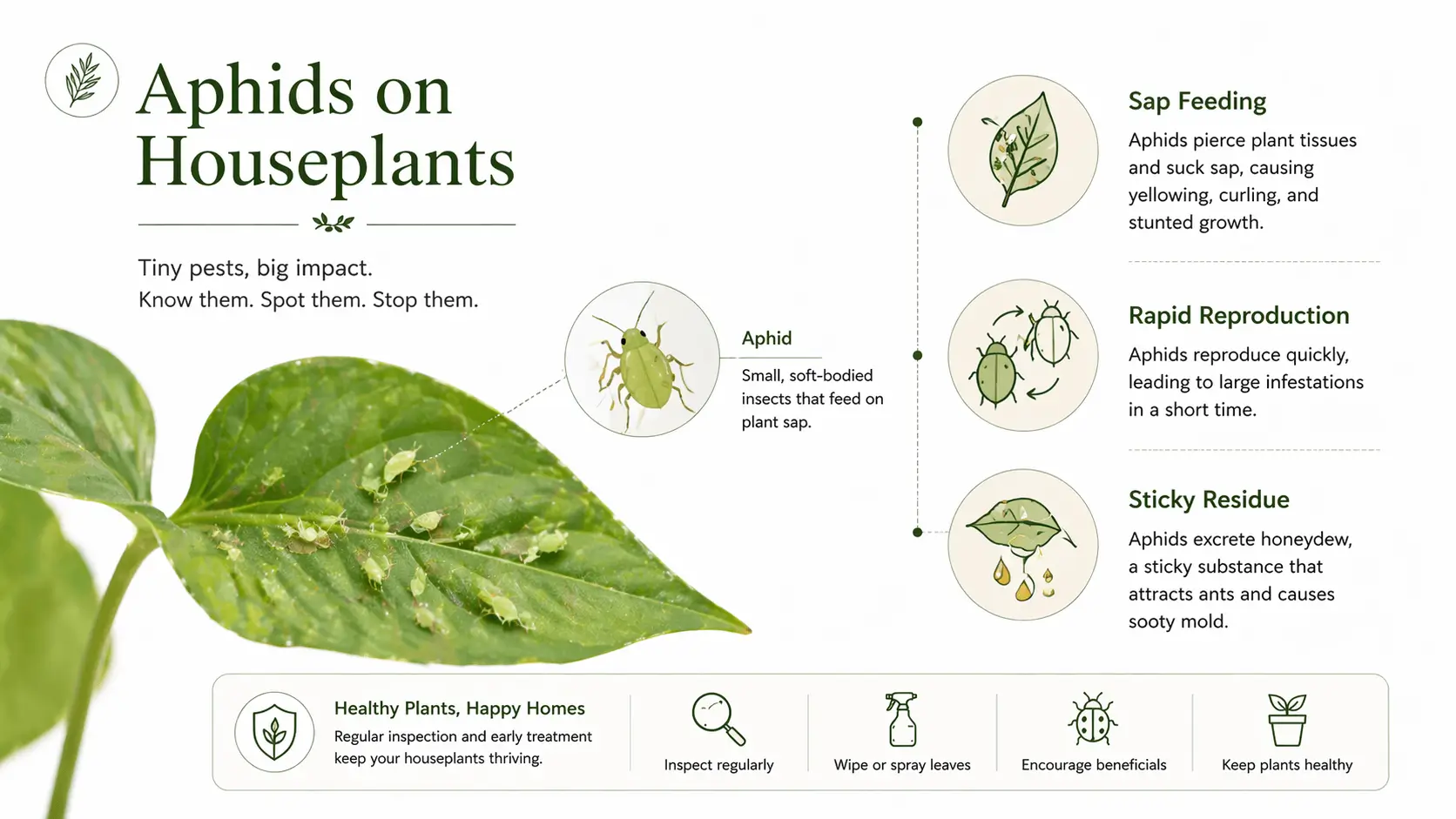
Aphids are small, soft-bodied insects that feed on plant sap by piercing plant tissues. They are commonly found on aphids on houseplants and reproduce rapidly, often without mating, which accelerates infestation.
- Colors include green, black, white, and brown
- Typically cluster on stems and leaf undersides
- Produce sticky honeydew as a byproduct
Aphids are small, soft-bodied insects scientifically classified under the superfamily Aphidoidea, known for feeding on plant sap.
What Causes Aphids on Indoor Plants?
Aphids in house environments appear due to favorable indoor conditions that support their growth and reproduction.
- Over-fertilization creates soft, nutrient-rich plant growth
- Infested plants brought indoors introduce aphids
- Lack of natural predators indoors allows unchecked reproduction
- Poor air circulation encourages pest buildup
Infested plants brought indoors—especially common houseplants like the Japanese money plant—can introduce aphids if not inspected properly.
Types of Aphids Found on Indoor Plants
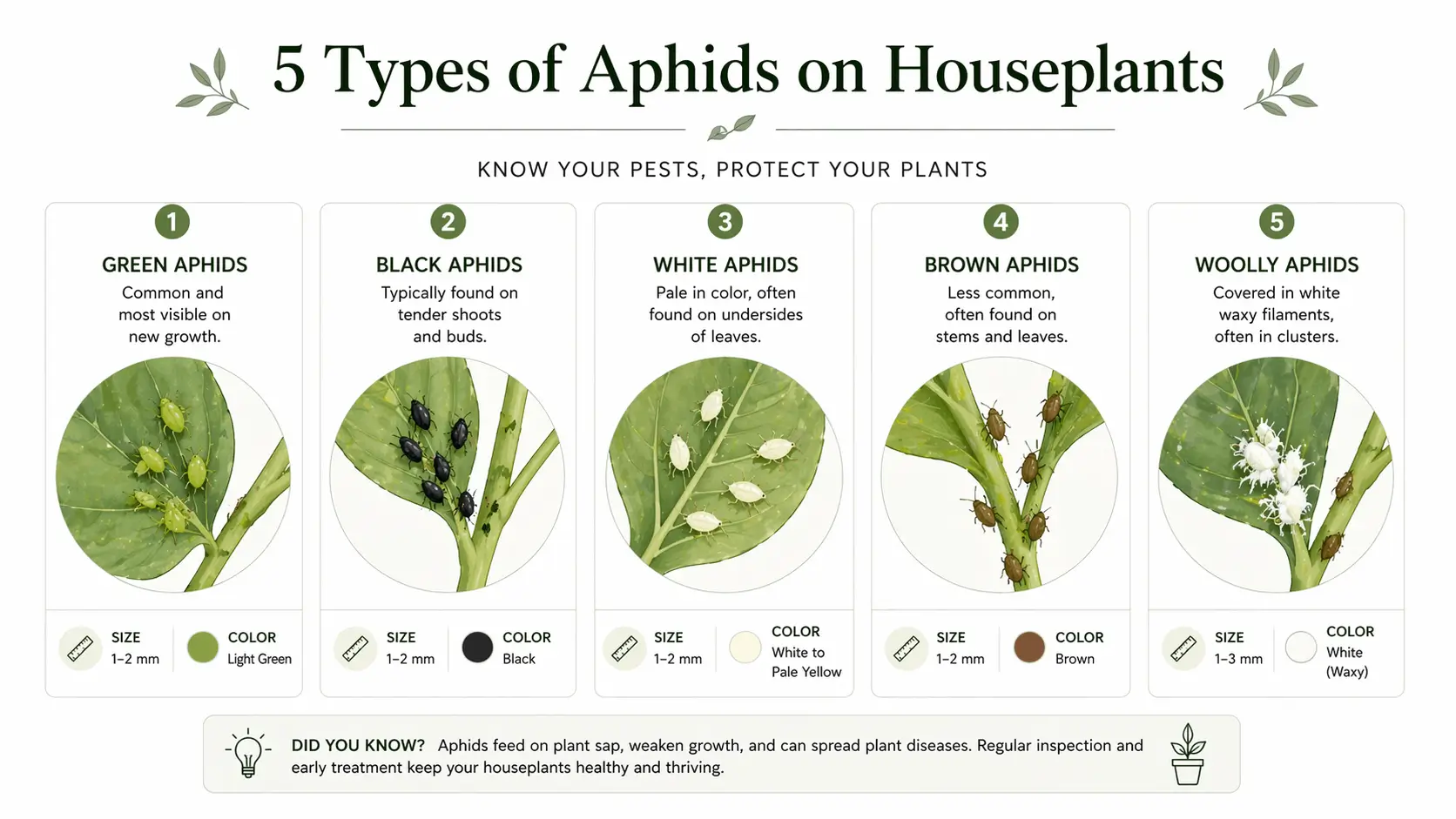
Different types of aphids on houseplants vary in appearance but behave similarly.
- Green aphids on houseplants: Most common, blend easily with foliage
- Black aphids on houseplants: Often form dense clusters on stems
- White aphids on houseplants: Appear pale and may resemble residue
- Brown aphids on houseplants: Less common but still harmful
- Woolly aphids on houseplants: Covered in white, cotton-like material
Signs of Aphids on Houseplants
Common Visual Indicators
Signs of aphids on houseplants are usually visible and easy to detect with regular inspection.
- Sticky residue (honeydew) on leaves
- Curling, yellowing, or distorted leaves
- Visible clusters on stems and undersides of leaves
Aphids are often easier to spot on plants with smooth or waxy leaves, where sticky honeydew becomes more visible.
Plant Health Symptoms
Aphid infestation affects overall plant vitality and development.
- Stunted growth
- Deformed or twisted new leaves
- Increased vulnerability to fungal diseases
How to Get Rid of Aphids on Indoor Plants (Step-by-Step Methods)
Immediate Removal Techniques
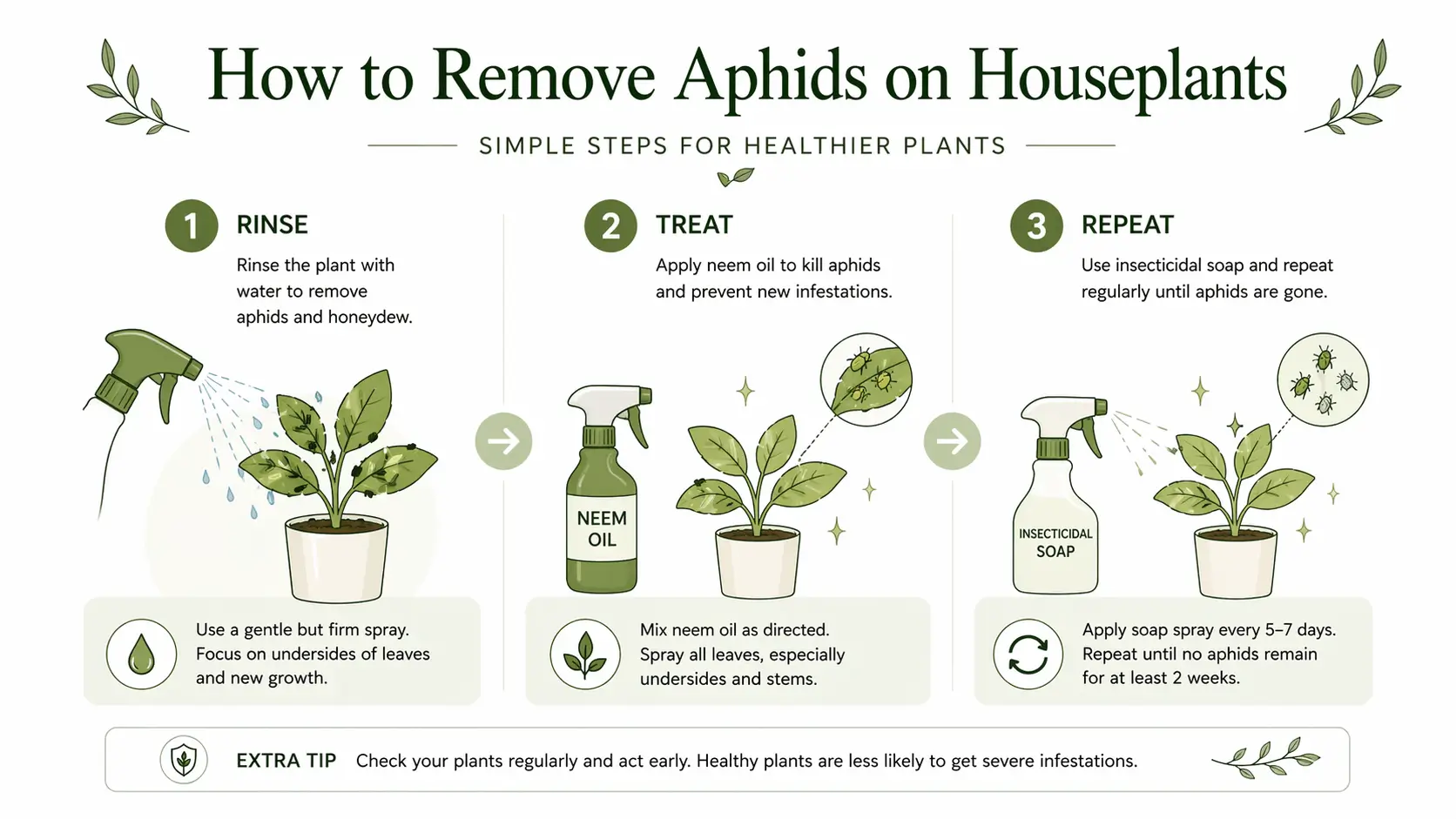
To quickly reduce aphid populations, physical removal methods are effective.
- Rinse plants with a strong stream of water to dislodge aphids
- Manually remove visible clusters using gloves or cloth
Natural Treatment Options
Natural solutions are safe and effective for aphids removal on houseplants.
- Neem oil applied weekly disrupts aphid feeding
- Insecticidal soap sprays break down aphid bodies
- Mild soap and water solutions can control small infestations
Chemical Treatment Options
For severe aphid infestation, chemical treatments may be required.
- Systemic insecticides provide long-term control
- Indoor-safe targeted sprays offer quick results
Home Remedies for Aphids on Houseplants
Home remedies for aphids on houseplants offer safe and accessible treatment options.
- Soap spray solution: Mix a few drops of mild liquid soap in water; spray weekly
- Vinegar-based spray: Dilute vinegar heavily (1:10 ratio) to avoid leaf burn
- Garlic or chili sprays: Natural repellents that deter aphids
Improper dilution can damage leaves, so always test on a small area first.
How to Get Rid of Aphids Permanently
To get rid of aphids permanently, breaking their life cycle is essential.
- Inspect plants regularly for early detection
- Isolate new plants before placing near others
- Maintain strong plant health through proper care
- Repeat treatments every 5–7 days to eliminate new generations
How to Prevent Aphids on Indoor Plants
Preventive Care Practices
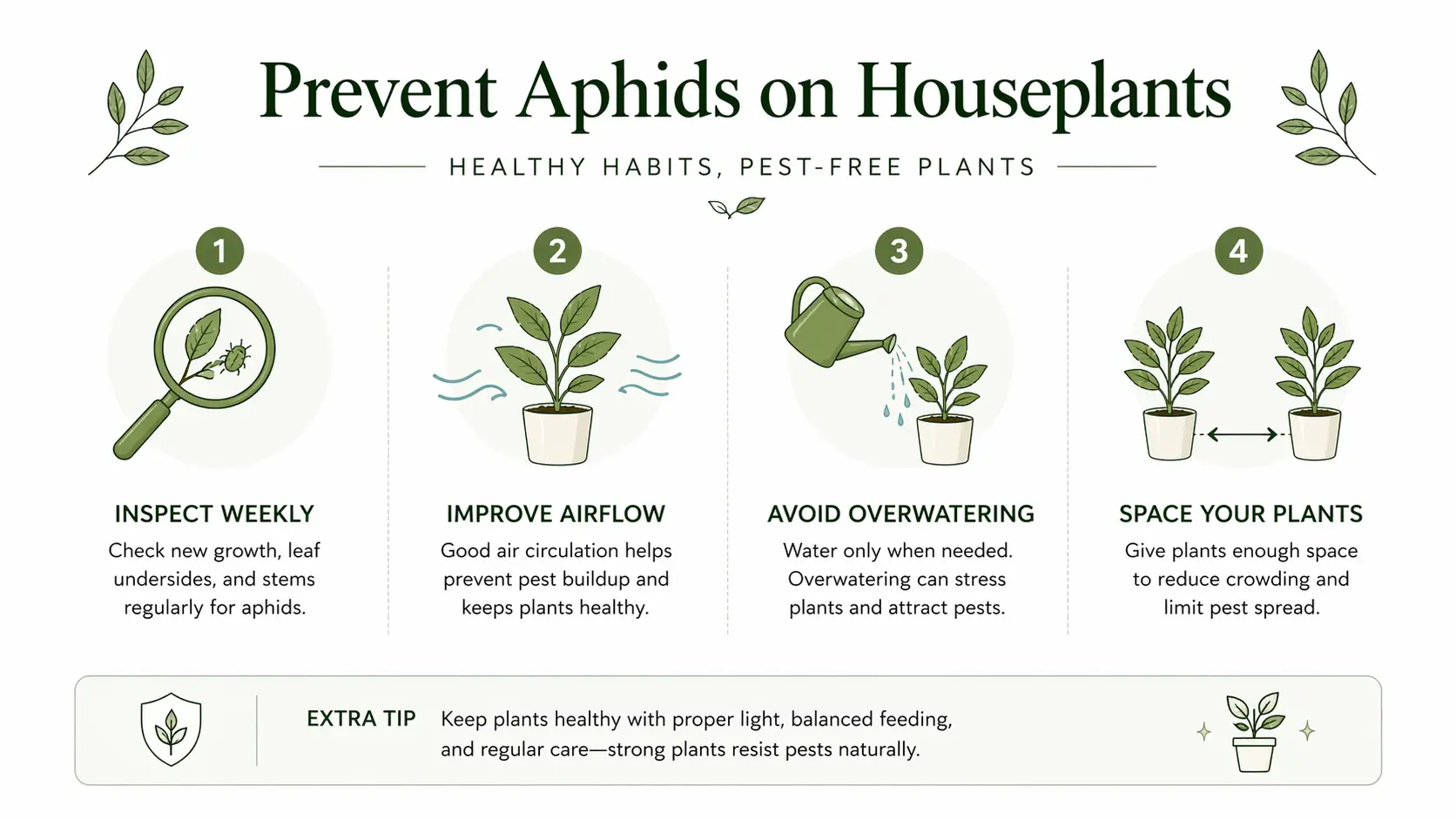
Preventing aphids on indoor plants requires maintaining balanced growing conditions.
- Avoid overwatering and excessive fertilization
- Ensure proper airflow around plants
Maintaining proper care routines for indoor plants such as the ZZ plant (Zamioculcas zamiifolia) helps reduce stress and lowers the risk of aphid infestations.
Monitoring and Early Detection
Early detection reduces the risk of severe infestation.
- Inspect leaves weekly
- Check undersides and stems where aphids hide
Neem Oil for Aphid Control (Table Section)
| Aspect | Details |
| What it is | Natural plant-based insecticide derived from neem tree |
| How it works | Disrupts aphid feeding and reproduction cycles |
| Application | Diluted spray applied weekly to leaves and stems |
| Benefits | Safe for indoor use when used correctly |
| Limitations | Requires repeated applications for effectiveness |
Comparison: Natural vs Chemical Aphid Treatments
| Method | Pros | Cons | Best Use Case |
| Natural remedies | Safe, eco-friendly | Slower results | Mild infestations |
| Neem oil | Effective + natural | Needs repetition | Moderate infestations |
| Chemical insecticides | Fast results | Potential toxicity | Severe infestations |
Common Problems and Mistakes When Treating Aphids
Why Treatments Fail
Treatment failure often occurs due to improper application or misunderstanding of aphid behavior.
- Incomplete coverage of plant surfaces
- Skipping repeated treatments
- Misidentifying aphids or other pests
Common Beginner Mistakes
Many indoor gardeners unintentionally worsen aphid problems.
- Overusing strong solutions causing leaf damage
- Ignoring early signs of infestation
- Not isolating infected plants
Environmental Factors That Affect Aphid Infestation
Environmental conditions significantly influence aphid infestation on indoor plants.
- Warm indoor temperatures accelerate reproduction
- Dry air conditions favor aphid survival
- Crowded plant arrangements increase spread
Aphids vs Other Indoor Plant Pests (Comparison Section)
| Pest | Location | Damage Type | Key Difference |
| Aphids | Leaves/stems | Sap sucking | Visible clusters |
| Fungus gnats | Soil | Root damage | Flying adults |
| Soil gnats | Soil | Larvae damage | Moist soil indicator |
Conclusion
Aphids on houseplants are a common but manageable problem when addressed early and consistently. By identifying symptoms quickly, applying effective treatments, and maintaining proper plant care, indoor gardeners can control aphid infestations successfully. Long-term prevention through monitoring and balanced care is essential to stop recurring issues. With the right approach, healthy indoor plants can be maintained without ongoing pest problems.
For a broader understanding of plant care, pest management, and healthy growth practices, explore our complete plant care resource guide.
FAQs
What kills aphids instantly on indoor plants?
Strong water sprays, insecticidal soap, or neem oil can quickly reduce aphid populations, though repeated treatment is required for complete elimination.
Where do aphids come from indoors?
Aphids typically enter through newly purchased plants, open windows, or contaminated soil brought indoors.
Can aphids spread to other houseplants?
Yes, aphids reproduce rapidly and can easily spread between nearby indoor plants if not controlled early.
Are aphids harmful to humans?
No, aphids are not harmful to humans, but they can significantly damage plant health.
How often should I treat aphids on houseplants?
Treat aphids every 5–7 days until there are no visible signs of infestation.