
Introduction
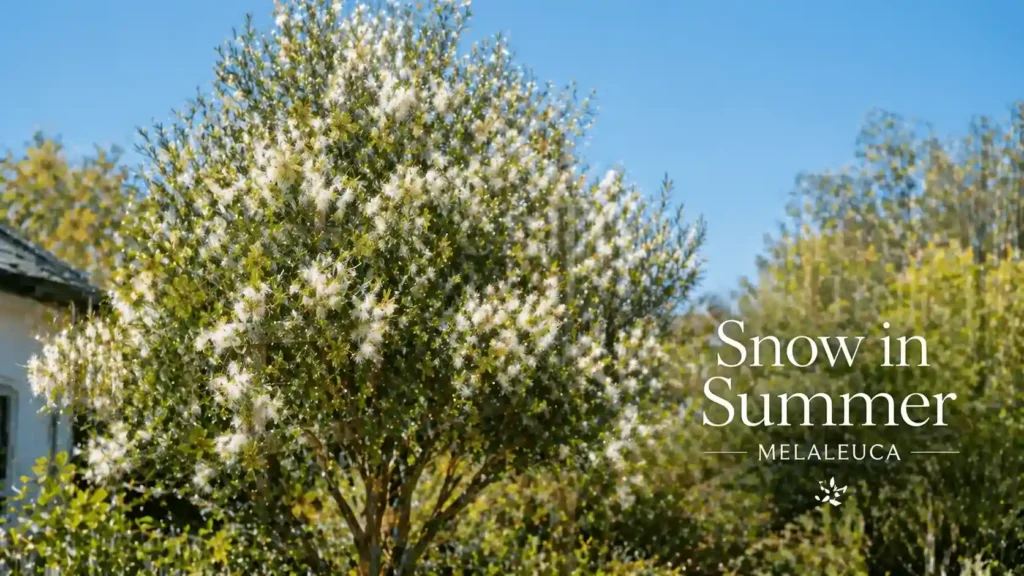
The snow in summer melaleuca (scientifically known as Melaleuca linariifolia) is a distinctive evergreen tree admired for its soft, white, fluffy flowers that resemble snow during warmer months. Commonly called the snow in summer tree, this Australian native is widely used in landscaping for its ornamental appeal, fast growth, and adaptability. It belongs to the Myrtaceae family and is closely related to other melaleuca species known for their resilience. This guide explains what the plant is, how it grows, how to care for it, and how it compares to similar species—making it easy for both beginners and experienced gardeners to understand.
Quick Summary
- The snow in summer melaleuca is a fast-growing evergreen tree with white, bottlebrush-like flowers.
- It thrives in warm climates and is valued for landscaping, shade, and screening.
- Proper spacing, pruning, and watering are essential for healthy growth.
- Common issues include overwatering, poor pruning, and environmental stress.
What Is Snow in Summer Melaleuca?
Understanding the Plant and Its Identity
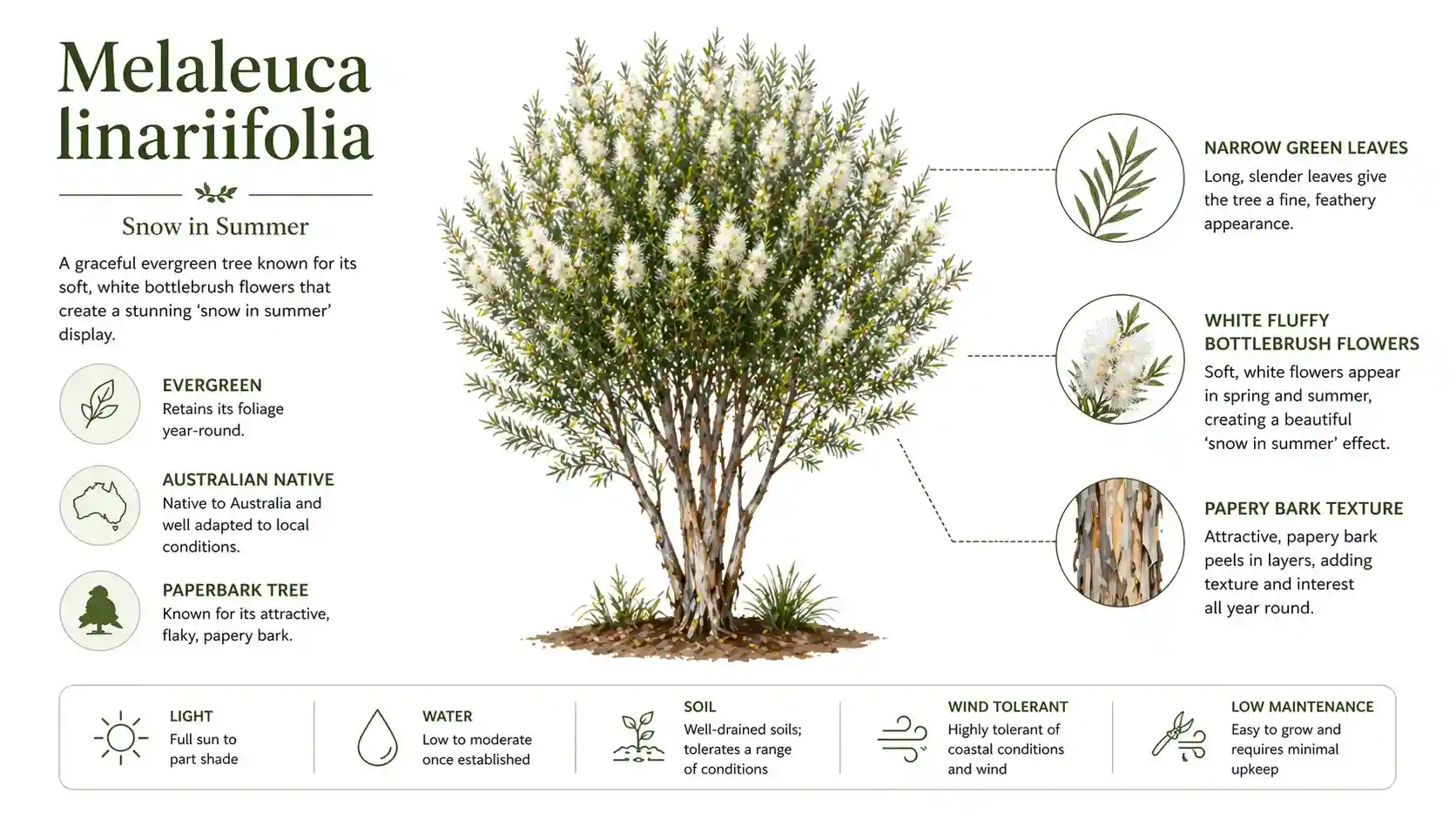
Snow in summer melaleuca refers to Melaleuca linariifolia, a fast-growing evergreen tree native to eastern Australia. It is commonly known as the snow in summer tree, melaleuca snow in summer tree, or paperbark tree due to its peeling bark texture. It belongs to the Myrtaceae family and is part of the broader Melaleuca genus, which includes many evergreen species adapted to Australian climates (see Melaleuca on Wikipedia).
This plant is often confused with other “snow in summer” plants, such as ground covers or flowering perennials, but it is distinctly a tree species. The term “snow tree plant” or “snow in summer plant” in this context specifically refers to this melaleuca species.
Botanically, it belongs to the Myrtaceae family and is related to other species such as:
- Melaleuca sieberi
- Melaleuca snowstorm
These species share similar flowering structures but differ in size and growth habit.
Key Characteristics of Snow in Summer Tree
Appearance, Foliage, and Flowering Traits
The snow in summer melaleuca is known for its fine, narrow green leaves and soft, white, bottlebrush-like flowers that bloom densely along branches. These blooms create a visual effect similar to snow covering the tree, even during warm seasons.
- Evergreen: retains foliage year-round
- Flowering season: late spring to summer
- Bark: papery, peeling texture
The plant is sometimes referred to as melaleuca snow in summer myrtle or melaleuca snowflake due to its delicate floral appearance. Its visual effect closely resembles snow-covered trees, making it a unique ornamental feature in warm climates. As an evergreen species, it also fits well among selections featured in 7+ Essential Evergreen Trees Brisbane Gardens Need, particularly for year-round greenery.
Snow in Summer Melaleuca Size and Growth Rate
Height, Width, and Growth Behavior
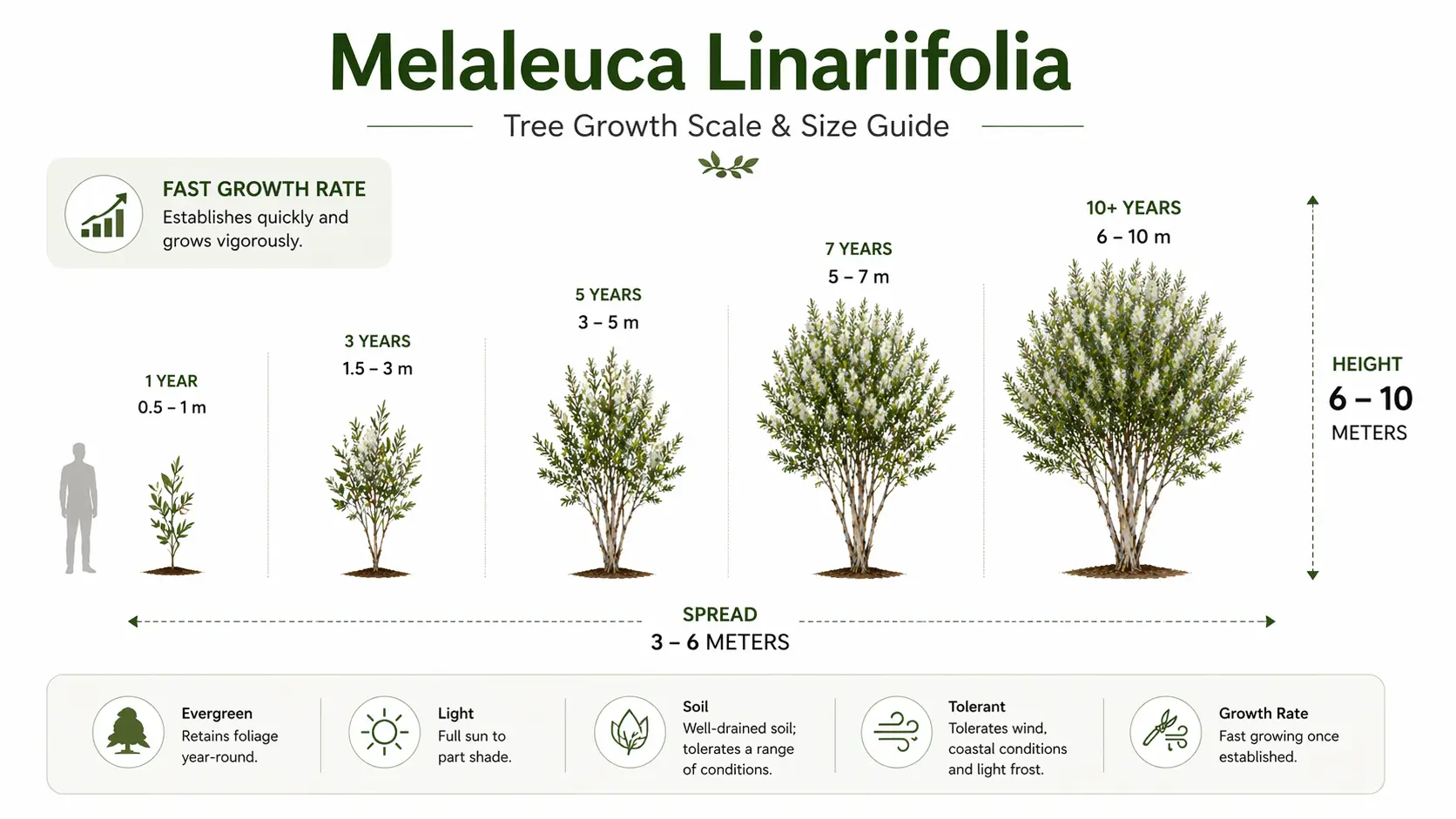
Snow in summer melaleuca is a fast-growing tree that can reach significant height and spread under ideal conditions.
| Feature | Typical Range |
| Height | 6–10 meters |
| Width | 3–6 meters |
| Growth Rate | Fast |
The final size depends on environmental conditions such as:
- Soil quality
- Water availability
- Sun exposure
In optimal conditions, Melaleuca linariifolia snow in summer grows rapidly and develops a dense canopy, making it suitable for shade and screening.
Ideal Spacing and Planting Conditions
How Far Apart to Plant Snow in Summer Trees
Proper spacing is essential for healthy growth and airflow. The spacing varies depending on the intended use.
- Small gardens: 3–4 meters apart
- Screening rows: 2–3 meters
- Open landscapes: wider spacing for canopy spread
Snow in summer melaleuca spacing should also consider:
- Well-drained soil to prevent root rot
- Full sun exposure for optimal flowering
- Moderate soil fertility
Understanding how to grow snow in summer involves selecting a location that provides enough room for mature size and adequate sunlight. For dense hedging or fast coverage, it can be combined with strategies from Fast Growing Trees for Privacy: Ultimate Guide for Quick Screening to create effective natural barriers.
Snow in Summer Melaleuca Care Guide
Watering, Light, Soil, and Maintenance
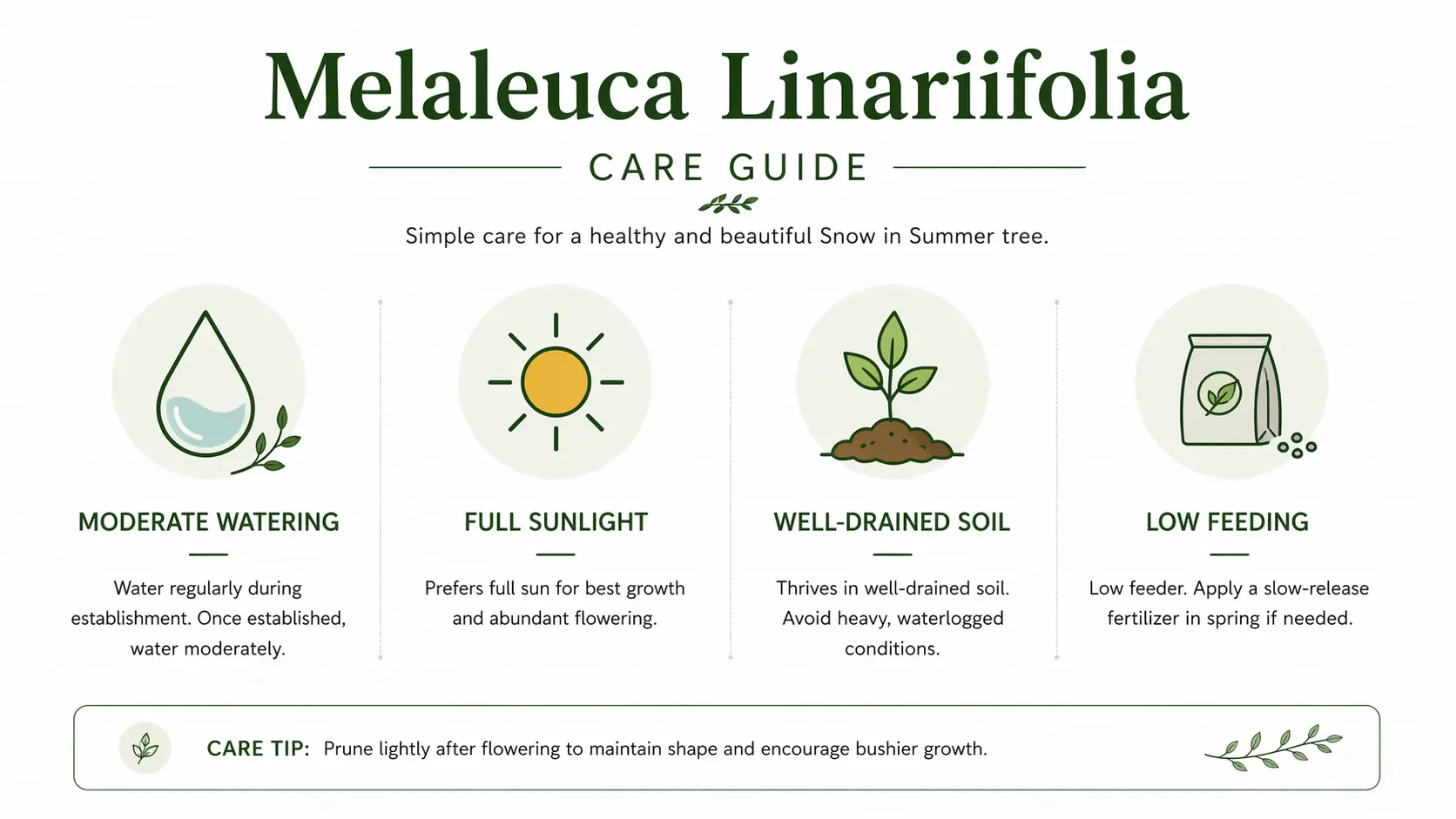
Snow in summer melaleuca care is relatively simple, making it suitable for both beginners and experienced gardeners.
- Watering: moderate; drought-tolerant once established
- Light: full sun preferred for best flowering
- Soil: well-drained and adaptable to various types
- Fertilizer: low to moderate feeding
Additional care considerations:
- Prune lightly to maintain shape
- Avoid waterlogged conditions
- Adaptable to warm and coastal climates
These practices align with general melaleuca plant care, which emphasizes resilience and low maintenance.
Pruning and Maintenance Practices
How and When to Prune Snow in Summer Melaleuca
Pruning should be done after flowering to maintain shape and encourage healthy growth. Proper pruning improves airflow and prevents structural issues.
- Prune after flowering
- Remove dead or crossing branches
- Avoid heavy cutting during active growth
Snow in summer melaleuca pruning helps:
- Maintain ornamental shape
- Encourage denser foliage
- Support future flowering cycles
Incorrect pruning timing can reduce flowering and weaken the plant structure.
Common Problems and How to Fix Them
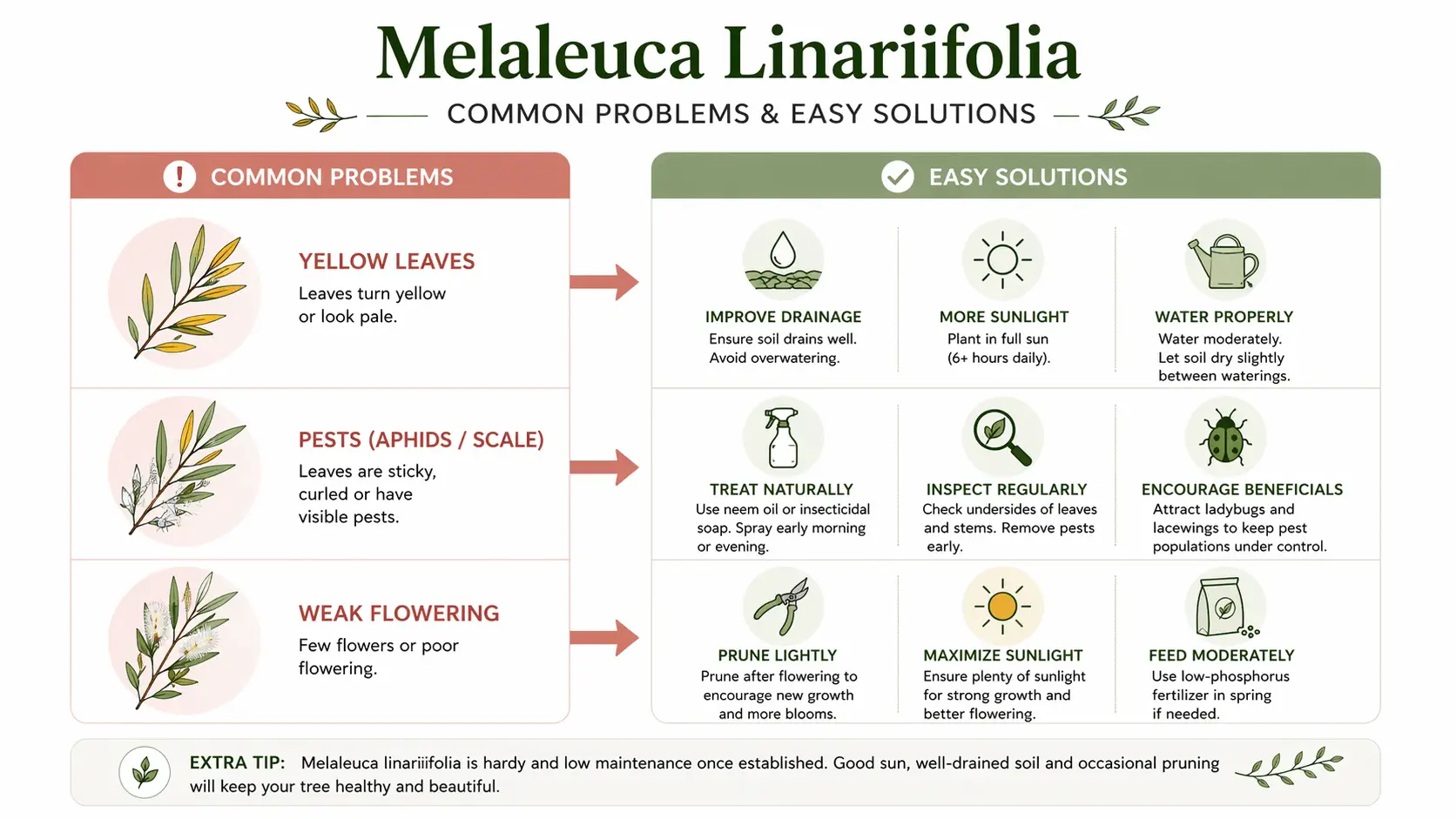
Troubleshooting Snow in Summer Melaleuca Issues
Common problems in snow in summer melaleuca are usually related to environmental stress or improper care. Identifying issues early helps maintain plant health.
- Yellowing leaves → overwatering or poor drainage
- Sparse flowering → lack of sunlight or improper pruning
- Pest issues → scale insects or mites
Solutions and prevention:
- Improve drainage and reduce watering frequency
- Ensure full sun exposure
- Use appropriate pest control methods
Most problems occur due to avoidable care mistakes, making proper maintenance essential.
Comparison: Snow in Summer Melaleuca vs Other Melaleuca Varieties
Key Differences Between Related Species
| Variety | Size | Flower Color | Growth Habit |
| Melaleuca linariifolia | Tall | White | Upright |
| Melaleuca linariifolia dwarf | Compact | White | Shrub-like |
| Melaleuca little red | Smaller | Red | Dense |
| Melaleuca snowstorm | Medium | White | Bushy |
Other related varieties include:
- Melaleuca seafoam
- Dwarf cultivars for small gardens
These differences influence landscaping choices, especially when selecting for size, color, or growth habit.
Seasonal Growth and Environmental Considerations
How Climate Affects Growth and Flowering
Snow in summer melaleuca responds strongly to seasonal changes, especially temperature and sunlight.
- Spring–summer: active growth and flowering
- Winter: slower growth but remains evergreen
- Heat tolerance: high
- Frost tolerance: moderate
Environmental limitations include:
- Poor drainage leading to root issues
- Reduced flowering in low sunlight
- Stress in extreme frost conditions
Understanding climate adaptability ensures consistent growth and flowering performance.
Beginner Mistakes to Avoid When Growing Snow in Summer Tree
Common Errors and How to Prevent Them
Common mistakes can affect long-term growth and appearance. Avoiding these ensures healthier plants.
- Overwatering leading to root rot
- Poor spacing causing overcrowding
- Incorrect pruning timing reducing flowering
Prevention strategies:
- Follow proper watering schedules
- Plan spacing based on mature size
- Prune only after flowering
These practices improve plant longevity and reduce maintenance issues.
Uses in Landscaping and Garden Design
Why Grow Snow in Summer Melaleuca
Snow in summer melaleuca is widely used in landscaping due to its versatility and visual appeal.
- Shade tree for large gardens
- Privacy screening due to dense foliage
- Ornamental feature with striking white blooms
It is suitable for:
- Urban landscapes (with space considerations)
- Large gardens and open areas
Its fast growth and evergreen nature make it a practical and decorative choice.
Snow in summer melaleuca works especially well alongside other privacy species listed in Tropical Screening Plants: Best Choices for Garden Privacy, making it a strong option for layered garden design.
Conclusion
The snow in summer melaleuca is a versatile, fast-growing evergreen tree that stands out for its soft white blooms and easy-care nature. Whether used for shade, screening, or visual appeal, understanding its size, care needs, and potential problems ensures long-term success. With proper spacing, pruning, and environmental awareness, this striking tree can thrive in a wide range of garden settings.
For a broader understanding of plant care, growth techniques, and species selection, explore our Plants: Benefits and Guides (Complete Care, Types & Growing Tips) pillar resource.
FAQs
1. What is snow in summer melaleuca?
It is an evergreen Australian tree (Melaleuca linariifolia) known for its white, fluffy summer flowers.
2. How fast does snow in summer melaleuca grow?
It is a fast-growing tree that can reach full height within several years under ideal conditions.
3. Is snow in summer melaleuca evergreen?
Yes, it retains its leaves year-round, making it suitable for screening and shade.
4. How do you care for a snow in summer tree?
Provide full sun, well-drained soil, moderate watering, and occasional pruning.
5. What problems affect snow in summer melaleuca?
Common issues include overwatering, poor drainage, and pest infestations.
6. How tall does snow in summer melaleuca grow?
It typically grows between 6–10 meters, depending on conditions.