
Introduction
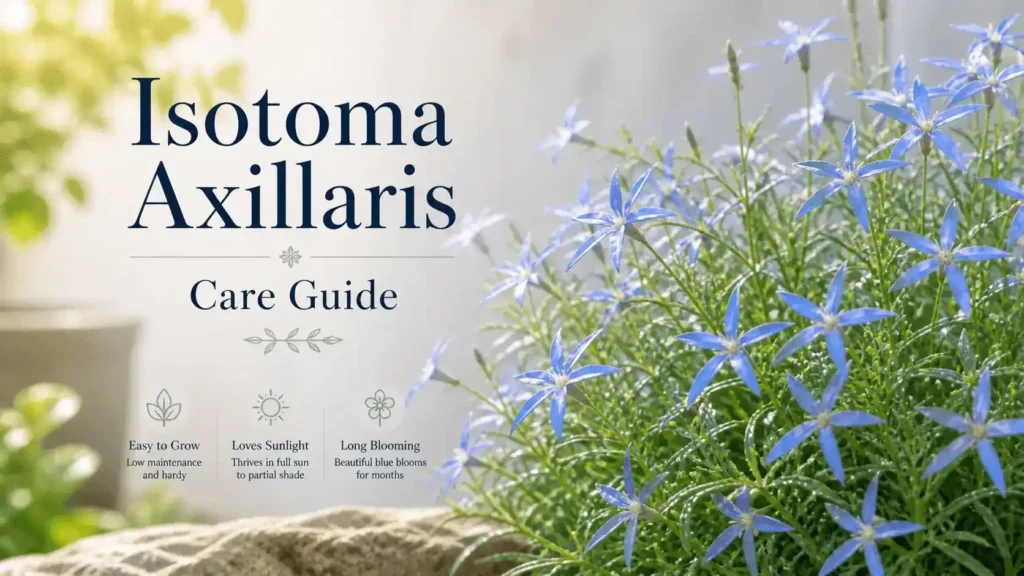
isotoma axillaris is a flowering ornamental plant known for its star-shaped blooms and fine-textured foliage. Commonly referred to as the laurentia plant or laurentia axillaris, it is widely used in garden borders, containers, and hanging baskets due to its delicate appearance and long flowering season. This guide explains what isotoma (isotoma axillaris) is, how it grows, and how to care for it effectively in different environments.
Quick Summary
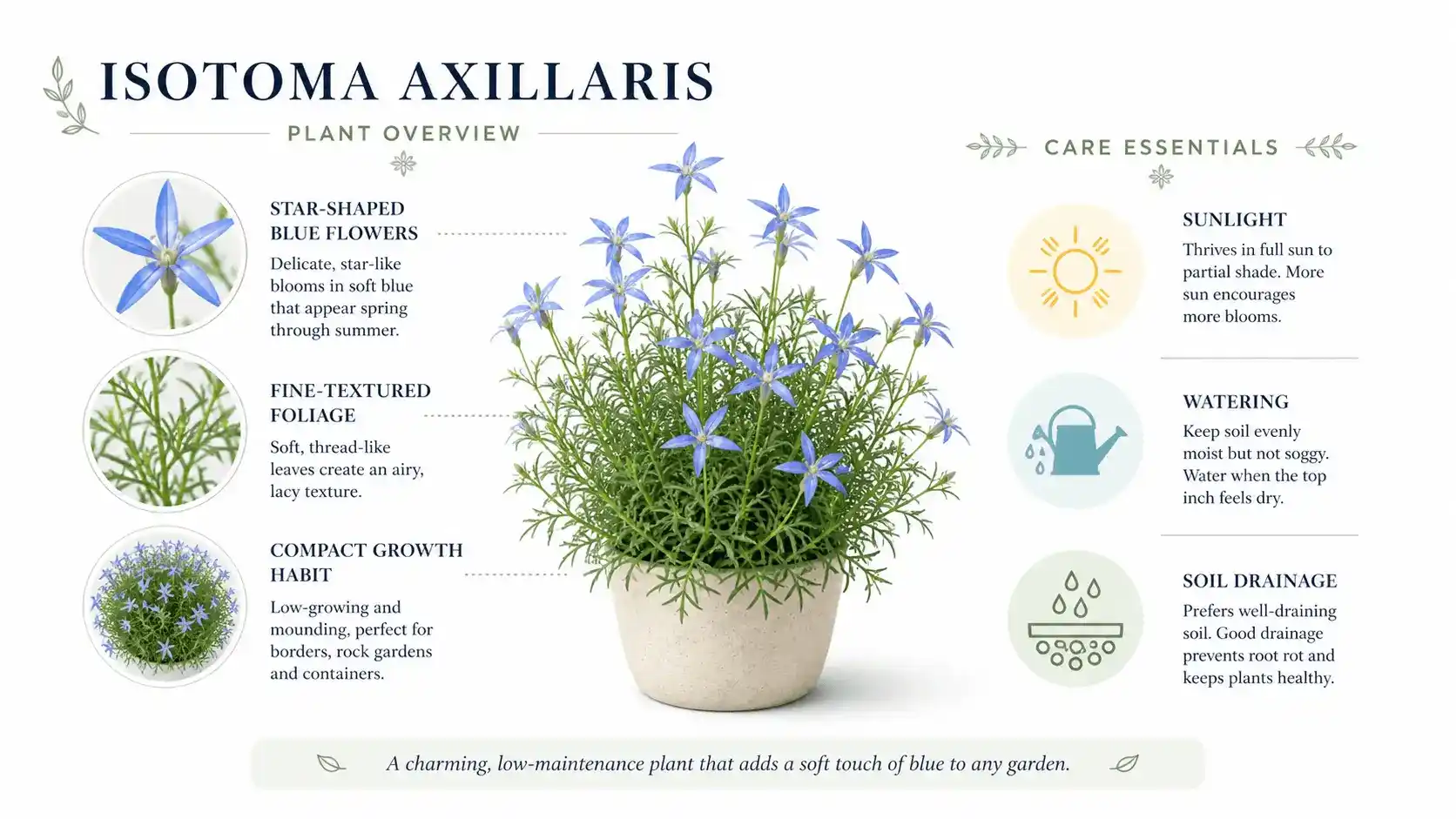
- isotoma axillaris is a low-growing flowering plant valued for blue, star-like flowers.
- Also known as laurentia or isotome, it thrives in warm climates and sunny locations.
- It is commonly grown from seeds and used in containers, edging, and ornamental displays.
- Proper watering, sunlight, and soil conditions are key to healthy growth and blooming.
What Is Isotoma Axillaris and How Is It Classified?
Botanical Identity and Naming Variations
isotoma axillaris is a flowering plant in the Campanulaceae family, commonly known as isotoma, isotome, or laurentia. The terms isotoma (isotoma axillaris), laurentia, and laurentia axillaris are often used interchangeably depending on regional and commercial naming practices. According to botanical references such as Wikipedia (Isotoma axillaris), the plant belongs to the Campanulaceae family and is native to Australia.
Botanically, isotoma is the accepted genus, while laurentia is widely used in horticulture. These naming differences do not indicate separate species but reflect historical classification and marketing preferences across regions.
Plant Origin and Natural Habitat
isotoma axillaris is native to Australia, where it grows in well-drained soils and open, sunny environments. It is often found in rocky or sandy areas, which explains its preference for excellent drainage.
This plant thrives in warm climates and adapts well to temperate regions as a seasonal annual. It tolerates heat but performs best in mild conditions without extreme frost.
What Does the Isotoma Axillaris Plant Look Like?
Physical Characteristics and Flower Structure
isotoma axillaris produces small, star-shaped flowers, most commonly in shades of blue, including isotoma axillaris blue varieties. The flowers typically have five narrow petals arranged in a symmetrical star form.
The foliage is fine, airy, and delicate, giving the plant a soft, textured appearance. It has a compact, slightly spreading growth habit and blooms continuously from late spring through summer under optimal conditions.
Popular Varieties and Cultivars
Several cultivars of isotoma axillaris differ in flower color, size, and growth habit:
- isotoma axillaris blue star – classic bright blue flowers
- isotoma axillaris gemini blue – compact and uniform growth
- isotoma axillaris fizz n pop – vigorous flowering variety
- isotoma axillaris beth’s blue – softer blue tones
- laurentia blue star plants – commonly sold ornamental selection
These varieties are selected for improved flowering performance and adaptability in containers and garden beds.
If you prefer similar blue flowering plants, the Blue Cosmos Flower: 5+ Facts, Colors & Meaning Guide offers another ornamental option with vibrant blooms.
How to Grow Isotoma Axillaris Successfully
Growing Conditions and Environmental Requirements
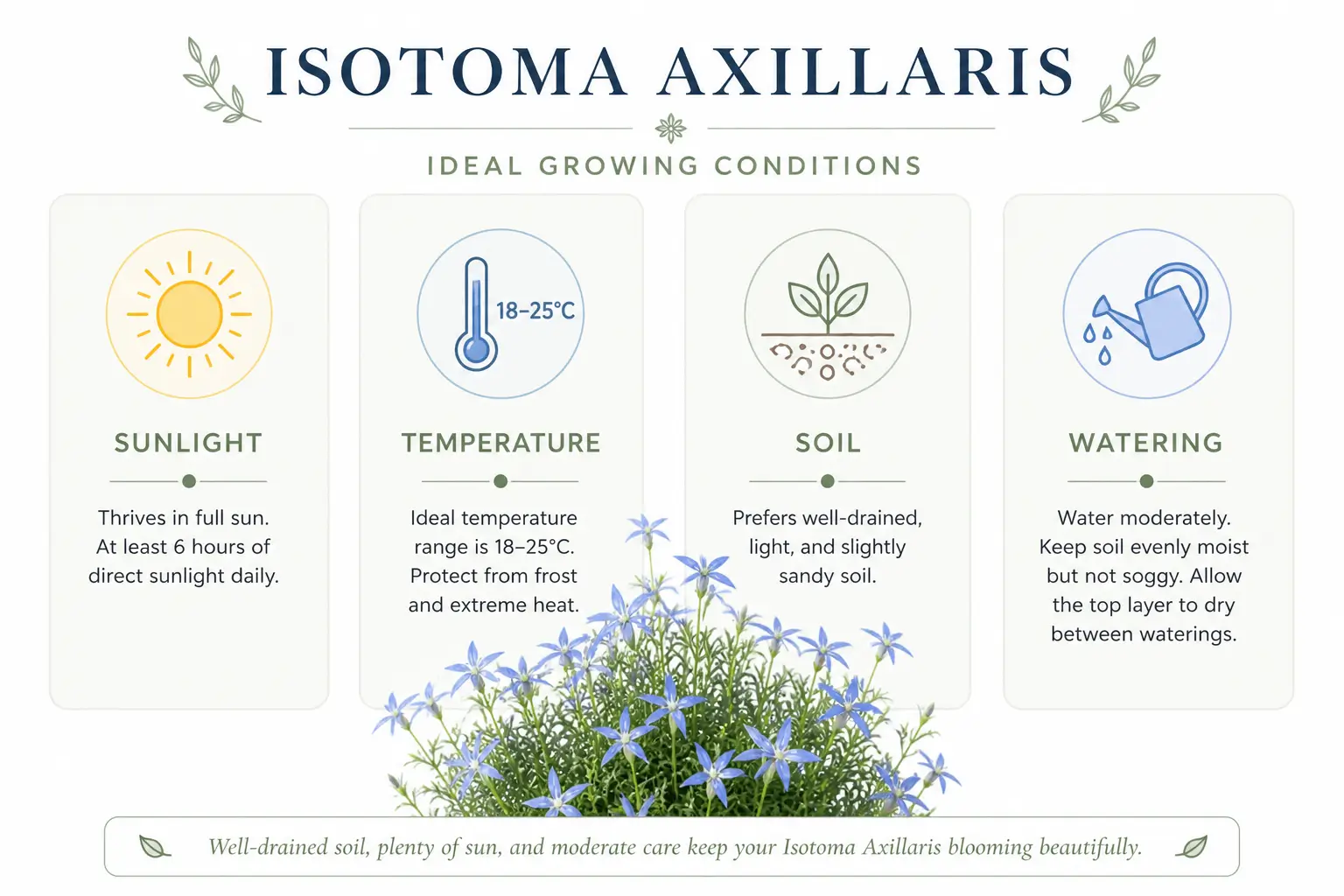
isotoma axillaris grows best in full sun, which promotes maximum flowering. Partial shade is tolerated but may reduce bloom density.
It prefers:
- Warm temperatures between 18–25°C
- Well-drained, light soil (sandy or loamy)
- Moderate humidity without waterlogging
Good airflow and drainage are essential to prevent root-related issues.
Planting Methods: Seeds and Transplants
isotoma axillaris is commonly grown from seeds, which germinate under warm, moist conditions with indirect light.
- Sow seeds on the soil surface without deep covering
- Keep soil consistently moist during germination
- Transplant seedlings once they develop several true leaves
Planting guidelines:
- Ideal planting depth: surface sowing or very light covering
- Spacing: 15–25 cm between plants
- Best seasons: early spring or after last frost
- Indoor start: 6–8 weeks before outdoor planting
- Outdoor sowing: only in warm, frost-free conditions
Isotoma Axillaris Care Guide (Essential Maintenance)
Watering, Feeding, and Soil Care
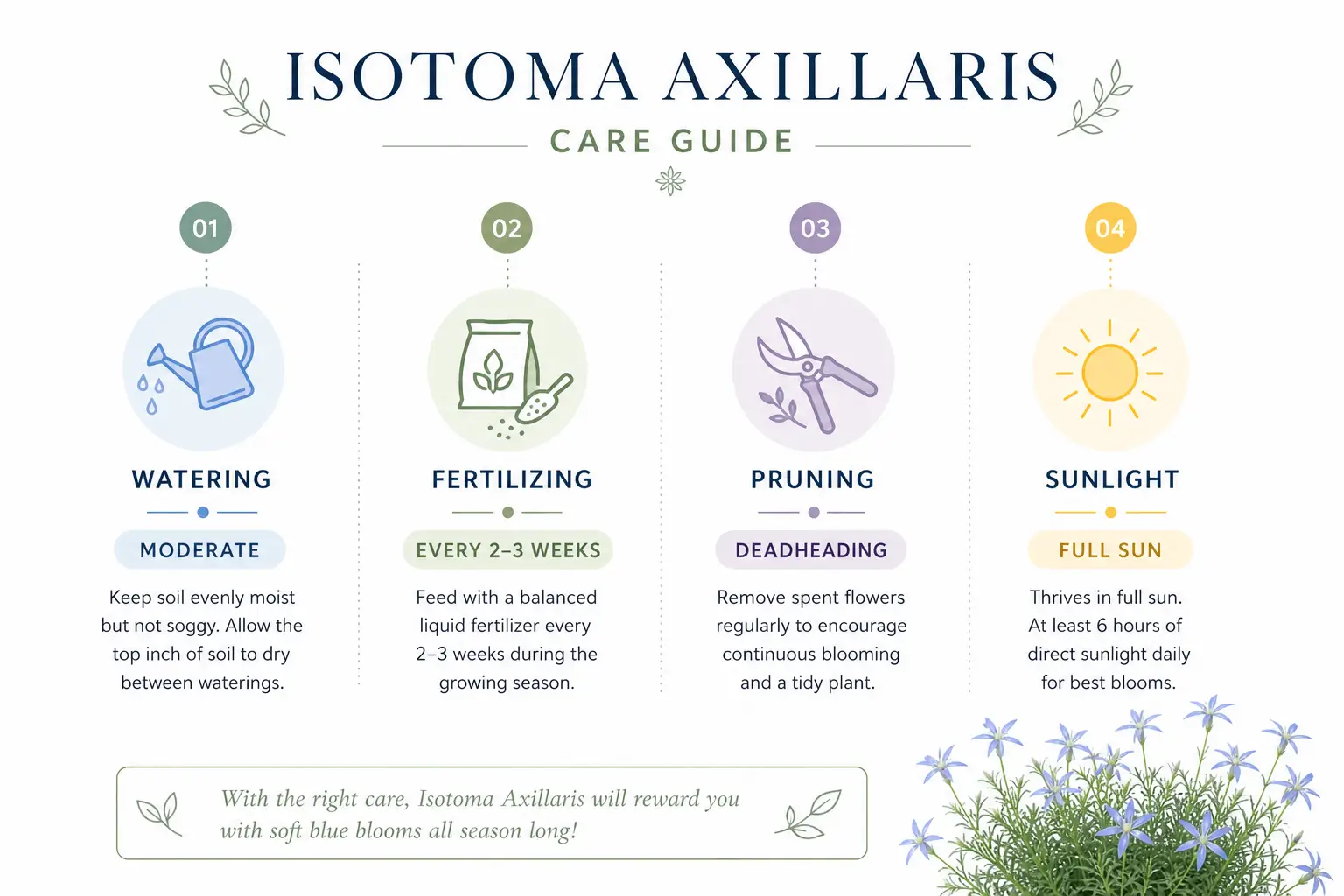
isotoma axillaris care requires balanced watering and well-draining soil. The plant prefers consistent moisture but is sensitive to overwatering.
Key care practices:
- Water when the topsoil feels slightly dry
- Avoid waterlogged conditions to prevent root rot
- Use a balanced liquid fertilizer every 2–3 weeks during the growing season
Proper soil structure with organic matter improves moisture retention while maintaining drainage.
Light, Pruning, and General Maintenance
Full sunlight ensures optimal flowering and compact growth. In low light, plants may become leggy with fewer blooms.
Maintenance tips:
- Remove faded flowers (deadheading) to encourage continuous blooming
- Trim lightly to maintain shape and airflow
- Ensure spacing for good air circulation
For more flowering plant care strategies, refer to Kangaroo Paw Care: 6+ Essential Tips for Healthy Blooms for additional insights.
Growth Rate and Plant Size
Typical Size and Spread
isotoma axillaris typically grows to a height of 20–30 cm with a spread of 25–40 cm. In containers, growth may remain slightly more compact due to limited root space.
It forms a low, spreading mound suitable for edging and ground cover.
Growth Speed and Seasonal Behavior
The plant has a moderate growth rate and establishes quickly under favorable conditions. Flowering begins in late spring and continues through summer.
Growth is influenced by:
- Temperature
- Light exposure
- Soil quality
Common Problems with Isotoma Axillaris and How to Fix Them
Why the Plant Stops Blooming or Weakens
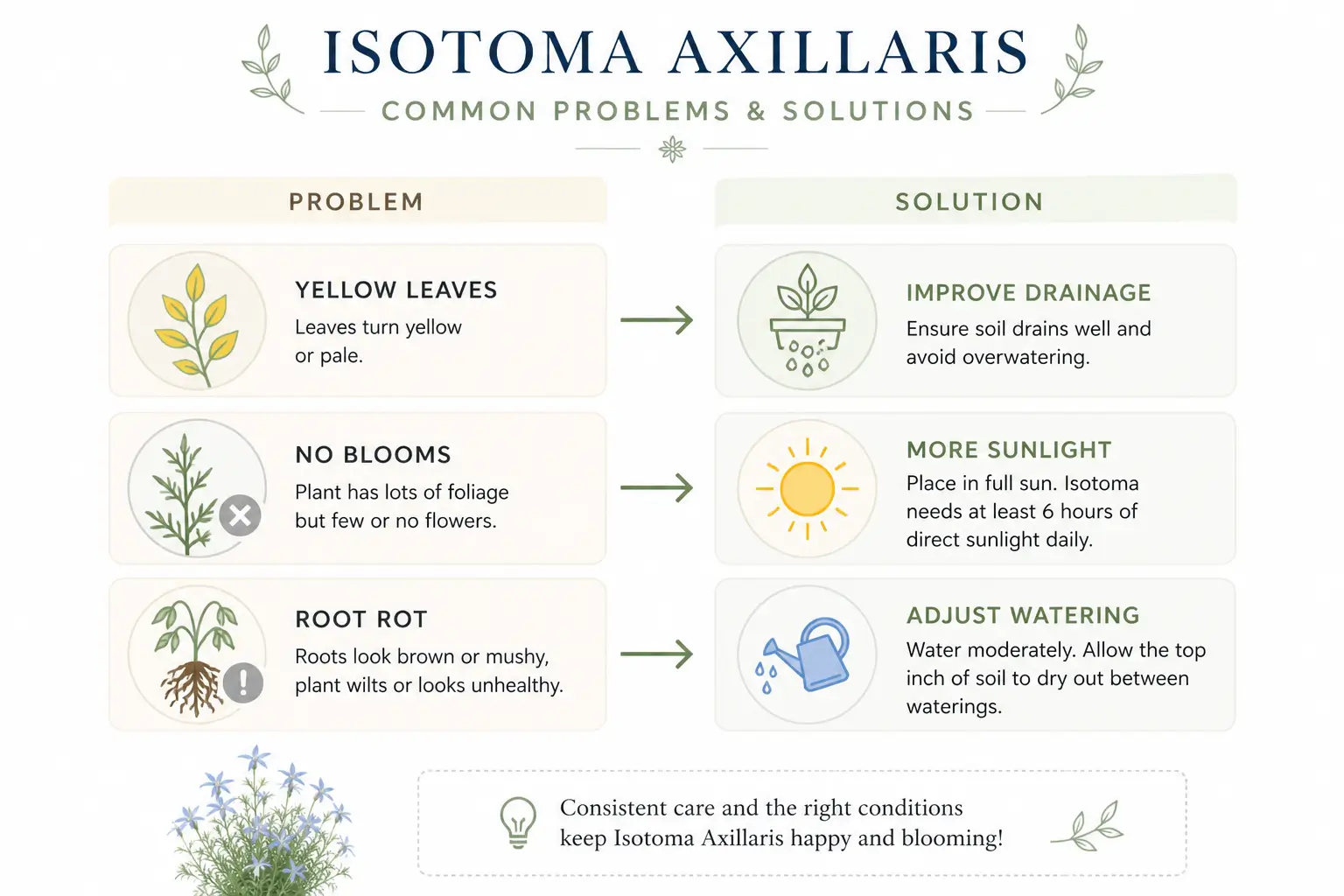
isotoma axillaris may stop blooming due to environmental or care-related issues. The most common causes include insufficient sunlight, poor soil drainage, and nutrient deficiencies.
These factors reduce energy available for flowering and overall plant vigor.
Troubleshooting Issues and Prevention
Overwatering is a frequent problem, leading to root rot and weakened growth. Environmental stress such as heat extremes or poor airflow can also affect plant health.
Signs of stress:
- Yellowing leaves
- Wilting despite moist soil
- Reduced flowering
Quick fixes:
- Improve drainage
- Adjust watering schedule
- Increase sunlight exposure
Preventive care tips:
- Use well-drained soil
- Avoid overcrowding
- Maintain consistent care routines
Comparing Isotoma Axillaris with Similar Ornamental Plants
Isotoma vs Laurentia Naming and Usage Differences
isotoma and laurentia refer to the same plant species, isotoma axillaris, but are used differently depending on context. “Isotoma” is the botanical name, while “laurentia” is commonly used in horticulture and plant marketing.
There is no functional difference in plant characteristics between these names.
Comparison Table: Isotoma vs Similar Bedding Plants
| Feature | Isotoma Axillaris | Lobelia | Petunia |
| Growth Habit | Low, spreading | Trailing/compact | Spreading/mounding |
| Flower Type | Star-shaped | Small tubular | Funnel-shaped |
| Care Difficulty | Moderate | Moderate | Easy |
| Climate Suitability | Warm climates | Mild climates | Wide adaptability |
Landscaping Uses and Design Applications
Where and How to Use Isotoma Axillaris
isotoma axillaris is widely used in ornamental landscaping due to its delicate texture and continuous blooms.
Common uses:
- Garden borders and edging
- Ground cover in small areas
- Hanging baskets and containers
Its spreading habit makes it effective for filling gaps and softening edges. For similar low-growing plants used in borders and ground cover, see our guide on Australian Violet Ground Cover: Care, Growth & Uses Guide.
Companion Plants and Design Pairings
This plant pairs well with other flowering species to create contrast and visual balance.
Design considerations:
- Combine with bold flowers for contrast
- Use alongside trailing plants for layered displays
- Mix colors for seasonal variety
Beginner Mistakes to Avoid When Growing Isotoma
Common mistakes include overwatering, planting in heavy soil, and providing insufficient sunlight. These issues occur because the plant requires well-drained conditions and consistent light for proper growth.
Avoiding these mistakes ensures better flowering and plant health.
Environmental Limitations and Seasonal Considerations
isotoma axillaris is sensitive to frost and performs best in warm seasons. It may not survive cold winters without protection.
Seasonal considerations:
- Protect from frost in cooler climates
- Adjust watering in extreme heat
- Grow as an annual in colder regions
Indoor growth is possible but requires strong light and proper airflow.
Conclusion
isotoma axillaris is a versatile ornamental plant that combines delicate beauty with relatively simple care requirements. Understanding its growth conditions, maintenance needs, and common challenges allows gardeners to use it effectively in containers, borders, and landscape designs. With proper care, this plant provides long-lasting seasonal color and enhances garden aesthetics. This guide is part of our broader resource on Plants: Benefits and Guides (Complete Care, Types & Growing Tips), covering plant care, growth, and uses.
FAQs
1. What is the difference between isotoma and laurentia?
They are often used interchangeably, but both refer to the same plant species, isotoma axillaris, depending on regional naming conventions.
2. How long does isotoma axillaris take to grow from seeds?
It typically takes a few weeks to germinate and several months to reach full flowering, depending on growing conditions.
3. Does isotoma axillaris require full sun?
Yes, it grows best in full sun but can tolerate partial shade with slightly reduced flowering.
4. Can isotoma axillaris be grown in pots or containers?
Yes, it is well-suited for containers, hanging baskets, and small garden spaces.
5. Why are my isotoma axillaris flowers not blooming?
Common causes include insufficient sunlight, overwatering, or lack of nutrients.