
What Is Orthrosanthus Polystachyus?
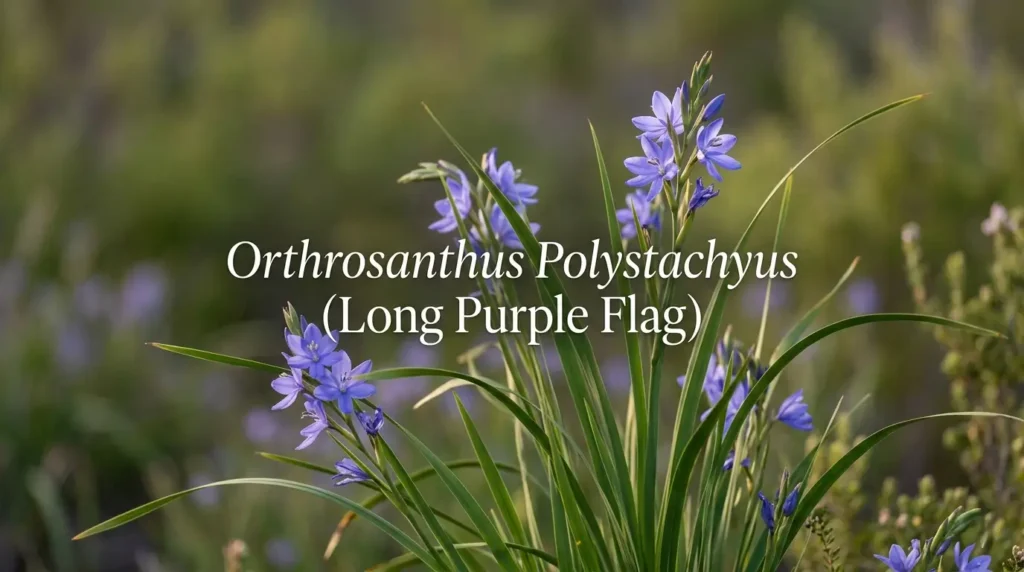
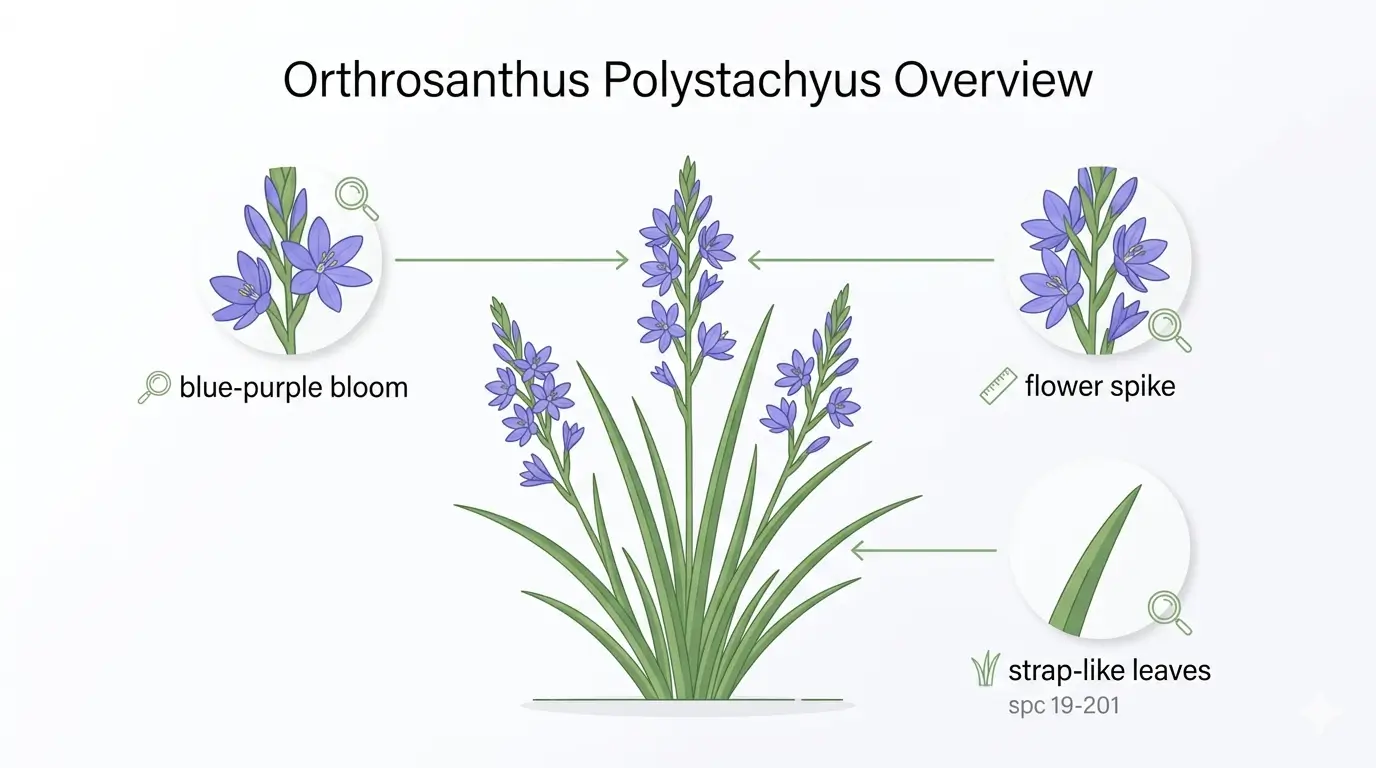
Orthrosanthus polystachyus is an Australian native perennial plant commonly known as the long purple flag or morning flag. It belongs to the Iridaceae family, which also includes true irises, and is naturally found in southwestern Australia. The plant is recognized for its narrow, strap-like leaves and delicate blue to violet flowers that appear seasonally.
This species belongs to the Orthrosanthus genus, commonly referred to as “morning flowers” due to the short-lived nature of its blooms. Each flower typically opens in the morning and fades by the end of the day, creating a continuous but fleeting display throughout the flowering season.
Quick Summary
- Orthrosanthus polystachyus is a native Australian perennial known as long purple flag or morning flag
- It belongs to the Iridaceae family and is related to irises
- The plant produces grass-like foliage and short-lived violet-blue flowers
- It thrives in sandy, well-drained soils with low maintenance needs
- Ideal for native, coastal, and water-wise garden landscapes
Orthrosanthus Polystachyus — Botanical Profile and Classification
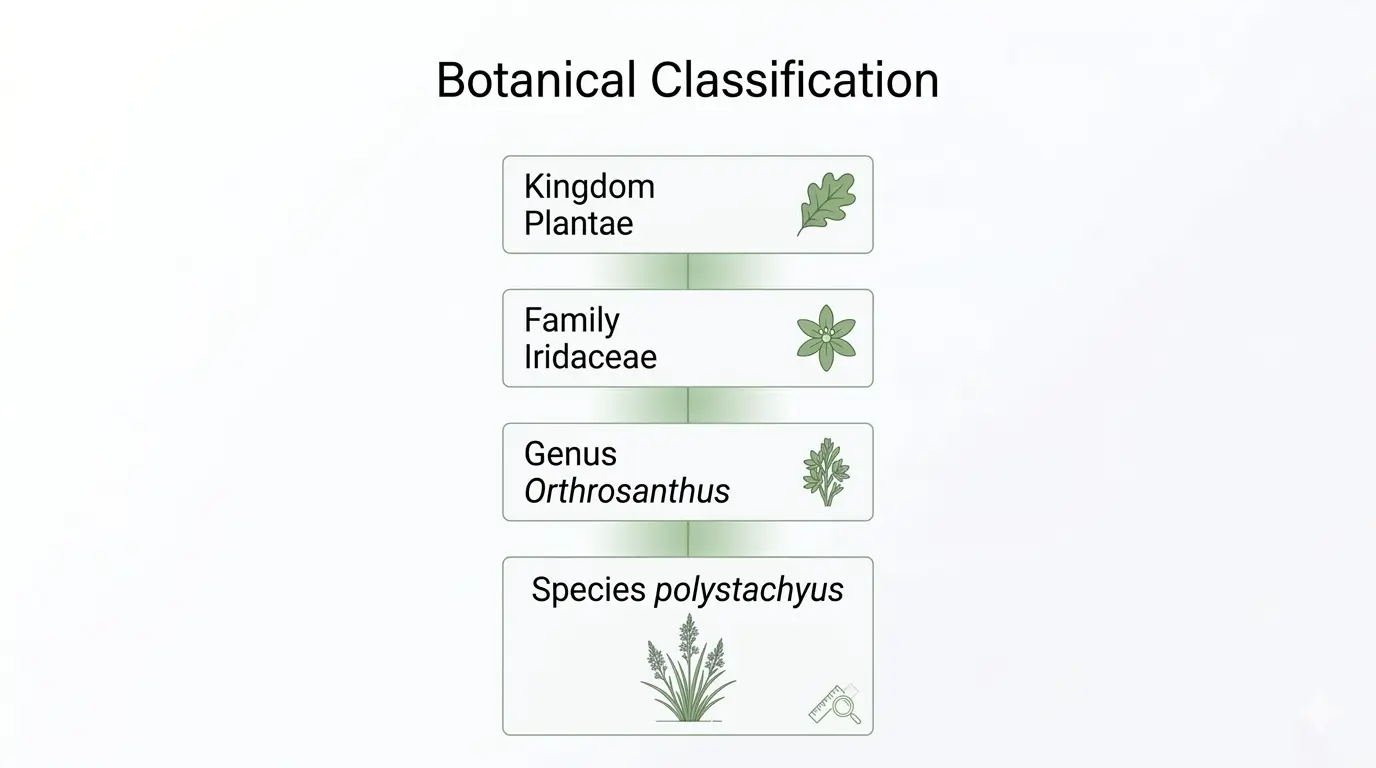
Orthrosanthus polystachyus is classified as follows:
- Kingdom: Plantae
- Family: Iridaceae
- Genus: Orthrosanthus
- Species: polystachyus
The genus name Orthrosanthus comes from Greek, meaning “morning flower,” referencing the plant’s habit of producing flowers that last only a single day. This is a defining trait shared among morning flag species Orthrosanthus polystachyus belongs to the Iridaceae family, which is well documented in botanical taxonomy and includes iris-related plants across the globe (see Iridaceae family classification for reference).
The common name “long purple flag” is used to describe its tall flower spikes and purple-toned blooms. It is native and endemic to southwestern Western Australia, particularly sandy heathland environments.
This species is sometimes confused with Patersonia plants, such as Patersonia occidentalis, which are also referred to as purple flag flowers. However, they belong to a different genus within the same family and differ in floral structure and growth habits.
How Does Orthrosanthus Polystachyus Differ from Other Morning Flag Species?
Orthrosanthus polystachyus is often compared with Orthrosanthus multiflorus and Orthrosanthus laxus due to similarities in appearance and habitat.
| Feature | O. polystachyus | O. multiflorus | O. laxus |
| Common Name | Long Purple Flag | Morning Flag | Spreading Morning Flag |
| Flower Color | Blue-purple | Blue-purple | Pale blue |
| Height | Taller | Moderate | Lower/spreading |
| Native Region | SW Australia | SW Australia | SW Australia |
| Bloom Habit | Multi-spike | Multi-flower | Lax/open branching |
Orthrosanthus polystachyus is frequently mistaken for Orthrosanthus multiflorus in nurseries due to overlapping common names and similar floral appearance. However, O. polystachyus generally grows taller and forms more pronounced flower spikes.
Common Names and Naming Confusion
Orthrosanthus polystachyus is known by several common names, including:
- Long purple flag
- Long purple-flag
- Morning flag
- Morning flag plant
- Native iris plant
- Morning iris
The term “native iris” is commonly used in horticulture, although this plant is not a true Iris species. It is instead a close relative within the Iridaceae family.
Confusion often arises between morning flag (Orthrosanthus) and purple flag plants (Patersonia). While both share similar purple flowers and grass-like leaves, they belong to different genera.
Patersonia occidentalis is frequently labeled as a purple flag plant in Australian gardens, leading to misidentification when compared with Orthrosanthus species.
Orthrosanthus Polystachyus Plant Size
Orthrosanthus polystachyus typically grows to a mature height of 40–80 cm, depending on environmental conditions.
It forms upright clumps of narrow, strap-like leaves that gradually expand in width over time.
Plant size varies based on:
- Full sun exposure leading to more compact growth
- Partial shade resulting in taller, slightly stretched foliage
- Soil fertility and drainage affecting overall vigor
Well-drained sandy soils produce the healthiest and most balanced clump development.
Growth Rate and Seasonal Behavior
Orthrosanthus polystachyus is considered a moderate-growing perennial under optimal conditions.
It typically flowers in spring to early summer in Australian climates. Each individual flower lasts only a single day, a trait that gives rise to the common name “morning flag.”
The plant produces multiple flower spikes throughout the season, ensuring continuous visual interest despite short-lived blooms.
Its root system is fibrous and forms dense clumps over time, contributing to soil stabilization in native habitats.
Orthrosanthus Polystachyus Care Guide
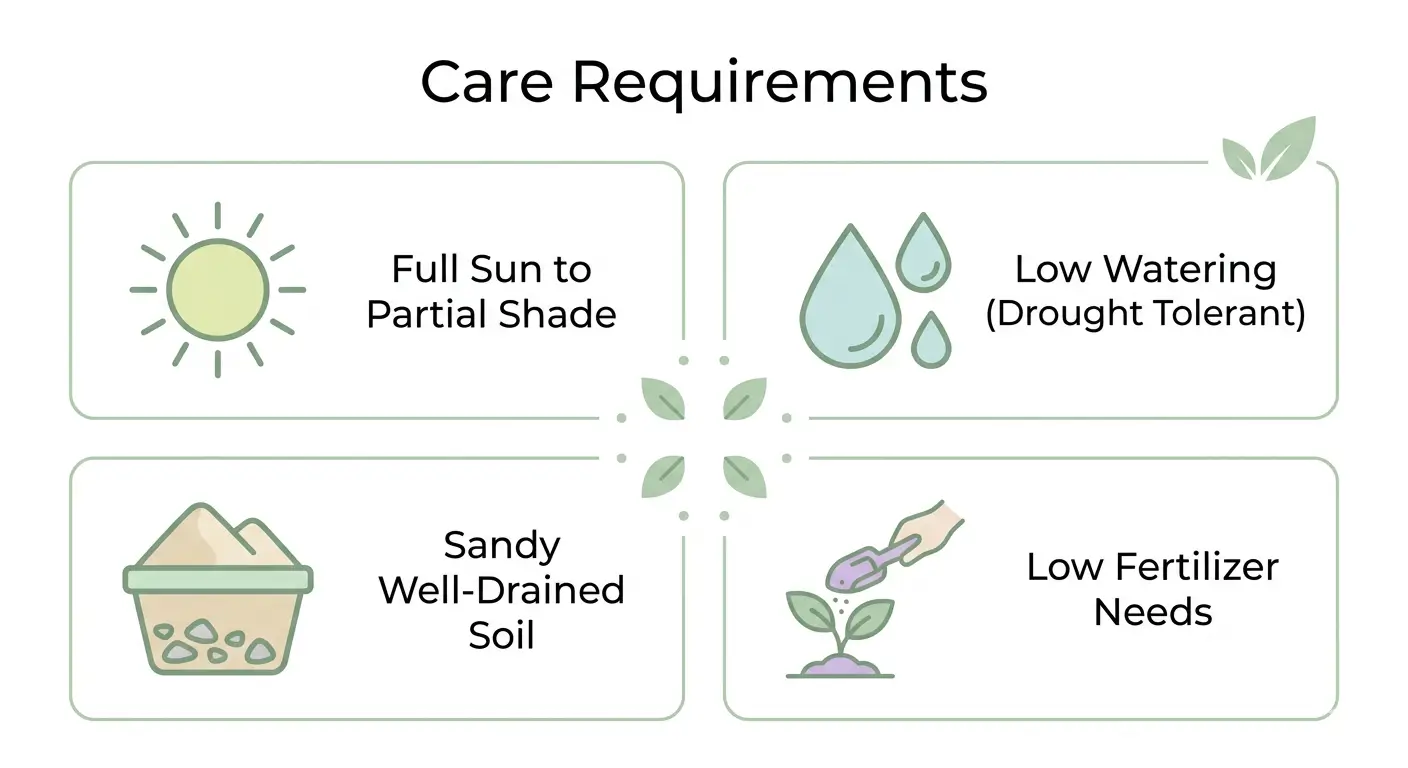
Orthrosanthus polystachyus is a low-maintenance plant suited for native and water-wise gardens.
This plant is also commonly featured in beginner-friendly native gardening approaches such as easy low maintenance Australian native garden systems, where drought tolerance and soil adaptation are key success factors.
Watering Requirements
The plant is drought-tolerant once established. During early growth, regular watering helps root establishment. Mature plants require minimal irrigation, as overwatering can lead to root rot in poorly drained soils.
Light Requirements
It grows best in full sun to partial shade. Full sun encourages stronger flowering, while partial shade may reduce bloom density but maintain foliage health.
Soil Preferences
It thrives in sandy, well-drained soils similar to its native heathland habitat. Clay soils should be amended with sand or organic matter to improve drainage. It prefers slightly acidic to neutral pH conditions.
Fertilization
Fertilizer needs are minimal. Excess feeding, especially nitrogen-rich fertilizers, may reduce flowering and damage foliage. Low-phosphorus native plant fertilizers are recommended if needed.
Pruning and Maintenance
Spent flower spikes can be removed to encourage tidiness. Clumps may be divided every few years to maintain vigor and prevent overcrowding.
Climate Tolerance
It is well-suited to Mediterranean climates and can tolerate light frost. It performs well in both garden beds and containers when drainage is adequate.
Orthrosanthus Polystachyus Seeds — Propagation Guide
Seeds can be collected from mature flower capsules and stored in dry conditions.
Germination requires:
- Warm temperatures
- Light exposure
- Consistent moisture without waterlogging
Germination may take several weeks to months depending on conditions.
Division of established clumps is a faster and more reliable propagation method than seeds. Plants grown from seed may take 2–3 years to flower.
Orthrosanthus Polystachyus Varieties and Related Species
There are no widely recognized formal cultivars of Orthrosanthus polystachyus in commercial horticulture.
Related species include:
- Orthrosanthus multiflorus (morning flag)
- Orthrosanthus laxus (spreading morning flag)
Patersonia occidentalis is often associated due to similar appearance but is a distinct genus commonly referred to as purple flag.
In broader planting palettes, Orthrosanthus polystachyus is often grouped with other purple native flowers in Australia and blue-flowering shrubs used in naturalistic garden compositions.
Landscape and Garden Uses
Orthrosanthus polystachyus is widely used in native landscaping.
It is ideal for:
- Native and cottage gardens
- Rockeries and coastal landscapes
- Mass planting and border edging
- Container gardening
It pairs well with Australian natives such as Melaleuca trichophylla, which provides contrasting foliage texture. The plant also supports native pollinators, including bees, and contributes to low-water garden systems and habitat restoration projects.
This species is commonly included in broader planting systems discussed in Australian native garden plants, especially in water-wise and biodiversity-focused landscape designs.
Common Problems and How to Fix Them
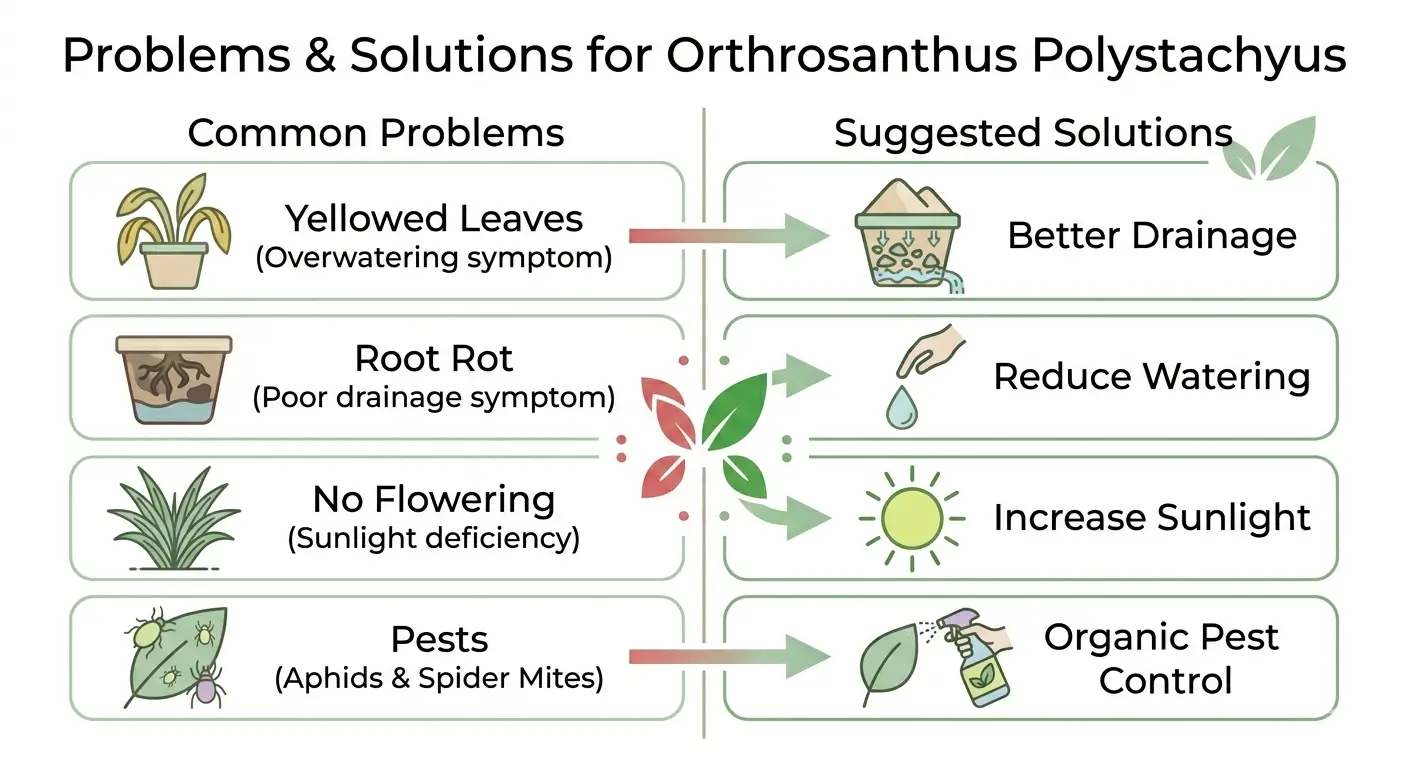
Yellowing Leaves
Caused by overwatering or poor drainage. Improving soil structure and reducing irrigation typically resolves the issue.
Poor or No Flowering
Often due to low light, excessive nitrogen, or immature plants. Increasing sunlight exposure and reducing fertilizer improves flowering.
Root Rot
Occurs in waterlogged soils. Prevention includes improved drainage and raised planting beds.
Pest Issues
Generally pest-resistant, though occasional sap-sucking insects may appear. Organic pest control methods are recommended to protect beneficial insects.
Beginner Mistakes When Growing Orthrosanthus Polystachyus
Common mistakes include:
- Overwatering as if it were a tropical plant
- Planting in heavy clay without drainage correction
- Expecting long-lasting individual flowers
- Over-fertilizing with general-purpose feeds
- Failing to divide clumps over time
- Confusing it with Patersonia species
Avoiding these issues ensures healthy, long-lived plants.
Orthrosanthus Polystachyus vs Purple Flag Plant (Patersonia) — Key Differences
Both Orthrosanthus and Patersonia species are often called purple flag plants, but they differ significantly.
| Feature | Orthrosanthus polystachyus | Patersonia occidentalis |
| Family | Iridaceae | Iridaceae |
| Common Name | Long Purple Flag / Morning Flag | Purple Flag / Wild Iris |
| Flower Color | Blue-purple | Purple |
| Flower Duration | Short-lived | Short-lived |
| Leaf Form | Strap-like | Strap-like |
| Habitat | SW Australia sandy heathlands | Wider Australian heathlands |
| Garden Use | Borders, natives, rockeries | Similar ornamental uses |
Proper identification is important because care requirements may vary slightly depending on species.
Conclusion
Orthrosanthus polystachyus, commonly known as the long purple flag or morning flag, is a resilient and visually appealing Australian native perennial. It is valued for its slender foliage, seasonal blue-purple flowers, and low-maintenance growth habit.
Well-suited to sandy soils, full sun, and water-wise landscapes, it is an excellent choice for native gardens and Mediterranean-style environments. Its ecological benefits and ornamental appeal make it a reliable addition to sustainable planting designs.
Frequently Asked Questions (FAQs)
What is the common name for Orthrosanthus polystachyus?
It is commonly known as long purple flag, morning flag, morning flag plant, native iris, and long purple-flag. These names exist due to regional naming differences and resemblance to iris plants.
What is the difference between Orthrosanthus polystachyus and Orthrosanthus multiflorus morning flag?
O. polystachyus is generally taller with more pronounced flower spikes, while O. multiflorus is shorter and more compact. Both share similar flower colors but differ in growth habit.
How do you grow Orthrosanthus polystachyus from seeds?
Seeds require warm, lightly moist conditions and well-drained soil. Germination can take weeks, and flowering may take 2–3 years. Division is a faster propagation method.
Is Orthrosanthus polystachyus the same as a purple flag plant?
No. Orthrosanthus is the morning flag, while purple flag usually refers to Patersonia species. They are related but distinct genera.
How much water does Orthrosanthus polystachyus need?
It needs minimal water once established and is drought-tolerant. Overwatering should be avoided to prevent root rot.
What are the best companion plants for Orthrosanthus polystachyus?
Good companions include Australian natives like Melaleuca trichophylla and other low-water shrubs that prefer sandy soils.
Why is my Orthrosanthus polystachyus not flowering?
Common causes include insufficient sunlight, excess nitrogen fertilizer, or immature plant age. Improving light exposure usually helps restore flowering.