
Introduction
Purple native flowers Australia refer to a diverse group of indigenous plants that produce purple blooms and thrive in Australian climates. These plants are adapted to local soil, rainfall, and temperature conditions, making them reliable for sustainable gardening. From compact ground covers to tall flowering trees, they serve both ecological and aesthetic purposes. Many species are drought-tolerant and require minimal maintenance, which makes them ideal for modern landscapes. Understanding their types, identification features, and care requirements helps gardeners select plants that suit specific environments while supporting biodiversity and native ecosystems.
Quick Summary
- Purple native flowers Australia include shrubs, trees, climbers, and ground covers adapted to local climates
- Many species are drought-tolerant and support pollinators like bees and birds
- They range in size from low-growing plants to tall flowering trees
- Ideal for landscaping, biodiversity, and low-maintenance gardening
What Are Purple Native Flowers in Australia?
What defines native flowers and purple flowering species
Native flowers are plant species that naturally occur in Australia without human introduction. Purple flowering species are those that produce blooms in shades ranging from violet to deep purple due to natural pigmentation.
Explain what are native flowers and what are australian native flowers
Australian native flowers are plants indigenous to Australia, evolved to survive local environmental conditions such as poor soils, heat, and drought. These include species from families like Myrtaceae and Proteaceae.
Clarify how native purple flowers australia differ from non-native ornamental plants
Native purple flowers Australia are adapted to local ecosystems, requiring less water and maintenance compared to non-native ornamental plants. Non-native species often need additional care and may not support local wildlife.
Introduce terms like native purple plants and native australian purple flowers
Terms such as native purple plants and native Australian purple flowers refer to indigenous species with purple blooms used in gardens and natural landscapes.
Why purple flowering plants are significant in Australian ecosystems
Purple flowering plants play a key role in maintaining ecological balance.
- Attract pollinators such as bees and nectar-feeding birds
- Support biodiversity by providing habitat and food
- Adapt naturally to Australian soils and climate conditions
Native plants are species that occur naturally in a region without human introduction, playing a vital role in ecosystems (see wikipedia).
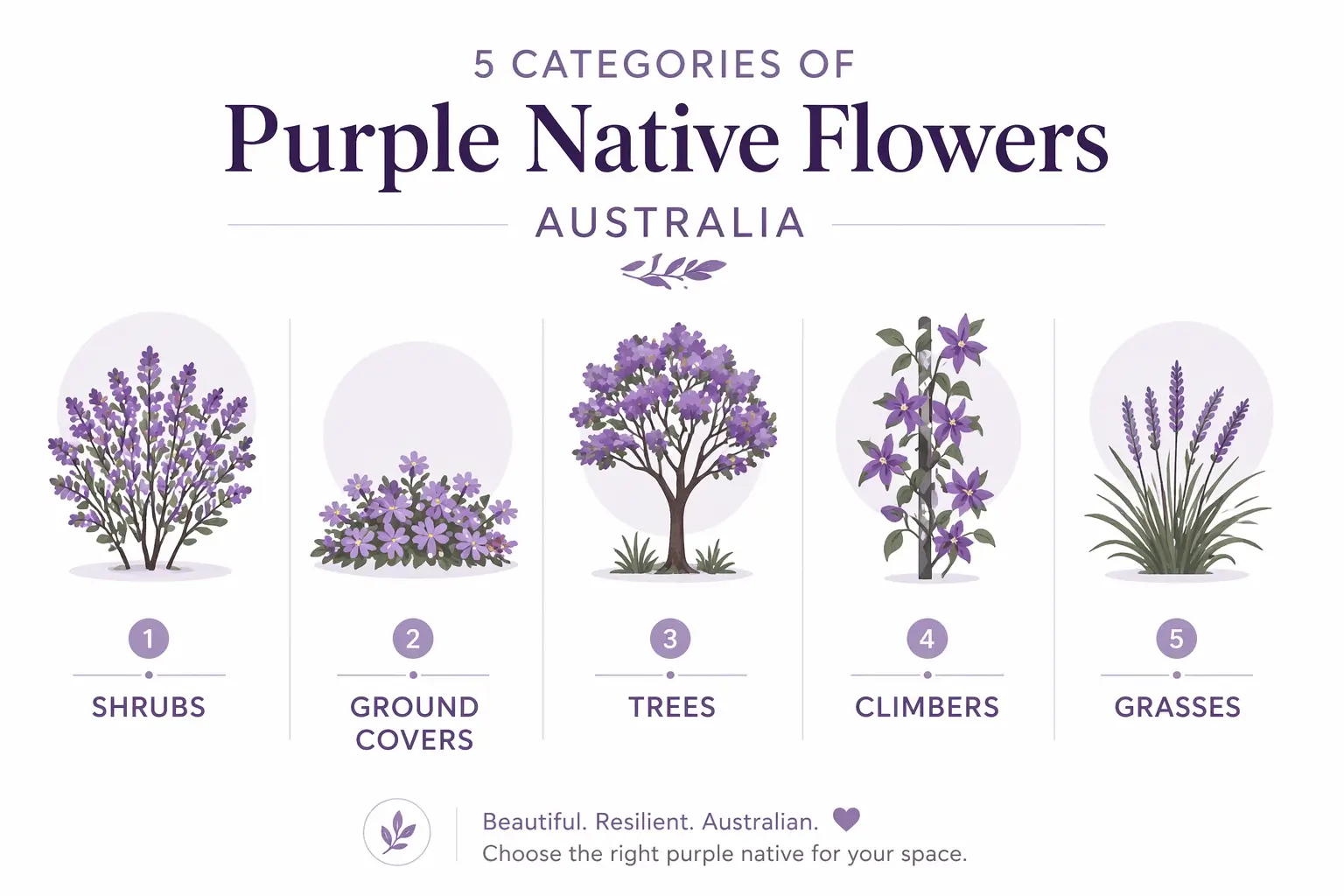
Types of Purple Native Flowers Australia (By Plant Category)
Shrubs with purple flowers Australia
Shrubs are one of the most common forms of purple flowering plants.
- Australian native shrub with purple flowers includes both compact and medium-sized varieties
- Small shrubs with purple flowers Australia are ideal for borders
- Larger purple flowering bush Australia types are suitable for hedges
Ground covers and creeping plants
These plants spread horizontally and are useful for covering soil.
- Australian native ground cover purple flower species help prevent erosion
- Australian native creeper with purple flowers works well in landscaping
- Suitable for low-maintenance gardens
For example, plants like Australian violets are commonly used as low-growing options—see Australian Violet Ground Cover: Care, Growth & Uses Guide for detailed planting insights.
Trees and tall purple native flowers
Trees provide height and visual structure.
- Australian native tree with purple flowers can act as feature plants
- Australian purple flower tree species offer shade and seasonal blooms
- Tall purple native flowers Australia are ideal for large spaces
If you are selecting taller species, explore options in Fast Growing Australian Native Trees: 8+ Smart Picks to compare suitable flowering trees for larger landscapes.
Climbers and vines
Climbers grow vertically and are useful for covering structures.
- Australian native climber purple flowers are used on trellises and fences
- Australian native vine purple flowers enhance vertical gardens
Grasses and unique forms
Some native grasses produce purple-toned flowers or seed heads.
- Australian native grass with purple flowers adds texture
- Useful for naturalistic and low-water gardens
Popular Purple Native Flowers Australia (Examples & Identification)
Common species and how to identify them
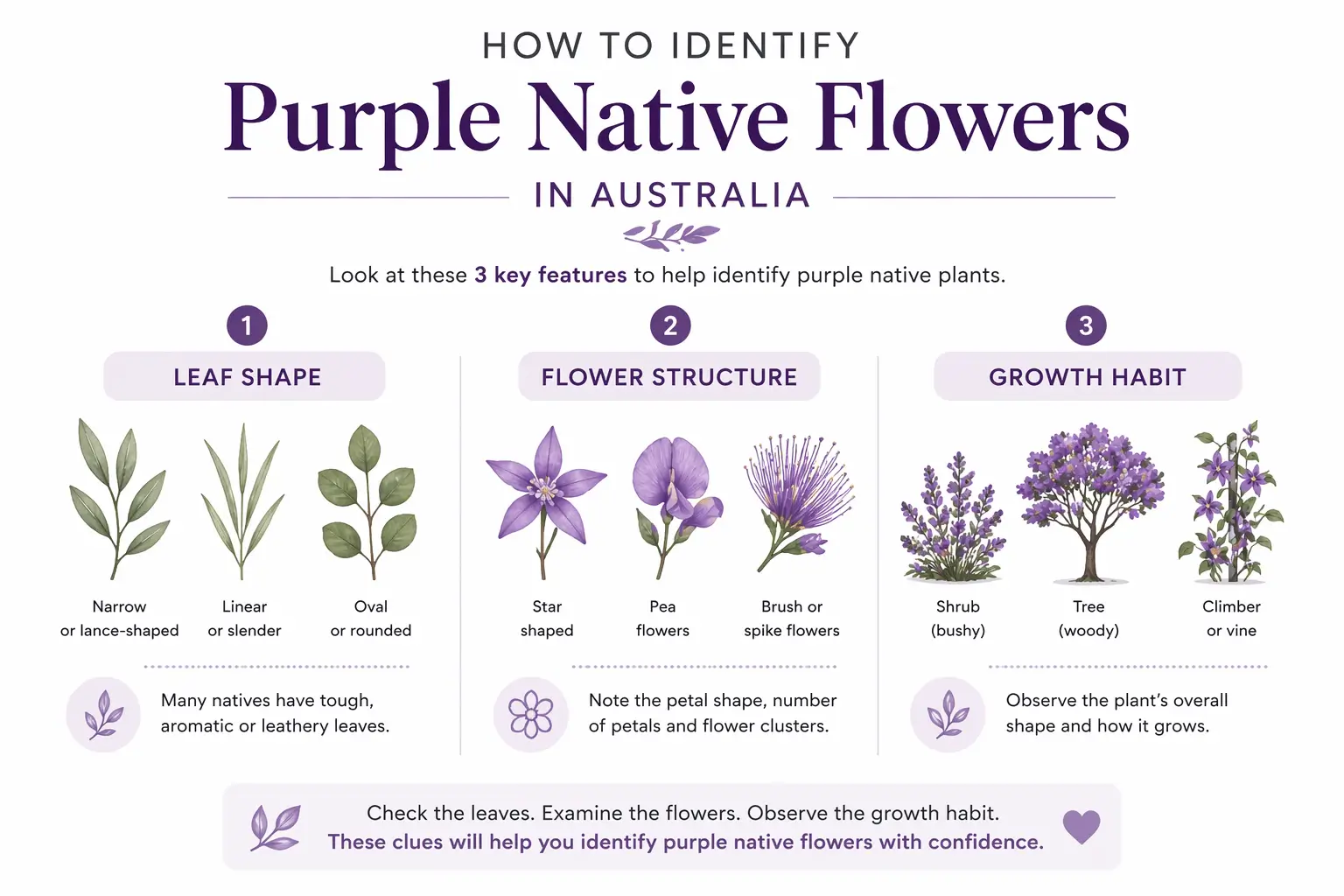
Purple native flowers Australia identification involves observing:
- Leaf shape and arrangement
- Flower structure (clusters, spikes, or single blooms)
- Growth habit (shrub, tree, or ground cover)
Table: Examples of purple native plants in Australia
| Plant Type | Height | Flower Type | Best Use |
| Shrub | Medium | Clustered purple flowers | Hedges |
| Tree | Tall | Large blooms | Shade & feature |
| Ground cover | Low | Small purple flowers Australia | Soil coverage |
Purple Native Flowers for Landscaping in Australia
How to use purple native flowers in garden design
Purple native flowers Australia for landscaping are used to create visual contrast and structure.
- Combine with Australian native silver foliage purple flowers for contrast
- Pair with purple and white flowers Australia for balanced color schemes
For a complete layout approach, refer to Easy Low Maintenance Australian Native Garden Guide 7+ Steps to design a sustainable and visually balanced garden.
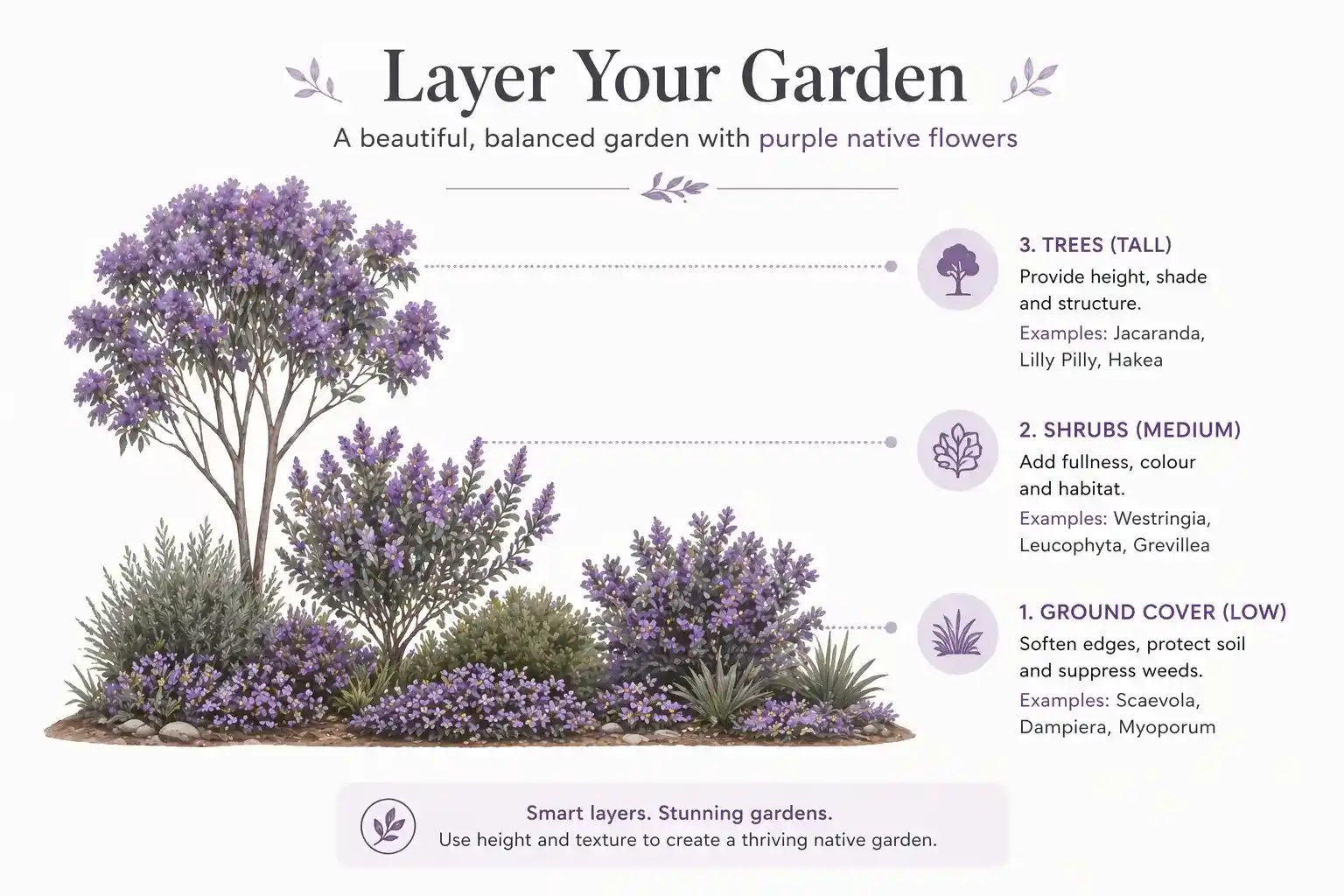
Layering with height variations (ground cover to trees)
Use a layered approach:
- Ground covers at the base
- Shrubs in the middle
- Trees as background or focal points
Best purple native flowers Australia for different settings
Different environments require different species:
- Coastal gardens: salt-tolerant varieties
- Dry regions: drought-resistant shrubs
- Shaded areas: low-light tolerant plants
- Urban gardens: compact and low-maintenance species
Growing Conditions and Care Guide
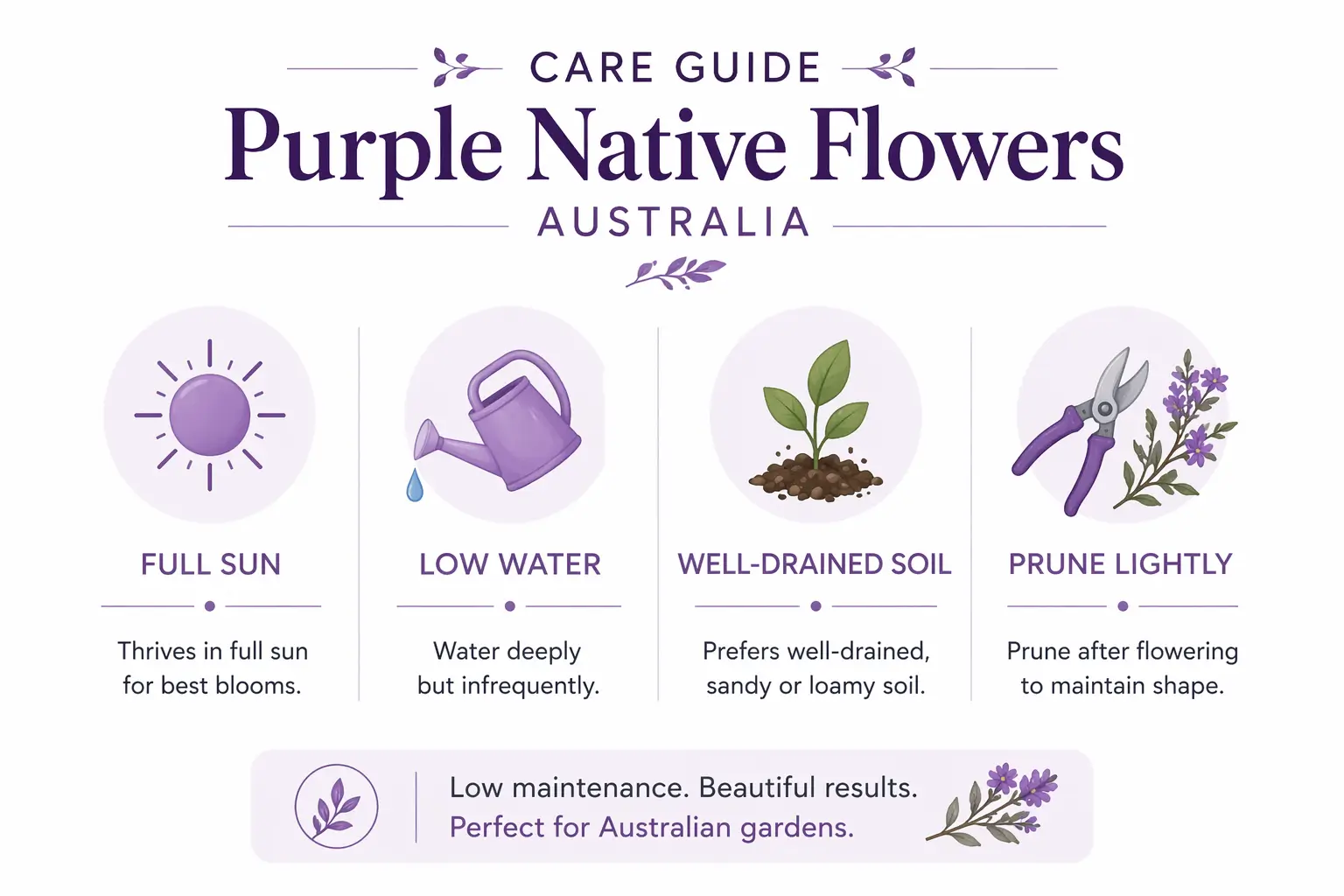
Environmental requirements
Purple native plants generally prefer:
- Well-drained soils
- Full sun to partial shade
- Adaptation to local climates
Basic care requirements
Care practices include:
- Watering: minimal once established
- Fertilization: low-phosphorus fertilizers
- Pruning: maintain shape and encourage growth
Growth rate and plant size
Growth varies by species:
- Shrubs: moderate to fast-growing
- Trees: slower but long-lived
Consider mature height and spread when planting.
This guide is part of a broader resource on plant care and selection—explore Plants: Benefits and Guides (Complete Care, Types & Growing Tips) for more in-depth information.
Comparison: Purple vs Blue Native Flowers in Australia
Key differences between purple and blue flowers
Purple and blue native flowers differ mainly in color tone and visual impact, though they may belong to similar plant groups.
Table: Purple vs Blue Native Flowers
| Feature | Purple Native Flowers | Blue Native Flowers |
| Common types | Shrubs, trees | Ground covers, shrubs |
| Visual impact | Bold contrast | Cooler tones |
| Landscaping use | Feature plants | Accent plants |
Common Problems and Solutions (Plant Troubleshooting)
Why purple native plants may struggle
Common issues include:
- Poor soil drainage
- Overwatering or underwatering
- Lack of sunlight
How to fix and prevent issues
Solutions include:
- Adjust watering schedules
- Improve soil drainage
- Select plants suited to the environment
Beginner Mistakes When Growing Purple Native Flowers
- Choosing species unsuitable for local climate
- Over-fertilizing native plants
- Ignoring proper spacing
- Mixing incompatible plant types
Environmental Benefits of Native Purple Flowers
- Support pollinators such as bees and birds
- Reduce water usage due to drought tolerance
- Improve soil stability and health
- Adapt naturally to local ecosystems
How to Choose the Best Purple Native Flowers Australia
Factors to consider
- Garden size and layout
- Climate and soil type
- Desired plant height
Best use-case scenarios
- Ground cover for erosion control
- Feature plants for visual impact
- Functional planting for biodiversity
Conclusion
Purple native flowers Australia provide a versatile and sustainable option for gardens and landscapes. With a wide range of plant types including shrubs, trees, climbers, and ground covers, they suit various environments and design needs. These plants enhance visual appeal while supporting biodiversity and requiring minimal maintenance. Selecting species based on climate, size, and purpose ensures long-term success and healthier ecosystems.
FAQs
1. What are the most common purple native flowers in Australia?
Common purple native flowers include shrubs, ground covers, and flowering trees that thrive in Australian climates and attract pollinators.
2. Are purple native plants easy to grow in Australia?
Yes, most purple native plants are low-maintenance and adapted to local conditions, making them suitable for beginners.
3. How do I identify purple native flowers in Australia?
Identification involves examining leaf shape, flower structure, and growth habit, along with regional characteristics.
4. Can purple native flowers be used for landscaping?
Yes, they are widely used in landscaping for their drought tolerance, aesthetic value, and ecological benefits.
5. What is the difference between purple and blue native flowers?
The difference is mainly in color tone and visual use, though both serve similar landscaping roles.
6. Do purple native flowers attract wildlife?
Yes, many species attract bees, birds, and other pollinators, supporting local ecosystems.



One Response