
Introduction
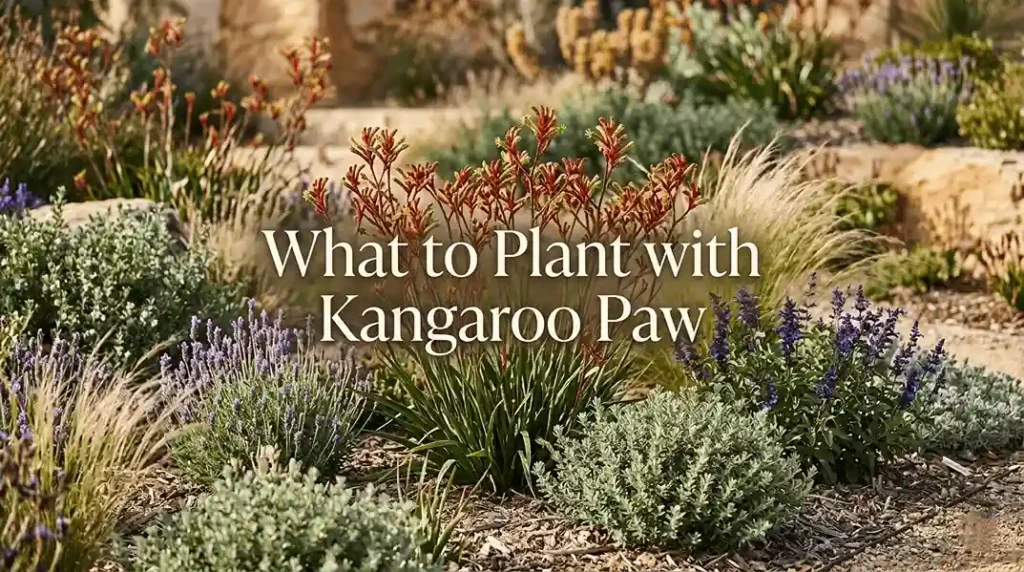
Kangaroo paw (Anigozanthos spp.) is a distinctive Australian native known for its vivid tubular flowers and velvet-textured stems. Understanding what to plant with kangaroo paw is essential for creating balanced, drought-tolerant garden designs that enhance its striking form. Companion planting improves visual contrast, supports similar soil and water needs, and strengthens overall garden performance in beds and containers. This guide explains the best companion plants, landscaping approaches, seasonal planting strategies, and care essentials to help kangaroo paw thrive in a variety of climates and settings.
Quick Summary
- Kangaroo paw grows best with drought-tolerant, low-phosphorus companion plants like grasses, lavender, and salvias.
- Its upright flower spikes pair well with mounding or fine-textured plants for visual contrast.
- Dwarf varieties are ideal for pots, while tall types suit landscape focal points.
- It is a perennial in warm climates (USDA zones 9–11) but may act as an annual in colder regions.
- Companion selection should always match full sun and free-draining soil conditions.
What Is Kangaroo Paw and Why Does Companion Planting Matter?
Definition and Botanical Background
Kangaroo paw is a Western Australian native perennial in the genus Anigozanthos, valued for its tubular, fuzzy flowers and strong architectural form. It naturally grows in sandy, low-nutrient soils and thrives in full sun environments.
Why Companion Planting Is Important
Companion planting with kangaroo paw matters because it ensures:
- Soil compatibility (low phosphorus, well-drained conditions)
- Balanced garden aesthetics and texture contrast
- Reduced competition for nutrients
- Improved pollinator attraction
Perennial Behavior and Climate Adaptation
Kangaroo paw is a perennial in USDA zones 9–11 and warm Australian climates. In colder regions, it may die back or behave like a seasonal plant, regrowing from rhizomes in favorable conditions. This answers the common question: is a kangaroo paw plant a perennial—yes, in warm climates.
Flower Color Variations and Design Impact
Kangaroo paw plant colors include red, yellow, orange, pink, purple, and black-tipped hybrids. Color selection influences companion pairing—for example, yellow varieties pair well with purple foliage plants, while red types contrast strongly with silvery greens.
Kangaroo paw belongs to the genus Anigozanthos, a group of flowering plants native to Western Australia known for their unique tubular blooms and wildlife value (see more on Wikipedia).
Best Companion Plants for Kangaroo Paw
Overview of Ideal Plant Pairings
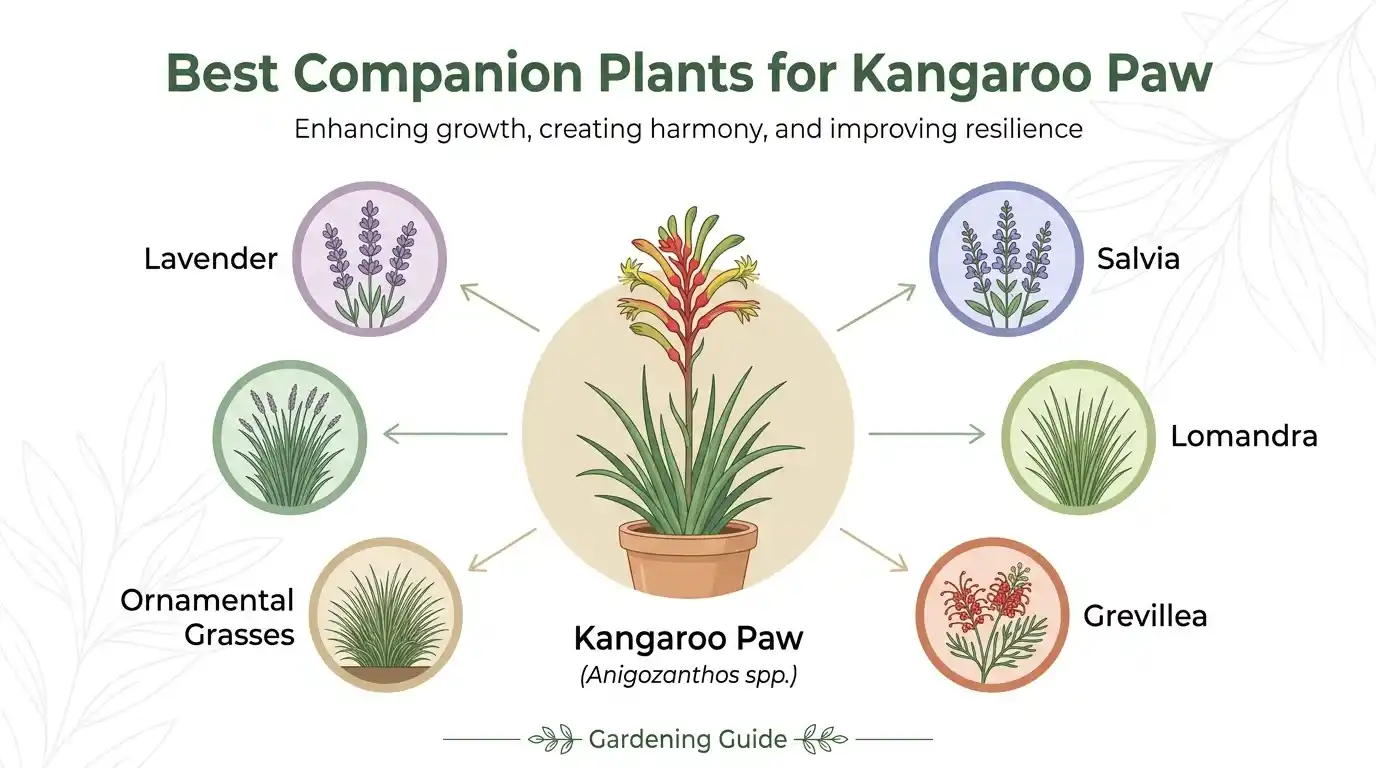
When deciding what plant goes well with kangaroo paw, prioritize plants that share its love for full sun, sandy soil, and low nutrients. Suitable companions include grasses, Mediterranean herbs, and Australian natives.
Key Principles of Pairing
- Match water and soil requirements
- Use contrasting growth forms
- Avoid high-phosphorus fertilizer feeders
- Prioritize drought tolerance
Australian Natives That Pair Well with Kangaroo Paw
Suitable Native Plant Choices
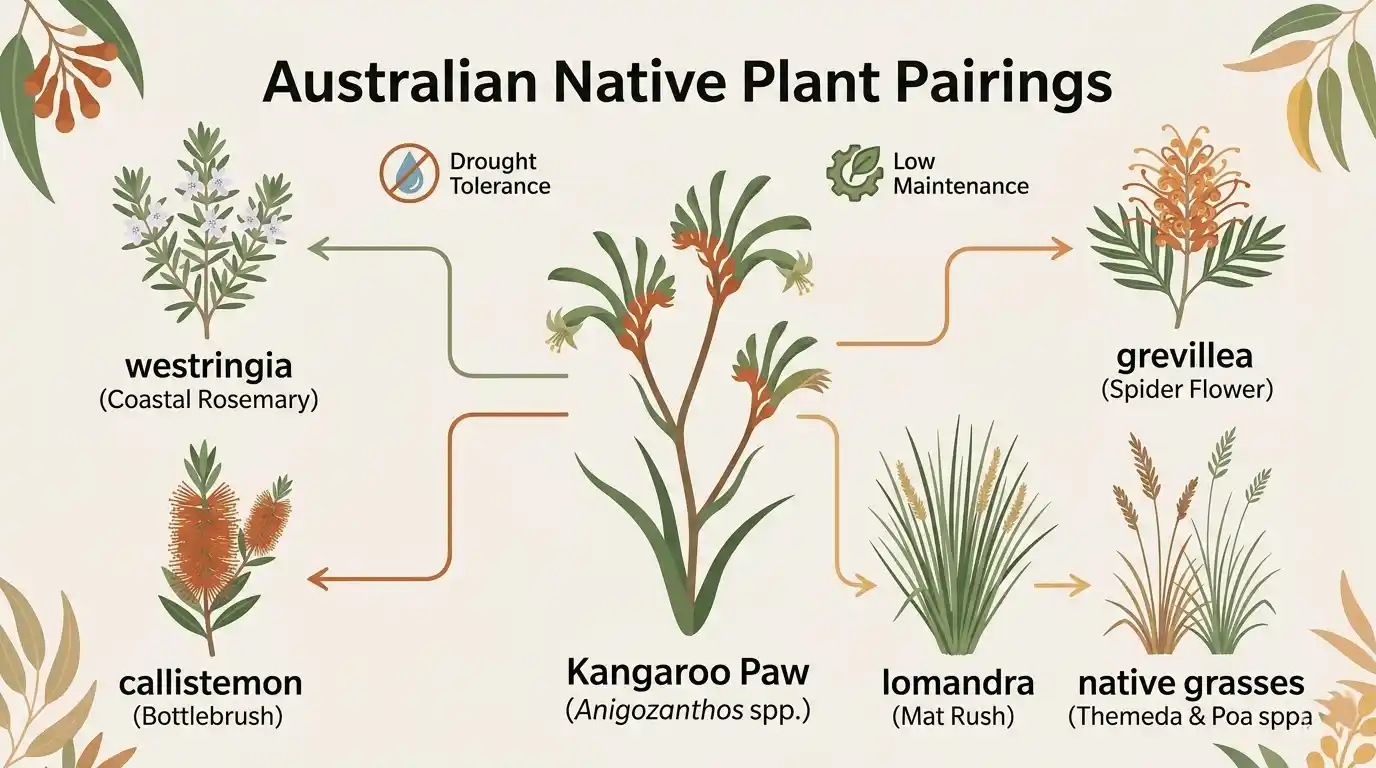
Australian natives create the most natural planting combinations:
- Westringia (coastal rosemary)
- Grevillea
- Lomandra
- Callistemon (bottlebrush)
- Native grasses
Why These Combinations Work
These plants share kangaroo paw’s drought tolerance and soil preferences, making them ideal for low-maintenance native gardens.
What to Plant with Kangaroo Paw Australia Context
In Australian landscapes, combining kangaroo paw with native shrubs and grasses creates resilient, wildlife-friendly gardens that require minimal irrigation.
Australian gardens often rely on structured native planting schemes, and you can explore more ideas in this guide to Australian Native Garden Plants: Types, Care Tips & Design Ideas for deeper landscape inspiration.
Mediterranean and Drought-Tolerant Companions
Ideal Global Climate Pairings
Mediterranean-style plants work well, especially in California and similar climates:
- Lavender
- Salvia
- Agapanthus
- Festuca (blue fescue)
- Pennisetum (ornamental grass)
- Society garlic
California-Specific Planting Guide
For what to plant with kangaroo paw in California, suitable companions include:
- Rockrose
- Sage
- Yarrow
- Blue fescue
- Mediterranean herbs
These plants thrive in similar dry-summer, wet-winter conditions.
Low-Growing and Textural Contrast Plants
Best Ground-Level Companions
Low-growing plants enhance kangaroo paw’s vertical form:
- Dwarf agapanthus
- Seaside daisy (Erigeron)
- Blue chalk sticks
- Society garlic
Design Purpose of Contrast
These plants emphasize kangaroo paw’s upright flower spikes by providing soft, spreading forms at ground level.
What to Plant with Kangaroo Paw in Pots
Container-Friendly Companion Plants
For what to plant with kangaroo paw in pots, use compact species:
- Lomandra ‘Little Con’
- Low-growing salvias
- Fine ornamental grasses
- Trailing ground covers
Container Soil Requirements
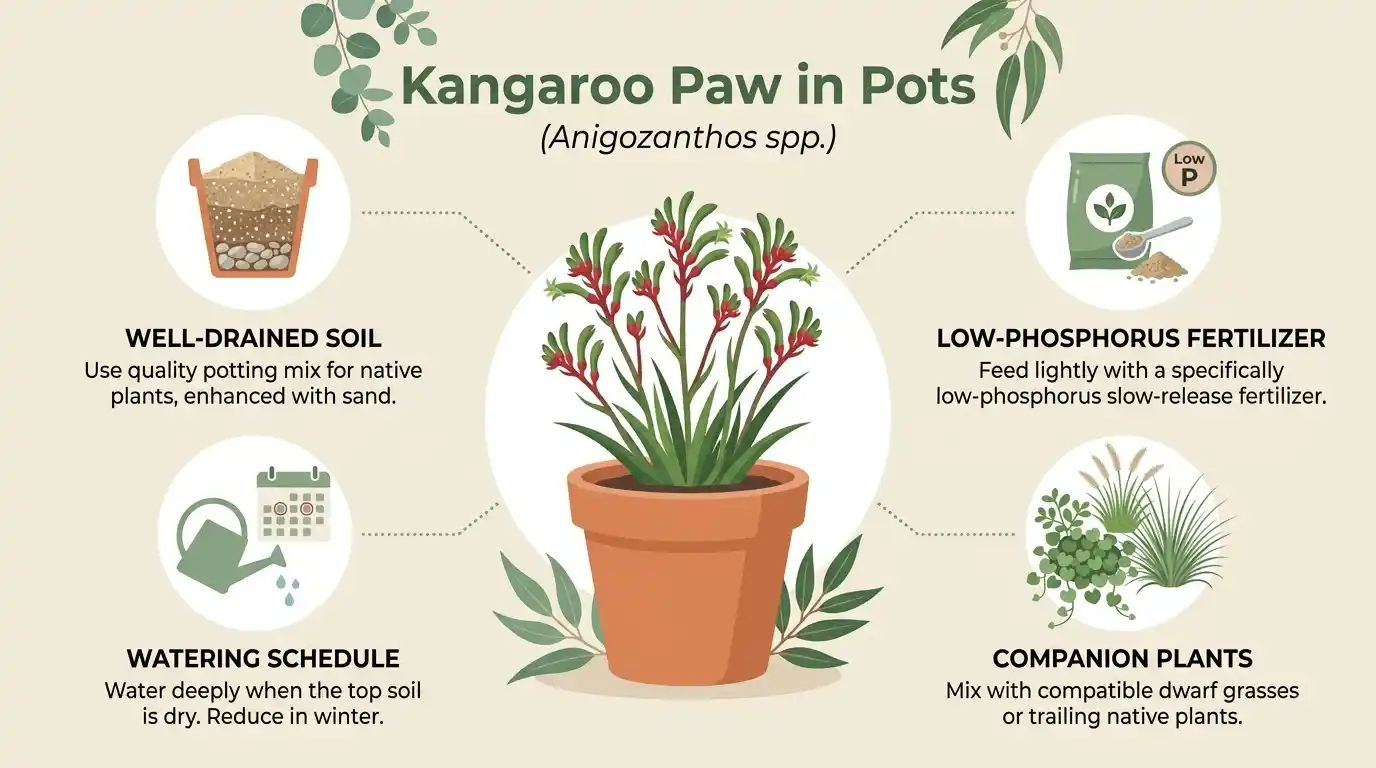
Use a free-draining, low-phosphorus native potting mix. Standard fertilizers should be avoided due to sensitivity.
Suitable Kangaroo Paw Varieties for Pots
Dwarf and miniature varieties are best for containers due to their compact growth habit.
What to Plant with Kangaroo Paw in Winter
Seasonal Growth Behavior
Kangaroo paw slows growth or becomes dormant in cooler months depending on climate. In colder regions, it may die back to rhizomes.
Winter Companion Plant Options
Best companions for winter structure:
- Evergreen grasses
- Westringia
- Structural shrubs
Maintaining Year-Round Interest
Evergreen companions ensure visual structure when kangaroo paw is not actively flowering.
Landscaping with Kangaroo Paws: Garden Design Ideas
Garden Layout Strategies
- Use tall varieties as focal points
- Plant in drifts for natural movement
- Combine contrasting foliage textures
Front Yard Landscaping Uses
Kangaroo paw garden ideas for front yards include low-water designs using grasses and native shrubs for curb appeal and sustainability.
Color Layering Techniques
Mix warm and cool flower tones to create depth and seasonal visual interest.
Kangaroo paw also fits beautifully into informal planting styles such as those shown in Australian Cottage Garden: 10+ Smart Design Ideas, where texture and seasonal color layering are key design principles.
Kangaroo Paw Varieties: Choosing the Right Type
Variety Comparison Table
| Variety Type | Example | Height | Best Use | Companion Style |
| Tall varieties | Anigozanthos flavidus | 1–2m | Back borders | Tall grasses, shrubs |
| Dwarf kangaroo paw | ‘Bush Pearl’, ‘Little Joey’ | 30–60cm | Pots, edging | Low grasses |
| Miniature kangaroo paw | ‘Amber Velvet’ | 25–40cm | Containers | Trailing plants |
| Blue kangaroo paw | A. viridis hybrids | 40–60cm | Contrast beds | Silver foliage |
| Purple kangaroo paw | Hybrids | 40–70cm | Mixed gardens | White/silver plants |
Dwarf and Miniature Types
Dwarf kangaroo paw varieties like Bush Pearl are widely available and ideal for small gardens and pots, including nursery stock such as Bunnings selections.
Color-Based Pairing Logic
Blue varieties suit warm-toned companions, while purple types pair best with soft whites and silvers.
Growing Kangaroo Paw in Pots
Container Selection
Use terracotta or well-drained containers at least 30 cm wide for dwarf varieties.
Soil and Potting Mix
Always use native, low-phosphorus potting mix with added sand or perlite for drainage.
Watering Requirements
Kangaroo paw is drought-tolerant but needs regular watering in pots. Allow soil to dry slightly between watering cycles.
Fertilizing Rules
Use only native-specific fertilizers. High phosphorus levels can damage roots and reduce flowering.
Kangaroo Paw Plant Care Guide
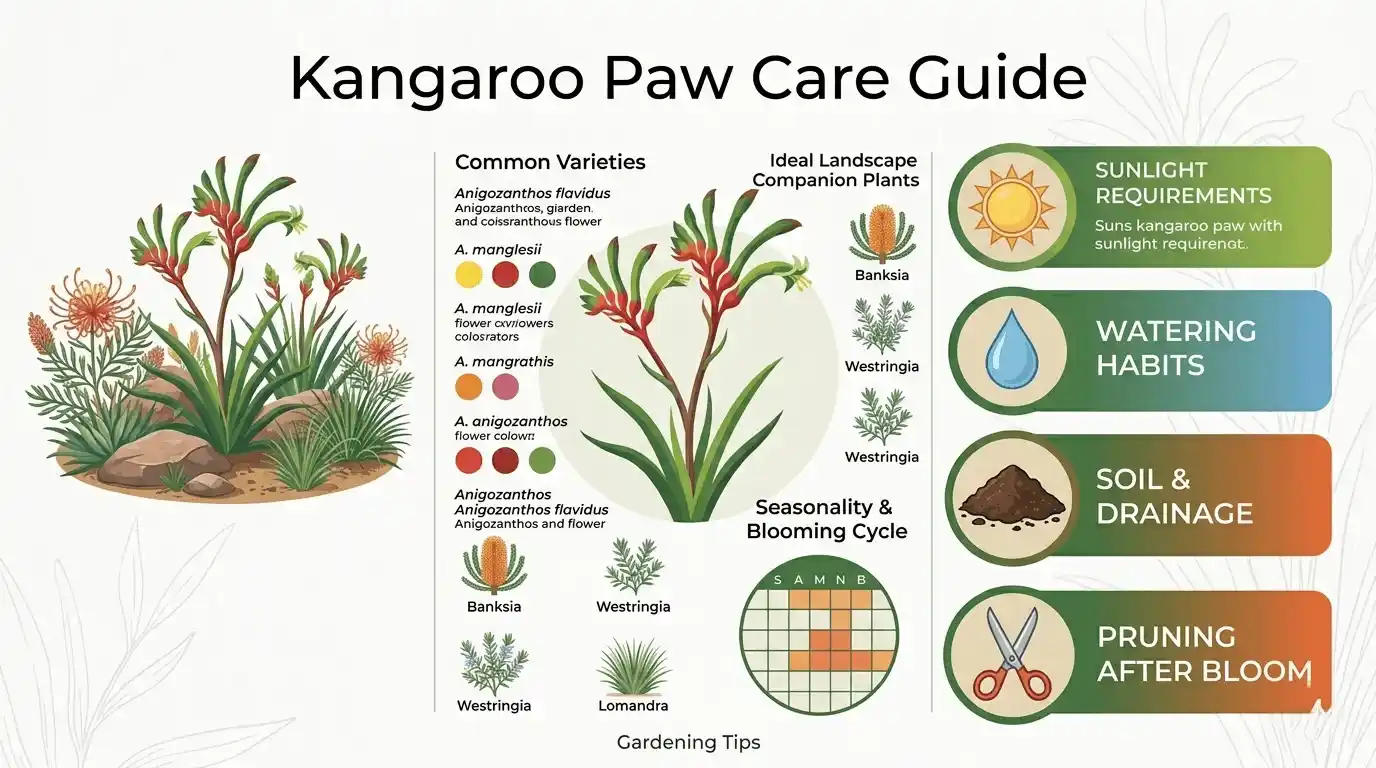
Light Requirements
Requires full sun with at least 6 hours of direct light daily for optimal flowering.
Soil Preferences
Prefers sandy, free-draining soil. Heavy clay must be amended with coarse material.
Watering Guidelines
Water deeply but infrequently once established. Avoid waterlogging.
Pruning and Maintenance
Cut flower stalks back after blooming to encourage new growth. Divide clumps every 3–4 years. For more detailed seasonal maintenance strategies, see our complete guide on Kangaroo Paw Care: 6+ Essential Tips for Healthy Blooms, which explains advanced pruning and flowering techniques.
Climate Tolerance
Best suited for warm climates; not frost-tolerant and may require protection in cold regions.
When Does Kangaroo Paw Flower?
Flowering Season
Kangaroo paw typically flowers from spring to summer, depending on climate conditions.
Causes of Poor Flowering
- Low sunlight
- Excess phosphorus
- Overcrowding
- Lack of pruning
When to Plant Kangaroo Paw
Best Planting Time
Spring is ideal for establishment before summer heat. Autumn planting is suitable in frost-free climates.
Year-Round Planting
Container-grown plants can be planted year-round in mild climates.
Common Problems with Kangaroo Paw and How to Fix Them
Ink Disease
Caused by Colletotrichum fungus, leading to black leaf spots. Improve airflow and remove infected leaves.
Yellowing Leaves
Often caused by overwatering or fertilizer imbalance. Adjust drainage and feeding practices.
Failure to Flower
Usually due to low sunlight or nutrient stress. Increase sun exposure and correct fertilization.
Pests
Generally pest-resistant but may experience occasional caterpillar or scale infestations.
Kangaroo Paw vs. Similar Plants
Key Differences
- Agapanthus: less drought-tolerant
- Bird of Paradise: higher water needs
- Lomandra: grass-like, non-flowering contrast plant
Unique Advantages of Kangaroo Paw
- Extreme drought tolerance
- High wildlife value
- Low nutrient requirements
- Long seasonal flowering
Kangaroo Paw Plant Benefits
Ecological Benefits
Attracts honeyeaters and supports pollinator biodiversity.
Landscape Benefits
Provides strong visual structure with minimal maintenance needs.
Commercial Use
Popular in cut flower arrangements due to unique texture and color.
Conclusion
Kangaroo paw is a highly adaptable Australian native plant that performs best when paired with compatible, low-maintenance companions. Understanding what to plant with kangaroo paw ensures healthier growth, stronger flowering, and visually balanced garden designs. Whether used in containers, native landscapes, or drought-tolerant front yards, selecting the right companion plants such as grasses, lavenders, salvias, and westringia transforms kangaroo paw into a striking focal point in any garden setting.
Frequently Asked Questions
1. What grows well next to kangaroo paw?
Ornamental grasses, lavender, salvia, westringia, lomandra, grevillea, and agapanthus grow well alongside kangaroo paw due to similar soil and sunlight needs.
2. Can kangaroo paw be grown in pots with other plants?
Yes, dwarf varieties can be grown in pots with compact grasses, salvias, and trailing plants in well-drained native potting mix.
3. What is the best companion plant for kangaroo paw in California?
Lavender, sage, rockrose, yarrow, and ornamental grasses are ideal companions in Mediterranean California climates.
4. Why is my kangaroo paw not flowering?
Common causes include insufficient sunlight, phosphorus overload, overcrowding, and lack of pruning.
5. Is kangaroo paw a perennial or annual?
It is a perennial in warm climates (zones 9–11) but may behave as an annual in colder regions.



One Response