Introduction
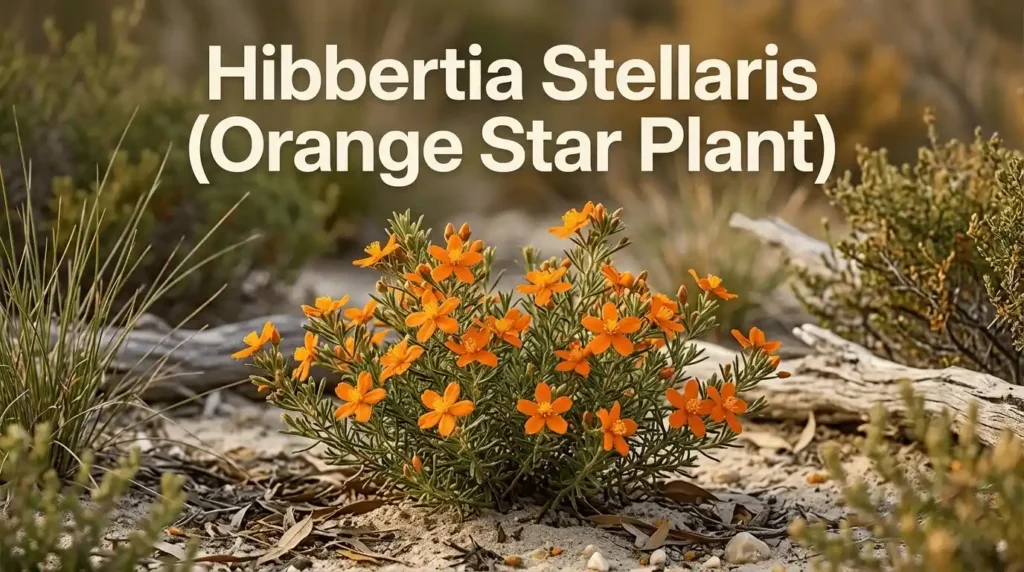
Hibbertia stellaris, commonly known as the orange star plant, is a compact native Australian flowering shrub valued for its vivid star-shaped orange flowers. The hibbertia stellaris species naturally grows in Western Australia, especially in sandy coastal heathlands and scrub regions. It is widely grown in ornamental gardens due to its drought tolerance, low maintenance needs, and striking floral display. Gardeners prefer it for rockeries, borders, and containers where its bright orange blooms add seasonal color and texture to native landscapes.
Quick Summary
- Hibbertia stellaris, known as the orange star, is a compact native Australian shrub with bright orange star-shaped flowers
- It thrives in well-drained sandy soils and full sun to partial shade conditions
- Highly drought-tolerant once established and ideal for low-maintenance gardens
- Suitable for rockeries, borders, and containers in temperate to warm climates
What Is Hibbertia Stellaris?
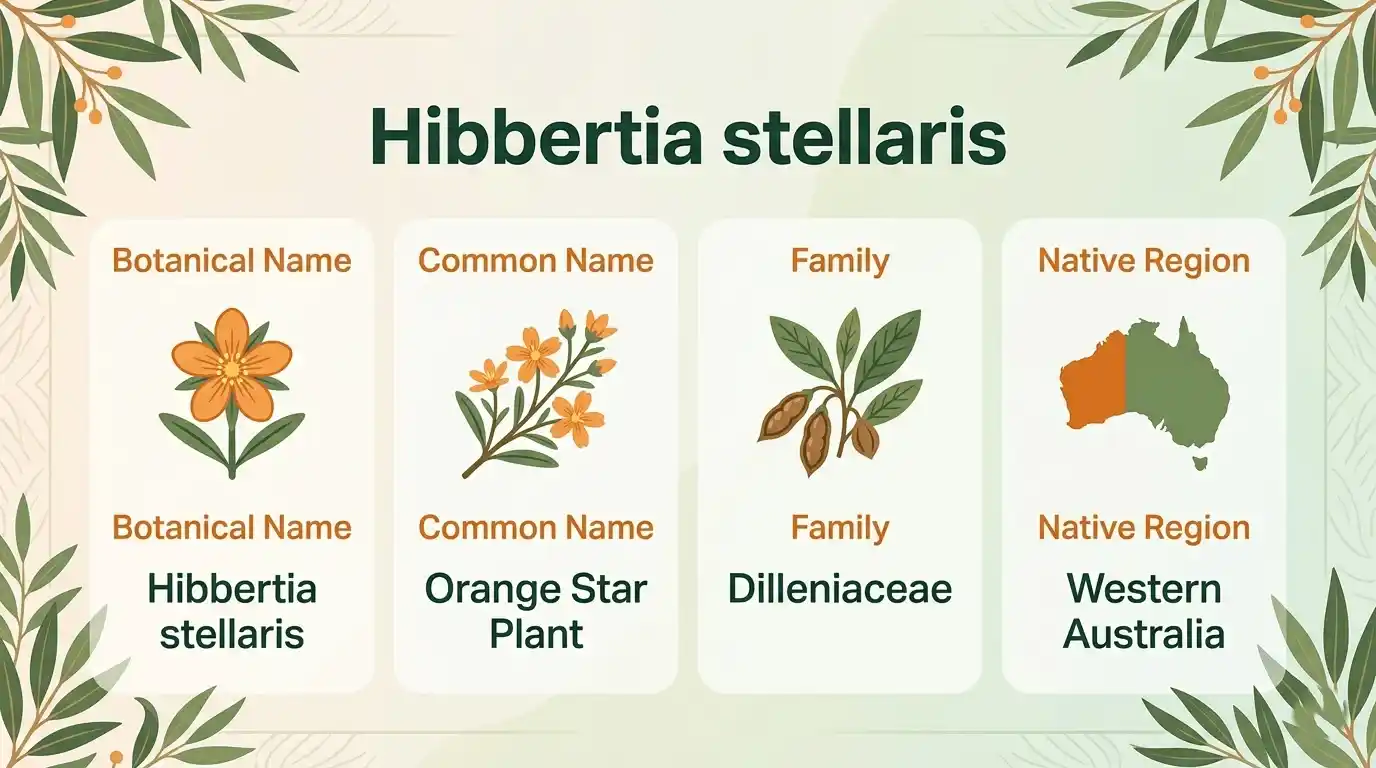
Hibbertia stellaris is a flowering shrub in the Dilleniaceae family native to Western Australia. The name “stellaris” means star-like, referring to its distinct floral shape, while “orange star” describes its bright flower color. It belongs to the Hibbertia genus, a large group of Australian native plants adapted to dry, nutrient-poor environments.
Hibbertia stellaris belongs to the plant family Dilleniaceae, which includes a wide range of flowering shrubs and climbers found primarily in tropical and subtropical regions.
Botanical Profile and Common Names
The hibbertia stellaris orange star plant produces small, bright orange five-petalled flowers that stand out against its compact green foliage. It is also commonly called orange stars due to its clustered star-shaped blooms. The plant has a dense, mounding structure with narrow leaves that help reduce water loss in dry environments.
Natural Habitat and Distribution
Hibbertia stellaris is native to southwestern Western Australia, particularly sandplain heathlands and coastal scrub zones. It naturally grows in sandy, well-drained soils with low fertility. These harsh conditions have made the species highly drought-adapted, allowing it to survive extended dry periods with minimal water availability.
Hibbertia Stellaris Plant Size and Growth Habit
Hibbertia stellaris is a low-growing shrub that typically reaches 20–50 cm in height and can spread up to 1 meter under favorable conditions. It forms a dense, mounded shape, making it suitable for ground-level planting and edging in garden designs.
How Big Does Hibbertia Stellaris Get?
In garden environments, hibbertia stellaris size depends on soil quality, climate, and pruning practices. In pots, it generally stays compact, while in open ground it spreads more widely. Poor soil may limit growth, while well-drained, nutrient-balanced soil supports fuller development.
Growth Rate of Hibbertia Stellaris
Hibbertia stellaris is a moderate-growing shrub with most active development occurring during spring and autumn. Warm temperatures and good drainage significantly improve growth performance. Excess moisture or heavy soil can slow down its growth and reduce overall plant vigor.
Hibbertia Stellaris Care Guide
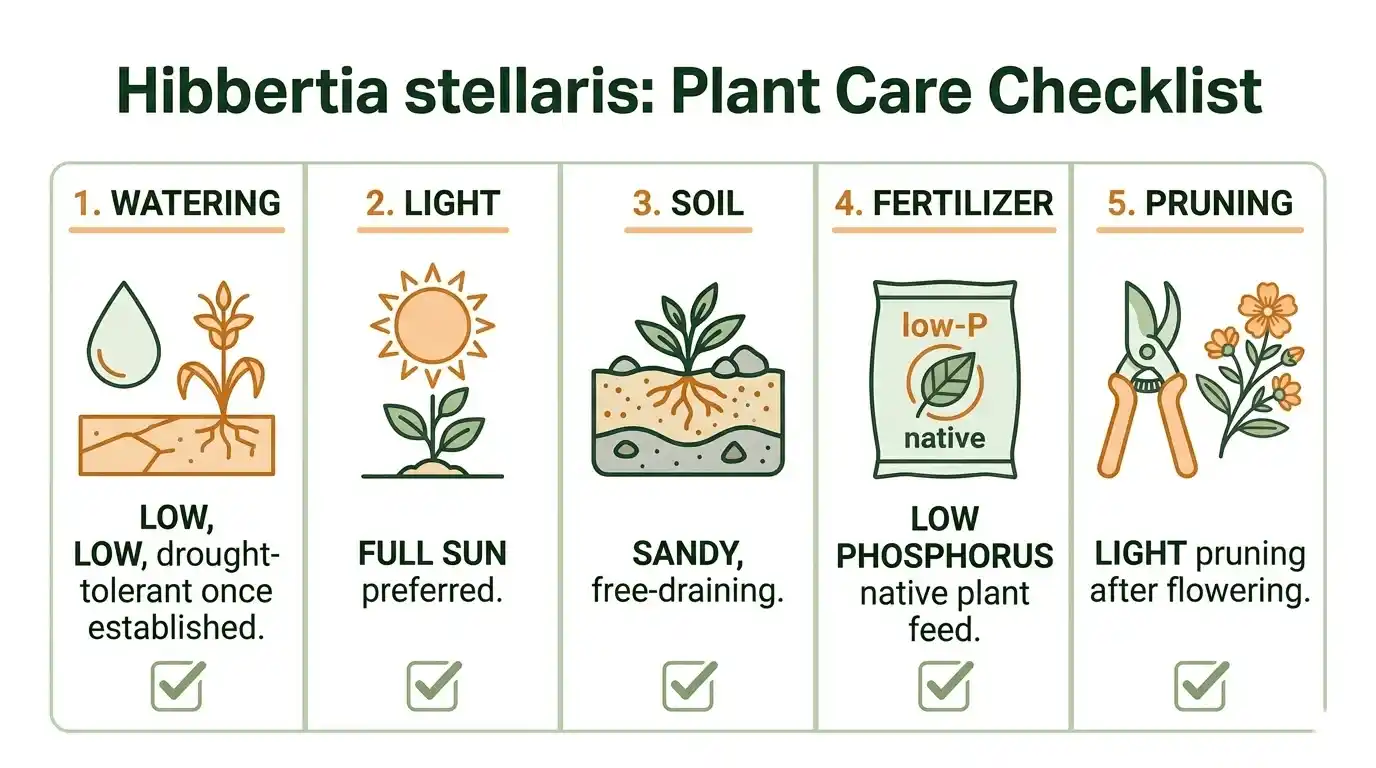
Hibbertia stellaris care is relatively simple, making it suitable for beginner gardeners. It prefers conditions similar to its natural habitat—dry, sunny, and well-drained environments.
Watering Requirements
- Water regularly during establishment phase
- Once established, only occasional deep watering is needed
- Avoid overwatering, especially in clay soils
Sunlight and Positioning
- Prefers full sun for best flowering
- Tolerates partial shade but may produce fewer blooms
- Needs at least 4–6 hours of direct sunlight daily
Soil Preferences and Drainage
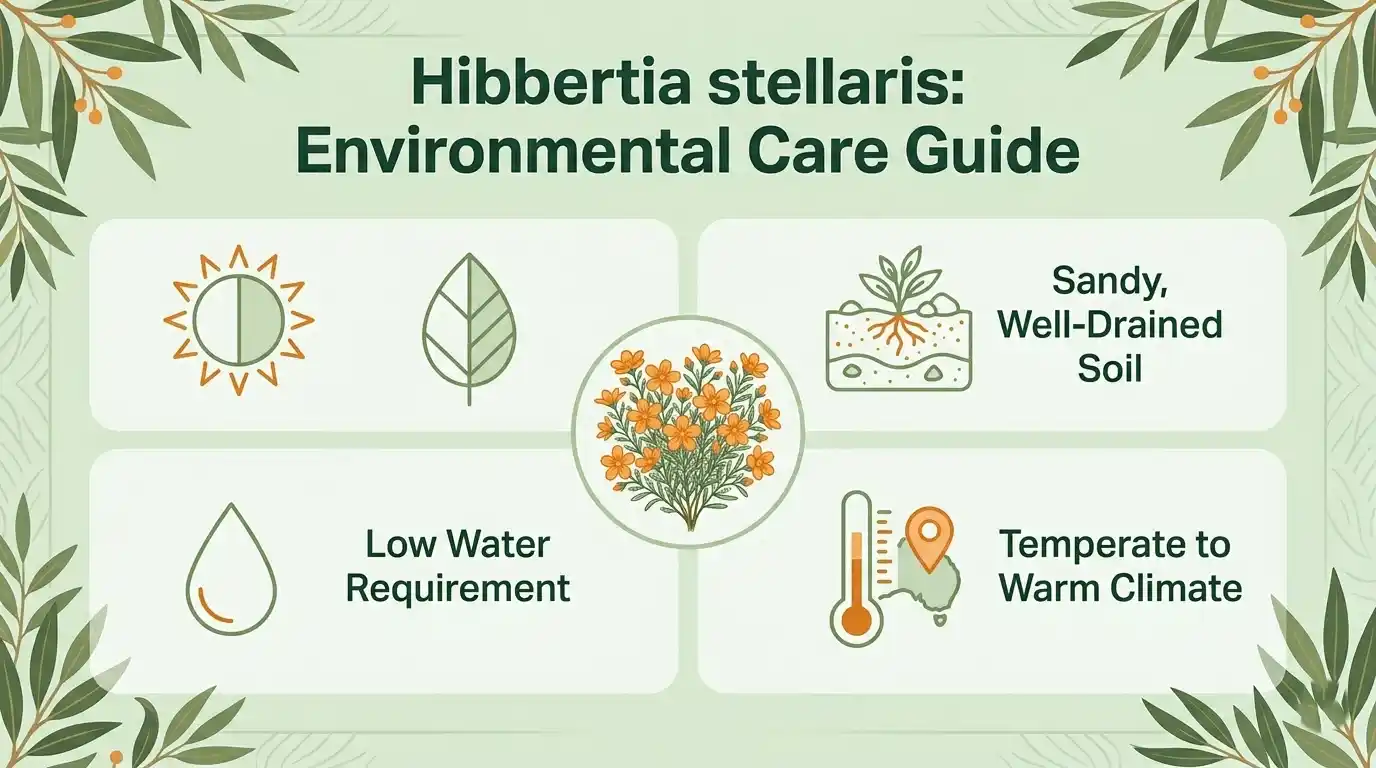
- Requires sandy, gravelly, or well-drained soil
- Poor performance in heavy clay without amendment
- Low-nutrient soil closely matches its natural habitat
Fertilizing Hibbertia Stellaris
- Use low-phosphorus native plant fertilizer
- Apply lightly in spring
- Over-fertilizing can reduce flowering and damage roots
Pruning and Maintenance
- Light pruning after flowering maintains compact shape
- Without pruning, plants may become leggy over time
- Annual trimming improves density and flowering performance
Climate Tolerance and Hardiness
- Best suited to temperate and Mediterranean climates
- Moderate frost sensitivity; protection needed in colder regions
- Performs best in dry to semi-arid conditions
Hibbertia Stellaris Seeds — Propagation and Growing from Seed
Hibbertia stellaris seeds require specific preparation for successful germination, often involving smoke treatment or scarification to mimic natural bushfire conditions.
Key Propagation Steps
- Collect fresh seeds after flowering season
- Apply smoke-water or scarification treatment
- Sow in a free-draining native seed mix
- Keep soil moist but not waterlogged
- Germination typically occurs within several weeks under warm conditions
Hibbertia Stellaris in the Garden — Landscape Uses
Hibbertia stellaris is widely used in native Australian garden designs due to its compact form and bright flowers. It enhances rockeries, borders, and container displays while supporting pollinators such as bees.
Hibbertia stellaris is a strong example of species featured in Australian Native Garden Plants: Types, Care Tips & Design Ideas, especially in low-maintenance landscaping designs where drought-tolerant native shrubs are prioritized for rockeries, borders, and natural-style garden beds.
Is Hibbertia Stellaris a Good Ground Cover?
It can function as a light ground cover in suitable conditions, especially when planted closely. However, it is more effective as a low shrub rather than a dense spreading ground cover compared to species like Hibbertia scandens.
Hibbertia stellaris is often combined in planting schemes inspired by Australian Cottage Garden: 10+ Smart Design Ideas, where it contrasts beautifully with flowering species from guides like Shrubs With Blue Flowers Australia Guide, creating visually balanced native landscapes.
Hibbertia Stellaris vs. Other Hibbertia Species
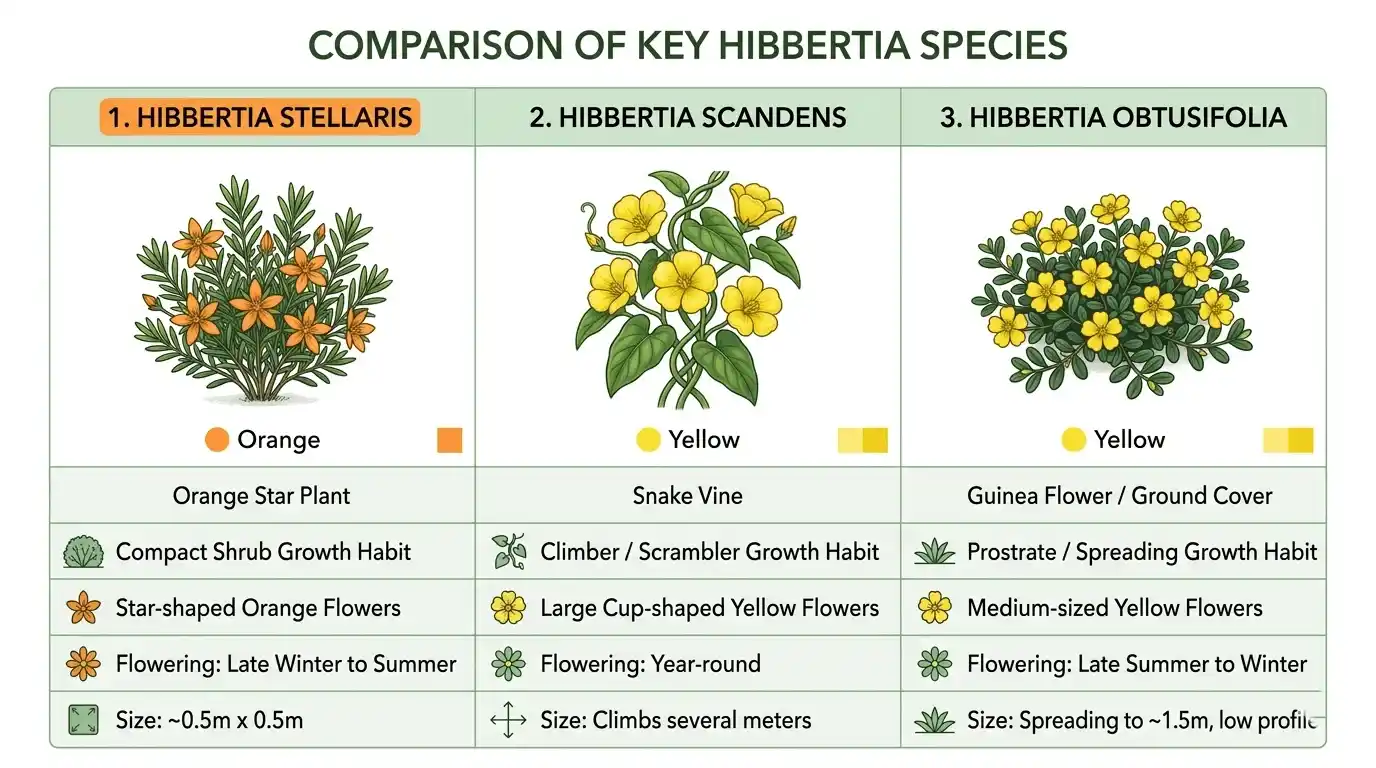
| Species | Common Name | Growth Habit | Flower Color | Best Use |
| Hibbertia stellaris | Orange Star | Compact shrub | Orange | Rockeries, borders |
| Hibbertia scandens | Snake Vine | Climber/spreader | Yellow | Ground cover, climber |
| Hibbertia obtusifolia | Guinea Flower | Prostrate | Yellow | Ground cover |
| Hibbertia vestita | Hairy Guinea Flower | Low shrub | Yellow | Native gardens |
| Hibbertia volubilis | Twining Guinea Flower | Climber | Yellow | Trellises |
| Hibbertia ‘Golden Sunburst’ | Golden Sunburst | Compact shrub | Yellow | Garden beds |
| Hibbertia ‘Little Rocker’ | Little Rocker | Dwarf shrub | Yellow | Small gardens |
Hibbertia Stellaris vs. Hibbertia Scandens
Hibbertia stellaris is a compact orange-flowering shrub, while Hibbertia scandens is a vigorous yellow-flowering climber often used as ground cover. Scandens grows faster and spreads widely, whereas stellaris remains compact and structured, making it better for rockeries and borders.
Hibbertia Stellaris vs. Hibbertia Obtusifolia
Hibbertia stellaris produces upright orange flowers and prefers slightly more structured garden settings. Hibbertia obtusifolia is a prostrate yellow-flowering species better suited for ground cover and low spreading landscapes in similar dry conditions.
Common Problems with Hibbertia Stellaris and How to Fix Them
Yellowing Leaves
Yellowing leaves are usually caused by overwatering or poor drainage. Improve soil structure, reduce watering frequency, and check for nutrient imbalance to restore plant health.
Poor or No Flowering
Lack of flowering is often due to insufficient sunlight or excessive phosphorus fertilizer. Move the plant to a sunnier position and switch to native plant fertilizer.
Overwatering and Root Rot
Symptoms include wilting, soft stems, and dark roots. Improve drainage immediately and reduce watering to prevent further damage.
Pest and Disease Issues
Common pests include aphids and scale insects. These can be controlled using horticultural oil or gentle organic insecticidal treatments. Fungal issues are usually linked to high humidity or poor airflow.
Pests affecting hibbertia stellaris can also be identified using guides like Aphids on Houseplants: 8+ Proven Ways to Remove Them and broader identification support from the Common Garden Bugs Guide: 12+ Essential ID Tips, especially when monitoring early infestations in native garden settings.
Beginner Mistakes When Growing Hibbertia Stellaris
Common mistakes include planting in heavy clay soil, overwatering, using high-phosphorus fertilizers, skipping pruning, and placing the plant in full shade. Correcting these issues improves flowering, structure, and overall plant health.
Seasonal Care for Hibbertia Stellaris
| Season | Care Actions |
| Spring | Monitor flowering and apply light native fertilizer |
| Summer | Reduce watering and mulch soil to retain moisture |
| Autumn | Prune after flowering and check soil health |
| Winter | Protect from frost and reduce feeding |
Where to Buy Hibbertia Stellaris
Hibbertia stellaris can be sourced from native plant nurseries, specialist Australian plant retailers, and some general garden centers. Availability may vary seasonally, and both seeds and established plants are commonly sold depending on region and demand.
Conclusion
Hibbertia stellaris, known as the orange star plant, is a resilient and visually striking native Australian shrub suited to low-maintenance gardens. Its compact growth, drought tolerance, and bright orange flowers make it ideal for rockeries, borders, and containers. With proper soil, sunlight, and minimal care, it thrives in a variety of warm and temperate landscapes. This makes hibbertia stellaris a valuable addition to native garden designs focused on sustainability and beauty.
FAQs
What is the common name of Hibbertia stellaris?
It is commonly known as the orange star or orange star plant due to its star-shaped orange flowers.
How do you grow Hibbertia stellaris from seed?
Seeds require smoke treatment or scarification, followed by sowing in well-drained soil and warm germination conditions.
What soil does Hibbertia stellaris need?
It prefers sandy, well-drained, low-nutrient soil similar to its natural Western Australian habitat.
How often should Hibbertia stellaris be watered?
Water regularly when young, but mature plants require only occasional deep watering due to drought tolerance.
What is the difference between Hibbertia stellaris and Hibbertia scandens?
Stellaris is a compact shrub with orange flowers, while scandens is a vigorous yellow-flowering climber.
Is Hibbertia stellaris frost-tolerant?
It has low frost tolerance and may need protection in colder climates.