
Introduction
Anigozanthos Pink Beauty is a hybrid kangaroo paw cultivar valued for its vivid pink flowers, upright stems, and adaptability to warm, dry gardens. Native kangaroo paw plants belong to the genus Anigozanthos, a group of flowering perennials endemic to Western Australia. Pink Beauty is widely grown as an ornamental plant because of its long flowering season, low-maintenance growth habit, and strong landscape appeal. Often called pink kangaroo paw, this cultivar performs well in garden beds, native landscapes, and containers. Its distinctive velvety flowers, drought tolerance, and suitability for Mediterranean-style climates make it one of the most recognizable hybrid anigozanthos cultivars for modern gardens.
Quick Summary
- Anigozanthos Pink Beauty is a hybrid kangaroo paw cultivar with vivid pink tubular flowers and upright flowering stems.
- The plant is native to the Australian kangaroo paw group and thrives in warm, dry climates with full sun exposure.
- Mature plants typically reach 60–100 cm tall and prefer sandy, well-drained soil conditions.
- Pink kangaroo paw is commonly used in low-maintenance gardens, containers, and native landscape designs.
- Proper drainage, low-phosphorus fertilizer, and seasonal pruning are essential for healthy growth and flowering.
What Is Anigozanthos Pink Beauty?
Anigozanthos Pink Beauty is a hybrid kangaroo paw cultivar grown for its bright pink, velvety flowers and ornamental garden performance. It belongs to the genus Anigozanthos, a group of flowering plants within the family Haemodoraceae. The genus Anigozanthos is native to southwest Western Australia and includes all kangaroo paw species, known for their unique tubular flowers and bird-attracting properties.
The kangaroo paw scientific name, Anigozanthos, comes from Greek words meaning “uneven” and “flower.” The unusual tubular flowers are covered in soft hairs and resemble the paw of a kangaroo, which explains the common name kangaroo paw flower.
Pink Beauty is a cultivated hybrid rather than a naturally occurring species. It differs from species-level plants such as Anigozanthos flavidus, which is one of the major parent species used in hybrid breeding programs.
All kangaroo paw species are native to Australia. Specifically, they are endemic to southwest Western Australia, where they naturally grow in sandy soils and dry Mediterranean-style climates.
Key characteristics of Anigozanthos Pink Beauty include:
- Bright pink tubular flowers
- Tall arching flower stems
- Strap-like green foliage
- Long flowering season
- Drought tolerance once established
The cultivar is widely used in ornamental landscaping because it combines strong flower production with improved disease resistance compared to older kangaroo paw species.
The Anigozanthos Genus: An Overview
The genus Anigozanthos contains several kangaroo paw species ranging from compact dwarf forms to large landscape plants. These Australian native perennials are known for their unusual flower shape and strong bird-attracting qualities.
Common species and forms include:
- Anigozanthos flavidus — tall, vigorous species often used in hybrid breeding
- Anigozanthos bicolor — recognized for its two-toned flowers
- Giant kangaroo paw varieties — reaching over 150 cm in height
- Dwarf kangaroo paw varieties — compact forms suited to containers and borders
Modern anigozanthos hybrids were developed to improve:
- Disease resistance
- Flower color diversity
- Compact growth habits
- Extended flowering periods
Many hybrid cultivars, including Pink Beauty, trace part of their genetics back to Anigozanthos flavidus pink forms because of their robust growth and reliable flowering performance.
Anigozanthos Pink Beauty Size and Height
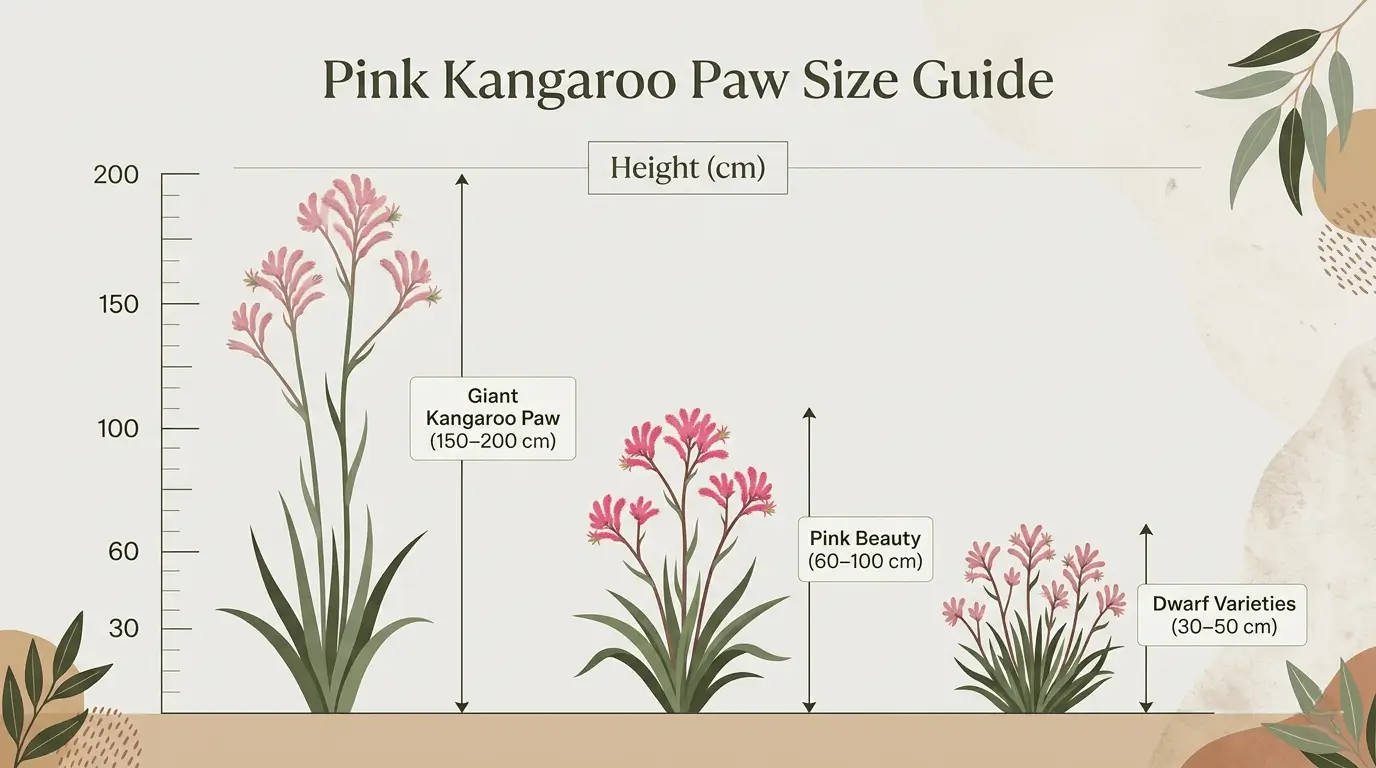
Anigozanthos Pink Beauty typically reaches a mature height of 60–100 cm, depending on growing conditions and climate. The flowering stems are significantly taller than the foliage base. The strap-like leaves usually remain around 30–50 cm tall, while flowering stems extend much higher during blooming periods. Outdoor garden-grown plants generally become larger and fuller than container-grown specimens because their roots have more space to spread.
Size Comparison Table
| Cultivar | Mature Height | Growth Type |
| Anigozanthos Pink Beauty | 60–100 cm | Medium |
| Dwarf kangaroo paw varieties | 30–50 cm | Compact |
| Giant kangaroo paw | 150–200 cm | Tall |
| Anigozanthos flavidus pink | 80–120 cm | Tall |
| Bush Pearl / Anigozanthos bush pearl | 40–60 cm | Dwarf-medium |
Factors affecting anigozanthos pink beauty size include:
- Sunlight exposure
- Soil drainage
- Pot size
- Fertilizer use
- Watering frequency
Plants grown in full sun with free-draining soil typically produce the strongest flowering stems and healthiest growth.
Growth Rate of Pink Kangaroo Paw
Anigozanthos Pink Beauty has a moderate to fast growth rate under suitable conditions. Warm temperatures, good drainage, and balanced watering encourage rapid seasonal growth.
The plant grows most actively during:
- Spring
- Mild autumn conditions
Growth may slow during periods of intense summer heat, particularly in very dry climates. In some regions, the plant enters a semi-dormant phase during extreme heat.
Environmental conditions strongly influence growth speed:
- Consistent sunlight improves flowering stem production
- Excessive moisture slows growth and increases disease risk
- Nutrient-poor sandy soils suit the plant better than rich clay soils
In climates similar to Perth, Western Australia, pink kangaroo paw plants often flower repeatedly over extended periods.
Anigozanthos Pink Beauty Care Guide
Sunlight Requirements
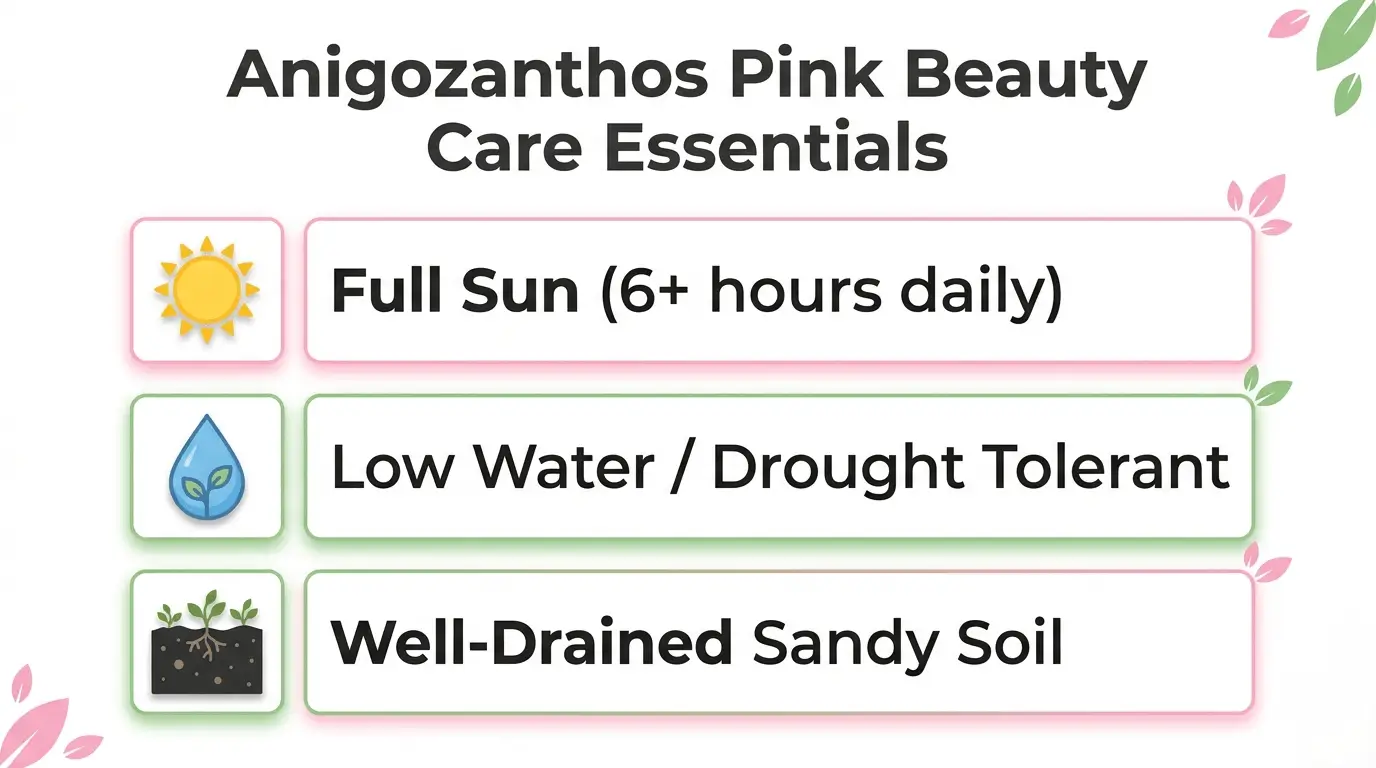
Anigozanthos Pink Beauty grows best in full sun with at least six hours of direct sunlight daily. Partial shade is tolerated, but flowering becomes less vigorous.
For maximum flower production:
- Choose open, sunny planting areas
- Avoid dense shade from trees or structures
- Ensure good airflow around the foliage
Watering Needs
Pink kangaroo paw is drought tolerant once established. Deep but infrequent watering encourages stronger root development.
Important watering guidelines include:
- Allow soil to dry slightly between watering
- Reduce watering during summer dormancy
- Avoid constantly wet soil conditions
Overwatering is one of the most common causes of decline and root rot.
Soil Preferences
Well-drained sandy soil is essential for healthy kangaroo paw growth.
Ideal soil conditions include:
- Sandy or gritty texture
- Slightly acidic to neutral pH (5.5–7.0)
- Excellent drainage
Heavy clay soils should be improved with coarse sand or grit before planting.
Fertilization
Use low-phosphorus fertilizer formulated for Australian native plants.
High-phosphorus fertilizers may damage Anigozanthos roots because many native Australian plants are sensitive to phosphorus toxicity.
Best fertilization practices:
- Feed lightly in early spring
- Use native-specific fertilizer blends
- Avoid excessive nitrogen applications
Pruning and Deadheading
Regular pruning improves flowering and plant vigor.
Recommended maintenance includes:
- Remove spent flower stems at the base
- Cut away dead foliage seasonally
- Divide crowded clumps every 3–4 years
Prompt deadheading often encourages repeat blooming.
Climate Tolerance
Anigozanthos Pink Beauty performs best in USDA zones 9–11.
The plant prefers:
- Warm temperatures
- Dry summers
- Mediterranean-style climates
It is not highly frost tolerant. Gardeners in colder climates often move container-grown plants undercover during winter.
For more detailed growing guidance, see our complete guide on Kangaroo Paw Care and flowering tips, including troubleshooting yellowing leaves in Yellow Kangaroo Paw varieties and choosing the best companion planting combinations in your garden.
Anigozanthos Pink Beauty in Pots and Containers
Anigozanthos Pink Beauty grows well in pots when provided with proper drainage and sunlight.
Container growing benefits include:
- Easier drainage control
- Mobility during frost periods
- Better suitability for patios and balconies
Important container recommendations:
- Use pots with multiple drainage holes
- Select a sandy native-plant potting mix
- Choose containers large enough for root expansion
Container-grown kangaroo paw plants are usually smaller than garden-grown specimens. Smaller root space naturally limits mature size and flowering stem height.
For best results:
- Position containers in full sun
- Elevate pots slightly to improve drainage
- Avoid water collecting in saucers beneath containers
Tall Kangaroo Paw Varieties vs Dwarf Varieties
Tall kangaroo paw varieties differ from dwarf forms in height, landscape use, and maintenance requirements.
Pink Kangaroo Paw (Pink Beauty — Medium)
- Medium-sized hybrid cultivar
- Reaches 60–100 cm tall
- Suitable for gardens and larger pots
- Long flowering season
Dwarf Kangaroo Paw
- Compact growth habit
- Typically 30–50 cm tall
- Better suited to containers and borders
- Easier to manage in small gardens
Giant Kangaroo Paw
- Large landscape specimen plants
- Can exceed 150 cm tall
- Strong vertical architectural effect
- Best for spacious garden designs
Bush Pearl / Anigozanthos Bush Pearl
- Compact dwarf-medium hybrid
- Dense flowering habit
- Suitable for edging and borders
- Smaller than Pink Beauty overall
Anigozanthos hybrids were specifically developed to improve:
- Disease resistance
- Color variation
- Flower longevity
- Size control for modern landscapes
Other Kangaroo Paw Colors and Cultivars
Kangaroo paw hybrids are available in a wide range of flower colors beyond pink.
Color Comparison Table
| Color Type | Common Cultivar Names | Notes |
| Pink | Pink Beauty, Pink Kangaroo | Medium height, popular ornamental |
| Red | Red Cross, Landscape Ruby | Bold, classic |
| Purple/Violet | Masquerade types | Hybrid; violet-toned |
| Blue (near) | Blue forms | Rare; blue-green tones |
| Bicolor | Anigozanthos bicolor | Two-tone tube; native species |
Blue kangaroo paw and purple kangaroo paw cultivars are generally violet-toned hybrids rather than true-blue flowers.
Anigozanthos bicolor is notable for its naturally occurring two-toned flowers and distinct tubular appearance.
What to Plant with Kangaroo Paw
Kangaroo paw grows best alongside plants that prefer similar dry, sunny conditions and low-phosphorus soils.
Good companion plants include:
- Lomandra and Poa native grasses
- Westringia (coastal rosemary)
- Grevillea species
- Scaevola (fan flower)
- Ornamental salvias
- Succulents and agaves
These plants share similar requirements:
- Full sun exposure
- Well-drained soil
- Moderate to low watering needs
Plants to avoid near kangaroo paw include heavy-feeding species such as roses that require richer soil and high-phosphorus fertilizers.
Common Problems with Anigozanthos Pink Beauty
Ink Disease (Leaf Blackening)
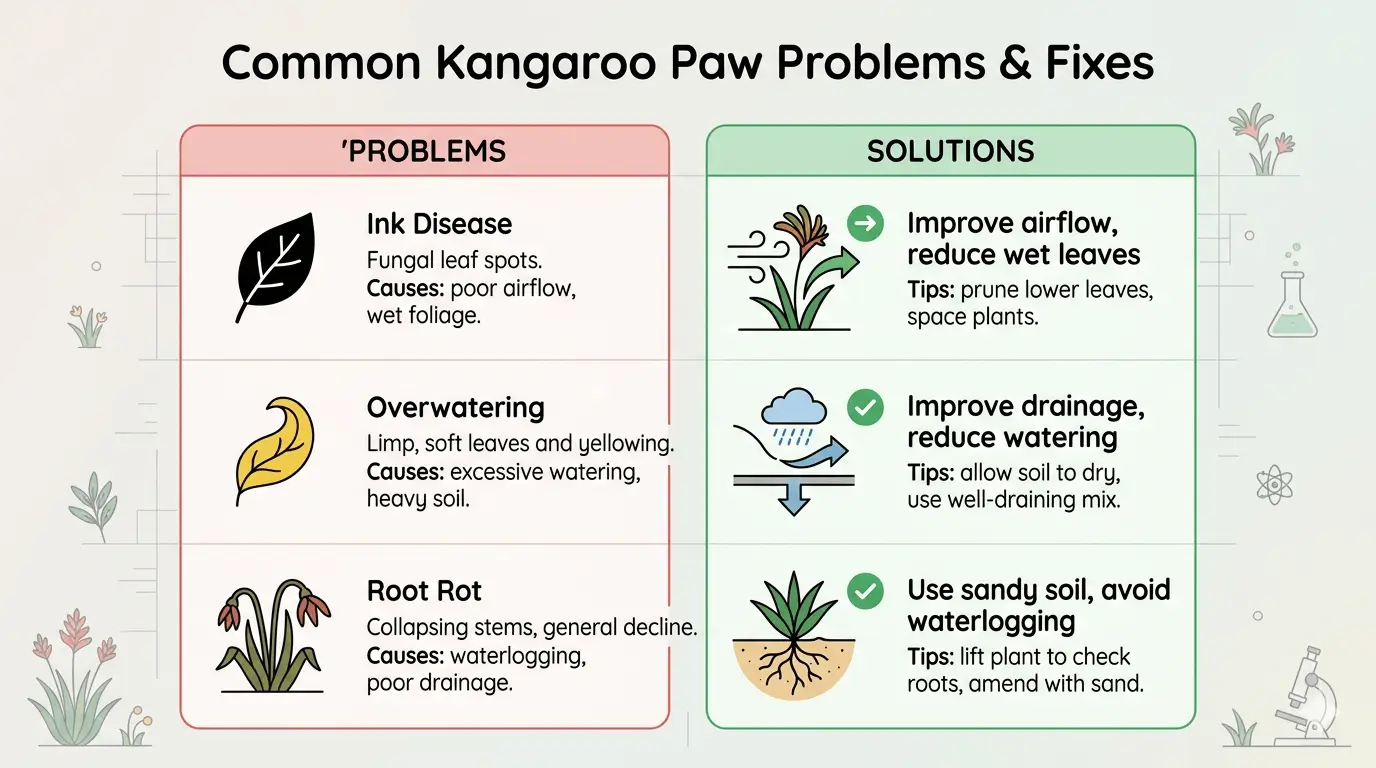
Ink disease is one of the most serious kangaroo paw problems. It is commonly associated with fungal pathogens such as Alternaria species.
Symptoms include:
- Black streaks on leaves
- Darkened flower stems
- Progressive foliage decline
Prevention methods:
- Improve airflow
- Avoid overhead watering
- Remove infected material quickly
Yellowing Leaves
Yellow leaves are usually caused by:
- Overwatering
- Waterlogged soil
- Excess phosphorus
- Root competition
To fix yellowing foliage:
- Improve drainage
- Reduce watering frequency
- Use native-specific fertilizer
Poor Flowering or No Flowers
Poor flowering is commonly linked to:
- Insufficient sunlight
- Excess nitrogen fertilizer
- Old overcrowded clumps
Solutions include:
- Move plants into full sun
- Deadhead regularly
- Divide mature clumps every few years
Root Rot
Root rot develops in poorly drained conditions.
Common causes include:
- Heavy clay soil
- Excessive watering
- Poor container drainage
Prevention focuses on free-draining soil and careful watering management.
Pest Issues
Young growth may attract:
- Aphids
- Thrips
- Scale insects
Neem oil and insecticidal soap are commonly used management options.
Beginner Mistakes When Growing Anigozanthos Pink Beauty
Many growing problems occur because gardeners treat kangaroo paw like traditional garden perennials rather than Australian native plants.
Common mistakes include:
- Using high-phosphorus fertilizer
- Planting directly into heavy clay soil
- Overwatering during hot weather
- Leaving spent flower stems attached
- Choosing oversized cultivars for small containers
Corrections include:
- Use native-specific fertilizer blends
- Improve drainage before planting
- Reduce watering during dormancy periods
- Prune regularly after flowering
- Match cultivar size to available growing space
Anigozanthos Pink Beauty Flowering Season
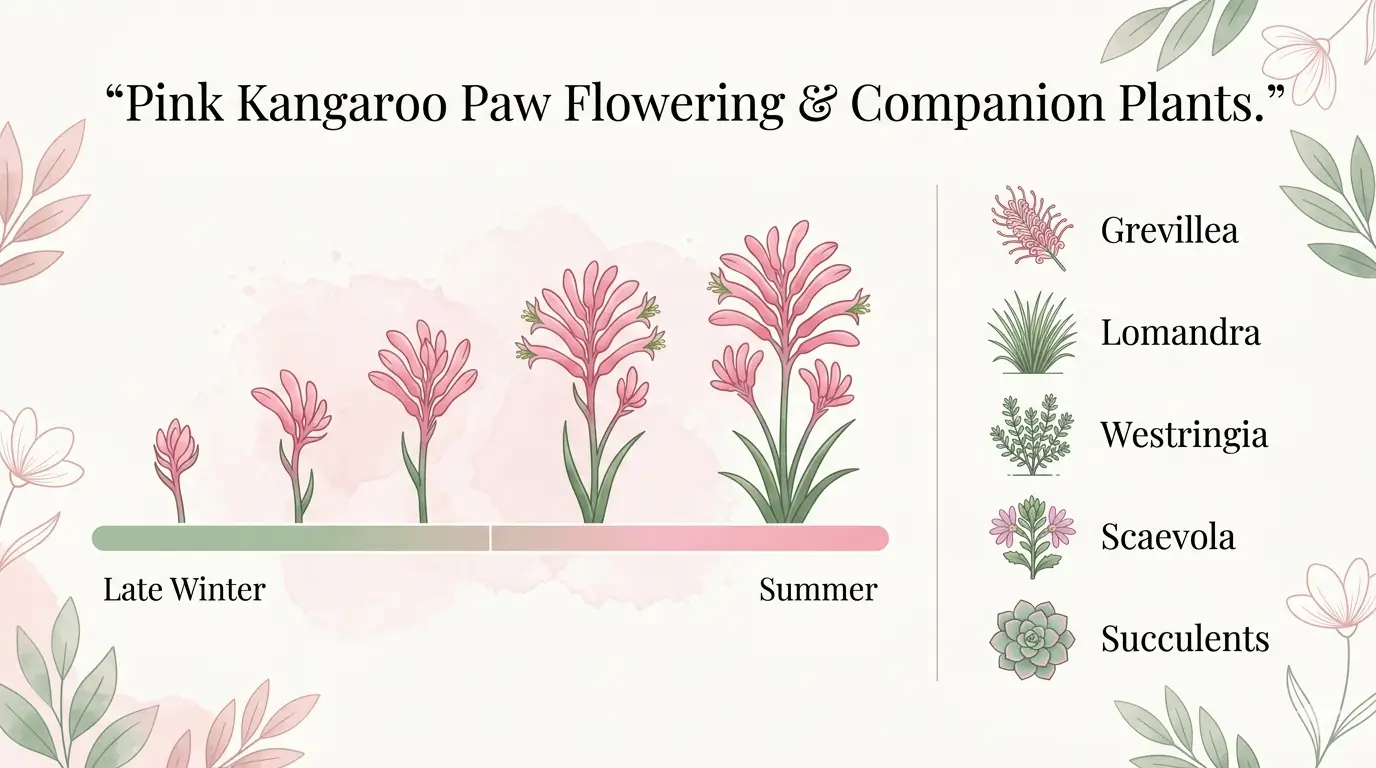
Anigozanthos Pink Beauty flowers primarily from late winter through summer in Australia. In Northern Hemisphere climates, flowering commonly peaks during spring and summer. Individual flower stems often last several weeks. Prompt removal of spent stems may encourage additional flowering cycles.
Pollinators attracted to kangaroo paw flowers include:
- Honeyeaters in Australia
- Hummingbirds in California and similar climates
- Nectar-feeding insects
Seasonal care adjustments improve flowering performance:
- Increase feeding in late winter
- Reduce watering during extreme summer heat
- Remove old flower stems quickly after blooming
Conclusion
Anigozanthos Pink Beauty is one of the most popular pink kangaroo paw cultivars for modern gardens because of its vivid flowers, manageable size, and drought-tolerant nature. This hybrid anigozanthos performs best in full sun, free-draining soil, and warm climates with moderate watering. Its suitability for pots, native landscapes, and low-maintenance gardens makes it highly versatile for ornamental planting. By understanding its seasonal growth habits, pruning needs, and sensitivity to excess phosphorus, gardeners can maintain healthy plants with reliable flowering year after year. Whether used as a feature plant or combined with compatible native companions, Pink Beauty showcases the distinctive appearance of Australian kangaroo paw flowers.
Pink kangaroo paw is one of the most iconic Australian native plants used in modern landscaping, especially within broader Australian native garden designs.
Frequently Asked Questions
What is the mature height of Anigozanthos Pink Beauty?
Anigozanthos Pink Beauty typically reaches 60–100 cm tall at maturity. The foliage usually stays shorter, while the flowering stems extend above the leaves during bloom periods.
Is pink kangaroo paw the same as Anigozanthos flavidus?
No. Pink kangaroo paw cultivars such as Pink Beauty are hybrid plants, while Anigozanthos flavidus is a naturally occurring species. Some hybrids use A. flavidus genetics for vigor and flower production.
Can Anigozanthos Pink Beauty grow in a pot?
Yes. Pink kangaroo paw grows well in containers when planted in free-draining potting mix with strong sunlight exposure and proper drainage holes.
Why are my kangaroo paw leaves turning black?
Black leaves are commonly caused by ink disease, a fungal problem associated with poor airflow and excessive moisture. Removing infected foliage and reducing overhead watering can help control the issue.
How is Anigozanthos Pink Beauty different from Bush Pearl?
Pink Beauty is generally taller and more upright than Bush Pearl. Bush Pearl has a more compact growth habit and is better suited to small borders and compact containers.
Is kangaroo paw native to Australia?
Yes. All kangaroo paw species are native to southwest Western Australia, where they naturally grow in sandy, Mediterranean-style climates.