
Introduction
Knowing how to add humidity to a room can improve indoor comfort, especially during dry seasons or in climate-controlled homes. Room humidity refers to the amount of moisture present in the air, usually measured as relative humidity. When indoor air becomes too dry, it can contribute to dry skin, irritated sinuses, sore throats, static electricity, cracked wooden furniture, and stressed houseplants. Fortunately, increasing humidity does not always require expensive equipment. Simple household techniques can help raise moisture levels, while humidifiers provide more consistent control. This guide explains practical, affordable ways to improve indoor humidity, with and without a humidifier, while maintaining a healthy balance.
Quick Summary
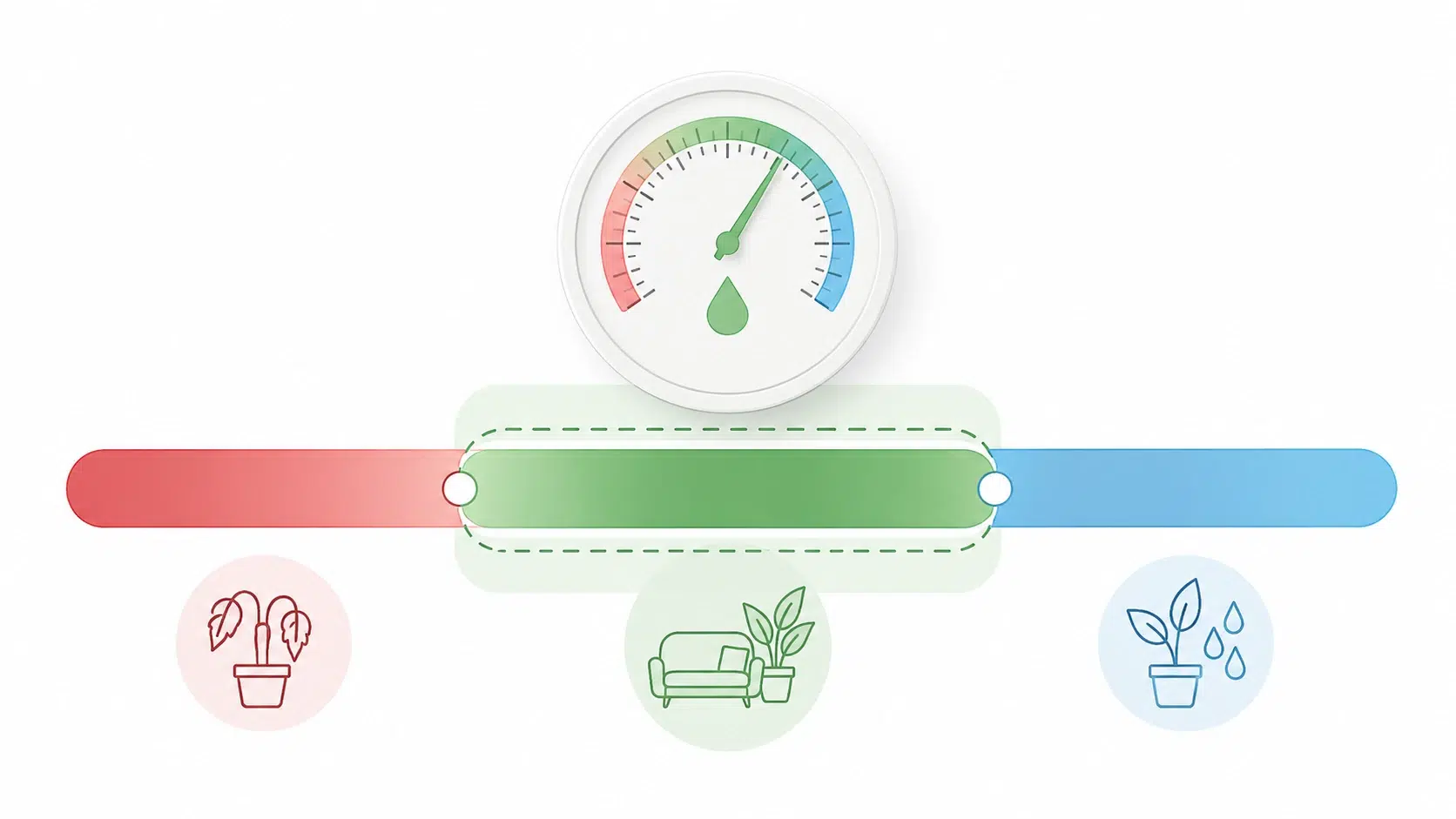
- Ideal indoor humidity is generally 30–50%, while levels below 30% are usually considered too dry.
- Natural methods such as bowls of water, wet towels, and houseplants can increase humidity modestly.
- A humidifier offers the most reliable way to maintain consistent indoor moisture.
- Air conditioners generally reduce indoor humidity rather than increase it.
What Counts as “Low Humidity” in a Room?
Low humidity generally means the relative humidity inside a room has fallen below 30%. Most homes remain comfortable between 30% and 50% relative humidity, although slight adjustments may be appropriate depending on climate and season.
Indoor moisture levels are typically measured as relative humidity, which represents the amount of water vapor present in the air compared to the maximum it can hold at a given temperature.
A humidity level of 40% is not too low for sleeping. In fact, it falls comfortably within the recommended indoor range for bedrooms. By contrast, 25% humidity is considered too low for most homes and may lead to noticeable dryness and discomfort.
Relative humidity is measured using a hygrometer, an inexpensive device that provides an accurate reading of indoor moisture levels.
Common signs of low humidity include:
- Dry skin and chapped lips
- Static electricity and small shocks
- Dry or irritated nose and throat
- Frequent nosebleeds
- Cracked wooden floors or furniture
- Curling wallpaper
- Wilting or browning houseplants
Recommended humidity ranges:
- Bedrooms: 30–50%
- Living rooms: 30–50%
- Plant rooms with tropical plants: 50–70% depending on plant species
Why Humidity Drops Indoors
Indoor humidity often decreases because heating and cooling systems remove moisture from the air. During winter, cold outdoor air naturally contains less moisture. Once heated indoors, its relative humidity drops further.
Other common causes include:
- Central heating systems
- Fireplaces and wood stoves
- Air conditioning
- Cold outdoor temperatures
- Continuous mechanical ventilation
- Low outdoor humidity
How to Test Room Humidity
The most accurate way to test humidity is with a digital hygrometer. Many smart thermostats and indoor weather stations also display relative humidity in real time.
A simple DIY method involves placing several ice cubes in a glass of water and leaving it for about five minutes. If condensation does not form on the outside of the glass, the indoor air is likely quite dry. While this test is only a rough indicator, it can suggest whether humidity may be low.
How to Add Humidity to a Room Without a Humidifier
You can humidify a room naturally by increasing water evaporation into the surrounding air. These methods are inexpensive and work best for mild dryness or smaller rooms.
Effective methods include:
- Hanging a wet towel indoors to air-dry
- Leaving a bowl or bucket of water near a safe heat source
- Air-drying freshly washed laundry indoors
- Boiling water or simmering a pot on the stove
- Taking longer hot showers while leaving the bathroom door open afterward
- Misting the air lightly with a spray bottle

These techniques produce gradual improvements rather than dramatic humidity increases. For plant-focused methods, you can explore detailed indoor strategies in our guide on how to increase humidity for indoor plants without a humidifier.
Does a Wet Towel Actually Increase Humidity?
Yes. A wet towel increases humidity because water slowly evaporates into the surrounding air. Evaporation adds moisture naturally without electricity.
The method works best when:
- Indoor air is very dry
- Air circulation is good
- The towel has a large exposed surface
- The towel hangs near gentle airflow or moderate warmth
Although effective, the increase is usually modest and temporary.
Can a Bowl of Water Humidify a Room?
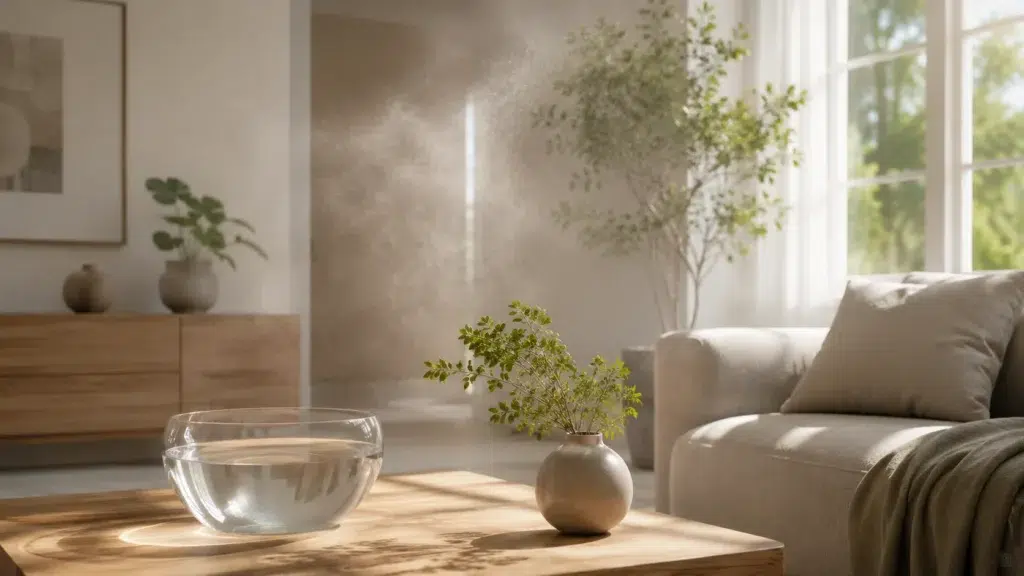
Yes, but only to a limited extent. A bowl of water releases moisture slowly through natural evaporation.
Evaporation becomes faster when:
- Water is warm
- Surface area is larger
- Airflow increases
- The bowl sits near a safe heat source
This method is best used as a supplemental solution rather than a replacement for a humidifier.
Homemade Humidifier Setup
A simple homemade humidifier can slightly improve evaporation.
One approach involves:
- Filling a shallow tray with water.
- Hanging a clean damp cloth so one end touches the water.
- Positioning a small fan nearby to blow air across the damp cloth.
The moving air speeds evaporation and distributes moisture more effectively throughout the room.
Using a Humidifier to Add Humidity
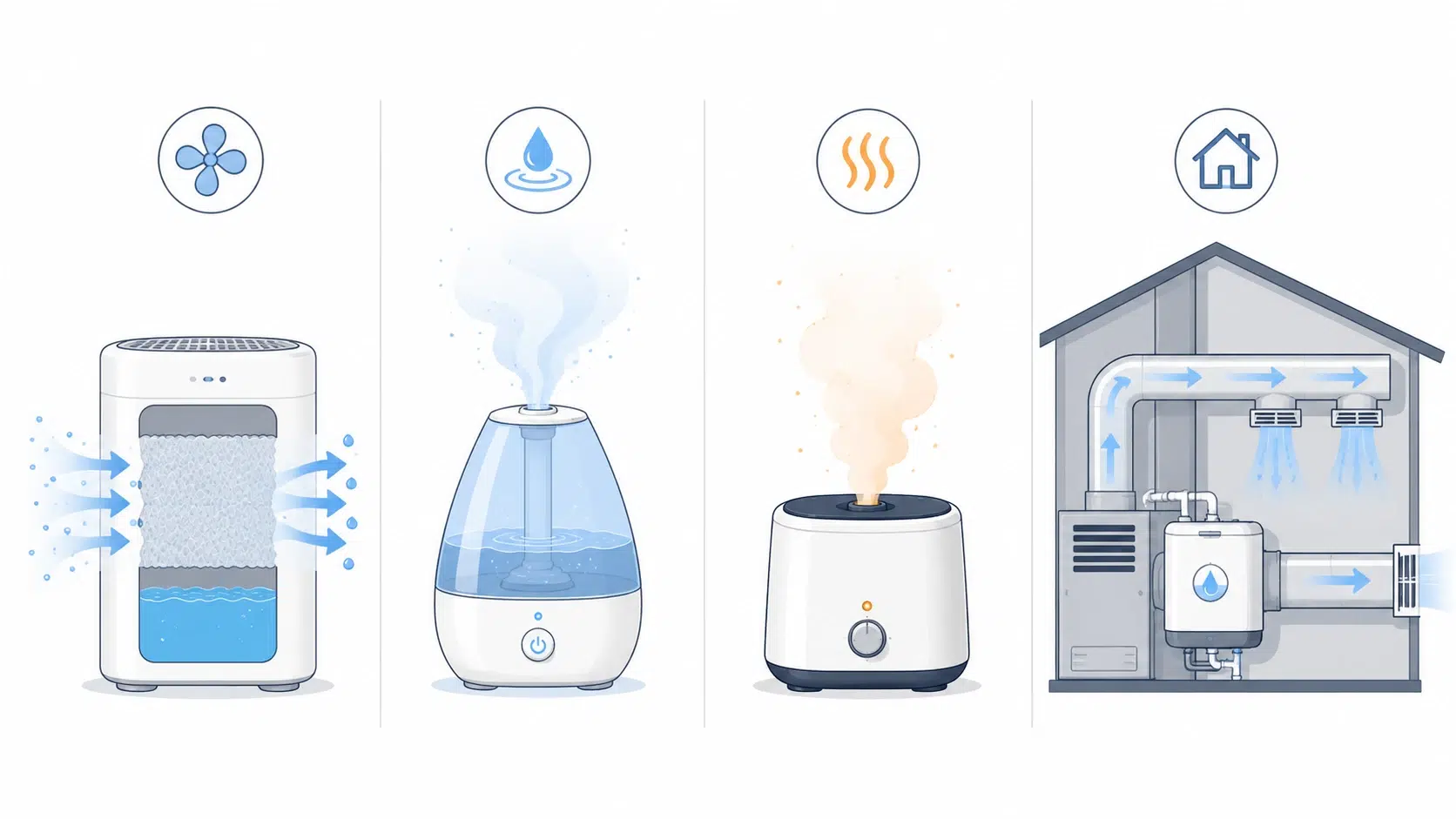
A humidifier is the most effective way to maintain consistent indoor humidity. It actively releases water vapor or fine mist into the air, allowing humidity to stay within the recommended range.
| Humidifier Type | How It Works | Noise Level | Maintenance | Best Room Size |
| Evaporative | Fan blows air through wet wick | Moderate | Regular wick cleaning | Medium to large |
| Ultrasonic | Vibrating diaphragm creates cool mist | Very quiet | Frequent tank cleaning | Small to medium |
| Steam/Vaporizer | Boils water into steam | Moderate | Mineral removal required | Small rooms |
| Whole-House | Integrated into HVAC system | Very quiet | Professional maintenance | Entire home |
Is It Safe to Sleep With a Humidifier On?
Yes, sleeping with a humidifier is generally safe when humidity stays between 30% and 50% and the unit is cleaned regularly.
Avoid excessive humidity because it may encourage mold, dust mites, and condensation. Using a hygrometer helps prevent over-humidification during the night.
Choosing the Right Humidifier Size for a Room
Select a humidifier based on room size and coverage rating.
General guidance:
- Small bedrooms: Compact units with smaller tanks
- Medium rooms: Mid-capacity humidifiers
- Large living spaces: High-capacity or console humidifiers
- Whole homes: Whole-house humidification systems
Larger tanks reduce refill frequency and provide longer operating times.
Do Air Conditioners Increase or Decrease Humidity?
Air conditioners generally decrease humidity rather than increase it. As warm indoor air passes over cold evaporator coils, moisture condenses and drains away as part of the cooling process.
Rare situations where humidity may seem higher include:
- Blocked condensate drains
- High outdoor humidity entering through leaks
- Oversized AC units that cool quickly without removing enough moisture
- Poor system maintenance
AC vs Humidifier — Comparison
| Device | Primary Purpose | Effect on Humidity | Best Season |
| Air Conditioner | Cool indoor air | Lowers humidity | Summer |
| Humidifier | Add moisture | Raises humidity | Winter or dry climates |
| Dehumidifier | Remove excess moisture | Lowers humidity | Humid seasons or damp homes |
Many homes benefit from using both an air conditioner during humid weather and a humidifier during dry winter months.
Adding Humidity to a Room for Houseplants
Many indoor plants thrive in higher humidity than people typically require. Increasing humidity can improve leaf health and reduce browning.
Helpful methods include:
- Using pebble trays filled with water
- Grouping plants together
- Misting foliage when appropriate
- Covering sensitive plants with humidity domes or cloches
Some plants like the spider plant respond better when humidity is controlled properly rather than misting alone.
Best Houseplants That Naturally Increase Room Humidity
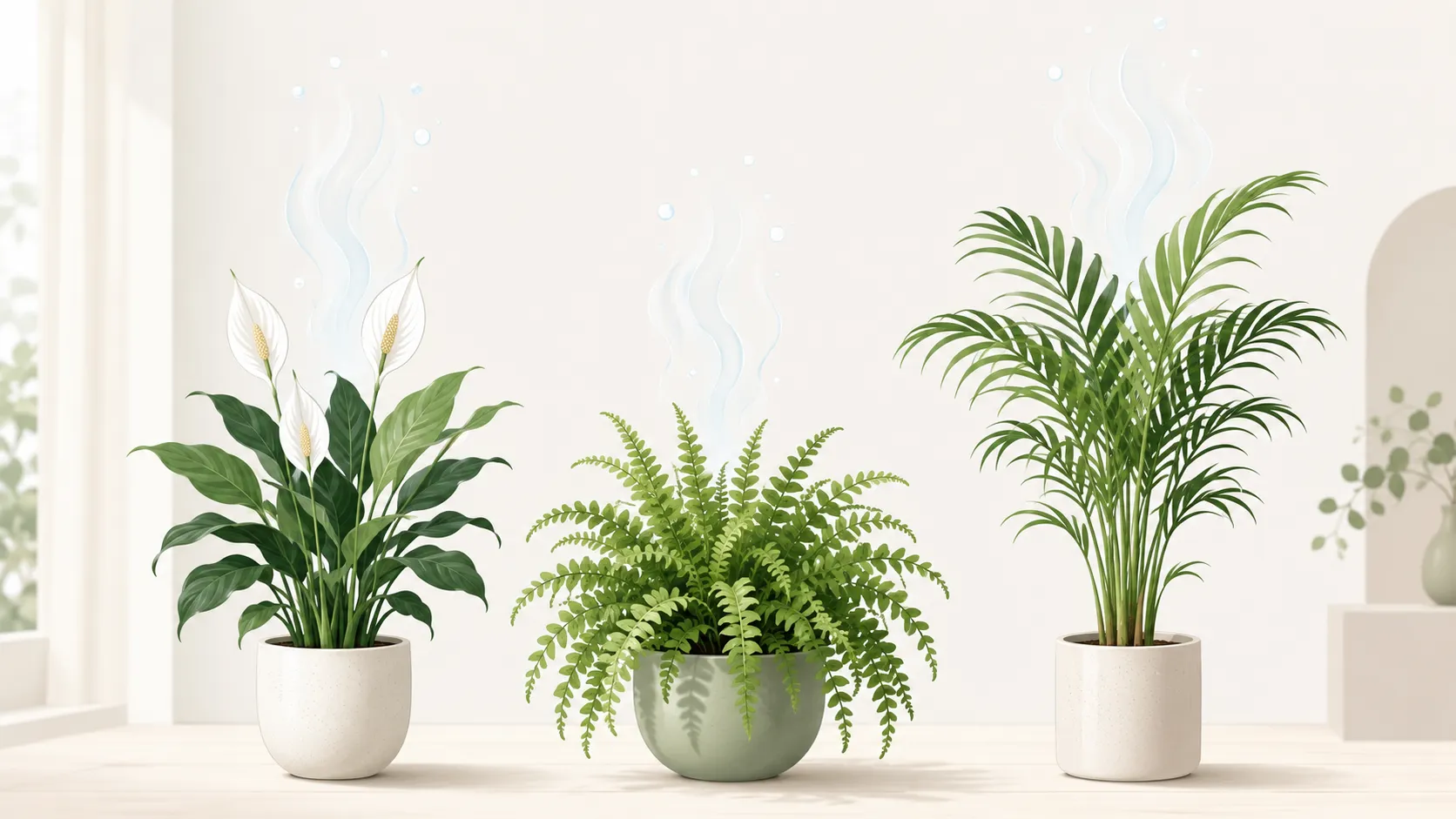
Some houseplants release moisture into the air through transpiration, a natural process where water moves from roots to leaves before evaporating. The areca palm is also widely used indoors because of its strong transpiration rate and easy maintenance. Peace lilies also perform best when temperature and humidity are balanced, especially in indoor environments.
Plants known for this include:
- Peace lily
- Boston fern
- Areca palm
While these plants contribute some moisture, they should be viewed as supplemental humidity sources rather than replacements for humidifiers. Ferns such as Boston fern require consistent humidity levels similar to those explained in detailed fern care guides.
Ideal Humidity Levels for Different Plant Types
| Plant Type | Preferred Humidity |
| Tropical plants | 50–70% |
| Orchids | 50–70% |
| Ferns | 60–80% |
| Succulents | 30–40% |
| Cacti | 30–40% |
Grouping plants with similar humidity preferences simplifies their care.
Seasonal Considerations for Room Humidity
Humidity requirements change throughout the year because heating and cooling systems affect indoor moisture differently.
Winter
- Heating systems dry indoor air.
- Active humidification is often necessary.
- Monitor humidity regularly with a hygrometer.
Summer
- Outdoor humidity may already be high.
- Air conditioners remove moisture during cooling.
- Additional humidification is usually needed only if indoor air becomes excessively dry.
Adjust humidity gradually rather than aiming for a fixed number year-round.
Common Mistakes When Adding Humidity to a Room
Avoid these common mistakes:
- Raising humidity above 50%, encouraging mold and condensation
- Neglecting regular humidifier cleaning
- Ignoring room ventilation
- Placing water containers where airflow cannot promote evaporation
- Running humidifiers continuously without monitoring humidity
A common beginner mistake is assuming that more humidity is always better. Excess moisture can create as many problems as overly dry air.
Fixing Common Room Humidity Problems
| Problem | Why It Happens | Solution | Prevention |
| Room still feels dry | Insufficient evaporation or poor airflow | Add fan circulation and multiple water sources | Monitor with a hygrometer |
| Condensation on windows | Humidity too high or poor insulation | Lower humidifier output and improve ventilation | Keep humidity below 50% |
| Plants continue wilting | Misting alone is inadequate | Use pebble trays or humidity domes | Group humidity-loving plants together |
Room Humidifier vs Natural Methods — Which Should You Choose?
The right option depends on your budget, room size, and how consistently you need to maintain humidity.
| Method | Cost | Effort | Effectiveness | Best For |
| Wet towel | Free | Low | Mild | Small rooms, temporary use |
| Bowl of water | Free | Very low | Mild | Supplemental humidity |
| Indoor laundry drying | Free | Low | Moderate | Occasional dryness |
| Homemade humidifier | Low | Moderate | Moderate | Small spaces |
| Humidifier | Moderate | Low | High | Bedrooms, plant rooms, long-term use |
Natural methods work well for occasional dryness, while humidifiers provide more reliable humidity control throughout the year.
Conclusion
Understanding how to add humidity to a room begins with maintaining healthy indoor humidity between 30% and 50%. Simple methods such as wet towels, bowls of water, indoor laundry drying, and houseplants can modestly increase moisture in the air, making them suitable for occasional dryness. However, for larger rooms, long-term comfort, or humidity-sensitive houseplants, a properly sized humidifier provides the most consistent and controllable results. Monitoring humidity with a hygrometer and avoiding excessive moisture helps create a healthier indoor environment while preventing mold, condensation, and other moisture-related problems.
FAQs
How can I humidify a room without a humidifier?
You can increase humidity by hanging wet towels, drying laundry indoors, placing bowls of water near safe heat sources, simmering water on the stove, taking hot showers, or grouping houseplants together.
Does hanging a wet towel increase humidity?
Yes. As the towel dries, water evaporates into the air, slightly increasing indoor humidity. It works best in dry rooms with moderate airflow.
Is 40% humidity too low for sleeping?
No. A bedroom humidity level of around 40% falls within the recommended indoor range of 30–50% and is generally comfortable for sleeping.
Does opening a window increase humidity?
It depends on outdoor conditions. Opening a window increases humidity only if the outdoor air contains more moisture than the indoor air. During cold, dry weather, opening windows may lower indoor humidity further.
Can painting a room increase humidity?
Fresh paint temporarily releases moisture as it dries, but this effect is short-lived and is not a practical method for increasing room humidity.
Is it okay to sleep with a humidifier on all night?
Yes. It is generally safe if the humidifier is clean, used according to the manufacturer's instructions, and indoor humidity remains between 30% and 50%.