
Introduction
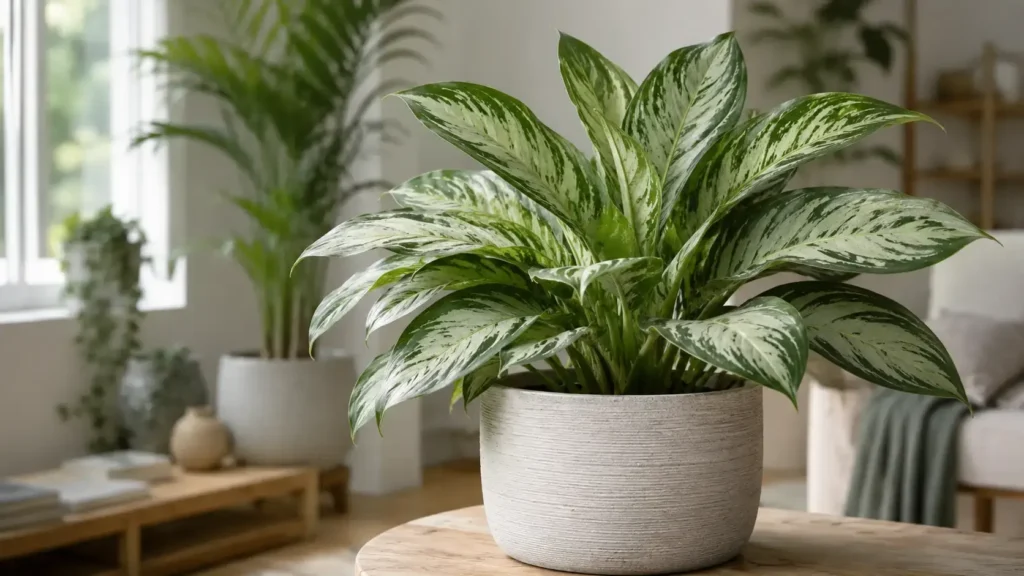
Aglaonema silver queen care is straightforward, making this plant one of the most popular houseplants for homes and offices. Aglaonema commutatum ‘Silver Queen’ is a tropical foliage plant valued for its elegant silver-green leaves, adaptability, and low-maintenance nature. Unlike many ornamental plants, it tolerates lower light levels while continuing to produce attractive foliage. This guide explains everything you need to know about caring for a Silver Queen plant, including watering, lighting, soil selection, fertilization, growth habits, and common care considerations. The information is presented in a clear, practical format designed to help both beginners and experienced plant owners maintain healthy, thriving plants. Aglaonema Silver Queen is one of many popular indoor plants featured in our comprehensive Plants Benefits and Guides resource, which covers plant care, growth habits, and maintenance techniques for a wide range of species.
Quick Summary
- Aglaonema Silver Queen is a low-maintenance tropical houseplant known for its silver-green variegated foliage.
- It grows best in medium to bright indirect light but can tolerate lower light conditions.
- Proper watering and well-draining soil are essential to prevent root rot and yellow leaves.
- The plant adapts well to indoor environments and is suitable for beginners.
- With proper care, Aglaonema Silver Queen can remain healthy and attractive for many years.
What Is Aglaonema Silver Queen?
Aglaonema commutatum ‘Silver Queen’ is a cultivated variety of Chinese Evergreen, a group of tropical foliage plants belonging to the Araceae family. Native to tropical regions of Southeast Asia, Aglaonema species are prized for their decorative leaves and adaptability to indoor environments. Aglaonema Silver Queen belongs to the Aglaonema genus, a group of tropical foliage plants widely cultivated as ornamental houseplants.
Silver Queen is distinguished by its elongated leaves featuring silver-green variegation across much of the leaf surface. The striking foliage creates visual interest even in areas with moderate lighting.
Common names include:
- Chinese Evergreen Silver Queen
- Silver Queen Chinese Evergreen
- Silver Queen Plant
The plant is classified as an Aglaonema because it belongs to the Aglaonema genus, which contains numerous ornamental foliage varieties developed for indoor cultivation. Its popularity stems from its ability to tolerate less-than-ideal indoor conditions while maintaining attractive growth.
Silver Queen vs. Similar Cultivars
Several Aglaonema cultivars resemble Silver Queen but differ in coloration and growth characteristics.
- Silver Queen features prominent silver-green variegation with elongated leaves.
- Silver King typically displays broader leaves with lighter silver coloration.
- Silver Moon has softer silver-gray tones and a more muted appearance.
- Red Aglaonema varieties feature red, pink, or burgundy coloration instead of silver.
Silver Queen vs. Similar Aglaonema Varieties
The primary differences between Aglaonema cultivars involve leaf coloration, variegation patterns, and lighting preferences.
| Feature | Silver Queen | Silver King | Silver Moon | Red Aglaonema |
| Leaf Color | Silver-green | Pale silver | Muted silver-gray | Red and pink tones |
| Light Needs | Low to medium | Low to medium | Low | Medium to bright indirect |
| Difficulty | Easy | Easy | Easy | Easy to moderate |
| Common Name | Chinese Evergreen | Chinese Evergreen | Silver Moon Plant | Red Chinese Evergreen |
Silver Queen remains one of the most widely grown varieties because it balances strong variegation with excellent tolerance for indoor conditions.
Is Silver Queen a Good Indoor Plant?
Yes, Silver Queen is considered one of the best indoor foliage plants available.
Its reputation comes from a combination of durability, adaptability, and ornamental appeal. Unlike many tropical plants that require constant humidity or bright light, Silver Queen performs well under average indoor conditions.
Benefits include:
- Tolerance of low-light environments
- Attractive silver variegated foliage
- Moderate humidity requirements
- Slow to moderate growth
- Beginner-friendly care needs
- Adaptability to homes and offices
Many indoor gardeners choose Silver Queen because it remains attractive even when care is not perfectly consistent. This forgiving nature makes it suitable for people new to houseplant care.
Is Silver Queen Easy to Care For?
Yes. Silver Queen is widely regarded as a beginner-friendly houseplant because it tolerates occasional missed waterings, average indoor humidity, and lower light conditions better than many tropical plants.
Aglaonema Silver Queen Light Requirements
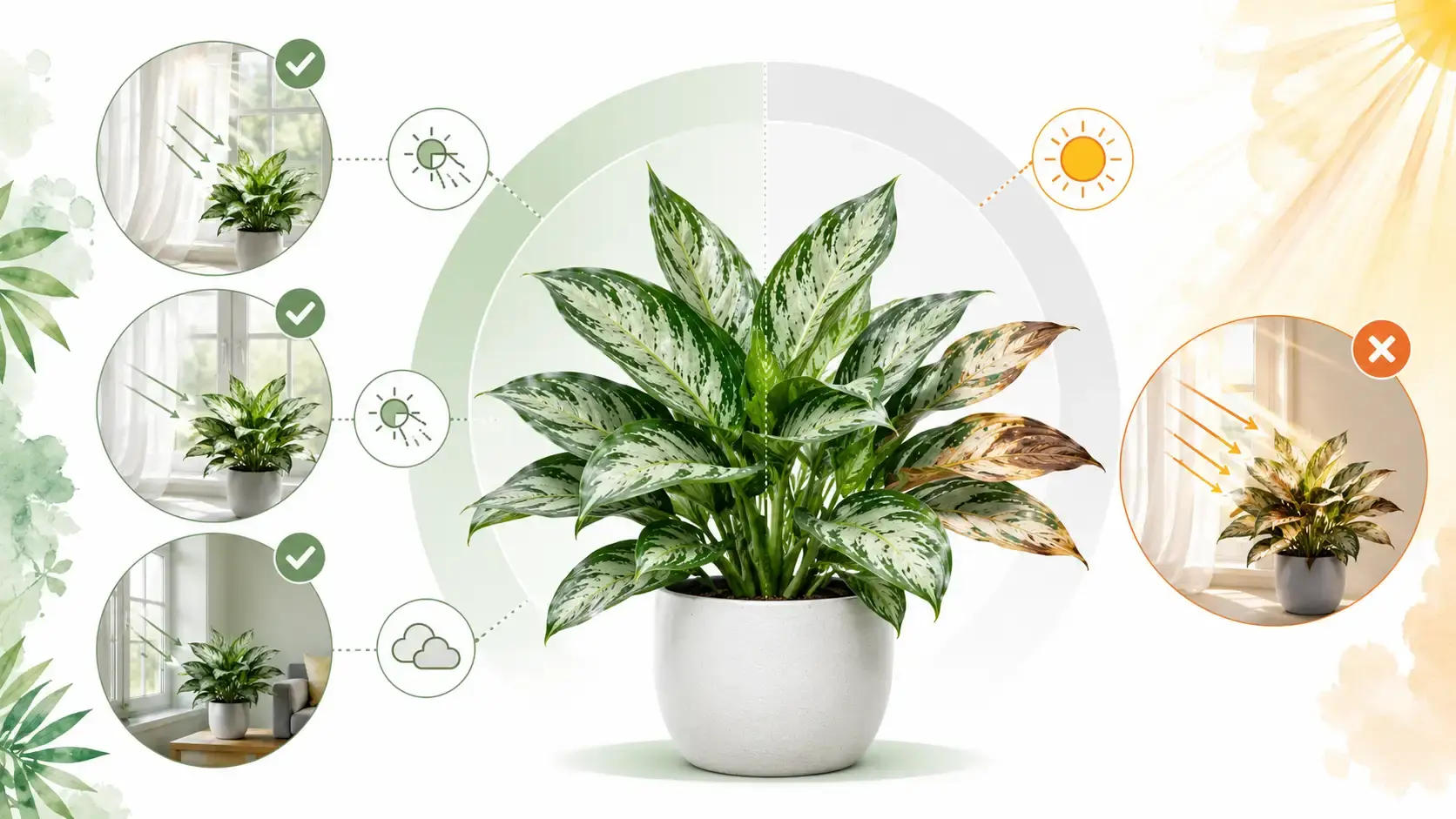
Aglaonema Silver Queen grows best in bright to medium indirect light.
Indirect light allows the plant to maintain strong variegation while supporting healthy growth. Although it tolerates lower light conditions, prolonged exposure to very dim areas may reduce leaf coloration and slow growth.
Ideal lighting conditions include:
- Bright indirect sunlight
- Filtered window light
- East-facing windows
- North-facing windows
- Locations several feet from bright south-facing windows
Direct sunlight should be avoided because intense rays can scorch the leaves and cause discoloration.
Indoor Light Requirements
Indoor plants thrive when placed near windows receiving filtered sunlight. Sheer curtains can help diffuse stronger light while protecting foliage.
Outdoor Light Requirements
When grown outdoors, Silver Queen should remain in deep shade or dappled shade. Direct afternoon sun can quickly damage foliage.
Can Aglaonema Silver Queen Grow Outdoors?
Yes, Aglaonema Silver Queen can grow outdoors in suitable climates.
The plant performs best outdoors in warm, frost-free environments where temperatures remain consistently above 15°C (59°F). It is generally suited to USDA Zones 10–12.
Outdoor requirements include:
- Warm temperatures
- High humidity
- Protection from direct sunlight
- Well-draining soil
- Shelter from cold winds
In most regions, Silver Queen is grown primarily as an indoor plant because it cannot tolerate frost or extended periods of cold weather.
Aglaonema Silver Queen Watering Guide
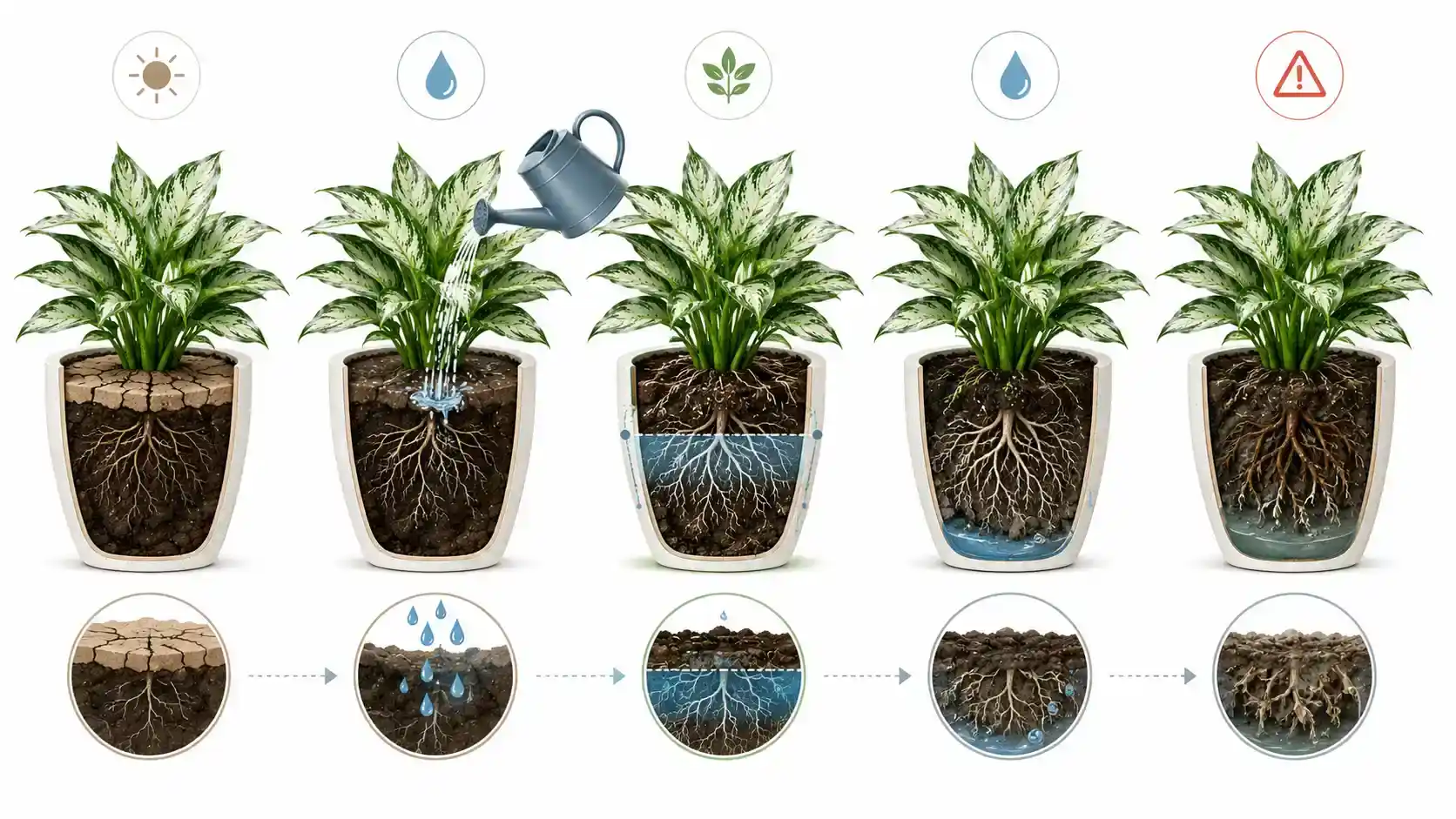
Proper watering is one of the most important aspects of aglaonema silver queen care.
Most Silver Queen plants require watering approximately every 7 to 10 days. However, actual frequency depends on:
- Temperature
- Humidity
- Pot size
- Soil type
- Season
Rather than following a strict schedule, check soil moisture before watering.
Water when the upper portion of the soil feels dry.
Signs of Underwatering
Common symptoms include:
- Drooping leaves
- Dry soil
- Crispy leaf edges
- Slower growth
Signs of Overwatering
Common symptoms include:
- Yellow leaves
- Mushy stems
- Persistently wet soil
- Root rot
Should You Bottom Water Aglaonema?
Bottom watering can be beneficial because it encourages deeper root growth and helps prevent surface compaction.
Advantages:
- More even moisture distribution
- Reduced soil disturbance
- Lower risk of fungus gnats
Disadvantages:
- Requires additional time
- Salt buildup may occur if top watering is never used
Many growers alternate between top watering and bottom watering for best results.
How to Avoid Overwatering Aglaonema Silver Queen
The simplest way to prevent overwatering is to use the finger test.
Insert a finger approximately 2 inches into the soil. If the soil feels dry at that depth, watering is generally appropriate. If moisture is still present, wait several more days before checking again.
Seasonal Adjustments
During spring and summer:
- Water more frequently
- Monitor faster soil drying
During autumn and winter:
- Reduce watering
- Allow soil to dry slightly longer
Pot Material Matters
Terracotta pots dry out faster because they are porous.
Plastic pots retain moisture longer.
Understanding how your container affects water retention can significantly reduce the risk of root rot.
Soil and Potting Requirements for Silver Queen
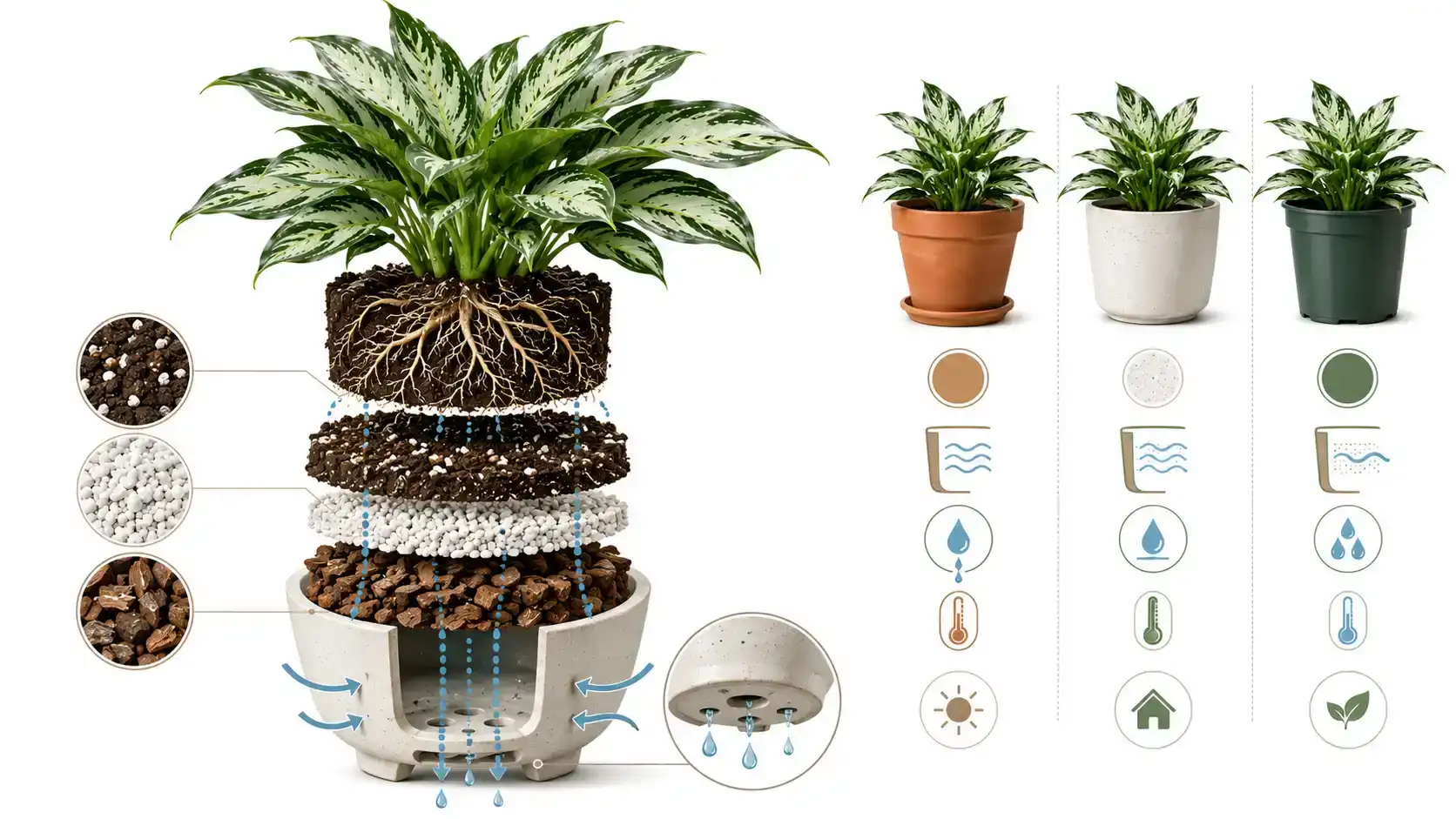
Silver Queen grows best in a loose, airy, well-draining soil mixture. The ideal growing medium retains some moisture while allowing excess water to drain efficiently.
Selecting the correct container size is important because pot dimensions can directly influence root development and overall plant growth.
A suitable mix may include:
- Quality indoor potting soil
- Perlite
- Orchid bark
- Coco coir or peat moss
The preferred soil pH is slightly acidic to neutral.
How Deep Should You Plant Silver Queen?
Plant the root ball at the same depth it was growing previously. Avoid burying stems deeper than necessary, as excessive planting depth can increase the risk of stem rot.
Do Aglaonema Like Big Pots?
No. Oversized pots can retain excessive moisture around the roots.
Choose a container only slightly larger than the root ball. Increasing pot size gradually helps prevent overwatering issues while supporting healthy root development.
Best Pot Types for Aglaonema Silver Queen Care in Pots
Selecting the right pot can simplify plant care and improve root health.
| Pot Type | Advantages | Considerations |
| Terracotta | Excellent drainage and airflow | Dries out faster |
| Ceramic | Attractive appearance and stability | Heavier and may retain moisture |
| Plastic | Lightweight and affordable | Holds moisture longer |
Drainage holes are essential regardless of container type.
Without drainage, excess water accumulates around roots and significantly increases the likelihood of root rot.
Repotting Frequency
Most Silver Queen plants benefit from repotting every 1 to 2 years.
Signs that repotting may be needed include:
- Roots emerging from drainage holes
- Slower growth
- Soil breakdown
- Frequent drying between waterings
Aglaonema Silver Queen Fertilization
Silver Queen benefits from regular but moderate feeding during active growth periods. Understanding the differences between bi-weekly and monthly feeding schedules can help indoor gardeners avoid over-fertilization and nutrient imbalances.
A balanced liquid fertilizer diluted according to label instructions works well for most plants.
Recommended schedule:
- Feed once per month during spring
- Feed once per month during summer
- Reduce feeding during autumn
- Avoid fertilizing during winter dormancy
Signs of Over-Fertilization
Excess fertilizer may cause:
- Brown leaf tips
- Salt buildup on soil
- Leaf discoloration
- Root damage
Moderate feeding generally produces healthier, more sustainable growth than heavy fertilization.
🌿 Plant Size — How Big Does Aglaonema Silver Queen Get?
A mature Aglaonema Silver Queen typically reaches a height of 60 to 90 cm (2 to 3 feet) indoors.
Its spread often ranges between 45 and 90 cm depending on growing conditions.
Factors affecting size include:
- Available light
- Pot size
- Nutrient availability
- Watering consistency
- Overall plant age
Outdoor specimens growing in favorable tropical environments may become slightly larger than indoor plants.
🌱 Growth Rate of Aglaonema Silver Queen
Silver Queen is considered a slow-to-moderate growing houseplant. Seasonal environmental changes play a major role in determining how quickly indoor plants grow throughout the year.
Growth is most active during spring and summer when temperatures are warm and daylight hours increase. During autumn and winter, growth naturally slows as the plant enters a period of relative dormancy. Growth speed can vary depending on light levels, watering habits, temperature, and nutrient availability. Use our plant growth calculator to estimate and track how quickly your Aglaonema Silver Queen may grow under different conditions.
Factors Affecting Growth Speed
Several environmental factors influence growth:
- Light intensity
- Temperature
- Humidity
- Fertilization schedule
- Root health
Plants receiving bright indirect light and consistent care generally produce the strongest growth.
What Is the Lifespan of Aglaonema?
With proper care, Aglaonema plants can live for many years, often exceeding 10 years indoors.
As perennial tropical plants, they continuously produce new foliage and can remain attractive for decades when maintained in favorable conditions.
🪴 Aglaonema Silver Queen Care Guide (Full)
Aglaonema Silver Queen care is relatively simple because the plant adapts well to typical indoor environments. Consistent watering, indirect light, proper soil drainage, and occasional feeding are the primary requirements for long-term success.
Watering
Proper watering is the foundation of healthy growth.
Key watering guidelines include:
- Water when the top 2 inches of soil feel dry
- Allow excess water to drain completely
- Never leave the pot sitting in standing water
- Reduce watering frequency during winter
- Use room-temperature water whenever possible
Filtered or distilled water can help prevent mineral buildup, especially in areas with hard tap water.
Light
Silver Queen performs best in indirect light conditions.
Light recommendations include:
- Bright indirect light for optimal growth
- Medium indirect light for healthy maintenance
- Low light tolerance for darker rooms
- Protection from direct afternoon sunlight
Plants grown in brighter indirect light typically develop stronger variegation and more vigorous growth.
Soil
A well-draining growing medium is essential.
Recommended soil characteristics:
- Lightweight texture
- Good aeration
- Moderate moisture retention
- Fast drainage
A suitable mixture may contain:
- Indoor potting mix
- Coco coir or peat moss
- Perlite
- Orchid bark
This combination prevents soil compaction while supporting healthy root development.
Fertilization
Silver Queen benefits from regular feeding during active growth periods.
General fertilization guidelines:
- Feed monthly during spring
- Feed monthly during summer
- Reduce feeding in autumn
- Stop fertilizing during winter dormancy
Balanced liquid fertilizers are usually sufficient for maintaining healthy foliage growth.
Pruning
Pruning helps maintain appearance and encourages fuller growth.
Routine pruning includes:
- Removing yellow leaves
- Removing damaged foliage
- Trimming unhealthy stems
- Cutting back leggy growth
How Do You Make Aglaonema Bushy?
The best way to create a fuller plant is to prune stretched stems and encourage new growth.
Methods include:
- Cutting back leggy stems
- Providing adequate indirect light
- Propagating healthy cuttings
- Replanting rooted cuttings into the original container
Adding propagated cuttings back into the same pot often creates a denser, bushier appearance.
Climate Tolerance
Aglaonema Silver Queen thrives in warm, stable indoor environments.
Ideal conditions include:
- Temperatures between 18–27°C (65–80°F)
- Moderate to high humidity
- Protection from cold drafts
- Protection from air conditioning vents
Temperatures below 15°C (59°F) may stress the plant and slow growth.
Aglaonema Silver Queen Propagation
Aglaonema Silver Queen propagation is relatively straightforward and can be accomplished using stem cuttings or plant division.
Spring is generally the best season for propagation because active growth supports faster rooting and recovery.
Common propagation methods include:
- Stem cuttings in water
- Stem cuttings in soil
- Division during repotting
Propagation Through Stem Cuttings
Stem cuttings are the most widely used propagation method.
The process relies on nodes along the stem developing new roots under suitable conditions.
Propagation Through Division
Mature plants often develop multiple stems and root clusters.
During repotting, these sections can be separated carefully and replanted individually.
Division provides instant mature plants and typically has a high success rate.
Can Aglaonema Grow in Just Water?
Yes, Aglaonema can grow in water for short periods and is commonly propagated this way.
However, long-term growth in water presents challenges:
- Limited nutrient availability
- Slower development
- Greater maintenance requirements
- Increased risk of nutrient deficiencies
Water propagation is ideal for rooting cuttings, while soil remains the preferred long-term growing medium.
Step-by-Step: How to Propagate Silver Queen Aglaonema
Follow these steps for successful propagation:
Step 1: Select a Healthy Stem
Choose a healthy stem with at least two or three visible nodes.
Healthy stems should be firm, green, and free from disease.
Step 2: Make a Clean Cut
Using sterilized scissors or pruning shears, cut just below a node.
Clean cuts reduce the risk of infection.
Step 3: Place the Cutting in Water or Propagation Mix
You can place the cutting in:
- Clean water
- Moist propagation soil
- Coco coir mixture
Ensure the nodes remain in contact with the rooting medium.
Step 4: Provide Warm Indirect Light
Keep the cutting in:
- Bright indirect light
- Warm temperatures
- Stable humidity
Most cuttings begin producing roots within 3–6 weeks.
Step 5: Transfer to Potting Mix
Once roots reach approximately 2–3 cm in length, transplant the cutting into a well-draining soil mixture.
Continue providing consistent moisture until new growth appears.
Aglaonema Silver Queen Flower — What to Expect
Aglaonema Silver Queen occasionally produces flowers, although flowering indoors is relatively uncommon.
The flower resembles a small peace lily bloom consisting of:
- A central spadix
- A surrounding spathe
This flower structure is characteristic of plants in the Araceae family.
What Does the Flower Indicate?
Flowering often suggests:
- Plant maturity
- Good growing conditions
- Consistent care
- Healthy root development
While attractive, the flowers are generally less ornamental than the foliage.
Should You Remove Aglaonema Flowers?
Many growers remove flowers after they appear.
Reasons include:
- Redirecting energy toward foliage production
- Maintaining leaf growth
- Preserving the plant’s ornamental appearance
Removing flowers is optional and does not harm the plant.
Common Problems With Aglaonema Silver Queen
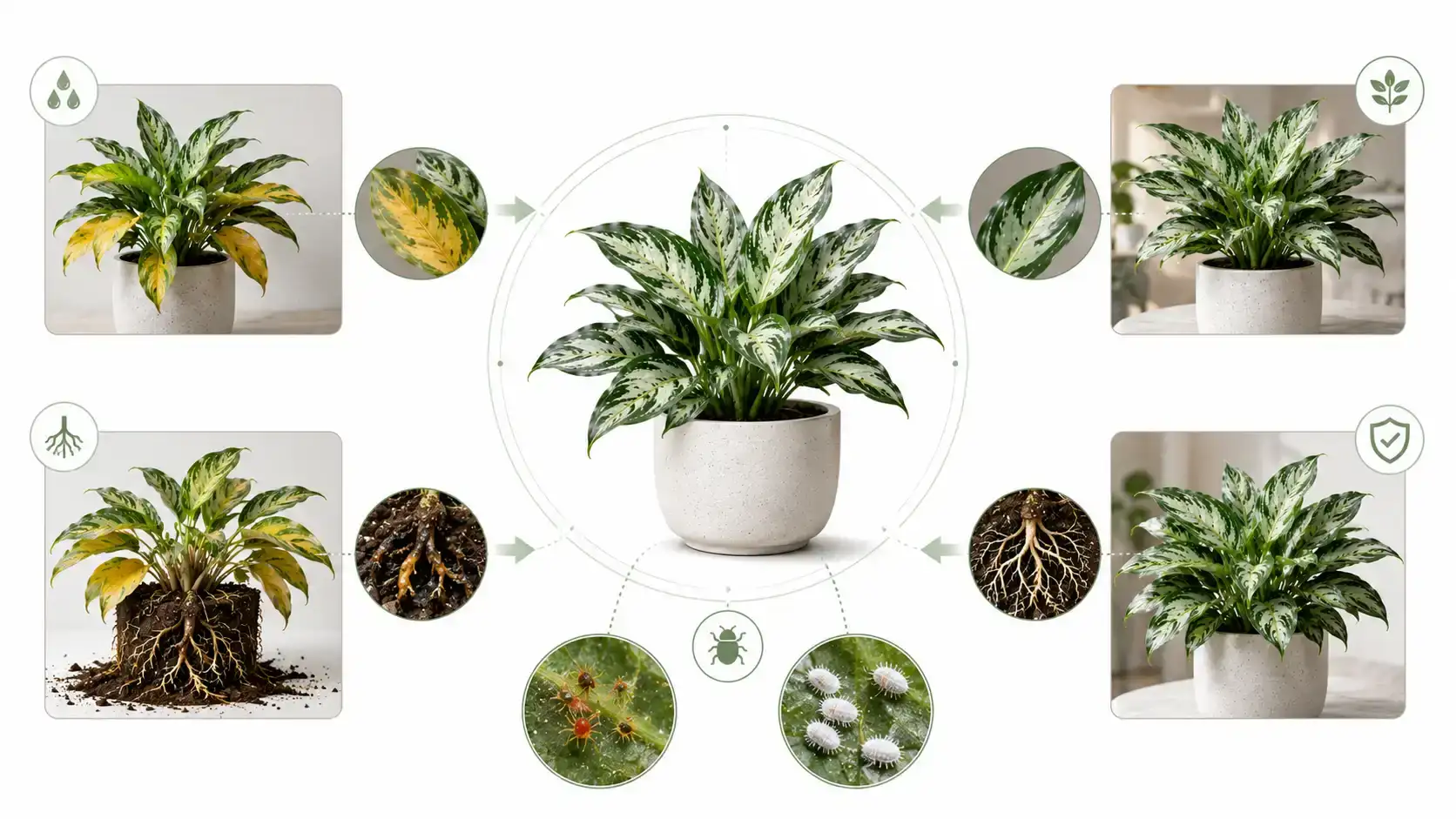
The most common problems with Aglaonema Silver Queen include yellow leaves, root rot, pest infestations, poor growth, and environmental stress.
Most issues can be prevented through proper watering, adequate drainage, and stable indoor conditions.
Common concerns include:
- Overwatering
- Underwatering
- Low light exposure
- Nutrient deficiencies
- Cold damage
- Spider mites
- Mealybugs
- Scale insects
Early detection greatly improves recovery outcomes.
Aglaonema Silver Queen Yellow Leaves — Causes and Fixes
Yellow leaves are among the most frequently reported Silver Queen problems.
Identifying the underlying cause is essential before making corrections.
| Cause | Symptom | Fix |
| Overwatering | Yellow leaves with mushy stems | Reduce watering and improve drainage |
| Underwatering | Yellow leaves with dry edges | Water more consistently |
| Low Light | Pale or faded foliage | Move to brighter indirect light |
| Nutrient Deficiency | Uniform yellowing | Apply balanced fertilizer |
| Cold Exposure | Yellowing and wilting | Move away from drafts |
Diagnostic Checklist
Ask the following questions:
- Is the soil constantly wet?
- Is the plant receiving adequate light?
- Has the plant been fertilized recently?
- Has it been exposed to cold temperatures?
- Are pests present?
Answering these questions usually reveals the cause of yellowing.
Root Rot in Aglaonema — Detection and Recovery
Root rot is one of the most serious problems affecting Aglaonema plants.
It typically develops when roots remain in overly wet soil for extended periods.
Signs of Root Rot
Common symptoms include:
- Yellow leaves
- Drooping growth
- Blackened roots
- Soft stems
- Foul-smelling soil
- Stunted growth
Does Hydrogen Peroxide Fix Root Rot?
Diluted 3% hydrogen peroxide can help manage root rot by increasing oxygen availability and reducing populations of anaerobic microorganisms.
However, hydrogen peroxide is not a complete cure.
Successful treatment typically requires:
- Removing affected roots
- Replacing contaminated soil
- Improving drainage
- Correcting watering practices
Hydrogen peroxide should be viewed as a supplemental treatment rather than a primary solution.
Recovery Steps
- Remove the plant from its pot.
- Inspect all roots.
- Trim black or mushy roots.
- Disinfect tools between cuts.
- Repot in fresh, well-draining soil.
- Water lightly until recovery begins.
- Adjust future watering practices.
Pest Problems: Spider Mites, Mealybugs, and Scale
Silver Queen can occasionally experience pest infestations, particularly when humidity is low or plants are stressed.
Spider Mites
Spider mites are tiny pests that feed on plant sap.
Signs include:
- Fine webbing
- Speckled foliage
- Leaf discoloration
- Reduced vigor
Mealybugs
Mealybugs appear as white cotton-like clusters.
Symptoms include:
- Sticky residue
- Distorted growth
- Weak foliage
- Reduced plant vigor
Scale Insects
Scale insects attach themselves to stems and leaves.
Common signs include:
- Brown bumps
- Sticky honeydew
- Yellowing leaves
- Slowed growth
Treatment Options
Effective treatment methods include:
- Neem oil
- Insecticidal soap
- Manual removal
- Increased humidity
- Regular inspections
Early treatment prevents infestations from spreading to nearby plants.
How to Revive a Dying Aglaonema Silver Queen
The first step in reviving a dying Aglaonema Silver Queen is identifying the underlying cause. Most declining plants suffer from overwatering, underwatering, poor lighting, pest infestations, or environmental stress.
Step 1: Diagnose the Problem
Carefully inspect the plant for signs such as:
- Yellow leaves
- Brown leaf tips
- Drooping stems
- Soft roots
- Pest activity
- Excessively wet soil
Correct diagnosis is essential because treatment varies depending on the cause.
Step 2: Correct Watering Issues
If overwatering is the issue:
- Allow soil to dry partially
- Improve drainage
- Remove damaged roots if necessary
If underwatering is the issue:
- Rehydrate the soil thoroughly
- Establish a more consistent watering routine
Step 3: Improve Light Conditions
Move the plant to a location with:
- Bright indirect light
- Filtered sunlight
- Stable daytime temperatures
Avoid sudden exposure to direct sunlight.
Step 4: Treat Pest Problems
Inspect leaves, stems, and leaf undersides.
Use:
- Neem oil
- Insecticidal soap
- Manual removal
Continue treatment until pests are eliminated.
Step 5: Monitor Recovery
Recovery may take several weeks.
Signs of improvement include:
- New leaf growth
- Improved leaf color
- Stronger stems
- Better overall vigor
How Do I Keep My Aglaonema Happy?
Long-term plant health depends on consistency.
Maintain:
- Proper watering
- Indirect light
- Good drainage
- Moderate humidity
- Seasonal care adjustments
Plants that receive stable care are less likely to experience major problems.
Common Beginner Mistakes With Silver Queen Plant Care
Many Aglaonema problems result from simple care mistakes rather than disease.
Understanding these errors helps prevent future issues.
Overwatering
Overwatering is the most common cause of plant decline.
Constantly wet soil can lead to:
- Root rot
- Yellow leaves
- Stem collapse
- Fungal problems
Always check soil moisture before watering.
Placing the Plant in Direct Sun
Direct sunlight can damage foliage.
Potential consequences include:
- Leaf scorch
- Brown patches
- Faded variegation
- Heat stress
Bright indirect light remains the safest option.
Using Cold Water
Very cold water can shock tropical plants.
Room-temperature water is generally preferred.
Repotting Too Frequently
Repotting unnecessarily can disturb root systems.
Repot only when:
- Roots become crowded
- Drainage decreases
- Growth slows significantly
Ignoring Humidity Needs
Silver Queen tolerates average humidity but performs best with moderate humidity levels.
Very dry indoor air may contribute to:
- Brown tips
- Slower growth
- Increased pest susceptibility
Seasonal Care Differences for Aglaonema Silver Queen
Care requirements change slightly throughout the year as environmental conditions shift.
Adjusting maintenance routines seasonally helps maintain healthy growth.
Spring Care
Spring is the active growth season.
Recommended tasks:
- Begin regular fertilization
- Increase watering as needed
- Repot if necessary
- Propagate healthy plants
- Inspect for new growth
Summer Care
Growth remains active during summer.
Focus on:
- Monitoring soil moisture
- Maintaining humidity
- Protecting from harsh sunlight
- Continuing monthly feeding
Plants often consume water more quickly during warm weather.
Autumn Care
Growth begins slowing during autumn.
Adjustments include:
- Gradually reducing fertilizer use
- Monitoring changing light levels
- Reducing watering frequency
- Preparing for winter dormancy
Winter Care
Winter is the slowest growth period.
Care recommendations include:
- Water less frequently
- Stop fertilization
- Keep plants away from drafts
- Maintain stable temperatures
- Monitor indoor humidity
Avoid excessive watering during winter because reduced growth decreases water consumption.
Aglaonema Silver Queen Care Outdoors vs. Indoors
Aglaonema Silver Queen can grow both indoors and outdoors, but care requirements differ depending on the environment.
Indoor cultivation remains the most practical option in most climates.
| Care Factor | Indoors | Outdoors |
| Light | Indirect or low light | Deep shade or dappled light |
| Watering | Every 7–10 days | More frequent depending on weather |
| Temperature | Controlled environment | Must remain above 15°C (59°F) |
| Humidity | May require supplementation | Naturally higher in tropical climates |
| Pest Risk | Lower | Higher exposure to insects |
Indoor Advantages
Indoor growing offers:
- Stable temperatures
- Better environmental control
- Reduced pest exposure
- Easier year-round care
- Protection from weather extremes
Outdoor Advantages
Outdoor cultivation may provide:
- Increased humidity
- Faster growth in tropical climates
- Larger mature size
- Natural airflow
Outdoor success depends heavily on climate suitability.
Conclusion
Aglaonema Silver Queen care is relatively simple compared to many tropical houseplants. The plant thrives when provided with bright to medium indirect light, well-draining soil, moderate watering, and occasional fertilization during the growing season. Its attractive silver-green foliage, adaptability to indoor conditions, and tolerance of lower light levels make it one of the most reliable houseplants available.
Most common issues, including yellow leaves, root rot, and pest infestations, can be prevented through proper watering practices and routine monitoring. With consistent care, Aglaonema Silver Queen can remain healthy for many years, making it an excellent choice for both beginners and experienced plant enthusiasts seeking a low-maintenance yet visually striking indoor plant.
Frequently Asked Questions — Aglaonema Silver Queen Care
How do you care for Aglaonema Silver Queen?
Aglaonema Silver Queen grows best in bright to medium indirect light, well-draining soil, and moderate watering. Water when the top few inches of soil become dry, fertilize monthly during spring and summer, and maintain moderate humidity for optimal growth.
Is Silver Queen easy to care for?
Yes. Silver Queen is considered one of the most beginner-friendly houseplants available. It tolerates low light, occasional watering inconsistencies, and average indoor humidity levels better than many tropical plants.
What are common problems with Aglaonema Silver Queen?
The most common problems include yellow leaves caused by overwatering, root rot from poor drainage, spider mites, mealybugs, scale insects, and cold stress resulting from exposure to low temperatures or drafts.
What is the lifespan of Aglaonema?
Aglaonema plants can live for many years, often exceeding 10 years when properly maintained. As perennial tropical plants, they continue producing new foliage and can remain attractive indefinitely under suitable growing conditions.
Does hydrogen peroxide fix root rot in Aglaonema?
Diluted 3% hydrogen peroxide can help improve oxygen levels around roots and reduce anaerobic bacterial activity. However, it is most effective when combined with root pruning, improved drainage, fresh soil, and corrected watering practices.