
Introduction
Bi-weekly vs monthly fertilizing is one of the most common questions among indoor plant owners. Most people know that houseplants need nutrients, but many are unsure how often to feed them. Bi-weekly fertilizing means applying fertilizer every two weeks, while monthly fertilizing means feeding once every four weeks. Neither schedule is universally correct. The ideal fertilizing frequency depends on plant species, growth rate, season, fertilizer type, and overall plant health. Understanding these factors helps prevent over-fertilizing while ensuring plants receive enough nutrients for healthy growth. This guide provides a practical, evidence-based framework to determine the best fertilizing schedule for your indoor plants.
Quick Summary
- Bi-weekly fertilizing suits fast-growing plants during active growing season when using diluted liquid fertilizers; monthly suits slow growers or slow-release formulas.
- Winter is almost always the wrong time to fertilize most houseplants because dormancy reduces nutrient uptake.
- Over-fertilizing is a more common problem than under-fertilizing and often leads to salt buildup and root damage.
- Natural fertilizers such as compost tea and banana peel water provide gentler alternatives to synthetic fertilizers.
- Plant type, growth rate, fertilizer strength, and season should determine feeding frequency.
What Is the Difference Between Bi-Weekly and Monthly Fertilizing?
Bi-weekly fertilizing means feeding houseplants every two weeks, while monthly fertilizing means feeding once every four weeks. The difference is not only frequency but also fertilizer strength.
In practice, bi-weekly feeding is usually performed using a diluted liquid fertilizer at half strength. Monthly feeding commonly uses the manufacturer’s recommended full strength.
When deciding how often to fertilize indoor plants, frequency should always be balanced with dosage. Applying fertilizer more frequently generally requires weaker concentrations to prevent nutrient accumulation.
How Fertilizer Frequency Affects Plant Health
Fertilizer frequency directly influences nutrient availability in the root zone. Houseplants absorb essential nutrients through their roots, including nitrogen, phosphorus, and potassium.When nutrients are supplied too infrequently, growth may slow and leaves can become pale. When supplied too often, excess nutrients accumulate as salts in the soil. Fertilizers provide essential nutrients that support plant growth, and their role in agriculture and horticulture is explained further in the Wikipedia article about fertilizer.
Key factors include:
- Nutrient demand increases during active growth.
- Fast-growing plants consume nutrients more quickly.
- Slow-growing plants require less frequent feeding.
- Excess fertilizer can cause root burn and salt toxicity.
NPK ratios also influence feeding schedules. Balanced fertilizers such as 10-10-10 or 20-20-20 provide equal amounts of major nutrients and are commonly used for general houseplant care.
Bi-Weekly vs Monthly Fertilizing: Which Schedule Is Better?
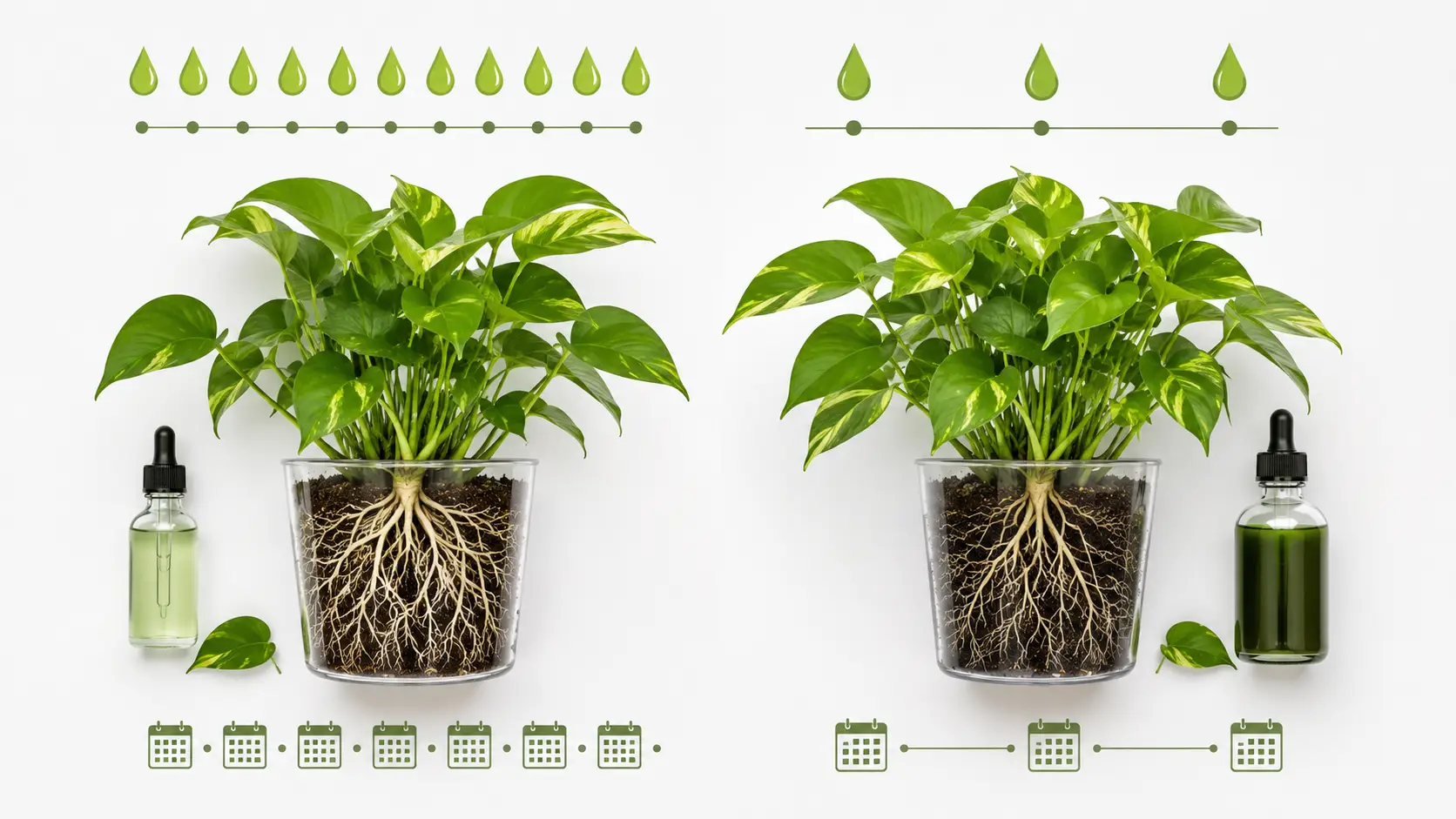
Neither schedule is inherently better. The best choice depends on plant growth rate, fertilizer type, and season.
Bi-weekly fertilizing works best for actively growing plants receiving diluted liquid fertilizer during spring and summer. Monthly fertilizing is generally better for slower-growing plants, beginners, and those using slow-release products.
Comparison Table: Bi-Weekly vs Monthly Fertilizing
| Factor | Bi-Weekly | Monthly |
| Best for | Fast-growing plants, liquid fertilizer | Slow growers, slow-release granules |
| Dosage | Half-strength | Full-strength |
| Risk level | Low if diluted properly | Low to moderate |
| Season | Spring and summer only | Spring, summer, early fall |
| Beginner-friendly | Moderate | Yes |
When Bi-Weekly Fertilizing Makes Sense
Bi-weekly feeding is ideal when plants are actively producing new growth.
Examples include:
- Pothos
- Philodendrons
- Spider plants
- Tradescantia
- Tropical foliage plants
Dilution is essential. Using half-strength fertilizer every two weeks provides a steady nutrient supply while reducing the risk of root burn and salt buildup.
When Monthly Fertilizing Is the Better Choice
Monthly feeding is often more appropriate for slower-growing plants and lower-maintenance care routines.
Monthly schedules work well for:
- Succulents
- Cacti
- ZZ plants
- Snake plants
- Recently repotted plants
Plants that have been repotted often contain fresh potting mix with nutrients already available. Supplemental feeding is usually unnecessary for the first 2–3 months. Slow-growing indoor plants such as money plants often require less frequent feeding, and understanding their overall needs through a Japanese Money Plant Care: Light, Watering & Propagation Guide can help prevent over-fertilizing.
When Is the Wrong Time to Fertilize Houseplants?
Yes, there is a wrong time to fertilize houseplants. Timing can be just as important as frequency.
Applying fertilizer when plants are not actively growing often leads to nutrient accumulation rather than nutrient use. Seasonal changes should guide feeding decisions.
Should You Fertilize Houseplants in October?
October represents a transition period for many indoor plants. Day length decreases, and growth naturally begins to slow.
For most tropical houseplants, October may be the final month for a diluted fertilizer application. Beyond that point, nutrient demand declines significantly.
Why You Should Not Fertilize Houseplants in Winter
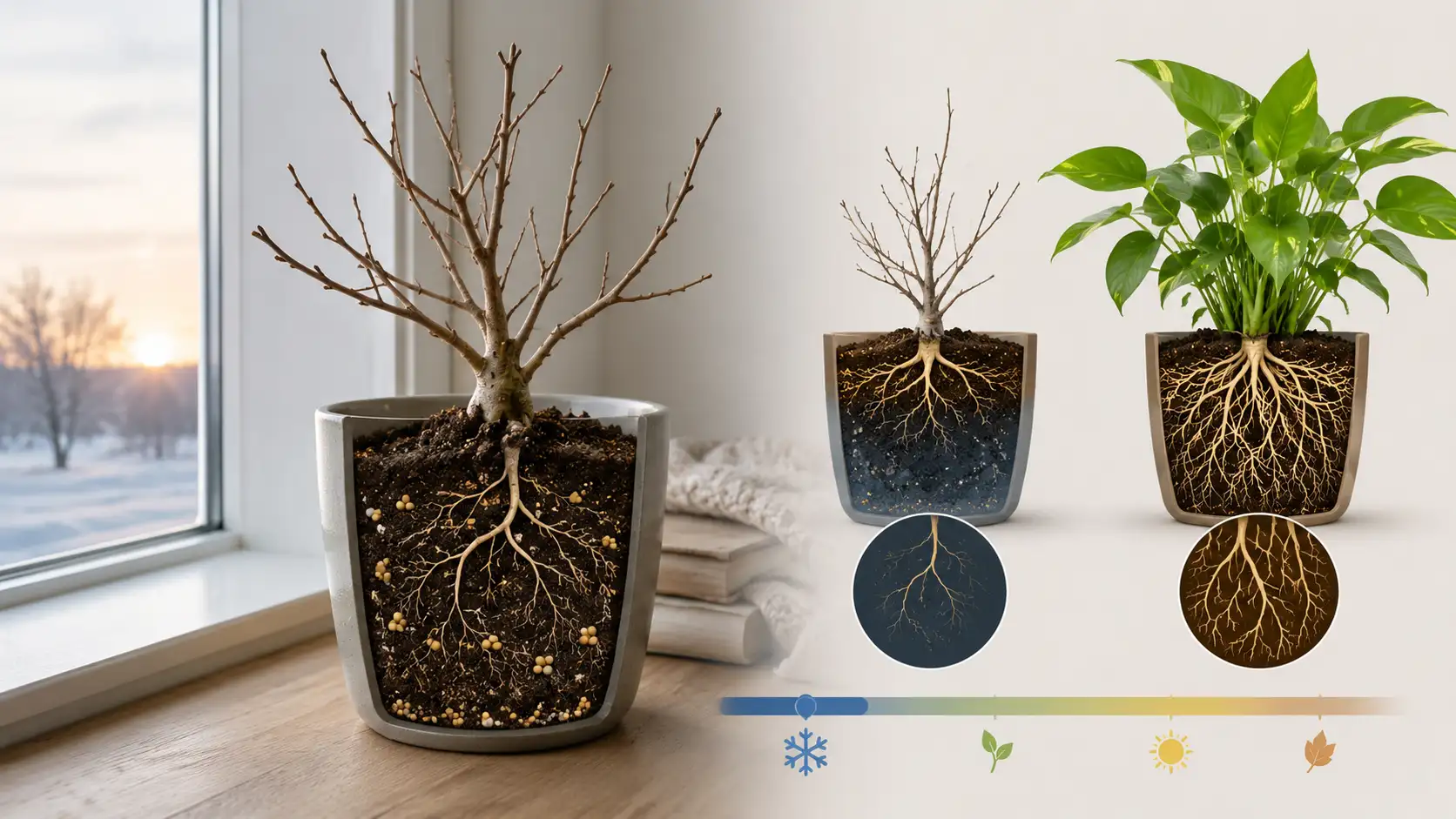
Most houseplants enter a semi-dormant state during winter because of reduced light levels.
During dormancy:
- Root activity slows.
- Nutrient uptake decreases.
- Growth nearly stops.
Unused fertilizer remains in the soil and gradually breaks down into salts. These salts can damage roots and impair water absorption.
A notable exception involves plants grown under high-quality grow lights providing 12 or more hours of daily light. These plants may tolerate occasional light feeding year-round.
What Are the Best Fertilizers for Indoor Plants?
The best fertilizer depends on plant type, growth habits, and maintenance preferences. Different indoor plant species have different nutrient needs, and compact plants like peperomia usually require lighter feeding schedules. A Peperomia Rotundifolia Care Guide: 6+ Proven Easy Tips provides more details.
Common categories include:
- Liquid fertilizers
- Granular fertilizers
- Slow-release fertilizers
- Organic fertilizers
Each type influences feeding frequency differently.
Liquid Fertilizers vs Slow-Release Granules: Key Differences
Liquid fertilizers provide nutrients immediately and are absorbed quickly. They are commonly paired with bi-weekly feeding schedules.
Slow-release granules gradually release nutrients over several months, reducing the need for frequent applications.
Advantages of liquid fertilizers:
- Fast nutrient availability
- Easy dosage adjustments
- Suitable for active growth periods
Advantages of slow-release granules:
- Long-lasting nutrition
- Reduced maintenance
- Lower risk of missed feedings
Comparison: Organic vs Synthetic Fertilizers for Houseplants
| Type | Release Speed | Burn Risk | Beginner Friendly | Cost |
| Liquid synthetic | Fast | Moderate | Moderate | Low |
| Slow-release granules | Slow (3–6 months) | Low | Yes | Low |
| Organic liquid | Moderate | Low | Yes | Moderate |
| Homemade / DIY | Variable | Low | Yes | Very low |
What Is the “King of Fertilizers”?
Urea is widely known as the king of fertilizers because of its high nitrogen content and global availability.
However, pure urea is rarely recommended for houseplants. Most indoor species perform better with balanced fertilizers such as 10-10-10 or 20-20-20 formulations that provide a broader nutrient profile.
Best Homemade and Natural Fertilizers for Indoor Plants
Natural fertilizers offer a gentler approach to feeding indoor plants. They generally release nutrients more slowly and present a lower risk of root burn.
What Is Poor Man’s Fertilizer?
Poor man’s fertilizer commonly refers to snow because melting snow can introduce atmospheric nitrogen into outdoor soils.
For indoor plants, the concept refers to low-cost natural nutrient sources that are readily available at home.
Top DIY Fertilizer Options for Houseplants
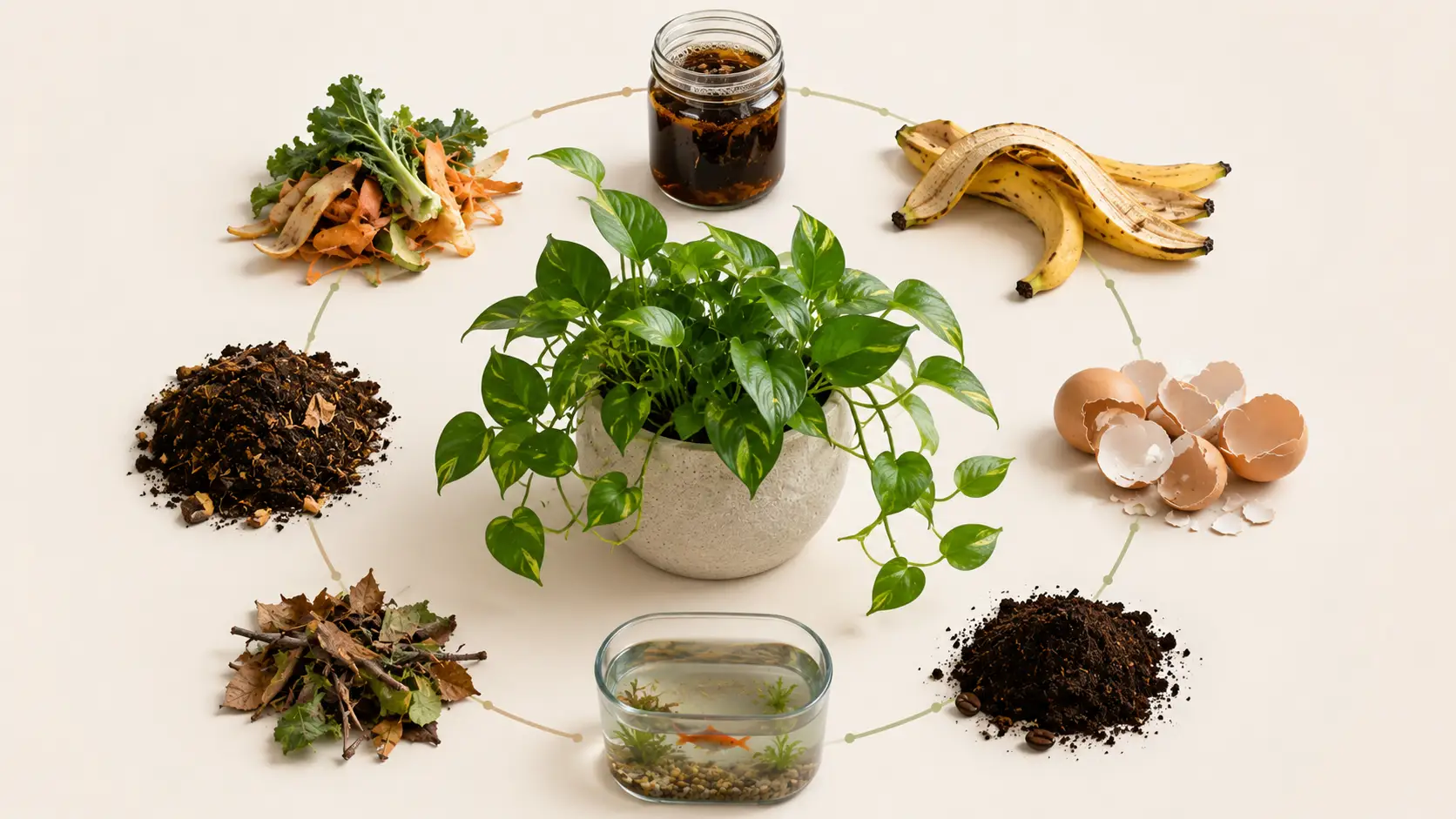
- Compost tea — diluted liquid from compost that provides balanced nutrition.
- Banana peel water — rich in potassium and useful for flowering plants.
- Coffee grounds — provide nitrogen and mild soil acidification when used sparingly.
- Aquarium water — contains nitrogen and trace minerals from fish waste.
- Epsom salt solution — supplies magnesium for deficiency correction.
- Eggshell tea — provides calcium to support cell wall development.
Traditional Amish fertilizer practices often rely on compost, manure, wood ash, and bone meal, all of which are natural nutrient sources.
Which Houseplants Do Not Like Fertilizer?
Some houseplants evolved in nutrient-poor environments and naturally require very little supplemental feeding. Snake plants are among the easiest low-maintenance houseplants because they tolerate limited nutrients and infrequent care. Learn more in this Sansevieria Laurentii Care Guide: Complete Indoor Tips.
Plants That Thrive on Minimal Fertilizing
- Cacti and succulents — excessive fertilizer often causes weak, stretched growth.
- ZZ plant (Zamioculcas zamiifolia) — thrives with minimal feeding.
- Snake plant (Sansevieria) — requires only occasional fertilization.
- Orchids — need specialized low-strength orchid fertilizers.
- Air plants (Tillandsia) — absorb nutrients through leaves and require highly diluted fertilizers.
Common Fertilizer Mistakes That Harm Houseplants
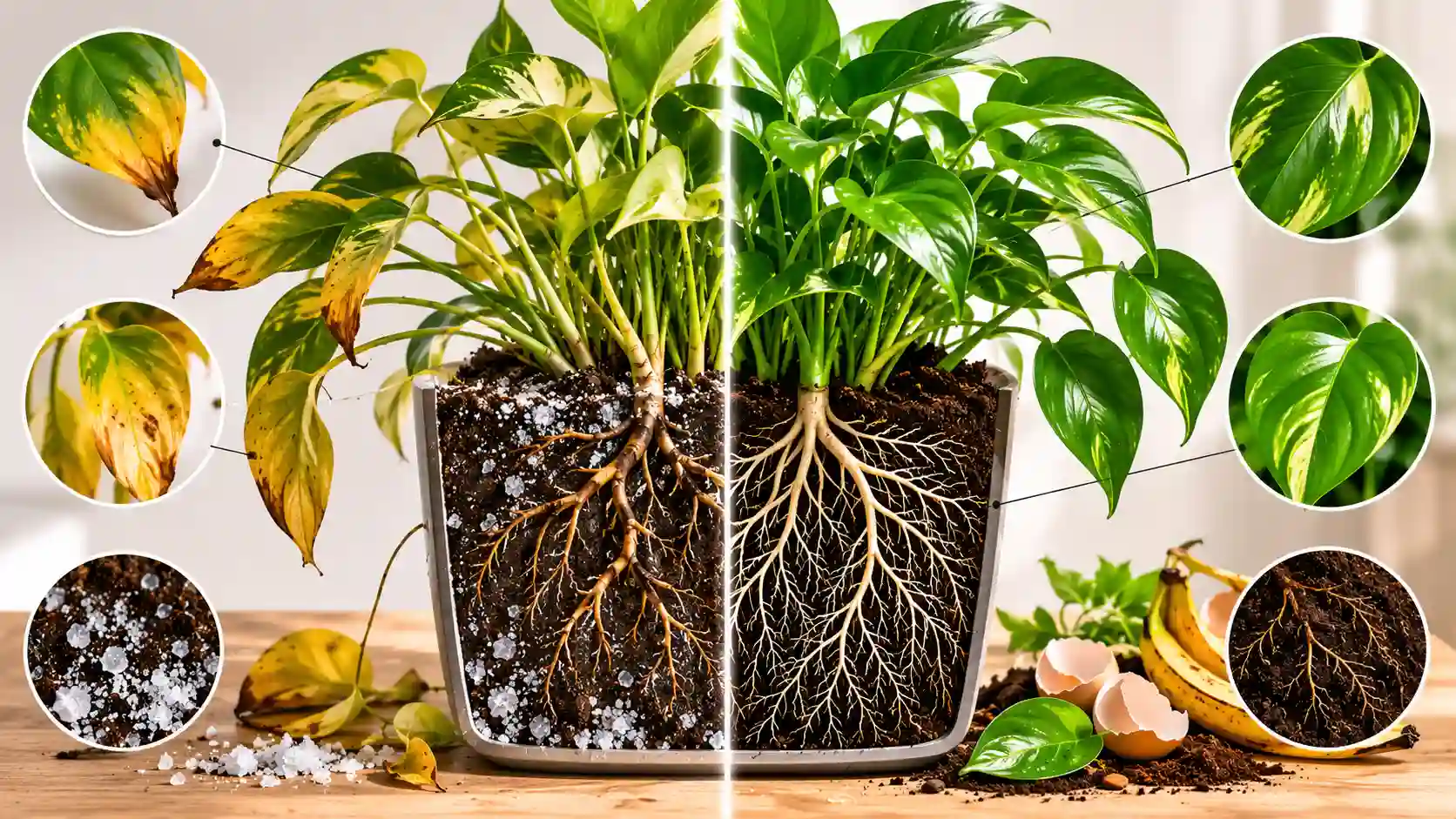
Many fertilizer problems result from incorrect timing, concentration, or application methods. Fertilizer problems are not the only reason houseplants decline. Issues such as pests in the soil can also affect root health, which is explained in Bugs in Indoor Plant Soil: Identification, Treatment & Prevention.
Over-Fertilizing: The Number One Killer of Houseplants
Over-fertilizing causes fertilizer salts to accumulate in soil.
As salt concentration rises, water is drawn out of roots through osmotic pressure. Symptoms include:
- Brown leaf tips
- Yellowing leaves
- Wilting despite moist soil
- White crust on soil or pot edges
To fix the issue:
- Flush soil thoroughly with water.
- Stop fertilizing for 4–6 weeks.
- Remove visible salt deposits.
Fertilizing Dry Soil
Applying fertilizer to dry soil dramatically increases the risk of root burn.
Always water plants before fertilizing or apply diluted liquid fertilizer to already-moist soil.
Using Full-Strength Fertilizer Too Often
Most commercial fertilizers are formulated for occasional use.
Applying full-strength fertilizer every two weeks often results in excessive nutrient accumulation. A safer approach is reducing the concentration by half when feeding more frequently.
Fertilizing Stressed or Sick Plants
Plants suffering from:
- Overwatering
- Root rot
- Pest infestations
- Repotting stress
cannot effectively process nutrients.
The solution is to correct the underlying issue first and wait for healthy new growth before resuming fertilization.
Seasonal Fertilizing Schedule for Houseplants
Seasonal adjustments help prevent overfeeding and align fertilization with natural growth cycles. Seasonal changes influence plant growth, nutrient absorption, and fertilizing needs. Learn more about these cycles in How Does Season Affect Indoor Plant Growth.
Fertilizing Calendar: What to Do Each Season
| Season | Action | Notes |
| Spring (March–May) | Resume feeding; start with half-strength | Growth resumes; increase frequency as days lengthen |
| Summer (June–August) | Bi-weekly or monthly at full schedule | Peak growth period; highest nutrient demand |
| Early fall (Sept–Oct) | Taper off; reduce to monthly or stop | Transition period; avoid encouraging late-season growth |
| Winter (Nov–Feb) | Stop feeding for most houseplants | Dormancy; risk of salt toxicity and root damage |
Plant Size and Growth Rate Considerations for Fertilizing
Plant size and growth rate strongly influence nutrient demand. Larger plants generally require more nutrients than smaller specimens, while fast-growing plants consume nutrients more rapidly than slow growers.
Understanding your plant’s growth pattern makes it easier to adjust feeding schedules, and using a plant growth calculator can help track expected growth changes and plan better care routines.
How Growth Rate Determines Feeding Frequency
Fast-growing plants that often benefit from bi-weekly feeding include:
- Pothos
- Spider plants
- Tradescantia
Moderate growers that perform well with monthly feeding include:
- Peace lilies
- Rubber plants
Slow growers that need minimal fertilization include:
- Cacti
- ZZ plants
- Snake plants
Care Guide: How to Fertilize Indoor Plants Correctly
Proper fertilization combines timing, dosage, and observation.
Step-by-Step: How to Fertilize Houseplants
- Check that the plant is actively growing.
- Water thoroughly 24 hours before fertilizing.
- Mix fertilizer to half strength for bi-weekly feeding or full strength for monthly feeding.
- Apply fertilizer to moist soil.
- Discard excess runoff.
- Record the application date and schedule the next feeding.
Signs Your Houseplant Needs More Fertilizer
- Slow or stunted growth despite proper care
- Pale or yellowing older leaves
- Small new leaves
- Reduced flowering in blooming plants
Conclusion
The choice between bi-weekly vs monthly fertilizing depends on plant type, growth rate, season, and fertilizer formulation. Fast-growing houseplants often benefit from bi-weekly feeding with diluted liquid fertilizer during spring and summer, while slower growers typically perform best with monthly feeding or slow-release products. Winter fertilizing should be avoided for most indoor plants because nutrient uptake slows significantly. The most common fertilizer mistake is overfeeding rather than underfeeding. Whether using synthetic fertilizer, compost tea, aquarium water, or banana peel water, proper timing and consistency are more important than the specific product. Following these principles makes it easier to determine the ideal bi-weekly vs monthly fertilizing schedule for healthy houseplants. Proper fertilizing is only one part of successful indoor plant care, and understanding complete plant requirements can help you create healthier growing conditions. Explore our full Plants: Benefits and Guides (Complete Care, Types & Growing Tips) resource for more plant care information.
Frequently Asked Questions
1: How frequently should I fertilize houseplants?
Most houseplants benefit from monthly feeding during the active growing season. Fast-growing tropical plants can be fed every two weeks with a diluted liquid fertilizer. Winter feeding should generally be avoided.
2: Is fertilizing every month too much for indoor plants?
No. Monthly fertilizing is appropriate for most houseplants during active growth when applied at the recommended strength. Problems occur when feeding continues through winter or is combined with additional fertilizer applications.
3: What month should I stop fertilizing houseplants?
Most houseplants should stop receiving fertilizer in November. October often serves as a transition month for a final diluted feeding. Fertilization can resume in March as growth restarts.
4: What are the best natural fertilizers for indoor plants?
Compost tea, banana peel water, aquarium water, diluted fish emulsion, and carefully used coffee grounds are among the most effective natural fertilizers for indoor plants.
5: What houseplants should not be fertilized frequently?
Cacti, succulents, ZZ plants, snake plants, and air plants are adapted to low-nutrient conditions and require very little supplemental feeding.
6: Why is over-fertilizing considered the number one killer of houseplants?
Over-fertilizing causes mineral salts to accumulate in soil. These salts draw moisture away from roots, leading to dehydration, yellowing leaves, leaf burn, and eventual root damage.
7: Can I fertilize my houseplants with homemade fertilizer bi-weekly?
Yes. Mild homemade fertilizers such as compost tea, banana peel water, and diluted aquarium water can often be applied bi-weekly during active growth because they contain lower nutrient concentrations and present less risk of root burn.