
Introduction
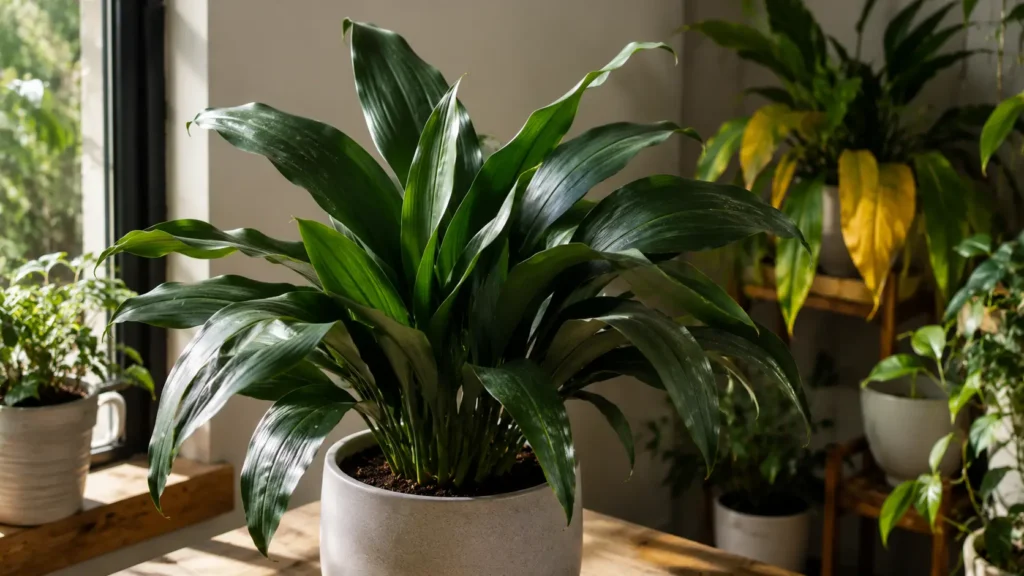
Aspidistra elatior, commonly known as the cast iron plant, is one of the most resilient indoor and outdoor plants grown in the UK and many other regions. However, aspidistra leaves turning yellow is one of the most common concerns raised by plant owners despite this plant’s reputation for being almost indestructible. Yellow leaves are not a disease by themselves; they are a visible symptom that something in the plant’s environment, watering routine, roots, or nutrition needs attention. Understanding the cause behind the yellowing is the first step toward restoring a healthy aspidistra plant. Like many indoor plants, understanding general plant benefits and care requirements helps growers identify problems early and maintain healthier growth.
Quick Summary
- Aspidistra leaves turning yellow is usually caused by overwatering, poor drainage, low light, or root stress rather than disease.
- The cast iron plant is highly adaptable, but yellow leaves indicate an environmental imbalance that should be corrected.
- Yellow leaves normally will not return to green, but the plant itself can recover after fixing the underlying problem.
- Correct watering, suitable indirect light, and healthy soil conditions are the foundation of successful aspidistra care.
What Is an Aspidistra Plant?
What makes Aspidistra elatior known as the cast iron plant?
Aspidistra elatior is an evergreen perennial plant native to East Asia and is widely recognised as the cast iron plant because of its ability to tolerate neglect, low light, and inconsistent care better than many other houseplants. It belongs to the Aspidistraceae family and is valued for its durability and attractive foliage. Aspidistra belongs to a group of evergreen flowering plants known for their tolerance and ornamental foliage.
The plant produces broad, glossy, dark green leaves that grow directly from underground rhizomes. It is naturally slow-growing and requires relatively little maintenance, making it popular for homes, offices, shaded patios, and garden borders. Aspidistra is often compared with other low-maintenance houseplants such as the ZZ plant, which is also valued for its drought tolerance and easy indoor care.
For growers searching for an aspidistra plant UK option, this species is especially suitable because it handles cooler indoor conditions and sheltered outdoor areas well. Understanding normal aspidistra elatior care helps identify when yellowing leaves indicate a genuine problem.
Popular types include:
- Aspidistra elatior — the classic green-leaved cast iron plant.
- Milky Way cast iron plant — a variety with cream-coloured speckles on leaves.
- Spotted cast iron plant — known for decorative leaf spotting patterns.
Why Are My Aspidistra Leaves Turning Yellow? (Core Causes)
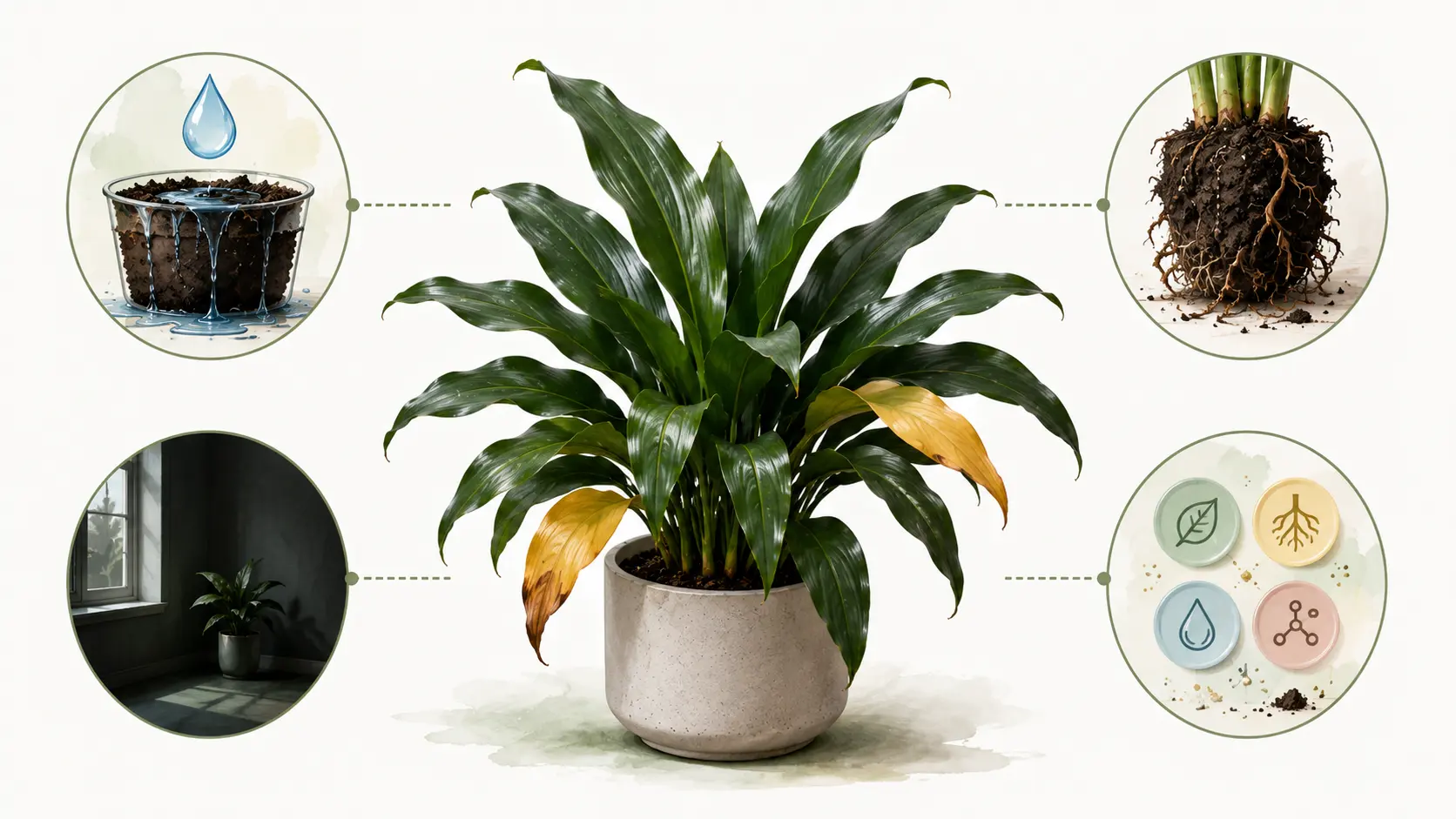
Yellow leaves are a common sign of environmental stress across many houseplants, including Syngonium, where watering, light, and root conditions also play major roles.
Overwatering and Waterlogged Soil
Overwatering is the most common reason aspidistra leaves turn yellow. When soil remains constantly wet, roots cannot access enough oxygen. This creates stress, reduces nutrient absorption, and can eventually cause root rot.
Signs that yellow leaves are caused by overwatering include:
- Soil staying wet for many days.
- A heavy pot that does not dry between waterings.
- Mushy or dark roots.
- Lower leaves turning yellow first.
The best approach is to allow the soil to dry significantly before watering again. For most indoor aspidistra plants, watering every 2–3 weeks is often enough, although conditions such as temperature, pot size, and light levels affect frequency.
Underwatering and Drought Stress
Although aspidistra tolerates drought better than many houseplants, prolonged dryness can still cause yellowing. When roots cannot absorb enough water, nutrient movement through the plant slows, causing leaves to lose colour.
Underwatering symptoms include:
- Very dry, compacted soil.
- A lightweight pot.
- Yellow leaves with crispy brown edges.
- Leaves becoming weak or curling.
The difference between overwatering and underwatering is usually the soil condition. Overwatered plants have wet soil, while underwatered plants have dry soil.
Low Light or Incorrect Light Conditions
Aspidistra is famous for tolerating low light, but it cannot survive without adequate light for long periods. Extremely dark locations reduce chlorophyll production, which may gradually lead to pale or yellow leaves. While aspidistra tolerates lower light levels, other indoor plants such as Begonia maculata require more specific lighting conditions to maintain healthy foliage and appearance.
This problem is especially common for indoor plants in the UK during winter when natural daylight levels drop.
Ideal conditions include:
- Bright indirect light.
- Filtered sunlight.
- Protection from harsh direct sun.
Too much direct sunlight can scorch leaves, while deep shade can weaken growth.
Nutrient Deficiency
Nutrient problems can also cause yellowing, especially when the plant has been growing in the same soil for years.
Nitrogen deficiency is one of the most common causes because nitrogen supports healthy green foliage. A lack of nitrogen usually causes older leaves to become pale yellow.
Other possible deficiencies include:
- Magnesium deficiency — may cause yellowing between leaf veins.
- Iron deficiency — can create interveinal chlorosis, where veins remain greener than surrounding tissue.
Epsom salt does not fix every yellow leaf problem. It only supplies magnesium, so it is useful only when magnesium deficiency is the confirmed cause.
Root Bound or Poor Drainage
When roots become crowded or soil drainage is poor, the plant struggles to absorb water and nutrients properly.
Repotting may help when:
- Roots circle tightly around the pot.
- Water runs straight through without absorbing.
- The soil has become compacted.
- Drainage holes are missing.
Use fresh, well-draining compost and avoid moving the plant into an unnecessarily large pot.
Temperature Extremes and Draughts
Aspidistra is hardy, but sudden temperature changes can cause stress. Cold draughts, frost exposure, and placement near heating systems can damage leaves.
For aspidistra UK growers, winter care is especially important. Outdoor plants should be placed in sheltered areas away from harsh winds and frost pockets.
Natural Ageing of Leaves
Not every yellow leaf indicates a problem. Older lower leaves naturally yellow and die as part of the plant’s life cycle.
Natural ageing usually appears as:
- One or two older leaves turning yellow.
- No widespread decline.
- Healthy new growth continuing.
If many leaves yellow at the same time, a care issue is more likely.
Aspidistra Yellow Leaves vs Brown Leaves: Understanding the Difference
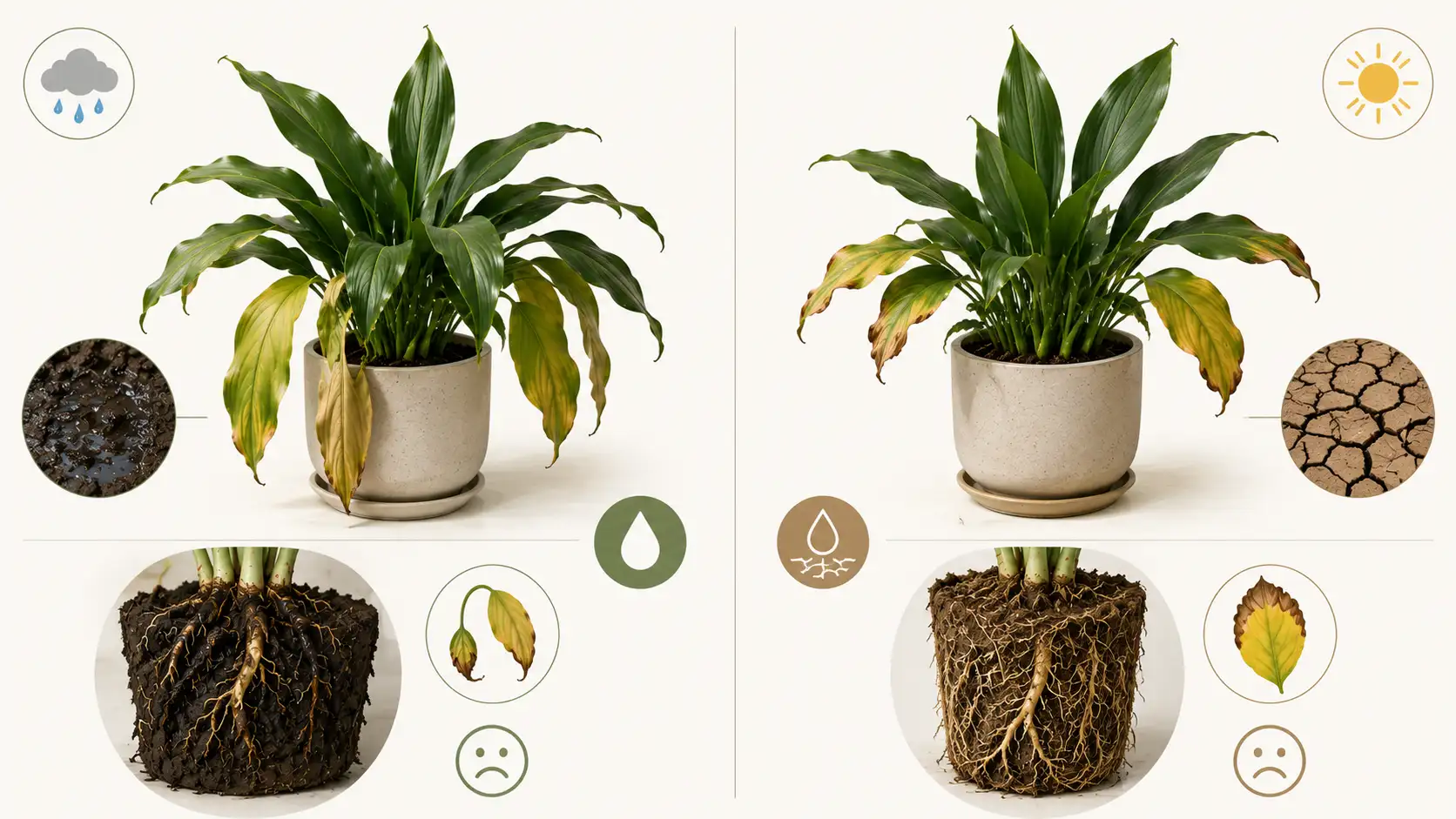
What is the difference between yellow and brown leaves on an aspidistra?
Yellow leaves usually indicate a root, nutrient, or environmental issue affecting the whole leaf, while brown leaves often suggest dryness, damage, or advanced stress.
| Symptom | Common Cause | What It Signals |
| Yellow leaves (whole leaf) | Overwatering, nutrient deficiency, low light | Root or systemic issue |
| Yellow leaves with brown tips | Underwatering, low humidity, fluoride | Environmental stress |
| Brown tips only | Dry air, excess fertiliser, fluoride water | Localised stress |
| Brown leaves (whole leaf) | Root rot, cold damage, severe stress | Advanced problem |
Common related searches include aspidistra brown tips, aspidistra leaves turning yellow and brown, cast iron plant leaves turning brown, and aspidistra brown leaves.
How to Revive an Aspidistra Plant
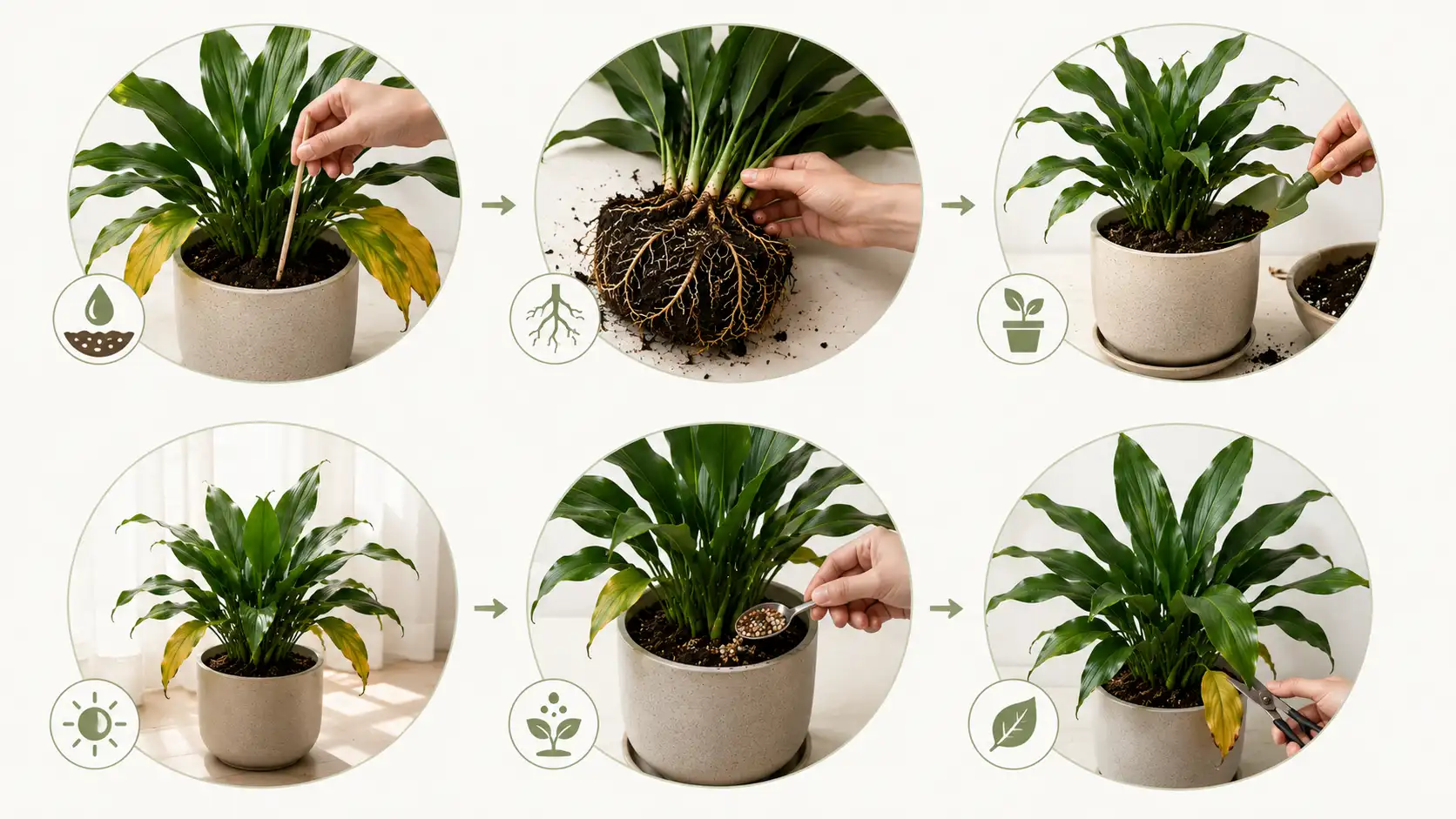
How do you revive a yellowing cast iron plant?
To revive an aspidistra, first identify the cause of yellowing, then correct the environmental problem affecting the plant.
Step 1 — Diagnose the Cause First
Check:
- Soil moisture.
- Root health.
- Light conditions.
- Recent changes in care.
Avoid changing multiple factors at once because this makes it harder to identify the cause.
Step 2 — Adjust Watering Immediately
If the soil is wet:
- Stop watering temporarily.
- Remove standing water.
- Allow the soil to dry.
Future watering should follow soil dryness rather than a strict calendar.
Step 3 — Check Roots and Repot if Necessary
Healthy roots should feel firm and appear light coloured. Remove damaged, mushy roots and place the plant into fresh, well-draining compost if root rot is present.
Step 4 — Improve Light Conditions
Move the plant to a brighter area with indirect light. Avoid direct midday sunlight because it can burn the leaves.
Step 5 — Feed Appropriately
Use a balanced liquid fertiliser during spring and summer. Avoid excessive feeding because salt accumulation can damage roots.
Step 6 — Remove Damaged Leaves
Should you cut yellow leaves off a cast iron plant? Yes. Fully yellow leaves will not recover, so removing them improves appearance and allows energy to focus on healthy growth.
Yellow leaves normally cannot turn green again because the chlorophyll inside the damaged tissue has already been lost.
Can a Plant Recover From Yellow Leaves?
Can a plant recover from yellow leaves?
Yes, an aspidistra can usually recover from yellow leaves once the underlying cause is corrected. Yellow leaves are a warning sign of stress, not a guaranteed sign that the plant is dying.
The yellow leaf itself will usually remain yellow and eventually decline, but the plant can produce new healthy growth.
Recovery often takes around 4–8 weeks depending on the severity of the problem and growing conditions.
Aspidistra Care Guide: Preventing Yellow Leaves Through Proper Care
Watering Requirements
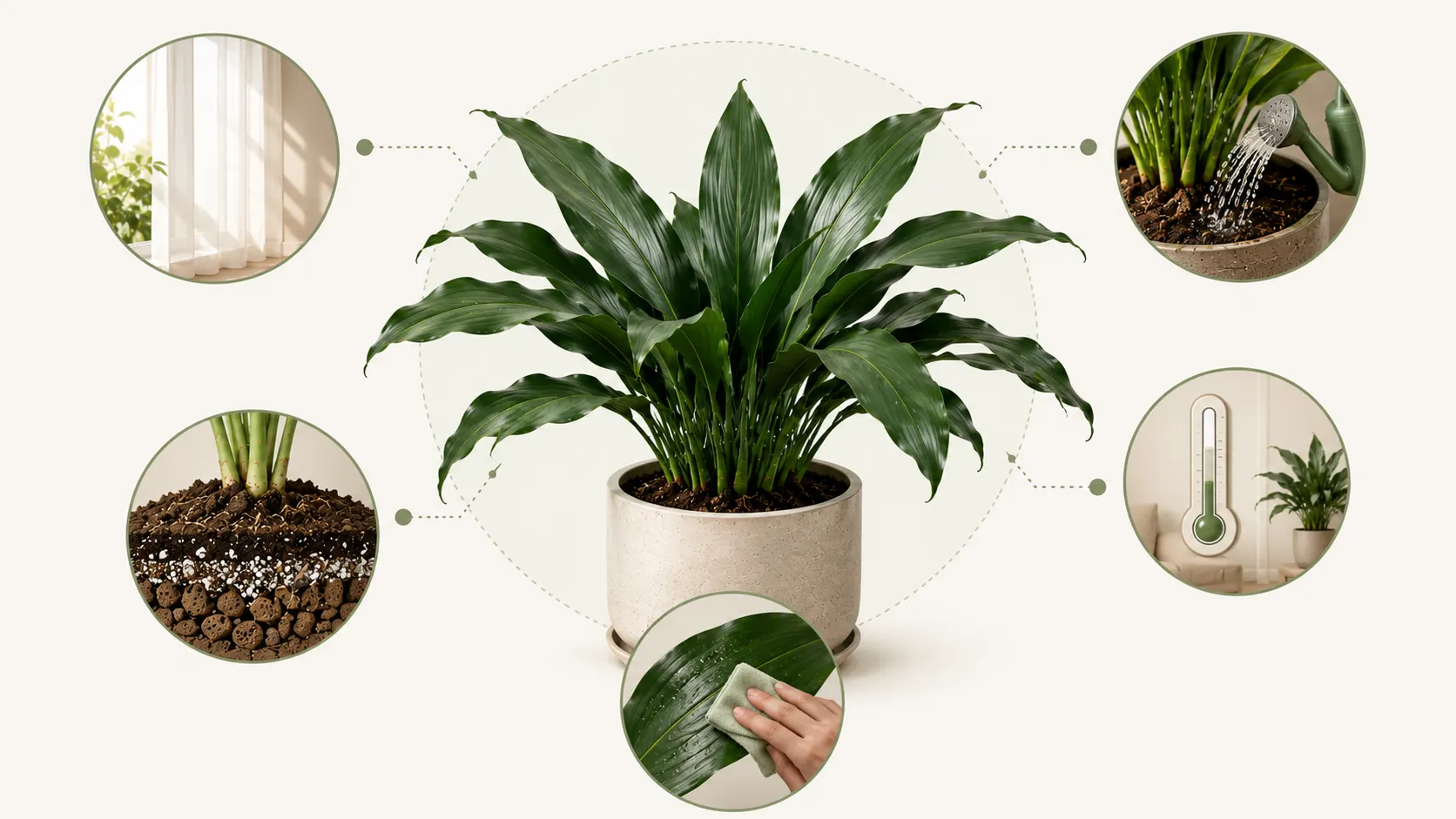
Aspidistra prefers soil that dries partially between waterings. Allow the top 50–75% of the soil to dry before watering again.
General guidance:
- Water every 2–3 weeks indoors during active growth.
- Water less frequently during winter.
- Use room-temperature water.
Light Requirements
Aspidistra thrives in indirect light but tolerates lower light areas.
Avoid:
- Complete darkness.
- Strong direct sunlight.
Soil and Drainage
Use:
- Well-draining compost.
- Loam-based soil.
- Pots with drainage holes.
Repot every 2–3 years or when root-bound.
Feeding Schedule
Feed monthly during spring and summer. Avoid fertilising during autumn and winter when growth slows.
Temperature and Humidity
Ideal conditions:
- Temperature: 10–24°C.
- Protection from frost.
- Avoid cold draughts.
Leaf Care
To shine aspidistra leaves:
- Wipe leaves with a damp cloth.
- Remove dust regularly.
- Avoid commercial leaf shine sprays.
Common Aspidistra Problems Beyond Yellowing
Checking soil health is also important because hidden issues such as pests in indoor plant soil can affect root function and overall plant growth.
What pests affect cast iron plants?
Common cast iron plant pests include:
- Spider mites.
- Scale insects.
- Vine weevils.
Treatment includes cleaning leaves, removing pests manually, and using suitable insect control methods.
What causes cast iron plant fungus and root rot?
Fungal problems are usually linked to excessive moisture. Symptoms include:
- Mushy stems.
- Poor growth.
- White mould on soil.
Improving drainage and reducing watering usually helps.
Why are there white spots on aspidistra leaves?
White spots may result from:
- Hard water deposits.
- Pest activity.
- Fungal spotting.
Diagnosis depends on whether the marks wipe away or damage the leaf tissue.
What causes aspidistra brown tips?
Brown tips are often caused by:
- Low humidity.
- Fluoride in tap water.
- Over-fertilising.
- Cold air exposure.
Aspidistra Plant Size and Growth Rate
Understanding the expected growth pattern of an aspidistra helps gardeners plan suitable pot sizes and growing spaces. You can estimate plant development and track growth expectations using our plant growth calculator for better long-term care planning.
How large does an aspidistra plant grow?
Aspidistra usually reaches around 60–90 cm tall indoors. Outdoor plants in suitable UK gardens may become slightly larger over time.
It is a slow-growing plant, often producing only 1–2 new leaves per month under good conditions.
Growth improves with:
- Warm temperatures.
- Indirect bright light.
- Consistent care.
Aspidistra Varieties Worth Knowing
What are the popular aspidistra varieties?
Common varieties include:
- Aspidistra elatior — the standard green variety.
- Milky Way cast iron plant — cream-speckled leaves.
- Spotted cast iron plant — decorative spotted foliage.
Variegated types generally require slightly brighter indirect light to maintain patterns.
Do Aspidistra Plants Flower?
Does the cast iron plant produce flowers?
Yes, Aspidistra elatior can produce small purple-brown flowers close to soil level. These flowers usually appear in late winter or spring and are often unnoticed indoors.
Flowering is natural and does not mean the plant is stressed.
Beginner Mistakes With Aspidistra Care
Common mistakes include:
- Overwatering because the plant is considered “easy.”
- Keeping it in extremely dark areas permanently.
- Using leaf shine products.
- Repotting too often.
- Ignoring early yellowing symptoms.
- Trying to restore yellow leaves instead of removing them.
Conclusion
Aspidistra leaves turning yellow is a manageable problem when the cause is identified correctly. In most cases, overwatering, poor drainage, low light, or nutrient imbalance are responsible. The cast iron plant is highly resilient, and correcting care conditions usually allows it to recover and produce healthy new growth. Yellow leaves themselves rarely return to green, but with proper watering, suitable light, and good soil conditions, most aspidistra plants continue to thrive.
Frequently Asked Questions
Why are my aspidistra leaves turning yellow?
Aspidistra leaves usually turn yellow because of overwatering, poor drainage, low light, nutrient deficiency, or natural ageing. Overwatering is the most common cause.
Should I cut yellow leaves off my cast iron plant?
Yes. Yellow leaves will not recover, so removing them with clean scissors helps keep the plant healthy and directs energy toward new growth.
Can yellow leaves turn back to green?
No, the affected leaf usually cannot regain its colour. However, the plant itself can recover and grow healthy new leaves.
How do I tell if yellow leaves are from overwatering or underwatering?
Overwatering causes wet soil, mushy roots, and lower yellow leaves. Underwatering causes dry soil, lightweight pots, and yellow leaves with crispy brown edges.
How often should I water an aspidistra?
Water when the top half to two-thirds of the soil has dried. Indoor plants often need watering every 2–3 weeks in summer and less in winter.
Does Epsom salt fix yellow leaves on a cast iron plant?
Epsom salt only helps when magnesium deficiency is the cause. It is not a general solution for yellow leaves.
Do yellow leaves always mean the plant is dying?
No. Yellow leaves are a stress signal, not a death sentence. Aspidistra is extremely resilient and usually recovers after care problems are corrected.