
Introduction
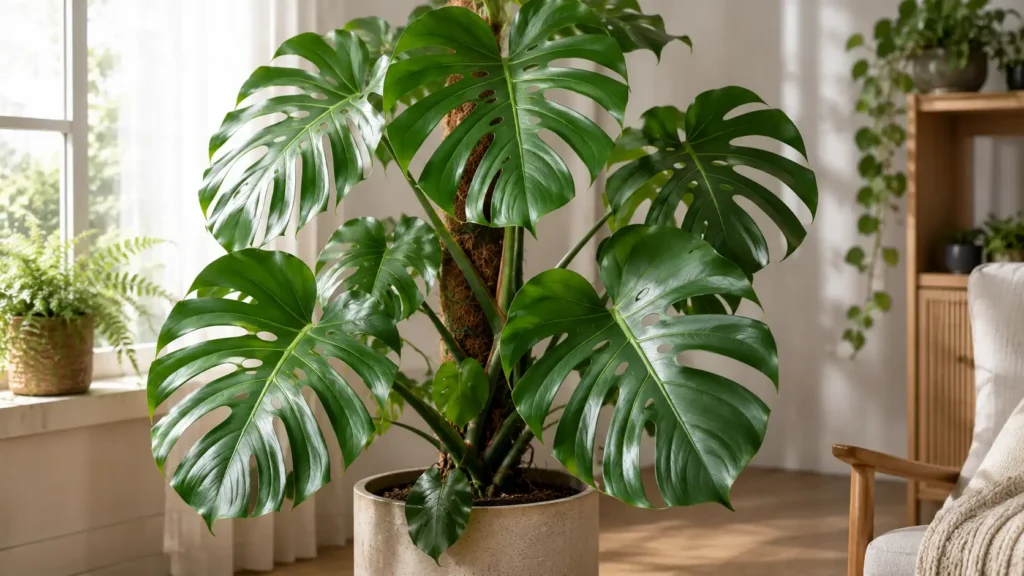
A cheese plant, scientifically known as Monstera deliciosa, is a popular tropical houseplant recognised for its large, glossy leaves with natural splits and holes. Many indoor plant owners ask how often to water a cheese plant because watering mistakes are one of the main reasons Monsteras develop yellow leaves, root problems, or slow growth. The correct watering frequency depends on several factors, including light exposure, humidity, temperature, pot size, and soil drainage. Also called a Swiss cheese plant or split-leaf philodendron, this climbing plant is valued for its attractive foliage and relatively easy indoor care when its basic needs are understood.
Quick Summary
- Cheese plants (Monstera deliciosa) usually need watering every 1–2 weeks during active growth, depending on indoor conditions.
- Always check the top 2–3 inches of soil before watering instead of following a fixed schedule.
- Overwatering is the most common care mistake and can cause yellow leaves and root rot.
- Winter watering should be reduced because growth slows and soil stays moist longer.
- Bright indirect light, good drainage, and balanced feeding help maintain a healthy Monstera.
What Is a Cheese Plant and Why Is It Called a Cheese Plant?
A cheese plant is the common name for Monstera deliciosa, a tropical climbing plant from the Araceae family. It is called a cheese plant because mature leaves develop natural holes and splits called fenestrations, which make them resemble Swiss cheese. While standard Monstera deliciosa has green leaves, special forms like variegated Monsteras require slightly different care approaches, including careful attention to light and watering.
The cheese plant name is widely used in gardening, especially in the UK and other regions, while “Swiss cheese plant” is another common name for the same species. The scientific name is Monstera deliciosa, referring to its unusual appearance and edible fruit produced in suitable tropical conditions. Another popular related species is Monstera adansonii, which is often grown as a hanging or climbing plant and is sometimes called a little Swiss monstera. Monstera deliciosa is a tropical flowering plant species in the Araceae family with distinctive split leaves and climbing growth habits. Learn more about its botanical classification on Wikipedia.
The relationship between Swiss cheese plant vs monstera is simple:
- Swiss cheese plant = common name
- Cheese plant = common name
- Monstera deliciosa = scientific name
A related species is Monstera adansonii, sometimes called the little Swiss monstera. It has smaller leaves and more delicate holes but is a different plant from Monstera deliciosa.
How Often to Water a Cheese Plant
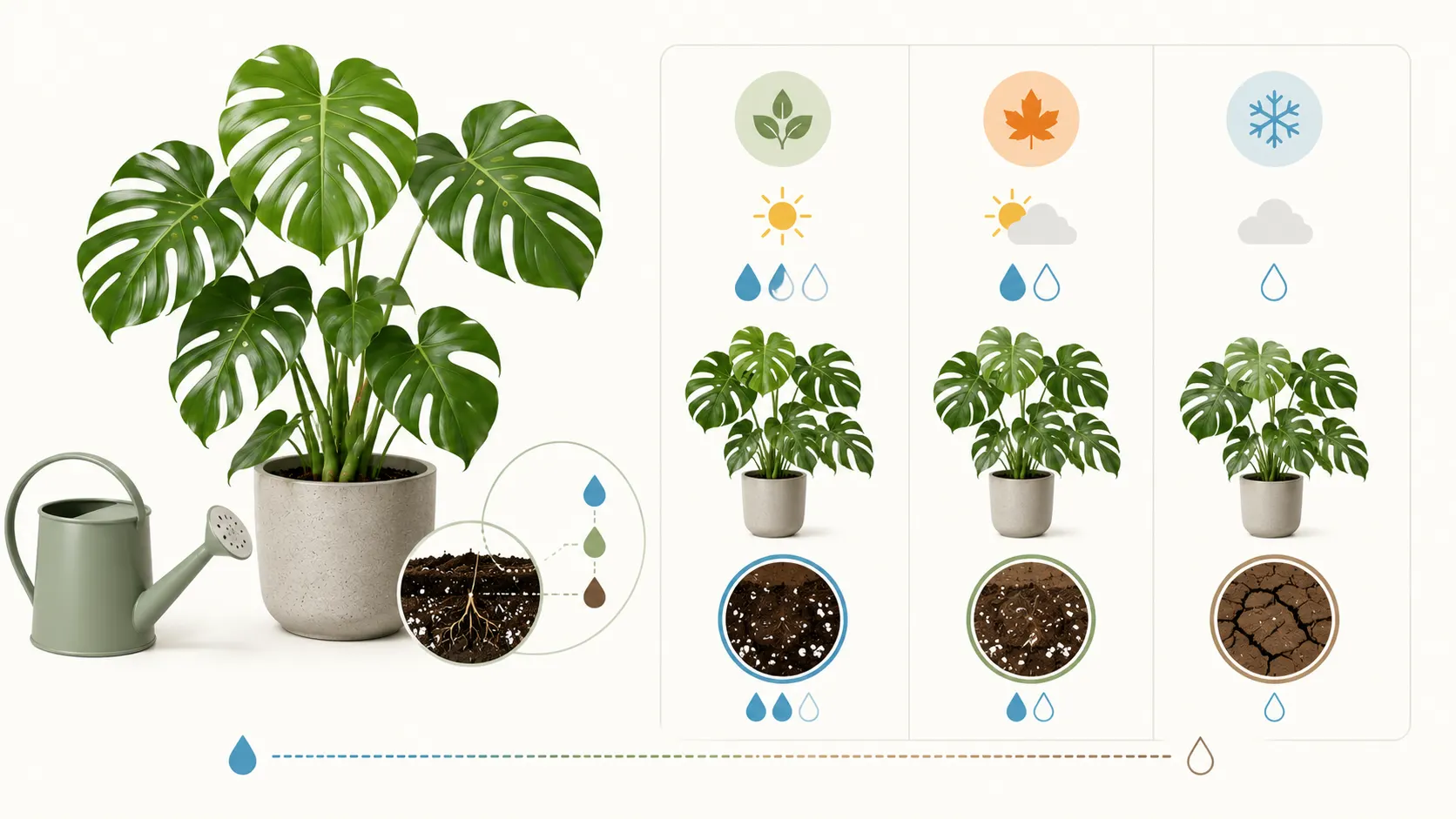
A cheese plant usually needs watering every 1–2 weeks during the growing season, but the exact frequency depends on its environment. There is no universal watering schedule because indoor conditions change how quickly soil dries.
A healthy watering routine depends on:
- Amount of light received
- Room temperature
- Humidity level
- Pot size and material
- Soil drainage quality
The best approach is to allow the top layer of soil to dry before watering again. Cheese plants prefer slightly moist soil but do not tolerate constantly wet roots.
How Often to Water a Cheese Plant Indoors
How often to water a cheese plant indoors depends mainly on the plant’s growing conditions. Indoor Monsteras often dry out slower than outdoor plants because they receive less sunlight and experience fewer temperature changes.
Important factors include:
- Pot material: Terracotta pots dry faster than plastic pots.
- Humidity: Dry indoor air can increase watering needs.
- Light levels: Brighter indirect light increases water use.
- Temperature: Warm rooms dry soil faster.
A common indoor routine is checking the soil every 7–10 days and watering only when the upper soil layer feels dry. The type and size of pot also influence watering frequency, so choosing the right container with proper drainage is essential for healthy Monstera growth.
How Often to Water a Swiss Cheese Plant in Winter
A Swiss cheese plant needs less water in winter because growth slows down and the plant uses moisture more slowly. In cooler months, watering may reduce to every 2–4 weeks depending on indoor conditions.
Winter risks include:
- Water staying trapped in cold soil
- Increased chance of root rot
- Yellowing leaves caused by excess moisture
During winter, always check soil dryness before watering. A plant near a bright window may still need more frequent watering than one kept in low light.
How Many Times a Week Should You Water a Cheese Plant?
A cheese plant usually needs watering less than once a week. Weekly or biweekly watering is more common than watering several times per week.
A Monstera should not be watered daily because constantly wet soil prevents roots from receiving enough oxygen.
Use this method:
- Check the top 2–3 inches of soil
- Water deeply when dry
- Allow excess water to drain completely
How to Tell If a Cheese Plant Needs Water
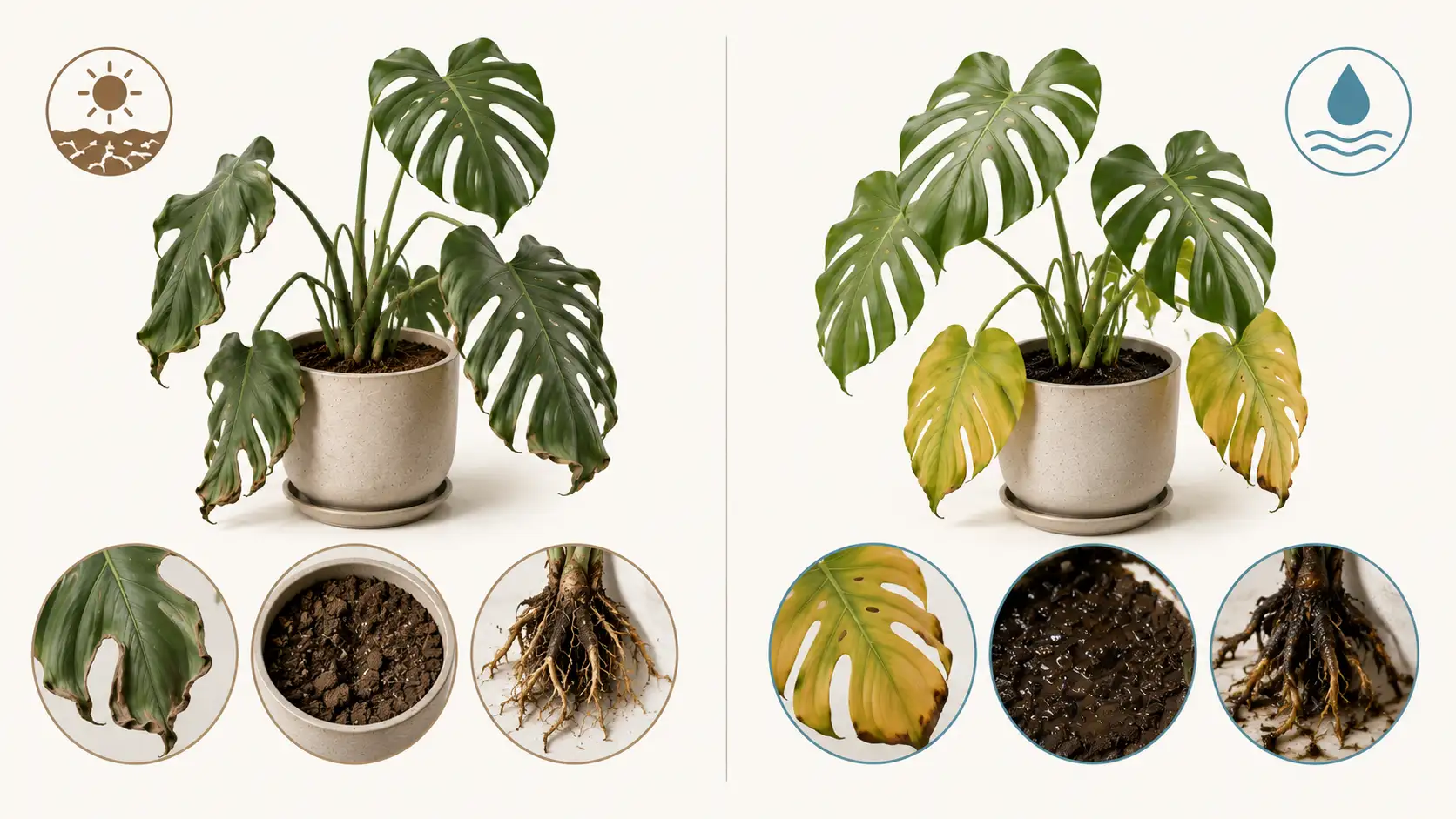
A cheese plant needs water when the soil becomes dry and the leaves begin showing early signs of stress. The most reliable method is checking soil moisture rather than relying only on leaf appearance.
Signs of underwatering include:
- Drooping leaves
- Curling leaf edges
- Dry soil
- Lightweight pot
- Leaves looking dull
A healthy Swiss cheese plant usually has firm stems and glossy leaves.
What Does a Stressed Monstera Look Like?
A stressed Monstera may show different symptoms depending on whether it lacks water or has received too much.
Underwatering signs:
- Limp leaves
- Dry brown edges
- Soil pulling away from the pot sides
- Slow recovery after watering
Overwatering signs:
- Yellow leaves
- Soft stems
- Constantly wet soil
- Wilting despite moist soil
Understanding the difference helps avoid treating the wrong problem.
Can You Overwater a Cheese Plant?
Yes, you can overwater a cheese plant, and overwatering is one of the most common causes of Monstera problems. When roots stay in soggy soil for too long, they cannot absorb oxygen properly, which can lead to root rot.
Signs of overwatering include:
- Yellow leaves
- Mushy stems
- Bad-smelling soil
- Slow growth
- Permanently wet compost
To recover an overwatered cheese plant:
- Stop watering until soil dries
- Check roots for rot
- Remove damaged roots if necessary
- Repot into fresh, well-draining soil
A healthy cheese plant can usually survive 2–3 weeks without water, especially in cooler conditions, but long periods of complete dryness can cause stress.
Swiss Cheese Plant Watering Methods Explained
Cheese plants can be watered using either top watering or bottom watering. Both methods can work when used correctly.
Top Watering vs Bottom Watering Monstera
| Method | Best For | Time Required | Risk Level |
| Top watering | General plant care | Immediate | Low if drainage is good |
| Bottom watering | Encouraging even root moisture | 20–45 minutes | Low when monitored |
Top watering involves pouring water directly onto the soil until excess drains from the bottom.
Bottom watering involves placing the pot in water and allowing the soil to absorb moisture through drainage holes.
Steps for watering:
- Check soil moisture first
- Water slowly and evenly
- Allow excess water to drain
- Empty standing water from trays
What to Feed a Cheese Plant Indoors
A cheese plant benefits from feeding during spring and summer when growth is active. A balanced liquid fertiliser or dedicated Monstera plant food can support healthy leaves and stronger growth.
Feeding schedule:
- Spring and summer: once a month
- Autumn: reduce feeding
- Winter: usually stop or feed rarely
Common options include:
- Balanced liquid fertiliser
- Slow-release fertiliser
- Monstera-specific plant food
Coffee grounds are sometimes suggested for Monsteras, but they are not a complete fertiliser. They may slightly improve organic matter but should not replace balanced plant nutrition.
What Makes a Monstera Happy?
A happy Monstera needs a combination of:
- Bright indirect light
- Correct watering
- Moderate humidity
- Good drainage
- Regular feeding during growth periods
Monstera deliciosa care works best when all conditions work together rather than focusing on only one factor.
Swiss Cheese Plant Size and Growth Rate
A Swiss cheese plant can become a large indoor plant when given proper care. Indoors, Monstera deliciosa commonly grows several feet tall and wide, especially when supported with a climbing structure.
Outdoor tropical conditions can produce much larger plants. Understanding how quickly a cheese plant grows can help with planning pot size, support structures, and indoor placement. You can estimate plant development and growth expectations using our Plant Growth Calculator tool.
Growth rate:
- Moderate to fast under ideal conditions
- Fastest during spring and summer
- Slower during winter
Factors affecting growth include light, nutrients, water, and available support.
Complete Cheese Plant Care Guide for Beginners
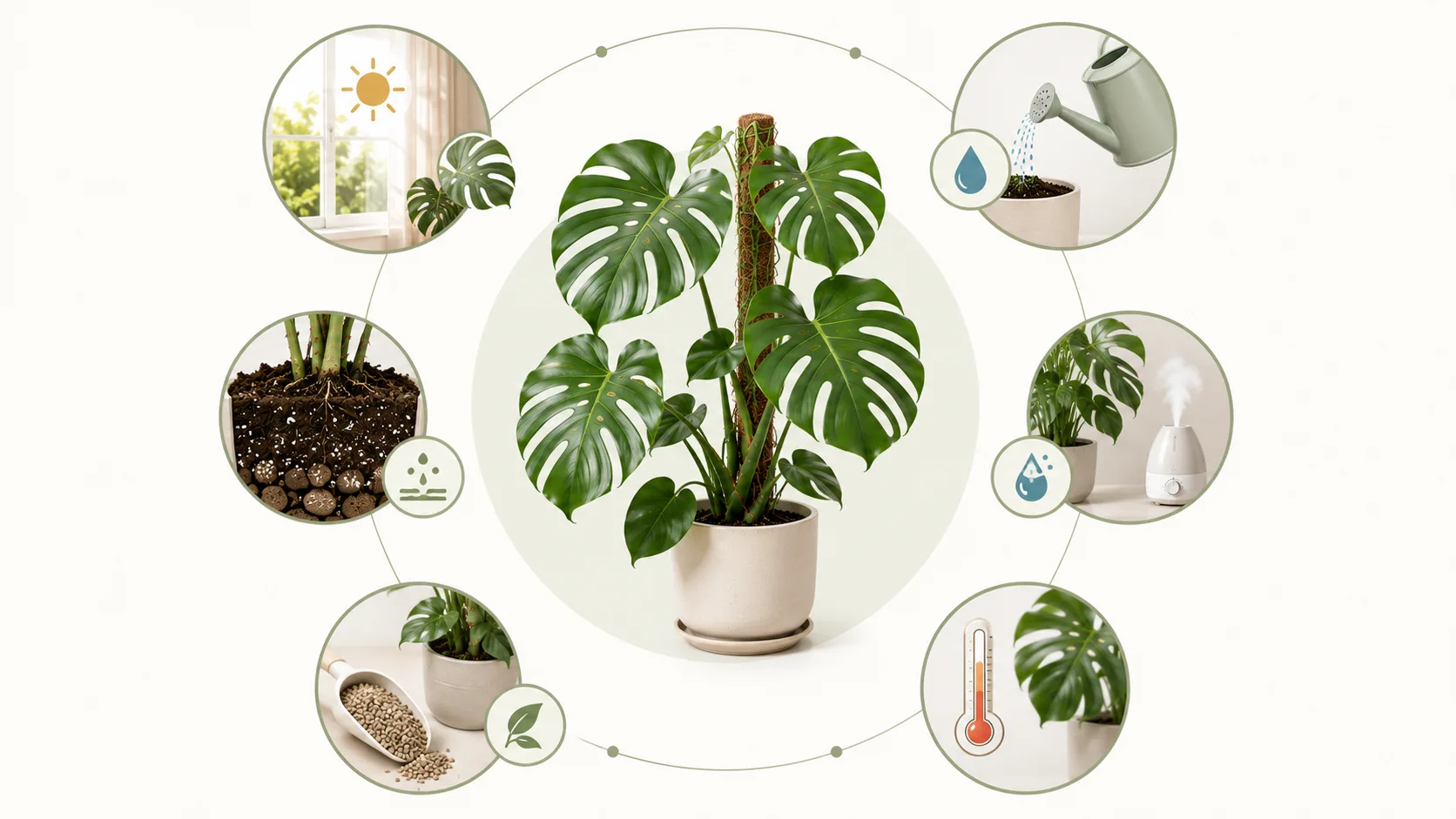
Learning how to look after a cheese plant is simple when the main care requirements are followed. Many indoor plant lovers grow Monstera alongside other tropical houseplants such as Begonia maculata, which also benefits from balanced light, humidity, and watering practices.
Care checklist:
- Light: Bright indirect light; avoid harsh direct sunlight.
- Watering: Every 1–2 weeks; check soil before watering.
- Humidity: Around 50–60% humidity is beneficial.
- Soil: Use a loose, well-draining peat-based mix.
- Feeding: Monthly fertilising during growing months.
- Pot size: Medium pots with drainage holes are usually ideal.
- Temperature: Keep between 18–27°C and avoid cold drafts.
Monsteras do not usually prefer extremely small pots because restricted roots can limit growth. Indoor plants like Monstera deliciosa are part of a wider group of popular houseplants covered in our complete Plants: Benefits and Guides (Complete Care, Types & Growing Tips) resource, which explores plant care, benefits, and growing advice.
Moss Poles and Support Structures for Cheese Plants
Cheese plants are natural climbers and use aerial roots to attach to trees in their native tropical environment. A moss pole or climbing support helps replicate this growth habit indoors.
Common supports include:
- Moss pole
- Coir pole
- Bamboo stake
A moss pole can affect watering because it may hold moisture near aerial roots. Avoid keeping it constantly soaked because excess moisture can encourage problems. Monsteras can also be trained as hanging plants, and understanding their climbing habits helps create healthier indoor displays.
How to Make a Swiss Cheese Plant Bushy
A Swiss cheese plant becomes leggy when it does not receive enough light or regular pruning. To encourage bushier growth:
- Provide brighter indirect light
- Prune long stems
- Remove weak growth
- Rotate the plant regularly
Pruning encourages branching and helps create a fuller appearance.
How to Prune a Cheese Plant
Cheese plant pruning helps control size, remove damaged leaves, and encourage healthier growth.
Steps:
- Use clean, sterilised scissors
- Cut just above a healthy node
- Remove yellow or damaged leaves
- Avoid removing too much growth at once
What Should You Not Do With a Monstera?
Avoid these common mistakes:
- Do not keep the plant in direct harsh sunlight
- Do not water on a strict calendar
- Do not use oversized pots with poor drainage
- Do not overfeed during winter
How to Propagate a Swiss Cheese Plant
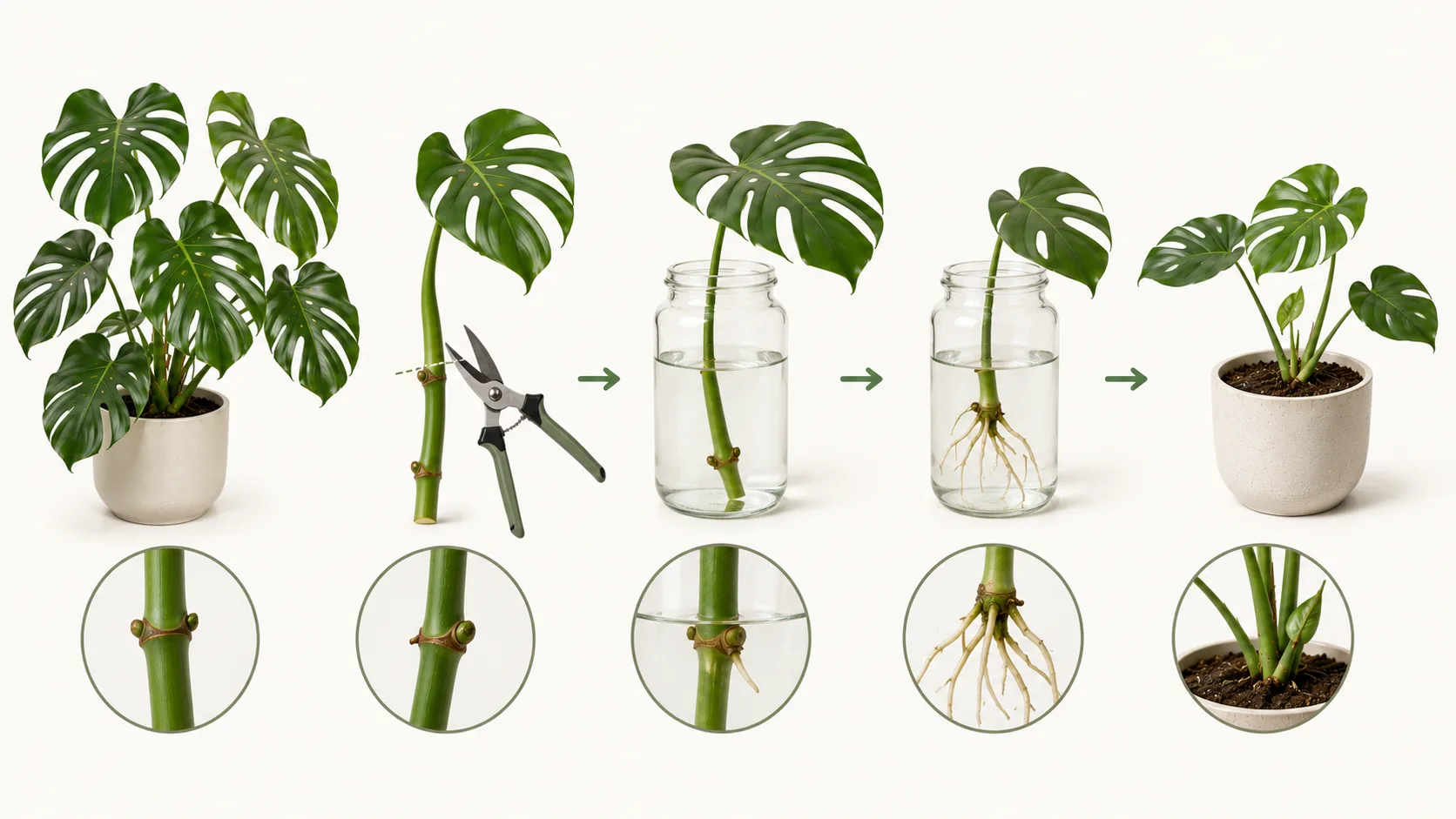
Swiss cheese plant propagation is commonly done through stem cuttings containing a node. The node is essential because it contains the growth point needed for new roots.
Propagation methods:
- Water propagation
- Soil propagation
Steps:
- Cut below a healthy node
- Place cutting in water or moist soil
- Keep in warm indirect light
- Transfer to a pot after strong roots develop
Spring and early summer are the best times to propagate.
How to Take a Cheese Plant Cutting
A cheese plant cutting should include:
- A healthy stem section
- At least one node
- A clean cutting tool
Cut below the node because roots develop from this area. A leaf alone cannot produce a new Monstera plant.
Cheese Plant Yellow Leaves — Causes and Fixes
Cheese plant yellow leaves usually indicate a care issue, especially overwatering, but other factors can also contribute.
Common causes:
- Overwatering or root rot
- Underwatering
- Low light
- Nutrient deficiency
- Natural ageing of older leaves
Fix yellow leaves by checking soil moisture first, improving light conditions, and adjusting watering habits.
Common Cheese Plant Problems and How to Solve Them
| Problem | Likely Cause | Fix |
| Yellow leaves | Overwatering or low light | Reduce watering and improve light |
| Brown leaf tips | Low humidity or underwatering | Increase humidity and check soil |
| Drooping stems | Dry soil or root restriction | Water properly and check pot size |
| Slow growth | Low light or lack of nutrients | Improve conditions and feed |
| Leggy growth | Insufficient light | Move plant and prune |
Common cheese plant problems are usually caused by incorrect watering, poor lighting, or unsuitable growing conditions.
Conclusion
Knowing how often to water a cheese plant is one of the most important parts of successful Monstera deliciosa care. In most indoor environments, watering every 1–2 weeks works well, but checking soil moisture is always more reliable than following a fixed schedule. A healthy Swiss cheese plant needs balanced care, including bright indirect light, proper drainage, suitable humidity, and occasional feeding. By understanding its natural growth habits and avoiding overwatering, beginners can maintain a strong, attractive cheese plant indoors.
Frequently Asked Questions
How often should you water a cheese plant?
A cheese plant usually needs water every 1–2 weeks during the growing season. Always check the top 2–3 inches of soil before watering because indoor conditions affect drying speed.
Can you overwater a cheese plant?
Yes. Overwatering is the most common cheese plant problem and can cause yellow leaves, root rot, and weak growth. Allow soil to partially dry between watering sessions.
What does a thirsty monstera look like?
A thirsty Monstera usually has drooping leaves, curling edges, dry soil, and a lighter pot. Leaves may appear less glossy than normal.
How often should you water a Swiss cheese plant in winter?
A Swiss cheese plant usually needs watering every 2–4 weeks in winter because growth slows and soil stays moist longer.
How long can a cheese plant go without water?
A healthy cheese plant can often survive around 2–3 weeks without water, depending on temperature, humidity, and pot conditions.
What should you feed a cheese plant indoors?
Use a balanced liquid fertiliser or Monstera plant food once a month during spring and summer. Reduce feeding during colder months.
Why are my cheese plant leaves turning yellow?
Yellow leaves are commonly caused by overwatering but may also result from low light, nutrient problems, underwatering, or natural ageing of older leaves. Check soil moisture before changing care routines.



2 Responses