
Introduction
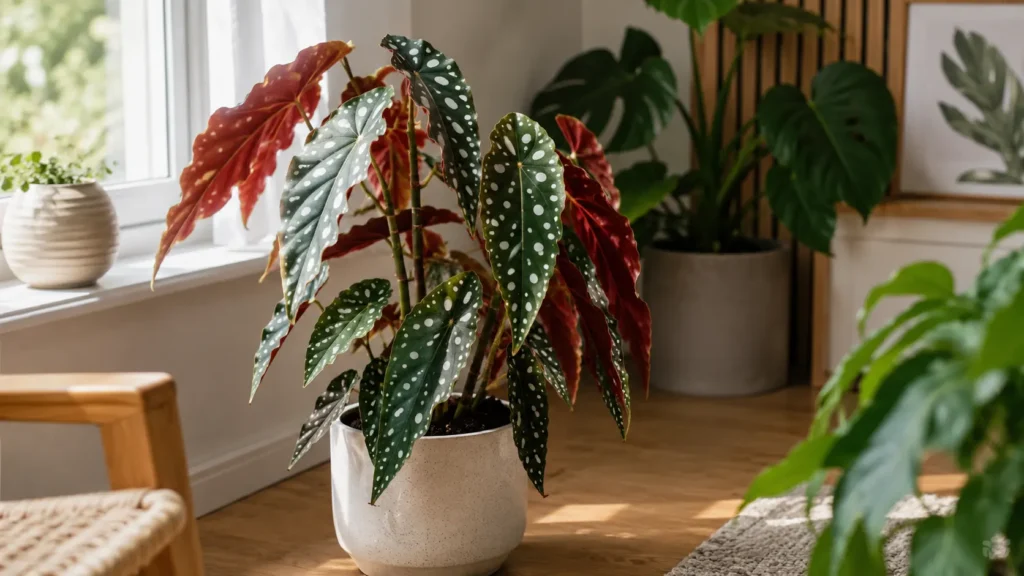
Begonia maculata wightii care focuses on providing bright indirect light, consistent moisture without waterlogging, high humidity, and well-draining soil to help this striking houseplant thrive. Known for its elegant silver-spotted leaves, rich burgundy-red undersides, and upright cane-like stems, this tropical begonia has become one of the most popular indoor ornamental plants. It is commonly called the polka dot begonia, spotted begonia, or angel wing polka dot begonia because of its distinctive foliage. Whether you are new to houseplants or have experience growing tropical species, understanding the plant’s natural growing conditions makes caring for Begonia maculata wightii much easier. Begonia maculata wightii is one of many beautiful houseplants featured in our Plants: Benefits and Guides, where you’ll find expert growing advice for a wide range of indoor and outdoor plants.
Quick Summary
- Begonia maculata wightii grows best in bright, indirect light with consistently high humidity.
- Water only when the top inch of soil feels dry to reduce the risk of root rot.
- Regular pruning encourages compact, bushier growth and prevents leggy stems.
- Stem cuttings root easily in either water or soil, making propagation beginner-friendly.
What Is Begonia Maculata Wightii?
Begonia maculata wightii is a cultivated form of Begonia maculata, a tropical cane begonia native to southeastern Brazil. It belongs to the Begoniaceae family and is admired for its dramatic foliage, upright growth habit, and ornamental flowers. If you enjoy growing tropical foliage plants, you may also like our Alocasia Amazonica Care Indoors guide, which covers another striking indoor plant with similar humidity and lighting needs.
The nickname polka dot begonia comes from the bright silver-white spots scattered across its dark green leaves. These spots create a striking contrast that makes the plant instantly recognizable. Another defining feature is the deep red or burgundy underside of each leaf, adding visual interest from every angle.
Begonia maculata belongs to the Begonia genus, a diverse group of flowering plants that includes more than 2,000 recognized species found primarily in tropical and subtropical regions.
Unlike many compact begonias, Begonia maculata wightii develops tall, cane-like stems that give it an elegant, architectural appearance indoors.
Is Wightii Different from Begonia Maculata?
Yes, but only slightly.
Begonia maculata refers to the species, while ‘Wightii’ is one of its best-known cultivated forms. In houseplant collections, the name “Begonia maculata” often refers specifically to the Wightii cultivar because it is the most widely available and commonly grown.
Are Polka Dot Begonias Rare?
Polka dot begonias were once considered collector plants because they were difficult to find commercially. Today, they are widely available through garden centers, specialty nurseries, and online plant retailers. While no longer rare, healthy, mature specimens remain highly valued because of their ornamental appearance.
Begonia Wightii vs Maculata: What’s the Difference?
Begonia maculata Wightii is a cultivar within the Begonia maculata species rather than an entirely separate plant. Most differences between the two relate to cultivated characteristics rather than botanical classification.
The Wightii cultivar is especially appreciated for its:
- More pronounced silver spotting
- Rich red leaf undersides
- Upright cane growth
- Reliable flowering indoors
Difference Between Angel Wing Begonia and Begonia Maculata
Begonia maculata belongs to the broader group commonly known as cane or angel wing begonias. However, not every angel wing begonia is Begonia maculata.
Angel wing begonias include numerous hybrids and cultivars that vary in leaf color, flower color, and spotting patterns. Begonia maculata Wightii is one specific type recognized for its dramatic white spots and elongated leaves.
| Feature | Begonia Maculata Wightii | Angel Wing Begonia |
| Leaf Shape | Long, narrow, pointed | Variable depending on cultivar |
| Silver Spots | Dense and prominent | May be absent or less pronounced |
| Leaf Underside | Deep red | Green, bronze, or red depending on variety |
| Flower Color | White to pale pink | White, pink, red, or coral |
| Growth Habit | Upright cane stems | Upright cane or branching |
Begonia Maculata Varieties and Types
Several Begonia maculata cultivars differ in foliage size, spotting intensity, growth habit, and flower color. Although all share similar care requirements, visual characteristics can vary considerably.
Popular Begonia maculata varieties include:
- Wightii – The classic silver-spotted cultivar with burgundy leaf undersides.
- Tamaya – Often trained into a tree-like standard form with elegant branching.
- Flamingo Queen – Features lighter foliage and attractive pink blooms.
- Silver Spot – Known for exceptionally dense spotting across the leaf surface.
- White Ice – Displays abundant silver variegation with compact growth.
| Variety | Spot Pattern | Flower Color | Mature Size |
| Wightii | Large silver spots | White to pale pink | Medium to tall |
| Tamaya | Moderate spotting | Pink | Tall |
| Flamingo Queen | Fine silver spotting | Pink | Medium |
| Silver Spot | Heavy spotting | White | Medium |
| White Ice | Dense silver markings | White | Compact to medium |
Different cultivars primarily vary in:
- Leaf size
- Spot density
- Stem height
- Flower color
- Overall growth habit
Begonia Maculata Light Requirements
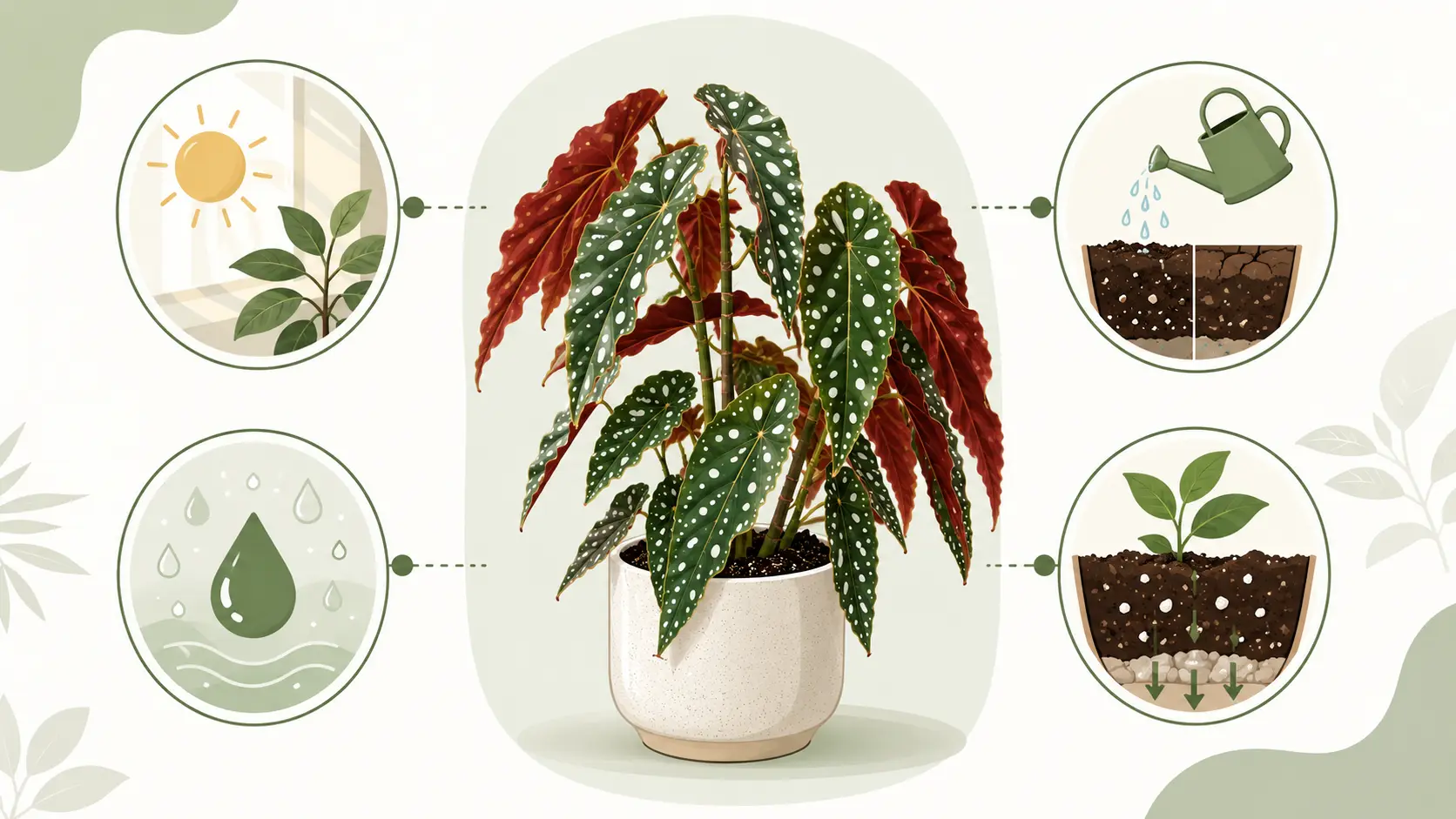
Bright, indirect light is the ideal lighting condition for Begonia maculata wightii. Providing sufficient filtered sunlight supports healthy foliage, vibrant coloration, and consistent growth while protecting delicate leaves from scorching.
Morning sunlight through an east-facing window is often ideal. North-facing windows also work well if natural light is adequate. South- or west-facing windows may require sheer curtains to diffuse intense afternoon sun. Plants such as Scindapsus pictus also thrive in bright indirect light, making our Scindapsus Pictus Care Guide a helpful companion if you’re creating an indoor tropical plant collection.
What Happens with Too Much Direct Sun?
Excessive direct sunlight can cause:
- Brown or crispy leaf edges
- Bleached foliage
- Leaf scorch
- Curling leaves
- Premature leaf drop
Intense afternoon sun is especially damaging during summer.
What Happens in Low Light?
Insufficient light commonly results in:
- Slow or stalled growth
- Smaller leaves
- Wider spacing between leaves
- Reduced silver spotting
- Fewer flowers
- Less vibrant red coloration beneath the leaves
If the undersides become noticeably less red, inadequate lighting may be one contributing factor, although plant maturity and genetics also influence coloration.
How to Water Begonia Maculata
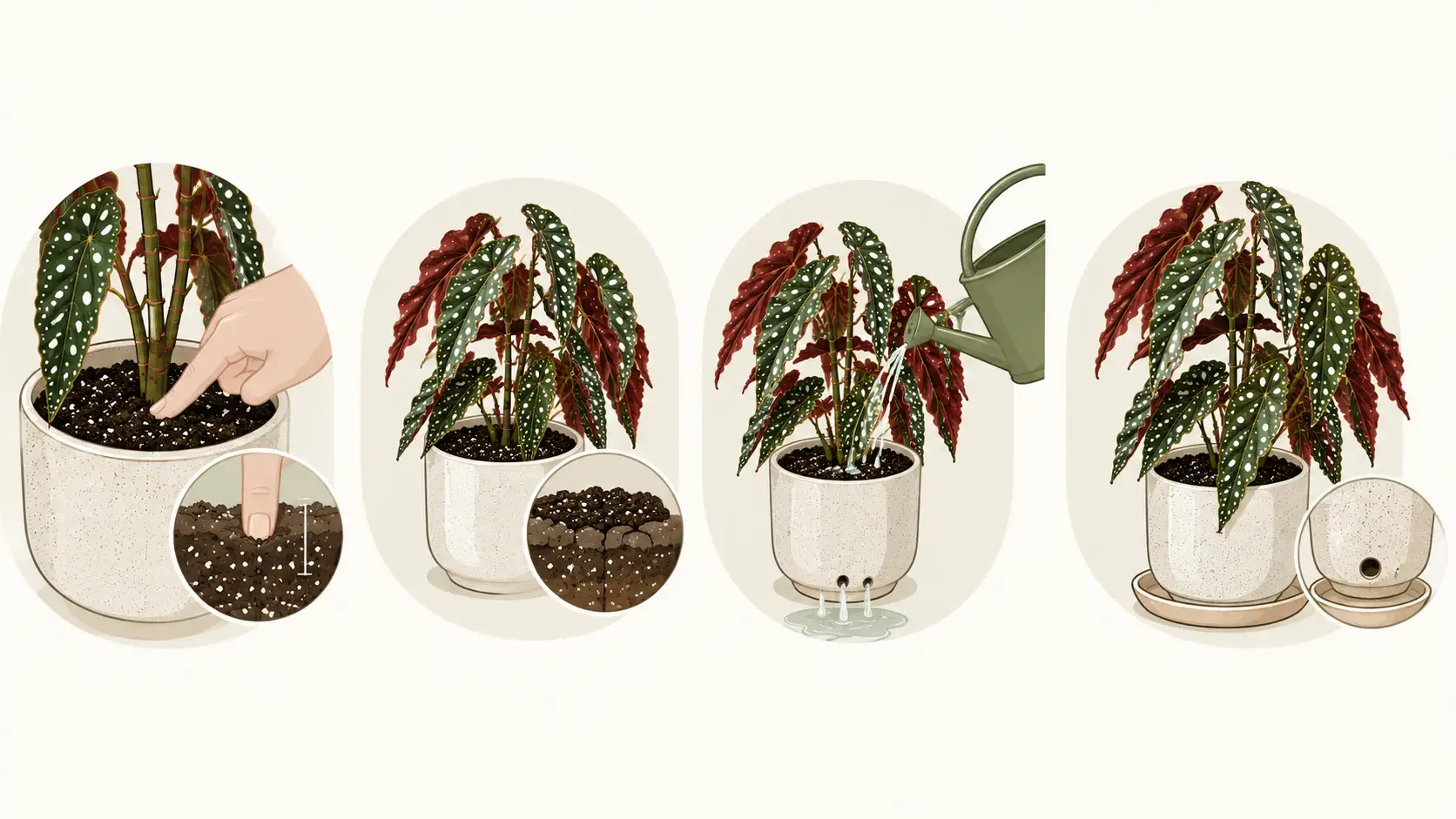
Water Begonia maculata when the top inch (2–3 cm) of soil feels dry. This simple rule helps maintain balanced moisture while minimizing the risk of root rot.
During spring and summer, most indoor plants require watering approximately once every 5–8 days, depending on temperature, humidity, light exposure, and pot size. During autumn and winter, watering typically becomes less frequent because growth slows.
Should You Water from the Top or Bottom?
Both methods are effective when used correctly.
Top watering
Advantages:
- Flushes accumulated fertilizer salts.
- Ensures even soil moisture.
- Easy for routine care.
Disadvantages:
- Requires proper drainage.
- Standing water must be emptied promptly.
Bottom watering
Advantages:
- Encourages deeper root development.
- Reduces surface disturbance.
- Helps evenly hydrate dry potting mix.
Disadvantages:
- Salt buildup can occur if exclusively used.
- Periodic top watering is still recommended.
Seasonal Watering Differences
Growing season (spring and summer):
- Water more frequently.
- Monitor soil moisture closely.
- Increase watering during periods of active growth.
Dormant season (late autumn and winter):
- Allow soil to dry slightly longer.
- Reduce watering frequency.
- Avoid keeping soil constantly wet.
Signs of Overwatering
- Yellow leaves
- Soft stems
- Mushy roots
- Persistent wet soil
- Leaf drop
- Fungal growth
Signs of Underwatering
- Dry soil
- Crispy leaf edges
- Drooping leaves
- Slow growth
- Curling foliage
Overwatering and Underwatering: How to Tell the Difference
Overwatering usually causes yellow, soft, or collapsing leaves because roots lose access to oxygen in waterlogged soil. Underwatering, by contrast, produces dry, crisp, and wilted foliage as the plant loses moisture faster than it can absorb it.
One of the most serious consequences of chronic overwatering is root rot, a fungal condition that destroys healthy roots and may eventually kill the plant if left untreated.
Pot choice also affects watering frequency. Containers with drainage holes allow excess water to escape, while decorative pots without drainage dramatically increase the likelihood of waterlogged soil.
Do Begonias Like Shallow or Deep Pots?
Begonia maculata develops a relatively shallow root system and generally performs best in moderately shallow pots with excellent drainage.
Choose a container that:
- Has drainage holes.
- Is only slightly larger than the root ball.
- Avoids excessive unused soil that retains moisture.
- Supports upright cane stems.
Begonia Maculata Humidity Requirements
Begonia maculata prefers humidity levels between 50% and 70%. These tropical conditions encourage healthy foliage, stronger growth, and reduced leaf damage.
Low humidity commonly results in:
- Crispy leaf edges
- Curling leaves
- Brown tips
- Slower growth
- Reduced overall vigor
Should You Mist Your Polka Dot Begonia?
Generally, no.
Frequent misting provides only temporary humidity while leaving moisture on the foliage. Wet leaves can encourage fungal diseases, particularly when airflow is poor.
Safer methods include:
- Using a room humidifier.
- Placing the pot on a pebble tray filled with water.
- Grouping humidity-loving houseplants together.
- Keeping plants away from heating vents and air conditioners.
These methods raise surrounding humidity more consistently without unnecessarily wetting the leaves.
Soil, Potting, and Fertilizer for Begonia Maculata
Begonia maculata thrives in an airy, well-draining, slightly acidic potting mix that retains enough moisture for healthy roots while allowing excess water to drain freely.
A quality soil blend typically contains:
- Peat moss or coco coir
- Perlite
- Fine orchid bark
- Compost or quality potting mix
This combination provides moisture retention, airflow, and structural stability.
Choosing the Right Pot
Begonia maculata grows best in pots with drainage holes and moderate depth. Avoid oversized containers because excess soil retains unnecessary moisture around the roots. Choosing the correct container is equally important, and our guide on Does Pot Size Affect How Fast a Plant Grows? explains how pot size influences root development and overall plant growth.
Fertilizing Begonia Maculata
Use a balanced liquid fertilizer, such as a 10-10-10 or 20-20-20 formula, diluted to half strength every 2–4 weeks during active growth in spring and summer. If you’re unsure how often to feed indoor plants throughout the year, our Bi-Weekly vs Monthly Fertilizing for Houseplants guide compares both schedules in detail.
Reduce or stop fertilizing during winter when growth naturally slows.
Is Miracle-Gro Good for Begonias?
Yes. A balanced Miracle-Gro houseplant fertilizer can be suitable when diluted according to label directions. Overfertilizing should be avoided because excess nutrients may cause leaf burn and encourage weak, leggy growth.
Will Baking Soda Help Begonias Bloom?
No. Baking soda is not a scientifically supported bloom enhancer for begonias. Flower production depends primarily on adequate light, balanced nutrition, healthy roots, and proper seasonal care rather than household additives.
Begonia Maculata Size and Growth Rate
Begonia maculata wightii has a moderate to fast growth rate when grown under ideal indoor conditions. With bright indirect light, consistent watering, proper humidity, and regular feeding during the growing season, it can produce new leaves and stems steadily from spring through early autumn.
How Big Do Polka Dot Begonias Get?
A mature indoor Begonia maculata typically reaches:
- Height: 3–5 feet (90–150 cm)
- Width: 1.5–3 feet (45–90 cm)
Under exceptional indoor conditions or in conservatories, some specimens may grow even taller with adequate support.
What Affects Mature Size?
Several environmental factors influence how large your plant becomes.
- Bright indirect light encourages vigorous stem growth.
- High humidity supports healthy leaf development.
- Balanced fertilization during active growth promotes larger foliage.
- A correctly sized pot allows healthy root expansion.
- Regular pruning encourages branching rather than excessive height.
Plants grown in dim conditions often remain smaller and develop fewer leaves. Since light, humidity, pot size, and fertilization all influence how quickly a Begonia maculata grows, you can use our Plant Growth Calculator to estimate growth potential based on your growing conditions and better plan repotting, pruning, and long-term care.
Growth Pattern Throughout the Year
Begonia maculata grows most actively during:
- Spring
- Summer
- Early autumn
Growth slows considerably during winter as temperatures, daylight hours, and light intensity decrease. This seasonal slowdown is normal and should not be mistaken for poor health.
How to Prune Begonia Maculata
Pruning is one of the most effective ways to maintain an attractive Begonia maculata. Regular pruning encourages fuller growth, improves airflow, removes weak stems, and keeps tall plants from becoming overly leggy.
How Do I Make My Begonia Maculata Bushy?
The best way to create a bushier plant is to prune above healthy leaf nodes. Each cut encourages dormant buds below the cut to develop into new branches, producing a fuller appearance.
Avoid allowing stems to become excessively tall before pruning, as older canes may produce fewer new shoots.
How to Prune Begonia Maculata
Follow these simple steps:
- Sterilize pruning shears with rubbing alcohol.
- Identify healthy stems with at least two or three nodes.
- Cut approximately ¼ inch above a leaf node.
- Remove damaged, weak, or crossing stems.
- Retain healthy cuttings for propagation.
Never remove more than one-third of the plant during a single pruning session.
What Causes a Leggy Polka Dot Begonia?
Leggy growth usually results from one or more of the following:
- Insufficient light
- Lack of regular pruning
- Overcrowded growing conditions
- Excess nitrogen fertilizer
Correcting these issues encourages shorter internodes and denser growth.
How to Fix a Leggy Begonia Maculata
A leggy plant can often be restored by:
- Moving it to brighter indirect light.
- Pruning elongated stems.
- Rotating the pot regularly for even growth.
- Propagating healthy stem cuttings to create a fuller container.
Pruning Checklist
- Prune above leaf nodes.
- Remove dead or damaged stems.
- Improve light exposure.
- Avoid excessive pruning at one time.
- Use clean, sterilized tools.
When and How Often to Prune Polka Dot Begonia
The best time to prune Begonia maculata is during spring and early summer, when active growth allows the plant to recover quickly and produce vigorous new shoots.
Light maintenance pruning can be performed throughout the growing season whenever stems become overly long or damaged.
How Often Should You Prune?
Most indoor plants benefit from:
- Light pruning every few months.
- More substantial shaping once each spring.
- Occasional removal of yellowing or damaged leaves throughout the year.
Can Pruned Cuttings Be Used for Propagation?
Yes. Healthy stem cuttings removed during pruning are excellent propagation material. This allows you to create new plants while maintaining the shape of the original specimen.
Recommended Tools
Use:
- Sharp pruning shears
- Small scissors for fine stems
- Rubbing alcohol for sterilizing blades
Sanitizing tools before each pruning session helps reduce the spread of fungal and bacterial diseases.
How to Propagate Begonia Maculata
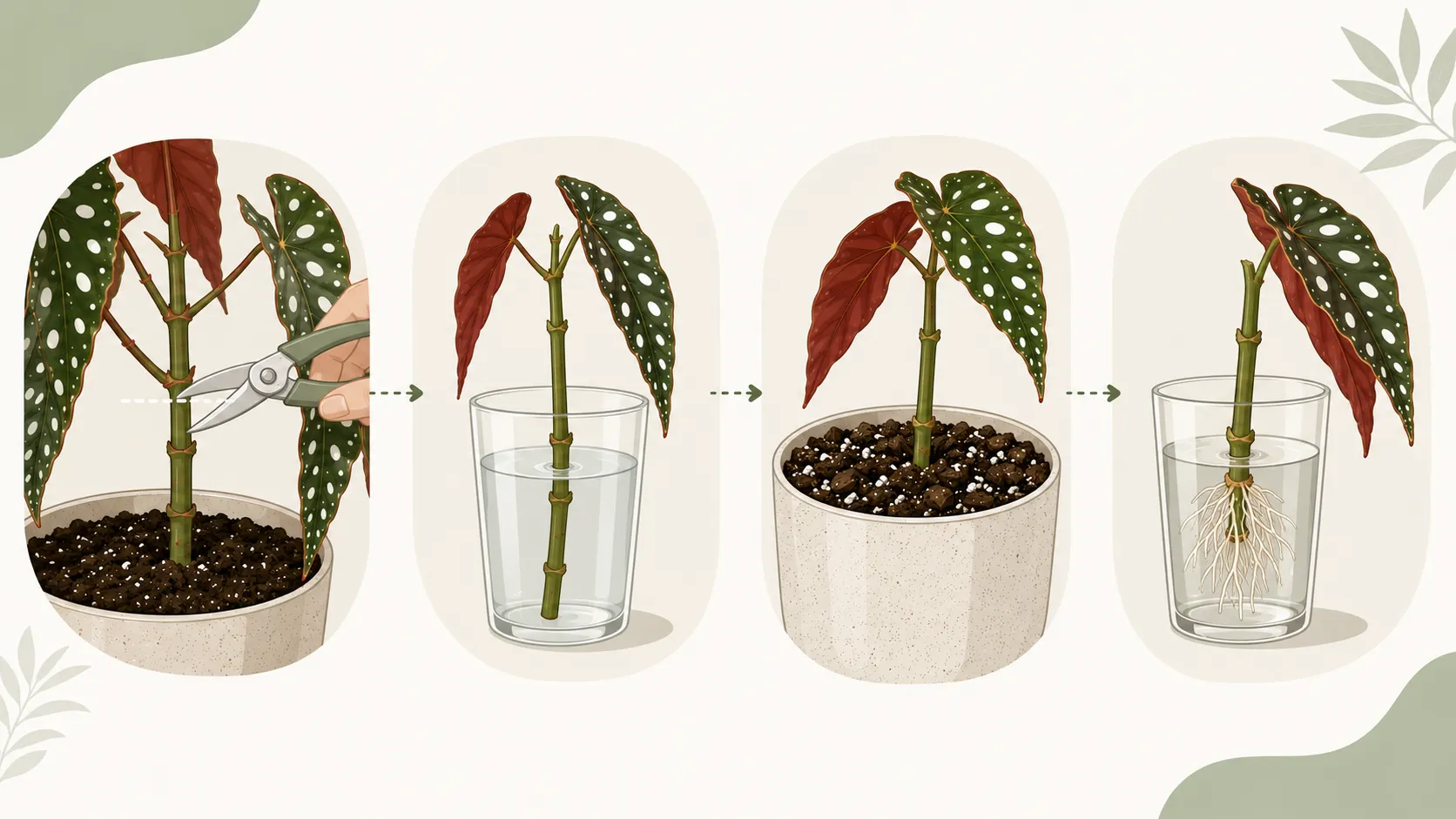
Yes, you can propagate a polka dot begonia easily. Stem cuttings root readily in both water and soil, making Begonia maculata one of the more beginner-friendly tropical houseplants to multiply.
The highest success rates occur during spring and summer when the plant is actively growing.
Water Propagation Method
- Select a healthy stem with two or three nodes.
- Make a clean cut just below a node.
- Remove the lower leaves.
- Place the node in clean water while keeping the remaining leaves above the surface.
- Replace the water every few days.
- Wait for roots to reach approximately 2–3 inches before transplanting into potting mix.
Soil Propagation Method
- Take a healthy stem cutting.
- Remove lower leaves.
- Plant the cutting into moist, well-draining soil.
- Keep the soil lightly moist but never saturated.
- Place the cutting in bright indirect light.
- Maintain moderate to high humidity until rooting occurs.
Propagation Success Tips
- Always include at least one healthy node.
- Use clean cutting tools.
- Avoid direct sunlight during rooting.
- Maintain warm temperatures.
- Keep humidity relatively high.
- Avoid overwatering newly rooted cuttings.
Best Time for Propagation
The ideal propagation period is:
- Spring
- Early summer
Rooting is generally slower during autumn and winter because plant growth naturally declines.
Stem Cutting Propagation: Water vs Soil Method
Both water and soil propagation are effective. The best choice depends on your preferences and growing conditions.
| Feature | Water Propagation | Soil Propagation |
| Ease of Monitoring | Excellent | Limited |
| Root Visibility | High | None |
| Average Rooting Time | 2–4 weeks | 3–5 weeks |
| Transplant Shock | Possible after potting | Minimal |
| Beginner Friendly | Very high | High |
Water Propagation Advantages
- Roots are easy to monitor.
- Beginners can quickly identify healthy root development.
- It is simple to replace contaminated water.
Soil Propagation Advantages
- Roots adapt immediately to potting mix.
- Less transplant stress.
- Stronger long-term root establishment.
Common Propagation Mistakes
Avoid these common errors:
- Cutting stems without nodes.
- Using dirty tools.
- Allowing cuttings to sit in direct sunlight.
- Overwatering soil-grown cuttings.
- Forgetting to refresh propagation water regularly.
How to Get Begonia Maculata to Flower
Begonia maculata flowers most reliably when it receives bright indirect light, balanced fertilization, proper watering, and stable growing conditions. Healthy mature plants often bloom during the warmer months.
What Do Begonia Maculata Flowers Look Like?
The flowers typically appear as graceful hanging clusters of:
- White
- Pale pink
- Soft blush pink
Although the blooms are attractive, the plant is primarily grown for its dramatic foliage.
Why Isn’t My Plant Flowering?
Common reasons include:
- Insufficient light
- Excess nitrogen fertilizer
- Immature plants
- Poor overall plant health
- Low humidity
- Inconsistent watering
Providing brighter filtered light is often the single most effective way to improve flowering.
Seasonal Bloom Cycle
Indoor Begonia maculata commonly flowers during:
- Late spring
- Summer
- Early autumn
Bloom frequency varies depending on environmental conditions and plant maturity.
Post-Bloom Care
After flowering:
- Remove spent flower clusters.
- Continue regular watering.
- Feed with balanced fertilizer during active growth.
- Maintain bright indirect light to encourage future blooms.
Deadheading faded flowers helps the plant redirect energy toward new foliage and additional flower production.
Begonia Maculata Lifespan
Begonia maculata can live for many years indoors when provided with proper care. With bright indirect light, balanced watering, regular pruning, and occasional propagation, it is common for healthy plants to remain vigorous for 5–10 years or longer.
What Is the Lifespan of a Spotted Begonia?
A well-maintained spotted begonia is a long-lived houseplant. While older stems may eventually become woody or less productive, the plant can continually produce fresh growth when maintained correctly.
Factors that influence lifespan include:
- Consistent watering practices
- Adequate light exposure
- High humidity
- Proper fertilization
- Routine pruning
- Timely repotting
How Pruning and Propagation Extend Plant Life
Regular pruning removes aging stems and stimulates new shoots. Propagating healthy stem cuttings every few years effectively renews the plant, allowing you to enjoy genetically identical plants even as the original specimen ages.
Signs Your Plant Is Declining
Watch for:
- Persistent yellowing leaves
- Weak or sparse new growth
- Severe stem dieback
- Repeated root rot
- Poor flowering despite proper care
These signs may indicate that the plant would benefit from pruning, repotting, or propagation.
New Growth as a Sign of Good Health
Healthy Begonia maculata plants regularly produce:
- Fresh leaves
- Strong upright stems
- Bright foliage coloration
- Consistent seasonal growth
Active new growth is one of the best indicators that the plant’s growing conditions are appropriate.
Common Begonia Maculata Problems and How to Fix Them
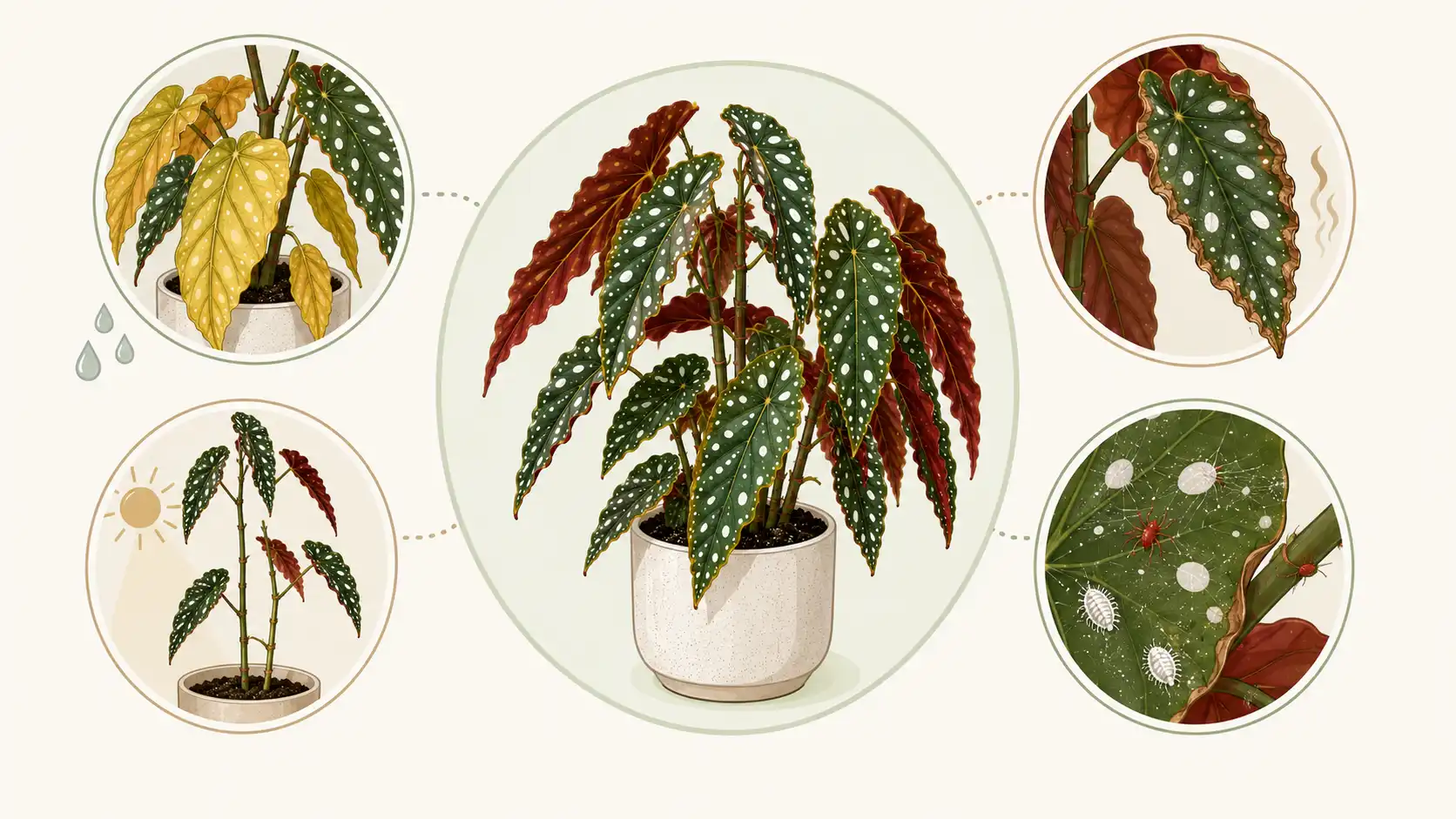
Begonia maculata problems are usually caused by improper watering, unsuitable lighting, low humidity, poor airflow, or common houseplant pests. Most issues can be corrected once the underlying cause is identified.
Yellowing Leaves
Why it happens
- Overwatering
- Poor drainage
- Nutrient deficiency
- Insufficient light
How to fix it
- Allow soil to partially dry before watering.
- Improve drainage.
- Move the plant to brighter indirect light.
- Fertilize appropriately during active growth.
How to prevent it
- Follow the top-inch dryness rule.
- Use a well-draining soil mix.
- Avoid leaving water in saucers.
Leaf Drop
Why it happens
- Sudden temperature changes
- Low humidity
- Overwatering
- Environmental stress
How to fix it
- Maintain stable indoor temperatures.
- Increase humidity.
- Adjust watering if needed.
How to prevent it
- Keep the plant away from drafts and heating vents.
- Avoid sudden environmental changes.
Small Leaves
Why it happens
- Low light
- Root-bound conditions
- Nutrient deficiencies
How to fix it
- Increase bright indirect light.
- Repot if roots fill the container.
- Feed during the growing season.
How to prevent it
- Monitor root growth.
- Maintain a regular fertilizing schedule.
Leggy Growth
Why it happens
- Inadequate light
- Lack of pruning
- Excess nitrogen fertilizer
How to fix it
- Prune above leaf nodes.
- Move to brighter indirect light.
- Rotate the pot regularly.
How to prevent it
- Prune routinely.
- Provide consistent lighting.
- Avoid excessive fertilization.
Powdery Mildew and Fungal Problems
Why it happens
- Poor air circulation
- Wet foliage
- Excess humidity without airflow
How to fix it
- Remove affected leaves.
- Improve ventilation.
- Water the soil instead of the foliage.
How to prevent it
- Avoid frequent misting.
- Space plants appropriately.
- Maintain good airflow.
Spider Mites, Mealybugs, and Fungus Gnats
Spider mites
- Cause fine webbing and speckled leaves.
- Treat with insecticidal soap or neem oil.
Mealybugs
- Appear as white cotton-like clusters.
- Remove manually with alcohol-dipped cotton swabs.
Fungus gnats
- Thrive in constantly wet soil.
- Allow soil to dry slightly between waterings and use sticky traps if necessary.
Are Polka Dot Begonias Hard to Take Care Of?
No. Polka dot begonias are generally considered moderately easy houseplants. They are not difficult to grow once their basic requirements—bright indirect light, well-draining soil, careful watering, and moderate to high humidity—are consistently met.
For additional pest management strategies, see our Aphids on Houseplants guide, which explains safe methods for identifying and controlling common indoor plant pests.
Beginner Mistakes to Avoid With Polka Dot Begonia
Many common problems are preventable with a few simple adjustments to everyday care.
Beginner Checklist
Avoid these common mistakes:
- Watering before the top inch of soil dries.
- Placing the plant in direct afternoon sunlight.
- Using dense, poorly draining potting soil.
- Frequently misting the leaves.
- Choosing pots without drainage holes.
- Overfertilizing during the growing season.
- Ignoring leggy growth instead of pruning.
Why These Mistakes Happen
Most beginners assume tropical plants require constantly wet soil or direct sunlight. In reality, Begonia maculata prefers evenly moist—not saturated—soil and filtered light similar to the forest understory where it naturally grows.
How to Correct Care Problems
If your plant is struggling:
- Check soil moisture before watering.
- Evaluate available light.
- Increase humidity using a humidifier or pebble tray.
- Repot into an airy soil mix if drainage is poor.
- Prune weak growth to encourage new branching.
Begonia Maculata Outdoor Care
Begonia maculata can be grown outdoors in suitable climates, but it performs best where temperatures remain warm and frost-free.
USDA Hardiness Zones
Outdoor cultivation is generally suitable in USDA Zones 10–11, where freezing temperatures are uncommon.
In cooler regions, it is typically grown as a houseplant or moved outdoors only during warm months.
Outdoor Growing Conditions
Provide:
- Bright, filtered light
- Protection from intense afternoon sun
- Sheltered locations with good airflow
- Consistently moist but well-drained soil
Bringing Plants Indoors Before Frost
If grown outside seasonally:
- Bring plants indoors before nighttime temperatures drop below approximately 55°F (13°C).
- Inspect carefully for insects before moving indoors.
- Gradually acclimate the plant to indoor conditions.
Shade Requirements
Outdoors, Begonia maculata performs best in:
- Partial shade
- Bright filtered light
- Morning sun with afternoon shade
Avoid prolonged exposure to harsh midday sunlight.
Indoor vs Outdoor Growth
| Feature | Indoor | Outdoor |
| Light | Bright indirect | Filtered or partial shade |
| Growth Rate | Moderate | Often faster in warm climates |
| Maximum Size | 3–5 ft | May grow slightly taller |
| Humidity | Often requires supplementation | Naturally higher in suitable climates |
| Winter Care | Year-round indoors | Protection from frost required |
Conclusion
Begonia maculata wightii care centers on five essential practices: providing bright indirect light, watering only when the top inch of soil has dried, maintaining moderate to high humidity, pruning regularly to encourage bushier growth, and propagating healthy stem cuttings for long-term renewal. Although this tropical houseplant has specific care preferences, it rewards consistent attention with striking silver-spotted foliage, burgundy-red leaf undersides, and seasonal clusters of delicate flowers. By recreating its preferred growing conditions and avoiding common mistakes such as overwatering or excessive direct sun, both beginners and experienced plant owners can enjoy a healthy, long-lasting polka dot begonia.
Frequently Asked Questions
Are polka dot begonias hard to take care of?
No. Polka dot begonias are moderately easy to care for once their basic needs are understood. Bright indirect light, well-draining soil, careful watering, and adequate humidity are the key factors that keep the plant healthy.
How often should I water my polka dot begonia?
Water whenever the top inch of soil feels dry. During spring and summer this is often every 5–8 days, while watering is usually less frequent during autumn and winter because growth slows.
Should I mist my polka dot begonia?
Generally, no. Misting provides only temporary humidity and can leave moisture on the foliage, increasing the risk of fungal diseases. A humidifier, pebble tray, or grouping plants together offers more consistent humidity.
What is the lifespan of a Begonia maculata?
With proper care, Begonia maculata can live for many years indoors, often 5–10 years or longer. Regular pruning, repotting when necessary, and propagation help maintain healthy, productive plants.
How do I make my Begonia maculata bushy instead of leggy?
Prune stems just above healthy leaf nodes, provide brighter indirect light, rotate the pot regularly, and avoid excessive nitrogen fertilizer. These practices encourage branching and compact growth.
Can you root a polka dot begonia in water?
Yes. Stem cuttings with at least one healthy node root readily in clean water. Replace the water every few days and transplant the cutting into soil once the roots are about 2–3 inches long.
What is the difference between Begonia maculata wightii and angel wing begonia?