
Introduction
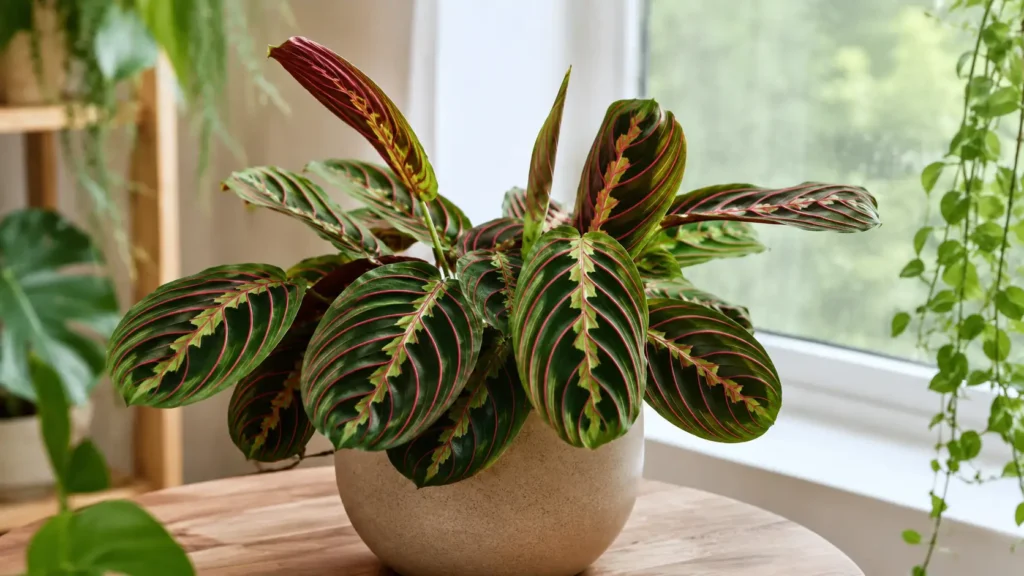
Maranta red plant care focuses on maintaining the right balance of moisture, indirect light, humidity, and proper soil conditions for a healthy indoor plant. The red Maranta, scientifically known as Maranta leuconeura, is a tropical prayer plant recognized for its dark green leaves, decorative red veins, and unique leaf movement. Its leaves often fold upward at night, creating a “praying” appearance. This guide explains how to care for a red prayer plant, including watering needs, placement, potting, growth habits, and solutions for common issues such as yellow leaves, curling, and brown tips.
For more indoor plant care information, explore our complete guide to Plants: Benefits and Guides (Complete Care, Types & Growing Tips) covering different plant types, benefits, and growing tips.
Quick Summary
- Red Maranta (Maranta leuconeura) is a tropical prayer plant with dark leaves, red veins, and natural “praying” leaf movement.
- It grows best in bright indirect light, consistently moist soil, and higher humidity.
- Most red prayer plant problems are caused by improper watering, low humidity, or unsuitable light.
- Red Maranta is considered one of the easier Maranta varieties for indoor plant growers.
- Proper care encourages fuller growth, healthier leaves, and longer plant life.
What Is a Red Maranta (Red Prayer Plant)?
A red Maranta is a tropical houseplant from the species Maranta leuconeura, commonly called a red prayer plant or praying hands plant because of its nighttime leaf movement. The leaves fold upward in response to daily light changes, a behavior known as nyctinasty.
The red prayer plant is popular because of its ornamental foliage. Its oval-shaped leaves usually feature dark green coloring, lighter patterns, and noticeable red veins running through the surface.
The main characteristics include:
- Scientific name: Maranta leuconeura
- Common names: Red Maranta, prayer plant, praying hands plant
- Plant family: Marantaceae
- Growth type: Tropical perennial houseplant
Maranta plant benefits are mainly related to decoration and indoor greenery. Like many indoor plants, it can contribute to a more pleasant indoor environment, but it should not be considered a replacement for ventilation or air-cleaning systems.
Maranta vs. Calathea — What’s the Difference?
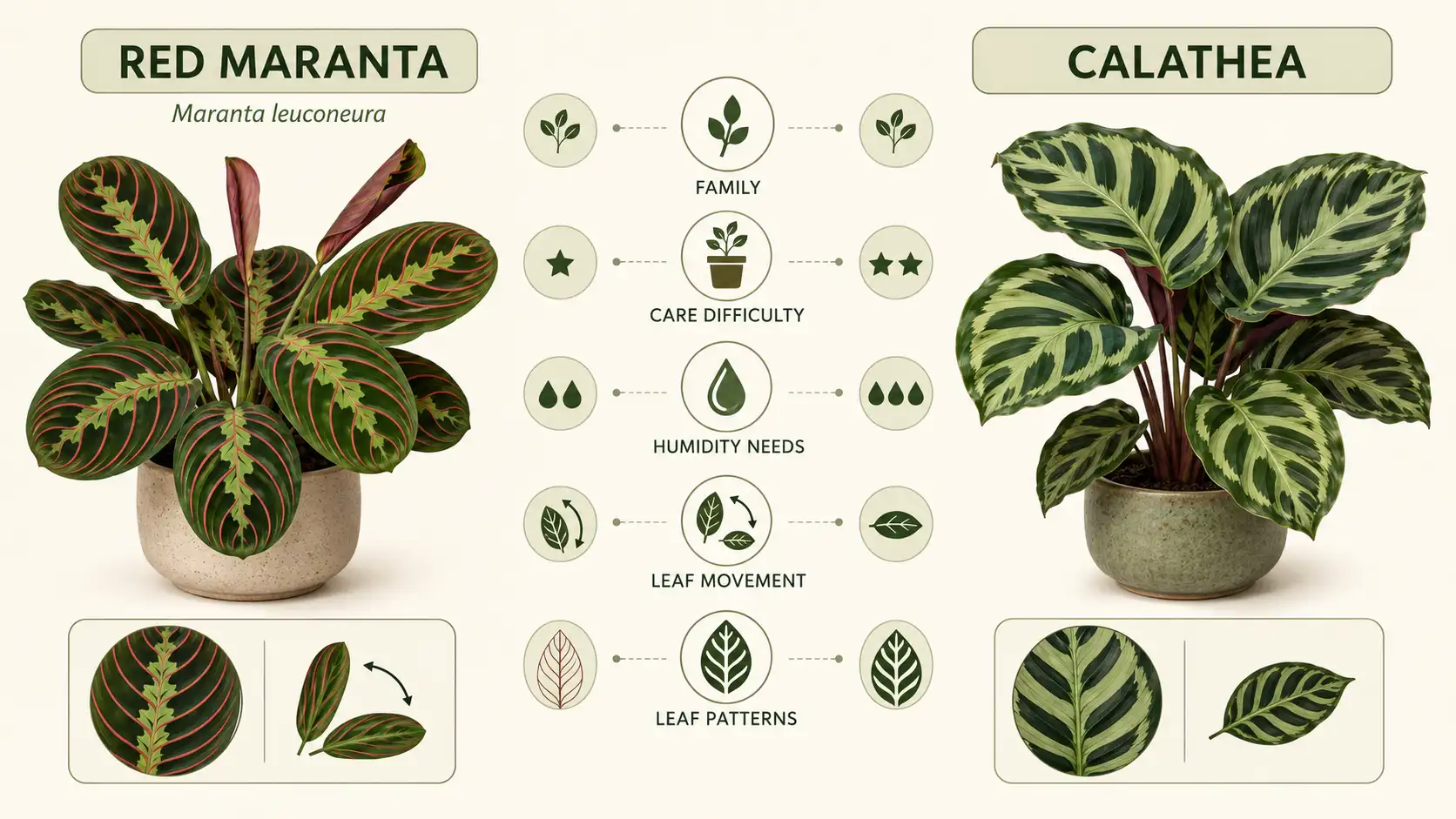
Maranta and Calathea are closely related tropical plants and are both part of the Marantaceae family. However, they are different plant groups. Many people confuse them because both have patterned leaves and similar humidity preferences.
Since Maranta and Calathea belong to the same plant family and share similar tropical care needs, understanding other Calathea varieties such as the Calathea Roseopicta Medallion Care Guide can help indoor growers compare humidity, light, and watering requirements.
| Feature | Red Maranta | Calathea |
| Family | Marantaceae | Marantaceae |
| Leaf movement | Strong “prayer” movement at night | Some species move leaves but usually less noticeable |
| Care difficulty | Usually easier for beginners | Often more sensitive |
| Light needs | Bright indirect light | Bright indirect light |
| Humidity needs | High humidity preferred | High humidity often required |
| Leaf patterns | Red veins and decorative markings | Wide variety of patterns and colors |
A common question is “Is a Maranta a Calathea?” The answer is no. They are related but separate plant groups with different care requirements.
Is Red Maranta Easy to Care For?
Yes, red Maranta is considered relatively easy to care for compared with many tropical houseplants. It is beginner-friendly when its main needs—humidity, moisture, and indirect light—are consistently provided. Beginner indoor gardeners may also enjoy learning about other decorative foliage plants, such as the Begonia Maculata Care Guide for Healthy Growth, which has similar indoor growing considerations.
Among Maranta varieties, Maranta kerchoveana and red-veined varieties are often considered manageable choices for indoor growers.
However, red Maranta is not a completely low-maintenance plant. It reacts quickly to environmental changes, especially:
- Dry air
- Irregular watering
- Harsh direct sunlight
- Poor-quality water
With stable conditions, it can grow well indoors and reward growers with attractive foliage.
Where to Place Your Prayer Plant
The best place for a prayer plant is an indoor location with bright, indirect light and protection from extreme temperatures. Prayer plants naturally grow beneath tropical forest canopies, so they prefer filtered light rather than direct sun.
Light Requirements
Red Maranta grows best with:
- Bright indirect sunlight
- Several hours of filtered light daily
- Protection from strong afternoon sun
Too much direct sunlight can cause:
- Faded leaf color
- Scorch marks
- Brown patches
Too little light may lead to:
- Slow growth
- Smaller leaves
- Leggy stems
A low-light area may keep the plant alive, but brighter indirect light usually produces healthier growth.
Best Rooms for Prayer Plants
Bathrooms are often suitable for prayer plants because they naturally provide higher humidity. A bathroom with a window offering indirect light can create a favorable environment.
Bedrooms are also acceptable locations. There is no scientific evidence that prayer plants are harmful in bedrooms, and they are commonly grown there for decoration.
A prayer plant should not be placed in areas with:
- Cold drafts
- Direct heating vents
- Strong air conditioning flow
- Dark corners without natural light
Maranta Red Plant Care — Watering Guide
Watering is one of the most important parts of maranta red plant care. Red Maranta prefers soil that stays evenly moist but never becomes waterlogged.
A practical watering routine:
- Check the top inch of soil before watering.
- Water when the surface begins to dry.
- Allow excess water to drain completely.
- Reduce watering during cooler winter months.
Overwatering can cause:
- Yellow leaves
- Root problems
- Soft stems
Underwatering can cause:
- Curling leaves
- Drooping growth
- Dry edges
Many growers ask, “Can I water Maranta with tap water?” Tap water may work, but some Maranta plants are sensitive to chlorine, fluoride, and mineral buildup. Filtered, rain, or distilled water is often preferred if brown tips repeatedly appear.
Soil, Humidity & Temperature Needs
Red Maranta prefers a loose, well-draining soil mix that holds moisture without becoming soggy.
A suitable soil combination may include:
- Quality indoor potting soil
- Peat moss or coco coir
- Perlite for drainage
Humidity is especially important because Maranta plants come from tropical environments. Low humidity often causes leaf curling and brown edges.
Ideal conditions:
- Temperature: approximately 18–27°C (65–80°F)
- Humidity: moderate to high
- Soil: moist but well-draining
What Makes a Prayer Plant Happy?
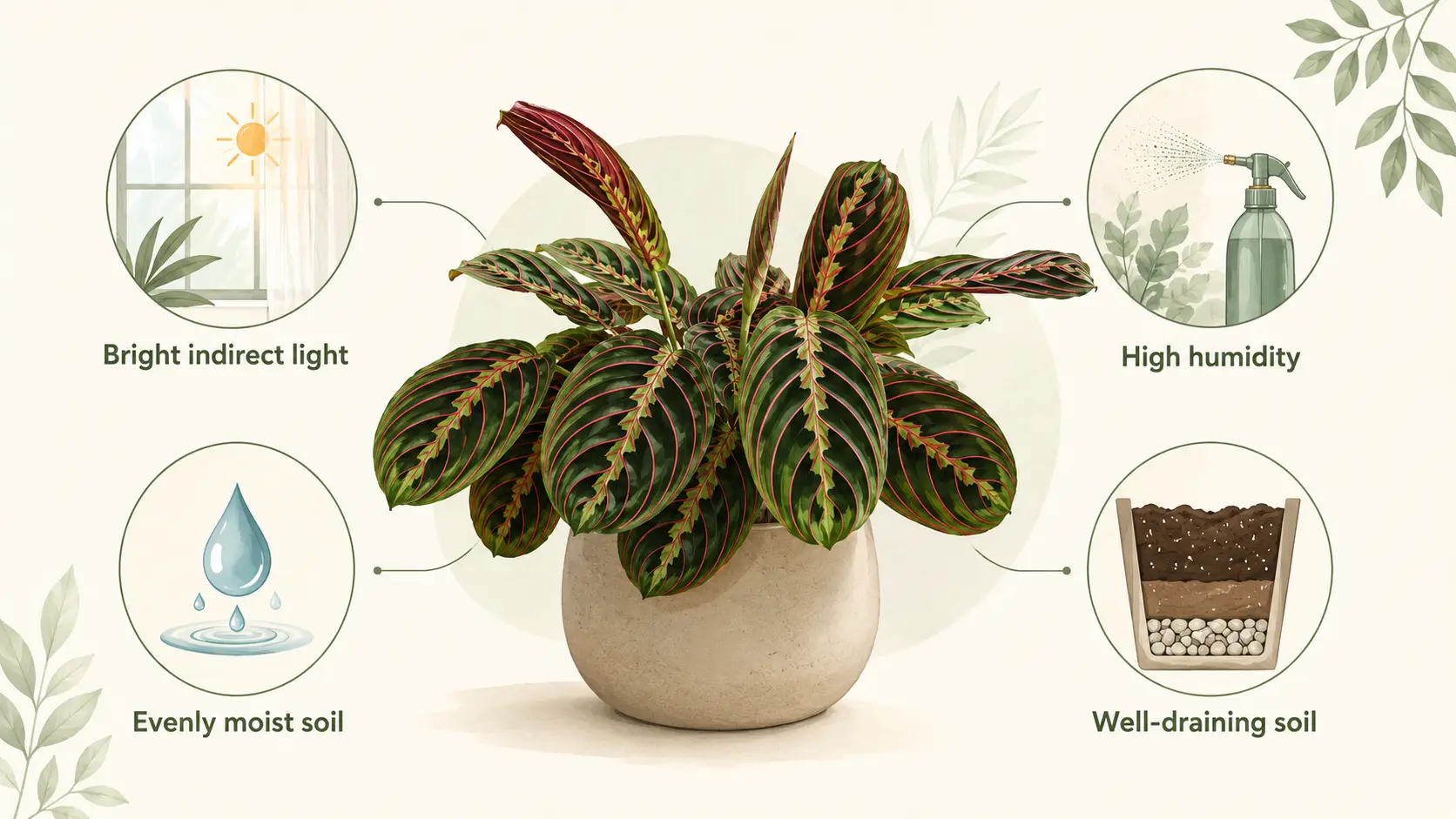
A happy prayer plant receives consistent care rather than extreme conditions.
The ideal combination includes:
- Bright indirect light
- Even soil moisture
- High humidity
- Warm temperatures
- Gentle feeding during active growth
Stable conditions are usually more important than frequent adjustments.
Potting & Repotting a Red Maranta
Red Maranta does not require frequent repotting. It grows through underground rhizomes and spreads gradually rather than aggressively.
Repot when:
- Roots begin growing through drainage holes
- Water runs through the pot too quickly
- Growth slows during the growing season
Repotting is usually needed every 1–2 years depending on growth.
Do Prayer Plants Like Big Pots?
No, prayer plants generally do not prefer oversized pots. A pot that is too large can hold excess moisture and increase the risk of root problems. Similar tropical houseplants also have specific root-space preferences, and learning about whether Calathea likes to be root bound can help growers understand how pot size affects related plants.
Choose a container only slightly larger than the current root system. A snug pot often supports healthier growth.
How to Make Your Prayer Plant Bushier and Fuller
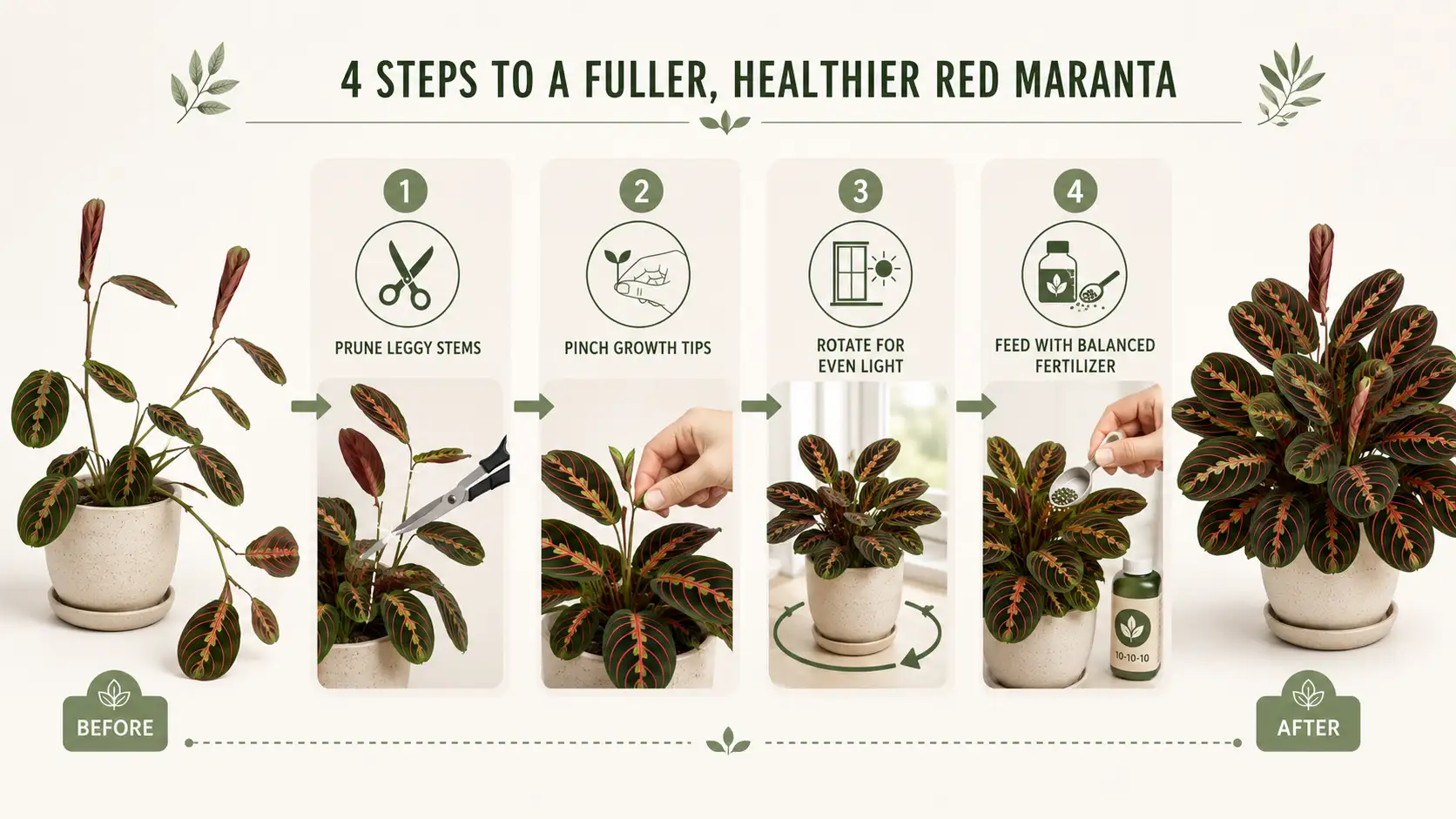
To make a Maranta fuller, encourage branching and healthy new growth through proper care. Proper pruning is one of the best ways to encourage fuller growth. Follow our detailed guide on how to prune a Prayer Plant for healthier shaping and maintenance.
Helpful methods include:
- Prune leggy stems to encourage new growth.
- Pinch growing tips to promote a bushier shape.
- Rotate the plant regularly for even light exposure.
- Fertilize during the active growing season.
Avoid excessive fertilizer because salt buildup can damage roots and leaves.
Common Red Prayer Plant Problems (Troubleshooting)
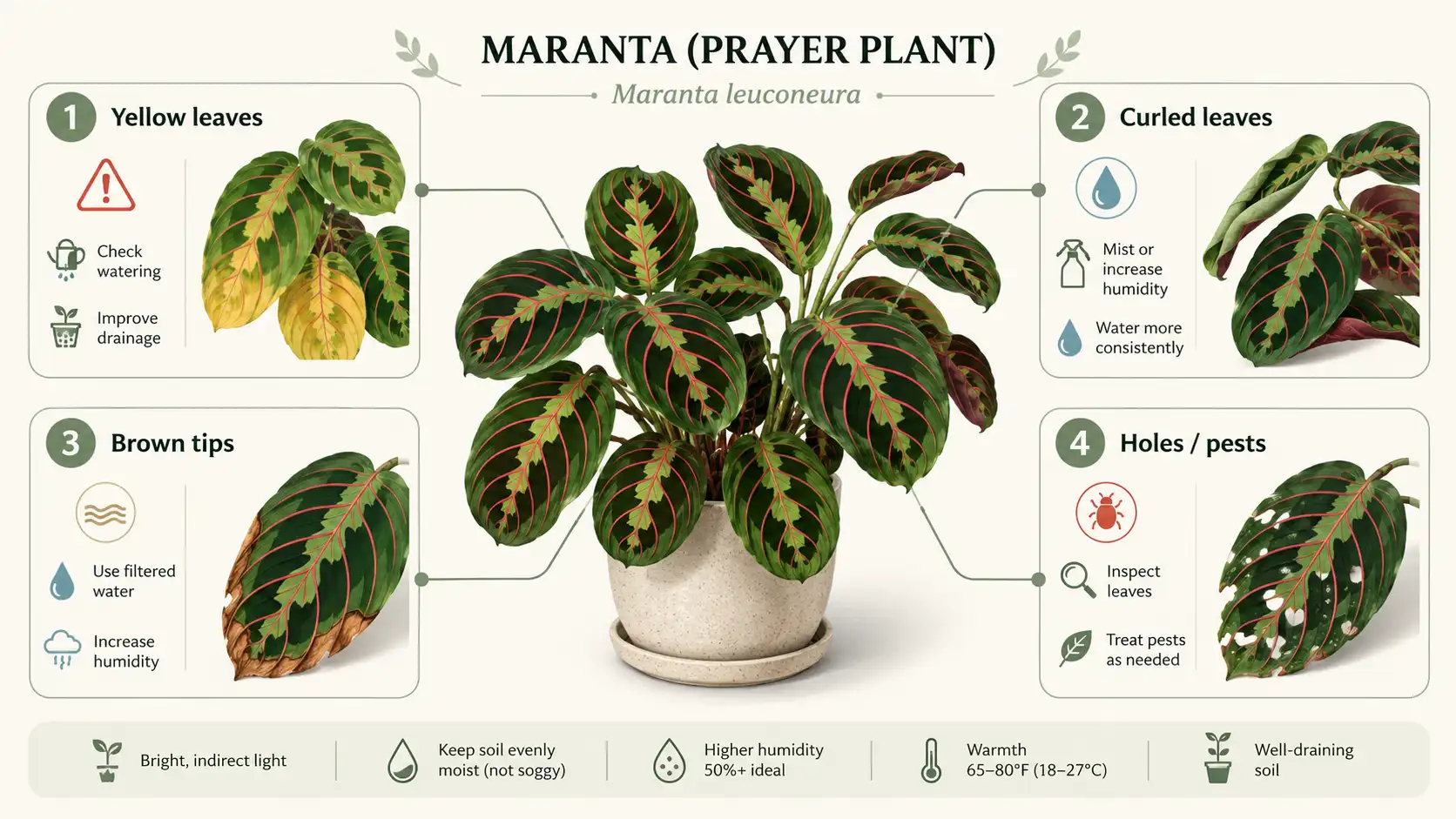
Red prayer plant problems usually come from environmental stress rather than serious disease.
| Symptom | Likely Cause | Fix | Prevention |
| Yellow leaves | Overwatering or stress | Adjust watering | Check soil moisture first |
| Curling leaves | Low humidity or underwatering | Increase humidity and water properly | Maintain consistent moisture |
| Brown tips | Mineral buildup or dry air | Improve water quality and humidity | Use filtered water if needed |
| Holes in leaves | Pests or physical damage | Inspect and treat issues | Regular plant checks |
Yellowing Leaves
Yellow leaves on a prayer plant are often caused by too much water, poor drainage, or sudden environmental changes.
To fix it:
- Reduce watering frequency if soil stays wet.
- Check drainage holes.
- Remove severely damaged leaves.
Prayer Plant Leaves Curling
Curling leaves usually indicate stress from underwatering, low humidity, or cold temperatures.
Solutions include:
- Increase humidity.
- Check soil moisture.
- Move away from drafts.
Brown Tips on Prayer Plant Leaves
Brown leaf tips commonly appear because of dry air or mineral buildup from water.
Some people ask, “What does mayonnaise do for plant leaves?” Mayonnaise is not recommended for plant care because it can leave residue and attract dust or pests. Instead:
- Clean leaves gently with water.
- Improve humidity.
- Use better-quality water if needed.
Holes in Prayer Plant Leaves
Holes can result from:
- Insect feeding
- Physical damage
- Leaf stress
Inspect the plant for pests such as spider mites or other insects.
Common Beginner Mistakes with Red Maranta
Common mistakes include:
- Keeping soil constantly wet
- Placing the plant in direct sunlight
- Ignoring humidity needs
- Using unsuitable water for sensitive plants
- Applying too much fertilizer
- Waiting too long to repot
Prayer Plant Lifespan and Growth Habits
A healthy prayer plant can live for several years indoors with proper care. Its lifespan depends on watering habits, environment, and prevention of common issues.
Growth expectations:
- Growth rate: Moderate
- Active growth: Spring and summer
- Dormancy: Often slower during winter
Prayer plants may produce small flowers under suitable conditions, but their foliage is usually the main attraction. Understanding a plant’s expected growth pattern helps indoor growers plan space, pot size, and care routines. You can estimate plant development and track growth expectations using our Plant Growth Calculator to better understand how plants progress over time.
Is the Prayer Plant Lucky? Symbolism and Benefits
The prayer plant is sometimes considered a lucky plant because of cultural symbolism associated with growth, protection, and positive energy. These beliefs are traditional rather than scientifically proven. If you enjoy growing beneficial indoor plants, you can also explore Spider Plant Indoor Benefits: Air, Wellness, and Easy Care for another popular low-maintenance houseplant option.
Factual benefits include:
- Attractive indoor decoration
- Tropical foliage appeal
- Contribution to a greener indoor environment
Some people consider the prayer plant one of the best indoor plants because of its unique appearance and manageable care needs.
Conclusion
Maranta red plant care mainly depends on providing consistent moisture, bright indirect light, suitable humidity, and proper soil conditions. Red Maranta (Maranta leuconeura) is an approachable indoor plant for many growers when its environmental needs are understood. Regular observation helps prevent common problems such as yellow leaves, curling, and brown tips. By maintaining stable conditions and avoiding common beginner mistakes, growers can enjoy a healthy prayer plant with beautiful patterned foliage for years.
FAQs
Is red Maranta easy to care for?
Yes, red Maranta is relatively easy to care for when provided with indirect light, consistent moisture, and good humidity. It is considered beginner-friendly compared with many tropical plants.
Where is the best place to put a prayer plant?
The best place for a prayer plant is a warm indoor location with bright indirect light, such as near an east-facing window or in a humid room like a bathroom with suitable lighting.
What are the common problems with red prayer plants?
Common problems include yellow leaves, curling leaves, brown tips, and slow growth. These issues are usually linked to watering, humidity, light, or water quality.
Do prayer plants like big pots?
No, prayer plants usually prefer slightly snug pots. Oversized containers can retain too much moisture and increase root problems.
Can I water Maranta with tap water?
Yes, but some Maranta plants react poorly to chlorine, fluoride, or minerals in tap water. Filtered or distilled water may help prevent brown leaf tips.
What is the lifespan of a prayer plant?
A prayer plant can live for several years indoors with proper care. Good watering habits, humidity, and stable conditions improve longevity.
How do I make my prayer plant bushy?
Make a prayer plant bushier by pruning leggy stems, pinching growth tips, providing enough light, and fertilizing during the active growing season.



One Response