
Introduction
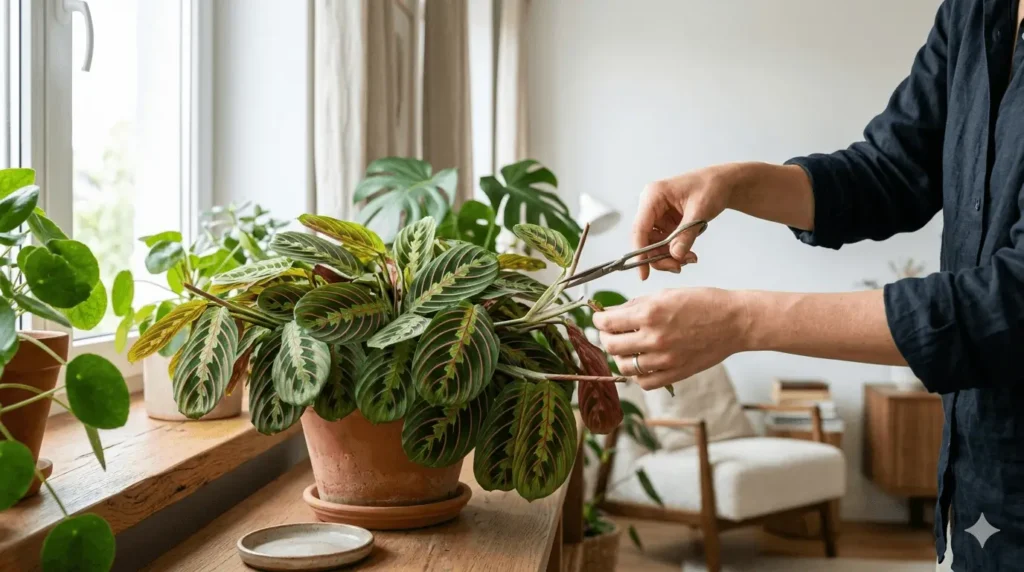
Learning how to prune a prayer plant is an important part of keeping this tropical houseplant healthy, attractive, and productive. Prayer plants, scientifically known as Maranta leuconeura, are prized for their colorful patterned foliage and unique habit of folding their leaves upward at night. Proper pruning helps remove damaged growth, encourages fuller foliage, controls legginess, and improves the overall appearance of the plant. Whether you are maintaining a mature specimen, trimming brown leaves, or propagating new plants from cuttings, understanding the correct pruning techniques can improve long-term plant health and growth. For broader houseplant care and growing advice, explore our complete Plants: Benefits and Guides resource hub.
Quick Summary
- Prayer plants benefit from light pruning to remove dead, damaged, or leggy growth and encourage bushier foliage.
- Spring and early summer are the best times to prune because the plant is actively growing.
- Always cut just above a healthy leaf node using clean, sharp tools.
- Brown tips, yellow leaves, spent flower stems, and long sparse vines are common pruning targets.
- Healthy cuttings removed during pruning can be propagated in water or soil to grow new plants.
What Is a Prayer Plant and Why Does Pruning Matter
Prayer plant is the common name for Maranta leuconeura, a tropical perennial native to Central and South American rainforests. The plant is known for nyctinastic movement, meaning its leaves fold upward in the evening and reopen during the day.
For botanical information about Maranta species, the Missouri Botanical Garden Plant Finder is a useful reference resource.
Pruning matters because it helps direct energy toward healthy growth. Removing dead or damaged foliage reduces stress on the plant and encourages new leaves to develop. Pruning also prevents excessive stretching, improves airflow, and helps maintain a compact shape.
Common varieties include:
- Red prayer plant
- Lemon lime prayer plant
- Fishbone prayer plant
- Rabbit’s foot prayer plant
Regular pruning keeps these varieties dense, colorful, and visually appealing.
When Is the Best Time to Prune a Prayer Plant
The best time to prune a prayer plant is during spring and early summer when active growth begins. During this period, the plant recovers quickly and produces new shoots more readily.
Winter pruning is generally discouraged because growth slows significantly due to lower light levels and cooler conditions. However, light maintenance pruning is acceptable during winter.
Examples of winter pruning include:
- Removing dead leaves
- Trimming brown tips
- Cutting spent flower stems
If significant reshaping is needed, wait until spring for the best results.
What You Need Before You Start Pruning
Tools and Preparation
Before beginning prayer plant pruning, gather the proper tools.
Recommended tools include:
- Small sharp scissors
- Precision pruning shears
- Clean garden snips
- Sterilized blade
Clean tools are important because they reduce the risk of spreading fungal or bacterial diseases between plants.
Gloves are optional but can be helpful for gardeners with sensitive skin, as the sap may cause mild irritation in some individuals.
Identifying What to Remove
Before making cuts, inspect the plant carefully.
Look for:
- Dead brown leaves
- Yellowing foliage
- Spent flower stems
- Broken stems
- Leggy vines
- Damaged growth
Identify leaf nodes before pruning. A node is the point where a leaf emerges from the stem. New growth and roots develop from these locations, making them the ideal cutting points.
How to Prune a Prayer Plant — Step-by-Step
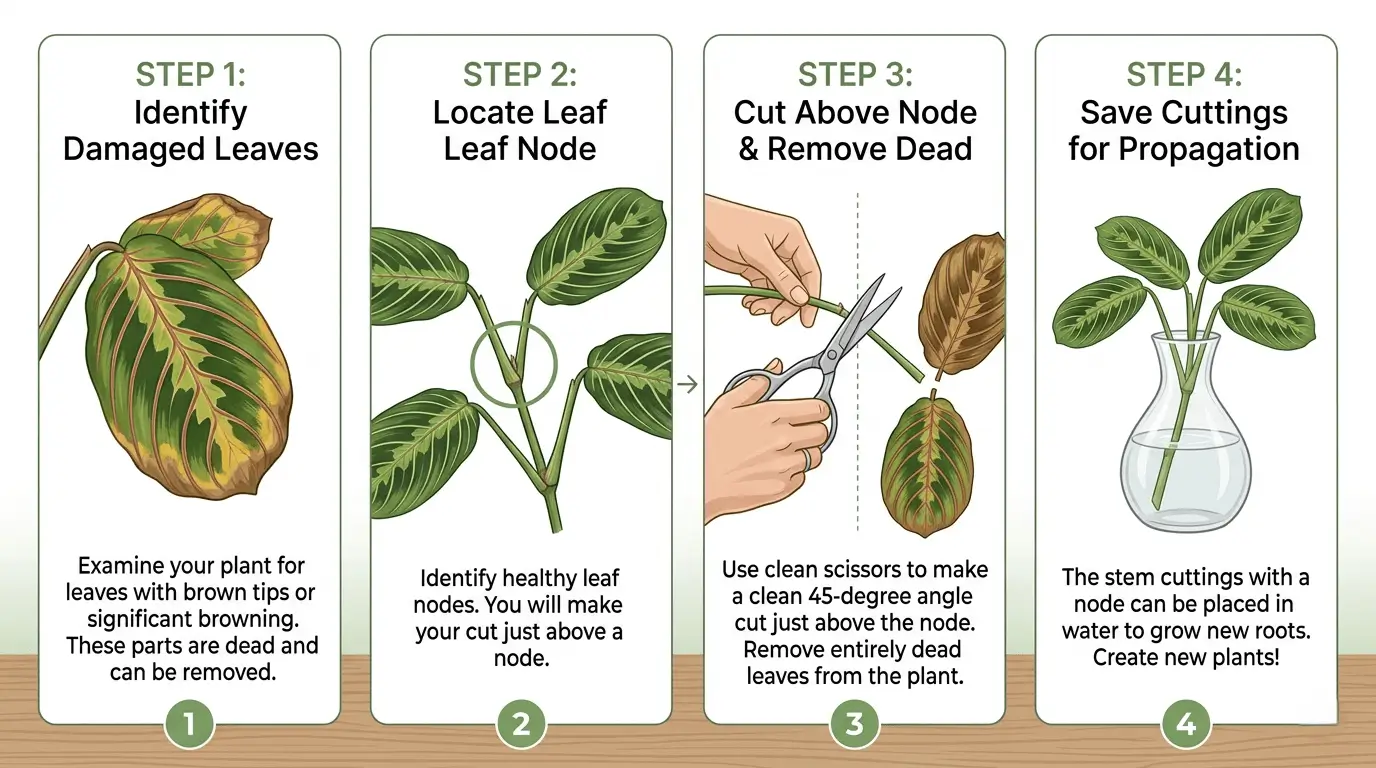
Yes, you can prune a prayer plant safely by cutting just above healthy leaf nodes.
Follow these steps:
- Inspect the entire plant and identify damaged or overgrown areas.
- Locate a healthy leaf node on each stem.
- Position scissors slightly above the node.
- Make a clean cut at approximately a 45-degree angle.
- Remove dead leaves at their base.
- Trim brown leaf tips while following the leaf’s natural shape.
- Save healthy cuttings for propagation.
- Dispose of unhealthy plant material.
- Allow cut surfaces to dry naturally.
No sealing compound is required after pruning.
This method works whether you are learning how to prune prayer plant specimens for maintenance or how to properly prune a prayer plant for shape control.
How to Prune a Leggy Prayer Plant
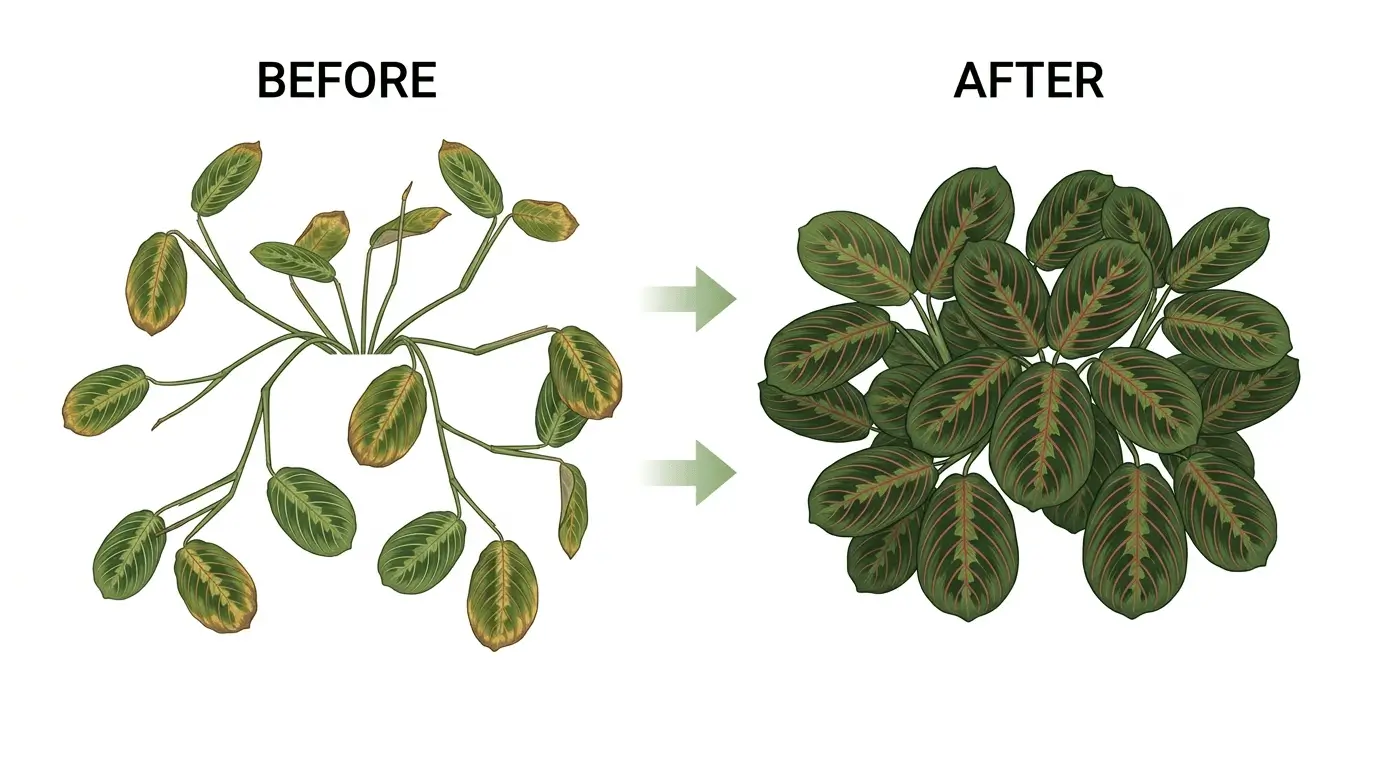
A leggy prayer plant is usually caused by insufficient light.
When stems become long with sparse leaves, prune them back to a healthy node. This encourages dormant buds to activate and produce fuller growth.
To correct legginess:
- Cut elongated stems above nodes.
- Move the plant closer to bright indirect light.
- Rotate the pot regularly.
- Avoid dark corners of the home.
Pruning improves appearance, but improving light conditions addresses the root cause.
How to Prune Prayer Plant Varieties
How to Prune a Lemon Lime Prayer Plant
Lemon lime prayer plant (Maranta leuconeura ‘Lemon Lime’) follows the same pruning principles as other Maranta varieties.
Remove:
- Yellow leaves
- Damaged stems
- Overly long growth
Light shaping helps maintain its vibrant yellow-green foliage and compact appearance.
How to Prune a Fishbone Prayer Plant
Fishbone prayer plant (Maranta leuconeura var. kerchoveana) has distinctive patterned foliage that deserves careful shaping.
When pruning:
- Preserve symmetrical growth.
- Remove damaged leaves individually.
- Cut above nodes to encourage branching.
The pruning technique remains identical to other prayer plant varieties.
How to Trim Dead Leaves Off a Prayer Plant
Trimming dead leaves differs from full pruning because the goal is cleanup rather than reshaping.
For fully dead leaves:
- Follow the leaf stem to its base.
- Cut cleanly near the stem.
- Remove the leaf completely.
For brown tips:
- Use sharp scissors.
- Follow the natural contour of the leaf.
- Avoid cutting straight across.
For yellow leaves:
- Remove them completely if more than half the leaf is discolored.
This process improves appearance while preserving healthy tissue.
Prayer Plant Light Requirements and Their Effect on Pruning Frequency
Prayer plants grow best in bright indirect light. Lighting conditions directly affect pruning frequency.
| Light Condition | Effect on Plant | Pruning Impact |
| Bright indirect light | Balanced growth | Less corrective pruning |
| Low light | Leggy stems | More pruning required |
| Direct sun | Leaf scorch and fading | More damaged leaves to remove |
Proper placement reduces the need for frequent corrective pruning and supports healthier growth. Similar light and humidity requirements are also found in Alocasia Amazonica Care Indoors, making both plants popular choices for tropical indoor collections.
Plant Size and Growth Rate
How Big Does a Prayer Plant Get
Prayer plants typically reach:
- 6–12 inches tall
- 12–18 inches wide
Indoors, they remain relatively compact compared to plants growing in their native tropical habitat.
Pruning helps control spread while encouraging dense foliage. Growers interested in larger tropical foliage plants may also enjoy our Ultimate Hanging Monstera Guide: Care, Varieties & Tips.
How Fast Does a Prayer Plant Grow
Prayer plants are moderate growers.
Growth is fastest during:
- Spring
- Summer
Growth slows during:
- Late autumn
- Winter
Because growth accelerates during warm months, light trimming may be needed more often throughout the growing season.
Care Guide — Keeping Your Prayer Plant Healthy Between Prunings
Watering Needs
Prayer plants prefer consistently moist soil but should never remain waterlogged.
Use the finger-test method:
- Insert a finger about one inch into the soil.
- Water when the upper layer begins to dry.
Water quality matters. Prayer plants can be sensitive to fluoride and salts found in some tap water sources. Filtered, distilled, or rainwater often helps reduce brown leaf tips. For another beginner-friendly houseplant, see our Dracaena fragrans Care Guide: Complete Indoor Growing Tips.
Soil and Fertilization
Prayer plants grow best in:
- Well-draining soil
- Peat-based mixes
- Coco coir-based blends
Fertilize monthly during spring and summer using a diluted balanced houseplant fertilizer. Avoid excessive fertilization because salt accumulation can burn roots and leaf edges.
Climate and Humidity
Prayer plants thrive in:
- Temperatures between 60°F and 80°F
- Humidity above 50%
Low humidity frequently causes brown leaf tips.
Ways to increase humidity include:
- Grouping plants together
- Using pebble trays
- Running a humidifier
If you enjoy humidity-loving foliage plants, our Begonia Maculata Care Guide for Healthy Growth covers another decorative houseplant with similar environmental preferences.
Prayer Plant Flower — What to Know and When to Prune Blooms
Yes, prayer plants can flower indoors, although blooms are often small and short-lived.
Flowers are typically:
- White
- Pale lavender
- Delicate and temporary
Once flowers fade:
- Locate the flower stem.
- Cut it near the base.
- Remove the spent bloom stalk.
Some growers remove flower stems early because they prefer directing energy toward foliage growth.
How to Propagate a Prayer Plant From Pruning Cuttings
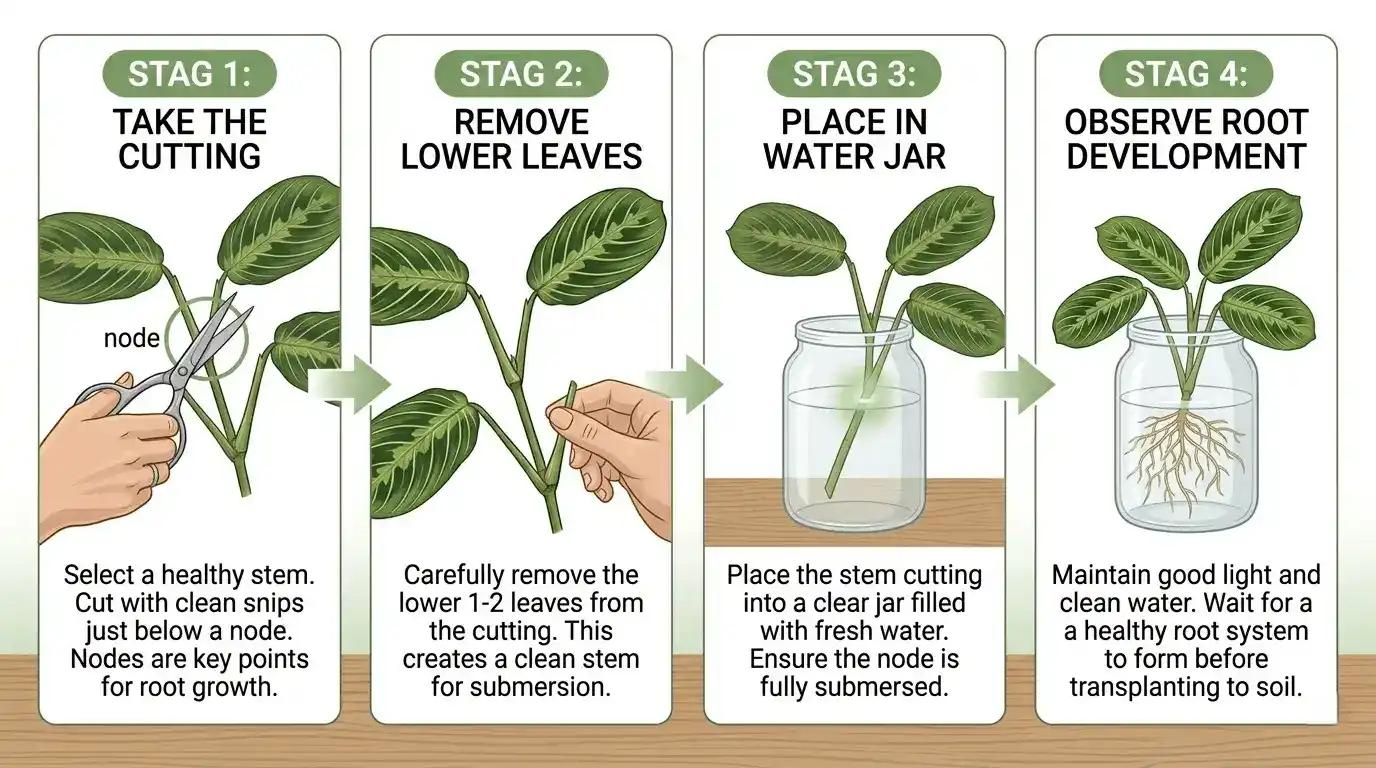
Prayer plant propagation is straightforward because roots form from nodes.
Follow these steps:
- Select a healthy cutting containing at least one node.
- Remove lower leaves.
- Leave one or two leaves near the top.
- Place the cutting in water or moist propagation mix.
- Keep in bright indirect light.
- Wait for root development.
Roots typically appear within 3–5 weeks. Transplant once roots reach approximately 1–2 inches long. Water propagation and soil propagation are both effective methods for Maranta propagation.
When to Repot a Prayer Plant
Repotting a prayer plant is usually needed every one to two years.
Signs that indicate repotting is necessary include:
- Roots emerging from drainage holes
- Slow growth
- Soil drying rapidly
- Water running straight through the pot
Repot during spring whenever possible. Choose a container that is 1–2 inches wider than the current pot and use fresh well-draining potting mix. Since prayer plants belong to the same family as calatheas, you may also find Does Calathea Like to Be Root Bound? helpful when deciding when to repot tropical foliage plants. Choosing the right container is important for root health, and many of the same principles discussed in Best Pot for Monstera: 7+ Proven Size & Material Tips apply to prayer plants.
Prayer Plant Varieties — A Visual and Care Comparison
| Variety | Leaf Pattern | Notable Trait |
| Maranta leuconeura erythroneura | Red veins on dark green leaves | Most common variety |
| Maranta leuconeura kerchoveana | Brown spots on light green leaves | Rabbit’s foot prayer plant |
| Maranta leuconeura ‘Lemon Lime’ | Yellow-green foliage with dark markings | Bright colorful appearance |
| Maranta leuconeura ‘Fishbone’ | Herringbone-style pattern | Dramatic texture and contrast |
Although leaf patterns differ, care and pruning requirements remain largely the same across varieties.
Prayer Plant Problems — Diagnosis and Solutions
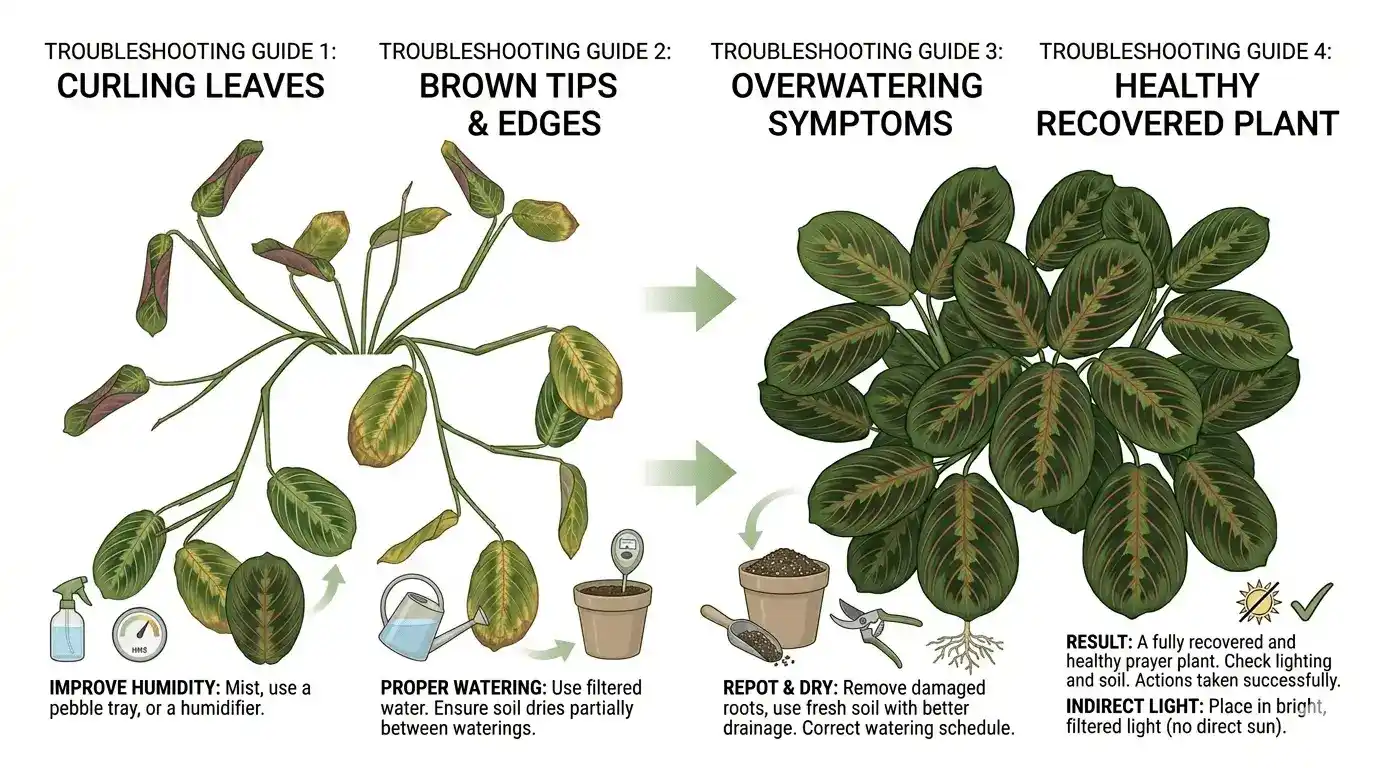
Why Are My Prayer Plant Leaves Curling
Prayer plant leaves curl primarily because of:
- Underwatering
- Low humidity
- Cold drafts
Check soil moisture first. If the soil is dry, water thoroughly. If humidity is low, increase moisture around the plant.
Why Are My Prayer Plant Leaves Turning Brown
Brown symptoms can indicate different issues.
| Symptom | Likely Cause |
| Brown tips | Low humidity, fluoride exposure |
| Brown patches | Sunburn, excess moisture |
| Fully brown leaves | Aging foliage, root problems |
Identifying the specific pattern helps determine the correct solution. Brown foliage issues are not unique to Maranta; our guide on Chamaedorea Elegans Dry Leaves Causes & Fix explains similar symptoms and solutions.
Overwatered Prayer Plant — Signs and Recovery
Signs of overwatering include:
- Yellow lower leaves
- Mushy stems
- Soggy soil
- Root rot odor
Recovery steps:
- Remove the plant from its pot.
- Inspect roots.
- Trim rotted roots.
- Repot into fresh mix.
- Reduce watering frequency.
- Improve drainage.
Early intervention significantly improves recovery chances.
Common Beginner Mistakes in Prayer Plant Care
Common mistakes include:
- Using fluoride-heavy tap water
- Exposing plants to direct sunlight
- Watering with very cold water
- Repotting too frequently
- Removing too much foliage during one pruning session
- Ignoring humidity requirements
Avoiding these mistakes reduces stress and improves long-term plant health.
How to Revive a Dying Prayer Plant
To revive a dying prayer plant, identify the underlying problem first.
Follow this checklist:
- Check soil moisture levels.
- Inspect roots for rot.
- Evaluate light conditions.
- Look for spider mites or mealybugs.
- Measure humidity levels.
- Assess temperature exposure.
Revival process:
- Remove damaged foliage.
- Correct watering practices.
- Improve lighting.
- Treat pests if present.
- Increase humidity.
- Repot if roots are unhealthy.
Consistent care usually produces recovery within several weeks.
How to Prune a Prayer Plant Indoors vs. Outdoors
Prayer plants are primarily indoor plants in most regions.
Indoor pruning requires attention to:
- Reduced winter light
- Dry indoor heating
- Slower seasonal growth
Outdoor-grown prayer plants in tropical climates may grow faster and require more frequent trimming. Regardless of location, the pruning method remains the same: cut above healthy nodes and remove damaged growth as needed.
Indoor gardeners may also benefit from our guide on Caring for a Ficus Elastica: Complete Indoor Care Guide, which covers pruning and maintenance of another popular houseplant.
Conclusion
Prayer plants are rewarding houseplants that respond beautifully to regular, light pruning. Understanding how to prune a prayer plant—when to cut, where to cut, and what to remove—helps keep Maranta healthy, compact, and vibrant throughout the year. Whether you are trimming dead leaves, correcting legginess, removing spent blooms, or collecting cuttings for propagation, the key is to make clean cuts just above healthy leaf nodes. Combined with proper lighting, consistent watering, suitable humidity, and routine maintenance, thoughtful pruning encourages lush foliage and supports the unique leaf-folding behavior that makes prayer plants so popular among indoor gardeners.
Frequently Asked Questions
1. Can you prune a prayer plant without harming it?
Yes. Pruning is safe and beneficial when performed correctly. Use clean tools and make cuts just above healthy leaf nodes to encourage new growth while maintaining plant health.
2. How often should you prune a prayer plant?
There is no strict schedule. Remove dead, damaged, or leggy growth whenever it appears. Most plants benefit from occasional light pruning throughout the growing season.
3. Where exactly do you cut when pruning a prayer plant?
Cut just above a leaf node. The node is the point where a leaf connects to the stem and is where new shoots typically emerge after pruning.
4. How do you propagate a prayer plant cutting in water?
Place a stem cutting containing at least one node into room-temperature water. Keep it in bright indirect light and change the water weekly. Roots usually appear within 3–5 weeks.
5. Why is my prayer plant getting leggy and how does pruning help?
Legginess is usually caused by insufficient light. Pruning long stems back to healthy nodes promotes bushier growth, but improving light conditions is necessary to prevent the problem from returning.
6. When should you not prune a prayer plant?
Avoid heavy pruning during winter when growth is slow. Also avoid major pruning if the plant is suffering from root rot, severe dehydration, disease, or other significant stress.
7. What is the difference between trimming and pruning a prayer plant?
Trimming usually refers to cosmetic maintenance such as removing brown tips or dead leaves. Pruning is more extensive and involves cutting stems back to nodes to shape the plant and encourage new growth.