
Introduction
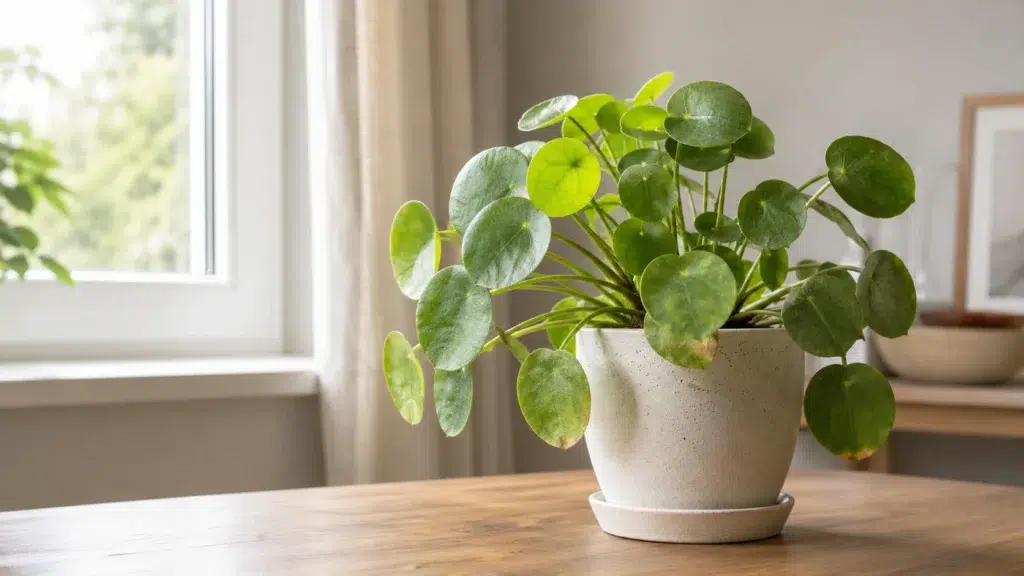
Chinese money plant brown leaves are a common problem affecting the popular houseplant Pilea peperomioides, also known as the Chinese money plant. This attractive indoor plant is recognized for its round, coin-shaped leaves and easy-care reputation, but brown leaves usually indicate stress from watering, light, humidity, or environmental conditions. In most cases, brown leaves are caused by fixable care mistakes rather than a serious plant failure. This guide explains why Chinese money plant leaves turn brown, how to identify the cause, and what steps can help restore healthier growth. For a complete overview of daily maintenance, propagation, and growing requirements, see this Chinese money plant care guide.
Quick Summary
- Brown leaves on a Chinese money plant are most commonly caused by overwatering, underwatering, direct sunlight, or low humidity.
- Yellow leaves that appear before browning often indicate root stress, watering problems, or nutrient issues rather than simple leaf damage.
- Most browning problems can be corrected if detected early; completely damaged leaves should be removed.
- Watering every 1–2 weeks while checking soil moisture is one of the best ways to prevent future browning.
What Causes Brown Leaves on a Chinese Money Plant?
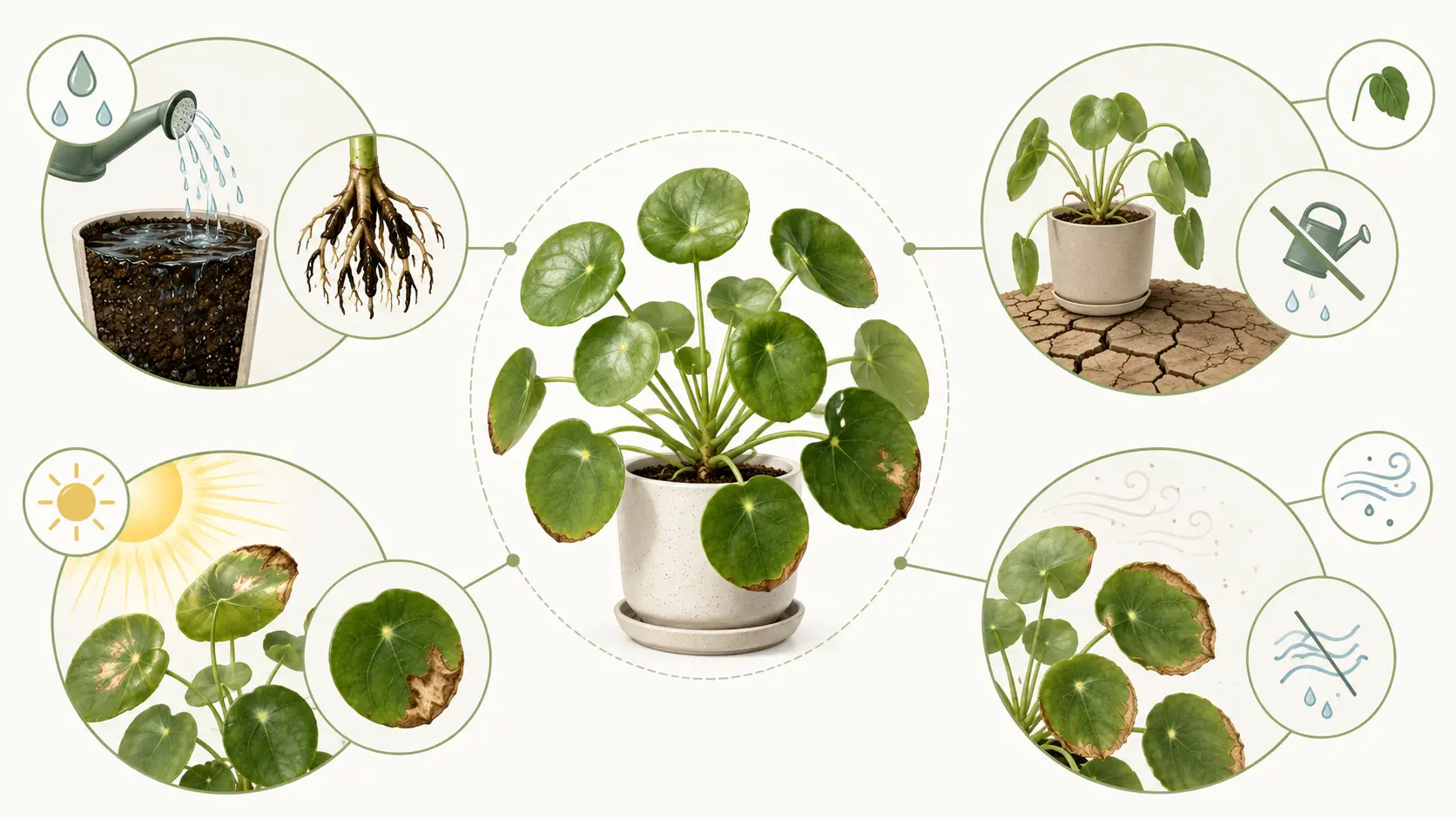
Chinese money plant brown leaves usually happen because the plant is experiencing environmental stress. The most common causes include incorrect watering, unsuitable lighting, low humidity, fertilizer problems, or sudden temperature changes.
Common reasons Chinese money plant leaves turn brown include:
- Overwatering that damages roots and reduces oxygen availability
- Underwatering that causes dehydration and crispy leaf edges
- Direct sunlight causing leaf scorch
- Low humidity causing dry leaf tissue
- Excess fertilizer creating root stress
- Cold drafts or sudden temperature changes
Understanding the exact cause is important because each problem requires a different solution.
Overwatering and Root Rot
Overwatering is one of the most common causes of brown leaves on a Chinese money plant. When soil stays wet for too long, the roots cannot receive enough oxygen. This can lead to root rot, where roots become damaged and unable to absorb water properly.
Signs of an overwatered Chinese money plant include:
- Brown or black patches that feel soft or mushy
- Yellow leaves appearing before browning
- Soil remaining wet for many days
- Drooping leaves despite moist soil
- A musty smell from the potting mix
An overwatered pilea may look similar to an underwatered plant because damaged roots can prevent water movement to the leaves. Checking soil moisture before watering is the best prevention method.
Underwatering and Dehydration
Underwatering causes the plant to lose moisture faster than it can replace it. A dehydrated Chinese money plant usually develops dry, crispy, or curling leaves.
Common dehydration signs include:
- Brown crispy edges
- Leaves curling inward
- Drooping stems
- Dry soil pulling away from the pot edges
- Leaves becoming thin or brittle
While the question “what does a dehydrated money tree look like?” often refers to different plants, similar dehydration symptoms can appear in Chinese money plants. The main difference is that underwatering usually creates dry damage, while overwatering often causes softer brown areas.
Sunlight and Environmental Stress
Chinese money plants prefer bright, indirect light. Too much direct sunlight can burn the leaves, creating brown scorch marks, especially on areas facing the light source. Maintaining suitable indoor humidity is important for many tropical houseplants, and humidity requirements can vary between species.
Environmental stress can also come from:
- Low light conditions causing weak growth
- Cold drafts from windows or air conditioners
- Sudden movement between different environments
- Extreme temperature changes
Quick diagnosis:
- Brown patches on sun-facing areas often indicate sun scorch.
- Pale, weak growth may suggest insufficient light.
- Brown edges with dry air may indicate humidity stress.
Chinese Money Plant Brown Spots vs. Brown Edges vs. Yellow Leaves
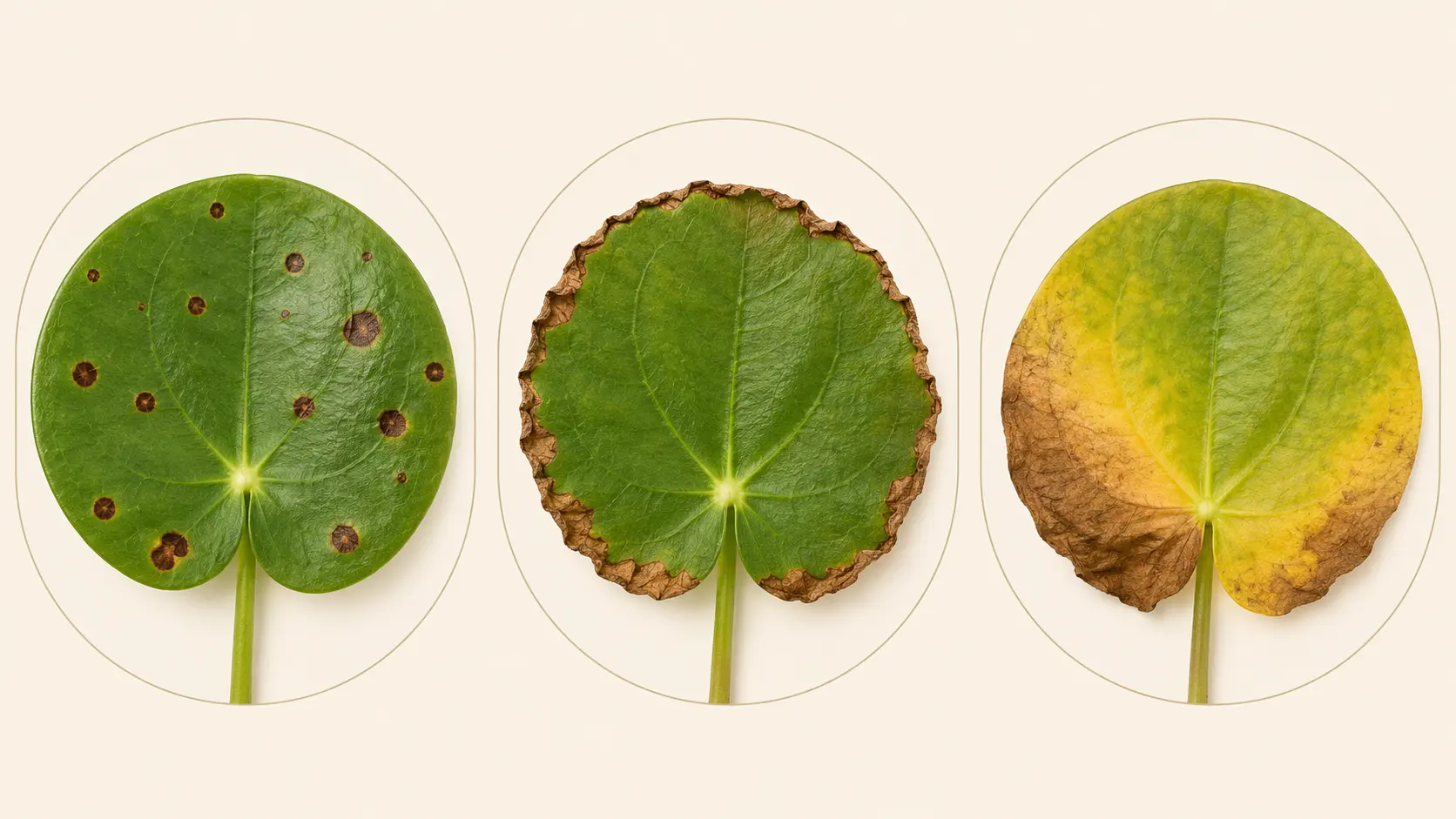
Different symptoms usually point toward different causes. Identifying whether you have Chinese money plant brown spots, brown edges, or yellow leaves can make treatment easier.
| Symptom | Likely Cause | Typical Location on Leaf | Fix Priority |
| Brown spots | Overwatering, fungal stress, leaf damage | Random areas across leaf surface | Check roots and moisture |
| Brown crispy edges | Underwatering, low humidity, excess salts | Leaf margins and tips | Improve watering and humidity |
| Yellow leaves before browning | Root stress, nutrient issues, overwatering | Older lower leaves first | Check soil and roots |
| Brown leaves after repotting | Transplant shock | Any area of leaf | Stabilize conditions |
Chinese Money Plant Brown Leaves After Repotting
Chinese money plant brown leaves after repotting are often caused by transplant shock. Repotting can temporarily disturb roots, causing the plant to struggle with water absorption.
Temporary stress signs may include:
- Slight leaf yellowing
- Brown edges
- Drooping leaves
- Slower growth
To help recovery:
- Avoid fertilizing immediately after repotting
- Keep the plant in stable indirect light
- Maintain normal watering without overwatering
- Allow roots time to adjust
If the browning continues for weeks, check whether the new pot has proper drainage.
How Often Should You Water a Chinese Money Plant?
A Chinese money plant should usually be watered every 1–2 weeks, but the exact schedule depends on light, temperature, pot size, and soil conditions. The best method is checking the top layer of soil before watering instead of following a fixed calendar.
Watering guidelines:
- Allow the top 1–2 inches of soil to dry before watering.
- Water thoroughly until excess water drains from the pot.
- Reduce watering during cooler months.
- Increase watering slightly during active growth periods.
A common mistake is watering based only on leaf appearance. Drooping leaves can happen from both too little and too much water.
Bottom Watering vs. Top Watering
Both methods can work, but they affect moisture distribution differently.
Top watering:
- Water is poured directly onto the soil surface.
- Works well when soil drains properly.
- Allows flushing of excess mineral buildup.
Bottom watering:
- The pot sits in water and absorbs moisture through drainage holes.
- Can encourage deeper root hydration.
- Helps when the soil surface becomes dry and compacted.
Bottom watering may help prevent brown leaves when done correctly, but the plant should not sit in water permanently because this increases root rot risk.
How to Fix Brown Leaves on a Chinese Money Plant
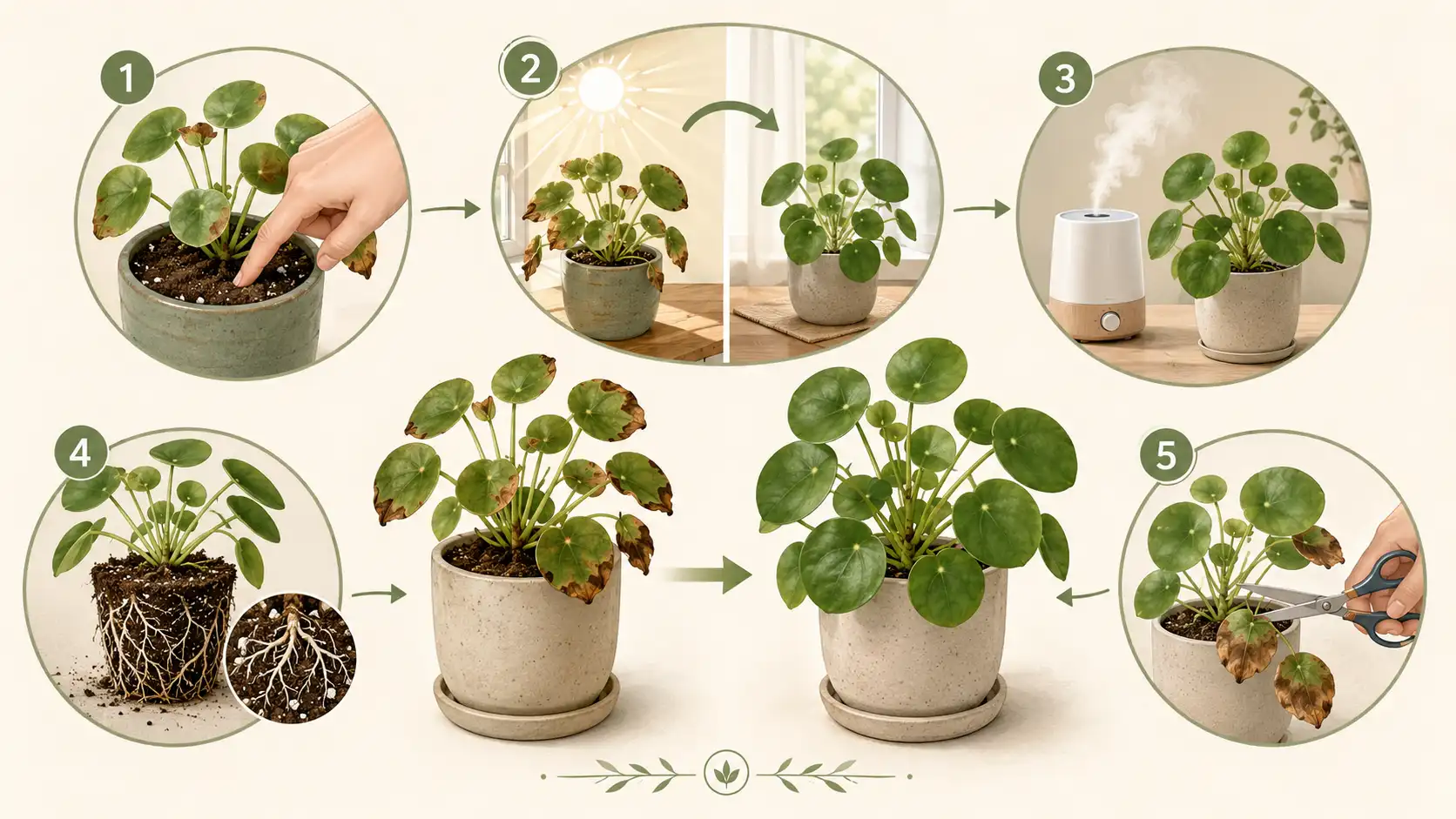
Fixing Chinese money plant brown leaves requires identifying and correcting the underlying stress. Damaged leaf tissue will not turn green again, but new growth can become healthy after conditions improve.
Steps to fix browning:
- Check soil moisture and adjust watering.
- Move the plant away from harsh direct sunlight.
- Improve humidity if the air is very dry.
- Inspect roots if the soil stays wet or smells unpleasant.
- Repot into fresh, well-draining soil if root rot is present.
Additional care adjustments:
- Use a pot with drainage holes.
- Avoid sudden environmental changes.
- Remove severely damaged leaves.
Should You Remove Brown Leaves From a Chinese Money Plant?
Yes, fully brown or dead leaves should usually be removed from a Chinese money plant. Removing damaged leaves helps the plant focus energy on healthier growth and improves appearance.
Trim leaves when:
- The entire leaf is brown
- The leaf is dry and no longer functioning
- The leaf is falling naturally
However, partially yellowing or slightly damaged leaves can sometimes remain temporarily. If some green tissue is still healthy, the plant may continue using that leaf. Leaf drop and browning symptoms can also appear in other indoor plants, and identifying the cause early is important for recovery.
Use clean scissors and cut near the base of the leaf stem to reduce damage.
Home Remedies — What Not to Use on a Chinese Money Plant
Many homemade solutions are shared online, but some can harm a Chinese money plant if used incorrectly.
Avoid:
- Dish soap: Concentrated soap can damage leaf surfaces and remove protective coatings.
- Hydrogen peroxide misuse: High concentrations may harm roots and beneficial soil organisms.
- Coffee grounds: Large amounts can change soil conditions and may create drainage problems.
Safer alternatives include:
- Proper watering control
- Good drainage
- Fresh potting mix when needed
- Balanced plant fertilizer at recommended levels
When plant leaves turn brown, correcting the environment is usually more effective than applying quick remedies.
Common Beginner Mistakes That Cause Brown Leaves
Many Chinese money plant problems come from inconsistent care rather than one major mistake.
Common beginner errors include:
- Watering too frequently after noticing brown leaves
- Ignoring drainage holes
- Moving the plant repeatedly between locations
- Keeping soil constantly wet
- Placing the plant in harsh afternoon sunlight
- Fertilizing stressed plants
Overcorrecting is especially common. A plant with brown leaves does not always need more water; it needs the correct diagnosis first. Similar watering and indoor growing principles apply to other low-maintenance houseplants, such as the ZZ plant, which also benefits from careful moisture management.
Preventing Future Brown and Yellow Leaves
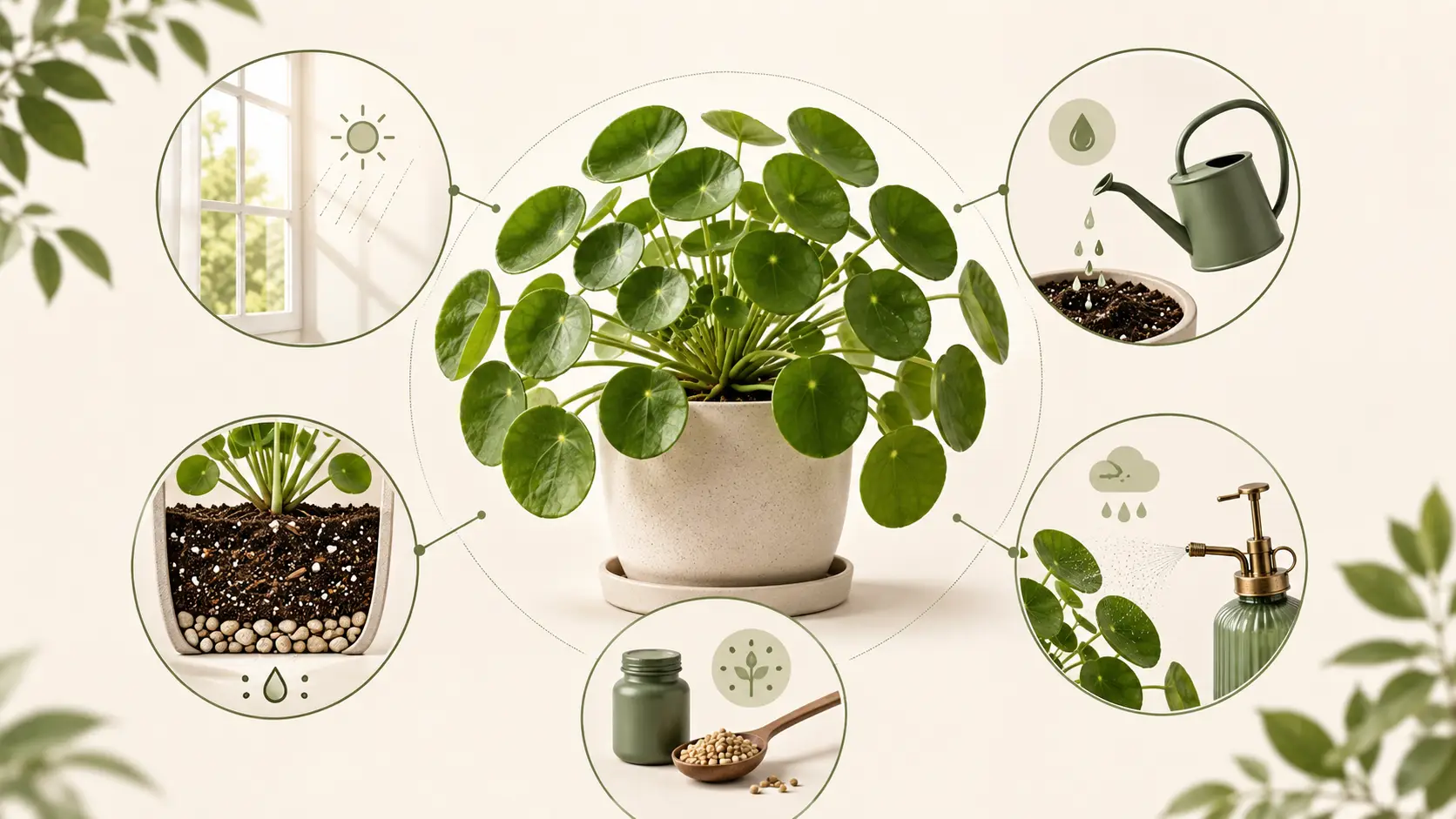
Preventing Chinese money plant brown leaves depends on maintaining stable growing conditions. Understanding general houseplant care principles can also help improve long-term results. Learn more about plant care requirements, growing tips, and common practices in this complete plant guide.
Key prevention practices:
Watering needs
- Check soil before watering.
- Avoid letting roots sit in standing water.
- Adjust frequency based on season.
Light requirements
- Provide bright indirect light.
- Protect leaves from strong direct sun.
Soil and drainage preferences
- Use a loose, well-draining potting mix.
- Ensure the container allows excess water to escape.
Fertilization practices
- Feed lightly during active growth.
- Avoid excess fertilizer, which can burn roots.
Climate and humidity tolerance
- Maintain moderate indoor humidity.
- Keep away from cold drafts and sudden temperature changes.
Tracking plant development can also help identify whether your Chinese money plant is recovering properly after care adjustments. Use this plant growth calculator to estimate growth progress and better understand your plant’s development over time.
Conclusion
Chinese money plant brown leaves are usually caused by watering problems, lighting stress, humidity issues, or environmental changes. Most cases can be corrected by checking soil moisture, improving drainage, adjusting light exposure, and maintaining consistent care. Brown leaves that are completely damaged should be removed, while early signs of stress can often be reversed with proper adjustments. A stable routine is the best way to keep a Chinese money plant healthy and prevent future browning.
FAQs
Why is my Chinese money plant turning brown?
A Chinese money plant usually turns brown because of overwatering, underwatering, direct sunlight, low humidity, fertilizer stress, or temperature changes. Checking soil moisture and growing conditions helps identify the exact cause.
How do you know if you overwatered a Chinese money plant?
An overwatered Chinese money plant often has wet soil, yellowing leaves, soft brown patches, drooping growth, or signs of root damage. Persistent moisture is a key warning sign.
Can browning leaves be saved once they turn brown?
No, completely brown leaf tissue will not recover. However, correcting the cause can prevent further damage and encourage healthy new leaves.
How often should I water a Chinese money plant?
A Chinese money plant usually needs water every 1–2 weeks, but frequency depends on soil dryness, light, temperature, and humidity. Always check the soil before watering.
Should I remove brown leaves from my Chinese money plant?
Yes, remove fully brown and dead leaves by cutting them near the stem base. Partially damaged leaves can remain if they still contain healthy green tissue.
What does a dehydrated money tree look like?
A dehydrated money tree or similar indoor plant usually shows dry soil, curling leaves, drooping growth, and crispy brown edges. These signs indicate the plant needs better moisture management.