
Introduction
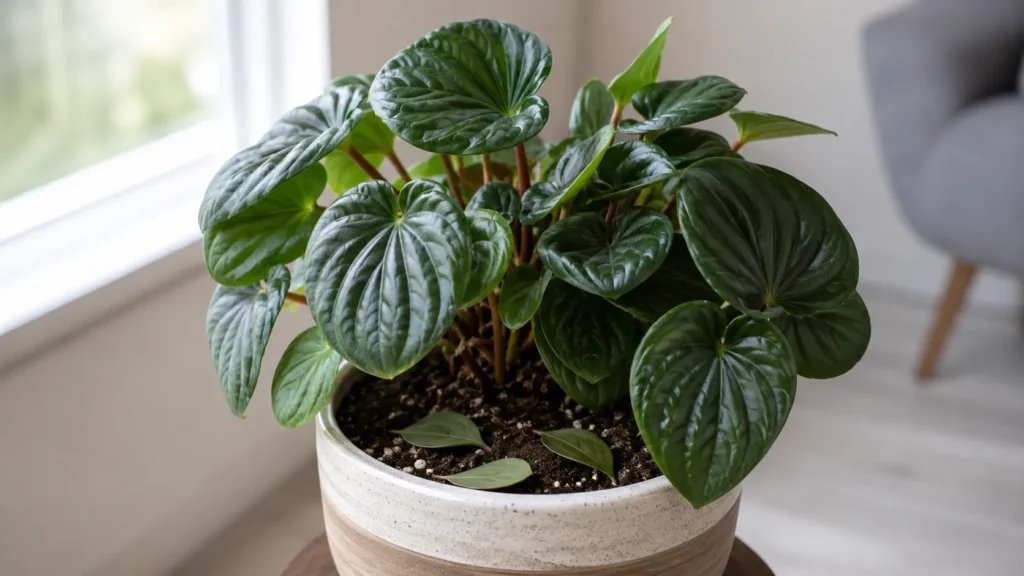
Peperomia leaves falling off is a common concern among houseplant owners and often signals that the plant is experiencing stress. Peperomia is a diverse genus of tropical plants known for its semi-succulent leaves, which store water and help the plant tolerate short periods of drought. Because these thick leaves act as moisture reserves, leaf drop is usually more than a cosmetic issue. It often indicates problems with watering, temperature, humidity, or root health. Understanding why peperomia leaves fall, how symptoms differ among varieties, and what corrective actions to take can help both beginner and experienced growers restore healthy growth and prevent further damage. Peperomia is part of a diverse group of popular houseplants featured in our Plants Benefits and Guides, where you can explore care requirements, growth habits, and common troubleshooting tips for indoor plants.
Peperomia belongs to the genus Peperomia, a large group of tropical plants known for their ornamental foliage and adaptable indoor growth habits.
Quick Summary
- Peperomia leaves falling off is most commonly caused by overwatering, cold stress, or sudden environmental changes.
- Yellow, brown, and healthy green leaf drop often indicate different underlying problems.
- Watermelon peperomia, raindrop peperomia, and peperomia hope have unique sensitivities that influence leaf loss.
- Most peperomias recover fully when the cause is identified and corrected.
- Fallen leaves can often be propagated to grow new plants.
What Does It Mean When Peperomia Leaves Fall Off?
Peperomia leaf drop is a stress response. Since peperomia plants have semi-succulent leaf tissue designed to retain moisture, they do not shed leaves without a reason. Normal leaf drop involves occasional loss of older leaves near the base of the plant. This is part of the natural aging process and usually does not indicate a problem.
Like many species featured in our Ultimate Guide to House Plants with Waxy Leaves, peperomia stores moisture in its thick foliage, making leaf condition an important indicator of plant health.
Abnormal leaf drop occurs when multiple leaves fall within a short period, especially newer growth. This often points to root stress, environmental changes, or improper care conditions. Because peperomia stores water in both leaves and stems, root health plays a critical role in maintaining foliage. Leaf drop should be viewed as a diagnostic signal rather than a random event.
Why Is My Peperomia Dropping Leaves?
Overwatering and Root Rot
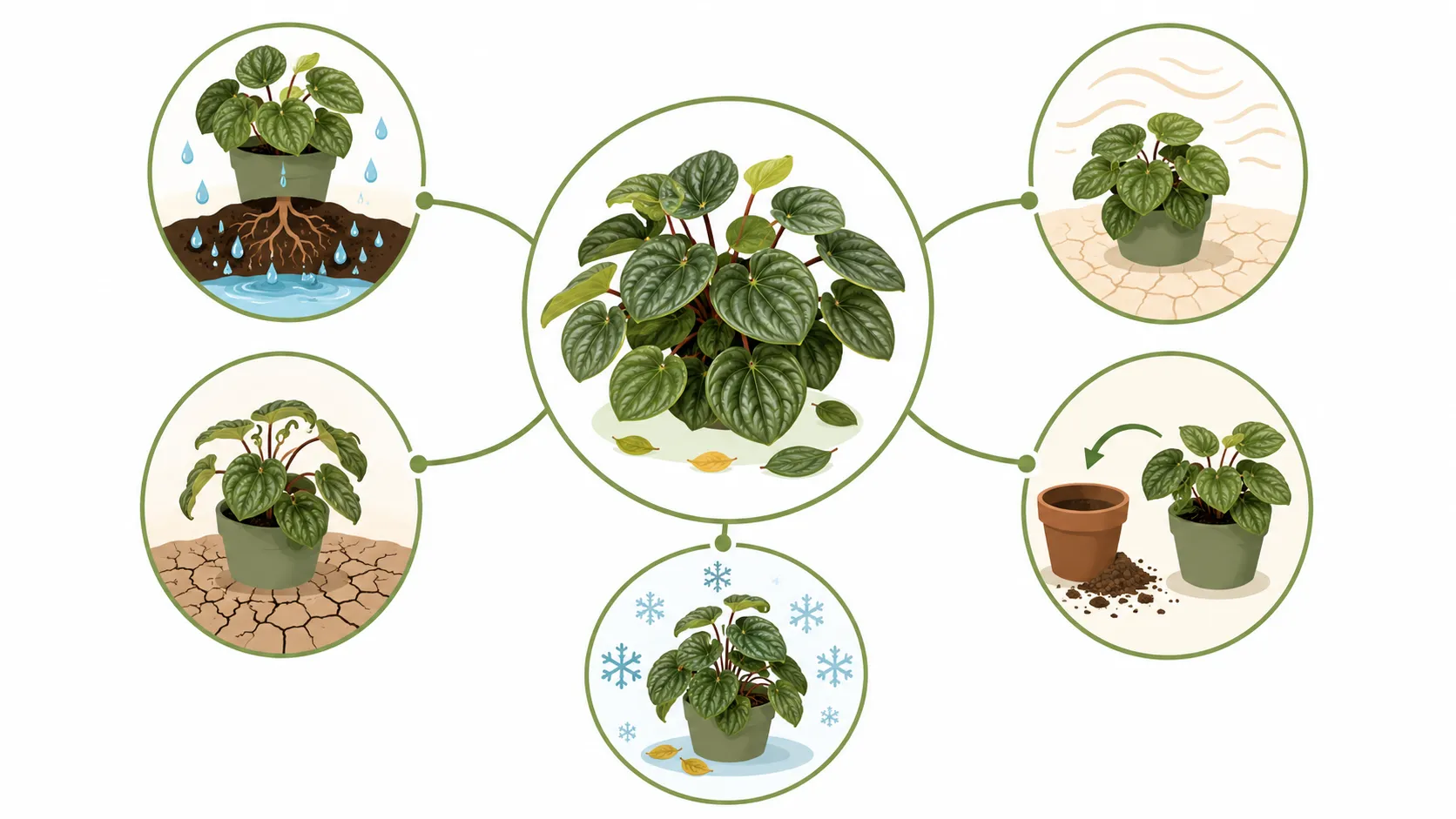
Overwatering is the most common reason for peperomia leaves falling off. When soil remains wet for extended periods, roots are deprived of oxygen and begin to rot.
Signs of overwatering include:
- Yellow leaves
- Soft stems
- Mushy roots
- Soil that remains wet for days
This issue is frequently associated with peperomia obtusifolia dying and peperomia hope root rot. An overwatered peperomia hope may show soft leaves, weak stems, and widespread leaf drop.
How to fix it:
- Allow soil to dry appropriately
- Remove damaged roots
- Repot into fresh, well-draining soil
- Use a pot with drainage holes
Underwatering and Drought Stress
Underwatering causes leaves to lose moisture reserves. Unlike overwatering, symptoms usually appear as dry or crispy foliage.
Common signs include:
- Curling leaves
- Crispy edges
- Wilting growth
- Soft leaves due to dehydration
Peperomia hope curling leaves often indicate insufficient watering rather than disease. Unlike peperomia, the ZZ Plant can tolerate much longer periods of drought thanks to its underground water-storing rhizomes.
Cold Temperatures and Winter Stress
Peperomia is sensitive to cold conditions. Temperatures below 55°F (13°C) can trigger leaf loss.
Common winter stress factors include:
- Cold window drafts
- Sudden temperature fluctuations
- Exposure to air conditioning or heating systems
Healthy green leaves may suddenly fall after cold exposure, making peperomia dropping leaves in winter a common seasonal issue.
Low Humidity
Dry indoor air can increase stress and contribute to leaf drop, particularly during winter when heating systems reduce humidity. Ideal humidity ranges between 40% and 60%.
Ways to improve humidity:
- Use pebble trays
- Group plants together
- Run a humidifier nearby
Repotting or Location Shock
Peperomia may shed leaves after repotting or relocation. Sudden changes in lighting, temperature, or airflow can cause stress. This frequently explains peperomia dropping healthy leaves despite otherwise good care.
To reduce shock:
- Acclimate plants gradually
- Avoid frequent moves
- Repot only when necessary
Pests and Disease
Although less common, pests and diseases can cause leaf loss.
Common issues include:
- Mealybugs
- Fungus gnats
- Root rot fungi
Pest infestations often involve visible insects, sticky residue, or distorted growth, helping distinguish them from environmental causes. If you notice insects alongside leaf loss, our guide on Aphids on Houseplants explains how to identify and control common indoor plant pests.
Peperomia Leaves Turning Yellow and Falling Off
Yellow leaves combined with leaf drop usually indicate an underlying care issue.
Quick diagnostic guide:
| Symptom | Likely Cause |
| Yellow + soft leaves | Overwatering or root rot |
| Yellow + pale color | Nutrient deficiency |
| Yellow lower leaves only | Natural aging |
Peperomia polybotrya yellow leaves frequently indicate excess moisture before leaves begin dropping. Overwatering yellowing is usually accompanied by softness and mushiness, while nutrient deficiencies create a more uniform pale appearance across the foliage.
Peperomia Leaves Turning Brown and Falling Off
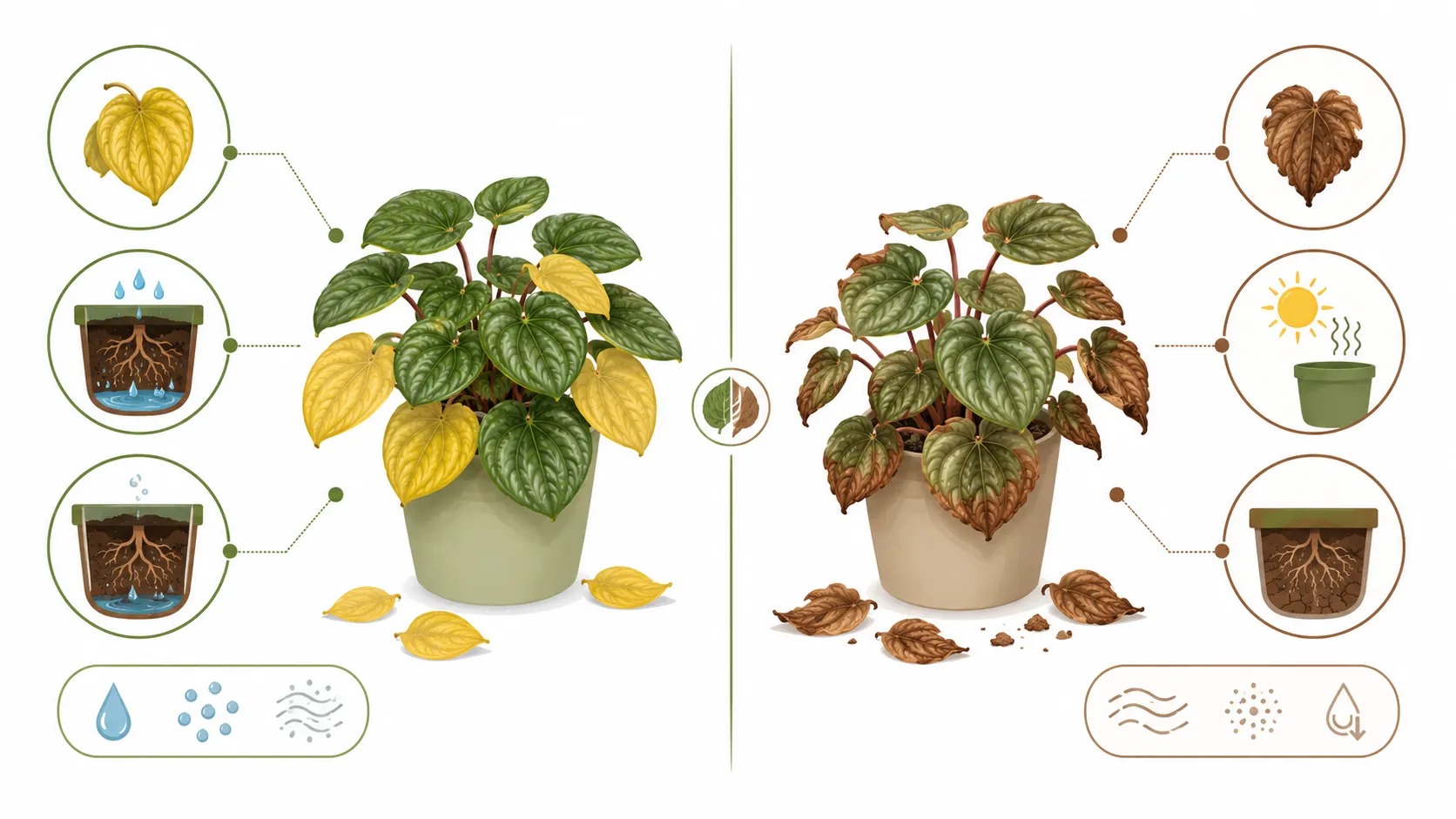
Brown leaf drop generally points to different issues than yellow leaf drop.
| Symptom | Likely Cause | Fix |
| Brown crispy edges | Low humidity or underwatering | Increase humidity and watering consistency |
| Brown soft patches | Overwatering or cold damage | Reduce watering and avoid cold exposure |
| Brown or black stems | Advanced root rot | Repot immediately |
| Brown lower leaves only | Natural aging | No action required |
Peperomia turning black often indicates severe root damage requiring immediate intervention. Brown leaf edges are not unique to peperomia; our guide on Chamaedorea Elegans Dry Leaves Causes & Fix covers similar symptoms caused by dry indoor conditions.
Peperomia Dropping Healthy Green Leaves
Healthy green leaf drop is usually caused by environmental shock rather than disease.
Common triggers include:
- Repotting
- Sudden relocation
- Temperature swings
- Cold drafts
Fortunately, this type of leaf loss is often reversible. Once environmental conditions stabilize, the plant typically resumes normal growth.
Leaf Drop by Variety: What Makes Each Type Different?
Watermelon Peperomia Leaves Falling Off
Watermelon peperomia (Peperomia argyreia) has large leaves that make it particularly vulnerable to overwatering.
Key sensitivities:
- Excess moisture
- Poor drainage
- Humidity fluctuations
Crispy edges often indicate low humidity rather than underwatering.
Raindrop Peperomia Leaves Falling Off
Raindrop peperomia (Peperomia polybotrya) tolerates drought reasonably well but struggles in dense, moisture-retentive soil. Yellow leaves often appear before leaf drop and typically signal overwatering.
Peperomia Hope Leaves Falling Off
Peperomia hope is a trailing variety sensitive to:
- Overwatering
- Root rot
- Cold exposure
Low light may also cause peperomia hope leggy growth. Watering frequency should be adjusted seasonally to prevent root stress.
Peperomia Obtusifolia Leaves Falling Off
Peperomia obtusifolia has thick, glossy leaves and is highly resilient when properly watered.
Most cases of leaf drop stem from:
- Overwatering
- Root rot
- Poor drainage
Untreated root rot may eventually lead to peperomia obtusifolia dying.
Other Varieties: Napoli Nights, Pepperspot, Caperata, Rosso, and More
| Variety | Primary Leaf Drop Trigger | Key Sensitivity |
| Napoli Nights | Overwatering | Dense soil |
| Pepperspot | Cold drafts | Temperature fluctuations |
| Caperata | Overwatering | Low light |
| Rosso | Overwatering | Excess moisture |
| Ferreyrae (Happy Bean) | Root rot | Hidden overwatering |
| Ginny | Cold stress | Draft sensitivity |
| Coin Leaf | Low humidity | Dry indoor air |
| Rotundifolia | Low humidity | Trailing growth habit |
Gardeners growing trailing varieties may also benefit from reading the Peperomia Rotundifolia Care Guide for more detailed watering and humidity recommendations.
Peperomia Plant Care: How to Prevent Leaf Drop
Watering
Follow the soil-dry method:
- Water only when the top 1–2 inches of soil are dry.
- Reduce watering frequency during winter.
- Use containers with drainage holes.
Light Requirements
Peperomia prefers bright, indirect light. Direct sunlight can scorch leaves, while prolonged low light may lead to weak growth and legginess. Gardeners seeking additional foliage plants for bright indoor spaces may also enjoy Begonia Maculata, which thrives under similar indirect light conditions.
Soil and Pot Selection
A well-draining soil mix is essential.
Recommended mix:
- Cactus soil
- Perlite
- Orchid bark (optional)
Terracotta pots help regulate excess moisture and reduce root rot risk.
Temperature and Humidity
Ideal conditions:
- Temperature: 65–85°F (18–29°C)
- Humidity: 40–60%
Avoid placing plants near vents, radiators, or drafty windows. Similar to Alocasia Amazonica, peperomia benefits from stable temperatures and moderate humidity levels throughout the year.
Fertilization
Use a balanced fertilizer diluted to half strength once monthly during active growth. Avoid fertilizing during winter dormancy. Over-fertilization can cause salt accumulation and contribute to leaf drop.
How to Fix Peperomia Dropping Leaves: Step-by-Step Recovery
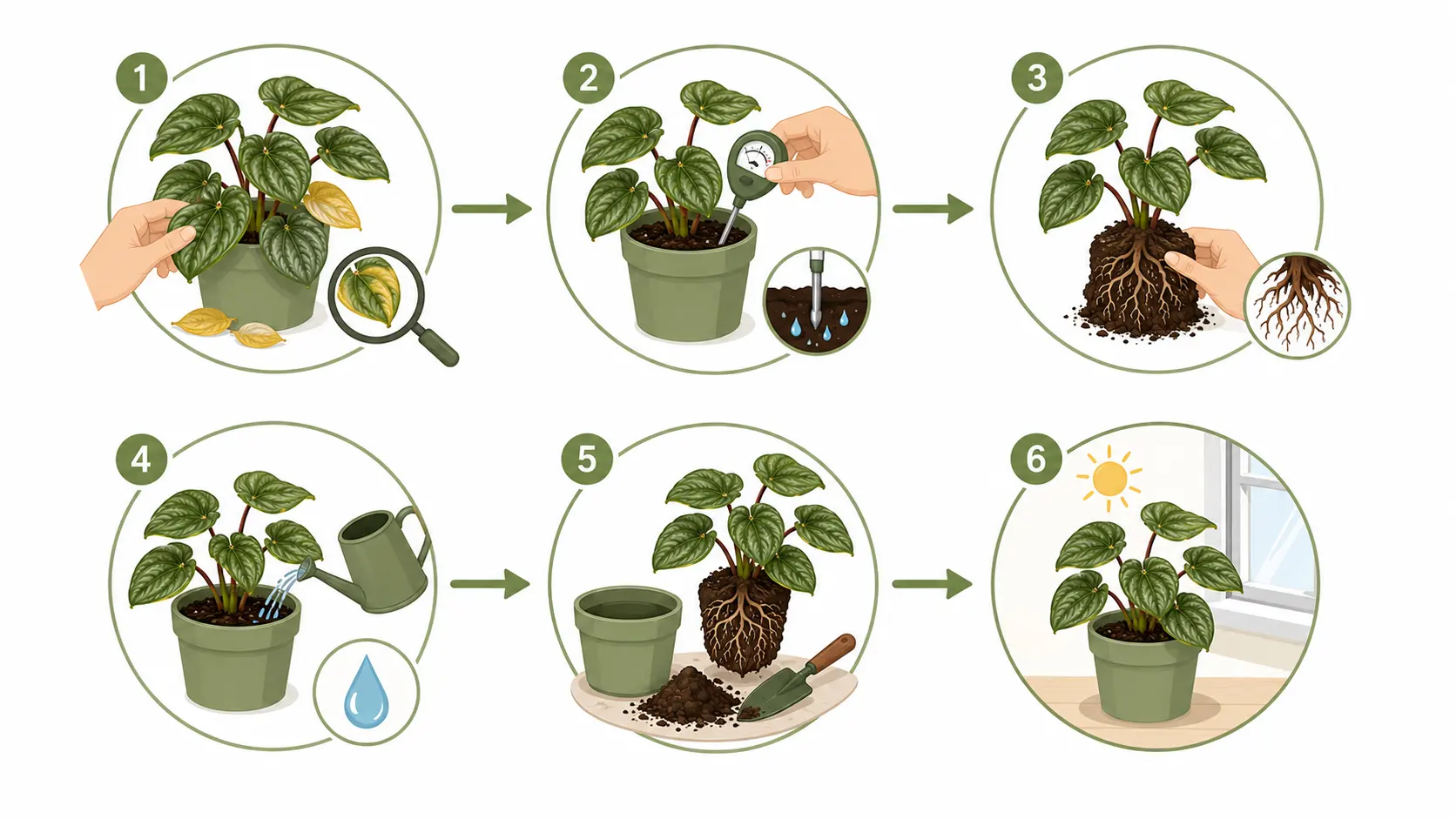
Step 1: Identify the cause using leaf color, texture, and drop pattern.
Step 2: Check soil moisture and inspect roots.
Step 3: Correct watering practices immediately.
Step 4: Repot if root rot is present.
Step 5: Move the plant to stable lighting and temperature conditions.
Step 6: Monitor recovery and avoid additional stress.
Patience is important. Most peperomias recover gradually once proper conditions are restored.
Do Peperomia Leaves Grow Back?
No, peperomia leaves do not grow back from the exact node where they fell. However, healthy plants produce new growth from active stems and growth points. Recovery speed depends on the severity of stress and overall plant health. Leaves that fall with an intact petiole can often be propagated successfully in moist soil or water.
Common Beginner Mistakes That Cause Leaf Drop
Many growers accidentally encourage leaf drop despite following general care advice.
Common mistakes include:
- Watering on a schedule instead of checking soil
- Using pots without drainage holes
- Keeping plants near heating vents
- Placing plants against cold winter windows
- Repotting too frequently
- Choosing oversized pots
- Misting leaves instead of increasing ambient humidity
Avoiding these mistakes significantly reduces the risk of leaf loss.
Peperomia vs. Similar Houseplants: Leaf Drop Differences
| Plant | Leaf Drop Trigger | Key Difference from Peperomia |
| Pothos | Overwatering, low light | Faster recovery |
| Rubber Plant | Cold and overwatering | Larger leaves |
| Jade Plant | Overwatering | Greater drought tolerance |
| Pilea Peperomioides | Cold drafts, overwatering | Similar care requirements |
Understanding these differences helps growers diagnose problems more accurately. Growers who enjoy peperomia often also keep the Japanese Money Plant, which shares similar indoor care requirements but responds differently to watering mistakes.
Seasonal Care Differences for Peperomia
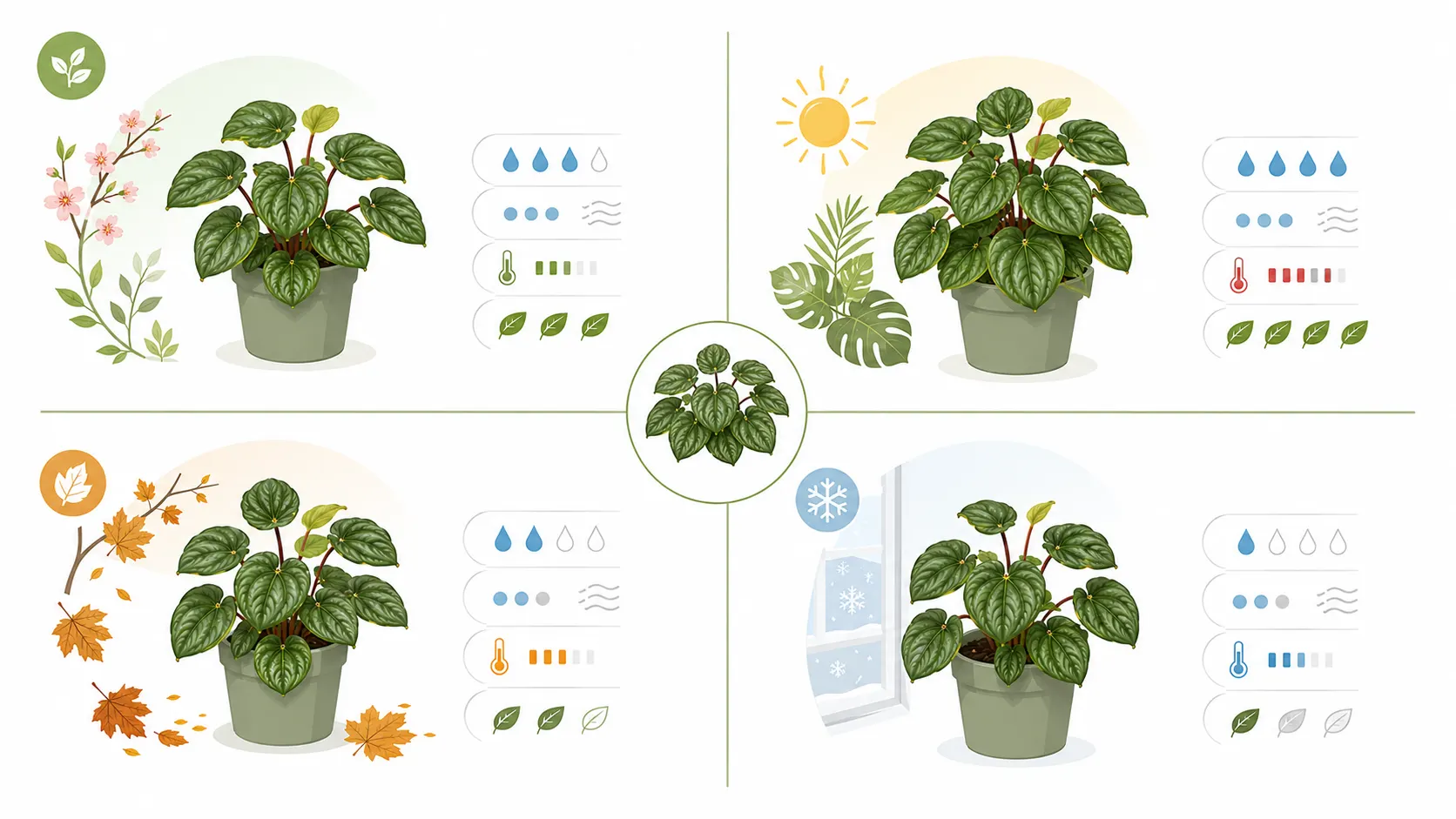
Spring and summer bring active growth.
- Water more frequently
- Fertilize monthly
- Monitor faster soil drying
Seasonal watering adjustments are also important for Dracaena Fragrans, another popular houseplant that experiences slower growth during winter.
During fall:
- Gradually reduce watering
- Prepare for lower light levels
- Move away from draft-prone locations
Winter requires the most caution.
- Water sparingly
- Stop fertilizing
- Protect from cold drafts
- Increase humidity if heating systems dry the air
Seasonal adjustments are one of the best ways to prevent peperomia leaves falling off in winter.
Conclusion
Peperomia leaves falling off is almost always a solvable problem when the underlying cause is correctly identified. Overwatering, cold stress, low humidity, and environmental shock account for most cases of leaf loss. While varieties such as watermelon peperomia, peperomia hope, and peperomia obtusifolia have unique sensitivities, all benefit from stable conditions, well-draining soil, and careful watering practices. By recognizing symptoms early, adapting care throughout the year, and avoiding common beginner mistakes, most peperomias recover successfully and continue producing healthy new growth.
Frequently Asked Questions
Q1. Why are my peperomia leaves falling off even though I water it regularly?
Regular watering may actually be causing the problem. Peperomia prefers soil that dries between waterings. Constant moisture often leads to root rot, which is the most common cause of leaf drop.
Q2. Why is my peperomia dropping healthy green leaves with no yellowing or browning?
Healthy green leaf drop is usually caused by environmental shock, such as repotting, sudden relocation, cold drafts, or temperature fluctuations.
Q3. Why is my watermelon peperomia losing leaves?
Watermelon peperomia is especially sensitive to overwatering. Check for soggy soil, poor drainage, and damaged roots, as these are the most common causes.
Q4. Do peperomia leaves grow back after falling off?
Individual leaves do not regrow from the same node. However, healthy stems can produce new foliage once growing conditions improve.
Q5. Why does my peperomia keep losing leaves in winter?
Winter combines lower light, colder temperatures, and lower humidity. These stressors frequently trigger seasonal leaf drop if watering and environmental conditions are not adjusted.
Q6. What is the difference between peperomia leaves turning yellow and turning brown before falling?
Yellow, soft leaves usually indicate overwatering or root rot. Brown, crispy leaves typically suggest underwatering, low humidity, or sunburn.
Q7. Can I propagate the leaves that have fallen off my peperomia?
Yes. Leaves that fall with the petiole attached can often be propagated in water or moist soil, allowing new plants to develop.