
Introduction
Philodendron Brasil growth rate depends on light, temperature, watering habits, soil quality, and overall care conditions. Philodendron Brasil is a popular variegated cultivar of Philodendron hederaceum, recognized for its heart-shaped leaves with green and yellow variegation. This tropical vining plant is considered a moderate-to-fast grower indoors when provided with suitable conditions. This guide explains how quickly Philodendron Brasil grows, how large it can become, whether it climbs or trails, and the care factors that influence healthy development. Understanding these growth patterns helps growers create conditions that support stronger vines, larger leaves, and long-term plant health. For more indoor plant care information, explore our complete guide to Plants: Benefits and Guides (Complete Care, Types & Growing Tips), which covers essential growing tips and plant care knowledge.
Quick Summary
- Philodendron Brasil typically grows 1–2 feet per year indoors under good growing conditions.
- It grows fastest with bright indirect light, warmth, humidity, and consistent care.
- Low light, cold temperatures, and poor soil conditions can significantly slow growth.
- Climbing structures like moss poles can encourage larger leaves and stronger growth.
- Regular pruning and propagation help create a fuller, bushier plant.
How Fast Does Philodendron Brasil Grow?
Philodendron Brasil is a moderate-to-fast growing tropical vine that can add approximately 1–2 feet of growth per year indoors when grown in bright indirect light with proper watering and nutrition. Its growth rate varies depending on environmental conditions, but healthy plants often produce new leaves regularly during the active growing season.
The Philodendron Brasil growth rate per year is influenced by factors such as light exposure, humidity, temperature, soil quality, and feeding routine. Unlike some slow-growing houseplants, this cultivar can produce long trailing vines relatively quickly when its basic needs are met.
Indoors, growth commonly follows these patterns:
- New leaves may appear every few weeks during spring and summer.
- Individual vines can extend several inches per month in ideal conditions.
- Growth slows naturally during colder months or periods of lower light.
- Mature plants can continue producing new vines for many years with proper care.
Philodendron Brasil has a flexible growth habit. It can develop into a trailing plant with long vines or become a climbing specimen with larger leaves when supported.
Average Growth Rate Per Year
A typical Philodendron Brasil growth rate chart can be described through general yearly growth expectations:
| Growing Condition | Expected Growth |
| Low light indoor conditions | Slow growth, fewer leaves, longer gaps between growth |
| Moderate indoor light | Around 6–12 inches of growth per year |
| Bright indirect light with good care | Around 1–2 feet of growth per year |
| Excellent conditions with climbing support | Faster vine extension and larger foliage |
Growth speed is not determined by genetics alone. Two Philodendron Brasil plants can grow at different rates even in the same home because small differences in light, watering, root health, and humidity affect development.
During active growth periods, especially spring and summer, the plant uses increased energy to produce new leaves and extend vines. In winter, reduced daylight and cooler temperatures often cause slower growth or temporary dormancy.
Factors That Speed Up or Slow Down Growth
Several environmental factors directly affect Philodendron Brasil growth:
Factors that encourage faster growth:
- Bright indirect light: Provides enough energy for photosynthesis without damaging leaves.
- Warm temperatures: Growth is strongest between 65°F and 85°F (18°C–29°C).
- Consistent humidity: Tropical conditions support healthier leaves and new growth.
- Balanced fertilization: Supplies nutrients needed for vine and leaf production.
- Proper pot size: Allows roots to expand without leaving excess wet soil.
Factors that slow growth:
- Low light exposure
- Overwatering or poor drainage
- Nutrient deficiencies
- Cold drafts
- Root-bound conditions
- Incorrect pruning methods
A common beginner mistake is assuming slow growth always means the plant needs more fertilizer. In many cases, insufficient light is the main reason a Philodendron Brasil stops producing new leaves.
Is Philodendron Brasil a Climber or a Crawler?
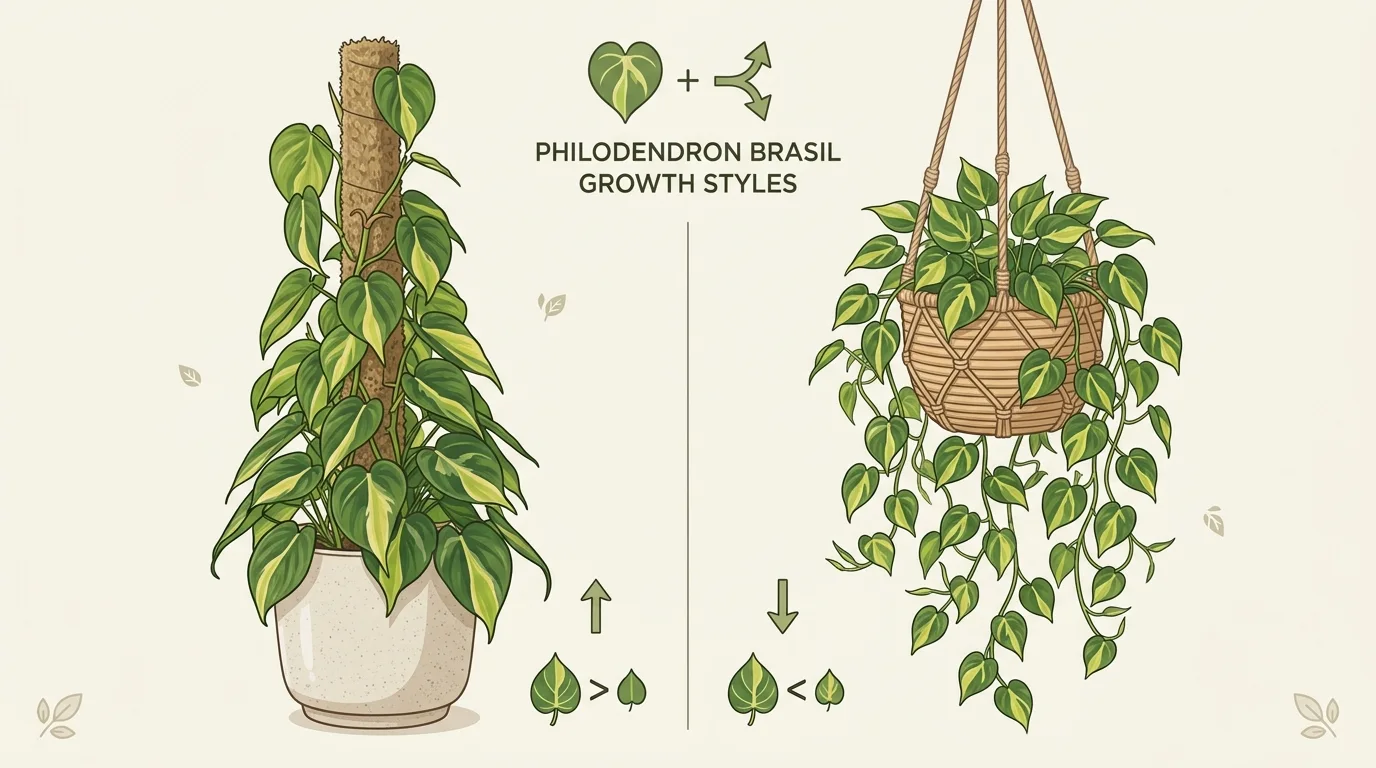
Philodendron Brasil is naturally a climbing tropical vine, not a crawler. In its native environment, Philodendron hederaceum varieties grow by attaching their aerial roots to trees and other vertical surfaces. Indoors, the plant can either climb with support or trail from hanging containers.
Many growers ask, “Do philodendrons like to climb or hang?” The answer depends on the desired growth style. Philodendron Brasil can adapt to both setups, but climbing usually produces larger, more mature-looking foliage.
Unlike crawling plants that spread horizontally across soil, Philodendron Brasil naturally seeks vertical surfaces. Providing support mimics its natural growth behavior.
Climbing vs. Trailing Setups
Philodendron Brasil can be grown in different ways depending on the appearance and growth goals.
| Setup | Growth Effect |
| Moss pole or trellis | Encourages climbing, stronger stems, and potentially larger leaves |
| Hanging basket | Creates long trailing vines with cascading foliage |
| Shelf or elevated planter | Allows vines to spill naturally downward |
Climbing setup benefits:
- Supports natural aerial root development
- Can encourage larger leaf production
- Creates a fuller vertical display
- Mimics the plant’s tropical growth habit
Trailing setup benefits:
- Requires less maintenance
- Works well for hanging baskets
- Produces attractive cascading vines
- Easier for beginners
A moss pole is not required for Philodendron Brasil survival, but it can improve growth quality when growers want a climbing plant with larger foliage.
How Big Can Philodendron Brasil Get?
Philodendron Brasil can become a long, vigorous vine when grown under suitable conditions. Indoors, mature plants commonly develop vines several feet long, while outdoor plants in warm tropical climates can grow much larger because they have more space, higher humidity, and natural climbing surfaces.
The mature size of Philodendron Brasil depends heavily on whether it is grown as a hanging plant or trained upward on a support structure.
Indoor vs. Outdoor Size Differences
| Growing Environment | Typical Size |
| Indoor hanging basket | Several feet of trailing vines |
| Indoor climbing setup | Longer vines with potentially larger leaves |
| Outdoor tropical environment | Can climb trees and spread extensively |
Indoor Philodendron Brasil plants are usually smaller because they grow in containers with limited root space and controlled light conditions.
Outdoor plants in frost-free tropical regions can display stronger climbing behavior and more vigorous growth due to consistent warmth, humidity, and access to larger structures.
Environmental Factors Affecting Size
Several conditions determine how large a Philodendron Brasil becomes:
- Light availability: Brighter indirect light supports stronger growth and healthier variegation.
- Root space: Larger containers can support more extensive growth when properly managed.
- Humidity levels:Higher humidity encourages tropical foliage development.
- Climbing support: Vertical growth can lead to larger leaves over time.
- Pruning routine: Regular trimming influences whether the plant becomes bushy or produces longer vines.
A plant grown in poor conditions may remain small for years, while one receiving ideal care can become a full, mature vine.
Philodendron Brasil Light Requirements
Philodendron Brasil grows best in bright indirect light, which provides enough energy for healthy growth while protecting its variegated leaves from sun damage. Understanding the difference between bright indirect light and direct sunlight for plants helps growers choose the correct location and prevent leaf scorch or weak growth. Light is one of the most important factors affecting the plant’s growth rate, leaf color, and overall appearance.
Because Philodendron Brasil has yellow and green variegation, it requires more light than many fully green houseplants. However, direct harsh sunlight can damage the thinner leaf tissue and cause fading or burns.
Ideal light conditions:
- Bright filtered sunlight near an east or north-facing window
- Several hours of indirect light daily
- Protection from intense afternoon sun
- Artificial grow lights when natural light is limited
Signs of low light:
- Long spaces between leaves on vines
- Smaller new leaves
- Loss of yellow variegation
- Slow or stopped growth
- Thin, stretched stems
Signs of too much light or sun scorch:
- Brown crispy patches on leaves
- Faded leaf color
- Yellowing from heat stress
- Dry damaged edges
The right balance of light helps maintain the distinctive variegated pattern while supporting steady Philodendron Brasil growth. If a plant begins losing its colorful sections or producing weak growth, adjusting its light exposure is often the first step toward improvement.
Philodendron Brasil Care Guide
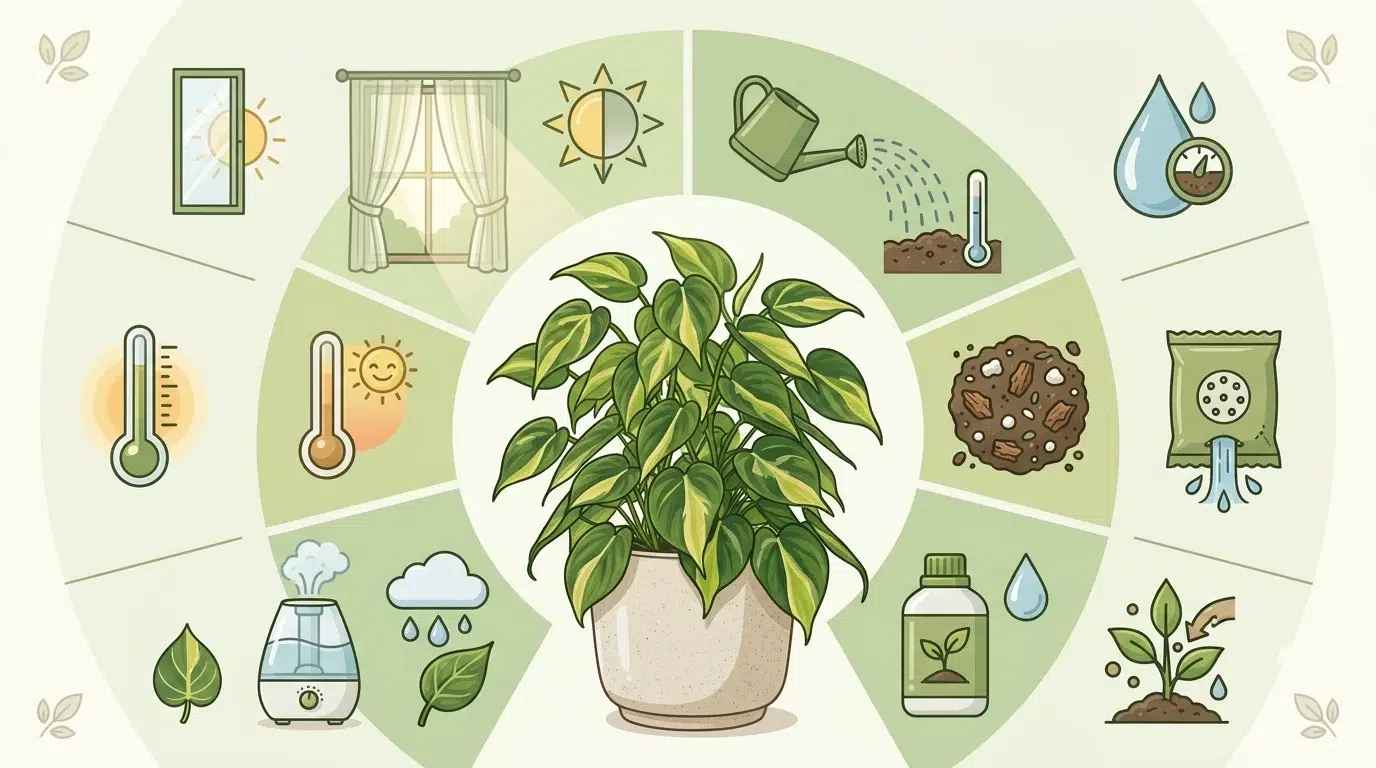
Philodendron Brasil care is relatively simple because this cultivar is adaptable and beginner-friendly. The plant belongs to the Araceae family and shares many care requirements with other tropical Philodendron species. Philodendron is a large genus of flowering plants in the Araceae family with many tropical species grown as ornamental houseplants. Consistent moisture management, suitable light, well-draining soil, and regular maintenance are the main factors that support healthy growth.
Proper care helps maintain the plant’s variegated leaves, encourages new vines, and improves the overall Philodendron Brasil growth rate. Although it tolerates some neglect, it performs best when its tropical growing conditions are recreated indoors.
Watering Needs
Philodendron Brasil watering requirements depend on light levels, temperature, humidity, and potting conditions. The plant prefers soil that remains slightly moist but should never stay waterlogged. Overwatering is one of the most common causes of yellow leaves and root problems.
A practical watering approach is:
- Water when the top 1–2 inches of soil feel dry.
- Allow excess water to drain completely from the pot.
- Reduce watering during cooler months when growth slows.
- Increase watering slightly during warm, bright growing periods.
Many growers ask, “How often should I water Philodendron Brasil?” There is no fixed schedule because indoor conditions vary, but most plants need watering approximately every 7–14 days depending on the environment.
Signs of incorrect watering:
| Symptom | Possible Cause |
| Yellowing leaves | Overwatering or poor drainage |
| Wilting with dry soil | Underwatering |
| Soft, dark roots | Root rot from excess moisture |
| Brown leaf edges | Inconsistent watering or dry air |
Bottom watering can be used for Philodendron Brasil, especially when soil becomes hydrophobic or the root system is dense. However, top watering is usually sufficient when the soil mix drains well.
Soil Preferences
The best soil for Philodendron Brasil is a lightweight, well-draining mix that allows oxygen to reach the roots while retaining moderate moisture. Because it is an epiphytic-style tropical plant, it performs poorly in dense soils that remain wet for long periods.
An effective Philodendron Brasil soil mix usually contains:
- High-quality indoor potting soil
- Perlite for drainage and airflow
- Orchid bark for structure
- Coco coir or peat moss for moisture retention
A suitable mix should:
- Drain excess water quickly
- Prevent root suffocation
- Maintain some moisture between watering
- Support healthy root development
Poor soil conditions can slow growth even when lighting is adequate. Compact soil may prevent roots from absorbing water and nutrients efficiently.
Fertilization Practices
Philodendron Brasil fertilizer helps support leaf production, vine growth, and stronger foliage. During active growing seasons, regular feeding can improve growth speed when combined with proper light and watering.
Recommended fertilization practices:
- Use a balanced liquid houseplant fertilizer during spring and summer.
- Apply fertilizer at reduced strength to avoid root damage.
- Feed less frequently during fall and winter.
- Avoid fertilizing stressed or unhealthy plants.
Overfertilization can cause:
- Brown leaf tips
- Salt buildup in soil
- Root stress
- Slower growth
Healthy plants benefit most from fertilizer when their basic environmental needs are already being met.
Pruning for a Bushier Plant
Pruning Philodendron Brasil encourages a fuller appearance by stimulating branching and preventing excessively long, sparse vines. Since this plant naturally grows as a climbing vine, regular trimming helps maintain a balanced shape indoors.
To make Philodendron Brasil bushier:
- Cut vines just above a leaf node.
- Remove weak or bare sections.
- Propagate healthy cuttings and replant them into the same pot.
- Trim regularly during active growth.
Pruning also helps control size and encourages the plant to produce more growth points.
Climate & Temperature Tolerance
Philodendron Brasil prefers warm, humid tropical conditions because it originates from regions with stable temperatures and high moisture levels.
Ideal temperature range:
- Daytime: 65°F–85°F (18°C–29°C)
- Avoid temperatures below 55°F (13°C)
The plant is sensitive to:
- Cold drafts
- Sudden temperature changes
- Dry heating vents
- Air conditioners blowing directly on leaves
Moderate household humidity is usually acceptable, but higher humidity can support healthier leaves and faster growth. If indoor air is dry, growers can improve humidity naturally by using methods explained in this guide on increasing humidity for indoor plants without a humidifier.
Repotting Guidelines
Repotting Philodendron Brasil is necessary when the plant becomes root-bound or growth slows due to limited space. It does not require frequent repotting and generally prefers a slightly snug container.
Signs that repotting may be needed:
- Roots growing from drainage holes
- Soil drying out very quickly
- Stunted growth
- Water running directly through the pot
When repotting:
- Choose a container only slightly larger than the current pot.
- Use fresh, well-draining soil.
- Inspect roots and remove damaged sections.
- Water thoroughly after repotting.
A common mistake is moving the plant into a much larger pot. Excess soil can retain water longer and increase the risk of root rot.
Can Philodendron Brasil Grow in Water?
Yes, Philodendron Brasil can grow in water, especially through propagation, but long-term growth requires proper nutrient management. The plant can survive in water for extended periods, although it usually develops stronger roots and more vigorous growth when eventually transferred to soil.
Philodendron Brasil water propagation is popular because roots are easy to observe and the process is beginner-friendly.
For growing Philodendron Brasil in water:
- Use a healthy stem cutting with at least one node.
- Keep the node submerged while keeping leaves above water.
- Replace water regularly to maintain oxygen levels.
- Provide bright indirect light.
Water-grown plants may grow more slowly over time because plain water does not contain all nutrients required for long-term development. For permanent growth, many growers transition rooted cuttings into a suitable soil mix.
A common mistake is placing a leaf without a node into water. A leaf alone may stay green temporarily but cannot create a new plant because the growth point is missing.
How to Propagate Philodendron Brasil
Philodendron Brasil propagation is one of the easiest ways to create new plants. Similar propagation techniques are also used for other climbing Philodendron varieties, such as learning how to propagate a Philodendron Birkin from stem cuttings. The most reliable method is stem cutting propagation because new roots develop from nodes located along the vine.
Propagation allows growers to:
- Create additional plants.
- Make a parent plant appear fuller.
- Replace older bare vines.
- Maintain desirable variegation patterns.
The best propagation period is spring through early summer when the plant is actively growing.
Where to Cut for Propagation
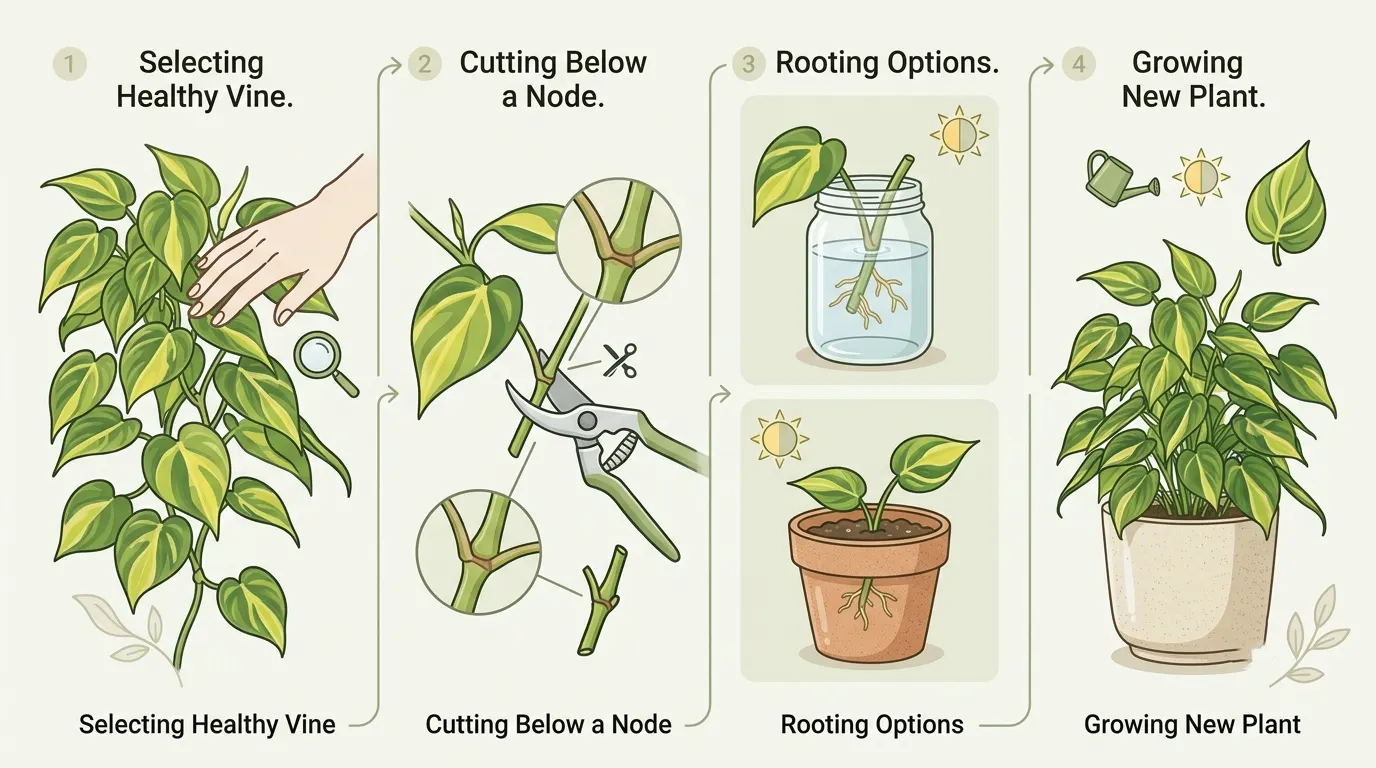
The correct cutting location is essential for successful Philodendron Brasil propagation. A new plant requires a stem section containing at least one healthy node because nodes contain the structures needed for root and shoot development. Understanding node placement is also important when propagating other tropical vines, such as Monstera Peru, which requires similar cutting techniques.
Steps for preparing a cutting:
- Select a healthy vine with strong leaves.
- Identify a node where a leaf attaches to the stem.
- Cut just below the node using clean scissors or pruning shears.
- Remove lower leaves if they would sit underwater or below soil level.
Tools should be cleaned before cutting to reduce the chance of spreading bacteria or fungal problems.
Water Propagation Method
Philodendron Brasil water propagation is a simple method for beginners. This same water and soil propagation approach is commonly used with related species, including the heartleaf Philodendron propagation method.
Steps:
- Take a stem cutting with at least one node.
- Place the node into clean water.
- Keep the cutting in bright indirect light.
- Change the water regularly.
- Wait for roots to develop before transplanting.
Root development commonly takes several weeks, depending on temperature, light, and cutting health.
Water propagation allows growers to monitor root formation easily, but the plant should eventually receive nutrients through soil or a complete hydroponic system for long-term growth.
Soil Propagation Method
Soil propagation creates roots that adapt directly to a growing medium.
Steps:
- Prepare a small pot with a light, well-draining soil mix.
- Insert the cutting so the node is covered.
- Keep the soil lightly moist.
- Place the cutting in warm, bright indirect light.
- Monitor new growth as a sign of successful rooting.
Soil-propagated cuttings often transition more easily into permanent indoor conditions because their roots develop in the final growing environment.
Aftercare for New Cuttings
New Philodendron Brasil cuttings need stable conditions while developing roots.
Aftercare tips:
- Avoid direct sunlight.
- Maintain consistent moisture.
- Do not fertilize immediately after cutting.
- Provide warmth and humidity.
- Transplant water roots carefully when they become established.
Most healthy cuttings begin producing stronger roots within a few weeks, although timing varies depending on environmental conditions.
Why Is My Philodendron Brasil Reverting?
Philodendron Brasil reverting happens when the plant begins producing leaves with less variegation or returns toward a more solid green appearance. This occurs because variegation in Philodendron Brasil is a natural genetic trait that can become unstable, causing some new growth to lose the yellow-green pattern.
Reversion is not always caused by poor care, but environmental conditions—especially light—can influence how much variegation the plant maintains. Since green leaves contain more chlorophyll, fully green growth can sometimes grow faster and outcompete highly variegated sections.
Common reasons Philodendron Brasil may revert include:
- Insufficient light: Lower light levels can encourage the plant to produce greener leaves because they contain more chlorophyll for photosynthesis.
- Natural genetic variation: Some sections of the plant may naturally produce less variegated growth.
- Selective growth: Fully green vines may become stronger and dominate the plant if not pruned.
How to manage reversion:
- Remove fully green reverted sections by cutting back to a node with desirable variegation.
- Provide brighter indirect light to encourage healthier patterned growth.
- Propagate from strongly variegated sections to preserve the appearance.
To encourage variegation to return:
- Move the plant closer to a bright indirect light source.
- Avoid heavily shaded locations.
- Prune green-only vines before they take over.
- Maintain consistent care conditions.
A common mistake is expecting new leaves to immediately return to the original pattern after adjusting light. Variegation depends on the plant’s genetics, so environmental improvements may support better expression but cannot completely change inherited traits.
Common Philodendron Brasil Problems & Fixes
Philodendron Brasil problems usually develop because of incorrect watering, unsuitable lighting, low humidity, or pest issues. Identifying symptoms early helps prevent long-term damage and supports healthier growth.
| Problem | Likely Cause | Fix |
| Yellowing leaves | Overwatering | Reduce watering frequency, improve drainage, check roots |
| Leggy or sparse vines | Low light | Move plant to brighter indirect light |
| Slow or stalled growth | Poor light, lack of nutrients, seasonal slowdown | Improve conditions, fertilize during active growth, allow winter rest |
| Brown crispy edges | Low humidity or excessive sunlight | Increase humidity and reduce direct sun exposure |
| Pests such as mealybugs or spider mites | Dry air or poor airflow | Isolate plant and treat with insecticidal soap |
Yellow leaves:
Yellowing leaves are often linked to excess moisture. Philodendron Brasil roots require oxygen, and constantly wet soil can prevent proper root function. Checking drainage holes and allowing soil to dry slightly between watering can help.
Leggy growth:
Long spaces between leaves usually indicate insufficient light. The plant stretches toward available light, creating thin vines with fewer leaves.
Slow growth:
A slow Philodendron Brasil growth rate may be normal during winter, but continued lack of growth can indicate problems with light, nutrition, or root health.
Brown leaf edges:
Brown edges can result from dry indoor air, inconsistent watering, fertilizer buildup, or excessive sunlight exposure.
Pests:
Spider mites and mealybugs are common indoor plant pests. Regular leaf inspections help detect infestations early.
Beginner Mistakes to Avoid With Philodendron Brasil
Philodendron Brasil is easy to care for, but several beginner mistakes can reduce growth speed and affect plant health. Understanding these common errors helps growers maintain stronger vines and better foliage.
Common mistakes include:
- Overwatering: Keeping soil constantly wet can lead to root rot and yellow leaves.
- Using a pot that is too large: Oversized containers hold excess moisture and increase the risk of root problems.
- Placing the plant in very low light: Low light reduces growth and can decrease variegation.
- Ignoring support needs: Growers who want climbing growth may miss the benefits of using a moss pole or trellis.
- Skipping pruning: Without pruning, vines may become long and sparse instead of full and bushy.
Many growers ask, “Do philodendrons like big or small pots?” Philodendron Brasil generally performs best in a pot that matches its root system. A slightly snug container is usually better than a very large pot filled with unused wet soil.
Philodendron Brasil vs. Pothos: What’s the Difference?
Philodendron Brasil and pothos are often confused because both are popular trailing houseplants with heart-shaped leaves and similar care requirements. However, Philodendron Brasil is a cultivar of Philodendron hederaceum, while pothos belongs to the genus Epipremnum.
The names “Brazil pothos” and “Brazilian pothos” are common mislabeling terms. Philodendron Brasil is not a pothos variety, although both plants share similar tropical growing habits.
Leaf & Stem Differences
| Feature | Philodendron Brasil | Pothos |
| Scientific classification | Philodendron hederaceum cultivar | Epipremnum species |
| Leaf shape | Heart-shaped with pointed tips | Usually broader and slightly thicker |
| Leaf texture | Softer, thinner foliage | Thicker, more waxy leaves |
| New growth | Emerges from a protective sheath (cataphyll) | Does not produce the same sheath structure |
| Growth habit | Climbing or trailing vine | Climbing or trailing vine |
The easiest way to distinguish them is by observing new growth. Philodendrons produce new leaves from a protective sheath called a cataphyll, while pothos does not develop the same structure.
Growth Rate Comparison
Both plants can grow quickly under good conditions, but their growth patterns differ.
| Growth Factor | Philodendron Brasil | Pothos |
| Growth speed | Moderate-fast | Fast |
| Light tolerance | Prefers moderate to bright indirect light | Generally tolerates lower light better |
| Leaf development | Can produce larger leaves when climbing | Usually maintains thicker trailing foliage |
| Variegation pattern | Yellow-green stripe patterns | Many patterns depending on variety |
Pothos may appear faster-growing in lower light, but Philodendron Brasil often produces more decorative foliage when given suitable conditions.
Care Difference Summary
| Feature | Philodendron Brasil | Pothos |
| Water needs | Allow soil to partially dry between watering | Similar, slightly more forgiving |
| Light needs | Bright indirect light supports better variegation | More tolerant of lower light |
| Support preference | Benefits from climbing support | Climbs easily with support |
| Beginner difficulty | Easy | Very easy |
Both plants are excellent indoor vines, but Philodendron Brasil requires slightly more attention to light because maintaining variegation depends on adequate brightness.
Is Philodendron Brasil Rare or Easy to Find?
Philodendron Brasil is generally considered an easy-to-find houseplant rather than a rare Philodendron variety. Its popularity, simple care requirements, and reliable propagation methods have made it widely available among indoor plant growers.
The term variegated Philodendron Brasil refers to its naturally patterned leaves rather than extreme rarity. While some highly unusual variegated Philodendrons can be difficult to obtain, Philodendron Brasil is usually accessible to beginners.
The “holy grail of Philodendrons” is often used by collectors to describe exceptionally rare or highly sought-after species, but Philodendron Brasil is valued more for its beauty, adaptability, and ease of care.
Does Philodendron Brasil Flower?
Philodendron Brasil can flower, but indoor blooming is uncommon. Like other members of the Araceae family, it produces an inflorescence called a spathe and spadix rather than a traditional flower.
Indoor Philodendron Brasil plants are usually grown for their attractive foliage rather than flowers because mature flowering conditions are difficult to replicate inside homes.
Factors that influence flowering include:
- Plant maturity
- Strong growing conditions
- Tropical-like environments
- Adequate light and nutrition
Most indoor growers may never see flowers, but this does not indicate poor health. A thriving Philodendron Brasil is typically recognized by strong vines and colorful leaves.
How Long Does Philodendron Brasil Live?
Philodendron Brasil can live for many years with proper care. As a perennial tropical plant, it can continue producing new growth for a decade or longer when provided with suitable light, water, soil, and maintenance.
Long-term health depends on:
- Preventing root problems
- Maintaining appropriate light levels
- Regular pruning
- Refreshing soil when needed
- Managing pests early
Older plants may develop long vines, woody stems, or require propagation to maintain a fuller appearance.
Benefits of Growing Philodendron Brasil
Philodendron Brasil offers several benefits that make it a popular indoor plant. Its combination of attractive foliage, adaptable growth habit, and relatively simple care requirements makes it suitable for both beginners and experienced growers.
Key benefits include:
- Decorative appearance: Yellow-green variegated leaves add visual interest to indoor spaces.
- Low-maintenance growth: It tolerates a range of indoor conditions when basic needs are met.
- Easy propagation: Stem cuttings allow growers to create new plants easily.
- Flexible placement: It works well in hanging baskets, shelves, or climbing displays.
- Indoor greenery benefits: Like many houseplants, it contributes to a more natural indoor environment.
Philodendron Brasil is especially valued because it combines the beauty of a variegated tropical plant with the manageable care needs of a beginner-friendly houseplant.
Conclusion
Philodendron Brasil growth rate is strongly influenced by light, watering, soil quality, temperature, and overall care consistency. Under good indoor conditions, this variegated Philodendron hederaceum cultivar can grow around 1–2 feet per year while producing attractive trailing or climbing vines. Bright indirect light, proper moisture control, and occasional pruning are the most important factors for encouraging faster, healthier growth. Whether grown in a hanging basket or trained on a moss pole, consistent care conditions provide the best path to maintaining strong vines, vibrant variegation, and long-term plant health.
FAQs
How fast does Philodendron Brasil grow?
Philodendron Brasil typically grows about 1–2 feet per year indoors under bright indirect light, warm temperatures, proper watering, and regular care. Growth slows when light levels are low or environmental conditions are unsuitable.
Is Philodendron Brasil a climber or crawler?
Philodendron Brasil is a climbing tropical vine. It naturally attaches to trees using aerial roots but can also be grown as a trailing plant in hanging baskets.
Will Philodendron Brasil grow in water?
Yes, Philodendron Brasil can grow in water, especially from stem cuttings. However, long-term growth is usually stronger in nutrient-rich soil unless the water system provides proper nutrients.
Why is my Philodendron Brasil reverting to lemon lime?
Philodendron Brasil may revert to lemon lime or greener growth because of genetic variation, insufficient light, or naturally unstable variegation. Pruning reverted sections and improving light can help maintain stronger variegation.
How big can Philodendron Brasil get?
Philodendron Brasil can produce vines several feet long indoors and can grow much larger outdoors in warm tropical climates with climbing support.
Does Philodendron Brasil need a moss pole?
Philodendron Brasil does not require a moss pole to survive, but a moss pole can encourage climbing growth, stronger stems, and potentially larger leaves.
What’s the difference between Philodendron Brasil and pothos?
Philodendron Brasil is a cultivar of Philodendron hederaceum, while pothos belongs to the Epipremnum genus. They have similar care needs, but Philodendron Brasil has different leaf structures and produces new leaves through cataphylls.