
Introduction
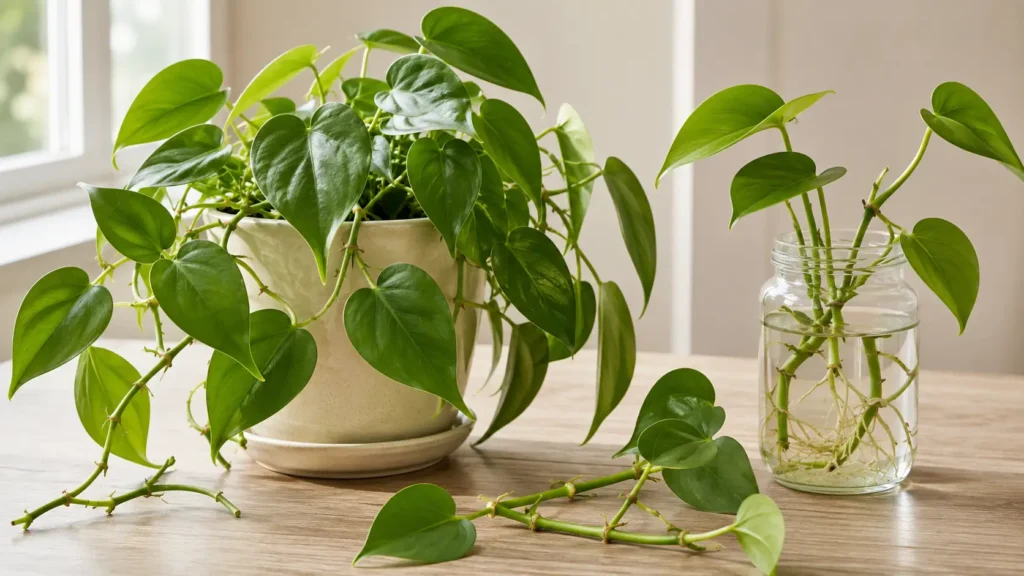
Heartleaf philodendron propagation is the process of creating a new plant from a cutting taken from an existing heartleaf philodendron. This popular houseplant is one of the easiest philodendrons to multiply because healthy stem cuttings can develop roots when they contain a proper node. Propagation can be done in water, soil, or other growing mediums, making it accessible for beginners. This guide explains where to cut, how to encourage philodendron roots, how long rooting takes, and how to care for new plants after propagation. Heartleaf philodendron is one of many beginner-friendly houseplants. If you’re exploring more indoor plant care topics, browse our Plants: Benefits and Guides (Complete Care, Types & Growing Tips) hub.
Heartleaf philodendron (Philodendron hederaceum) is a popular tropical vine belonging to the genus Philodendron, a group of flowering plants in the family Araceae.
Quick Summary
- Heartleaf philodendron propagates easily from stem cuttings containing at least one node.
- Cuttings can root in water, soil, or perlite, with water being the easiest method for beginners.
- Root development usually takes around 2–4 weeks under suitable conditions.
- Rooting hormone is optional and is not required for successful propagation.
What You Need to Know Before Propagating Philodendron
Heartleaf philodendron propagation depends on choosing a healthy stem section with a node. A cutting without a node cannot create new roots because the growth tissue required for root development is missing. The best results come from mature, healthy vines taken during active growth periods.
What Is a Node and Why It Matters
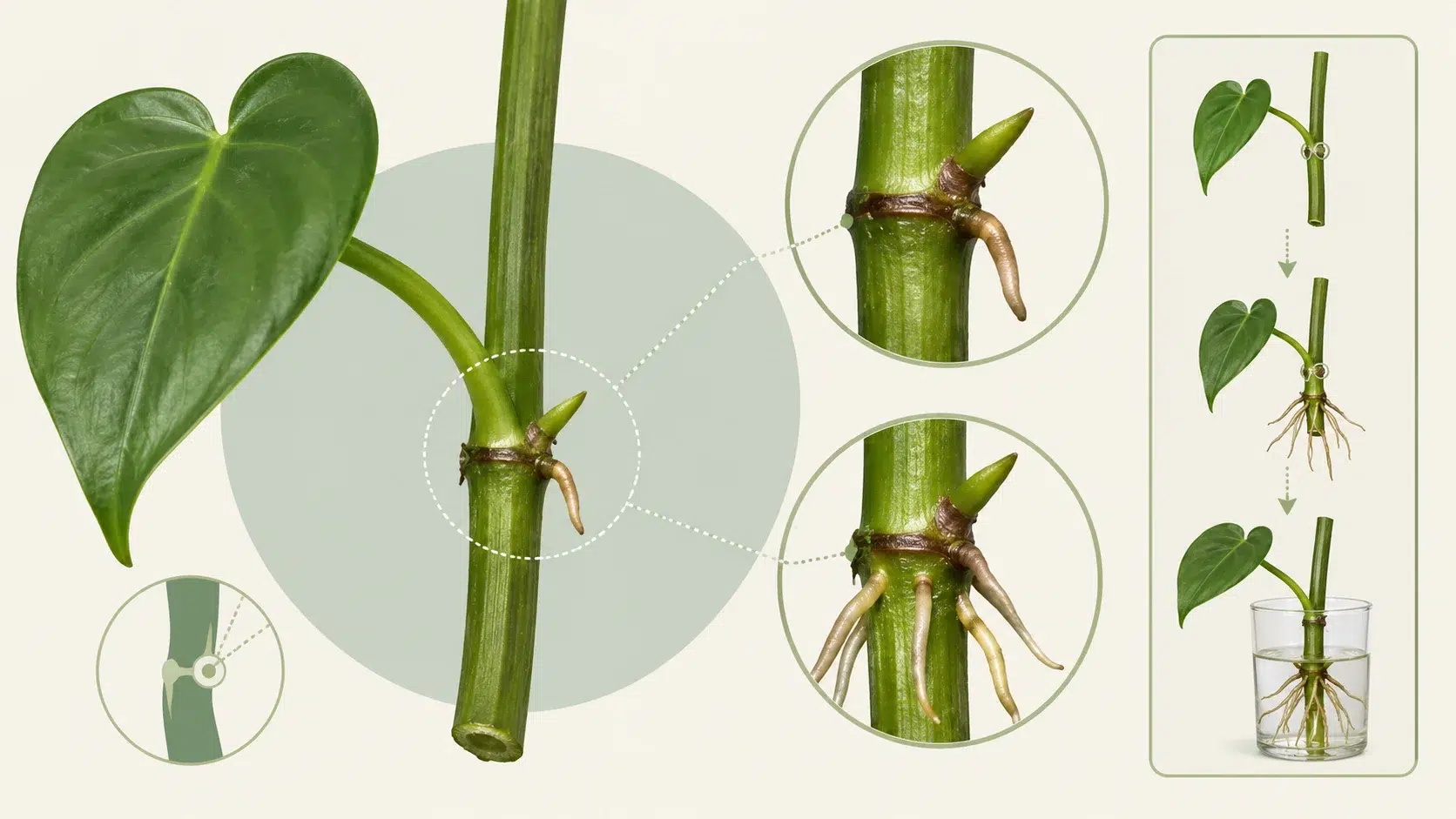
A node is the small section on a philodendron stem where leaves, aerial roots, and new growth emerge. It is the only part of the cutting capable of producing a new root system. If you’re still unsure how to identify a node, our Monstera Plant Node: Identification, Propagation & Care Guide explains the same botanical structure in detail, making it easier to recognize healthy propagation points.
A healthy propagation cutting should include:
- At least one visible node
- A healthy leaf attached above the node
- Firm green stem tissue
- No signs of disease or rot
The node contains cells that can develop into roots, allowing the cutting to become an independent plant.
Best Time of Year to Take Cuttings
The best time to take heartleaf philodendron cuttings is during spring and summer when the plant is actively growing. However, indoor plants can often be propagated successfully throughout the year because stable temperatures and light conditions support growth. Seasonal growth directly influences rooting success. Learn more in How Does Season Affect Indoor Plant Growth, where we explain how changing daylight and temperatures affect houseplants.
September cuttings are generally not too late. A healthy cutting can still root in fall if it receives enough warmth and indirect light.
Signs a cutting is ready include:
- A visible healthy node
- A mature, undamaged leaf
- An aerial root beginning to form
- A strong, green stem
Where to Cut a Philodendron for Propagation
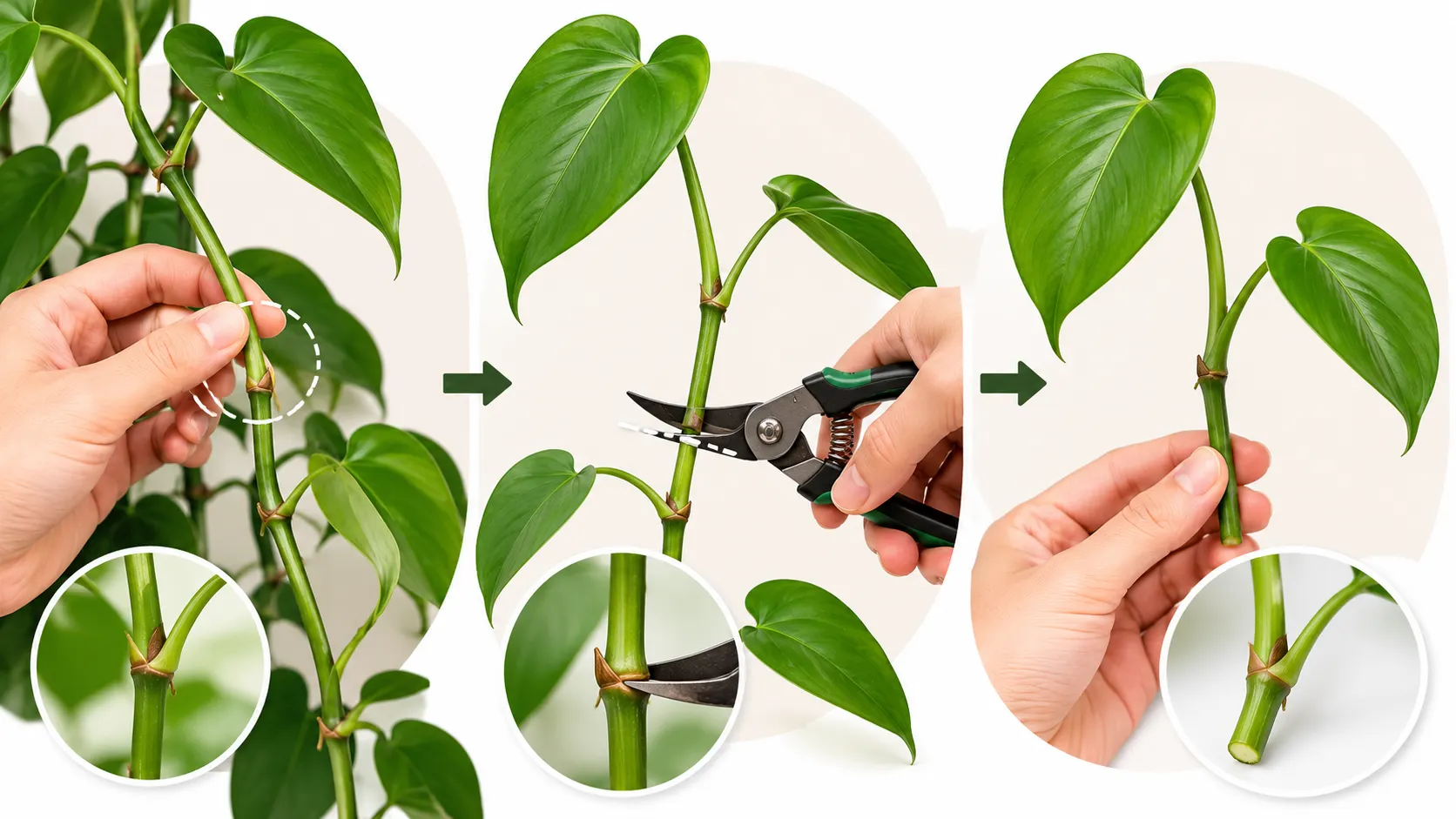
The correct cutting location determines whether propagation succeeds. Always cut below a node because the node contains the tissue needed for root formation.
Steps for taking a philodendron cutting:
- Identify a healthy node on the vine.
- Cut about ¼ inch below the node using clean, sharp shears.
- Keep one or two healthy leaves attached.
- Remove extra leaves that would sit underwater or in soil.
Clean tools reduce the risk of bacteria entering the cutting and causing rot.
How to Propagate Heartleaf Philodendron in Water
Heartleaf philodendron propagation in water is one of the simplest methods for beginners. The cutting is placed in clean water until roots develop, then transferred to soil if desired.
Steps:
- Place the cutting in a clean glass or container.
- Submerge the node while keeping leaves above water.
- Keep the container in bright, indirect light.
- Change the water every few days to prevent bacterial growth.
Many growers ask, “Will philodendron grow in water?” The answer is yes. A heartleaf philodendron can grow roots and survive in water temporarily, although long-term growth is usually better in soil.
Why Won’t My Philodendron Root in Water?
A philodendron cutting may fail to root in water because of poor light, incorrect node placement, or unhealthy stem tissue.
Common causes include:
- The node is not underwater
- The cutting receives too little light
- Water is rarely changed
- The cutting was taken from damaged growth
Keeping the node submerged, maintaining clean water, and providing indirect light usually improves rooting success.
How Long Do Philodendron Cuttings Take to Root
Philodendron cuttings usually take 2–4 weeks to develop visible roots. Some cuttings root faster in warm conditions, while slower growth can occur during cooler months or low-light periods.
How to Propagate Philodendron in Soil
Heart leaf philodendron propagation in soil involves placing the cutting directly into a suitable growing medium instead of starting in water. This method allows roots to develop in their permanent environment. Interested in propagating other popular houseplants? Our How to Propagate Dragon Tree: Complete Guide explains another easy propagation method suitable for indoor gardeners.
Soil propagation works best when:
- The soil remains lightly moist
- Humidity is moderate to high
- The cutting receives bright indirect light
Soil mix tips:
- Use a loose, well-draining potting mix.
- Add perlite or orchid bark for airflow.
- Avoid heavy soil that stays wet for long periods.
A humidity dome or clear plastic cover can help maintain moisture while roots form. Successful rooting is usually indicated by new growth or resistance when the cutting is gently pulled.
Water Propagation vs. Soil Propagation
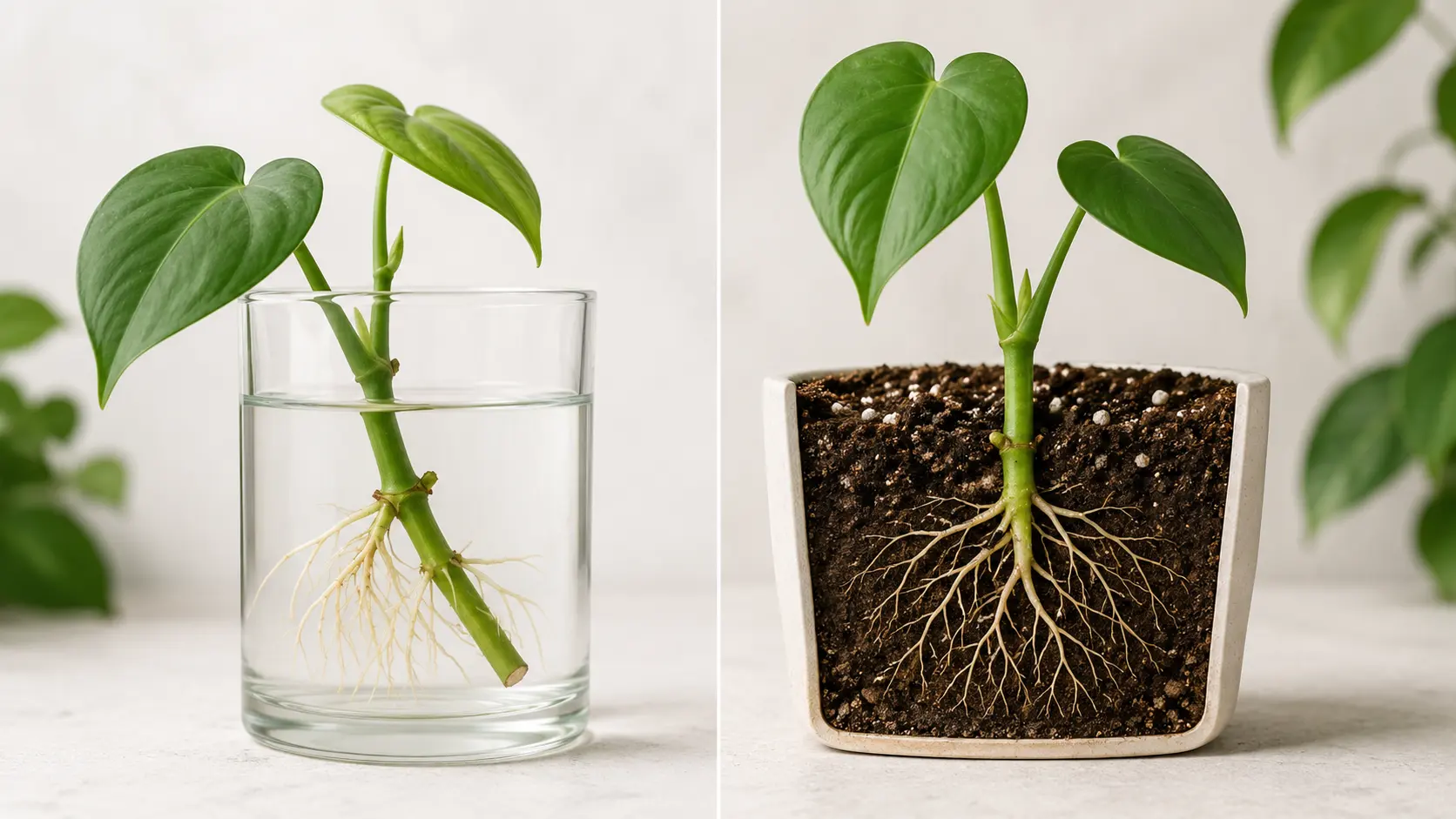
| Factor | Water Propagation | Soil Propagation |
| Visibility of roots | Yes | No |
| Transplant shock risk | Higher | Lower |
| Speed to rooting | Faster to see roots | Often stronger roots long-term |
| Beginner-friendly | Very | Moderate |
Can You Propagate Philodendron From a Single Leaf?
No, a philodendron leaf alone cannot create a new plant without a node. A leaf may remain green in water for some time, but it lacks the growth tissue needed to produce roots and new stems.
Successful philodendron propagation requires a section of stem containing at least one node.
Do You Need Rooting Hormone to Propagate Philodendron?
Rooting hormone is not required for heartleaf philodendron propagation. The plant naturally produces roots from its nodes, making it easy to propagate without additional products.
Rooting hormone may help speed up root development, but healthy cuttings in suitable conditions usually root successfully without it.
Caring for Philodendron Cuttings After Rooting
Once roots are established, the cutting can be moved into a pot with well-draining soil. Proper transition care helps prevent stress. Choosing the right container also matters after propagation. Our Does Pot Size Affect How Fast a Plant Grows? Complete Guide explains how pot size influences root development and overall plant growth.
Important steps:
- Choose a pot that is not excessively large.
- Water after repotting to settle the soil.
- Keep the plant in indirect light during acclimation.
- Avoid heavy fertilizing immediately after planting.
Heartleaf philodendrons generally prefer slightly snug pots and can tolerate being mildly root bound.
Heartleaf Philodendron Growth Habits
Heartleaf philodendron has a naturally trailing and climbing growth pattern. In nature, it can climb trees using aerial roots, but indoors it is commonly grown as a hanging plant or trained on a support pole.
Its growth style depends on presentation:
- Hanging baskets encourage trailing vines.
- Moss poles encourage climbing growth.
- Regular pruning creates a fuller appearance.
Heartleaf Philodendron Care Basics
Heartleaf philodendron care is simple because the plant adapts well to indoor environments. After your cutting becomes established, following a complete Philodendron Scandens Care, Growth, and Varieties Guide can help maintain vigorous growth, healthy foliage, and long trailing vines.
Key requirements:
- Light: Bright, indirect light is ideal.
- Watering: Water when the top layer of soil becomes slightly dry.
- Soil: Use a loose, well-draining mix.
- Fertilizing: Feed lightly during active growth.
- Pruning: Trim long vines to encourage bushier growth.
- Climate: Prefers warm temperatures and moderate humidity.
Common Mistakes When Propagating Heartleaf Philodendron
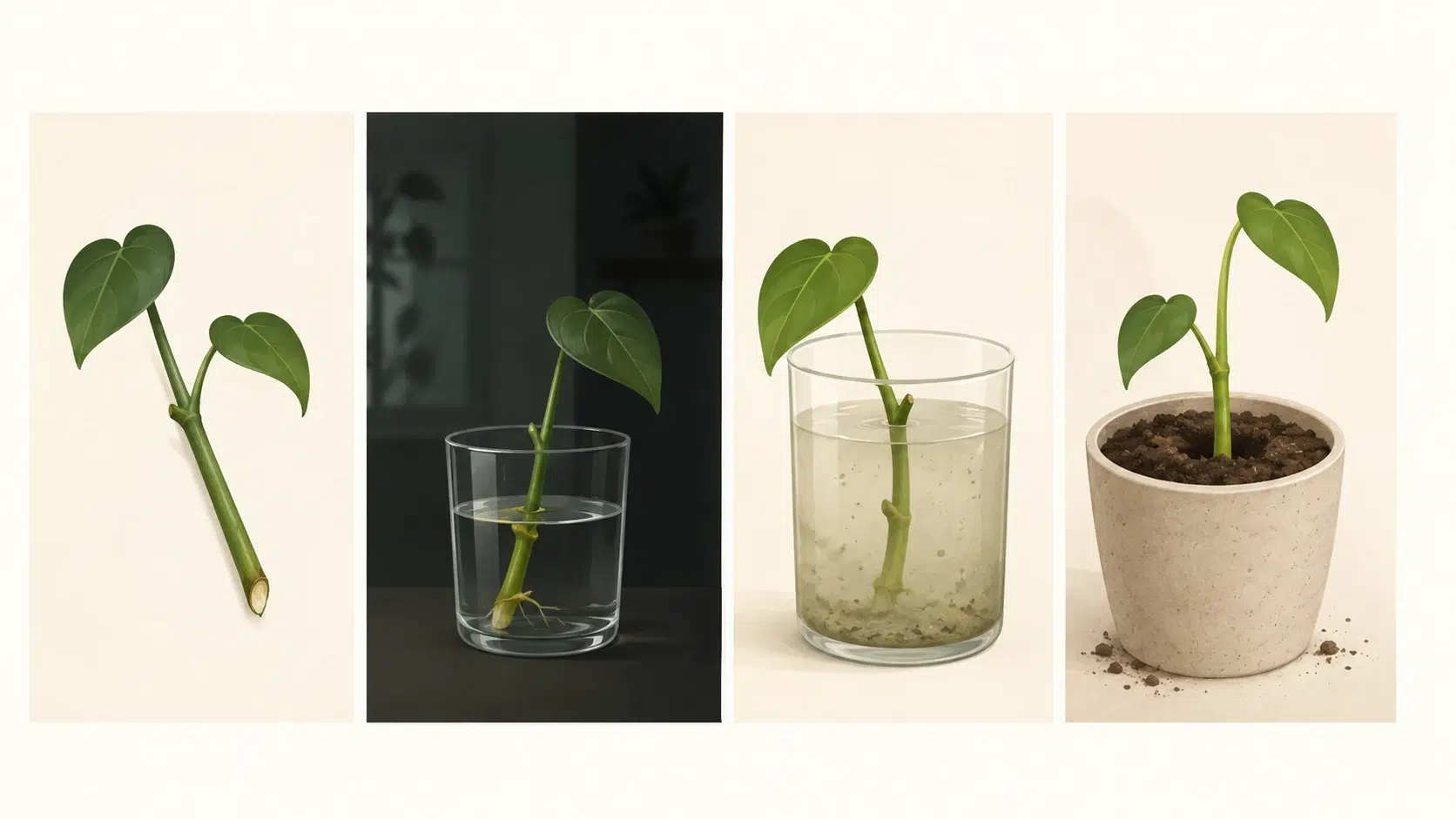
Common propagation mistakes include:
- Cutting without a node
- Changing water too infrequently, causing bacterial rot
- Providing insufficient light during rooting
- Moving cuttings into soil before roots are developed
Avoiding these issues greatly improves propagation success.
Troubleshooting Philodendron Propagation Problems
Propagation problems usually occur because of incorrect cutting preparation or unsuitable growing conditions.
Cutting Isn’t Rooting
A cutting may not root because it lacks a node, receives low light, or sits in stagnant water.
Solutions:
- Confirm the cutting contains a node.
- Move it to brighter indirect light.
- Replace old water regularly.
Cutting Is Rotting or Turning Mushy
Rot usually occurs from excess moisture, poor airflow, or dirty water.
Solutions:
- Remove damaged sections.
- Use clean containers and tools.
- Allow healthier cuttings to restart the rooting process.
What Is the “Holy Grail” Philodendron and How Does It Differ From Heartleaf?
The “Holy Grail” philodendron is a rare cultivated philodendron variety known for attractive foliage and collector interest. Unlike the common heartleaf philodendron, which is valued for easy care and fast propagation, rare varieties may have different growth patterns and availability.
Heartleaf philodendron remains one of the most beginner-friendly philodendrons because it roots easily and adapts well indoors.
Is It Legal to Propagate and Share Philodendron Cuttings?
Propagating and sharing common heartleaf philodendron cuttings is generally allowed because it is not commonly protected by plant patents. However, some newer cultivars may have legal restrictions if they are patented or licensed.
Before selling or commercially distributing cuttings, check whether the specific variety has intellectual property protection.
Conclusion
Heartleaf philodendron propagation is a simple process when using healthy stem cuttings with at least one node. Cuttings can successfully root in water or soil, with water being the easiest method for beginners and soil often producing stronger long-term roots. Understanding where to cut, how to maintain moisture, and when to transplant helps create healthy new plants. Choose a suitable propagation method, provide proper conditions, and your heartleaf philodendron cutting can develop into a thriving plant.
Frequently Asked Questions
Can I propagate heartleaf philodendron from just a leaf with no node?
No, a heartleaf philodendron leaf without a node cannot produce a new plant because it lacks the growth tissue needed for root and stem development.
How long do philodendron cuttings take to root in water?
Philodendron cuttings usually take about 2–4 weeks to root in water, depending on temperature, light, and cutting health.
Do philodendrons prefer to climb or hang as they grow?
Philodendrons can both climb and trail. Heartleaf philodendrons naturally climb using aerial roots but are also commonly grown as hanging plants.
Should I water my philodendron right after repotting a cutting?
Yes, watering after repotting helps settle the soil around the roots. Afterward, allow excess water to drain and avoid keeping the soil constantly saturated.
Is it illegal to propagate and share philodendron cuttings?
Propagating common heartleaf philodendron cuttings is generally allowed, but patented or protected cultivars may have restrictions on commercial propagation.
Do heartleaf philodendrons like to be root bound?
Heartleaf philodendrons tolerate being slightly root bound, but they should eventually be moved to a larger pot when roots become crowded or growth slows.



One Response