
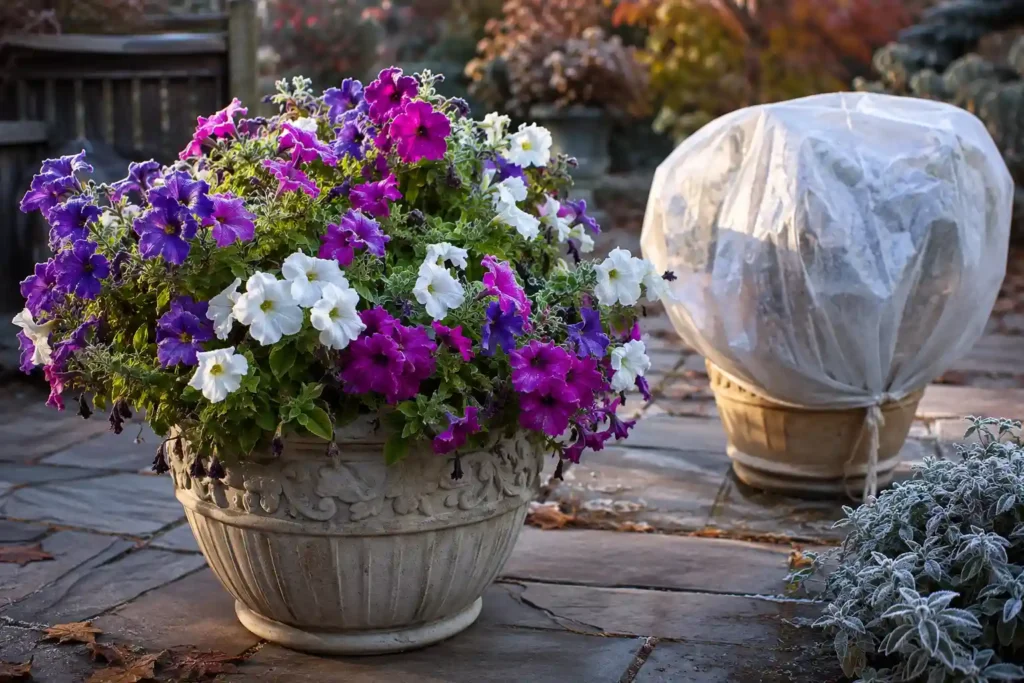
Manuela Nogueira notes that petunias in pots typically survive only until the first hard frost, dying back once temperatures drop below roughly 28–32°F (-2 to 0°C). Left unprotected, they rarely last more than a few weeks into winter. Moved indoors beforehand and given bright light, they can persist through the season as houseplants.
Container roots sit closer to ambient air than garden soil, so potted petunias chill faster and benefit from insulating the pot or relocating it to a sheltered wall. In USDA zones 10–11, petunias behave as tender perennials and can persist outdoors year-round. Many growers instead take stem cuttings before frost, since indoor-overwintered plants often turn leggy and lose vigor by spring.
Petunias belong to the genus Petunia, a group of flowering plants in the nightshade family (Solanaceae).
Quick Summary
- Potted petunias usually die after the first hard frost (32°F/0°C) unless they are protected or brought indoors.
- In USDA Zones 9–11, petunias can survive outdoors through winter and often bloom again in spring.
- In colder climates, petunias can be overwintered indoors, in an unheated garage, or by rooting cuttings before frost.
- Without winter protection, most potted petunias live from spring until the first freeze, typically about 4–7 months depending on local climate.
How Long Do Petunias Last in Pots? (Baseline Lifespan)
Petunias grown in pots typically last one growing season in climates with freezing winters. In most regions, gardeners plant them in spring after the last frost, enjoy continuous blooms throughout summer, and replace them after the first autumn frost. Under these conditions, their average lifespan is about four to six months, although mild autumn weather can extend flowering into early fall.
Although often treated as annuals, petunias are tender perennials. This means they naturally live for more than one year but lack the cold tolerance needed to survive freezing temperatures outdoors. In USDA Hardiness Zones 9–11, where winter temperatures rarely fall below freezing, healthy potted petunias may continue growing for two to three years with routine pruning, feeding, and seasonal maintenance. Since petunias are technically tender perennials rather than true annuals, it helps to see how they stack up against similar plants in this tender perennials winter hardiness database. It catalogs cold tolerance ranges for dozens of species gardeners commonly overwinter.
Bloom duration also depends on the variety. Modern hybrids are bred for prolonged flowering and often continue producing blooms until cold weather arrives.
Some common examples include:
- Wave Petunias: Vigorous spreading habit with continuous flowering from spring until frost.
- Grandiflora Petunias: Large, showy flowers but slightly less weather tolerant.
- Multiflora Petunias: Smaller blooms with better resistance to rain and wind.
- Supertunia® hybrids: Long blooming season with minimal deadheading and excellent container performance.
While genetics influence longevity, environmental conditions such as sunlight, watering, fertilization, and frost exposure have a much greater effect on how long potted petunias remain healthy.
How Long Do Petunias Last in Hanging Baskets vs. Pots
Petunias generally last slightly longer in traditional pots than in hanging baskets because containers placed on the ground retain moisture more consistently and provide better insulation around the root system.
Hanging baskets expose roots to:
- Faster moisture loss due to increased airflow
- Greater temperature fluctuations
- Stronger winds
- More rapid drying during hot weather
- Increased exposure to cold air during autumn and winter
Ground-level pots experience less temperature stress because the surrounding environment helps buffer sudden changes. During winter, even a small amount of insulation can make a noticeable difference in root survival.
However, with attentive care—including regular watering, weekly fertilization during the growing season, and protection from frost—petunias in hanging baskets can bloom just as beautifully throughout spring and summer.
Can Petunias Survive Winter Outdoors in Pots?
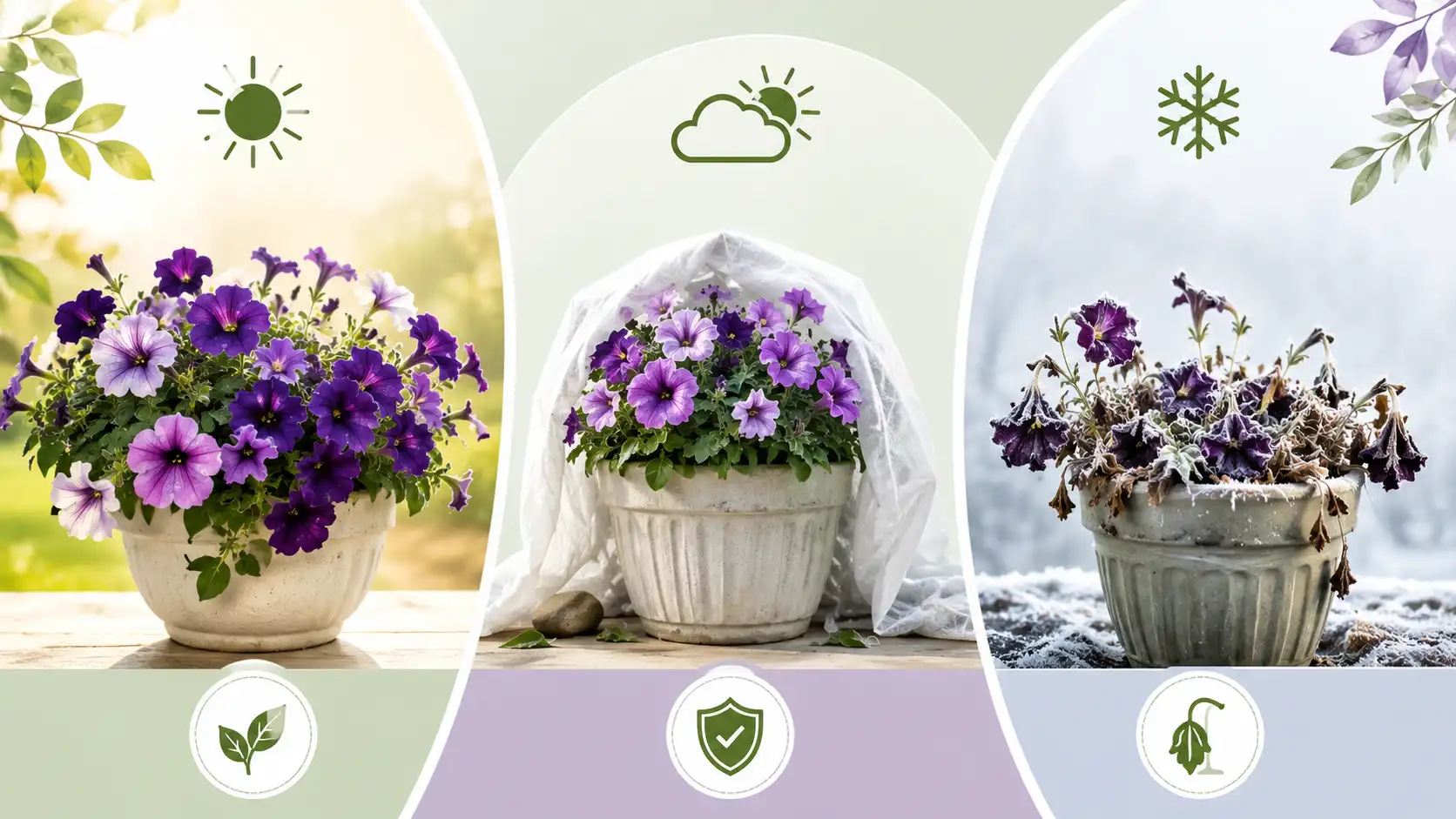
Petunias can survive winter outdoors in pots only in frost-free or very mild climates. Whether they return the following spring depends almost entirely on your USDA Hardiness Zone and the severity of winter temperatures.
In USDA Zones 9–11, winter temperatures generally remain warm enough for petunias to survive outdoors. Although flowering slows during the coolest months, many plants remain evergreen and resume vigorous blooming once temperatures rise in spring. For a more granular, filterable breakdown by zone and frost date, this petunia winter survival data sheet lets you cross-check your specific USDA zone against real recorded outcomes rather than general guidelines.
In Zone 8, survival becomes less predictable. Light frosts may only damage foliage, but prolonged freezing temperatures often kill potted plants unless they receive protection such as frost cloths or temporary shelter.
In Zones 7 and colder, unprotected petunias almost always die after the first hard freeze. Containers provide very little insulation compared to garden soil, allowing roots to freeze much more quickly.
As a general guideline:
| USDA Zone | Winter Survival in Pots | Protection Needed |
| Zones 9–11 | Usually survives outdoors | Minimal protection during cold snaps |
| Zone 8 | Possible in mild winters | Frost protection recommended |
| Zones 7 and colder | Unlikely to survive outdoors | Move indoors or overwinter in protected space |
If you hope to keep the same petunia plants for another growing season, bring them indoors before freezing temperatures arrive rather than waiting until after frost damage occurs.
Petunia Temperature Tolerance Explained
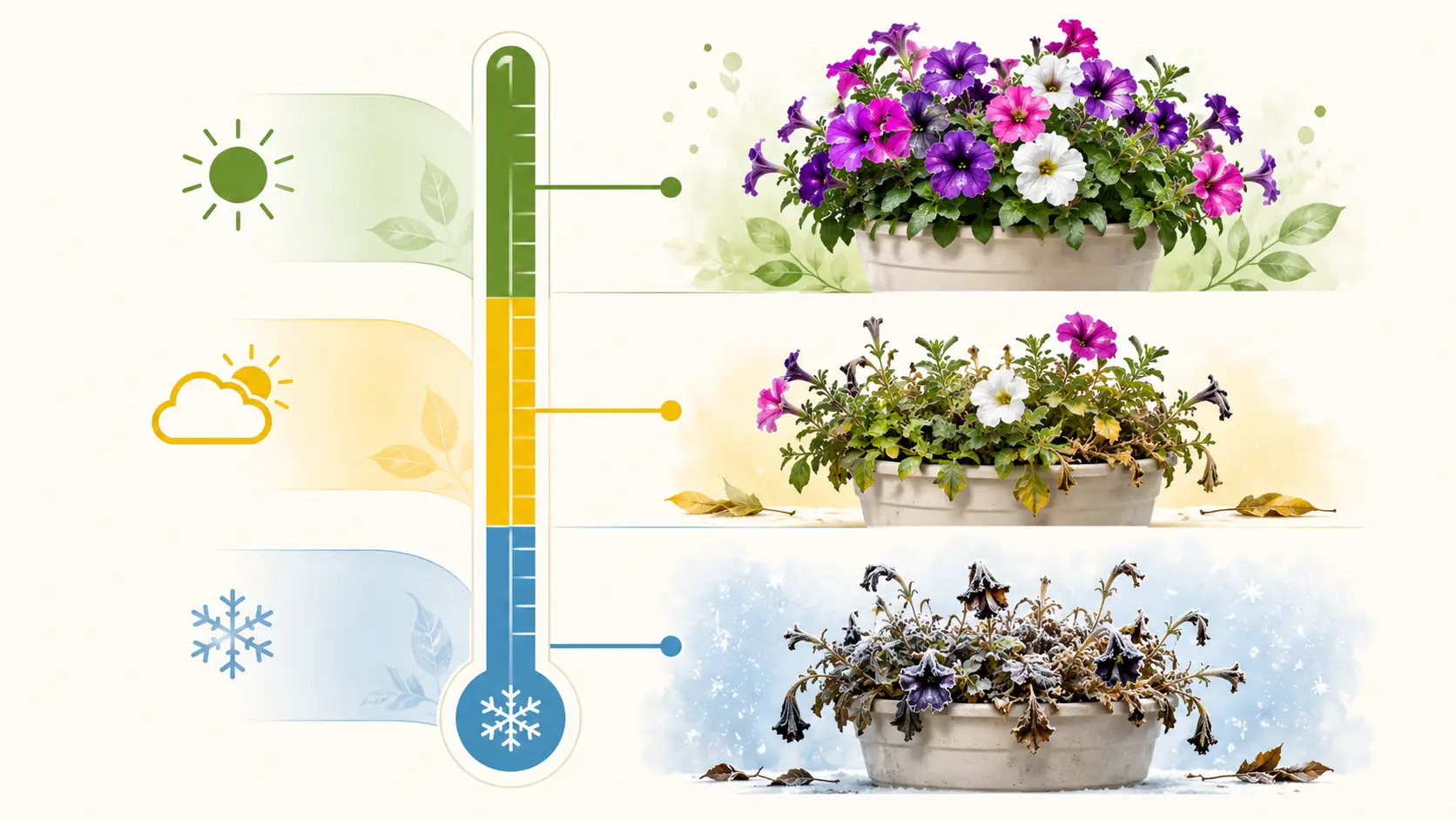
Petunias perform best when daytime temperatures remain between 55°F and 80°F (13–27°C). Within this range, they produce vigorous growth, abundant flowers, and healthy foliage.
As temperatures decline, growth gradually slows. Healthy plants can tolerate brief nighttime temperatures around 39–40°F (4–5°C) with little or no lasting damage. However, prolonged exposure to temperatures at or below 32°F (0°C) causes frost injury, blackened foliage, and eventually plant death.
Conversely, excessive summer heat can also reduce flowering. Temperatures consistently above 90°F (32°C) often lead to fewer blooms, especially if plants become drought stressed. Adequate watering and afternoon shade in extremely hot climates help maintain flowering.
A few specially bred cultivars exhibit greater cold tolerance than standard petunias and may survive temperatures between 14°F and 35°F (-10°C to 2°C) under favorable conditions. These varieties are the exception rather than the rule and should not be considered reliably frost hardy.
Petunia Temperature Tolerance Chart
| Temperature Range | Effect on Plant | Action Needed |
| Above 90°F (32°C) | Heat stress may reduce flowering | Water consistently and provide afternoon shade if needed |
| 55–80°F (13–27°C) | Ideal growth and continuous blooming | Maintain regular watering and fertilization |
| 40–55°F (4–13°C) | Growth slows but plants remain healthy | Continue normal care and monitor weather |
| 39–40°F (4–5°C) | Brief exposure usually causes minimal damage | Prepare for possible frost if temperatures continue falling |
| 32°F (0°C) | Frost damages flowers and foliage | Protect plants or move indoors immediately |
| Below 32°F (0°C) | Hard freeze typically kills petunias | Overwinter indoors or replace plants in spring |
For a broader side-by-side comparison across multiple container flowers, not just petunias, check out this detailed winter container flower survival matrix. It breaks down cold thresholds and survival odds for dozens of popular potted annuals by zone.
How to Overwinter Petunias in Pots (Step-by-Step)
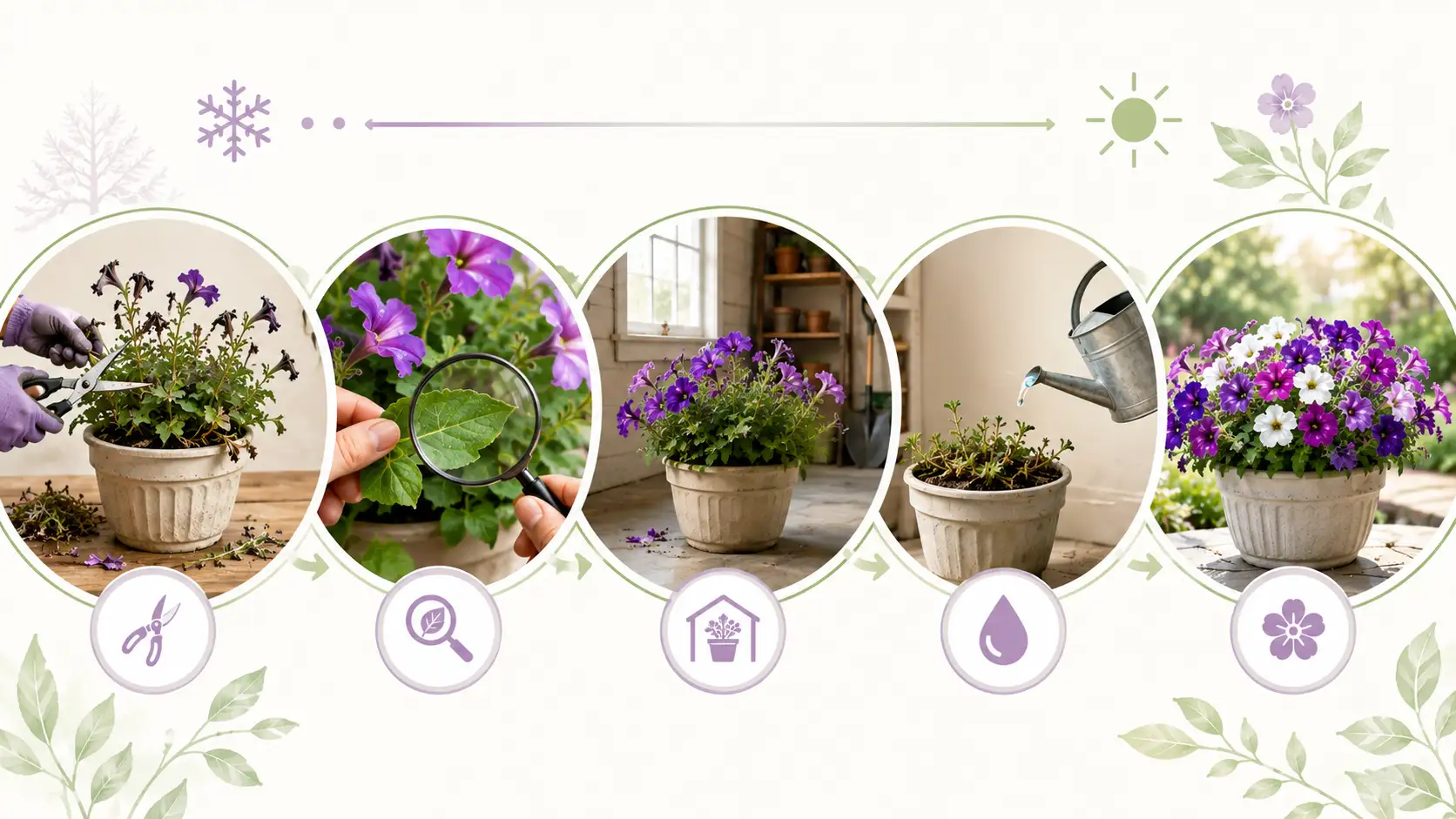
Overwintering petunias in pots involves moving healthy plants into a protected location before frost, reducing growth activity, and maintaining minimal care until spring. Since petunias are tender perennials rather than frost-hardy plants, successful overwintering depends on preventing freezing temperatures from damaging roots and foliage. Winter conditions affect plant growth cycles because reduced daylight and cooler temperatures slow photosynthesis and development. Understanding how seasons influence plant growth can help gardeners adjust care routines during colder months.
The best time to prepare petunias for winter is before the first expected frost. Plants that have already experienced freezing temperatures are often weakened and less likely to recover.
Follow these steps to overwinter potted petunias:
- Choose healthy plants
- Select petunias with strong stems, green foliage, and no signs of disease.
- Avoid bringing heavily damaged, pest-infested, or declining plants indoors.
- Prune the plant before moving it
- Trim petunias back by about one-third of their size or cut stems approximately 1–2 inches above the soil line for more compact overwintering.
- Removing excess growth reduces stress and limits pest problems.
- Inspect for pests and diseases
- Check leaves, stems, and soil for common problems such as aphids, spider mites, whiteflies, or fungal issues.
- Treat infestations before bringing plants indoors because pests can spread to other houseplants.
- Water thoroughly before storage
- Give the plant a deep watering, allowing excess water to drain completely.
- Do not leave the pot sitting in water because cold, wet soil increases the risk of root rot.
- Move the pot to a cool, protected location
- Suitable places include:
- A bright basement
- A cool garage with a window
- A greenhouse
- A sunny indoor area
- Suitable places include:
- Reduce watering during winter
- Petunias grow slowly or become semi-dormant during low-light months.
- Check soil every 3–4 weeks and water only when the top layer feels dry.
Using a soil moisture check method helps prevent both dehydration and overwatering during winter dormancy.
- Resume active care in spring
- Move plants back outdoors after the danger of frost has passed.
- Gradually expose them to outdoor conditions to prevent transplant shock.
- Begin regular watering and feeding as new growth appears.
Overwintering is usually easier with compact varieties because they require less indoor space and adapt better to reduced winter light.
Bringing Petunias Indoors as Houseplants
Petunias can be grown indoors temporarily during winter, but they are not naturally ideal houseplants because they require high light levels and strong airflow. With enough sunlight, however, healthy plants can survive indoors until warmer weather returns. When petunias are moved indoors for winter, maintaining suitable humidity and airflow can help reduce stress and prevent dry indoor conditions from affecting plant health.
For indoor survival, petunias need:
- At least 6 hours of direct sunlight daily
- A bright south-facing window or supplemental grow light
- Good air circulation to prevent fungal problems
- Well-draining potting soil
- Reduced watering during slow growth periods
Indoor petunias often produce fewer flowers during winter because shorter days reduce photosynthesis and growth. Some plants enter a semi-dormant state, producing limited new leaves until spring.
Common indoor problems include:
- Leggy growth: Caused by insufficient light
- Yellow leaves: Often linked to overwatering or nutrient imbalance
- Fungal diseases: More common when airflow is poor
- Pest outbreaks: Indoor conditions can allow aphids and spider mites to multiply
Although petunias can survive indoors, many gardeners find that overwintering cuttings is easier than keeping a large mature plant alive inside.
Overwintering via Cuttings
Taking cuttings is one of the simplest ways to preserve petunias through winter because young plants require less space and usually adapt better indoors.
Before the first frost:
- Select healthy, non-flowering stems.
- Cut sections about 2–3 inches long below a leaf node.
- Remove lower leaves while keeping a few leaves at the top.
- Place cuttings in water or moist propagation soil.
- Keep them in bright indirect light.
- Maintain consistent moisture until roots develop.
Petunia cuttings typically develop roots within 2–3 weeks under suitable conditions.
Once rooted, young plants can be grown indoors through winter and planted outdoors again in spring.
Advantages of overwintering cuttings include:
- Requires less indoor space
- Reduces pest problems
- Produces younger, more vigorous spring plants
- Allows gardeners to preserve favorite varieties
What Affects How Long Potted Petunias Last?
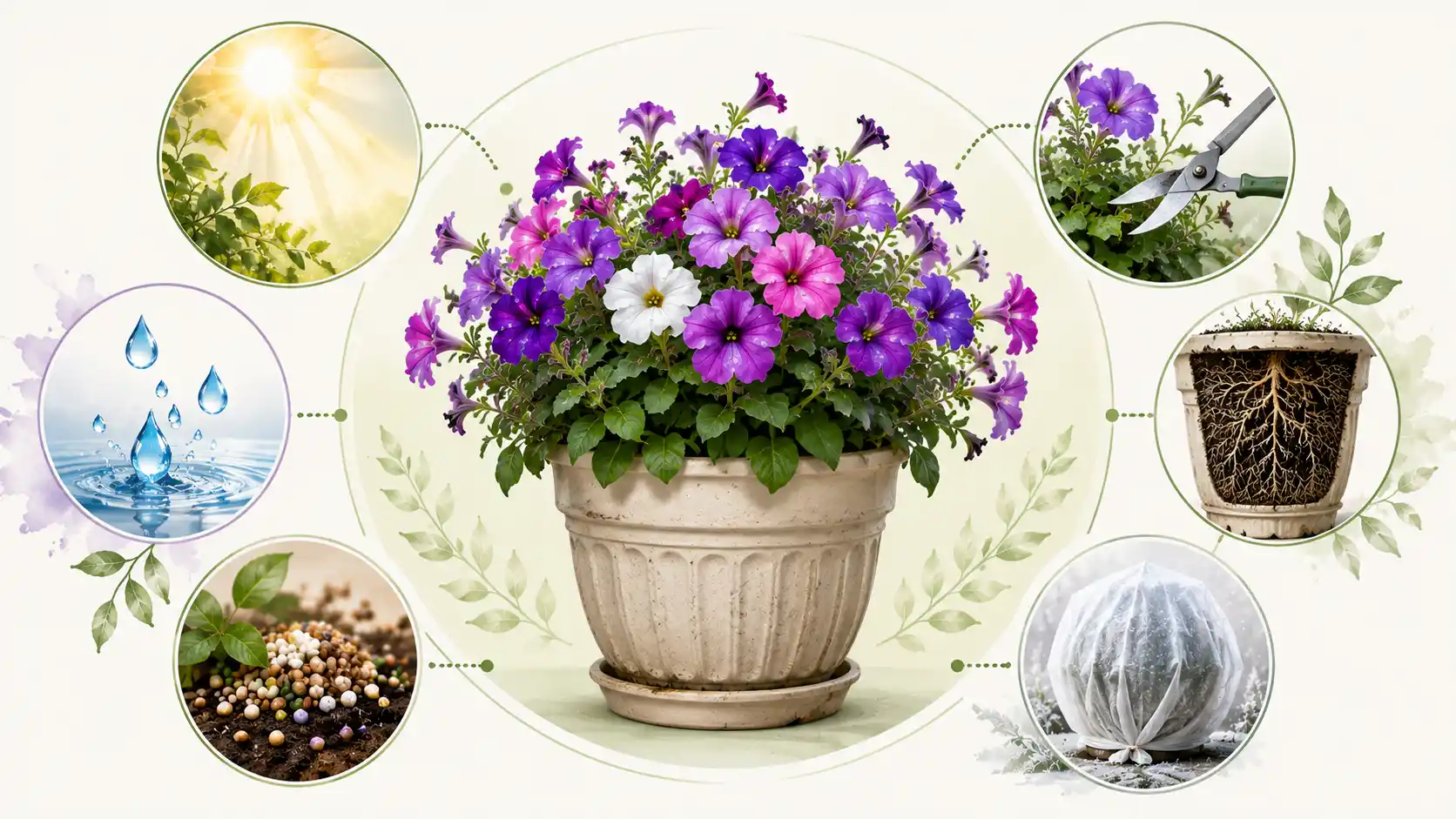
The lifespan of potted petunias depends on environmental conditions, care practices, and protection from stress. Even though petunias naturally have a limited lifespan in cold climates, proper care can extend blooming and keep plants healthy throughout the growing season. Container size influences root development, moisture retention, and overall plant performance, which is why choosing the right pot is important for long-term growth.
Important factors include:
- Sunlight
- Watering habits
- Soil quality
- Fertilization
- Pot size
- Pruning and deadheading
- Temperature protection
Sunlight Requirements
Petunias need approximately 6 or more hours of direct sunlight daily for strong growth and abundant flowering.
Insufficient light can cause:
- Fewer flowers
- Weak stems
- Stretching or leggy growth
- Increased disease risk
In very hot climates, some afternoon shade can prevent heat stress while still providing enough light for flowering. Understanding the difference between direct and indirect light helps gardeners place container plants in locations that provide suitable growing conditions.
Watering Petunias in Pots
Potted petunias require more frequent watering than plants grown in garden beds because containers dry out faster.
A practical watering approach:
- Check the top 1–2 inches of soil before watering.
- Water deeply until excess water drains from the bottom.
- Avoid keeping soil constantly saturated.
- Increase watering during hot, windy weather.
Signs of improper watering:
| Problem | Possible Cause | Solution |
| Wilting leaves | Underwatering or extreme heat | Water deeply and check moisture regularly |
| Yellow leaves | Overwatering or poor drainage | Allow soil to dry slightly and improve drainage |
| Root rot | Constantly wet soil | Use well-draining potting mix |
Fertilization and Bloom Production
Petunias are heavy bloomers and use significant nutrients throughout the growing season.
A balanced or bloom-focused fertilizer can encourage continuous flowering. Many gardeners feed container petunias every 7–10 days during active growth using a fertilizer designed for flowering plants.
Avoid excessive nitrogen because it can cause:
- More leafy growth
- Fewer flowers
- Weak stems
A fertilizer with adequate phosphorus and potassium supports flower production and overall plant health.
Pot Size and Spacing
Container size affects root development and moisture stability.
Small pots:
- Dry out quickly
- Require frequent watering
- Restrict root growth
Larger containers:
- Hold moisture longer
- Provide more root space
- Support larger, healthier plants
Crowded containers can reduce airflow and increase the risk of fungal problems.
Deadheading and Pruning
Removing faded flowers encourages petunias to redirect energy into producing new blooms.
Regular maintenance includes:
- Removing spent flowers
- Trimming long stems
- Cutting back overgrown growth
- Removing damaged leaves
For leggy plants, pruning stems back by one-quarter to one-half can encourage branching and create a fuller appearance.
Common Problems That Shorten Petunia Lifespan
Most petunia problems are caused by incorrect watering, insufficient light, nutrient issues, or pest damage. Identifying the cause early can significantly extend plant health and flowering time.
Yellowing Leaves
Yellow leaves are commonly caused by:
- Overwatering
- Poor drainage
- Nitrogen deficiency
- Iron deficiency
- Root stress
Solutions:
- Improve drainage
- Allow soil to dry slightly between watering
- Apply a balanced fertilizer if nutrients are lacking
- Check roots for signs of rot
Overwatering and Root Rot
Petunias prefer consistently moist but well-draining soil. Waterlogged roots cannot absorb oxygen properly, leading to root damage.
Signs of root rot include:
- Yellow lower leaves
- Soft or dark roots
- Wilting despite wet soil
- Slow growth
Prevention:
- Use containers with drainage holes
- Avoid heavy garden soil in pots
- Empty excess water from saucers
Leggy or Spindly Growth
Leggy petunias usually result from:
- Too little sunlight
- Lack of pruning
- Excess nitrogen fertilizer
Fixes:
- Move plants to brighter light
- Trim long stems
- Reduce high-nitrogen feeding
Pests Eating Petunias at Night
Petunia leaves damaged overnight are often affected by:
- Slugs
- Snails
- Cutworms
- Caterpillars
Inspect plants during evening hours when these pests are active.
Control methods include:
- Removing pests manually
- Keeping the growing area clean
- Using appropriate garden pest controls when necessary
Slow Growth
Slow growth is usually related to environmental stress.
Common causes:
- Low light
- Cold temperatures
- Nutrient shortages
- Root-bound conditions
Improving sunlight exposure, refreshing soil nutrients, and maintaining proper temperatures usually restores healthy growth.
Petunias in Pots vs. In the Ground (Comparison Block)
Petunias can grow successfully in both containers and garden beds, but pots provide greater control and flexibility while in-ground plants often experience more stable growing conditions. The better choice depends on your climate, maintenance preferences, and whether you want to move plants indoors during winter.
Container-grown petunias are especially useful for gardeners in colder climates because pots can be relocated before frost. In contrast, garden-grown petunias benefit from the insulating effect of surrounding soil but cannot easily be protected once temperatures drop.
| Feature | Petunias in Pots | Petunias in the Ground |
| Drainage control | Easier to manage with proper potting mix and drainage holes | Depends on natural soil conditions |
| Watering needs | Requires more frequent watering because containers dry faster | Usually holds moisture longer |
| Winter protection | Easy to move indoors or into a sheltered area | Difficult to protect from freezing temperatures |
| Root temperature stability | Roots experience faster temperature changes | Soil provides better insulation |
| Growth potential | Limited by container size | More room for root expansion |
| Portability | Can be moved for sunlight or frost protection | Fixed location |
For gardeners who experience cold winters, growing petunias in pots is often the more practical option because overwintering becomes possible. In warmer climates, either method can work well if plants receive enough sunlight and proper moisture.
Regional Differences in Petunia Winter Survival
Petunia winter survival varies significantly by climate region because temperature, frost frequency, and USDA Hardiness Zone determine whether plants can remain alive outdoors. A petunia that survives winter in a mild coastal climate may die quickly in a colder inland region.
Understanding your local growing zone helps determine whether petunias should be treated as annual flowers or maintained as short-lived perennials.
Petunias in Texas Winters
Texas has several climate zones, so petunia survival depends on location.
- Southern Texas (Zones 9–10):
- Mild winters may allow petunias to survive outdoors in pots.
- Plants may continue blooming during cooler months.
- Occasional freezes still require protection.
- Central Texas (Zone 8):
- Survival is possible during mild winters.
- Covering plants during cold nights can improve survival chances.
- Northern Texas (Zones 7–8):
- Freezing temperatures are more common.
- Potted petunias usually need indoor protection.
The key factor is not the state itself but the specific growing zone and winter temperature patterns.
Petunias in California Winters
Many areas of California provide favorable conditions for overwintering petunias.
- Coastal and southern regions commonly fall within Zones 9–10, where petunias may survive outdoors year-round.
- Cooler inland areas may experience frost and require protection.
- Northern mountainous regions may be too cold for outdoor survival.
In mild California climates, petunias may continue flowering during winter with reduced growth and resume stronger blooming in spring.
General Winter Survival Rule
Before deciding whether your potted petunias can survive winter:
- Check your USDA Hardiness Zone.
- Review the expected lowest winter temperatures.
- Move containers indoors before frost arrives.
- Protect roots because potted plants freeze faster than plants in the ground.
Beginner Mistakes to Avoid With Potted Petunias
Many petunia problems occur because gardeners provide too much care in the wrong way rather than because the plant is difficult to grow. Avoiding common mistakes can extend flowering, improve plant health, and increase the chance of successful overwintering.
Overfeeding With High-Nitrogen Fertilizer
A common mistake is using too much nitrogen fertilizer because it encourages rapid green growth.
Excess nitrogen can cause:
- Large amounts of foliage
- Fewer flowers
- Weak stems
- Increased pest problems
Instead, use a balanced fertilizer or a formula designed for flowering plants and follow recommended application rates.
Watering on a Fixed Schedule
Petunias do not need the exact same amount of water every day. Their needs change based on:
- Temperature
- Sun exposure
- Pot size
- Wind conditions
- Humidity
Instead of following a strict schedule, check soil moisture first. Water when the upper layer begins drying.
Ignoring Drainage Holes
Poor drainage is one of the fastest ways to shorten petunia lifespan.
Problems caused by poor drainage include:
- Root rot
- Yellow leaves
- Reduced flowering
- Plant decline
Always use containers with drainage holes and a lightweight potting mix.
Leaving Spent Flowers on the Plant
Old flowers consume plant energy and can reduce new flower production.
Regular deadheading helps:
- Encourage more blooms
- Maintain a tidy appearance
- Extend the flowering season
Waiting Too Long Before Winter Protection
One of the biggest overwintering mistakes is waiting until after frost damage occurs.
Once freezing temperatures damage stems and roots, recovery becomes much less likely.
Move petunias indoors or take cuttings before the first hard frost for the best chance of keeping them alive.
Conclusion
Petunias grown in pots usually last from spring until the first frost, giving approximately 4–7 months of flowering in most climates. However, how long do petunias last in pots in winter depends on temperature, USDA zone, and whether plants receive protection. In frost-free areas such as USDA Zones 9–11, petunias can survive outdoors and continue growing for multiple years. In colder regions, they must be moved indoors, stored in a protected area, or propagated through cuttings to survive winter.
The best approach is to understand your climate, protect plants before freezing temperatures arrive, and provide consistent care throughout the growing season. With proper winter management, petunias can return stronger and provide colorful blooms year after year. Learning the basic principles of plant care, seasonal maintenance, and growing requirements can help gardeners successfully manage a wide range of plants beyond petunias.
Frequently Asked Questions (FAQs)
How long do petunias last in pots in winter?
Petunias in pots usually do not survive winter outdoors in freezing climates. In USDA Zones 9–11, they may survive outdoors throughout winter, while colder-zone gardeners must protect them indoors or overwinter cuttings.
Do petunias come back after winter?
Petunias can come back after winter only if they survive freezing temperatures or are successfully overwintered. Plants protected indoors, stored in warm climates, or grown from cuttings can return in spring.
What is the coldest temperature petunias can survive?
Petunias can tolerate brief exposure to temperatures around 39–40°F (4–5°C), but they are damaged at 32°F (0°C). A hard freeze usually kills standard petunia varieties.
Can you keep petunias alive all year round?
Yes, petunias can be kept alive year-round by growing them in frost-free climates, bringing them indoors during winter, or maintaining new plants from cuttings.
Will petunias survive winter in pots without protection?
Most potted petunias will not survive winter without protection in areas that experience freezing temperatures. They are most likely to survive outdoors without protection in USDA Zones 9–11.