
Intoduction
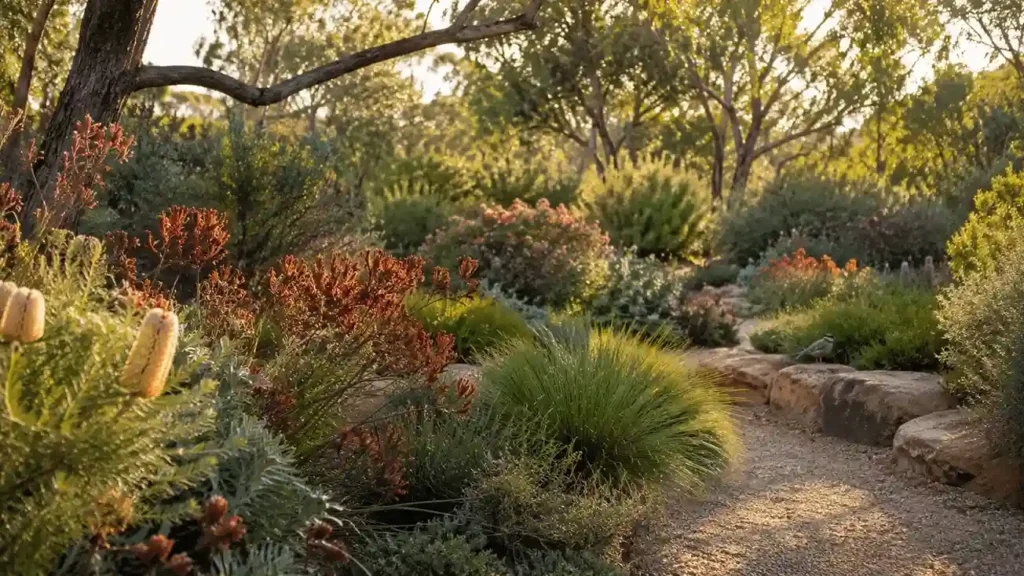
The brewery hill native garden demonstrates how Australian native plants can create visually striking, ecologically functional, and low-maintenance outdoor spaces. Across Australia, native gardens are becoming increasingly popular because they conserve water, support pollinators, and adapt naturally to local climates. Unlike traditional landscapes that often rely on exotic species, native gardens work with Australia’s environment rather than against it. This article explores native garden definitions, design principles, plant selections, and practical landscaping strategies inspired by the brewery hill native garden. Readers will also discover small native garden ideas, soil preparation methods, low-maintenance planting solutions, and step-by-step guidance for creating sustainable Australian native landscapes.
For a practical starting approach, explore this step-by-step guide on building an easy low maintenance Australian native garden for beginners.
Quick Summary
- The brewery hill native garden is a model example of how Australian native plants can be used to create beautiful, low-maintenance outdoor spaces.
- Native gardens use locally adapted species like grevilleas, banksias, and wattles that require minimal water and care once established.
- Small native garden ideas in Australia can be implemented in courtyards, suburban backyards, and hillside slopes.
- Proper soil preparation and thoughtful plant selection are the two most critical steps when starting a native plant garden.
What Is a Native Garden? Definition, Purpose, and Core Concepts
A native garden is a landscaped space primarily designed with plants indigenous to a specific region or country. In Australia, native gardens focus on species naturally adapted to local soils, rainfall patterns, and climate conditions.
Native gardens are closely linked to conservation ecosystems similar to those found in protected natural environments such as nature reserves.
Native gardens differ from conventional landscaping because they prioritize ecological compatibility over ornamental imports. These gardens often require less irrigation, reduced fertiliser input, and lower long-term maintenance once established.
The main purpose of a native garden is to support biodiversity while creating sustainable outdoor environments. Native plantings attract birds, bees, butterflies, and beneficial insects that rely on indigenous flora for food and shelter.
Ecological gardening principles commonly associated with native gardens include:
- Water-wise landscaping
- Habitat creation for wildlife
- Reduced chemical use
- Soil preservation
- Climate-resilient planting design
Native Garden Examples Across Australia
Native garden examples vary widely across Australian climates and landscapes.
In coastal regions, gardens commonly feature salt-tolerant plants such as coastal banksias, pigface, and westringia. Arid inland gardens rely on drought-hardy wattles, spinifex grasses, and eremophilas. Temperate regions often showcase grevilleas, kangaroo paws, and bottlebrushes, while subtropical gardens incorporate lilly pillies and rainforest understory species.
The brewery hill native garden is a notable example because it combines layered planting, seasonal flowering, and strong ecological value within a curated landscape setting.
Native gardens can range from:
- Large public botanical displays
- Wildlife corridors
- Residential backyard gardens
- Small urban courtyards
- Hillside revegetation projects
Brewery Hill Native Garden — What It Is and Why It Matters
The brewery hill native garden is an Australian native landscape designed to showcase the beauty and adaptability of indigenous plants. It serves as both an educational destination and a practical reference for gardeners interested in sustainable Australian landscaping.
One reason the garden stands out is its thoughtful plant curation. The landscape integrates flowering shrubs, textured grasses, layered canopies, and seasonal colour transitions that create year-round visual interest.
The garden also demonstrates how native landscapes can support biodiversity by attracting honeyeaters, native bees, butterflies, and small wildlife species.
Visitors and gardeners can learn important design concepts from the brewery hill native garden, including:
- Plant grouping techniques
- Layered planting systems
- Low-water landscape design
- Seasonal colour planning
- Naturalistic Australian garden styling
Design Features of the Brewery Hill Native Garden Worth Replicating
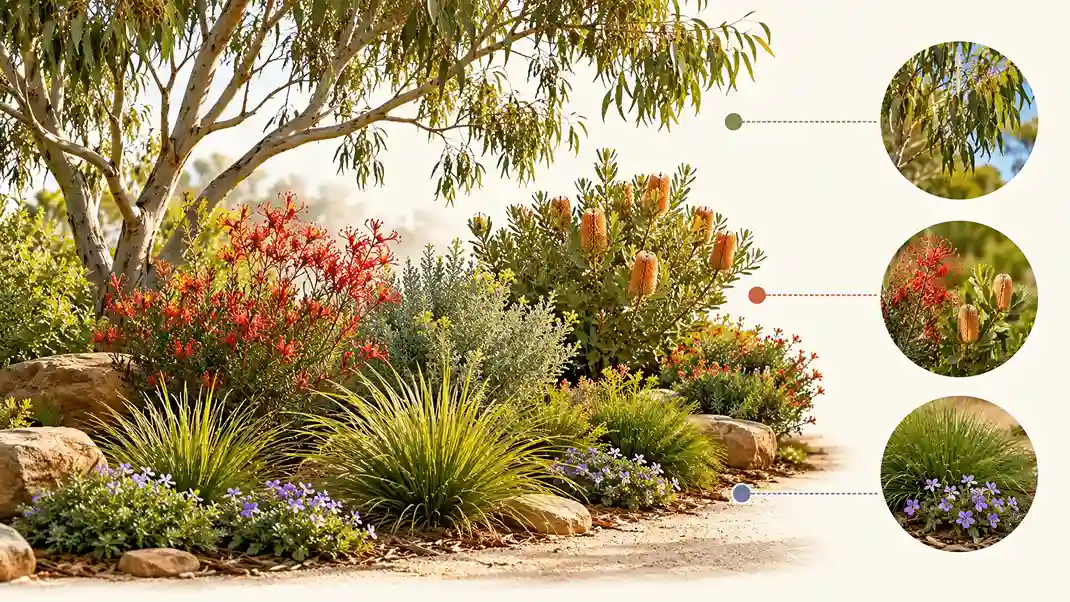
Several design elements used in the brewery hill native garden can easily be adapted to home landscapes.
Key features include:
- Layered planting: canopy, mid-storey, and ground cover
- Mass planting of single species: creates strong visual impact
- Integration of gravel paths and natural stone: improves texture and drainage
- Seasonal blooming cycles: ensures year-round colour and pollinator support
These principles help create gardens that feel cohesive, natural, and visually balanced while remaining low maintenance.
Australian Garden Design Principles for Native Spaces
Australian garden design for native spaces focuses heavily on texture, structure, and environmental harmony. Native gardens often rely more on foliage contrast and plant form than traditional flower-heavy landscapes.
Core design principles include:
- Repetition of plant forms
- Layered heights for depth
- Strategic use of negative space
- Colour balance between foliage and flowers
- Natural transitions between hardscape and planting areas
Formal native gardens typically use geometric pathways and controlled planting schemes, while naturalistic designs imitate bushland patterns with irregular groupings and organic flow. These principles are widely applied in broader landscape planning frameworks such as Australian native garden plants and design systems, where structure and ecology are balanced.
How to Integrate Native Australian Flowers Into a Garden Layout
Native Australian flowers should be positioned strategically to maximize colour, biodiversity, and seasonal interest.
Popular flowering natives include:
- Grevilleas
- Kangaroo paw
- Banksias
- Waratahs
- Bottlebrushes
Tall flowering plants often work best as focal points, while lower-growing natives can soften borders and pathways. Companion planting strategies can be further refined using guides like what to plant with kangaroo paw for balanced native garden ecosystems.
For effective bloom succession:
- Use spring-flowering banksias
- Add summer-blooming kangaroo paws
- Include grevilleas for extended flowering periods
- Combine evergreen shrubs for year-round structure
Ground covers such as native violet or creeping boobialla can connect planting zones and reduce exposed soil.
Australian Native Cottage Garden Layout
An Australian native cottage garden layout combines informal planting patterns with indigenous species. Unlike structured native landscapes, cottage-style native gardens emphasize softness, density, and layered textures.
Characteristics often include:
- Winding gravel paths
- Dense flowering borders
- Mixed foliage textures
- Informal shrub placement
- Relaxed planting symmetry
This style adapts well to Australian natives because many indigenous plants naturally grow in layered, free-flowing forms.
For front yards, compact shrubs and flowering borders create street appeal. Rear gardens can incorporate seating areas surrounded by native grasses, grevilleas, and flowering perennials.
Small Australian Native Garden Ideas and Space Planning
A small Australian native garden can still provide strong ecological value and visual impact when planned carefully. Compact spaces benefit from layered planting, vertical structure, and multi-functional species.
Space-saving strategies include:
- Vertical screening with narrow shrubs
- Container-grown natives
- Raised garden beds
- Native hedging
- Ground cover alternatives to lawn
Even small native gardens can support pollinators and birds when nectar-producing species are included.
Small Native Garden Ideas Australia Homeowners Can Implement
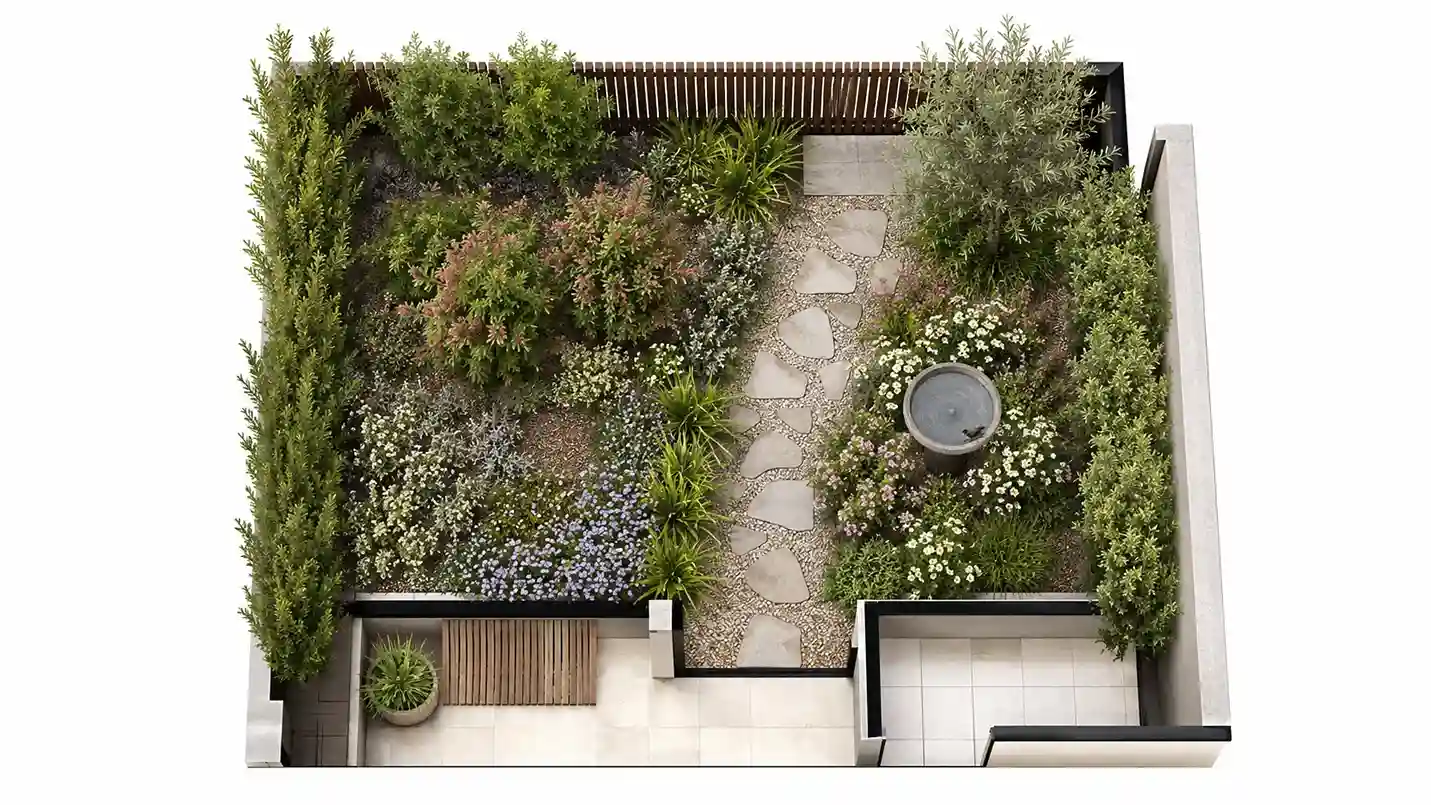
Practical small native garden ideas Australia homeowners can apply include:
- Plant compact grevillea varieties as border shrubs
- Use native ground covers to replace lawn in tight areas
- Create a bush tucker corner with edible Australian natives
- Line pathways with low-growing daisies and lomandras
- Install a small birdbath surrounded by nectar-producing natives
These low maintenance small native garden ideas Australia homeowners use are especially effective for courtyards, balconies, and narrow suburban spaces.
Top Native Australian Plants for Landscaping and Garden Beds
Australian native plants offer diverse forms, colours, and textures suitable for landscaping and garden beds. Many species are drought tolerant and adapted to poor soils.
| Plant Name | Type | Height | Sun Requirement | Best Use |
| Grevillea | Shrub | 1–4 m | Full sun | Feature planting, screening |
| Kangaroo Paw | Flowering perennial | 0.5–1.5 m | Full sun | Colour accents |
| Banksia | Shrub/tree | 1–10 m | Full sun | Wildlife attraction |
| Waratah | Flowering shrub | 2–4 m | Part shade/full sun | Statement planting |
| Lilly Pilly | Shrub/tree | 2–10 m | Sun/part shade | Hedging |
| Lomandra | Grass-like perennial | 0.5–1 m | Full sun | Borders and erosion control |
| Westringia | Shrub | 1–2 m | Full sun | Low hedges |
| Native Violet | Ground cover | 10–15 cm | Shade/part shade | Underplanting |
| Bottlebrush | Shrub/tree | 1–5 m | Full sun | Bird-friendly gardens |
| Everlasting Daisy | Flowering perennial | 30–60 cm | Full sun | Cottage-style planting |
Grevillea Gardens — Design Uses and Cultivar Selection
Grevillea gardens are a defining feature of many Australian native landscapes because grevilleas provide extended flowering periods, vibrant colour, and strong wildlife attraction.
Different cultivars suit different landscape purposes:
- Ground cover grevilleas for slopes and borders
- Medium shrubs for mixed planting beds
- Large grevilleas for privacy screening
Grevilleas attract honeyeaters and native pollinators due to their nectar-rich flowers. Mass planting multiple grevilleas together also creates strong visual rhythm and seasonal colour continuity.
How to Start a Native Plant Garden From Scratch
Starting a native plant garden requires thoughtful planning rather than simply planting indigenous species randomly.
The most important early steps include:
- Understanding local climate conditions
- Assessing drainage and sunlight
- Choosing regionally appropriate plants
- Avoiding over-fertilisation
- Planning mature plant spacing carefully
Native gardens generally establish best when gardeners work with existing site conditions rather than trying to dramatically alter them.
How to Prepare Soil for a Native Garden
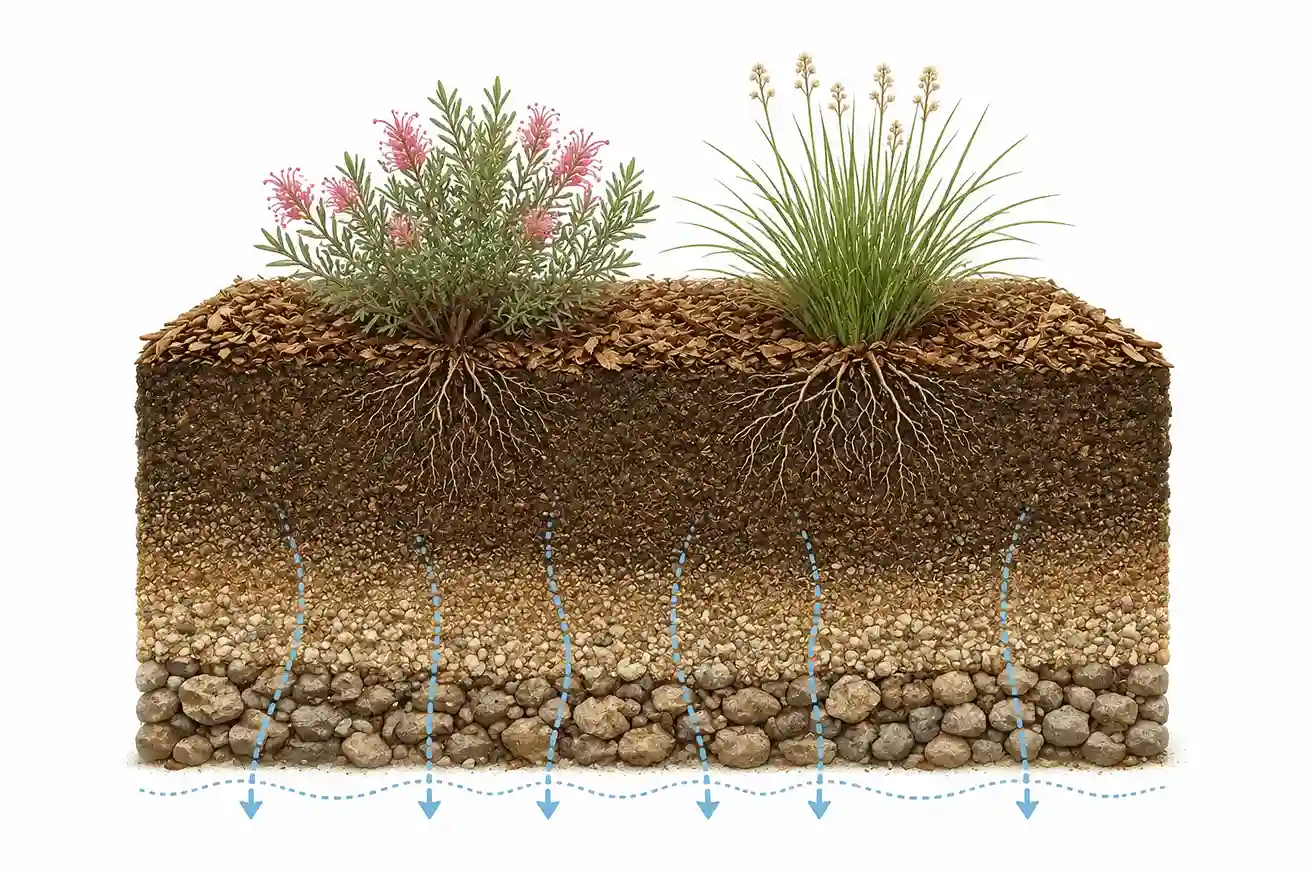
Most Australian native plants prefer well-drained, low-phosphorus soils. Excessive enrichment can damage sensitive root systems, particularly among banksias and grevilleas.
Key soil preparation principles include:
- Avoid standard high-phosphorus fertilisers
- Improve heavy clay with grit or coarse sand
- Use native-specific soil mixes when necessary
- Apply mulch such as wood chips, leaf litter, or sugar cane
- Maintain slightly acidic to neutral soil pH where possible
Good drainage is especially important because waterlogged conditions often lead to root rot in native species.
How to Plant a Native Garden Step by Step
- Assess your climate zone and microclimate.
- Choose plants suited to your soil and sunlight levels.
- Prepare soil without over-enriching it.
- Lay out plants before planting to test spacing and design balance.
- Water plants deeply immediately after planting.
- Reduce watering frequency gradually as roots establish.
- Apply native-compatible mulch around root zones.
- Monitor plants closely during the first 1–2 growing seasons.
Low Maintenance Australian Native Plants and Long-Term Care
Low maintenance Australian native plants are naturally adapted to Australian conditions, making them resilient during drought, heat, and fluctuating weather.
However, low maintenance does not mean maintenance-free.
Newly planted natives still require:
- Regular deep watering during establishment
- Mulching for moisture retention
- Occasional pruning after flowering
- Monitoring for pests or fungal issues
Once mature, many native plants survive with minimal supplemental watering.
Seasonal Care Calendar for a Native Garden
| Season | Maintenance Tasks |
| Summer | Deep but infrequent watering; monitor heat stress in young plants |
| Autumn | Ideal planting season; refresh mulch layers |
| Winter | Light pruning after flowering; avoid excessive fertilising |
| Spring | Peak flowering period; deadhead flowers and monitor pests |
Comparison — Native Garden vs Traditional Australian Garden
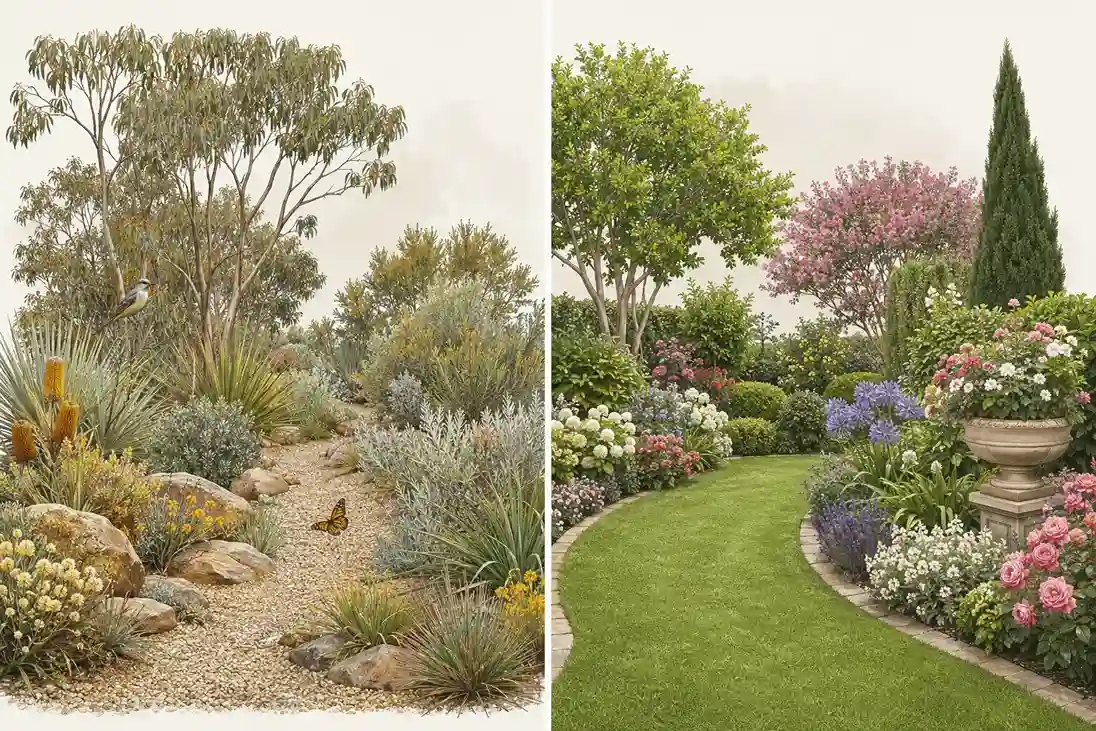
| Feature | Native Garden | Traditional Garden |
| Water Use | Low once established | Often high |
| Maintenance Level | Moderate to low | Frequently higher |
| Plant Diversity | Indigenous species | Exotic and mixed species |
| Wildlife Attraction | Excellent | Variable |
| Soil Needs | Usually low nutrient | Often enriched soil |
| Cost Over Time | Lower maintenance costs | Higher irrigation and upkeep |
| Visual Style | Naturalistic and ecological | Formal or ornamental |
Common Mistakes When Starting a Native Garden (SERP Gap Coverage)
Many beginner gardeners unintentionally damage native plants by applying conventional gardening methods unsuitable for Australian natives.
Common mistakes include:
- Over-fertilising with phosphorus-rich products: Many natives are phosphorus sensitive. Use native-specific fertilisers only.
- Planting climate-inappropriate species: Select plants suited to local rainfall and temperature patterns.
- Overwatering during establishment: Native plants prefer deep, infrequent watering rather than shallow daily irrigation.
- Ignoring drainage: Waterlogged soil commonly causes root disease and plant decline.
- Choosing plants only for flowers: Foliage texture, structure, and growth habit are equally important in Australian garden design.
- Failing to mulch properly: Mulch stabilizes soil moisture and suppresses weeds around developing root systems.
One of the most common beginner issues is overcrowding plants. Many Australian natives grow significantly larger than expected over time, so mature size planning is essential.
Conclusion
The brewery hill native garden highlights how Australian native landscapes can combine ecological function, seasonal beauty, and low-maintenance practicality. Whether designing a large backyard retreat or a compact courtyard, native gardens succeed when plant selection, soil preparation, and layout planning align with local environmental conditions.
Australian native plants such as grevilleas, banksias, lomandras, and bottlebrushes provide long-term resilience while supporting birds, pollinators, and biodiversity. By following the design principles, plant recommendations, and soil preparation techniques outlined in this guide, gardeners can create sustainable outdoor spaces that thrive naturally within Australia’s climate.
The most effective native gardens are those that work with Australia’s environment rather than against it. Using the brewery hill native garden as inspiration, homeowners can begin planning landscapes that are visually striking, water efficient, and ecologically valuable.
FAQs
What is the Brewery Hill Native Garden?
The brewery hill native garden is an Australian native landscape designed to showcase indigenous plants, ecological gardening principles, and sustainable landscape design. It features layered planting, native flowering shrubs, textured foliage, and wildlife-supporting habitats that make it a useful reference for Australian native garden planning.
What are the best low maintenance Australian native plants for a small garden?
Some of the best low maintenance Australian native plants for small gardens include compact grevilleas, lomandra, westringia, native daisies, and dwarf bottlebrush varieties. These plants tolerate drought, require minimal fertiliser, and adapt well to compact urban spaces.
How do I prepare soil before planting a native garden?
Prepare native garden soil by improving drainage, avoiding phosphorus-rich fertilisers, and using native-compatible mulch. Most Australian native plants prefer well-drained soil with low nutrient levels and slightly acidic to neutral pH conditions.
What is the difference between a native garden and a cottage garden in Australia?
A native garden focuses on indigenous Australian plants and ecological sustainability, while an Australian native cottage garden layout combines informal cottage-style planting with native species. Native cottage gardens use dense planting, winding paths, and layered textures for a softer appearance.
What native Australian flowers bloom year-round?
Grevilleas are among the best near-year-round flowering Australian natives. Kangaroo paw and some lilly pilly varieties also provide extended seasonal colour. Combining different flowering times helps maintain continuous blooms throughout the year.
Can I create a small native garden in a courtyard or townhouse?
Yes, small Australian native gardens work well in courtyards and townhouse spaces. Compact shrubs, container-grown natives, vertical planting, and low-growing ground covers allow native gardens to thrive even in limited areas.