
Introduction
Pelargonium australe is a key species within the broader context of pelargonium Australia, representing native plant diversity alongside widely cultivated ornamental pelargoniums. Many gardeners confuse pelargoniums with geraniums, but they are botanically different groups. Pelargoniums typically have asymmetrical flowers and thrive in warmer climates, while true geraniums prefer cooler conditions. Australian native pelargonium and native geranium Australia species are increasingly valued for their adaptability, drought tolerance, and ecological benefits. This article explains pelargonium types, care requirements, differences from geraniums, and common gardening challenges to help improve plant selection and maintenance.
Quick Summary
- Pelargonium Australia includes native species like Pelargonium australe and cultivated ornamental varieties.
- Pelargoniums differ from geraniums in flower structure, growth habits, and climate preference.
- Common types include regal, ivy, and zonal pelargoniums suited to various environments.
- Successful growth depends on sunlight, well-drained soil, and climate adaptation.
What Is Pelargonium in Australia?
Understanding Pelargonium as a Plant Group
Pelargonium is a genus within the Geraniaceae family, commonly referred to as pelargoniums or pelargonium geraniums in everyday language. Botanically, pelargonium plant classification distinguishes it from true geraniums, although both belong to related groups.
The naming confusion arises from overlapping terms such as:
- Pelagonia plant (misspelling or informal usage)
- Geranium plant (often used for pelargoniums)
- Pelargonium geraniums (common but incorrect grouping)
Pelargonium represents the broader group of ornamental and native species grown across Australia. While not all pelargoniums are native, some species like Pelargonium australe are considered pelargonium native to Australia. These plants are often compared with wild geranium or geranium native concepts, though they differ botanically.
Botanically, pelargoniums belong to the Geraniaceae family, a group that includes both pelargoniums and true geraniums, as explained in this overview of the genus on Wikipedia.
Pelargonium vs Geranium: Key Differences Explained
How Pelargoniums Differ from True Geraniums
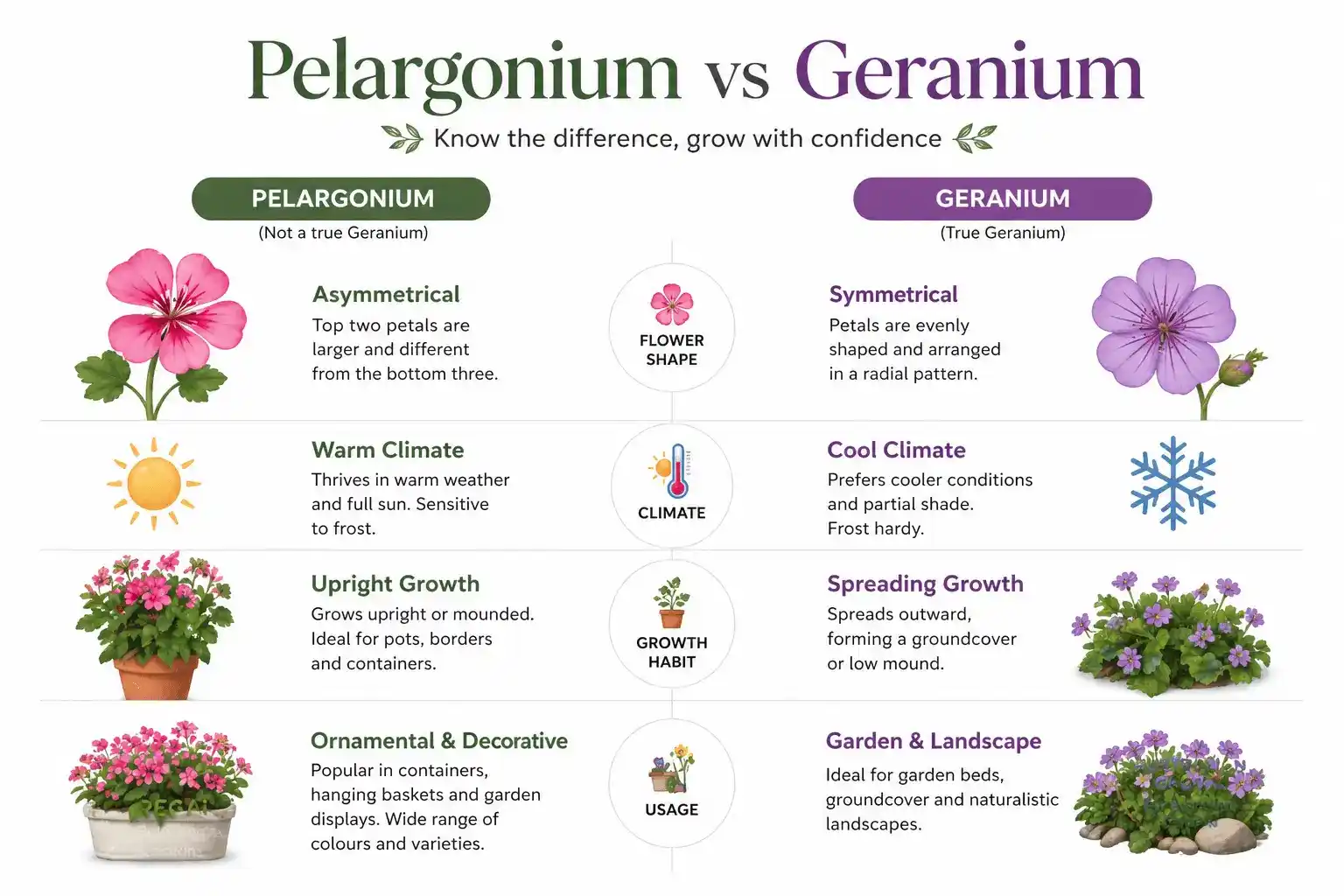
Pelargoniums differ from true geraniums primarily in flower structure, growth habit, and climate preference. Pelargoniums have asymmetrical flowers and are adapted to warmer climates, while geraniums have symmetrical flowers and tolerate cooler environments.
Key differences include:
- Flower symmetry: Pelargoniums are asymmetrical; geraniums are symmetrical
- Leaf shape: Pelargoniums often have rounded or zoned leaves; geraniums have deeply divided leaves
- Growth habits: Pelargoniums grow upright or trailing; geraniums spread as ground cover
- Climate adaptability: Pelargoniums prefer warm, dry climates like Australia
Many gardeners misidentify pelargoniums as geraniums, especially when discussing color variations—this confusion is explained further in Yellow Geraniums: 7+ Truths About Color & Types, which clarifies naming and classification differences.
Comparison Table: Pelargonium vs Geranium
| Feature | Pelargonium | Geranium |
| Flower Shape | Asymmetrical | Symmetrical |
| Climate | Warm climates | Cooler climates |
| Common Use | Ornamental pots | Ground cover |
In Australia, confusion often arises with terms like red geranium or yellow geranium Australia, which usually refer to pelargoniums. Keywords such as pelargonium vs geranium Australia and australian native geranium highlight this ongoing mix-up.
Native Pelargonium Species in Australia
Focus on Pelargonium australe
Pelargonium australe is a native pelargonium Australia species found in coastal and inland regions. It grows naturally in sandy or well-drained soils and produces soft pink to white flowers. This species is often called a native geranium Australia, although it belongs to the pelargonium genus.
It plays an ecological role by:
- Supporting native pollinators
- Adapting to dry and coastal conditions
- Contributing to local biodiversity
Other Native and Naturalized Types
Other species such as Pelargonium rodneyanum are also found in Australia. Native geraniums differ from cultivated varieties in their resilience and adaptability. Australian native geraniums typically require less maintenance and are better suited to local climates compared to ornamental pelargoniums.
Popular Pelargonium Australia Varieties
Common Cultivated Types
Pelargonium Australia varieties include several widely grown ornamental types:
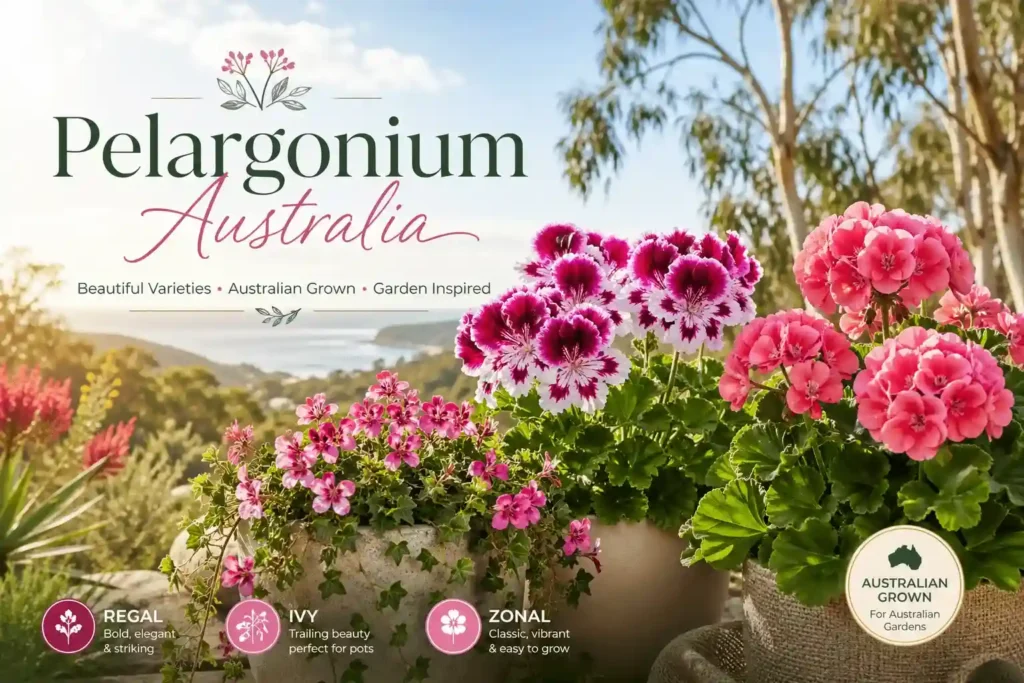
- Regal pelargoniums: Known for large, decorative flowers
- Ivy pelargoniums: Trailing or climbing forms used in hanging baskets
- Zonal pelargoniums: Upright plants with distinctive leaf markings
These varieties are selected based on climate, appearance, and growth habit.
Notable Named Varieties
Some well-known cultivated varieties include:
- Pelargonium ‘Attar of Roses’ – valued for its fragrance
- Pelargonium ‘Australian Pink Rambler’ – popular trailing type
- Pelargonium ‘Australian Mystery’ – known for unique blooms
Choosing the best pelargonium Australia variety depends on environmental conditions and aesthetic preferences.
Plant Size and Growth Characteristics
Typical Size and Spread
Pelargonium plants vary in size depending on type and environment:
- Height: 30 cm to 1 meter
- Spread: 30 cm to 60 cm
Native pelargoniums are often smaller and more compact, while cultivated types can grow larger.
Indoor vs Outdoor Growth
- Indoor plants remain smaller due to limited space and light
- Outdoor plants grow larger with more sunlight and airflow
Factors influencing size include:
- Sunlight exposure
- Soil quality
- Pot size
Growth Rate and Seasonal Behavior
Growth Speed and Patterns
Pelargoniums generally have a moderate to fast growth rate, depending on conditions. Growth accelerates during warmer months.
Seasonal Behavior in Australia
- Spring and summer: Active growth and flowering
- Autumn: Slower growth
- Winter: Dormancy or reduced activity in cooler regions
Climate zones across Australia affect pelargoniums Australia growing conditions, with warmer areas supporting year-round growth.
Pelargonium Australia Care Guide
Watering and Soil Needs
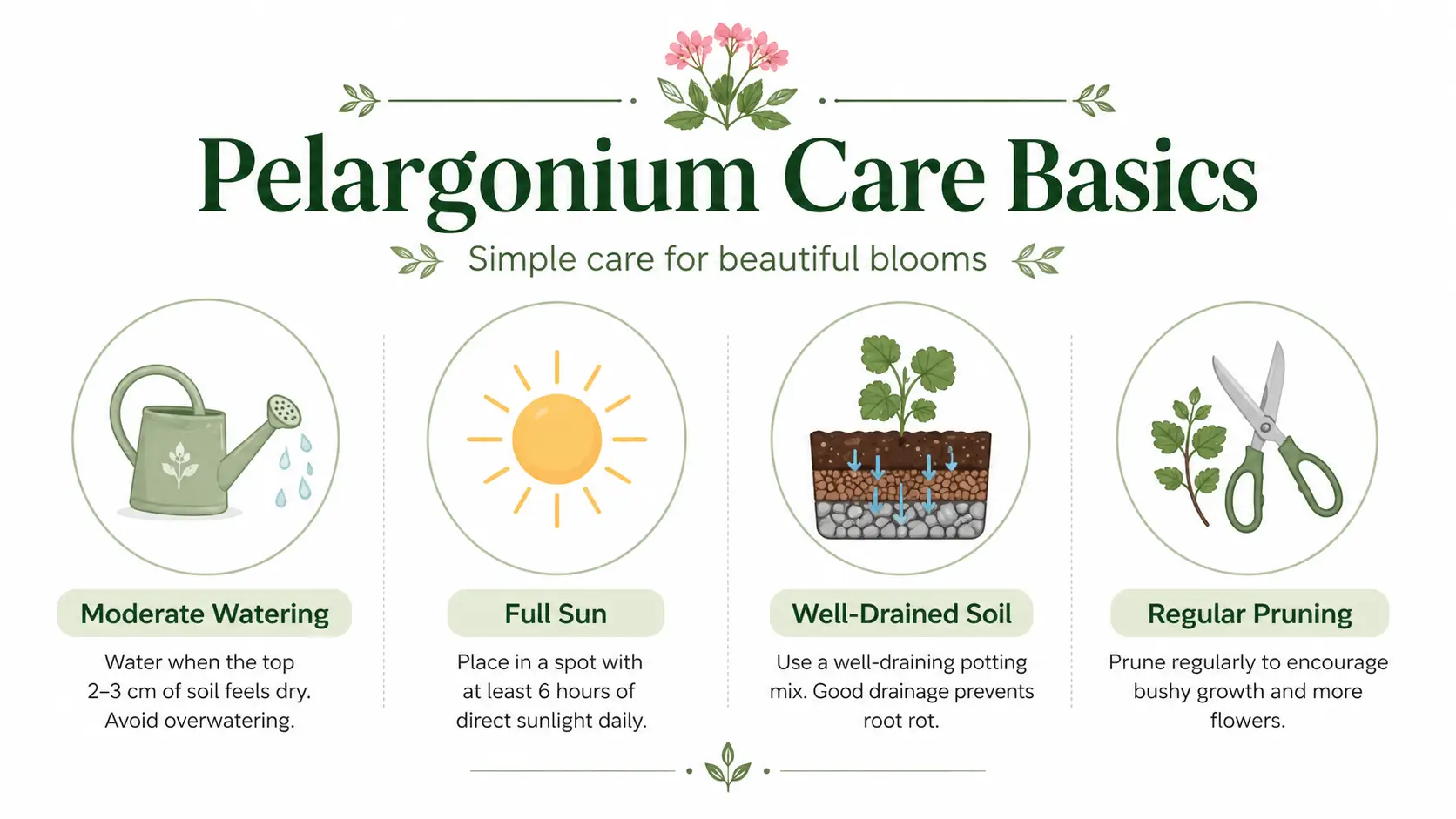
Pelargoniums require well-draining soil to prevent root rot. Overwatering is a common issue.
Best practices:
- Water when the topsoil is dry
- Use sandy or loamy soil
- Ensure proper drainage
Light and Temperature Requirements
- Full sun to partial shade is ideal
- Most pelargoniums are sensitive to frost
Maintenance Practices
- Pruning encourages bushy growth
- Fertilizing supports flowering
- Basic pest control prevents infestations
These practices align with general pelargonium Australia care and native geranium care principles.
Similar to other Australian ornamentals, care practices like pruning and sunlight management also apply to plants such as Kangaroo Paw Care: 6+ Essential Tips for Healthy Blooms, which thrive under comparable conditions.
Common Problems and Solutions
Why Leaves Turn Yellow or Plants Decline
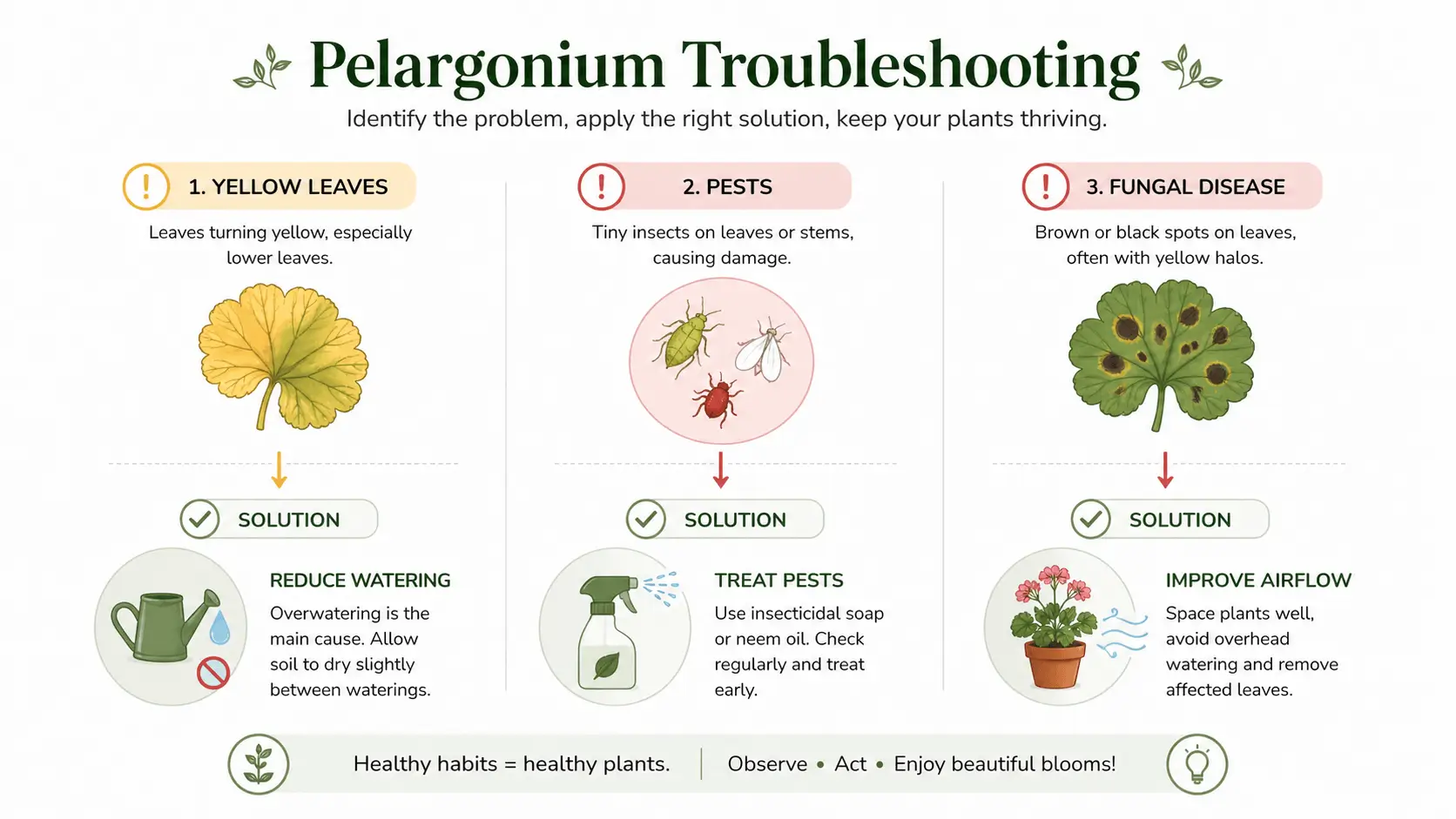
Yellowing leaves are often caused by overwatering, poor drainage, or nutrient deficiencies.
Pests and Diseases
Common issues include:
- Aphids
- Fungal infections
How to Fix and Prevent Issues
- Reduce watering frequency
- Improve airflow around plants
- Use appropriate treatments like organic sprays
Wild geranium species are typically more resilient than cultivated pelargoniums.
Beginner Mistakes to Avoid
Common mistakes include:
- Overwatering pelargoniums
- Confusing geranium vs pelargonium care requirements
- Planting in poorly drained soil
Avoiding these errors improves plant health and longevity.
Pelargonium Propagation Methods
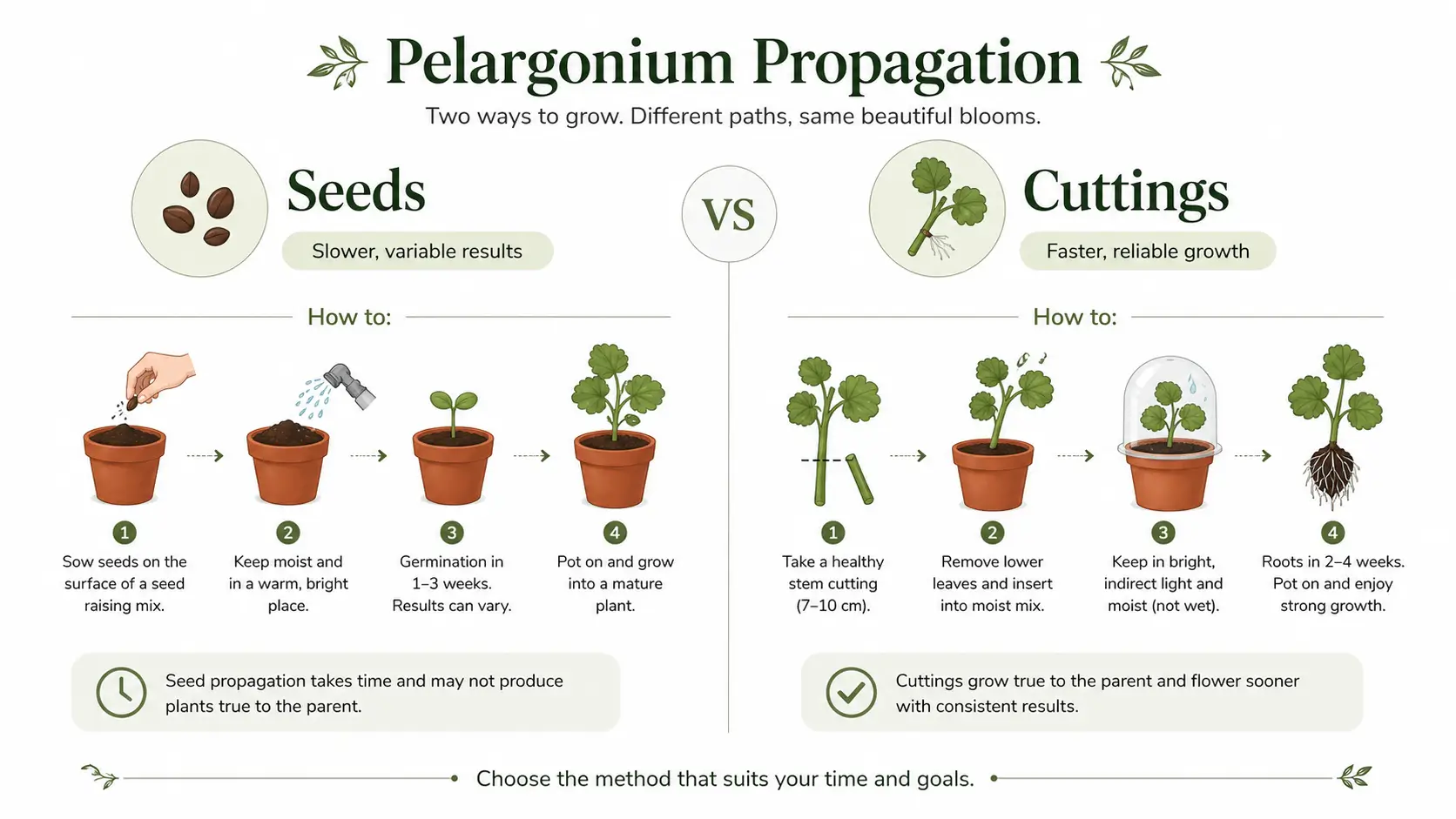
Growing from Seeds vs Cuttings
Pelargoniums can be propagated through:
- Seeds: Slower and less predictable
- Cuttings: Faster and more reliable
Best Conditions for Success
- Warm temperatures
- Moderate humidity
- Indirect sunlight
Pelargonium cuttings Australia methods are widely preferred for consistent results.
Environmental and Landscaping Uses
Pelargoniums are versatile in landscaping and gardening:
- Garden borders: Add color and structure
- Pots and containers: Suitable for patios and balconies
- Hanging baskets: Ideal for ivy pelargoniums
They are commonly used alongside geraniums Australia in decorative planting schemes.
For ground coverage alongside pelargoniums, plants like Australian Violet Ground Cover: Care, Growth & Uses Guide are often used to create layered and visually balanced garden designs.
Conclusion
Pelargonium Australia includes both native species like Pelargonium australe and a wide range of cultivated varieties suited to different environments. Understanding the differences between pelargoniums and geraniums helps improve plant selection and care. With proper watering, sunlight, and maintenance, pelargoniums can thrive in many Australian climates. The key takeaway is to choose the right variety and adapt care practices to local conditions for the best results. For a broader understanding of plant care, types, and growing techniques, refer to our complete resource on Plants: Benefits and Guides (Complete Care, Types & Growing Tips).
FAQs
1. What is the difference between pelargonium and geranium in Australia?
Pelargoniums have asymmetrical flowers and prefer warmer climates, while true geraniums have symmetrical flowers and tolerate cooler conditions.
2. Is Pelargonium australe native to Australia?
Yes, Pelargonium australe is an Australian native species commonly referred to as a native geranium.
3. What are the best pelargonium varieties for Australian gardens?
Popular options include regal, ivy, and zonal pelargoniums, depending on climate and garden style.
4. How do you care for pelargoniums in Australia?
They require well-drained soil, moderate watering, plenty of sunlight, and protection from frost.
5. Can pelargoniums be grown from cuttings?
Yes, pelargoniums are commonly propagated from cuttings, which root easily under the right conditions.