
Introduction
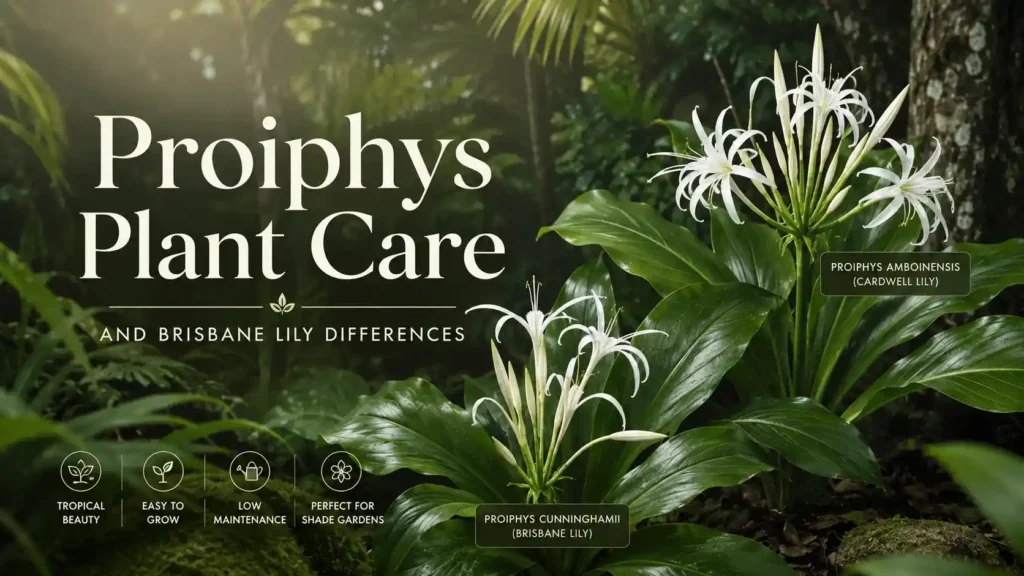
Proiphys is a genus of tropical flowering plants admired for its broad ornamental foliage and fragrant white blooms. Popular species such as the brisbane lily and cardwell lily are commonly cultivated in shaded gardens and subtropical landscapes because of their lush appearance and low-maintenance growth habits. The proiphys plant belongs to the Amaryllidaceae family and includes species like proiphys cunninghamii and proiphys amboinensis, both valued by collectors and tropical garden enthusiasts. These plants naturally grow in rainforest environments where warmth, humidity, and filtered light support healthy foliage and flowering. Their elegant leaves and lily-like flowers make them highly suitable for decorative planting in humid climates. Proiphys species are also commonly featured in broader tropical plant collections and indoor foliage guides because of their ornamental value and low-maintenance growth habits.
Quick Summary
- Proiphys is a genus of tropical bulb-forming plants known for broad leaves and white lily-like flowers.
- Proiphys cunninghamii is commonly called the brisbane lily, while proiphys amboinensis is often known as the cardwell lily.
- These plants thrive in warm, humid, shaded environments with well-draining soil.
- Proper watering, humidity, and protection from frost are key to healthy growth.
What Is Proiphys?
Proiphys is a genus of tropical perennial bulb plants within the Amaryllidaceae family. These plants are recognized for their large glossy leaves, fragrant flowers, and rainforest-adapted growth habits. Botanically, proiphys belongs to the Amaryllidaceae family, a group of flowering bulb plants widely distributed across tropical and subtropical regions.
The term “proiphys meaning” originates from botanical naming conventions used to classify tropical bulb species within the amaryllis family. Botanically, proiphys species share similar flower structures, bulb growth patterns, and foliage characteristics.
Commonly recognized species include:
- proiphys cunninghamii
- proiphys amboinensis
- proiphys alba
- proiphys infundibularis
These species are grouped together because they produce bulb-based root systems, broad tropical foliage, and clusters of white funnel-shaped flowers. Most originate from tropical rainforests in Australia, Southeast Asia, and nearby humid regions.
Common Names and Regional Identification
The brisbane lily refers primarily to proiphys cunninghamii, while the cardwell lily usually describes proiphys amboinensis. Nurseries and plant collectors may also label them as the brisbane lily plant or cardwell lily proiphys amboinensis.
Naming confusion is common because spellings and regional terms vary. For example:
- “cardwell lilly” is a frequent misspelling of cardwell lily
- “brisbane lily proiphys cunninghamii” specifically identifies the Australian species
- “cardwell lily proiphys amboinensis” distinguishes the tropical species from related plants
Plant names may vary between Australia, tropical Asia, and commercial nursery catalogs.
Key Proiphys Species and Their Differences
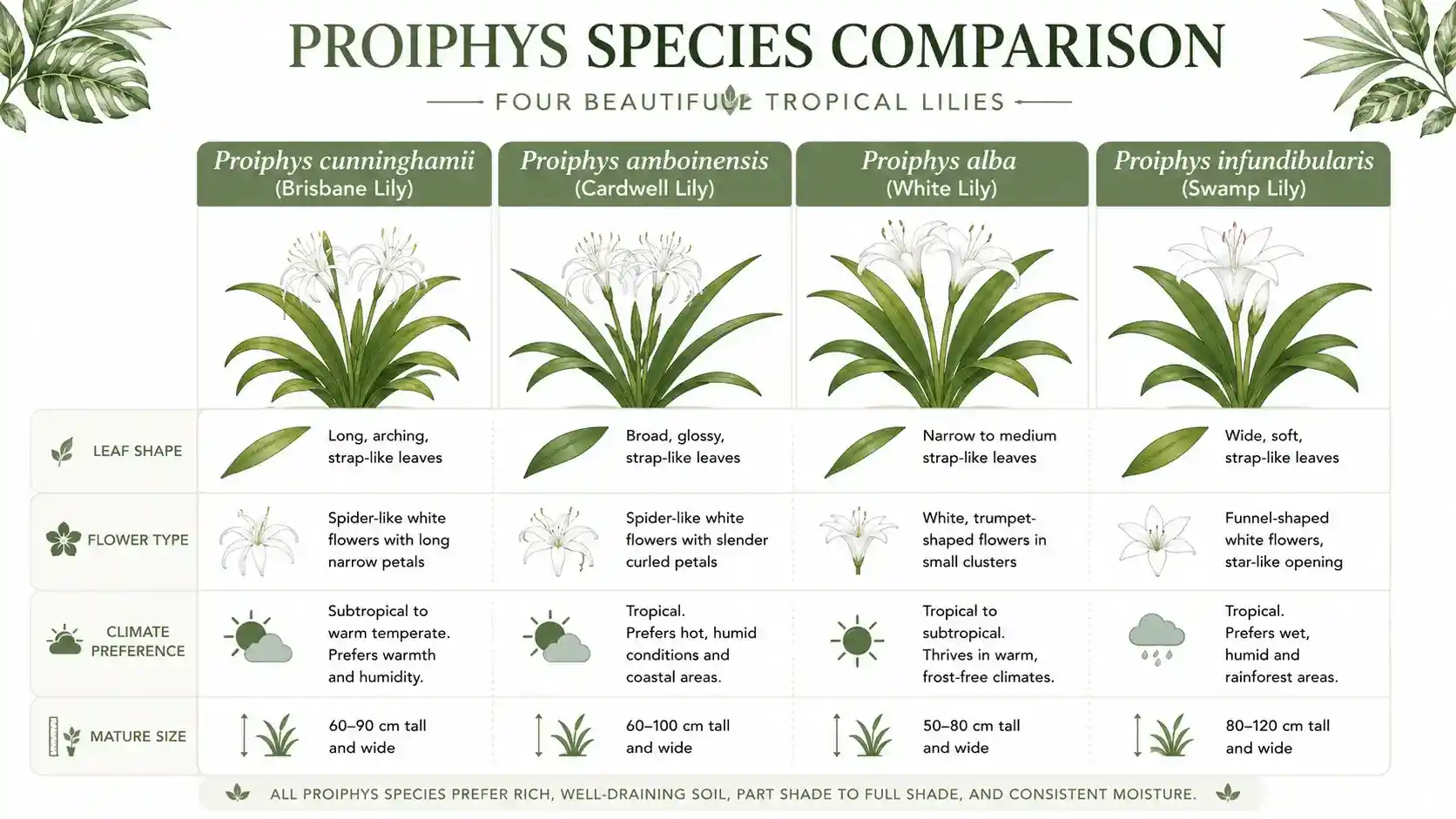
Different proiphys species vary in foliage texture, climate preference, and flower size.
| Species | Leaf Appearance | Flower Characteristics | Climate Preference | Growth Habit |
| Proiphys alba | Broad green leaves | White fragrant blooms | Tropical | Compact |
| Proiphys infundibularis | Glossy upright foliage | Funnel-shaped flowers | Humid subtropical | Moderate spread |
| Proiphys amboinensis | Large tropical leaves | White clustered flowers | Warm tropical | Dense foliage |
| Proiphys cunninghamii | Rounded glossy leaves | Fragrant star-like flowers | Rainforest subtropical | Clumping |
Proiphys Cunninghamii (Brisbane Lily)
Proiphys cunninghamii brisbane lily is a rainforest species native to eastern Australia. It is recognized for its rounded glossy foliage and fragrant white flowers that emerge above dense green leaves.
The brisbane lily proiphys cunninghamii grows naturally in humid forest understories with filtered sunlight and rich organic soil. Gardeners value this species for ornamental shade planting because it tolerates humid environments better than many flowering bulbs.
Common identifying characteristics include:
- Large circular leaves
- Thick bulb base
- Fragrant white blooms
- Compact clumping growth habit
Proiphys Amboinensis (Cardwell Lily)
Proiphys amboinensis common name is typically cardwell lily. This tropical species grows in humid rainforest conditions and develops broad lush foliage with striking white flowers.
The botanical reference proiphys amboinensis l herb identifies its scientific classification in botanical records. Proiphys amboinensis cardwell lily is commonly grown in warm climates where humidity remains consistently high.
Notable characteristics include:
- Large tropical leaves
- Dense bulb structure
- Fragrant flowers in clusters
- Preference for warm temperatures
Table Section — Comparing Popular Proiphys Species
| Species Name | Common Name | Mature Size | Leaf Appearance | Flower Characteristics | Climate Tolerance | Ideal Growing Conditions |
| Proiphys cunninghamii | Brisbane Lily | 60–90 cm | Rounded glossy leaves | White fragrant flowers | Subtropical | Humid shade |
| Proiphys amboinensis | Cardwell Lily | 70–100 cm | Broad tropical leaves | Clustered white blooms | Tropical | Warm humidity |
| Proiphys alba | White Proiphys | 40–70 cm | Compact foliage | Small white flowers | Tropical | Filtered light |
| Proiphys infundibularis | Funnel Proiphys | 50–80 cm | Upright leaves | Funnel-shaped blooms | Humid subtropical | Moist organic soil |
Ideal Growing Conditions for Proiphys Plants
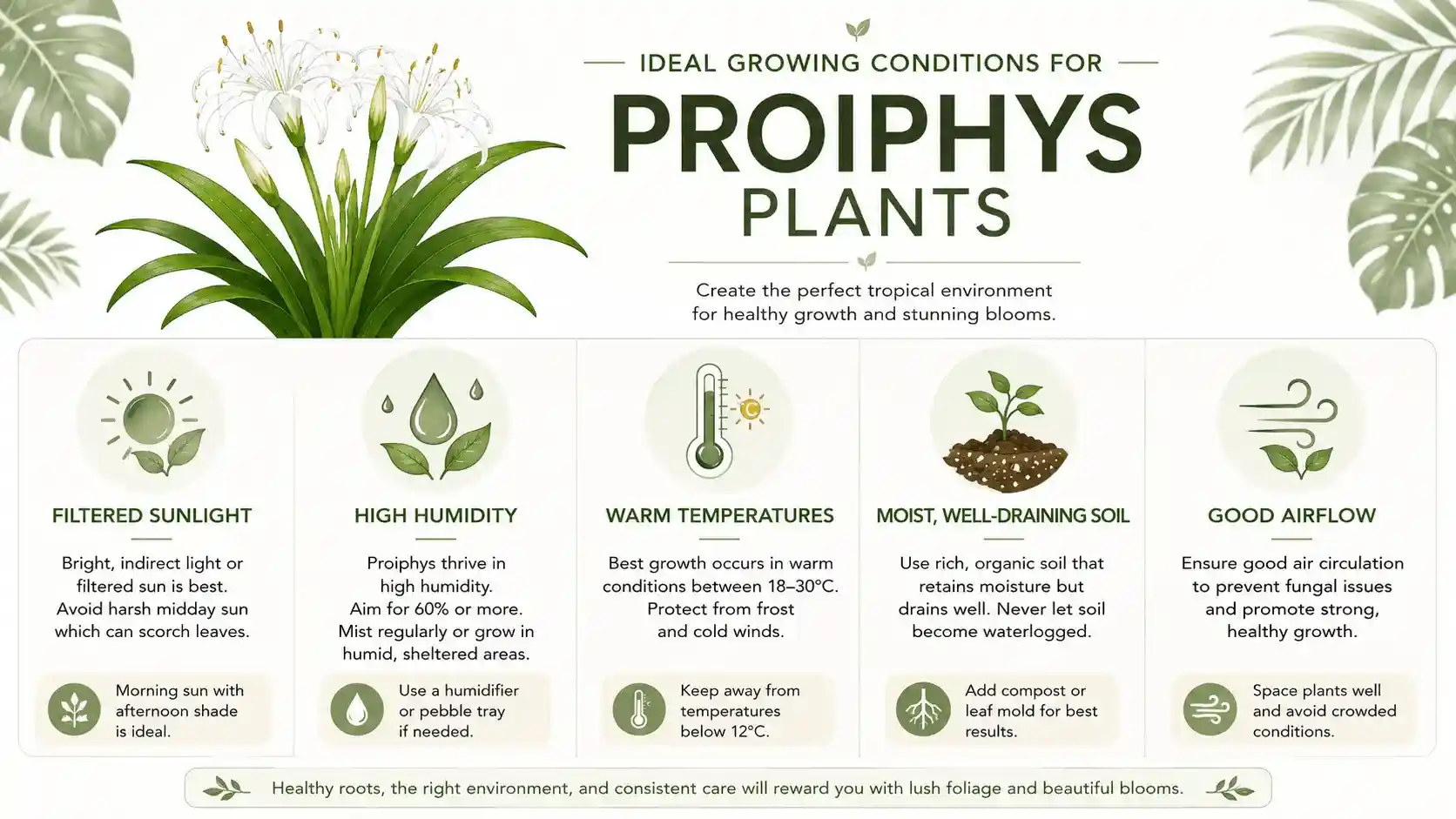
The proiphys plant grows best in warm, humid environments with filtered light and excellent drainage. Caring for an proiphys amboinensis requires balancing moisture, humidity, and airflow.
Ideal conditions include:
- High humidity
- Indirect sunlight
- Temperatures above 15°C
- Organic well-draining soil
- Moderate airflow around foliage
Excessively dry air or compacted soil can reduce flowering and damage roots.
Light Requirements and Shade Tolerance
Proiphys plants prefer filtered or indirect light because their rainforest origins naturally protect them from intense sun exposure. Direct afternoon sunlight can scorch leaves and cause moisture stress.
Best lighting conditions include:
- Morning sunlight
- Bright filtered shade
- Covered patios
- Tree canopy protection
Soil and Moisture Needs
Rich organic soil with moisture retention and proper drainage is essential for healthy bulb development. Soil should remain lightly moist but never waterlogged.
Overwatering can cause:
- Root rot
- Bulb decay
- Yellowing leaves
- Fungal disease
Adding compost and coarse organic matter improves drainage balance.
Climate and Temperature Considerations
Proiphys species thrive in tropical and subtropical climates with warm temperatures and steady humidity. Most species are highly frost sensitive.
Recommended temperature conditions:
- Ideal range: 18°C–30°C
- Avoid freezing temperatures
- Protect from cold winds
- Maintain humidity during dry seasons
Winter frost can damage foliage and dormant bulbs.
Plant Size and Growth Habit
Most proiphys species develop broad foliage with mature heights ranging from 40 cm to 100 cm depending on species and growing conditions. Outdoor-grown plants generally become larger due to unrestricted root development. Indoor container specimens often remain more compact. The glossy foliage of proiphys species also makes them visually similar to several house plants with waxy leaves commonly used in tropical indoor displays.
Leaf growth patterns include:
- Seasonal flushes during warm months
- Slower growth during cooler periods
- Dense foliage spread in humid climates
Indoor vs Outdoor Growth Differences
Proiphys plants usually grow more vigorously outdoors because humidity, airflow, and root space are greater in garden environments.
Indoor growth may result in:
- Smaller leaves
- Reduced flowering
- Slower bulb expansion
- Increased humidity requirements
Containers also limit root spread and nutrient availability. Gardeners who enjoy humidity-loving foliage plants often grow proiphys alongside species discussed in the Japanese Money Plant Care guide because both benefit from indirect light and balanced moisture.
Growth Rate and Seasonal Development
Proiphys species are moderate growers under favorable conditions. Growth speed depends heavily on temperature, humidity, and soil quality.
Typical growth cycle includes:
- Active foliage growth in warm seasons
- Flowering during humid periods
- Slower winter growth
- Partial dormancy in cooler climates
Consistent warmth accelerates growth and flowering performance.
Care Guide for Proiphys Plants
Caring for an proiphys amboinensis or related species involves proper watering, feeding, humidity control, and periodic repotting.
Basic care recommendations include:
- Water regularly during active growth
- Use balanced fertilizer monthly
- Remove damaged foliage
- Repot crowded bulbs
- Maintain humidity around leaves
Beginner gardeners often succeed when soil drainage and indirect light are managed correctly.
Watering Schedule and Drainage Tips
Watering frequency should change seasonally. During active growth, soil should remain evenly moist. During cooler periods, watering should decrease slightly.
Drainage tips include:
- Use pots with drainage holes
- Avoid standing water
- Allow upper soil to dry slightly between watering
- Reduce watering during dormancy
Fertilizing and Soil Nutrition
Balanced fertilizers support healthy foliage and flowering. Organic compost and slow-release nutrients improve long-term soil quality.
Common nutrient deficiencies may cause:
- Pale leaves
- Weak flowering
- Slow growth
- Leaf edge discoloration
A balanced liquid fertilizer applied monthly during growth periods is usually sufficient.
Repotting and Bulb Division
Mature plants can be divided through bulb offsets during repotting. Division is usually performed during active growth recovery periods.
Steps include:
- Remove plant carefully from soil
- Separate healthy offsets
- Trim damaged roots
- Replant in fresh organic soil
- Water lightly after transplanting
Common Problems With Proiphys Plants and How to Fix Them
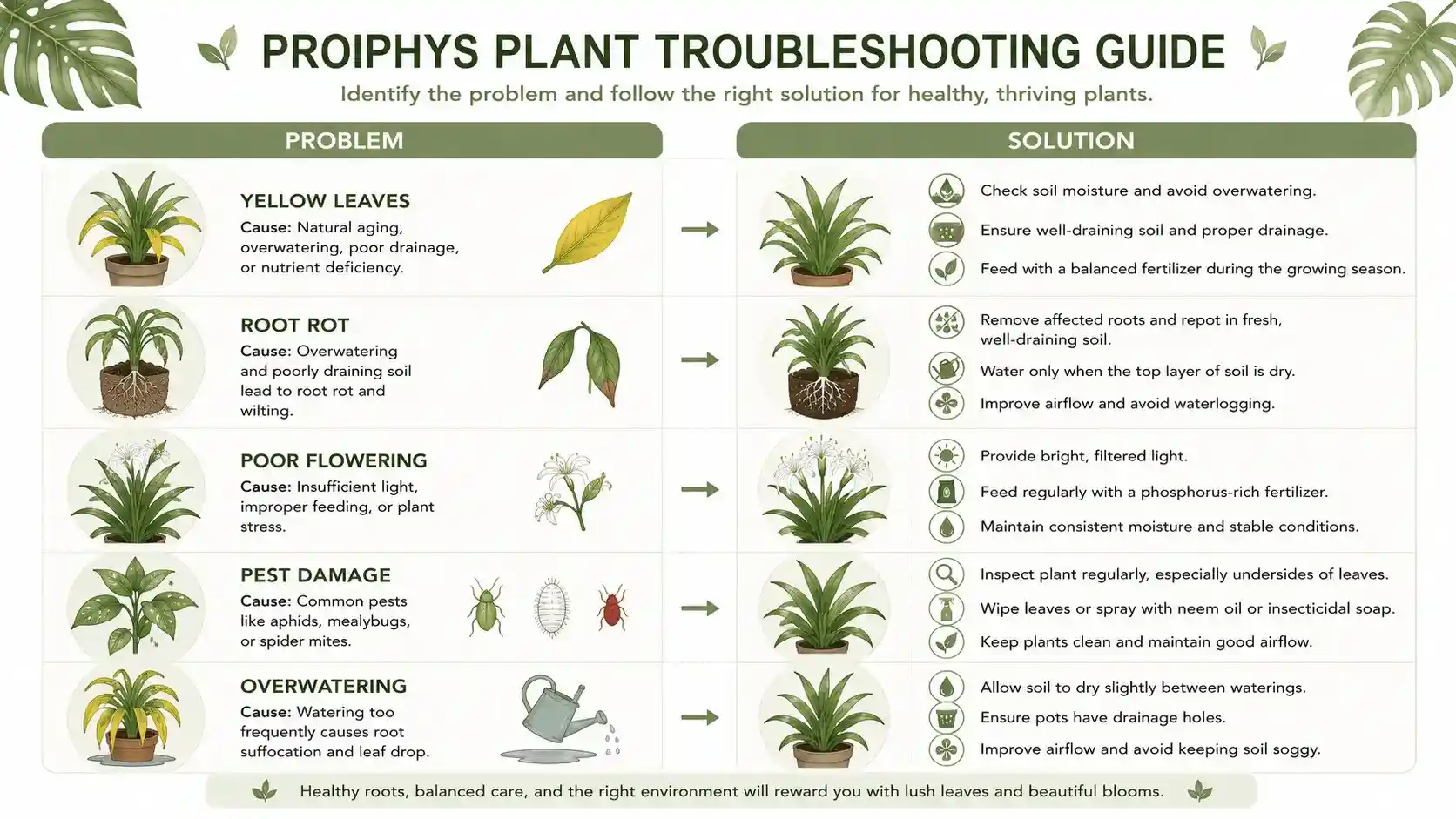
Common proiphys plant issues include yellow leaves, poor flowering, root rot, and pest infestations. Most problems are caused by moisture imbalance or unsuitable growing conditions.
Why Leaves Turn Yellow
Leaves usually turn yellow because of watering imbalance, poor drainage, nutrient deficiency, or excessive sun exposure.
Possible causes include:
- Overwatering
- Dry soil stress
- Compacted soil
- Direct harsh sunlight
- Nitrogen deficiency
Correcting watering habits and improving drainage often resolves the issue.
Preventing Root Rot and Bulb Damage
Root rot develops when bulbs remain in overly wet soil for extended periods. Fungal pathogens thrive in poorly drained growing conditions.
Prevention strategies include:
- Use free-draining soil mixes
- Avoid excessive watering
- Improve airflow
- Remove infected roots quickly
- Keep containers elevated from standing water
Common Pests and Environmental Stress
Snails, slugs, and fungal diseases are common problems in humid environments. Excess humidity without airflow may encourage fungal spread.
Environmental stress symptoms include:
- Browning leaves
- Wilting foliage
- Reduced flowering
- Fungal spotting
Beginner Mistakes When Growing Brisbane Lily and Cardwell Lily
Common mistakes when growing brisbane lily and cardwell lily include planting in direct sunlight, poor drainage management, overcrowding, and excessive watering.
Frequent beginner errors include:
- Using compacted soil
- Ignoring humidity needs
- Planting bulbs too deeply
- Allowing standing water
- Growing in low-humidity indoor areas
Comparing Brisbane Lily vs Cardwell Lily
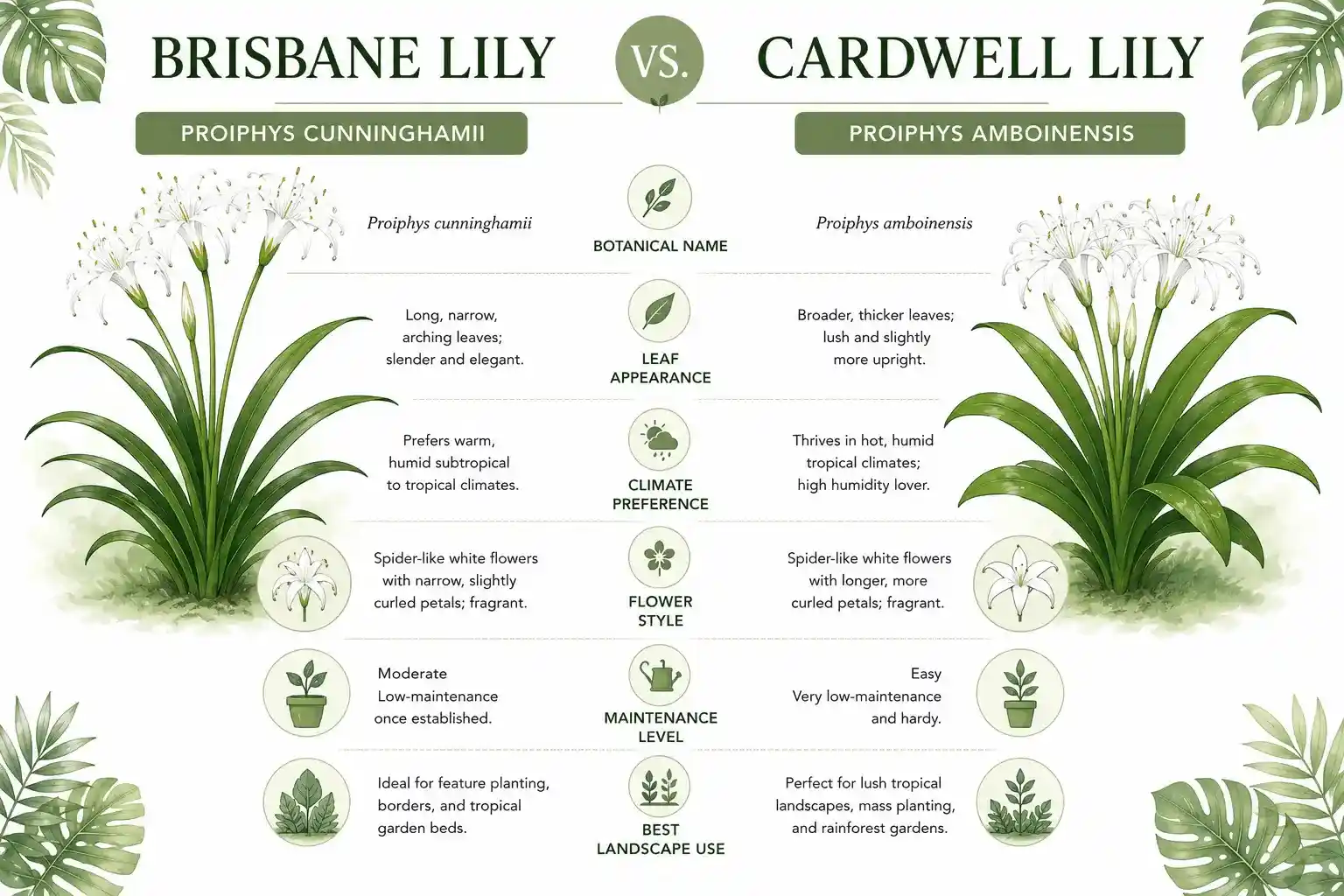
The brisbane lily and cardwell lily differ in climate preference, foliage size, and growth habits. Both belong to the proiphys genus but adapt differently to environmental conditions.
Table Section — Brisbane Lily vs Cardwell Lily
| Feature | Brisbane Lily | Cardwell Lily |
| Botanical Name | Proiphys cunninghamii | Proiphys amboinensis |
| Leaf Shape | Rounded glossy leaves | Large tropical leaves |
| Flower Appearance | Star-like white blooms | Clustered white flowers |
| Climate Preference | Subtropical rainforest | Tropical humid climate |
| Maintenance Level | Moderate | Moderate to high humidity needs |
| Landscape Use | Shade gardens | Tropical landscapes |
Landscaping and Decorative Uses for Proiphys
Proiphys plants are widely used in shaded gardens, rainforest-style landscaping, and decorative container arrangements.
Popular uses include:
- Tropical understory planting
- Humid courtyard gardens
- Decorative patio containers
- Rainforest-style borders
Their broad leaves create strong visual contrast against finer foliage plants. Because of their broad tropical foliage, proiphys plants are frequently combined with other large leaf plants in Australia to create dense rainforest-style garden designs.
Best Companion Plants for Proiphys
Suitable companion plants include tropical foliage species that thrive in similar humidity and shade conditions.
Recommended companions:
- Ferns
- Calatheas
- Philodendrons
- Alocasias
- Peace lilies
- Bromeliads
These plants create layered tropical displays with contrasting textures.
Where Proiphys Plants Grow Best
Proiphys plants grow best in rainforest environments, subtropical gardens, and humidity-rich tropical climates.
Ideal cultivation regions include:
- Coastal subtropical areas
- Humid tropical gardens
- Protected shaded landscapes
- Warm greenhouse environments
Environmental limitations include frost, prolonged drought, and dry indoor air.
Availability and Plant Buying Considerations
Searches for proiphys plant for sale, proiphys cunninghamii for sale, and proiphys amboinensis for sale are increasingly common among collectors and tropical garden enthusiasts.
Terms like:
- proiphys cunninghamii buy
- brisbane lily proiphys cunninghamii for sale
- dreamkillers proiphys cunninghamii
often appear in specialty nursery listings and collector communities.
When sourcing plants, buyers should evaluate:
- Bulb condition
- Root health
- Foliage quality
- Nursery reputation
- Climate compatibility
How to Choose a Healthy Proiphys Plant
Healthy proiphys plants should have firm bulbs, vibrant foliage, and healthy root systems without signs of rot.
Signs of quality include:
- Firm bulbs without soft spots
- Bright green leaves
- Strong root systems
- No fungal odor
- Absence of pests or leaf damage
Avoid plants with yellow collapsing leaves or mushy bulbs.
Conclusion
Proiphys species are tropical ornamental plants valued for their lush foliage, fragrant flowers, and suitability for shaded landscapes. Understanding the differences between the brisbane lily and cardwell lily helps gardeners provide proper environmental conditions for healthy growth. Proiphys cunninghamii generally adapts well to subtropical rainforest gardens, while proiphys amboinensis thrives in warm tropical climates with high humidity. Successful cultivation depends on filtered light, balanced moisture, rich organic soil, and frost protection. With proper care, proiphys plants can become long-lasting decorative features in tropical and subtropical gardens.
FAQs
What is proiphys?
Proiphys is a genus of tropical bulb-forming plants within the Amaryllidaceae family known for broad leaves and fragrant white flowers.
What is the difference between Brisbane lily and Cardwell lily?
The brisbane lily refers to proiphys cunninghamii, while the cardwell lily usually refers to proiphys amboinensis. They differ in climate preference, foliage size, and growth habit.
How do you care for a proiphys amboinensis plant?
Caring for a proiphys amboinensis plant involves filtered light, humid conditions, moist but well-draining soil, and protection from frost.
Does proiphys grow better indoors or outdoors?
Proiphys generally grows better outdoors in humid subtropical or tropical conditions where airflow and root space are greater.
Why are the leaves on my proiphys turning yellow?
Yellow leaves are commonly caused by overwatering, poor drainage, nutrient deficiency, or excessive direct sunlight.
How often should proiphys plants be watered?
Proiphys plants should be watered regularly during active growth while allowing slight drying between watering sessions to prevent root rot.