
Introduction
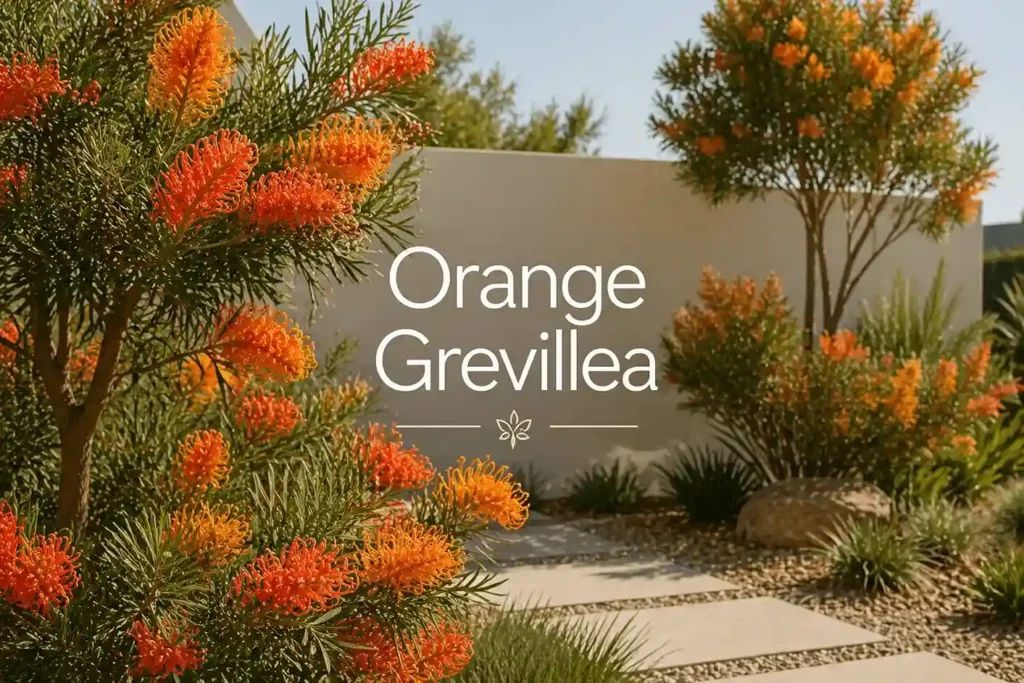
Orange grevillea refers to a group of ornamental plants within the Grevillea genus, widely valued for their bright orange flowers, drought tolerance, and adaptability. These plants belong to the Proteaceae family and are native primarily to Australia. Orange grevillea varieties range from compact ground covers to shrubs and small tree forms, making them suitable for diverse landscape applications. Their nectar-rich flowers attract birds, bees, and other pollinators, contributing to ecological balance. With proper care, these plants provide long-lasting color, low maintenance requirements, and strong resilience in dry or coastal environments. Orange grevillea refers to a group of ornamental plants within the Grevillea genus, widely valued for their bright orange flowers, drought tolerance, and adaptability.
Quick Summary
- Orange grevillea includes multiple cultivars such as grevillea blood orange, orange marmalade grevillea, and grevillea orange wow
- Growth forms vary from ground cover to orange grevillea tree structures
- Known for drought tolerance, fast growth, and vibrant grevillea orange flower displays
- Requires well-drained soil, minimal watering, and low-phosphorus feeding
- Regular pruning improves plant structure, density, and flowering
What Is Orange Grevillea and How Does It Differ From Other Grevillea Types?
Orange grevillea is a subgroup of the Grevillea genus characterized by orange-toned flowers, ranging from pale orange to deep burnt orange shades. Unlike other grevillea types that may produce pink, red, or yellow blooms, orange grevillea varieties are specifically selected for their warm-toned floral display.
For a broader understanding of the genus, see this detailed grevillea types and care guide based on the .
These plants exist in multiple growth forms:
- Grevillea bush (shrub): Medium-sized and dense, suitable for hedging
- Grevillea tree: Taller varieties with upright growth used as focal points
- Ground cover grevillea: Low-growing, spreading plants for soil coverage
Naming confusion may occur with terms like “grevillia tree,” which is a misspelling. The correct botanical term is Grevillea. Color variations include:
- Bright orange grevillea
- Burnt orange grevillea
- Yellow orange grevillea
- Red orange grevillea
Popular Orange Grevillea Varieties and Cultivars
Key Named Varieties and Their Features
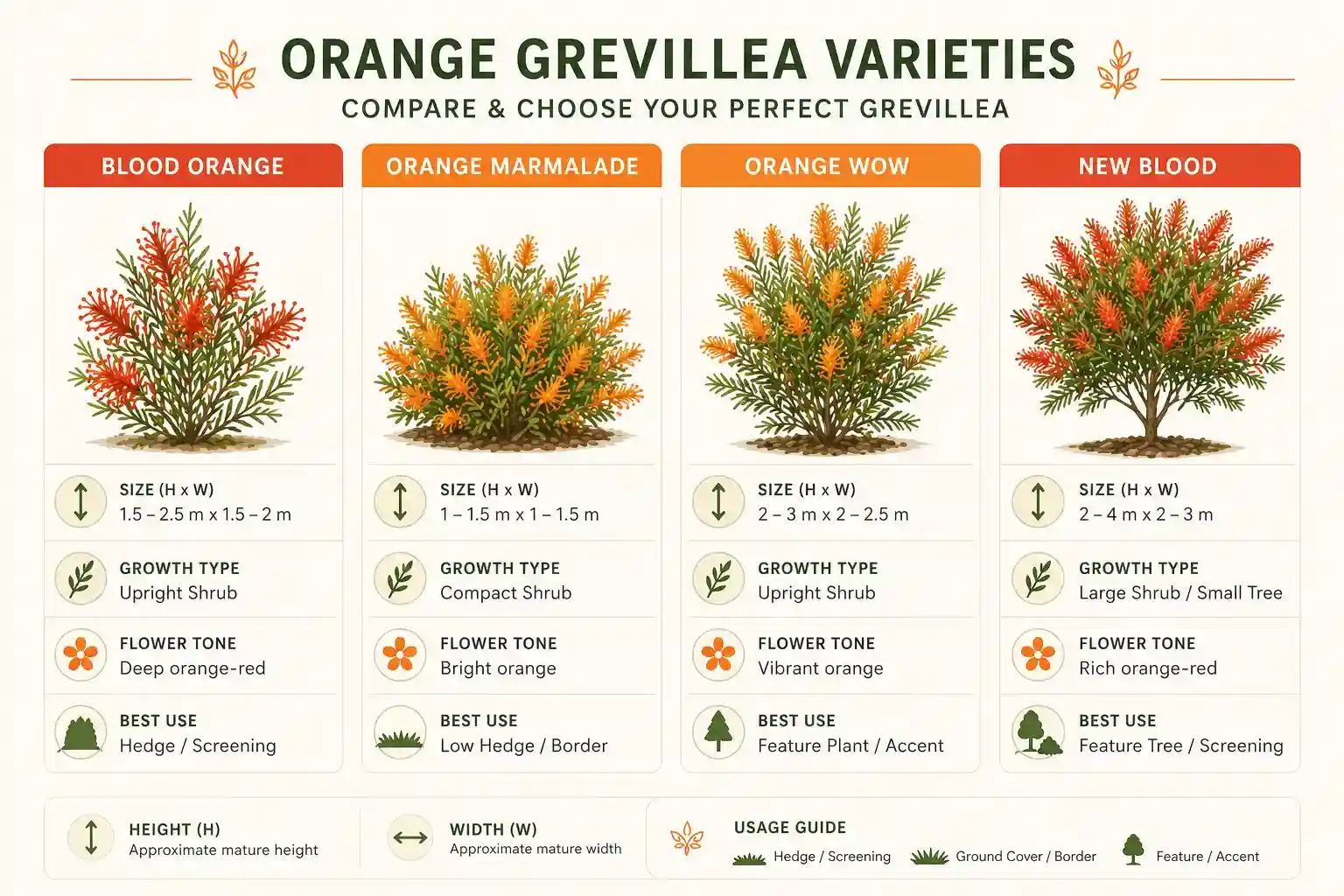
Several orange grevillea cultivars are widely grown due to their unique growth habits and flower colors:
- Grevillea ‘Blood Orange’ (grevillea blood orange): Compact shrub with deep orange flowers
- Orange Marmalade Grevillea (grevillea orange marmalade): Medium shrub with soft orange blooms
- Grevillea ‘Orange Wow’: Vigorous, fast-growing with bright orange flowers
- Grevillea ‘New Blood’: Dense, low-growing shrub with intense orange-red tones
- Grevillea olivacea (grevillea olivacea orange): Hardy shrub with muted orange flowers
- Carramar Orange Grevillea: Known for consistent flowering and adaptability
- Orange Flame / Orange Glow Grevillea: Bright flowering cultivars with vivid orange tones
Flower shades vary from pale orange to orange-yellow grevillea tones, depending on cultivar.
Table: Comparison of Orange Grevillea Varieties
| Variety Name | Growth Type | Flower Color Tone | Mature Size | Best Use |
| Blood Orange | Shrub | Deep orange | 1–1.5 m | Hedging |
| Orange Marmalade | Shrub | Soft orange | 2–3 m | Landscaping |
| Orange Wow | Shrub/tree | Bright orange | 3–4 m | Feature plant |
| New Blood | Ground cover/shrub | Orange-red | 0.5–1 m | Ground cover |
| Grevillea olivacea | Shrub | Muted orange | 2–3 m | Screening |
| Carramar Orange | Shrub | Bright orange | 1–2 m | Garden borders |
Growth Forms: Tree, Shrub, or Ground Cover?
Understanding Plant Structure
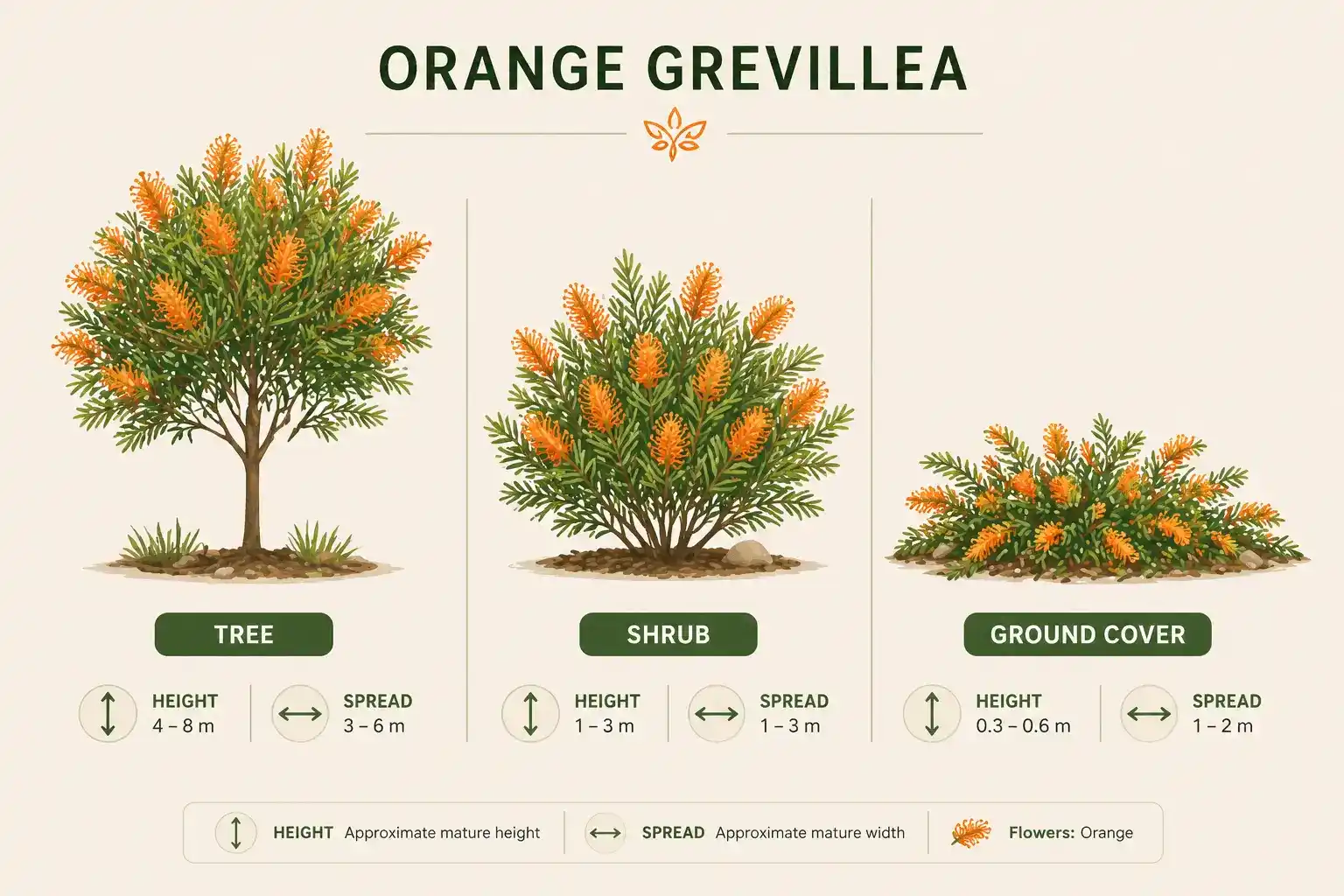
Orange grevillea plants can grow in three primary forms:
- Tree form: Upright growth reaching several meters
- Shrub form: Bushy and dense with moderate height
- Ground cover: Low-growing and spreading
The growth habit influences spacing, pruning, and placement within a garden.
When to Choose Each Type
- Tree form: Ideal for shade or focal landscaping elements
- Shrub: Suitable for hedging, privacy screens, or borders
- Ground cover: Best for erosion control or low-maintenance areas
Orange Grevillea Care Guide (Complete Growing Requirements)
Light, Water, and Soil Needs
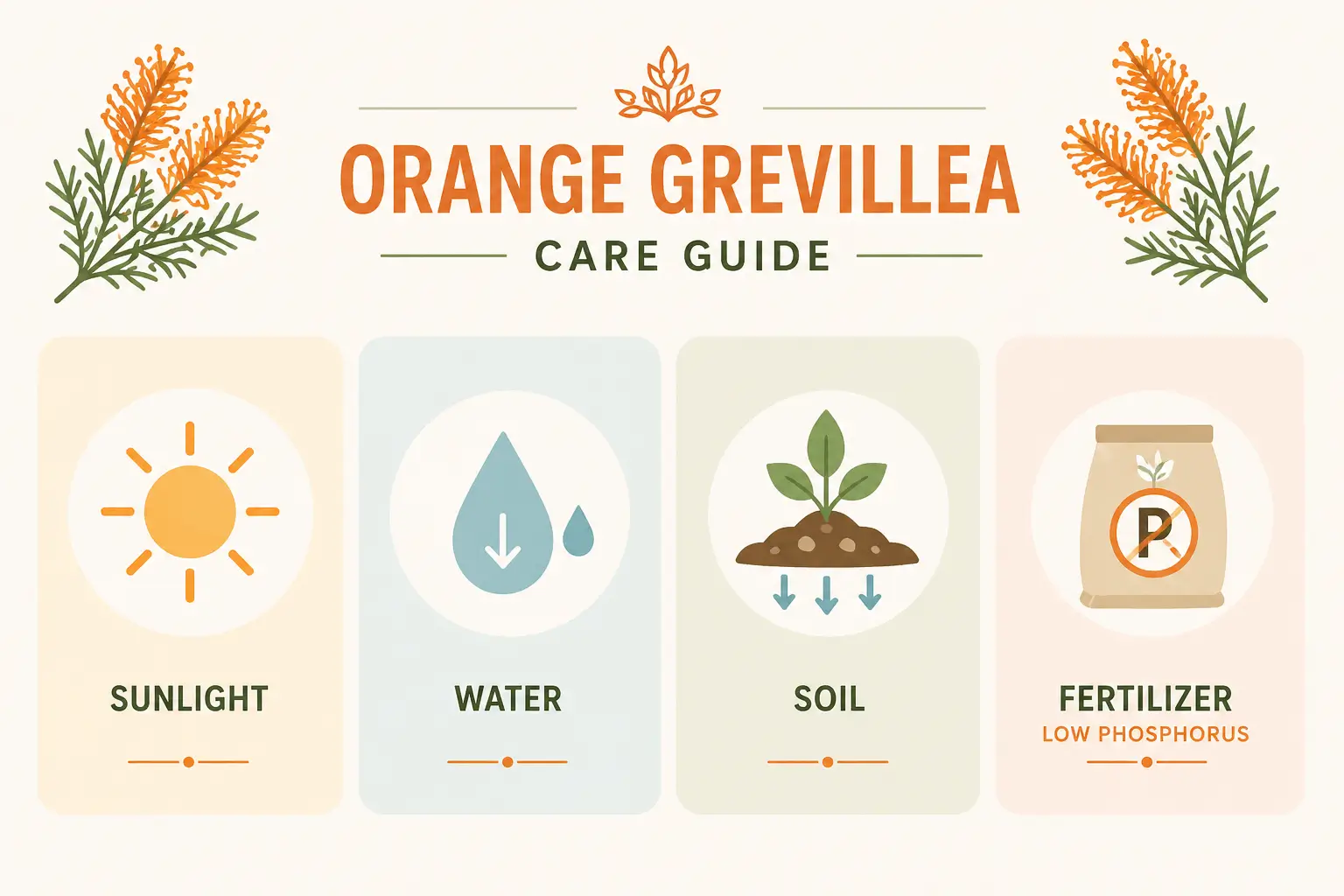
Orange grevillea thrives under:
- Full sun exposure for optimal flowering
- Low water conditions once established
- Well-draining soil, essential to prevent root rot
Feeding and Fertilization
Grevillea plants require:
- Low-phosphorus fertilizers, as high phosphorus can damage roots
- Minimal feeding, as over-fertilizing reduces plant health
Climate and Environmental Conditions
- Best suited to warm and temperate climates
- Sensitive to heavy frost and excessive humidity
- Performs well in coastal and dry regions
For broader plant care principles, refer to this complete plant care and growing guide covering essential techniques for healthy plant growth .
Plant Size and Growth Rate of Orange Grevillea
Mature Size Expectations
Orange grevillea size varies widely:
- Compact varieties: 0.5–1 m
- Medium shrubs: 2–3 m
- Tree forms: up to 4–5 m
Examples:
- Grevillea orange marmalade size: ~2–3 m
- Orange wow grevillea size: up to 4 m
Growth depends on soil quality, pruning, and climate conditions.
Growth Speed and Seasonal Patterns
Most orange grevillea plants are:
- Fast-growing, especially in warm climates
- Flowering occurs in cycles throughout the year, often peaking in spring and winter
Pruning Orange Grevillea for Shape and Flowering
When and How to Prune
Prune orange grevillea:
- After flowering cycles
- Lightly trim to maintain shape
- Avoid cutting into old wood excessively
Benefits of Regular Pruning
- Encourages denser growth
- Improves flower production
- Prevents leggy or sparse appearance
Common Orange Grevillea Problems and How to Fix Them
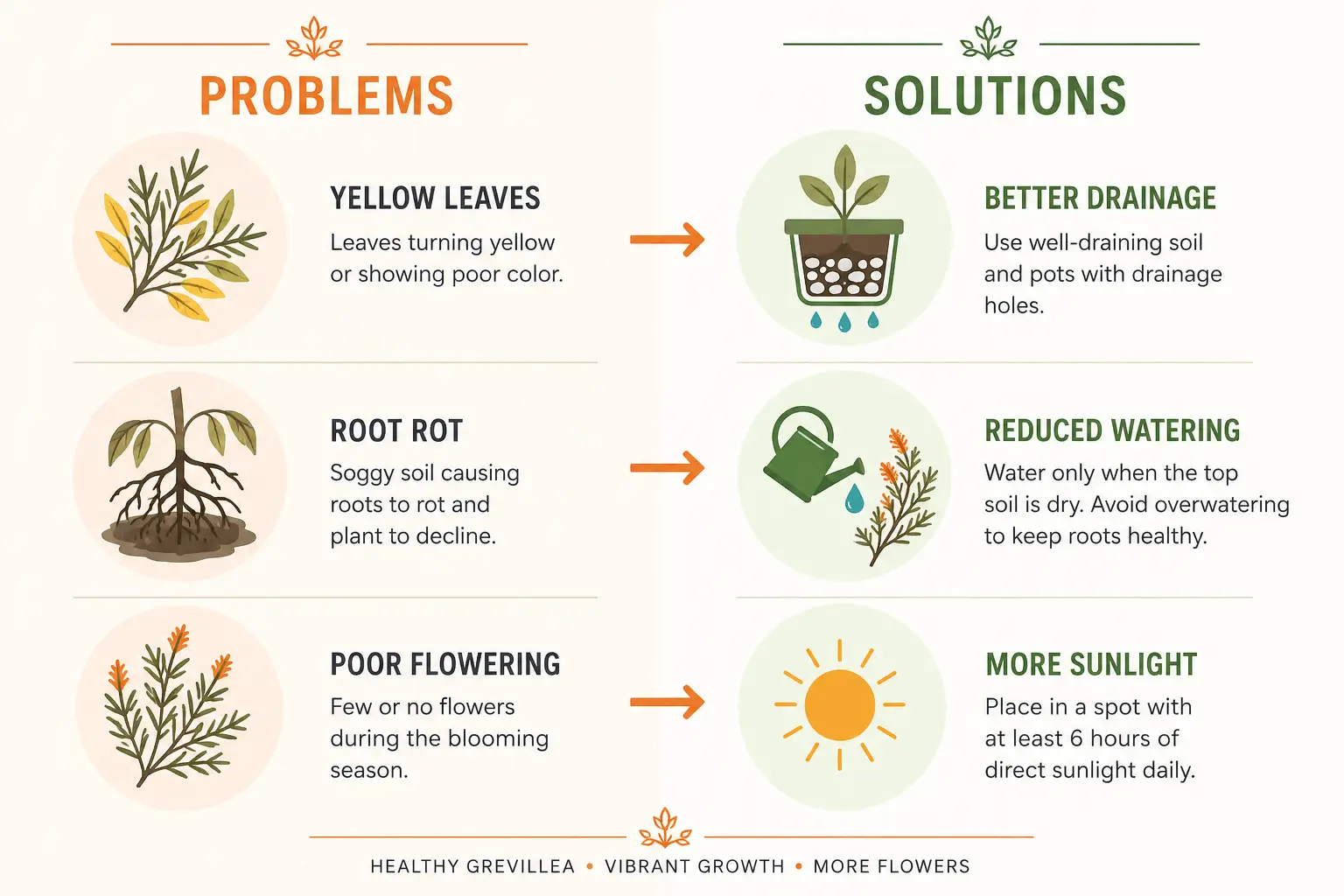
Typical Issues
Common orange grevillea problems include:
- Yellowing leaves (nutrient imbalance or drainage issues)
- Root rot from overwatering
- Poor flowering due to lack of sunlight
- Occasional pest infestations
Solutions and Prevention
- Improve soil drainage
- Reduce watering frequency
- Ensure adequate sunlight exposure
- Maintain proper plant spacing for airflow
Is Orange Grevillea Invasive or Environmentally Risky?
Orange grevillea is generally not considered invasive in most regions. However, its behavior depends on local environmental conditions. In native ecosystems, it supports biodiversity by attracting pollinators. In non-native areas, controlled planting is recommended to prevent unintended spread.
Choosing the Best Orange Grevillea Variety for Your Garden
Factors to Consider
- Plant size (small vs large)
- Flower color preference (bright orange, burnt orange, etc.)
- Intended landscape function
Best Orange Grevillea Varieties by Use
- Small gardens: Compact shrub varieties
- Hedges: Dense, medium-sized shrubs
- Ground cover: Low-growing types like ‘New Blood’
- Feature plants: Taller varieties like ‘Orange Wow’
For privacy-focused planting, orange grevillea can be combined with other fast-growing native screening plants to create dense, low-maintenance garden barriers .
Comparison: Orange Grevillea vs Other Flowering Shrubs
Key Differences
Orange grevillea differs from other orange flowering shrubs by offering:
- Higher drought tolerance
- Lower maintenance requirements
- Stronger attraction to pollinators
Table: Grevillea vs Other Orange Flowering Shrubs
| Plant Type | Water Needs | Growth Habit | Maintenance Level | Pollinator Attraction |
| Orange Grevillea | Low | Shrub/tree/ground cover | Low | High |
| General Orange Shrubs | Moderate | Mostly shrubs | Medium | Moderate |
Beginner Mistakes to Avoid When Growing Orange Grevillea
- Overwatering the plant
- Using high-phosphorus fertilizers
- Planting in poorly drained soil
- Pruning at the wrong time
Where Orange Grevillea Fits in Landscaping and Garden Design
Orange grevillea is widely used in:
- Native and wildlife-friendly gardens
- Coastal landscapes
- Drought-tolerant designs
Its bright orange flowers create strong visual contrast and attract birds and pollinators.
Conclusion
Orange grevillea is a versatile and visually striking plant group within the Grevillea genus, offering a wide range of forms from ground covers to small trees. With proper care, pruning, and variety selection, these plants provide long-lasting color, ecological benefits, and low-maintenance gardening solutions.
FAQs
What is the best orange grevillea variety for small gardens?
Compact shrub varieties such as smaller grevillea cultivars are ideal due to their manageable size and controlled growth.
How often should orange grevillea be watered?
Water sparingly once established, as grevillea plants are highly drought-tolerant and sensitive to excess moisture.
Why is my orange grevillea not flowering?
Common causes include insufficient sunlight, overwatering, or excessive fertilizer use, particularly phosphorus-rich products.
Can orange grevillea grow as a tree?
Yes, certain varieties can develop into small trees depending on growth conditions and pruning practices.
Is orange grevillea suitable for ground cover?
Yes, low-growing varieties like ‘New Blood’ function effectively as ground cover plants.



One Response