
Introduction
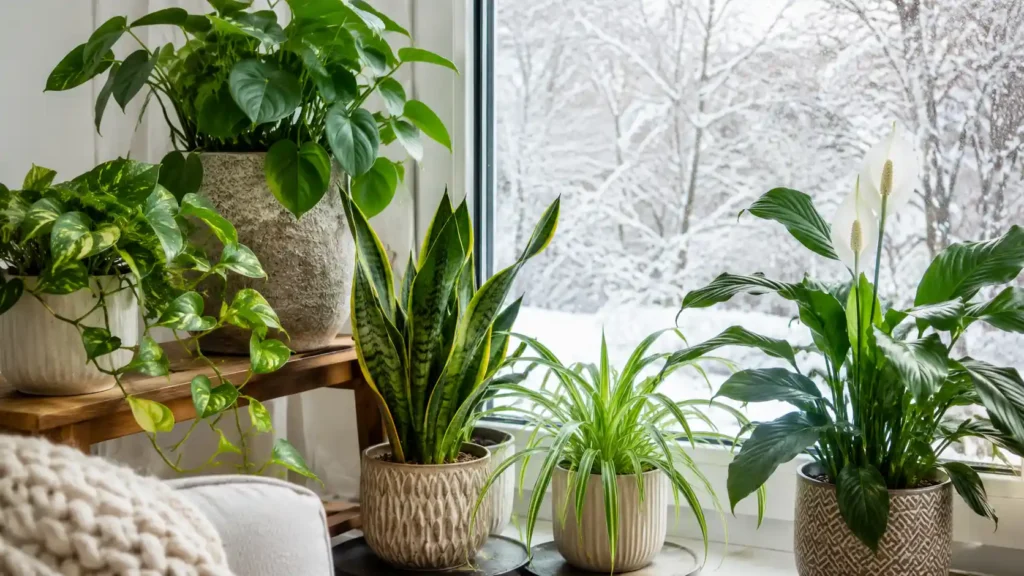
Indoor houseplants can be surprisingly sensitive to cold temperatures, but the exact point at which conditions become dangerous depends on the species. Understanding what temperature is too cold for indoor houseplants is essential because many popular houseplants originate from tropical or subtropical regions where temperatures remain warm year-round. While some hardy species tolerate cool conditions, most common houseplants begin experiencing stress when temperatures drop below certain thresholds. This guide explains safe temperature ranges, signs of cold damage, species-specific tolerances, and practical steps to protect plants from low-temperature stress.
Understanding temperature requirements is only one part of successful indoor gardening. For a complete overview of plant care routines, growing tips, and different plant types, explore our Plants: Benefits and Guides (Complete Care, Types & Growing Tips) resource.
Quick Summary
- Most indoor houseplants begin to suffer when temperatures fall below 50°F (10°C).
- Tropical plants such as pothos and philodendrons are especially vulnerable to cold injury.
- Freezing temperatures at 32°F (0°C) or lower can cause severe or fatal damage.
- Cold damage symptoms include yellowing leaves, wilting, blackened tissue, and mushy stems.
- Some cold-tolerant houseplants can survive temperatures between 40–50°F (4–10°C).
What Temperature Is Too Cold for Indoor Houseplants?
For most indoor houseplants, temperatures below 50°F (10°C) are considered too cold. The majority of common houseplants thrive within a temperature range of 60–80°F (15–27°C). Once temperatures fall below 50°F, many tropical species begin experiencing physiological stress that can affect growth, root function, and overall health.
Tropical plants such as peace lilies require stable warm conditions, and understanding their specific peace lily temperature requirements can help prevent cold stress and growth problems.
It is important to distinguish between two types of cold injury:
- Chilling injury: Damage caused by temperatures above freezing but below a plant’s tolerance level.
- Freeze damage: Damage caused when plant tissues freeze at or below 32°F (0°C).
Tropical houseplants are particularly susceptible to chilling injury because they evolved in consistently warm environments.
Why 50°F (10°C) Is the Critical Lower Threshold for Most Houseplants
Temperatures below 50°F affect plant cells in several ways:
- Metabolic processes slow significantly.
- Water and nutrient uptake becomes less efficient.
- Root growth declines.
- Cell membranes become damaged.
- Photosynthesis efficiency decreases.
One challenge with cold damage is that symptoms may not appear immediately. A plant exposed to low temperatures may look healthy initially, only to develop yellowing, blackened leaves, or stem damage several days later. Cold stress affects plants at a cellular level by changing metabolic activity and membrane function. These processes are part of broader plant physiology, which explains how plants respond to environmental changes.
Cold temperatures can slow plant metabolism, root activity, and overall development. After adjusting temperature and care conditions, gardeners can use a plant growth calculator to estimate growth progress and better understand how environmental changes affect their plants.
What Is the Lowest Temperature a Houseplant Can Survive?
The lowest survivable temperature depends on the species.
- Many tropical plants struggle below 40°F (4°C).
- Some hardy indoor plants can briefly tolerate 35–40°F (2–4°C).
- Very few houseplants survive prolonged freezing conditions.
Survival should not be confused with healthy growth. A plant may survive short-term exposure to low temperatures while still suffering significant stress and long-term damage.
Ideal Temperature Range for Indoor Houseplants
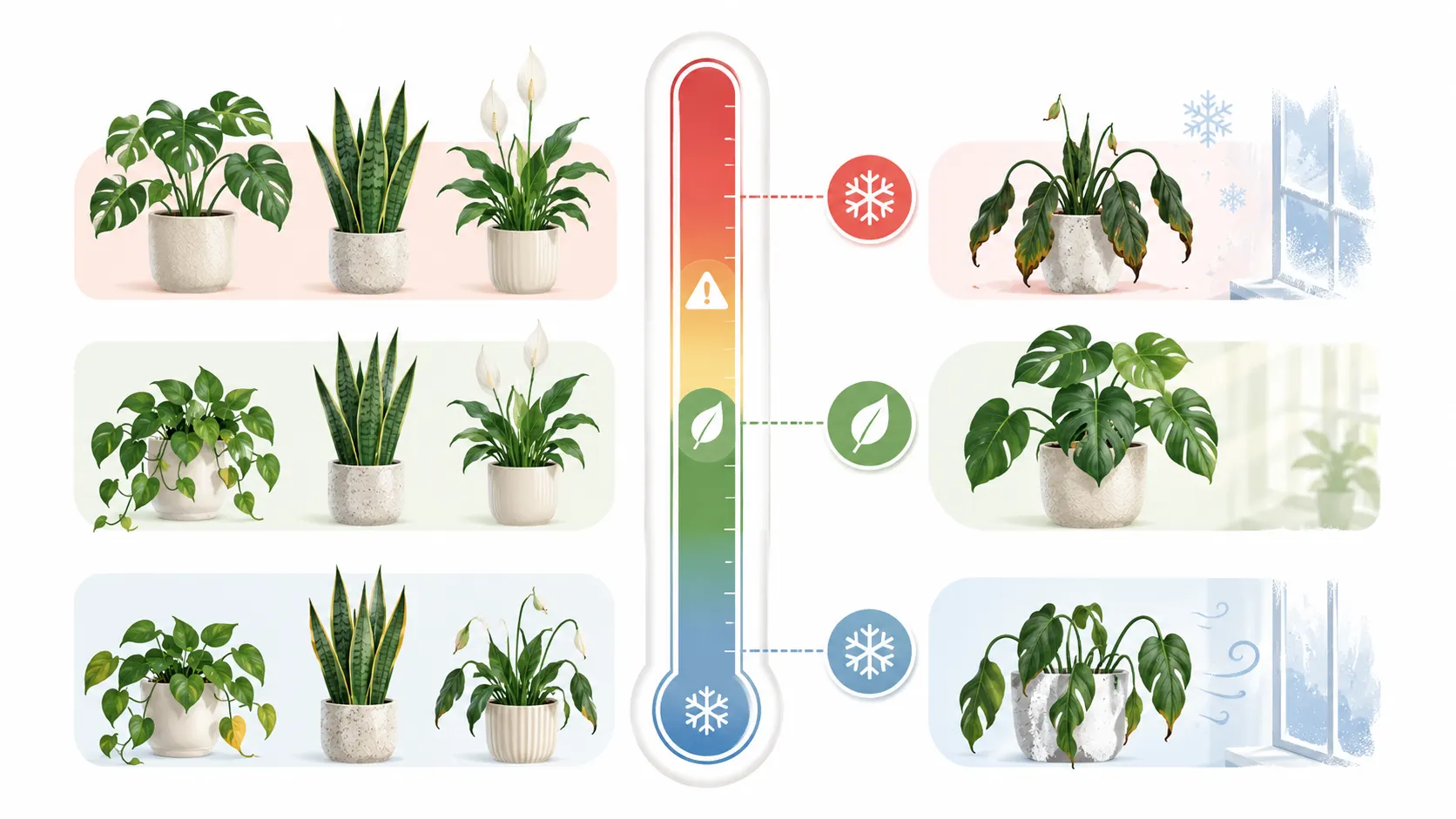
Most indoor plants perform best within the following ranges:
| Condition | Ideal Temperature |
| Daytime | 60–80°F (15–27°C) |
| Nighttime | 55–70°F (13–21°C) |
| Danger Zone | Below 50°F (10°C) |
| Freeze Risk | 32°F (0°C) and below |
Sudden temperature fluctuations can be just as harmful as prolonged cold exposure. Consistency is often more important than achieving perfect temperatures.
How Cold Can Houseplants Tolerate? Temperature Ranges by Plant Type
Different plant groups have different cold tolerance levels.
📊 Cold Tolerance by Plant Category
| Plant Category | Example Species | Minimum Safe Temp °F | Minimum Safe Temp °C | Risk Level |
| Tropical Houseplants | Pothos, Philodendron, Peace Lily | 55–60°F | 13–16°C | High |
| Subtropical Houseplants | Snake Plant, ZZ Plant | 50–55°F | 10–13°C | Moderate |
| Succulents & Cacti | Jade Plant, Aloe Vera | 40–50°F | 4–10°C | Moderate |
| Cold-Hardy Indoor Plants | Cast Iron Plant, Spider Plant | 35–45°F | 2–7°C | Low |
Pothos Cold Tolerance — How Cold Can Pothos Tolerate?
Pothos prefers temperatures between 65–85°F (18–29°C). Although pothos can survive brief exposure to around 50°F (10°C), prolonged exposure below this threshold often results in stress. Similar to other popular indoor plants, pothos requires consistent environmental conditions. Comparing its needs with other low-maintenance plants like ZZ plants can help gardeners choose species suitable for their home environment.
Common signs of pothos cold damage include:
- Yellow leaves
- Blackened leaf edges
- Drooping foliage
- Slowed growth
If caught early, pothos often recovers once moved to a warmer environment.
Philodendron Cold Tolerance
Philodendrons are highly sensitive to cold because of their tropical origins. Most varieties should not be exposed to temperatures below 55°F (13°C).
Cold stress symptoms include:
- Dark leaf patches
- Curling leaves
- Stunted growth
- Premature leaf drop
Even brief exposure to cold drafts can trigger visible damage.
Can Tropical Plants Survive 40-Degree Weather?
Most tropical houseplants cannot safely tolerate 40°F (4°C) for extended periods.
Brief exposure may not immediately kill the plant, but damage can occur at the cellular level. Roots are especially vulnerable because cold soil limits water uptake and nutrient absorption.
Outdoor exposure to 40°F temperatures is often more stressful than indoor exposure because wind, humidity changes, and fluctuating temperatures increase plant stress.
Is 50 Degrees Too Cold for Houseplants?
Yes, 50°F (10°C) is considered borderline dangerous for many tropical houseplants.
Factors affecting risk include:
- Duration of exposure
- Plant species
- Humidity levels
- Overall plant health
A brief overnight dip may be survivable, but repeated exposure often causes cumulative stress.
Is 45 Degrees Too Cold for Plants?
Yes, 45°F (7°C) is too cold for most common indoor houseplants.
Plants that may briefly tolerate 45°F include:
- Spider plants
- Cast iron plants
- Certain ferns
- Snake plants
However, tropical plants such as philodendrons, pothos, calatheas, and anthuriums often suffer noticeable damage at this temperature.
What Temperature Is Too Cold for Potted Plants Specifically?
Potted plants are generally more vulnerable to cold than plants growing in the ground.
Unlike garden soil, containers provide limited insulation. Cold temperatures move rapidly through pot walls and directly affect the root system.
Why Potted Plants Are More Cold-Sensitive Than Ground Plants
Several factors increase vulnerability:
- Roots are exposed on all sides.
- Containers cool rapidly.
- Soil volume is limited.
- Wind chills pots more effectively than garden beds.
Pot material also matters:
| Pot Material | Cold Protection |
| Plastic | Better insulation |
| Ceramic | Moderate insulation |
| Glazed Pottery | Moderate insulation |
| Terracotta | Poor insulation |
Terracotta containers lose heat quickly, making roots more susceptible to cold injury.
What Temperature Should I Bring My Potted Plants Inside at Night?
As a general guideline:
- Tropical plants: bring indoors at 50°F (10°C)
- Hardy plants: bring indoors at 40°F (4°C)
Waiting until temperatures drop below these thresholds increases the likelihood of cold damage.
At What Temperature Should I Bring My Houseplants Inside?
Outdoor houseplants should be moved indoors before the first consistent nighttime temperatures below 50°F (10°C).
Many gardeners make the mistake of waiting until temperatures become uncomfortable for humans. By that point, sensitive plants may already have suffered cold stress.
To be safe:
- Monitor local forecasts in early autumn.
- Move tropical plants indoors before cold nights arrive.
- Acclimate plants gradually to indoor conditions.
Signs Your Houseplants Are Too Cold Indoors
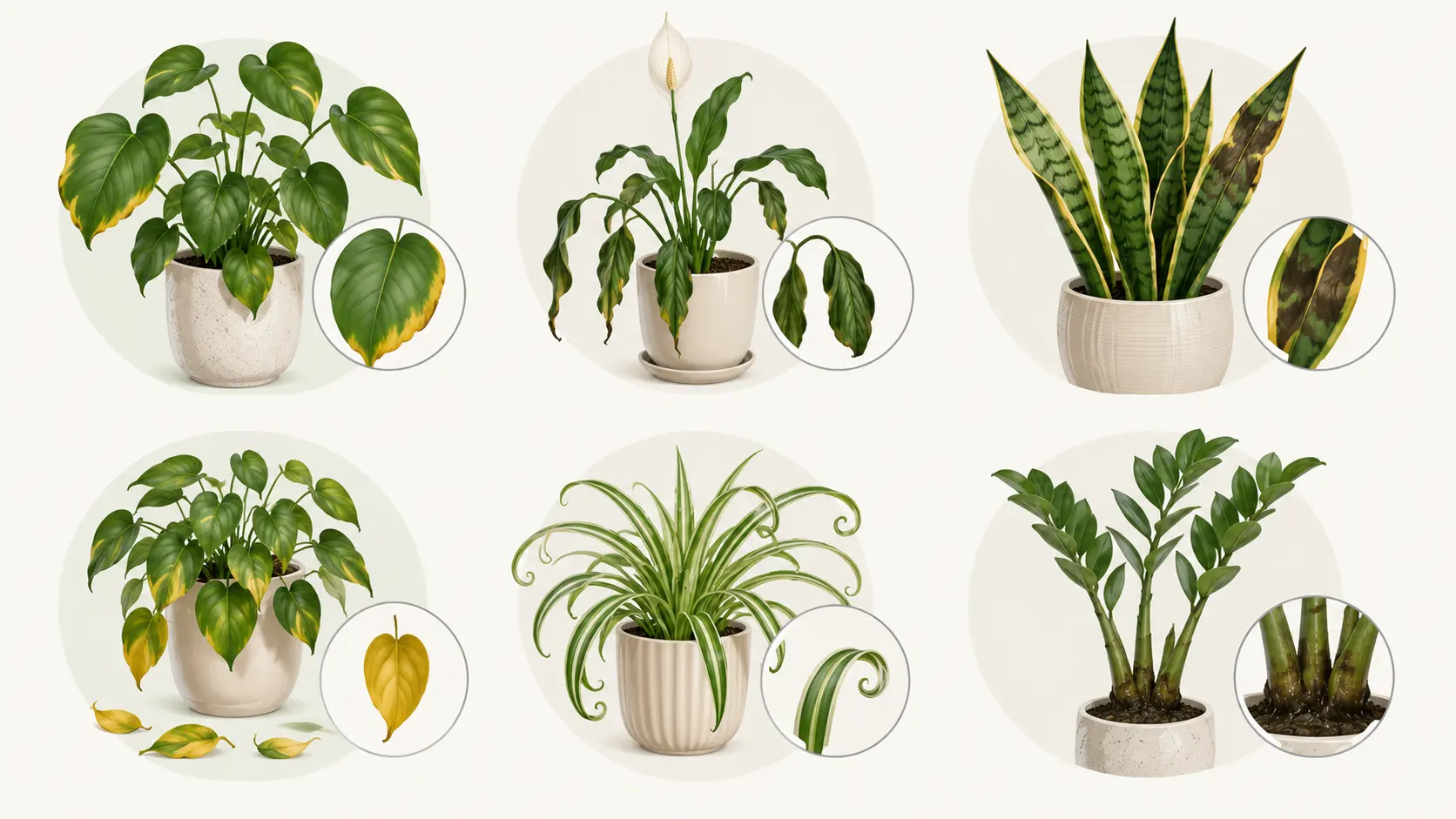
Cold-stressed houseplants often show visible symptoms within hours or days of exposure. Recognizing these warning signs early can prevent permanent damage and improve recovery chances.
Common signs plants are too cold include:
- Yellowing or browning leaf edges
- Wilting despite adequate watering
- Blackened, water-soaked patches on leaves or stems
- Sudden leaf drop
- Mushy or translucent stems
- Curling or cupping leaves
- Slowed or completely stopped growth during active growing seasons
The severity of symptoms depends on the temperature, duration of exposure, and plant species.
The Difference Between Cold Damage and Other Plant Stress
Cold damage can resemble problems caused by overwatering, underwatering, or pests. However, several clues help distinguish cold injury from other issues.
| Symptom | Cold Damage | Overwatering | Underwatering |
| Blackened tissue | Common | Less common | Rare |
| Sudden leaf drop | Common | Possible | Possible |
| Mushy stems | Common after freeze damage | Common | Rare |
| Leaf curling | Common | Sometimes | Common |
| Yellow leaves | Common | Common | Sometimes |
| Symptoms after cold exposure | Very likely | Unrelated | Unrelated |
A key diagnostic clue is timing. If symptoms appear shortly after exposure to cold drafts, open windows, or low temperatures, cold stress is often the cause.
Can Cold-Damaged Houseplants Recover?
Many cold-damaged houseplants can recover if the injury is mild.
Recovery is most likely when:
- Damage is limited to leaves.
- Roots remain healthy.
- Exposure was brief.
- Temperatures did not reach freezing.
To encourage recovery:
- Move the plant to a warm location.
- Remove severely damaged leaves.
- Avoid overwatering.
- Resume normal care gradually.
- Monitor for new growth.
Plants suffering frost or freeze damage may not recover, especially tropical species whose stems and roots have frozen.
Best Indoor Plants for Cold Rooms
If your home includes drafty rooms, cool hallways, or minimally heated spaces, choosing cold-tolerant houseplants can significantly improve success.
📊 Best Cold-Tolerant Houseplants for Cool Rooms
| Plant Name | Minimum Safe Temp °F / °C | Light Needs | Notes |
| Cast Iron Plant (Aspidistra elatior) | 28°F / -2°C | Low to Moderate | Extremely tough and adaptable |
| Spider Plant (Chlorophytum comosum) | 45°F / 7°C | Bright Indirect | Handles cooler temperatures well |
| Peace Lily | 55°F / 13°C | Low to Bright Indirect | Tolerates brief cool periods |
| Snake Plant (Sansevieria) | 50°F / 10°C | Low to Bright Indirect | More cold-tolerant when soil is dry |
| Chinese Evergreen | 50–55°F / 10–13°C | Low to Medium | Adaptable indoor plant |
| Boston Fern | 50°F / 10°C | Bright Indirect | Requires humidity |
Indoor Plants That Can Withstand Both Heat and Cold
Some species adapt well to fluctuating indoor temperatures.
Examples include:
- Snake plant
- Spider plant
- Cast iron plant
- ZZ plant
- Chinese evergreen
These plants generally tolerate wider temperature ranges than sensitive tropical species and are suitable for homes with inconsistent heating.
Plants for Cold Rooms: What to Avoid
Certain houseplants are highly sensitive to cool conditions and should not be placed in cold rooms. Sensitive tropical plants like calatheas require more stable temperatures and humidity levels. Following a proper calathea care guide helps prevent stress caused by temperature fluctuations.
Examples include:
- Orchids
- Anthuriums
- Calatheas
- Alocasias
- Most tropical aroids
- Prayer plants
These plants often require temperatures consistently above 60°F (15°C) for healthy growth.
How Cold Is Too Cold for a House? (Temperature and Plant Safety Together)
Indoor temperatures affect both human comfort and plant health. Fortunately, temperatures that are comfortable for most people are generally suitable for houseplants.
Is 60 Degrees Too Cold for a House With Houseplants?
No, 60°F (15°C) is generally safe for most indoor plants.
Hardier species thrive at this temperature, while tropical plants usually tolerate it without significant issues. However, prolonged exposure to temperatures close to 60°F may slow growth in warmth-loving species.
Is 58°F Too Cold for a House?
58°F (14°C) is borderline for many houseplants.
While hardy species may tolerate it, tropical plants can begin showing signs of stress if exposed for extended periods. If your home regularly reaches 58°F, consider relocating sensitive plants to warmer rooms.
How Cold Can You Let Your House Get Without Harming Houseplants?
For homes containing tropical houseplants, indoor temperatures should generally remain above 50°F (10°C).
Practical recommendations include:
- Avoid thermostat setbacks below 55°F (13°C).
- Keep plants away from cold windows.
- Protect plants from drafts.
- Monitor nighttime temperatures during winter.
What Temperature Is Too Hot for Indoor Plants?
Most houseplants begin experiencing heat stress above 95°F (35°C).
Signs of excessive heat include:
- Crispy leaf edges
- Rapid soil drying
- Wilting
- Sun scorch
For most indoor plants, the ideal upper range is approximately 80–85°F (27–30°C).
How to Protect Houseplants from Cold Damage
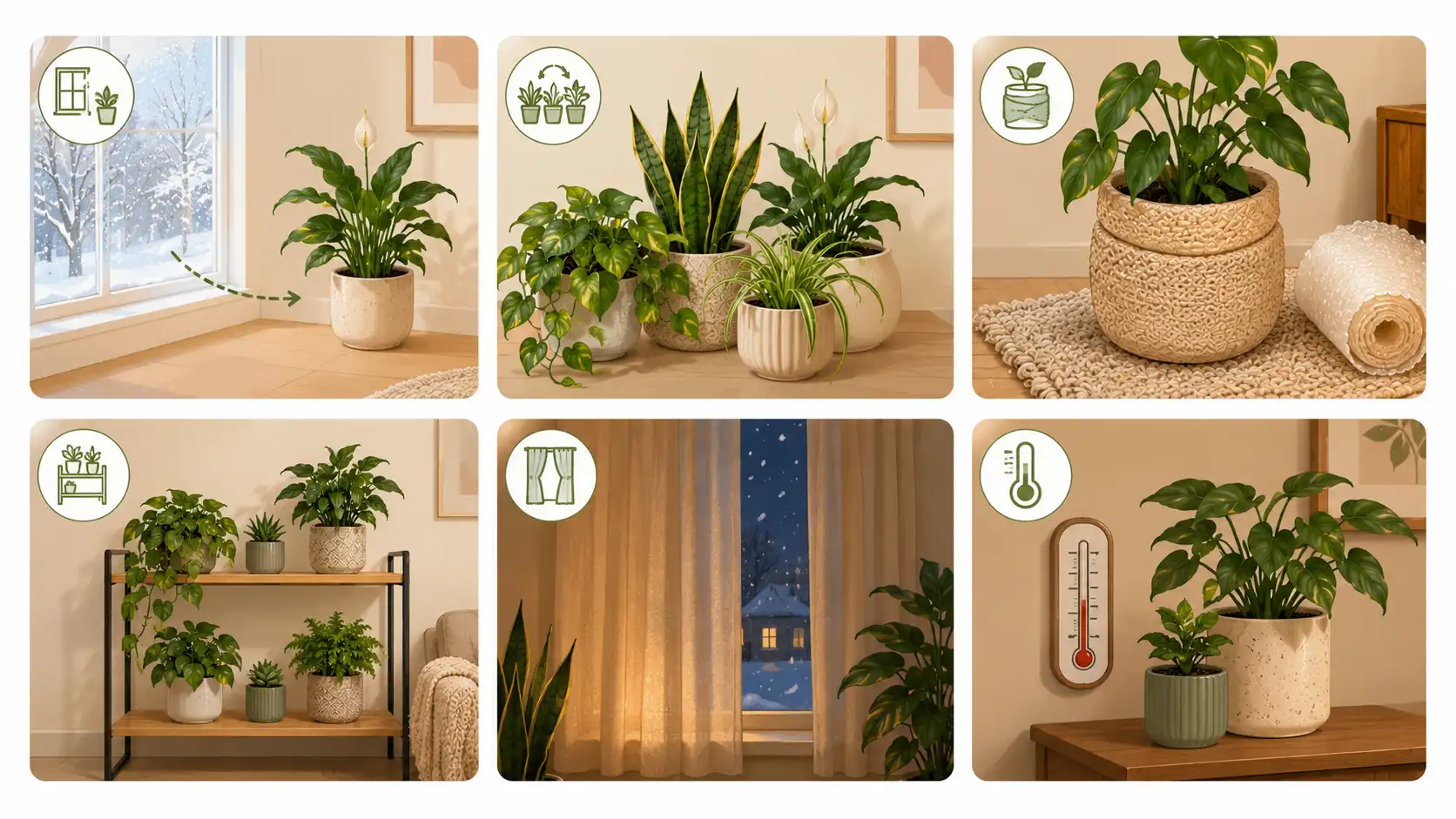
Prevention is far easier than treating cold damage after it occurs.
Practical cold protection strategies include:
- Move plants away from cold windows and exterior walls.
- Use thermal curtains during winter nights.
- Group plants together to create a warmer microclimate.
- Place plants on shelves or stands rather than directly on floors.
- Use space heaters carefully, avoiding direct hot airflow.
- Monitor room temperatures with an indoor thermometer.
- Wrap containers with insulating materials in very cold rooms.
Even small adjustments in placement can significantly reduce cold stress.
How to Debug Plants Before Bringing Them Indoors
Before moving outdoor plants indoors for winter, inspect them carefully for pests.
Follow these steps:
- Examine the undersides of leaves.
- Check stems and growing points.
- Remove dead foliage.
- Spray with neem oil or insecticidal soap if necessary.
- Rinse foliage thoroughly.
- Isolate plants for one to two weeks before placing them near other houseplants.
This process prevents accidental pest infestations indoors.
Common Mistakes That Lead to Cold Damage in Houseplants
Many cases of cold injury result from overlooked environmental conditions rather than extreme weather.
Common cold damage mistakes include:
- Placing plants directly on cold windowsills
- Leaving plants near air-conditioning vents
- Keeping tropical plants in unheated rooms overnight
- Watering with very cold tap water
- Moving plants outdoors abruptly without acclimation
- Ignoring drafts from exterior doors
Avoiding these mistakes often eliminates the majority of temperature-related problems.
Cold Drafts vs. Sustained Low Temperature — Which Is More Damaging?
Both are harmful, but sudden cold drafts can sometimes cause more immediate damage.
Rapid temperature changes shock plant cells and disrupt normal physiological processes. A tropical plant placed near a frequently opened winter door may experience repeated cold stress even if room temperatures remain acceptable.
For many species, consistency is more important than achieving a perfectly warm environment.
Comparison: Cold-Tolerant vs. Cold-Sensitive Houseplants
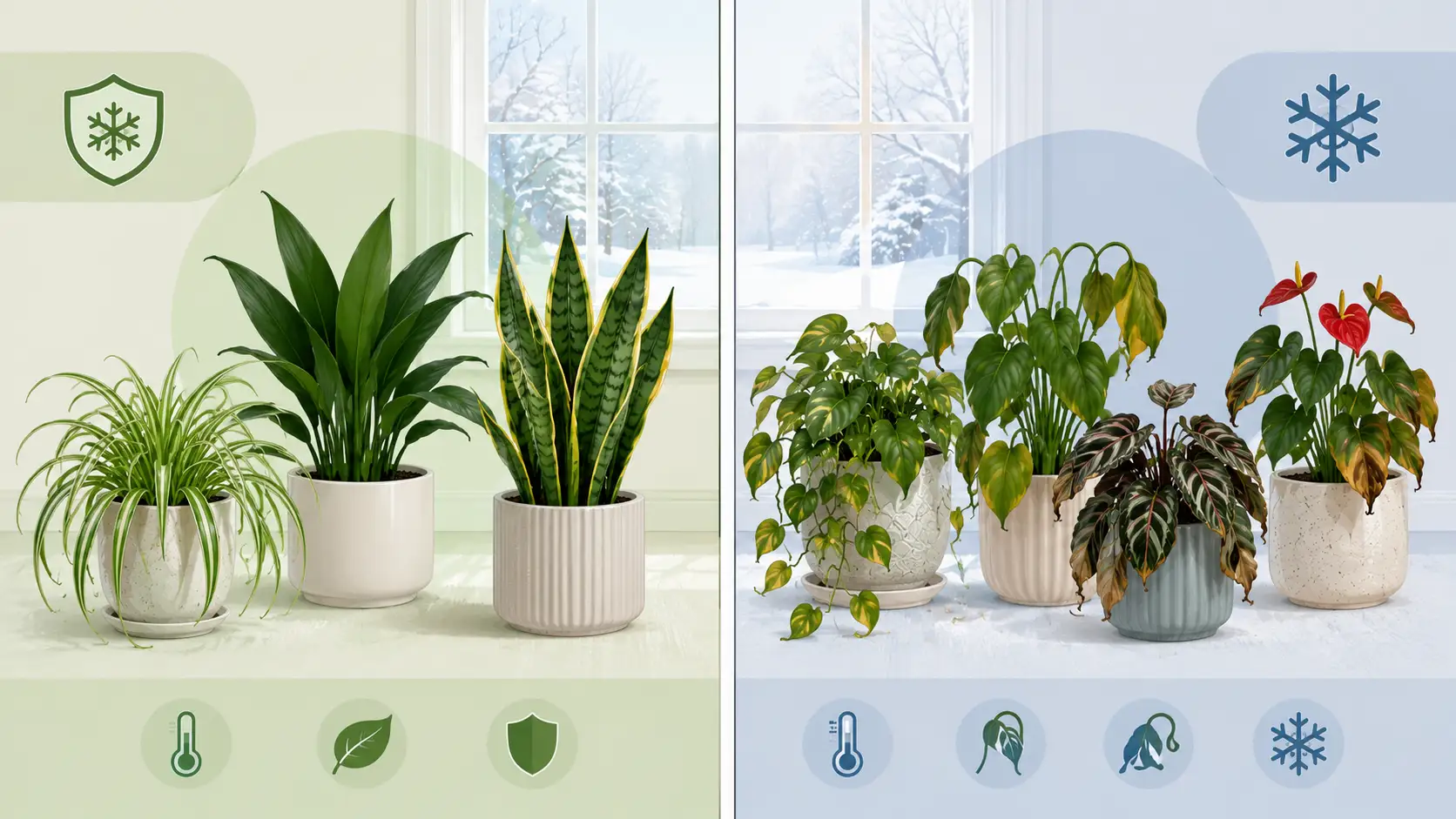
Understanding plant categories helps gardeners choose species that match their home conditions.
📊 Comparison Table: Cold-Tolerant vs. Cold-Sensitive Houseplants
| Feature | Cold-Tolerant Plants | Cold-Sensitive (Tropical) Plants |
| Minimum Safe Temp | 35–50°F (2–10°C) | 55–60°F (13–16°C) |
| Key Examples | Spider Plant, Snake Plant, Cast Iron Plant | Pothos, Philodendron, Calathea |
| Recovery from Cold Exposure | Often recover well | Recovery less likely |
| Growth in Cool Rooms | Generally acceptable | Often stunted |
| Best Room Placement | Cool rooms, hallways | Warm living spaces |
| Draft Tolerance | Moderate | Low |
Cold-tolerant plants are typically better choices for homes with fluctuating temperatures or limited heating.
What Temperature Is Too Cold for Houseplants in Winter Specifically?
Winter presents unique challenges because low temperatures often occur alongside reduced sunlight, dry indoor air, and cold drafts.
Winter Plant Care and Temperature Management
Houseplant care should be adjusted during winter. Temperature is only one factor affecting winter plant health. Understanding how seasonal changes affect indoor plant growth helps adjust watering, lighting, and care routines throughout the year.
Recommended winter practices include:
- Reduce watering frequency.
- Avoid excessive fertilization.
- Move plants to the warmest available rooms.
- Keep foliage away from cold glass.
- Increase humidity if indoor air becomes dry.
- Use grow lights when natural light is limited.
One common beginner mistake is watering at the same rate used during summer. Cooler temperatures and reduced growth mean plants generally require less water during winter.
Low Temperature Houseplants: Species That Thrive in Winter Conditions
Some plants tolerate or even benefit from cooler winter temperatures.
Examples include:
- Cyclamen
- Christmas cactus
- Certain fern species
- Cast iron plant
- Spider plant
These species often appreciate a cooler winter rest period, provided temperatures remain above their minimum tolerance levels.
Conclusion
Most indoor houseplants begin suffering damage when temperatures fall below 50°F (10°C), making this the most important threshold for indoor gardeners to remember. Tropical species such as pothos and philodendrons are especially vulnerable to chilling injury, while cold-tolerant plants like spider plants and cast iron plants can withstand significantly cooler conditions. Potted plants are particularly at risk because their roots lack the insulation provided by garden soil.
Understanding what temperature is too cold for indoor houseplants allows you to prevent problems before they occur. By monitoring indoor temperatures, identifying early warning signs, protecting plants from drafts, and selecting species suited to your environment, you can keep your houseplants healthy and thriving throughout the year.
Frequently Asked Questions
1: What temperature is too cold for indoor houseplants at night?
Most tropical houseplants should not be exposed to temperatures below 55°F (13°C) at night. Hardy species can tolerate down to 45–50°F briefly, but sustained cold nights cause cumulative stress and damage.
2: Can houseplants survive 40-degree weather?
Most common houseplants, particularly tropical species, cannot safely survive 40°F (4°C) for extended periods. Brief exposure may not kill hardy varieties, but tropical plants like pothos and philodendron will likely suffer lasting damage or die.
3: How cold can pothos tolerate?
Pothos can tolerate temperatures as low as 50°F (10°C) briefly, but thrive best between 65–85°F (18–29°C). Sustained exposure below 50°F causes yellowing, blackened leaves, and potential root damage.
4: What are the signs that my houseplant is too cold?
Key signs include yellowing or blackened leaves, wilting despite normal watering, sudden leaf drop, mushy or translucent stems, and leaf curling. These symptoms often appear within 24–48 hours of cold exposure.
5: What is the lowest temperature a houseplant can survive?
This depends on the species. Tropical houseplants may be fatally damaged at 40°F (4°C). Cold-hardy indoor plants like cast iron plant and spider plant can survive brief dips to 35–40°F (2–4°C). No common houseplant survives sustained freezing temperatures.
6: Is 50 degrees too cold for houseplants?
50°F (10°C) is dangerously cold for tropical species and borderline for hardier varieties. At this temperature, tropical plants like calathea, pothos, and philodendron begin experiencing cellular stress even if visible damage is not immediate.
7: When should I bring my potted plants inside for winter?
Bring potted plants indoors when nighttime temperatures begin regularly falling below 50°F (10°C) for tropical species. For hardier plants, 40°F (4°C) is the general trigger point. In most temperate climates, this means moving plants inside by early to mid-autumn.