
Introduction
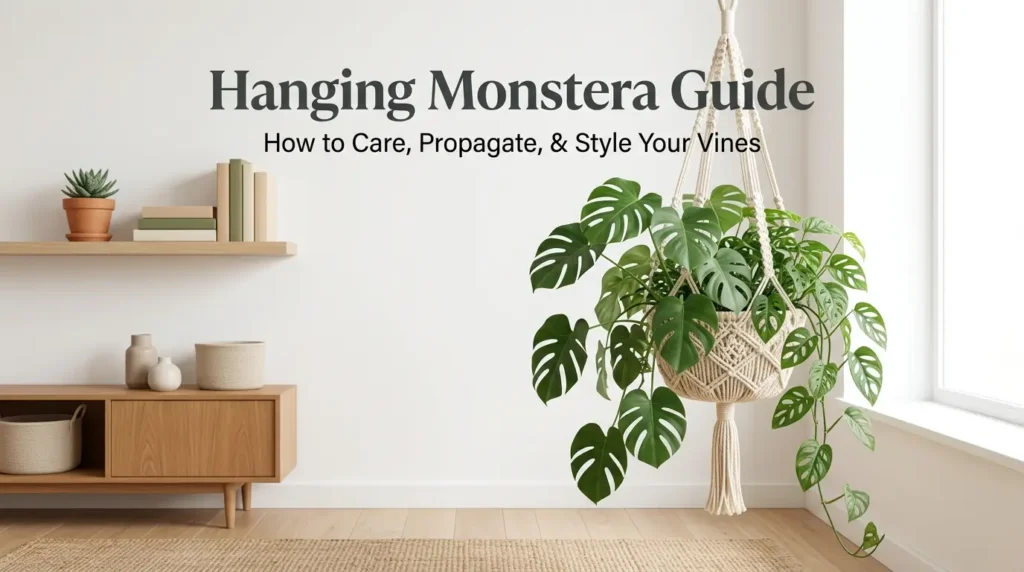
Hanging monstera refers to vining Monstera plants, such as Monstera deliciosa or Monstera adansonii, trained to trail from hanging baskets or ceiling hooks for a decorative indoor display. The hanging monstera is popular in modern interiors because it naturally mimics the plant’s climbing behavior found in tropical rainforests. These evergreen plants are known for their fenestrated leaves, aerial roots, and vigorous trailing growth. When suspended properly, they create a cascading green effect that enhances vertical space while remaining relatively easy to maintain. With the right care, they can thrive indoors for years and produce increasingly dramatic foliage over time.
Quick Summary
- Hanging monstera grows best in bright indirect light with well-draining soil
- Popular types include Monstera deliciosa and Monstera adansonii
- Growth is moderate to fast under high humidity and warm temperatures
- Care requires weekly watering, pruning, and monthly fertilization
- Common issues like yellow leaves are linked to overwatering or low light
What Is a Hanging Monstera
Definition and Natural Growth Habit
A hanging monstera is a display method where vining Monstera plants are placed in elevated containers so their stems trail downward. In nature, these plants are epiphytes, meaning they grow on trees and use aerial roots to climb and absorb moisture from the air. Hanging monstera shares structural behavior with other tropical foliage plants often used in indoor greenery systems such as Spider Plant Indoor Benefits: Air, Wellness, and Easy Care and Ultimate Guide to House Plants with Waxy Leaves: 7+ Easy Types.
Core Characteristics
- Fenestrated leaves that develop natural splits for better light exposure
- Aerial roots that support climbing and moisture absorption
- Fast vining growth suitable for hanging or trailing displays
This growth style is fully suitable for indoor environments when light and humidity conditions are met, making it a flexible option for home décor.
Monstera species belong to the Araceae family and are native to tropical regions of Central America, commonly documented in botanical references such as Wikipedia’s overview of Monstera.
Popular Hanging Monstera Varieties
Monstera Deliciosa for Hanging
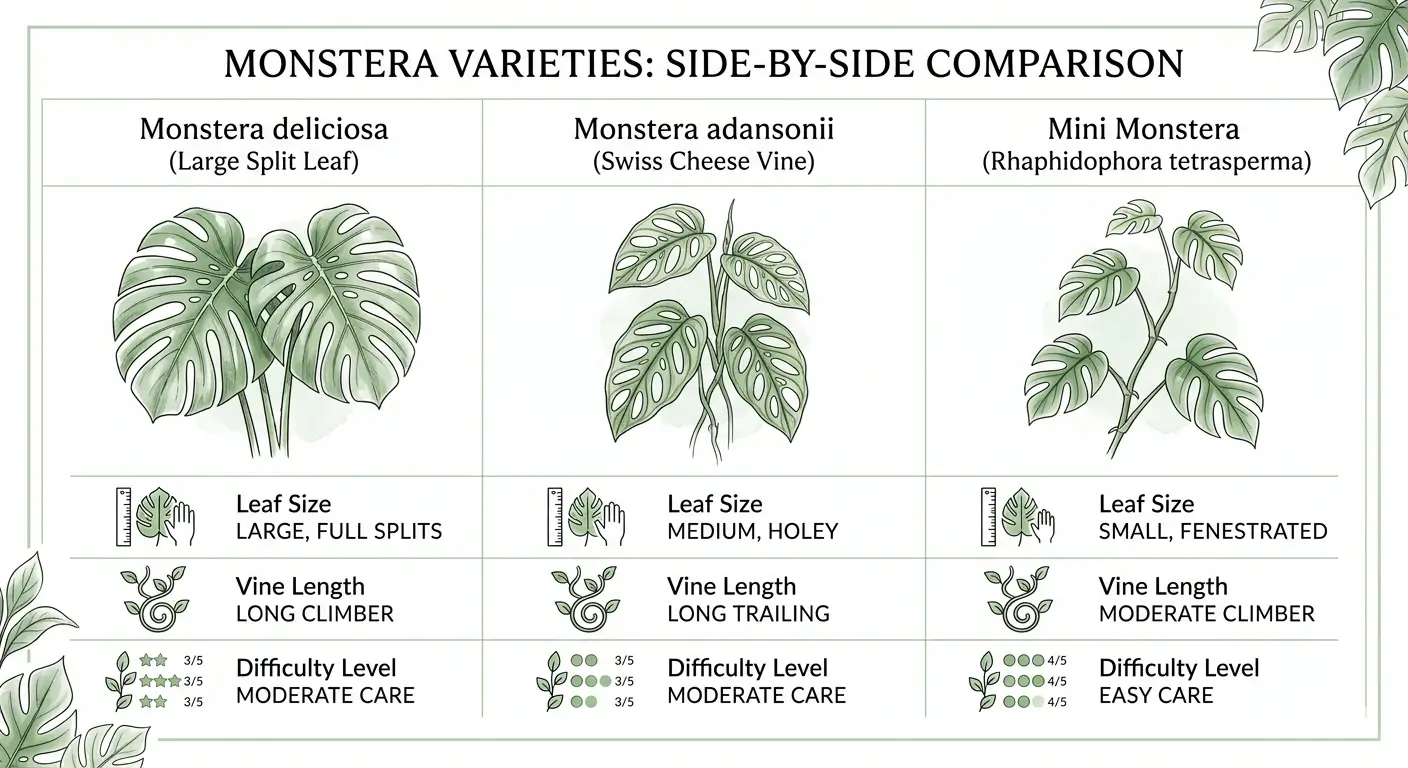
Monstera deliciosa produces large, split leaves and long trailing vines that can exceed 10 feet indoors. It is ideal for larger hanging spaces.
Monstera Adansonii (Swiss Cheese Vine)
Monstera adansonii features smaller leaves with more perforations, making it better suited for compact hanging baskets and tighter indoor areas.
Comparison Table
| Variety | Leaf Size | Mature Vine Length | Light Needs | Beginner-Friendly |
| Monstera deliciosa | Large (12–18″) | 10–20 ft | Bright indirect | Moderate |
| Monstera adansonii | Small (4–8″) | 6–12 ft | Medium indirect | High |
| Mini monstera (Rhaphidophora tetrasperma) | Tiny (2–4″) | 4–8 ft | Low to medium | Very high |
These varieties represent the most common “hanging monstera plant” options and are often confused with similar aroid species.
Plant Size
Mature Dimensions
Hanging monstera plants typically produce vines ranging from 6 to 20 feet depending on species and care conditions. Their spread can extend 2 to 4 feet from the hanging container.
Indoor vs Outdoor Growth
Indoor plants grow more slowly due to limited light, while outdoor plants in tropical climates grow significantly faster.
Growth Factors
- Pot size directly affects root expansion
- Regular pruning controls vine length
- Support systems like moss poles influence growth direction
Growth Rate
Indoor Growth Pattern
Hanging monstera grows at a moderate to fast rate, typically 1–2 feet per year indoors under ideal conditions.
Seasonal Behavior
- Spring and summer: active growth phase
- Winter: slowed or dormant growth
Key Influencing Factors
- Humidity above 60%
- Temperature between 65–85°F
- Consistent watering and nutrient supply
Outdoor growth in warm climates such as tropical or subtropical regions is noticeably faster compared to indoor cultivation.
Care Guide for Hanging Monstera
Essential Care Steps
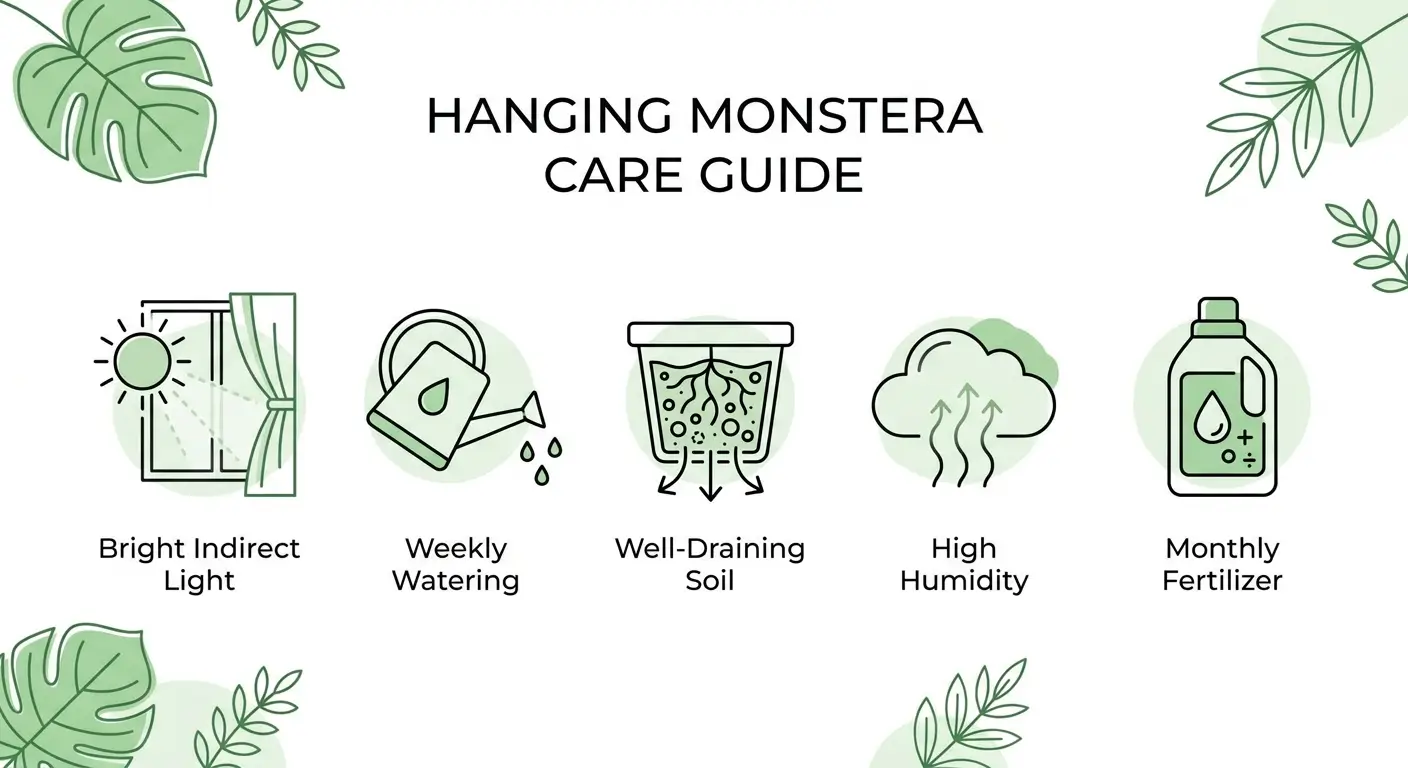
- Watering: Allow top 2 inches of soil to dry before watering
- Light: Bright indirect light, avoid direct sun exposure
- Soil: Chunky, well-draining aroid mix
- Fertilizer: Apply balanced liquid fertilizer every 4–6 weeks
- Pruning: Trim leggy vines to encourage bushier growth
- Climate: Best in 60–90°F, USDA zones 10–12 outdoors
For beginners exploring low-maintenance indoor plants, options like Japanese Money Plant Care: Light, Watering & Propagation Guide, Zamioculcas Zamiifolia Care Guide: ZZ Plant Growing Tips, and Peperomia Rotundifolia Care Guide: 6+ Proven Easy Tips offer similar easy-care benefits alongside hanging monstera.
Propagation Method
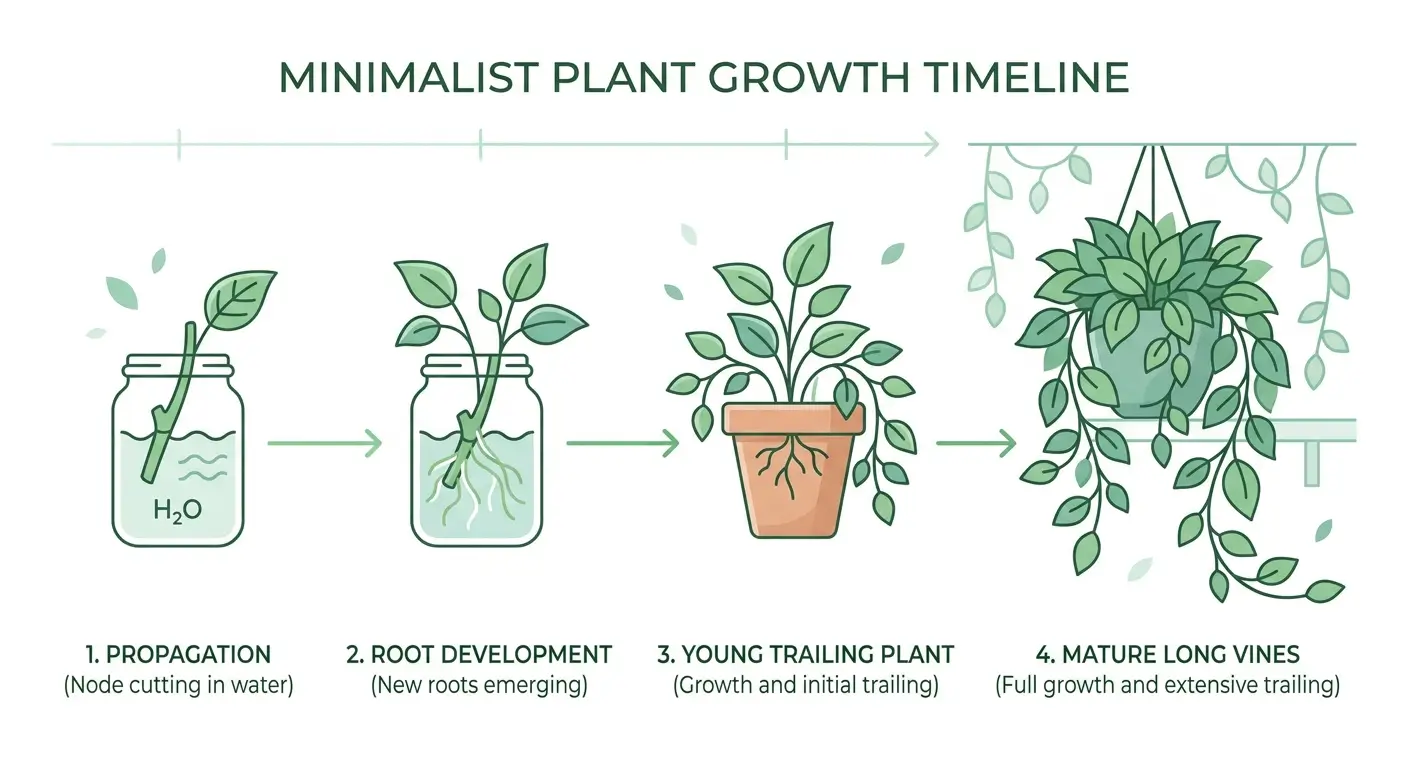
Stem cuttings can be placed in water or soil until roots develop, then transferred to a hanging setup once established.
How to Hang and Display Monstera Plants
Choosing Hanging Methods
Common hanging options include macramé holders, ceiling hooks, and wall-mounted baskets. These methods support trailing vines while maximizing visual appeal.
Practical Setup Tips
- Use baskets with drainage holes
- Ensure stable ceiling support for heavier varieties
- Consider self-watering pots for consistent moisture
Proper setup ensures balanced growth and prevents stress on trailing stems.
Common Problems and Solutions
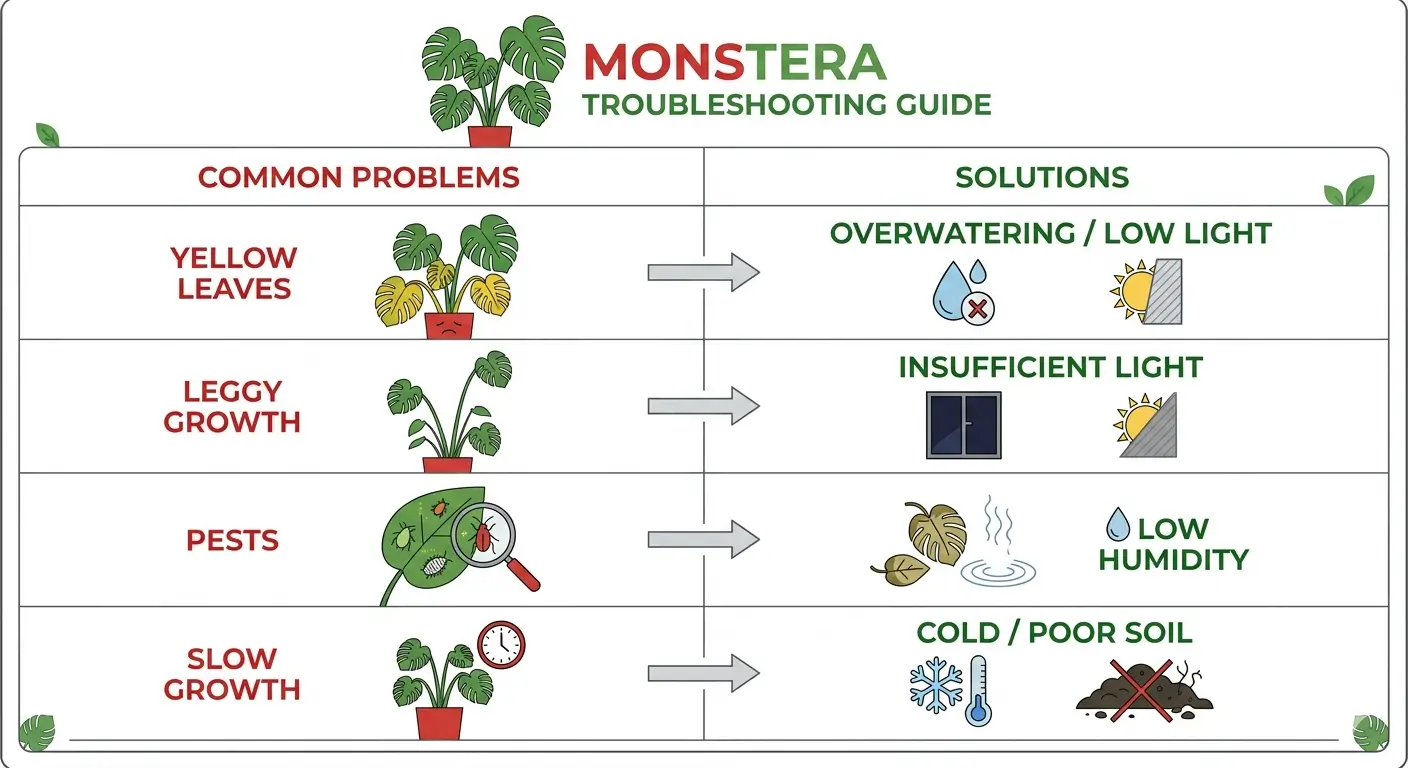
Yellow Leaves
Caused mainly by overwatering or poor drainage. Allow soil to dry and improve pot aeration.
Leggy Growth
Occurs due to insufficient light. Move plant closer to bright indirect light and prune long stems.
Pests (Spider Mites)
Appear in low humidity conditions. Increase humidity and apply neem oil regularly.
Slow Growth
Often caused by cold temperatures or nutrient-poor soil. Improve warmth and repot if needed.
Hanging Monstera vs Similar Vining Plants
Monstera vs Pothos
Monstera develops fenestrated leaves, while pothos has smooth, heart-shaped leaves.
Monstera vs Philodendron
Monstera produces split leaves as it matures, while philodendrons retain simpler leaf shapes.
Key Differences
- Leaf structure: Monstera is more complex and perforated
- Growth style: Both vine, but Monstera becomes larger and more dramatic
- Care needs: Similar but Monstera prefers higher humidity
Similar trailing and decorative plant behavior can also be seen in landscape-friendly species such as Liriope Varieties: 9+ Essential Types & Uses Guide, which are often used for ground cover, and tropical screening plants like Tropical Screening Plants: Best Choices for Garden Privacy.
Conclusion
Hanging monstera is an excellent way to showcase tropical foliage indoors, especially varieties like Monstera deliciosa and Monstera adansonii. With proper care, including balanced watering, bright indirect light, and humidity control, these plants develop lush trailing vines and iconic split leaves. The key to long-term success is maintaining consistent care and choosing an appropriate hanging setup that supports natural growth behavior.
FAQ
Can you hang a Monstera deliciosa indoors?
Yes, it grows well in hanging baskets with bright indirect light and proper support for aerial roots.
How do you care for a hanging Monstera adansonii?
Provide medium indirect light, weekly watering, and high humidity while pruning regularly.
What causes yellow leaves on hanging monstera?
Overwatering and poor drainage are the main causes; adjust watering and improve soil conditions.
Can Monstera deliciosa grow outdoors in Australia?
Yes, in warm zones (10+), but it must be protected from frost and direct harsh sunlight.
How to propagate a hanging monstera?
Cut below a node, root in water or soil, and transplant once strong roots develop.


4 Responses