
Introduction
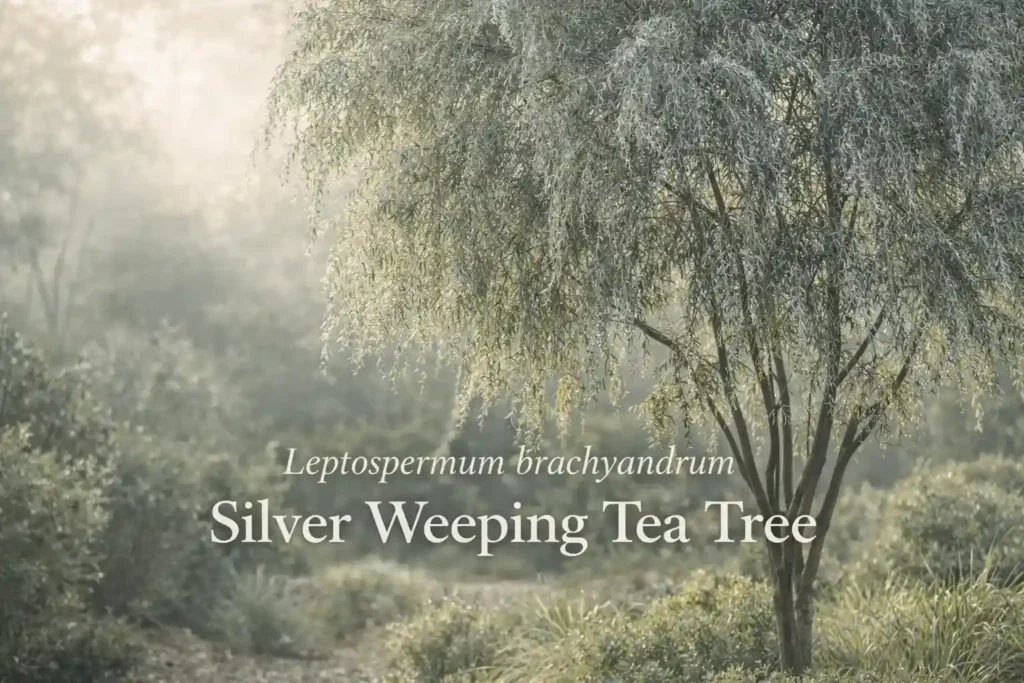
Leptospermum brachyandrum is a native Australian shrub or small tree known for its weeping habit and silvery foliage, commonly called silver weeping tea tree. This evergreen plant from the Myrtaceae family thrives in a wide range of landscapes, offering strong ornamental value through its cascading branches and seasonal white flowers. It is widely studied for identification, cultivation requirements, and ornamental garden applications.
Quick Summary
- Elegant small tree (3–5m tall) with silvery, pendulous foliage and white spring flowers
- Native to Australia, thrives in moist but well-drained soils with sun to part shade
- Low-maintenance once established and supports pollinators like bees and birds
- Includes ornamental cultivars such as ‘Silver’ and ‘Jack Frost’
Plant Size
Mature Dimensions
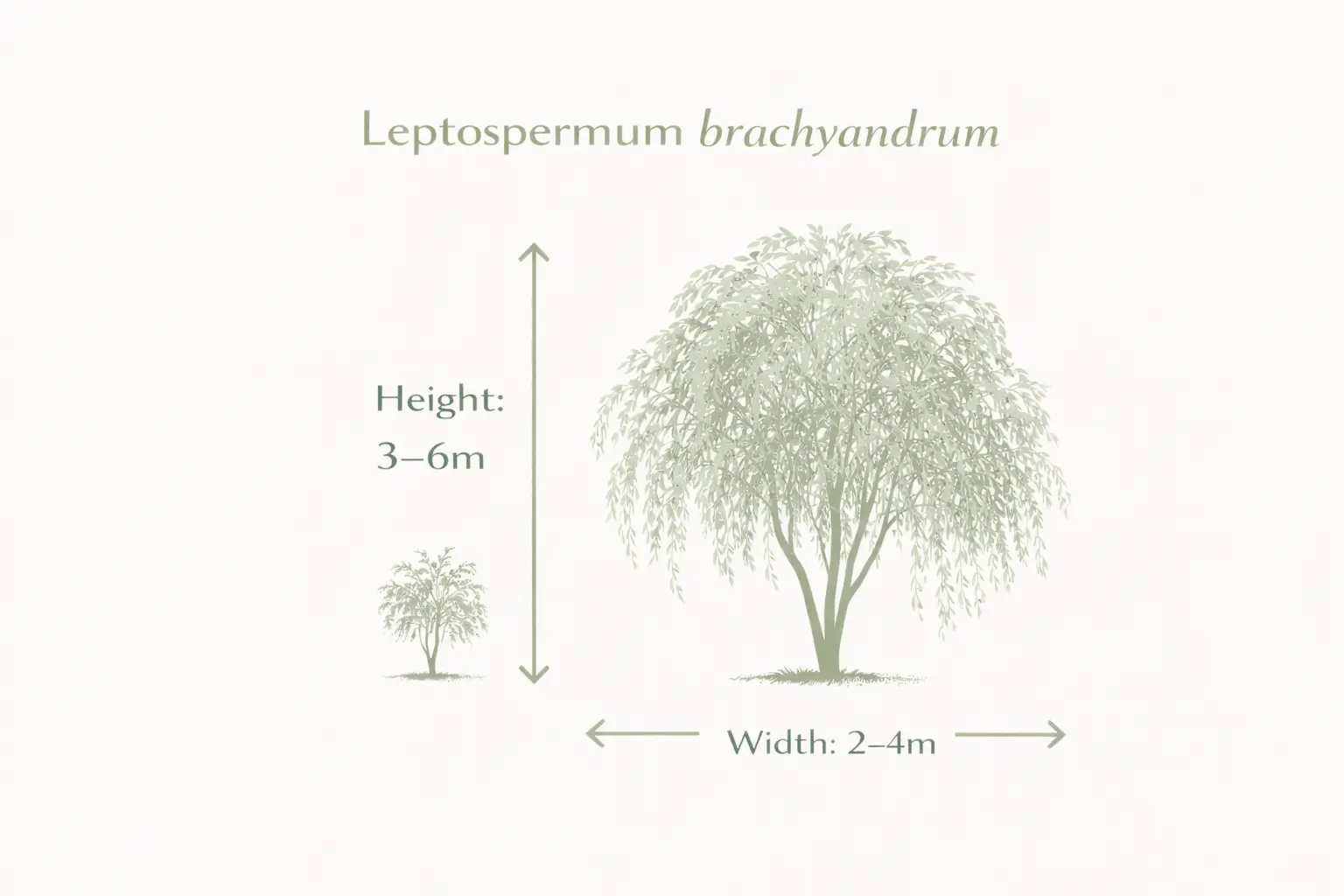
Leptospermum brachyandrum typically grows to 3–6 meters in height and 2–4 meters in width, depending on growing conditions and pruning practices.
Indoor vs Outdoor Growth
This species is not suitable for long-term indoor cultivation due to its size and light requirements. Outdoor planting allows full expression of its weeping structure and canopy development.
Factors Affecting Size
- Soil moisture levels
- Pruning frequency and intensity
- Sunlight exposure
- Soil fertility and drainage quality
Growth Rate
Growth Pattern Overview
Leptospermum brachyandrum has a moderate growth rate, with the fastest expansion occurring during warm spring and summer months.
Environmental Influence
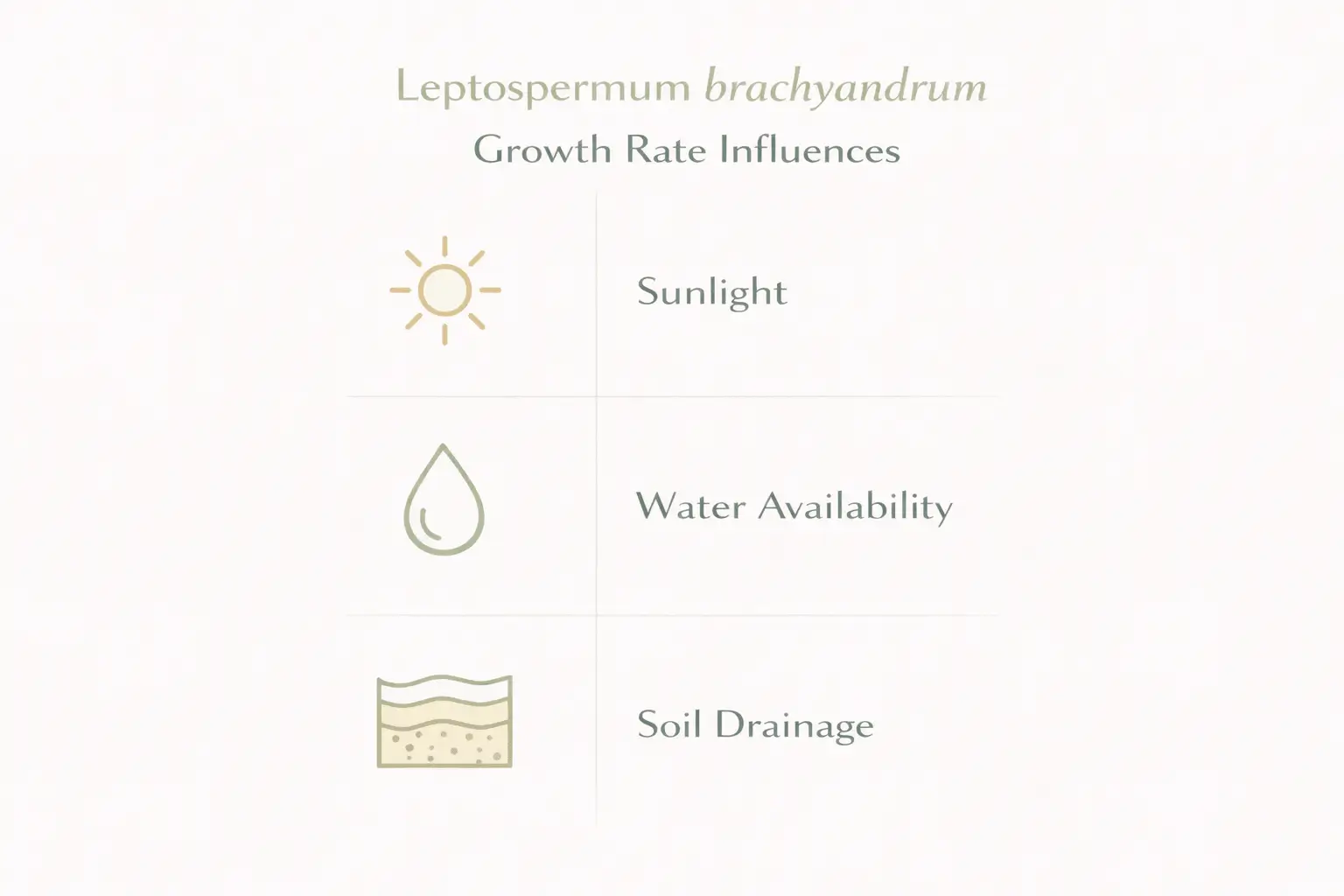
- Full sun exposure increases growth speed
- Consistent watering enhances early establishment
- Poor drainage or dry soil significantly slows development
Seasonal Variation
Growth slows considerably in cooler months, especially in frost-prone regions.
Care Guide
Watering Requirements
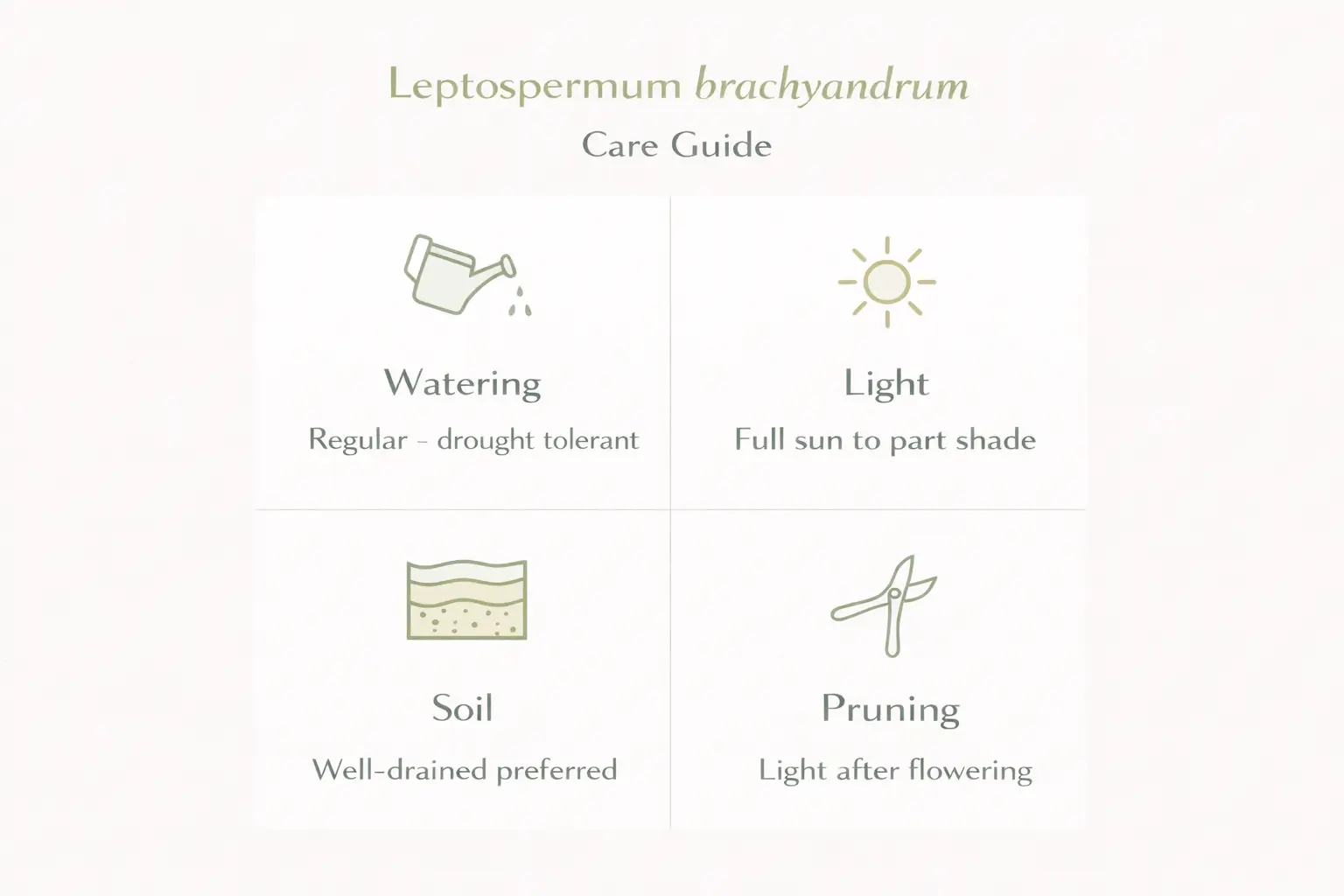
Regular watering is essential during the first 1–2 years. Once established, the plant becomes drought-tolerant.
Light Requirements
Best growth occurs in full sun, although it tolerates partial shade with slightly reduced flowering.
Soil Conditions
Prefers well-drained soil with neutral to slightly acidic pH. Heavy clay soils should be amended.
Fertilization
Apply low-phosphorus fertilizer in spring to encourage healthy foliage and flowering.
Pruning Practices
Light pruning after flowering helps maintain shape while preserving the natural weeping habit.
Climate Tolerance
Tolerates light frost down to approximately -7°C when mature.
If you’re growing other Australian natives alongside Leptospermum brachyandrum, you can also check detailed care guides like Easy Low Maintenance Australian Native Garden Guide 7+ Steps and 9+ Essential Plants for Dry Areas: Smart Garden Guide for better landscape planning.
Botanical Characteristics
Leaf Structure
Leaves are linear-lanceolate, up to 5 cm long, with a distinctive silvery-green appearance.
Flowers
Produces small white flowers approximately 7 mm in diameter, typically in late spring to early summer.
Bark and Growth Habit
Bark is flaky and ornamental, contributing to winter visual interest. The plant naturally develops a pendulous, weeping form.
Etymology
The species name “brachyandrum” originates from Greek, meaning “short stamens,” describing a key floral characteristic.
Natural Habitat
Occurs naturally in moist, partially shaded environments in Australia, often near waterways or sheltered forest margins.
Leptospermum brachyandrum belongs to the Myrtaceae family, which includes many important aromatic and ornamental plants such as tea trees and eucalyptus.
Popular Cultivars
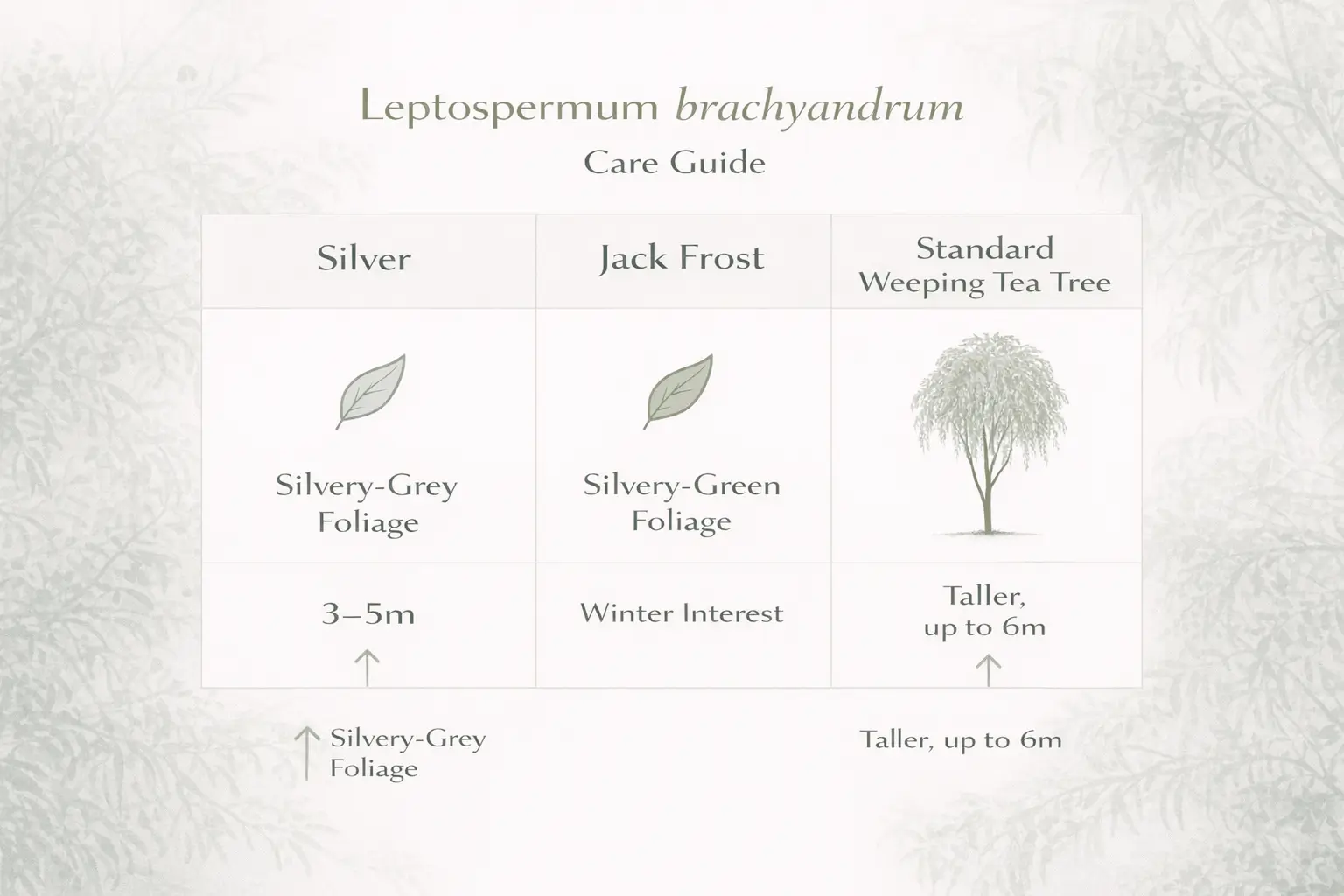
‘Silver’ (Silver Weeping Tea Tree)
- Silvery-grey pendulous foliage
- Height: 3–5m, Width: 2–3m
- Highly ornamental with strong pollinator attraction
‘Jack Frost’
- Silvery-green weeping foliage
- Height: 3–5m, Width: 2–3m
- Enhanced winter bark appeal and decorative structure
Standard Weeping Tea Tree
- Silver-green foliage
- Height: up to 6m, Width: 3m
- Used for screening and natural landscape structure
For comparison with other ornamental native trees used in hedging and landscaping, see Magnolia Hedge Australia: 8+ Smart Varieties & Tips and 7+ Essential Types of Westringia for Hedges & Gardens.
Comparisons with Similar Species
Leptospermum brachyandrum vs Leptospermum madidum
Leptospermum brachyandrum differs from Leptospermum madidum by having silvery foliage, shorter stamens, and better frost tolerance.
Leptospermum madidum, in contrast, prefers wetter habitats and features greener foliage with less ornamental silver coloration.
Key Differences
- Brachyandrum: more frost tolerant, ornamental silvery foliage
- Madidum: prefers wetter soils, greener appearance
- Brachyandrum: better suited for drier landscape gardens
Landscape Uses and Benefits
Ornamental Applications
Used as a specimen tree, screening plant, or feature planting due to its weeping form and silver foliage.
Ecological Benefits
- Attracts bees and nectar-feeding birds
- Supports pollinator ecosystems
- Helps with slope stabilization and erosion control
Environmental Tolerance
Tolerates salt spray and adapts well to coastal or exposed garden environments.
To explore more Australian native plants suitable for structured garden design and screening, you may also like our guides on Fast Growing Australian Native Screening Plants Guide, Tropical Screening Plants: Best Choices for Garden Privacy, and 7+ Essential Evergreen Trees Brisbane Gardens Need.
Common Problems and Solutions
Yellowing Leaves
Caused by overwatering or poor drainage. Improve soil structure and reduce watering frequency.
Slow Growth
Often due to compacted or nutrient-poor soil. Improve drainage and apply light fertilization.
Pests
Scale insects may occur. Manage with pruning and horticultural oil application.
Prevention
Proper site selection and well-drained soil significantly reduce most issues.
Beginner Mistakes
Heavy Clay Soil Planting
Planting without soil improvement leads to root rot. Raised beds or soil amendments are recommended.
Lack of Mulching
Skipping mulch increases water stress. Apply organic mulch annually.
Over-Pruning
Excessive pruning disrupts natural weeping shape. Only light tip pruning is recommended.
Seasonal Care and Variety Differences
Seasonal Growth Pattern
Spring and summer show peak flowering and growth activity, while winter focuses on structural appearance and bark texture.
Cultivar Differences
‘Silver’ offers stronger silvery foliage, while ‘Jack Frost’ provides enhanced bark and winter interest. Standard forms are more naturalistic and taller.
Conclusion
Leptospermum brachyandrum, especially silver weeping tea tree cultivars like ‘Silver’ and ‘Jack Frost’, is a highly ornamental and low-maintenance plant suited for diverse landscapes. Its success depends mainly on well-drained soil, moderate watering, and proper site selection. With strong pollinator benefits and elegant weeping structure, it is a valuable addition to sustainable garden design.
FAQ
What is the common name for Leptospermum brachyandrum?
It is commonly known as silver weeping tea tree or weeping tea tree, valued for its silvery cascading foliage.
How tall does Leptospermum brachyandrum 'Silver' grow?
It typically grows 3–5 meters tall with a spread of 2–3 meters depending on conditions.
What are the care needs for Leptospermum brachyandrum?
It requires full sun to part shade, well-drained soil, light pruning, and minimal fertilizer.
How does 'Jack Frost' differ from standard forms?
'Jack Frost' has enhanced silvery-green foliage and more decorative winter bark compared to standard varieties.
Why are leaves turning yellow?
Yellowing is usually caused by overwatering or poor drainage, which can be fixed by improving soil conditions.