
Introduction
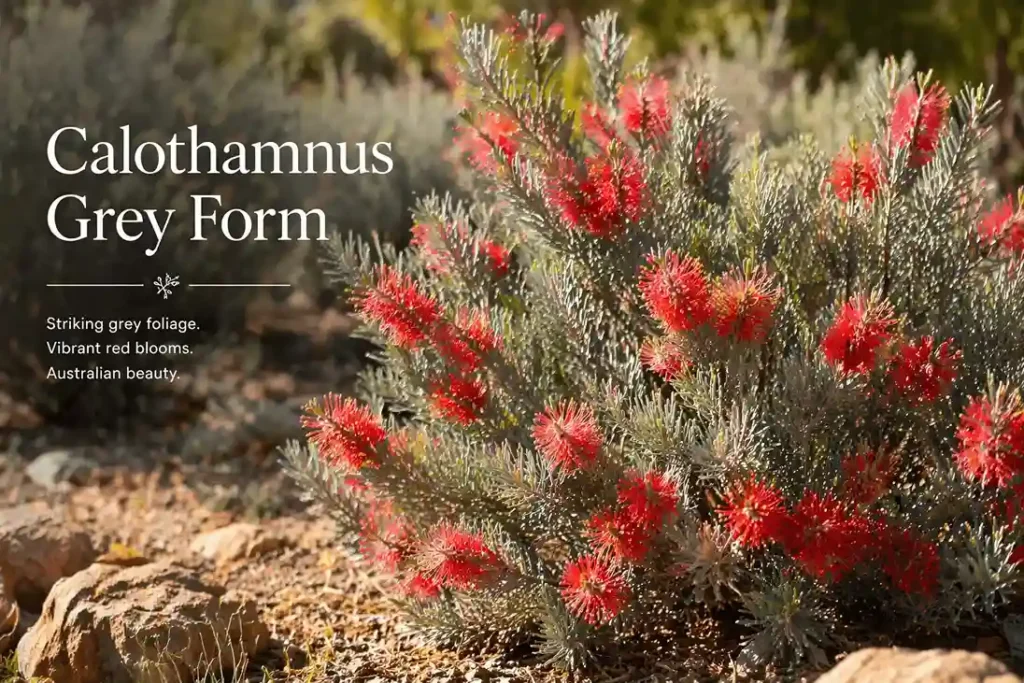
Calothamnus grey form is a distinctive Australian native shrub known for its silvery-grey foliage and striking red bottlebrush-like flowers. It belongs to the species calothamnus quadrifidus, commonly called the one-sided bottlebrush due to its unique flower arrangement. This plant is widely valued in drought-tolerant landscaping because of its ability to thrive in dry, well-drained environments. Its ornamental appeal, combined with low maintenance requirements, makes it suitable for both native gardens and modern landscape designs. Understanding its characteristics, growth patterns, and care needs helps gardeners maximize its performance and longevity.
Quick Summary
- Calothamnus grey form is a drought-tolerant shrub with silvery foliage and red flowers.
- It is a variation of calothamnus quadrifidus, known as the one-sided bottlebrush.
- Prefers full sun and well-drained soils for optimal growth.
- Requires minimal care and suits low-maintenance landscapes.
What Is Calothamnus Grey Form?
Calothamnus grey form is a naturally occurring variation of calothamnus quadrifidus, distinguished by its silvery-grey foliage and strong drought adaptation. It is part of the Myrtaceae family, which includes many Australian native shrubs.
Calothamnus grey form is a variation of Calothamnus quadrifidus, a species native to Western Australia (see Calothamnus quadrifidus on Wikipedia for botanical classification details).
The term “grey form” refers to the plant’s foliage coloration, which appears pale grey due to fine surface adaptations that reduce water loss. This feature enhances its ability to survive in dry, sandy environments.
Key Points:
- Belongs to calothamnus quadrifidus species
- Known as the one-sided bottlebrush
- Adapted to dry, sandy soils
- Native to Western Australia
Botanical Classification and Related Species
Understanding Calothamnus Quadrifidus
Calothamnus quadrifidus is the parent species of the grey form and is widely distributed in Western Australia. It is known for its distinctive one-sided flower spikes and adaptability to arid conditions.
Related Varieties and Forms
Several forms and related species exist within the genus, each with unique characteristics:
- calothamnus quadrifidus grey – similar grey foliage with upright habit
- calothamnus quadrifidus prostrate – low-growing, spreading ground cover
- calothamnus quadrifidus dwarf – compact form suitable for small gardens
- calothamnus hirsutus – characterized by hairy foliage
- calothamnus rupestris – adapted to rocky environments
These varieties differ in growth habit, foliage texture, and overall size, making them suitable for different landscaping purposes.
Key Characteristics of Calothamnus Grey Form
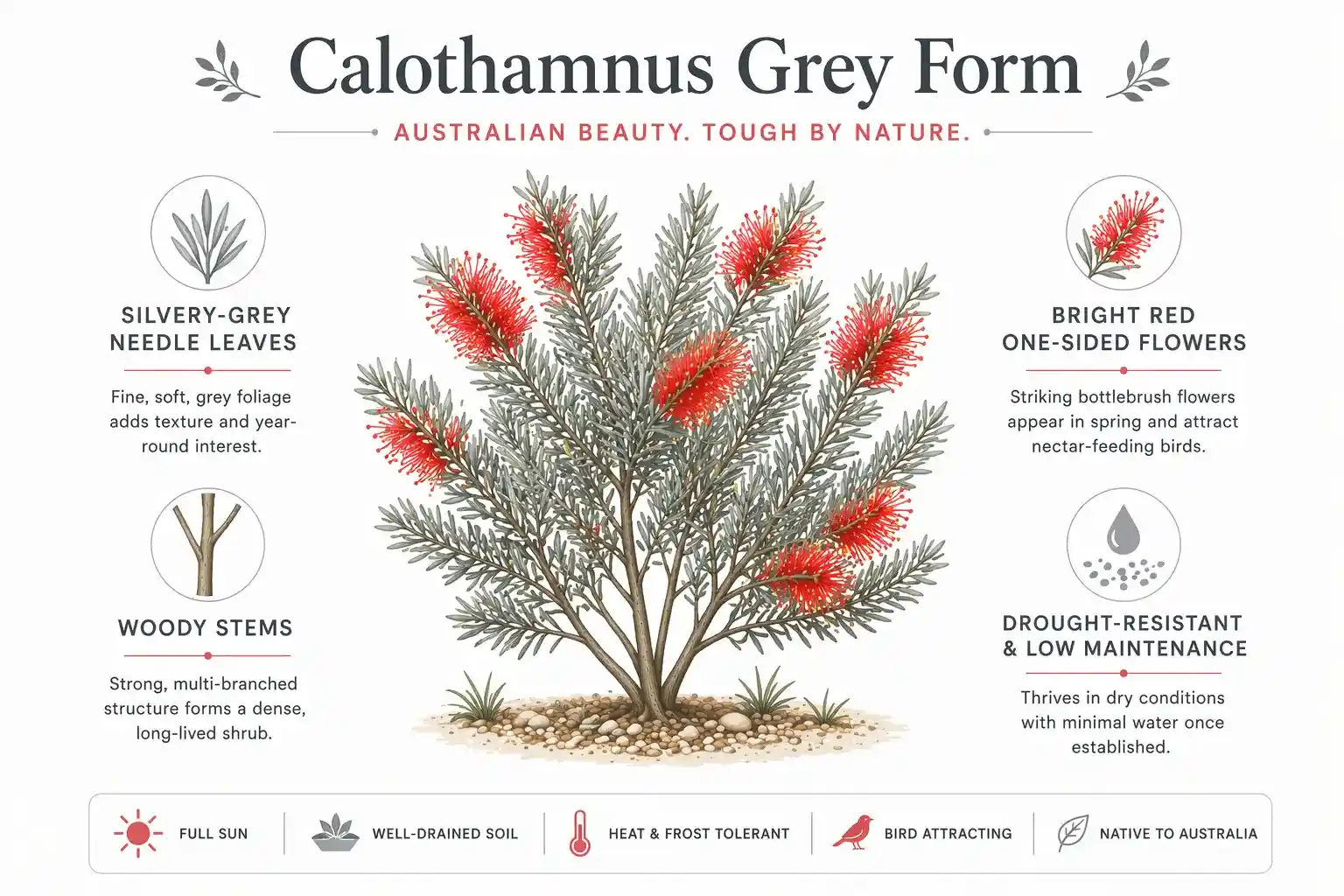
Calothamnus grey form is easily identified by its foliage color, flower structure, and woody growth habit.
Key Features:
- Silvery-grey, needle-like leaves
- Bright red flowers arranged on one side of the stem
- Woody shrub structure with upright growth
- High tolerance to drought and poor soils
Its vibrant red blooms place it among visually striking species highlighted in 7+ Essential Tree With Red Flowers Australia Smart Guide.
Calothamnus Grey Form Size and Growth Habit
Typical Size Range
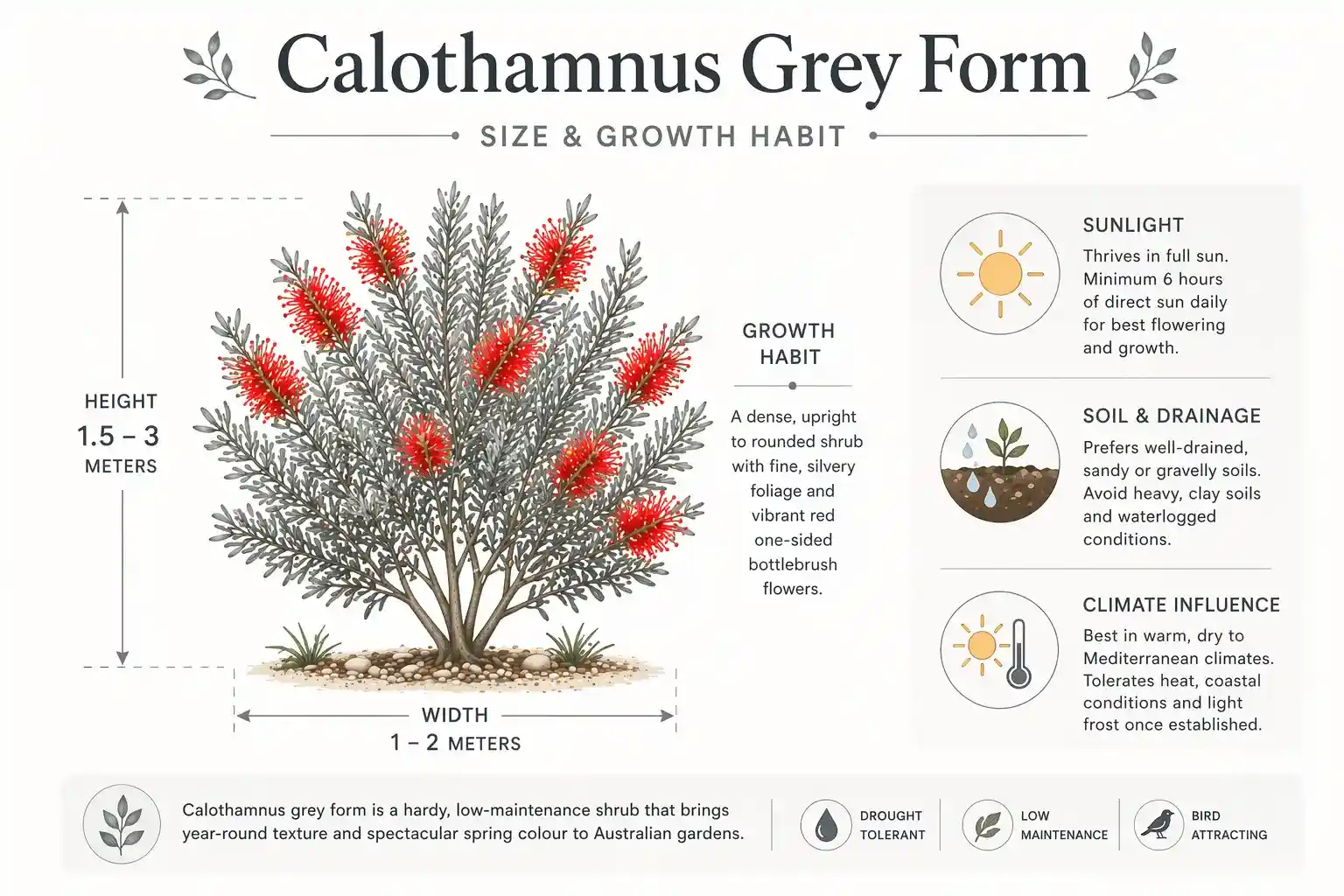
Calothamnus grey form typically grows to:
- Height: 1.5–3 meters
- Width: 1–2 meters
Growth Influences
The plant’s size and shape can vary depending on environmental conditions:
- Soil drainage quality
- Sun exposure levels
- Local climate conditions
Well-drained soils and full sunlight promote healthier and more compact growth.
Growth Rate and Seasonal Behavior
Calothamnus grey form has a moderate growth rate, meaning it develops steadily without rapid expansion. Growth is most active during warmer months when temperatures and sunlight levels are higher.
Key Points:
- Moderate growth rate
- Active growth in spring and summer
- Flowering typically occurs in spring
During cooler months, growth slows, but the plant remains structurally stable.
Ideal Growing Conditions
Light Requirements
Calothamnus grey form requires full sun for optimal development. Insufficient sunlight can reduce flowering and weaken plant structure.
Soil Preferences
The plant prefers:
- Well-drained, sandy soils
- Low-nutrient conditions
It is highly sensitive to waterlogging, which can damage roots.
Climate Tolerance
- Highly drought-tolerant once established
- Best suited to Mediterranean and dry climates
Calothamnus grey form performs exceptionally well in dry environments, making it a suitable choice among other species featured in 9+ Essential Plants for Dry Areas: Smart Garden Guide.
Care Guide for Calothamnus Grey Form
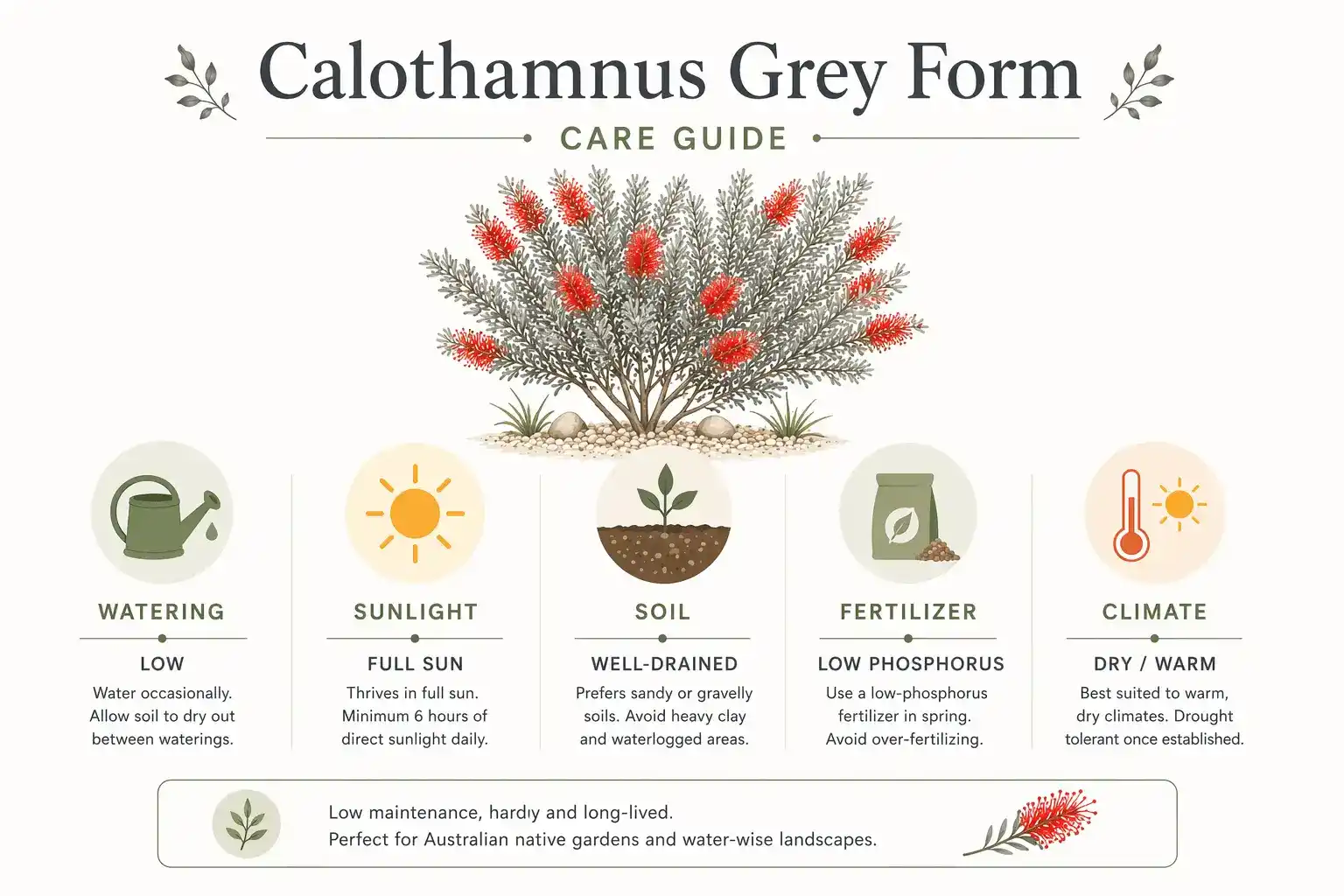
Proper care ensures long-term health and consistent flowering.
Care Guidelines:
- Watering: Low once established
- Fertilizing: Minimal; avoid high-phosphorus fertilizers
- Mulching: Helps retain soil moisture
- Climate: Prefers dry, warm conditions
A common mistake is overwatering, which can negatively affect root health.
Pruning and Maintenance
Calothamnus grey form pruning should be done lightly after flowering to maintain shape and encourage new growth.
Key Points:
- Prune after flowering
- Avoid cutting into old wood
- Encourages bushier and healthier growth
Excessive pruning can reduce flowering in the following season.
Common Problems and Troubleshooting
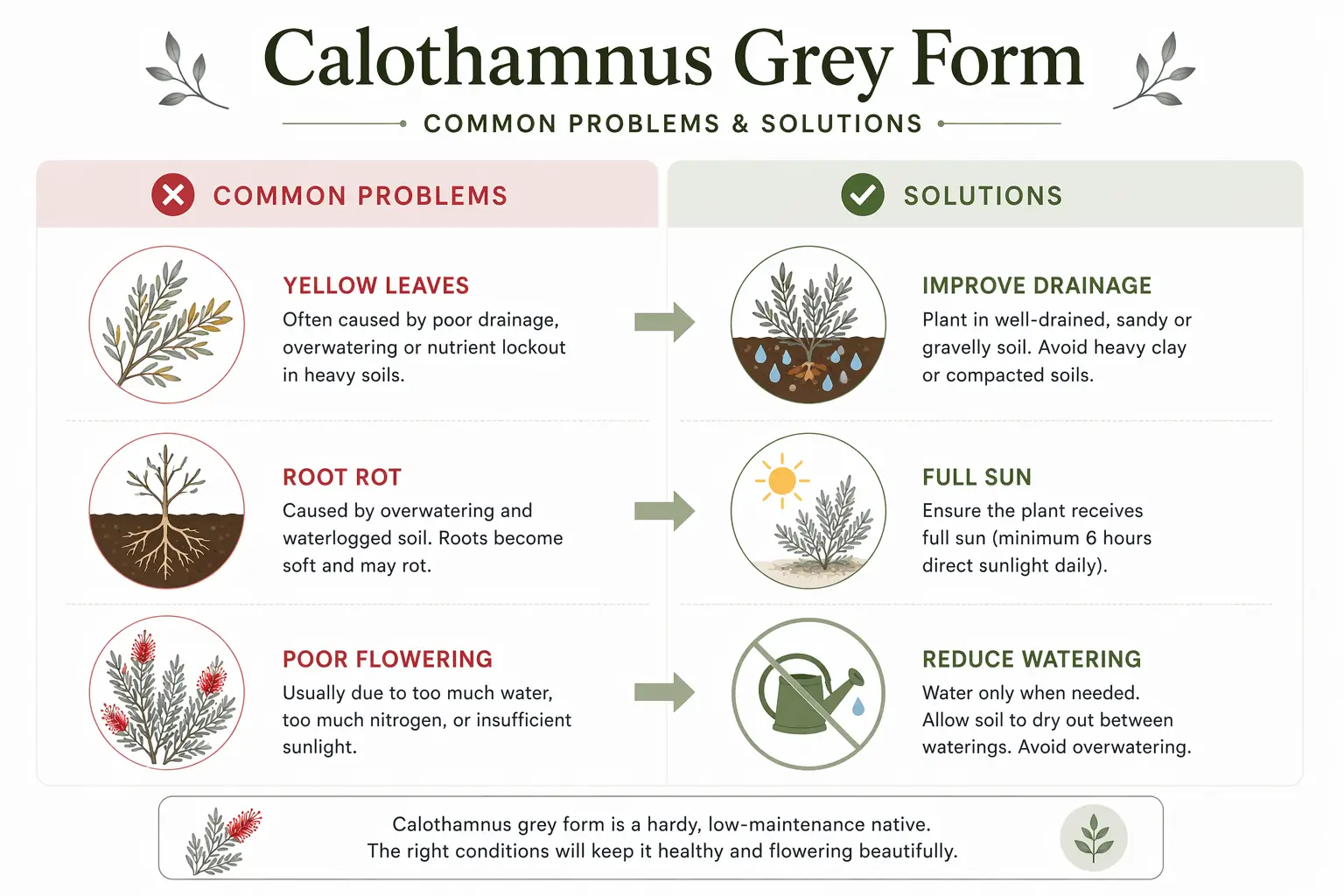
Common Issues
- Yellowing leaves due to overwatering
- Poor flowering caused by insufficient sunlight
- Root rot from poorly drained soil
Solutions and Prevention
- Improve soil drainage
- Ensure full sun exposure
- Reduce watering frequency
Monitoring soil moisture is critical to preventing most issues.
Comparison: Grey Form vs Other Calothamnus Varieties
| Variety | Foliage Color | Growth Habit | Size | Key Feature |
| Grey Form | Silvery-grey | Upright | Medium | Drought-tolerant |
| Prostrate | Green-grey | Spreading | Low | Ground cover |
| Dwarf | Green | Compact | Small | Suitable for small gardens |
| Hirsutus | Hairy foliage | Upright | Medium | Textured leaves |
This comparison helps identify the best variety based on landscape needs.
Landscaping Uses and Design Applications
Calothamnus grey form is widely used in landscape design due to its resilience and visual contrast.
Common Uses:
- Native gardens
- Drought-tolerant landscapes
- Coastal planting
- Feature shrub or informal hedge
Its grey foliage contrasts effectively with green plants. It is also a key component in sustainable landscape planning, similar to strategies outlined in Easy Low Maintenance Australian Native Garden Guide 7+ Steps.
Environmental Benefits and Limitations
Benefits
- Attracts pollinators such as bees
- Requires minimal water
- Helps stabilize soil in dry areas
Limitations
- Not suitable for heavy clay soils
- Sensitive to overwatering
Beginner Mistakes to Avoid
Common mistakes when growing calothamnus grey form include:
- Overwatering the plant
- Planting in shaded locations
- Using poorly drained soil
- Applying excessive fertilizer
Avoiding these issues significantly improves plant health and longevity.
Connection to Broader Gardening Topics
Calothamnus grey form is closely related to broader horticultural practices:
- Native plant gardening
- Drought-tolerant landscaping
- Shrub pruning techniques
- Plant selection for dry climates
Understanding these topics helps improve overall garden planning.
Conclusion
Calothamnus grey form is a resilient and visually striking shrub that combines drought tolerance with unique ornamental appeal. As a variation of calothamnus quadrifidus, it stands out for its silvery-grey foliage and vibrant red flowers. Its adaptability to dry conditions, minimal care requirements, and suitability for native landscaping make it a valuable addition to low-maintenance gardens. When grown in full sun with well-drained soil, calothamnus grey form performs reliably and enhances landscape diversity. For a broader understanding of plant care, growth patterns, and selection strategies, explore our complete resource on Plants: Benefits and Guides (Complete Care, Types & Growing Tips).
FAQs
What is calothamnus grey form?
Calothamnus grey form is a grey-foliaged variation of calothamnus quadrifidus, known for its distinctive red bottlebrush-like flowers and drought tolerance.
How big does calothamnus grey form grow?
It typically grows between 1.5 and 3 meters in height and spreads about 1 to 2 meters in width under suitable conditions.
How do you prune calothamnus grey form?
Prune lightly after flowering to maintain shape and encourage new growth, avoiding cutting into older woody parts.
What conditions does calothamnus grey form need?
It requires full sun, well-drained sandy soil, and minimal watering once established.
What is the difference between grey form and prostrate varieties?
Grey form grows upright, while prostrate varieties spread horizontally and are used as ground cover.