
Introduction
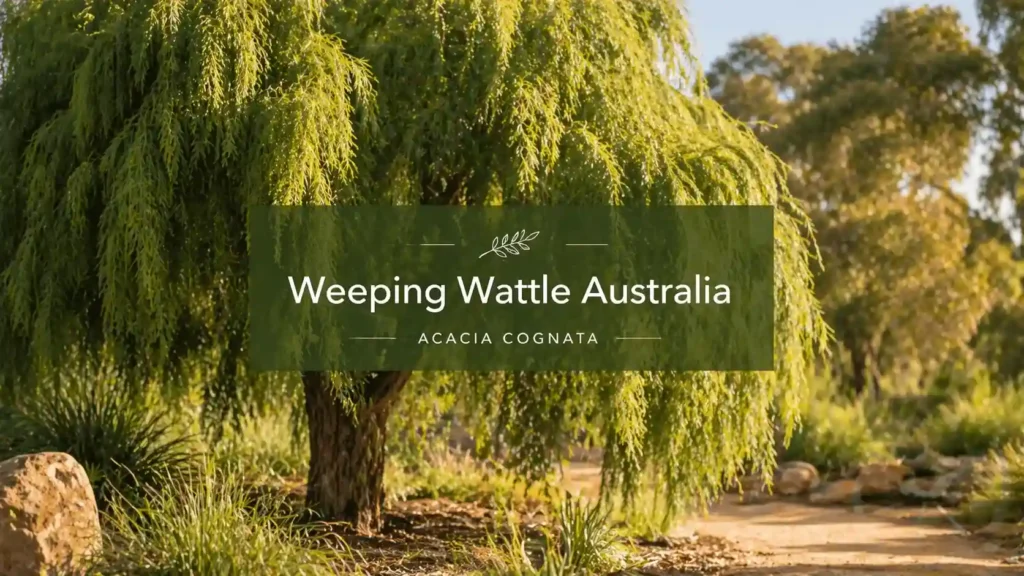
The weeping wattle Australia refers to a group of ornamental acacia species valued for their elegant, cascading foliage and adaptability to diverse Australian environments. Commonly associated with species such as Acacia cognata and Acacia pendula, these plants are widely used in landscaping due to their graceful appearance and low maintenance requirements. Their ability to thrive in dry conditions and poor soils makes them ideal for sustainable gardening. This guide explains what weeping wattles are, explores their types and growth habits, and provides clear, practical care instructions suited to Australian conditions.
Weeping wattles are especially effective in sustainable landscapes and can be integrated into an easy low maintenance Australian native garden for long-term success.
Quick Summary
- Weeping wattles are ornamental acacia varieties with pendulous, cascading foliage
- Common species include Acacia cognata and Acacia pendula
- Suitable for drought-tolerant gardens and low-maintenance landscapes
- Available in compact dwarf forms and larger standard trees
- Thrive in full sun with well-drained soil and minimal care
What Is Weeping Wattle in Australia?
Definition and Botanical Meaning
A wattle in Australia refers to plants belonging to the Acacia genus, a large group within the Fabaceae (legume) family. These native plants are recognized for their phyllodes (modified leaf structures) and characteristic yellow flowers. A wattle in Australia refers to plants belonging to the Acacia genus, a large group within the Fabaceae family.
The term “weeping” describes a growth habit where branches hang downward in a soft, pendulous form. This creates a flowing, waterfall-like appearance.
Common definitions:
- Weeping wattle plant: General term for ornamental acacias with drooping foliage
- Weeping wattle bush: Shrub form with cascading branches
- Weeping wattle tree: Taller, structured form with a defined trunk
These plants combine native resilience with ornamental appeal, making them widely used in Australian landscapes.
Types of Weeping Wattle Trees in Australia
Key Species and Varieties
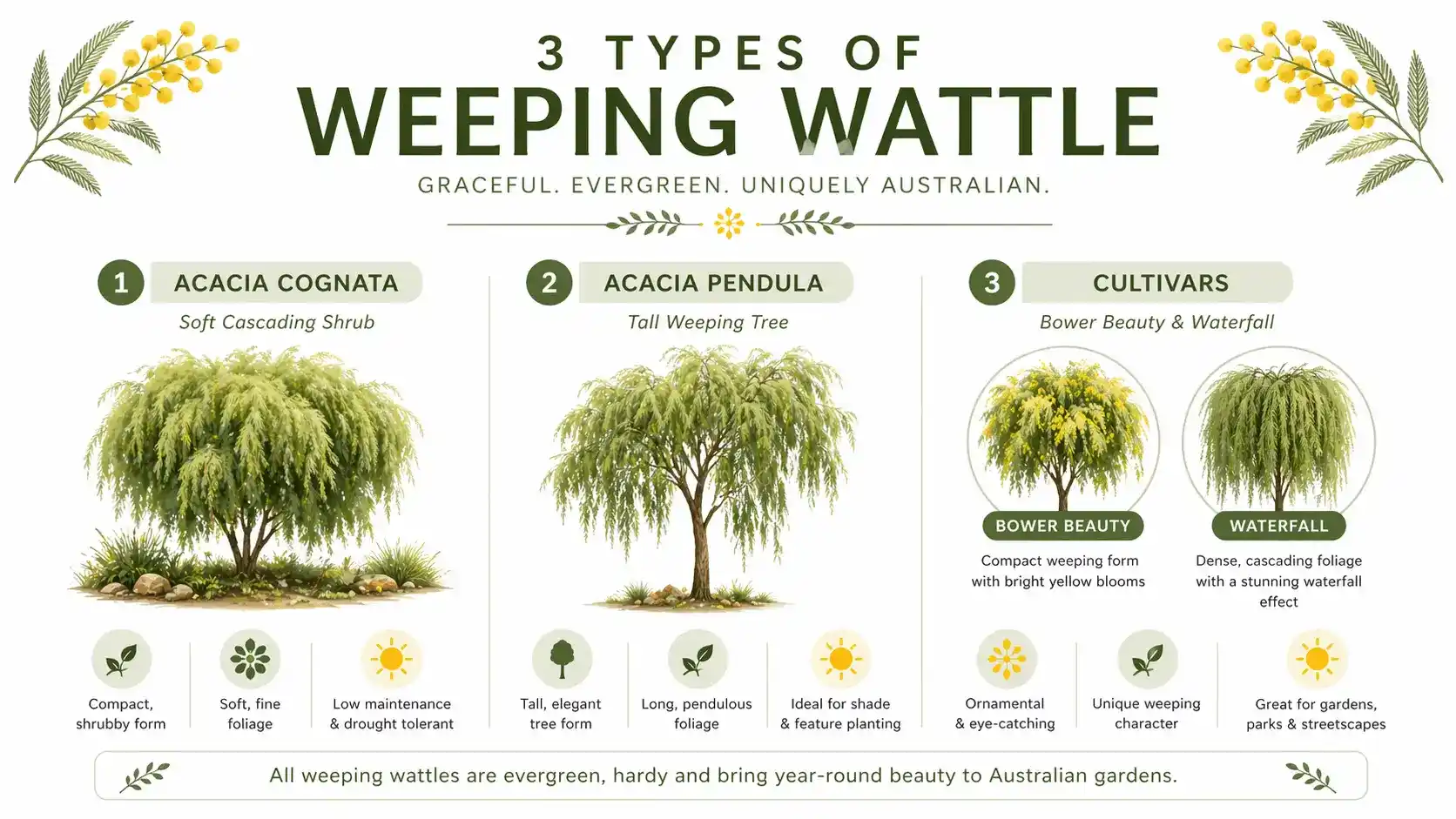
Several acacia species display weeping characteristics:
- Acacia cognata (River Wattle / Bower Wattle)
Known for soft, fine foliage and flexible growth forms - Acacia pendula
A true weeping tree with strongly drooping branches - Cultivars (e.g., Bower Beauty, Waterfall)
Selected for compact size and enhanced ornamental traits
Weeping wattles are often included among fast growing Australian native trees due to their adaptability and rapid establishment in suitable conditions.
Popular Cultivars and Forms
Common cultivated varieties include:
- Acacia cognata ‘Bower Beauty’ – Dense, compact, ideal for small gardens
- Acacia cognata ‘Waterfall’ – Strong cascading form, often used in landscaping
- Narrow-leaf and dwarf selections – Designed for pots and tight spaces
These cultivars offer flexibility for both large landscapes and urban gardens.
Weeping Wattle Size and Growth Characteristics
Typical Size and Shape
Weeping wattles vary significantly depending on species and cultivar.
- Shrub forms: Compact, rounded with flowing edges
- Tree forms: Upright trunk with cascading canopy
Typical sizes:
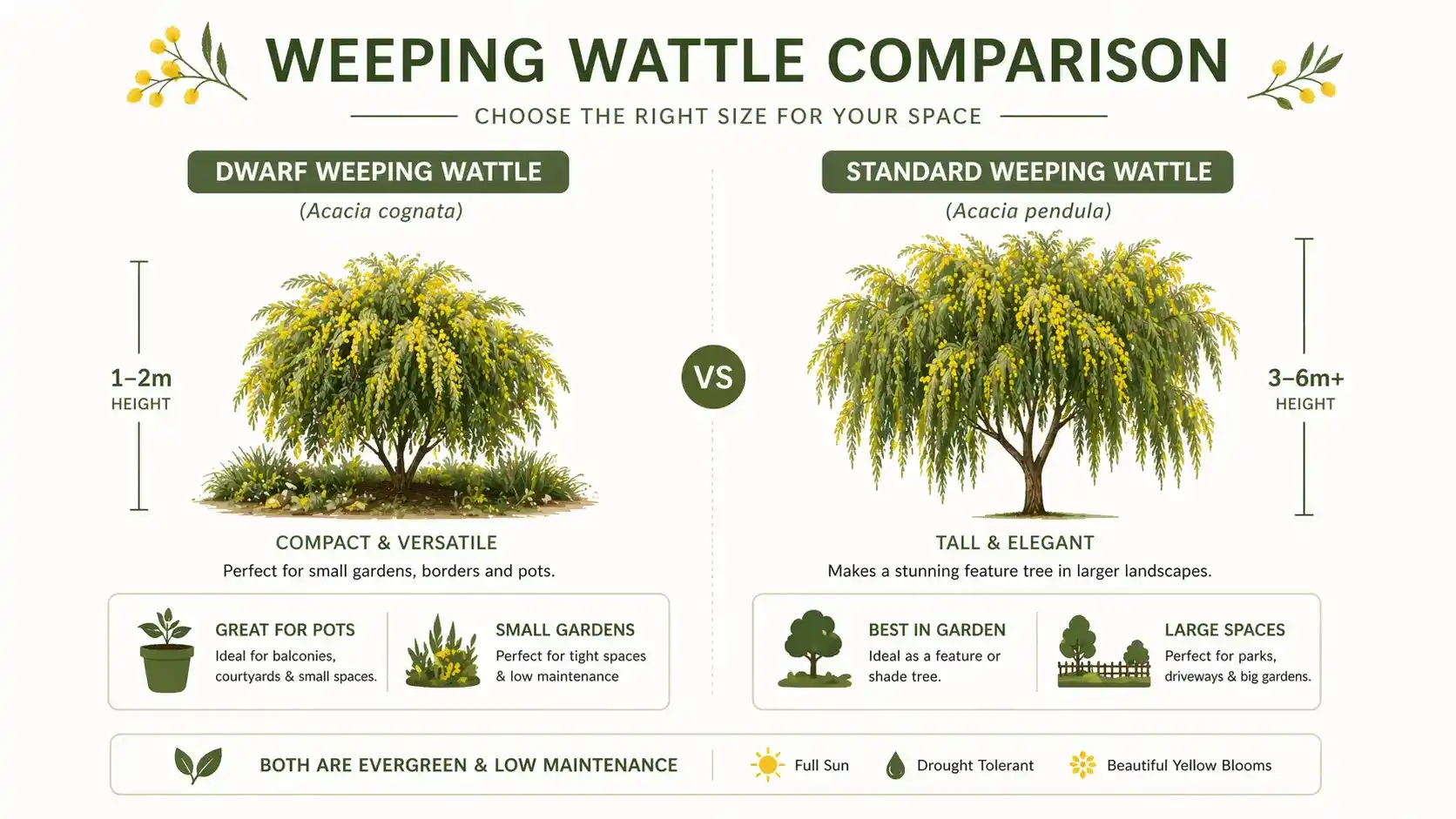
- Dwarf varieties: 1–2 meters tall and wide
- Standard trees: 3–6 meters or more
Environmental factors such as soil quality, sunlight, and water availability influence final size.
Growth Rate and Habit
Growth speed depends on species and conditions:
- Fast-growing in well-drained soil with full sun
- Moderate growth in less ideal environments
Seasonal patterns:
- Active growth during warmer months
- Slower growth in cooler seasons
Consistent conditions promote balanced, healthy development.
Dwarf vs Standard Weeping Wattle (Comparison Section)
Key Differences
| Feature | Dwarf Weeping Wattle | Standard Weeping Wattle |
| Height | Compact (1–2m) | Taller (3–6m+) |
| Use | Pots, small gardens | Feature trees |
| Maintenance | Low pruning | Occasional shaping |
Dwarf varieties suit limited spaces, while standard forms are better for large landscapes and focal planting.
How to Grow and Care for Weeping Wattle
Light, Soil, and Water Requirements
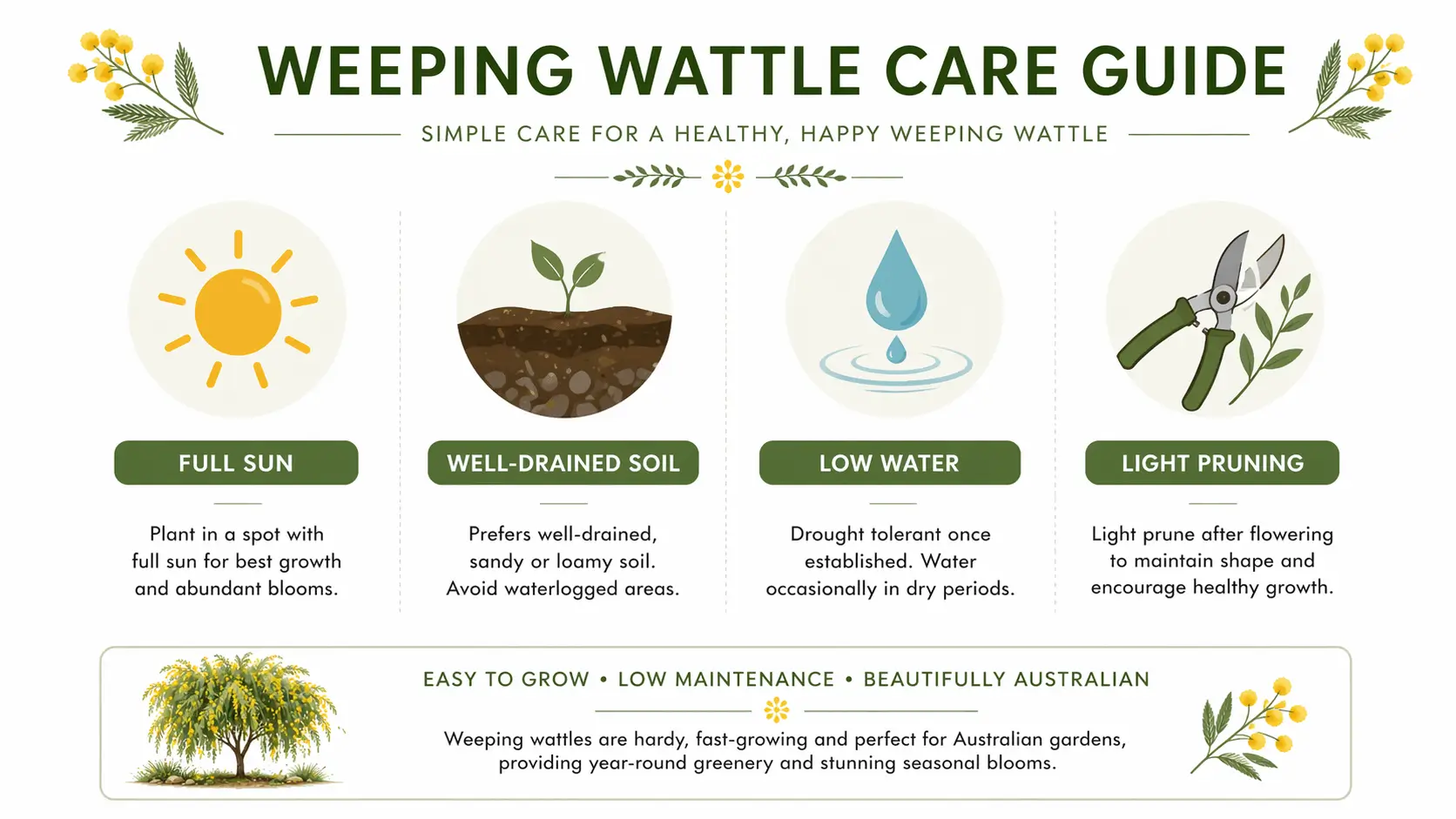
Weeping wattles thrive under simple conditions:
- Light: Full sun is essential for optimal growth
- Soil: Well-drained soil is critical; avoid heavy clay
- Water: Moderate watering during establishment, then drought-tolerant
Practical tip: Overwatering is a common mistake that can damage roots.
Fertilizing and Pruning
- Minimal fertilization is required due to nitrogen-fixing ability
- Use low-phosphorus fertilizers if needed
- Light pruning maintains the cascading shape and removes dead growth
Climate and Hardiness
These plants are well-adapted to Australian climates:
- Tolerate heat and dry conditions
- Suitable for most regions except areas with prolonged frost
- Perform best in temperate to arid zones
Because of their drought tolerance, weeping wattles are also recommended among plants for dry areas in water-efficient garden designs.
Flowering and Seasonal Behavior
When Do Wattle Trees Flower?
Weeping wattles typically flower from late winter to early spring, producing clusters of bright yellow flowers. These blooms are characteristic of the acacia genus and attract pollinators.
Seasonal Changes
Seasonal behavior includes:
- Increased growth in spring and summer
- Flowering followed by seed development
- Reduced activity during colder months
Understanding these cycles helps optimize care and maintenance timing.
Common Problems and How to Fix Them (Problem-Solution Section)
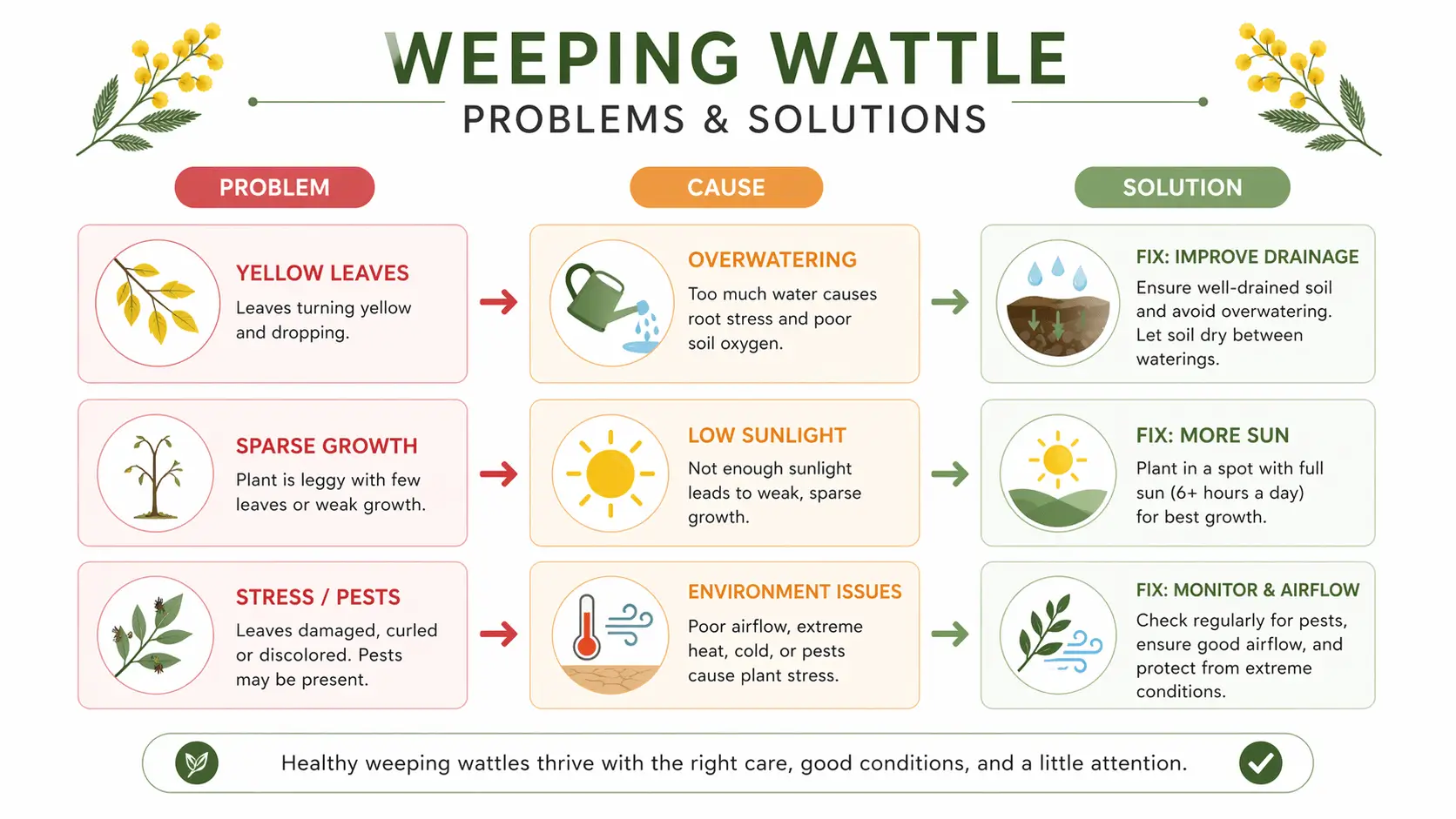
Yellowing Leaves or Poor Growth
Cause: Overwatering or poor drainage
Solution:
- Reduce watering frequency
- Improve soil drainage
Sparse Growth or Loss of Shape
Cause: Insufficient sunlight or improper pruning
Solution:
- Relocate to a sunnier position
- Prune to encourage branching
Pest or Environmental Stress
Common issues include minor insect infestations or heat stress.
Prevention strategies:
- Maintain airflow around the plant
- Avoid excessive watering
- Monitor regularly for early signs of stress
Weeping Wattle vs Other Weeping Trees (Comparison Section)
Weeping Wattle vs Weeping Willow
- Weeping wattle: Native, drought-tolerant, low maintenance
- Weeping willow: Non-native, requires high water availability
Weeping wattles are better suited to Australian conditions due to lower water demands.
Different Weeping Acacia Types
- Acacia cognata: Flexible, often used as shrub or small tree
- Acacia pendula: True weeping tree with stronger vertical structure
Each type serves different landscaping purposes.
Landscaping Uses of Weeping Wattle
Garden Design Applications
Weeping wattles are versatile:
- Feature tree in gardens
- Natural screening or soft borders
- Container planting for patios and small spaces
Aesthetic Appeal
Key visual benefits include:
- Cascading, waterfall-like foliage
- Soft texture that contrasts with rigid plant forms
- Movement and flow in landscape design
Common Beginner Mistakes to Avoid
Overwatering Native Plants
Wattles prefer dry conditions once established. Excess water can lead to root rot.
Planting in Poor Soil
Poor drainage is a major issue. Always ensure soil allows water to pass through easily.
Choosing the Wrong Variety
Selecting a plant too large for the space leads to maintenance issues. Match plant size to garden area.
Conclusion
Weeping wattle Australia plants, including species like Acacia cognata and Acacia pendula, combine ornamental beauty with exceptional resilience. Their cascading growth habit, adaptability to dry climates, and minimal care needs make them highly suitable for Australian gardens. By understanding their types, size variations, and proper care practices, gardeners can ensure healthy growth and long-term landscape value. These plants offer a practical and visually appealing solution for both small and large outdoor spaces. For broader insights into plant care, types, and growing strategies, explore this complete plants benefits and guides resource.
FAQs
What is the difference between Acacia cognata and Acacia pendula?
Acacia cognata is commonly used as an ornamental shrub or small tree with soft foliage, while Acacia pendula is a larger tree with a more pronounced weeping form.
How big does a weeping wattle grow in Australia?
Depending on the variety, sizes range from compact shrubs of 1–2 meters to trees exceeding 5 meters in height.
Are weeping wattles native to Australia?
Yes, most weeping wattle varieties originate from native Australian acacia species or are cultivated from them.
When do weeping wattles flower?
They typically flower from late winter to early spring, producing yellow blooms.
Can weeping wattle be grown in pots?
Yes, dwarf varieties grow well in containers if provided with good drainage, adequate sunlight, and proper care.