
Introduction
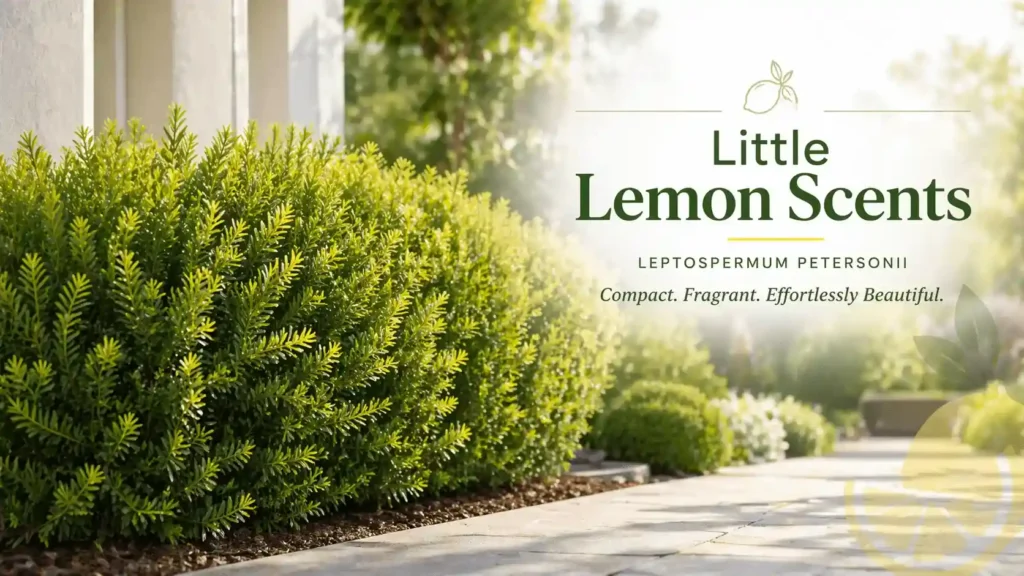
Little lemon scents refers to a compact, lemon-fragranced variety of Leptospermum petersonii, widely grown as a decorative and aromatic hedge. Known as Leptospermum little lemon scents, this plant produces a strong citrus fragrance and dense evergreen foliage. It is especially valued in Australian landscapes for its manageable size, adaptability, and consistent scent release. As a dwarf lemon scented tea tree, it provides both visual appeal and functional use in small gardens, borders, and hedges. Its ability to combine fragrance with low-maintenance growth makes it a practical choice for gardeners seeking structure and aroma in limited spaces.
Quick Summary
- Little lemon scents is a dwarf form of lemon-scented tea tree ideal for hedges and small gardens.
- It produces fragrant leaves with a citrus aroma similar to lemon oil.
- Commonly used for landscaping, hedging, and natural scent enhancement.
- Easy to maintain with proper sunlight, watering, and pruning.
What Is Little Lemon Scents (Leptospermum Variety)?
Botanical identity and classification
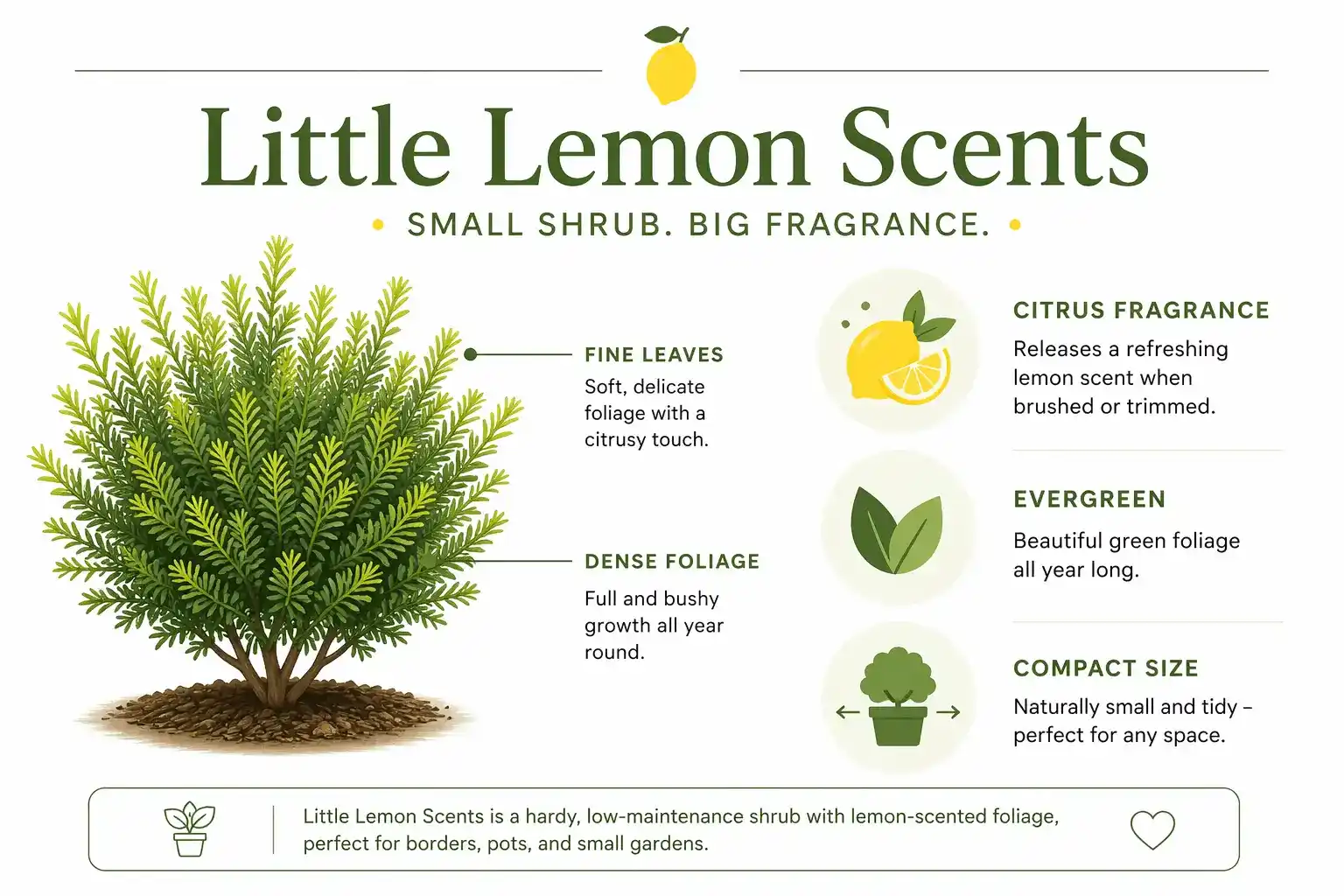
Little lemon scents is a cultivated dwarf variety of Leptospermum petersonii, a species in the Myrtaceae family. This plant is native to Australia and is commonly referred to as the lemon scented tea tree due to its aromatic foliage.
The plant is derived from Leptospermum petersonii, a species known for its aromatic foliage and native Australian origin.
Explanation of Leptospermum petersonii and its dwarf cultivar
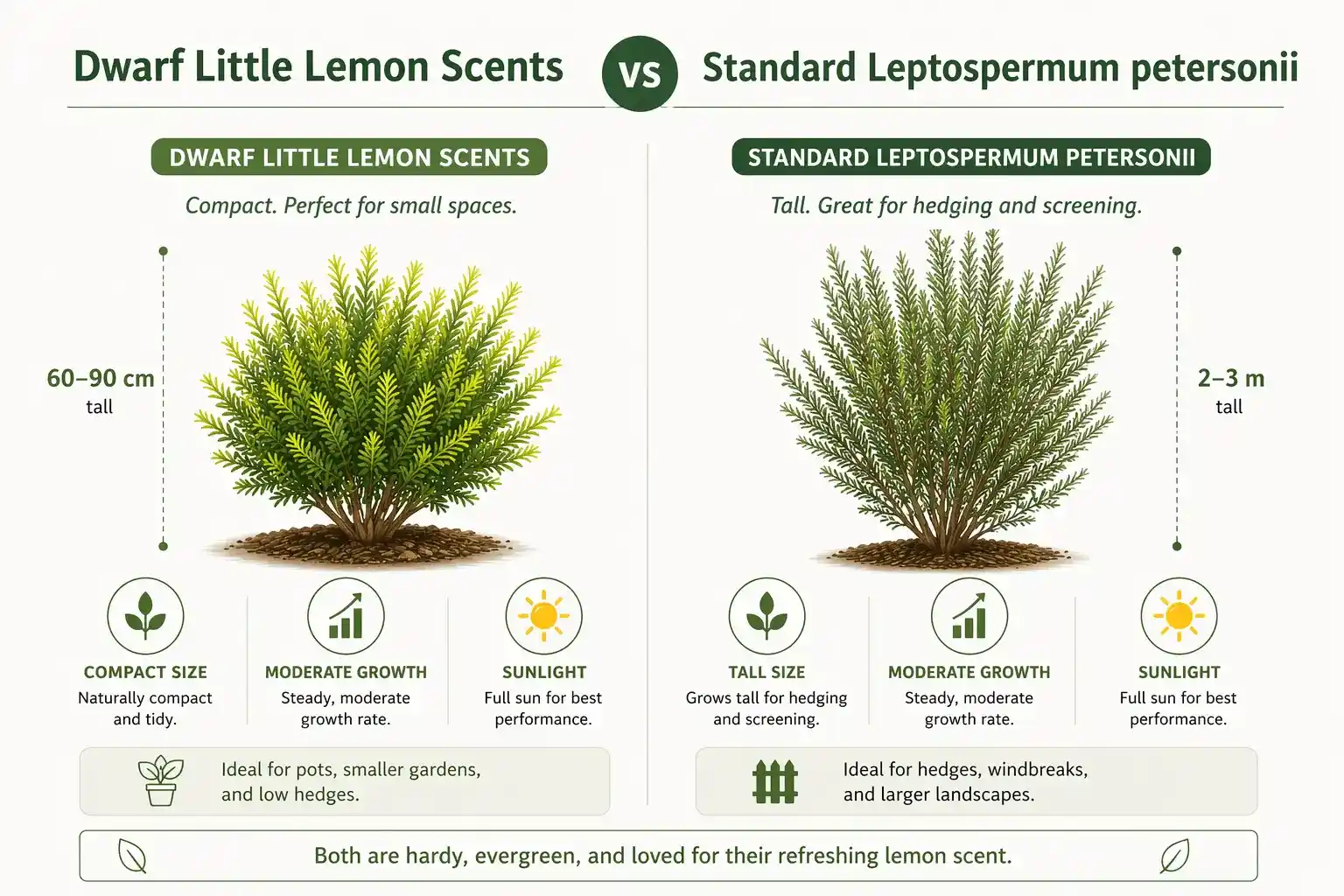
The standard Leptospermum petersonii grows as a tall shrub or small tree, while the dwarf cultivar known as little lemon scents is bred for compact growth. This makes it suitable for smaller landscapes and controlled garden designs.
Relationship between naming variations
The terms leptospermum petersonii, petersonii, and leptospermum petersonii little lemon scents refer to the same plant species or its cultivated form. Common names like lemon scented tea tree, lemon tea tree, and tree with lemon smelling leaves all describe this plant’s defining citrus fragrance.
Key Features of Little Lemon Scents Plant
Appearance and foliage characteristics
Little lemon scents is a dense evergreen shrub with fine, narrow leaves. Its foliage forms a compact structure, making it ideal for shaping into hedges or borders. The plant maintains year-round greenery.
Fragrance and natural compounds
The most distinctive feature is its strong citrus scent, released when the leaves are crushed. This fragrance is produced by natural essential oils present in the foliage.
- The scent closely resembles lemon oil
- It shares similarities with lemon tea tree oil
- It may also be compared to blends of lemon oil and tea tree oil
Plant Size and Growth Characteristics
Mature height and spread
The dwarf variety typically remains compact compared to standard forms. While regular Leptospermum petersonii can grow several meters tall, little lemon scents stays within a manageable shrub size, suitable for hedging.
Growth rate and environmental factors
This plant exhibits moderate growth under optimal conditions.
- Full sunlight encourages faster growth
- Well-drained soil improves root health
- Regular pruning helps maintain shape and density
Environmental factors such as soil quality and light exposure significantly influence its overall development.
Uses of Little Lemon Scents in Gardens and Homes
Landscaping and hedge applications
Little lemon scents is widely used as a lemon hedge or leptospermum lemon hedge. Its dense foliage makes it effective for privacy screening while adding visual structure. Little lemon scents is also suitable for structured layouts commonly used in front yard hedge designs, where compact plants provide both privacy and visual balance.
Practical and aromatic uses
Beyond landscaping, it serves as a natural fragrance source in gardens. The citrus scent enhances outdoor environments and contributes to sensory garden designs.
Common Uses:
- Decorative hedge plant
- Natural scent enhancer
- Low-maintenance garden border
- Suitable for small spaces
It can also be combined with other screening plants to create layered privacy in gardens.
Care Guide for Little Lemon Scents
Watering and soil requirements
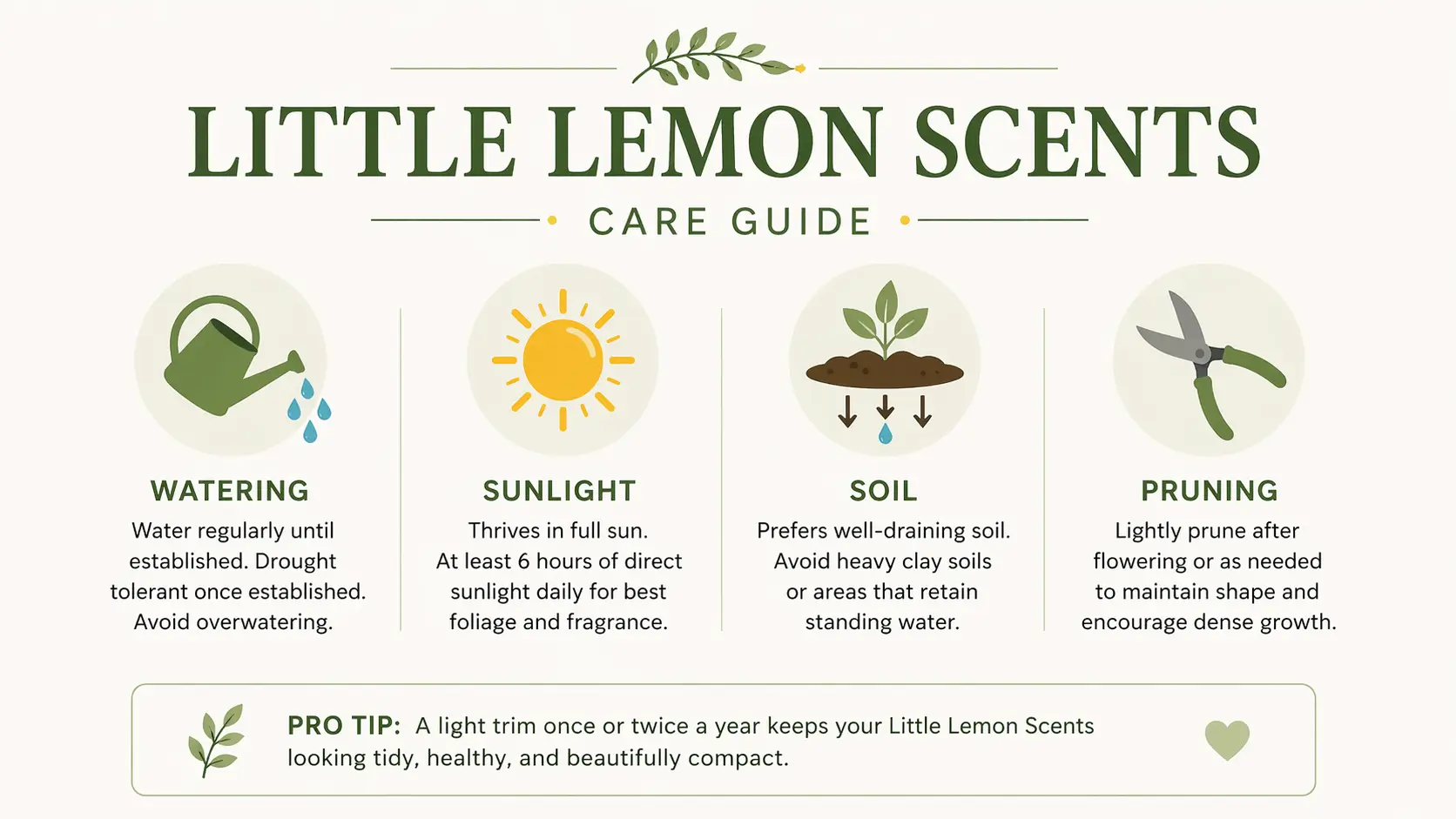
Little lemon scents prefers well-draining soil to prevent root issues. Moderate watering is sufficient, allowing the soil to dry slightly between watering sessions.
Light and climate conditions
This plant thrives in full sun to partial shade. It performs best in warm climates, similar to conditions found in Australia.
Pruning and maintenance
Regular pruning is essential to maintain hedge shape and encourage dense growth. Trimming also improves airflow and reduces the risk of disease.
Similar Australian native shrubs require comparable care practices, especially in watering and pruning routines.
Common Problems and Troubleshooting
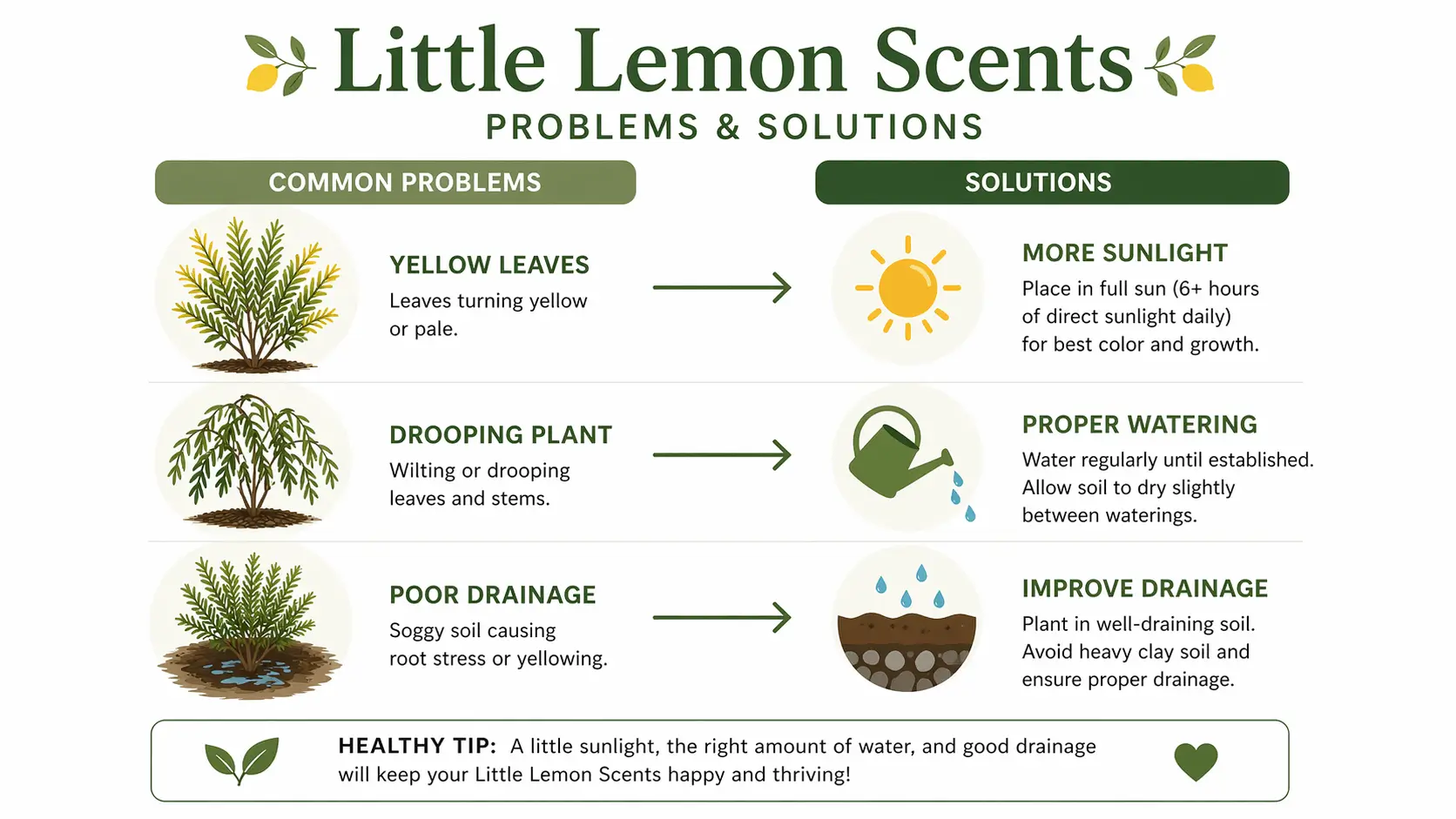
Issues affecting lemon scented tea tree
Common problems include yellowing leaves and reduced growth.
- Overwatering often leads to root stress
- Insufficient sunlight slows development
Pest and environmental stress
The plant may occasionally experience minor pest issues but is generally resilient.
Troubleshooting:
- Identify cause: Excess water, poor drainage, or low light
- Apply fix: Adjust watering, improve soil drainage, increase sunlight
- Prevent issues: Maintain balanced care routine
Comparison: Little Lemon Scents vs Other Lemon-Scented Plants
| Feature | Little Lemon Scents | Standard Lemon-Scented Tea Tree | Other Citrus-Scented Plants |
| Size | Compact | Tall shrub/tree | Varies |
| Scent strength | Strong | Strong | Mild to strong |
| Use | Hedge, small gardens | Screening, landscaping | Indoor/outdoor |
This comparison highlights the advantage of little lemon scents for compact spaces while maintaining strong fragrance.
Environmental Limitations and Growing Conditions
Climate and soil constraints
Little lemon scents is not suitable for extreme cold climates. It requires well-drained soil to prevent root damage.
Seasonal considerations
Growth is most active during warm seasons. Pruning is best performed during these periods to support healthy regrowth.
Beginner Mistakes to Avoid When Growing Little Lemon Scents
- Overwatering, which can lead to root rot
- Planting in shaded areas, reducing growth and scent
- Ignoring pruning, resulting in uneven or sparse growth
Avoiding these mistakes helps maintain plant health and appearance.
Broader Context: Citrus Scents and Plant Fragrance
What are citrus scents?
Citrus scents are natural aromas produced by plants through essential oils. These scents are commonly associated with lemon, lime, and related plants.
How plants create lemon-like fragrance
Plants like Leptospermum petersonii produce volatile compounds in their leaves. When released, these compounds create a recognizable lemon-like fragrance.
- Oils stored in leaf glands
- Activated when leaves are crushed or warmed
- Contribute to plant defense and attraction mechanisms
Conclusion
Little lemon scents is a versatile and compact lemon scented tea tree that combines ornamental value with practical garden use. As a dwarf form of Leptospermum petersonii, it offers manageable growth, dense foliage, and a consistent citrus fragrance. Its suitability for hedging, small gardens, and aromatic landscaping makes it a reliable plant choice. With proper care, including balanced watering, sunlight exposure, and regular pruning, it remains healthy and visually appealing. For gardeners seeking both structure and scent, little lemon scents provides an effective and low-maintenance solution.
For more detailed plant care strategies and guides, explore our complete resource on plant growth, benefits, and maintenance.
FAQs
1. What is little lemon scents plant used for?
It is mainly used for hedging, landscaping, and adding natural citrus fragrance to gardens
2. How tall does leptospermum petersonii grow?
Standard varieties can grow several meters tall, while dwarf types like little lemon scents remain compact.
3. Is little lemon scents suitable for hedges?
Yes, it is ideal as a dense, fragrant lemon hedge due to its compact growth.
4. What causes problems in lemon scented tea tree plants?
Common issues include overwatering, poor drainage, and insufficient sunlight.
5. Can little lemon scents grow in different climates?
It thrives best in warm climates but can adapt if protected from extreme cold.