
Introduction
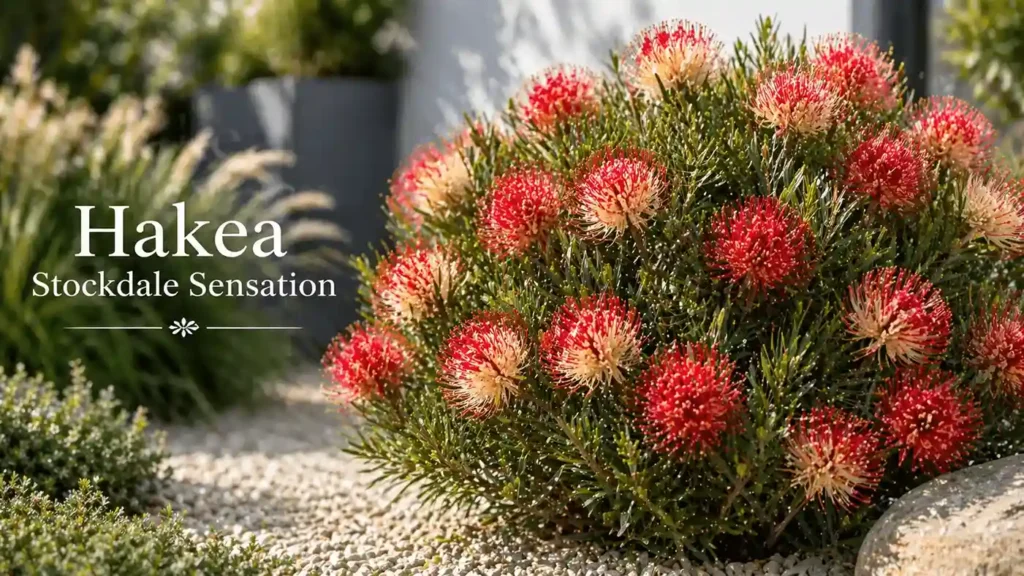
Hakea stockdale sensation is a compact ornamental cultivar of Hakea laurina, widely recognized for its striking pincushion-like flowers and manageable growth habit. This plant is popular in landscaping because it offers the visual appeal of a native hakea laurina tree without the large size. Gardeners value it for its adaptability, decorative blooms, and suitability for smaller spaces. It is closely related to forms such as dwarf hakea laurina and weeping hakea laurina, but differs in structure and growth pattern. This guide explains what it is, why it is grown, and how it compares to other hakea varieties.
Quick Summary
- A compact cultivar of Hakea laurina with ornamental “pincushion” flowers
- Smaller and more garden-friendly than standard hakea laurina size
- Suitable for small gardens, feature planting, and native landscapes
- Requires well-drained soil, sunlight, and low maintenance once established
What Is Hakea Stockdale Sensation?
Hakea stockdale sensation is a cultivated form of Hakea laurina, a species native to Australia and part of the Proteaceae family. It is specifically bred to maintain a smaller size while preserving the distinctive flowering traits of the species. Hakea stockdale sensation is a cultivated form of Hakea laurina, a species native to Australia (see Hakea laurina on Wikipedia).
The term pincushion hakea stockdale sensation refers to its unique spherical flower heads, which resemble decorative pin cushions. These blooms are a defining feature of many hakea species, including hakea laurina.
Naming variations such as “stockdale sensation” are commonly used in nurseries and landscaping contexts, but they all refer to the same compact ornamental cultivar. This plant combines the aesthetic appeal of traditional hakeas with improved suitability for residential gardens.
Key Characteristics of Hakea Stockdale Sensation
Appearance and Flower Structure
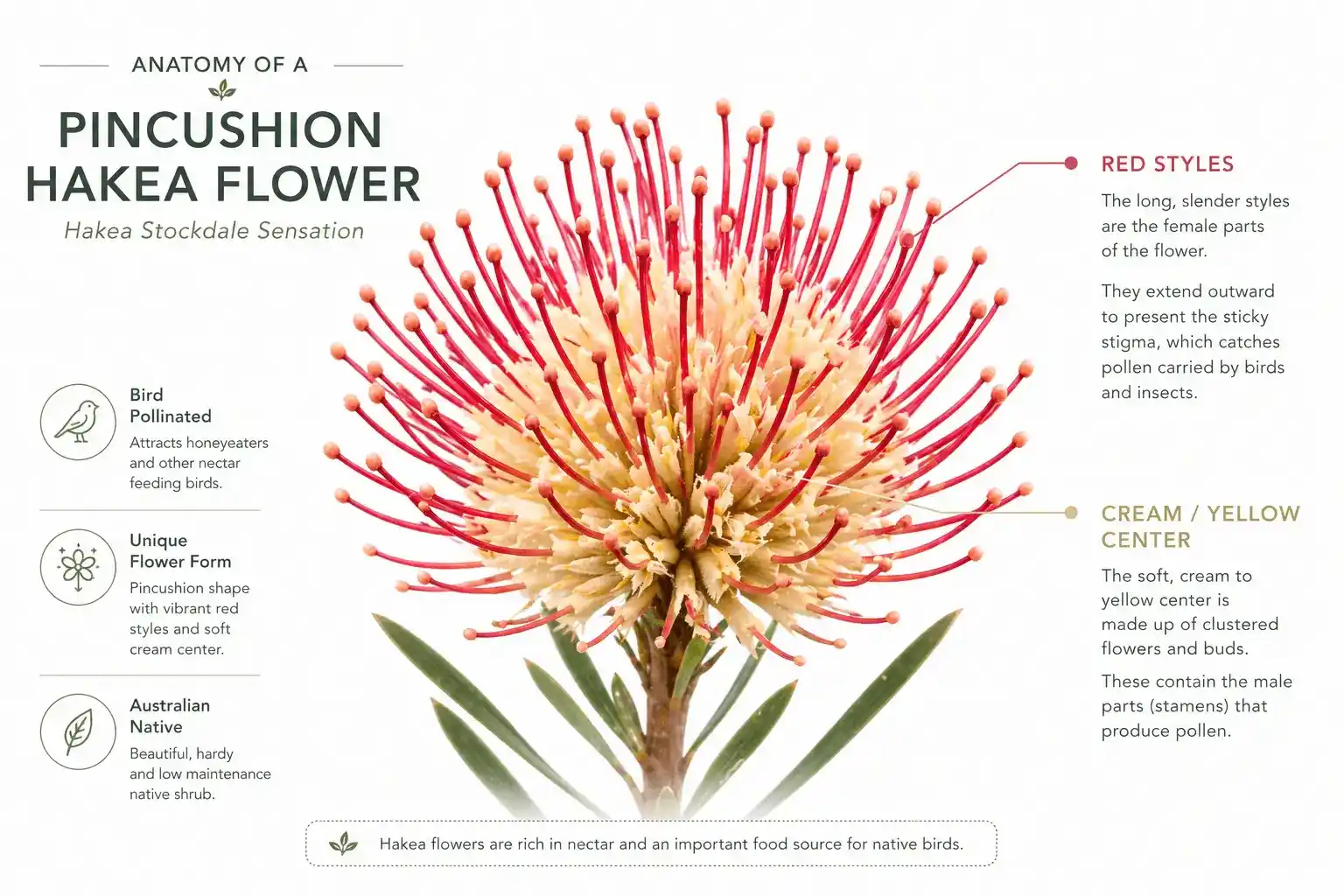
The most distinctive feature of this plant is its hakea flowers, which form round, ball-shaped clusters known as pincushion blooms.
Key features include:
- Spherical “pincushion” flower structure
- Prominent red styles extending outward
- Cream to yellow centers creating strong contrast
- Long-lasting blooms during the flowering season
These hakea pincushion flowers attract pollinators such as birds and insects, making the plant valuable in wildlife-friendly gardens. The visual similarity to a pin cushion tree contributes to its ornamental popularity.
Growth Habit and Structure
Unlike larger species or weeping hakea forms, this cultivar grows as a compact, bushy shrub.
Growth traits:
- Dense, rounded shape
- Upright but controlled branching
- Non-weeping structure compared to hakea laurina weeping form
This structure makes it suitable for structured landscaping and small garden spaces.
Hakea Laurina Size vs Stockdale Sensation
Typical Hakea Laurina Size
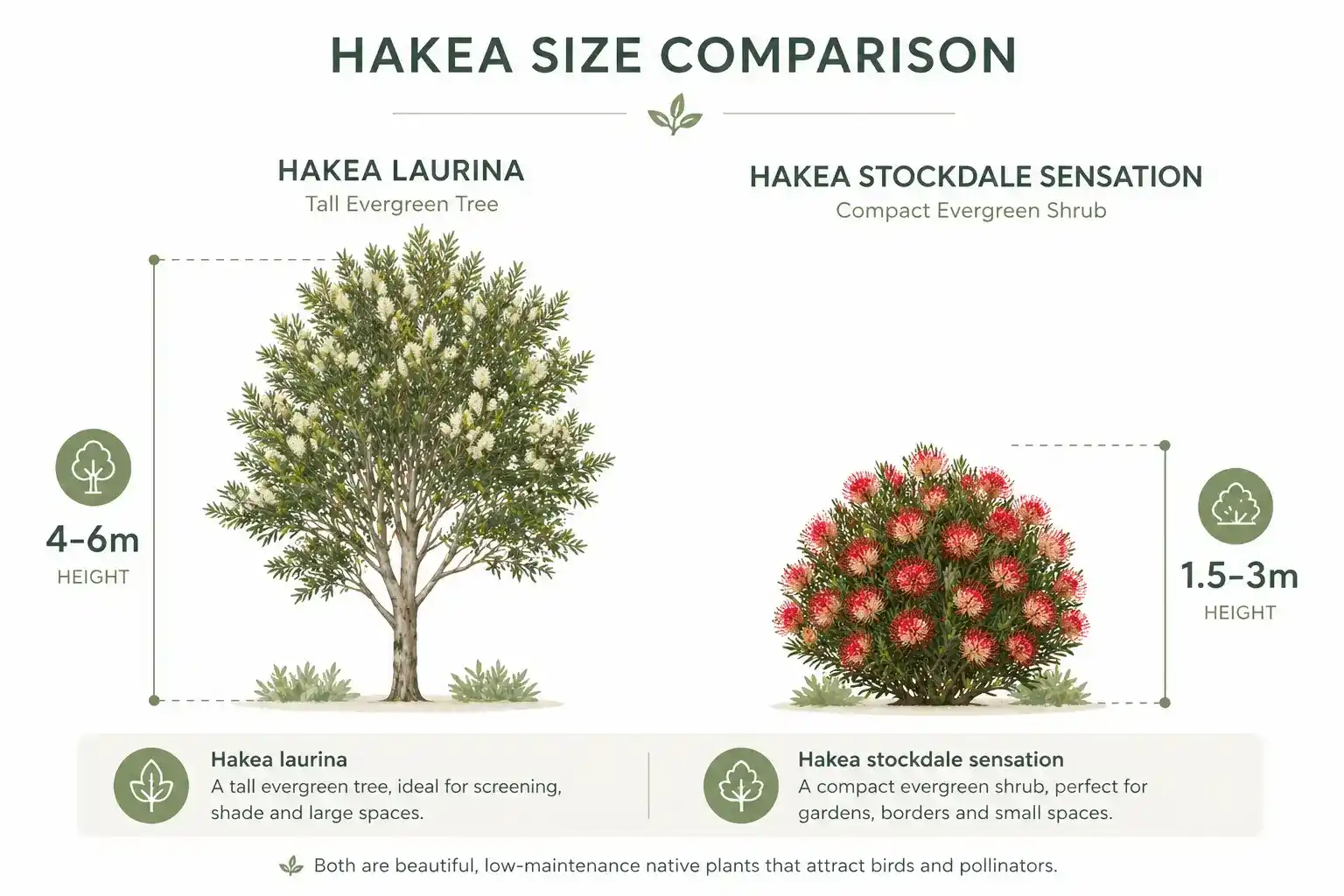
Standard hakea laurina grows into a medium to tall tree.
Typical size:
- Height: 4–6 meters
- Spread: 3–5 meters
Some varieties may develop a weeping hakea laurina form, creating a cascading appearance.
Hakea Stockdale Sensation Height and Spread
In contrast, hakea stockdale sensation height is significantly smaller.
Typical size:
- Height: 1.5–3 meters
- Spread: 1.5–2.5 meters
This controlled growth makes it a preferred option for limited spaces.
Comparison Table (Recommended)
| Feature | Hakea Laurina | Stockdale Sensation |
| Height | Tall tree | Compact shrub |
| Form | Upright / weeping | Dense and rounded |
| Garden Use | Large landscapes | Small gardens |
Dwarf and Weeping Variants Explained
Dwarf Hakea Laurina
Dwarf hakea laurina or hakea laurina dwarf forms are selectively bred to reduce plant size while retaining flower characteristics.
Features:
- Compact growth
- Suitable for suburban gardens
- Similar flower structure to standard hakea
Weeping Hakea Laurina Forms
Weeping hakea laurina refers to varieties with drooping branches.
Characteristics:
- Cascading branch structure
- Ornamental landscape appeal
- Larger footprint compared to dwarf forms
How Stockdale Sensation Differs
Hakea stockdale sensation differs by offering:
- Compact size like a dwarf hakea
- Structured growth instead of a weeping hakea
- Dense foliage and rounded form
This makes it more predictable and easier to manage in residential landscapes.
Ideal Growing Conditions for Hakea Stockdale Sensation
Soil Requirements
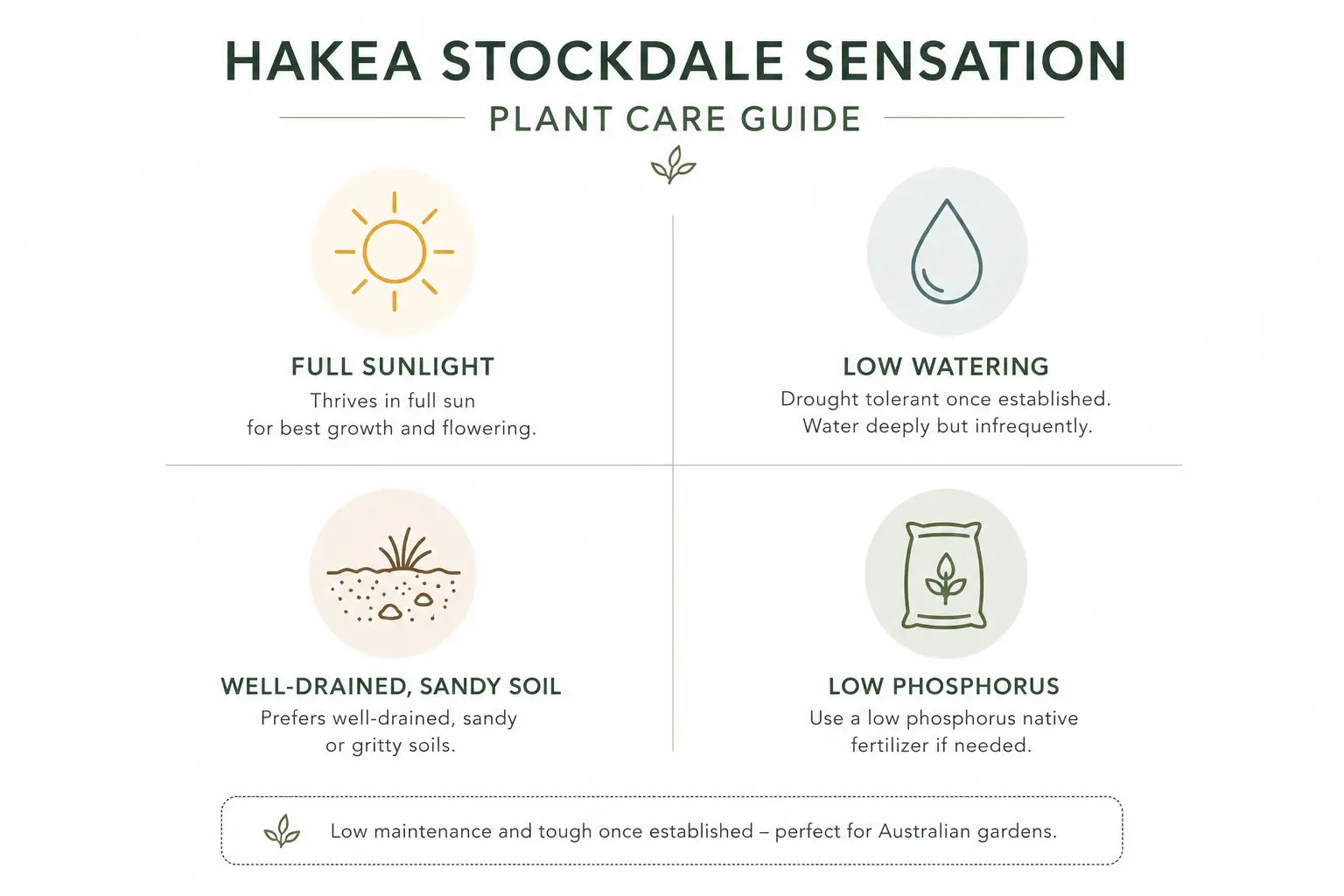
This plant requires well-draining soil to prevent root problems.
Best soil types:
- Sandy soils
- Loamy soils with good drainage
Avoid:
- Heavy clay soils
- Waterlogged conditions
Sunlight Needs
Full sun is ideal for optimal growth and flowering.
Light conditions:
- Minimum: Partial sun
- Optimal: Full sun exposure
Insufficient light can reduce flowering and slow growth.
Climate Suitability
As a native plant, it adapts well to dry climates.
Climate traits:
- Drought-tolerant once established
- Moderate frost tolerance
- Performs well in Mediterranean-type climates
This plant fits well into broader native landscapes, especially when following principles from an easy low maintenance Australian native garden guide.
Care Guide for Healthy Growth
Watering Needs
Water requirements are low after establishment.
Guidelines:
- Young plants: Regular watering
- Established plants: Occasional deep watering
Avoid frequent shallow watering, which can weaken roots.
Fertilization Practices
Hakeas are sensitive to phosphorus.
Best approach:
- Use low-phosphorus or native plant fertilizers
- Avoid standard high-phosphorus fertilizers
Pruning and Maintenance
Minimal pruning is required.
Maintenance tips:
- Light pruning after flowering
- Remove dead or damaged branches
- Maintain shape without heavy cutting
Similar care principles apply to other Australian natives, such as those outlined in a banksia ericifolia Little Eric care guide, particularly regarding soil drainage and low-phosphorus fertilization.
Growth Rate and Maturity
Hakea stockdale sensation has a moderate growth rate.
Growth timeline:
- Establishment phase: 1–2 years
- Mature size: 3–5 years
The hakea stockdale sensation age at maturity depends on:
- Soil quality
- Sunlight exposure
- Water availability
Growth slows during colder months and increases in spring and summer.
Common Problems and Troubleshooting
Why Is My Hakea Dying?
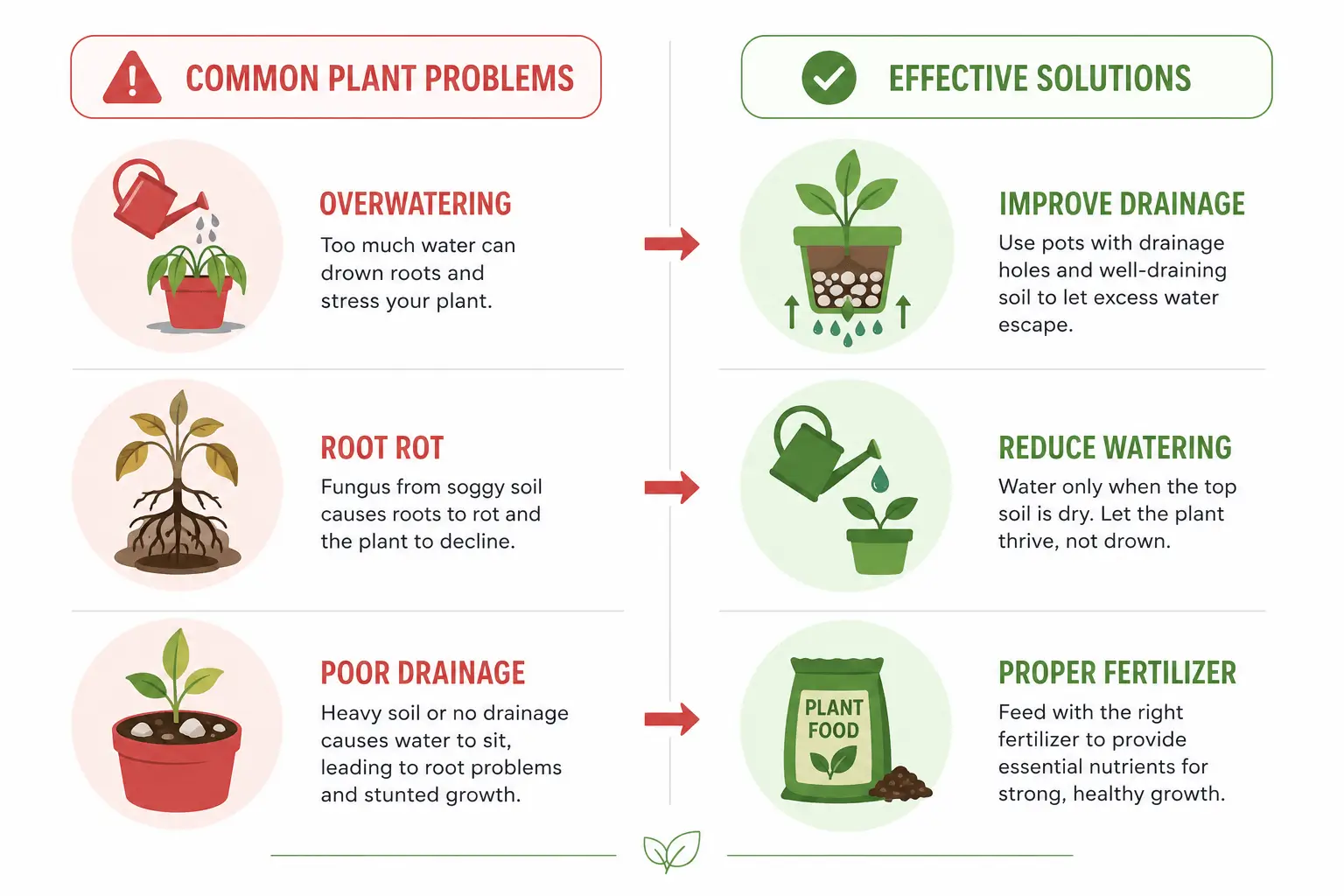
The most common causes of decline include poor environmental conditions.
Primary issues:
- Poor drainage
- Overwatering
- Root rot
- Nutrient imbalance
These problems are often linked to improper soil or watering practices.
How to Fix and Prevent Issues
Effective solutions include:
- Improve soil drainage by adding sand or organic matter
- Reduce watering frequency
- Use appropriate native plant fertilizers
- Ensure planting in a well-drained location
Preventative care is key to long-term plant health.
Beginner Mistakes to Avoid
Common mistakes when growing hakeas include:
- Overwatering native plants
- Planting in heavy clay soil
- Using incorrect fertilizers
- Choosing poor planting locations
A frequent issue is treating hakeas like high-water plants, which leads to root damage.
Landscaping Uses and Design Ideas
Hakea stockdale sensation is versatile in landscape design.
Common uses:
- Feature shrub in small gardens
- Native garden integration
- Wildlife-friendly planting
Compared to a full hakea laurina tree, it provides similar visual appeal in a smaller footprint.
For larger hedging applications, gardeners may also consider other species, as explained in a hakea salicifolia hedge guide.
Comparison: Stockdale Sensation vs Other Native Ornamentals
| Plant | Size | Flower Type | Maintenance |
| Stockdale Sensation | Compact | Pincushion | Low |
| Dwarf Hakea Laurina | Compact | Pincushion | Low |
| Other natives | Varies | Varies | Varies |
This comparison helps gardeners select plants based on space, maintenance, and visual preference.
Seasonal Considerations and Flowering Cycle
Flowering typically occurs during cooler months, depending on climate.
Seasonal notes:
- Flowers appear in late autumn to winter
- Growth increases in spring
- Reduced activity in winter dormancy
Seasonal care adjustments:
- Reduce watering in colder months
- Avoid fertilizing during dormancy
- Monitor drainage during rainy seasons
Conclusion
Hakea stockdale sensation is a compact, ornamental native plant that combines the iconic pincushion flowers of hakea laurina with a manageable size suitable for modern gardens. Its dense growth, low maintenance needs, and adaptability make it ideal for small landscapes and native planting schemes. By understanding its care requirements and differences from dwarf and weeping varieties, gardeners can successfully grow this plant in a wide range of conditions.
For more plant care insights and guides, explore this complete plants benefits and guides resource covering growth, care, and selection strategies.
FAQs
What is hakea stockdale sensation?
Hakea stockdale sensation is a compact cultivar of Hakea laurina, known for its distinctive pincushion flowers and suitability for small gardens.
How big does hakea stockdale sensation grow?
It typically grows to about 1.5–3 meters tall, smaller than the standard hakea laurina size.
What is the difference between dwarf hakea laurina and stockdale sensation?
Both are compact, but stockdale sensation is specifically bred for a denser structure and consistent ornamental performance.
Why are my hakea leaves turning yellow or dying?
This is usually caused by overwatering, poor drainage, or nutrient imbalance affecting root health.
Can hakea stockdale sensation grow in pots?
Yes, it can grow in large containers if provided with well-draining soil and adequate sunlight.
Is hakea stockdale sensation suitable for dry climates?
Yes, it is drought-tolerant once established and performs well in dry, well-drained environments.