
Introduction
Backhousia myrtifolia is an evergreen Australian native tree known for its aromatic foliage, compact growth, and adaptability in landscaping. Commonly referred to as cinnamon myrtle or grey myrtle, this plant is valued for both ornamental and practical uses. It is frequently grown as a hedge, small tree, or feature plant due to its dense foliage and ability to respond well to pruning. Gardeners prefer it for its manageable size and versatility across different environments. This guide explains its botanical identity, growth characteristics, and essential care practices for maintaining healthy plants in various garden settings.
Quick Summary
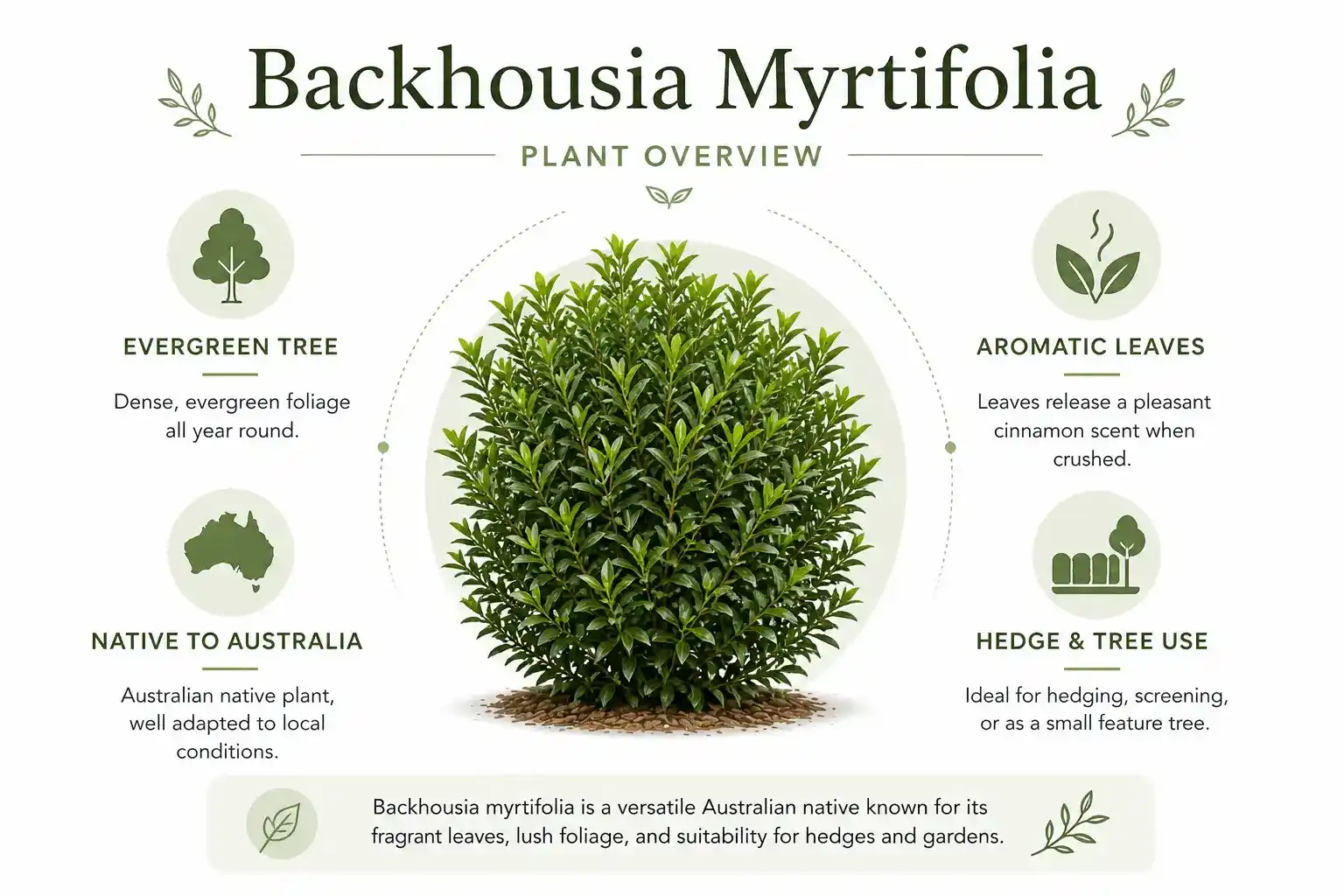
- Backhousia myrtifolia is an evergreen native Australian plant with aromatic, cinnamon-scented leaves.
- It can be used as a hedge, small tree, or ornamental landscape feature.
- Thrives in well-drained soil with moderate watering and full sun to partial shade.
- Regular pruning improves density and shape, especially for hedging purposes.
What Is Backhousia myrtifolia (Cinnamon Myrtle / Grey Myrtle)?
Names, Classification, and Origin
Backhousia myrtifolia is a flowering plant species in the family Myrtaceae, native to eastern Australia. It is commonly known as cinnamon myrtle or grey myrtle, both names referring to the same species. The plant belongs to the genus Backhousia, which includes aromatic Australian natives. The term “backhousia myrtifolia cinnamon myrtle” and “grey myrtle” are interchangeable, describing the same botanical plant used in landscaping and horticulture.
Backhousia myrtifolia is a flowering plant species in the family Myrtaceae, native to eastern Australia. For botanical classification and taxonomy details, refer to its Wikipedia entry.
Key Plant Characteristics
Backhousia myrtifolia is characterized by glossy, lance-shaped leaves that release a mild cinnamon-like aroma when crushed. It is an evergreen species, maintaining foliage year-round. The plant produces small, creamy-white flowers typically in spring to summer. Its dense foliage makes it ideal for screening and hedging. While it may produce small fruit, it is not a primary feature and has limited ornamental significance.
Backhousia myrtifolia Size, Height, and Growth Habit
Typical Height and Spread
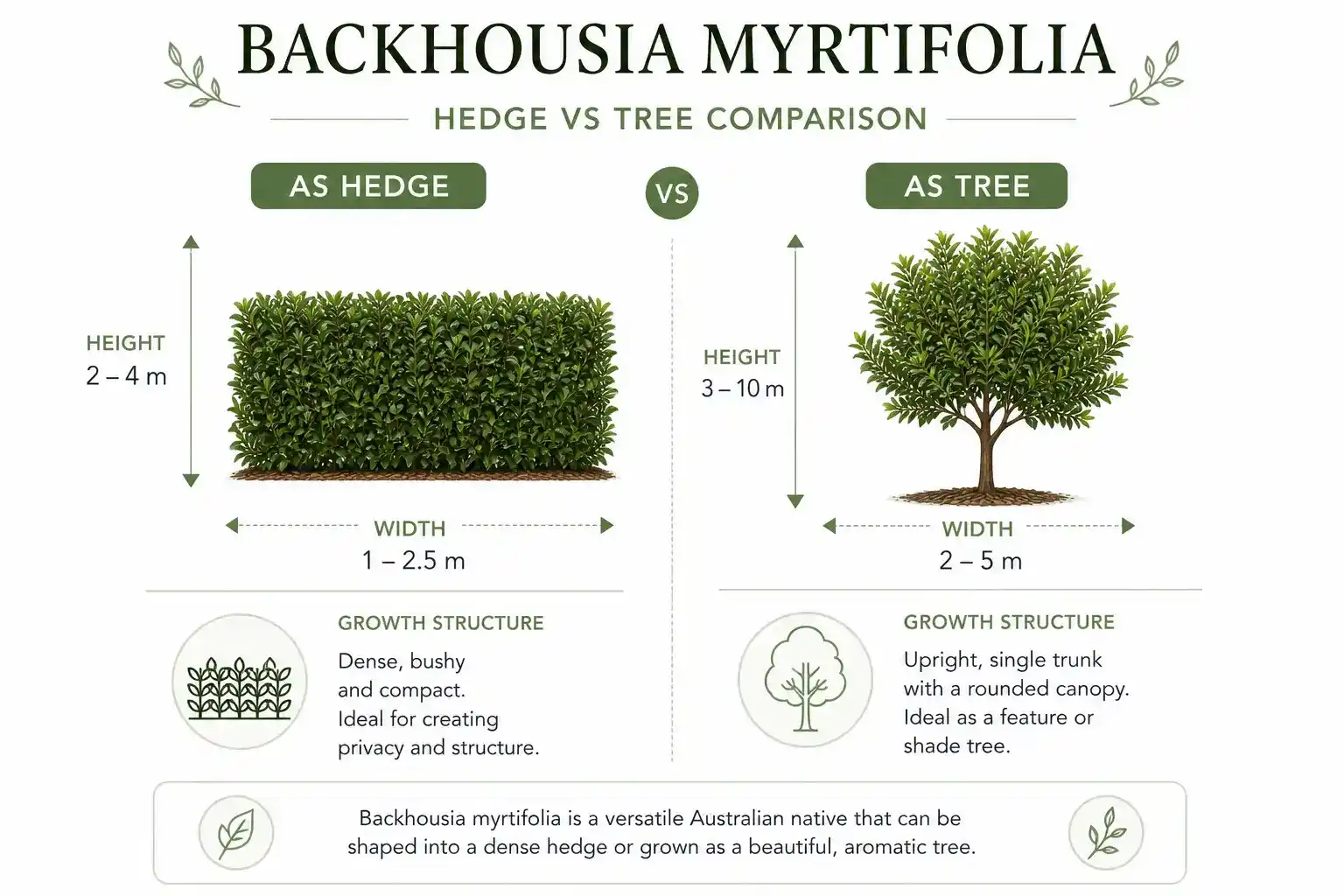
Backhousia myrtifolia typically grows between 3 to 10 meters in height, depending on conditions and pruning. As a hedge, it is usually maintained between 2 to 4 meters. The spread ranges from 2 to 5 meters. Regular pruning helps control both height and width, especially in structured landscapes.
Growth Rate and Structure
This plant has a moderate growth rate under optimal conditions. It develops a dense, upright branching structure, making it suitable for privacy hedges. Growth speed is influenced by soil quality, water availability, and sunlight exposure. In favorable environments, it establishes quickly and maintains compact foliage.
Using Backhousia myrtifolia as a Hedge or Tree
Backhousia myrtifolia Hedge Applications
Backhousia myrtifolia is widely used as a hedge due to its dense foliage and strong response to pruning. It forms an effective natural screen, offering privacy and wind protection. Variations such as grey myrtle hedge and cinnamon myrtle hedge are commonly used in residential landscapes.
Key benefits:
- Dense screening capability
- Easy to shape and maintain
- Evergreen coverage year-round
Backhousia myrtifolia is widely used as a hedge due to its dense foliage and strong response to pruning. It forms an effective natural screen, offering privacy and wind protection. For more options, explore other species in this guide on fast-growing Australian native screening plants.
Tree and Landscaping Uses
As a standalone tree, cinnamon myrtle provides aesthetic appeal with its structured canopy and aromatic foliage. It is suitable for:
- Garden focal points
- Street planting
- Native landscaping designs
Comparison: Hedge vs Tree Use
| Feature | Hedge Form | Tree Form |
| Growth Form | Compact, dense | Upright, open canopy |
| Maintenance | Requires regular pruning | Minimal pruning |
| Space Requirement | Narrow planting areas | Larger open spaces |
| Visual Impact | Uniform and structured | Natural and decorative |
Ideal Growing Conditions for Cinnamon Myrtle
Light, Soil, and Climate Requirements
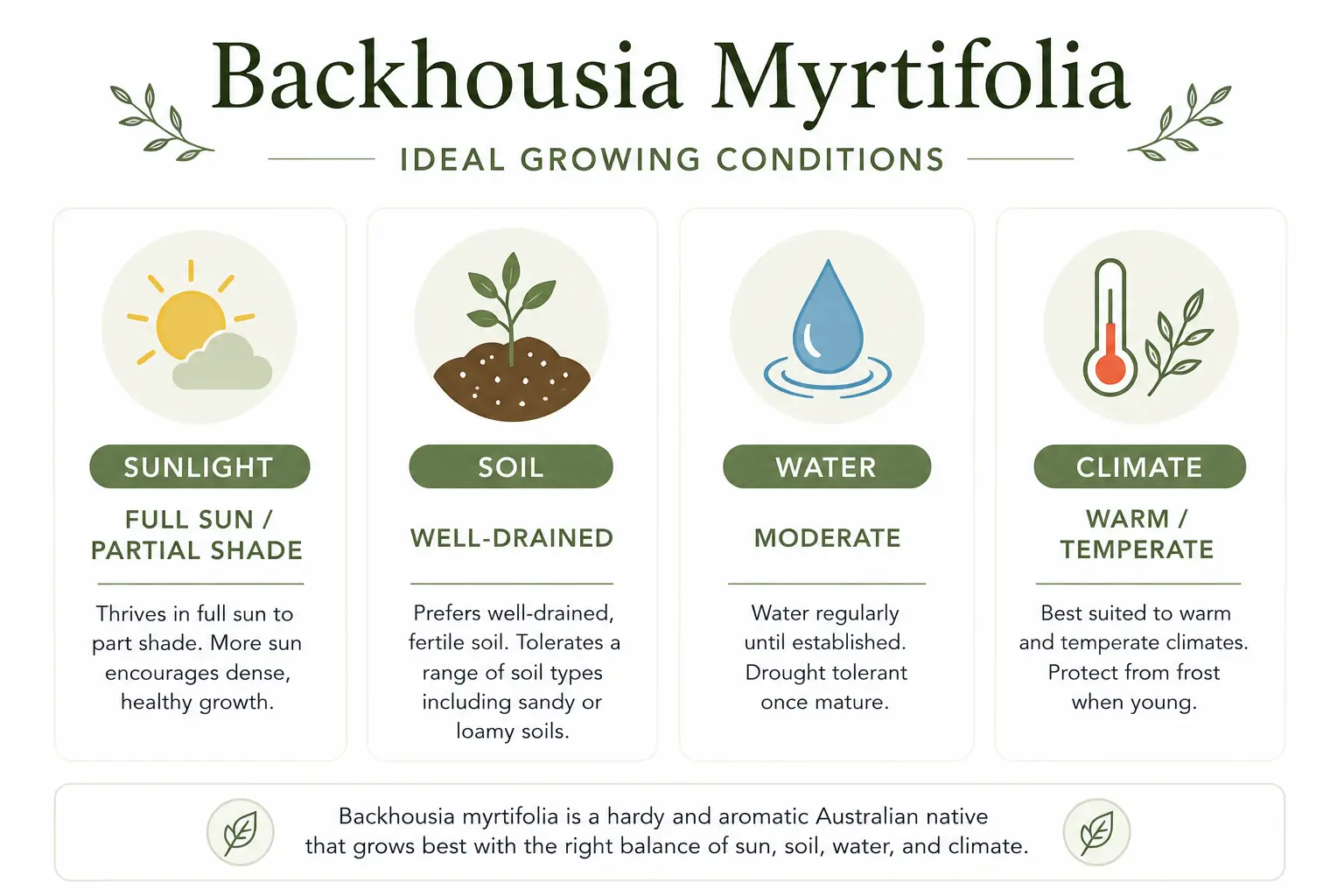
Backhousia myrtifolia grows best in full sun to partial shade. It prefers well-drained, fertile soils with good organic content. It is well-suited to Australian climates and similar temperate regions.
Watering and Environmental Tolerance
Young plants require consistent watering during establishment. Once mature, the plant shows moderate drought tolerance. It prefers humid conditions but can adapt to varying environments. It is sensitive to heavy frost, especially in early growth stages.
Care Guide: Caring for a Backhousia myrtifolia
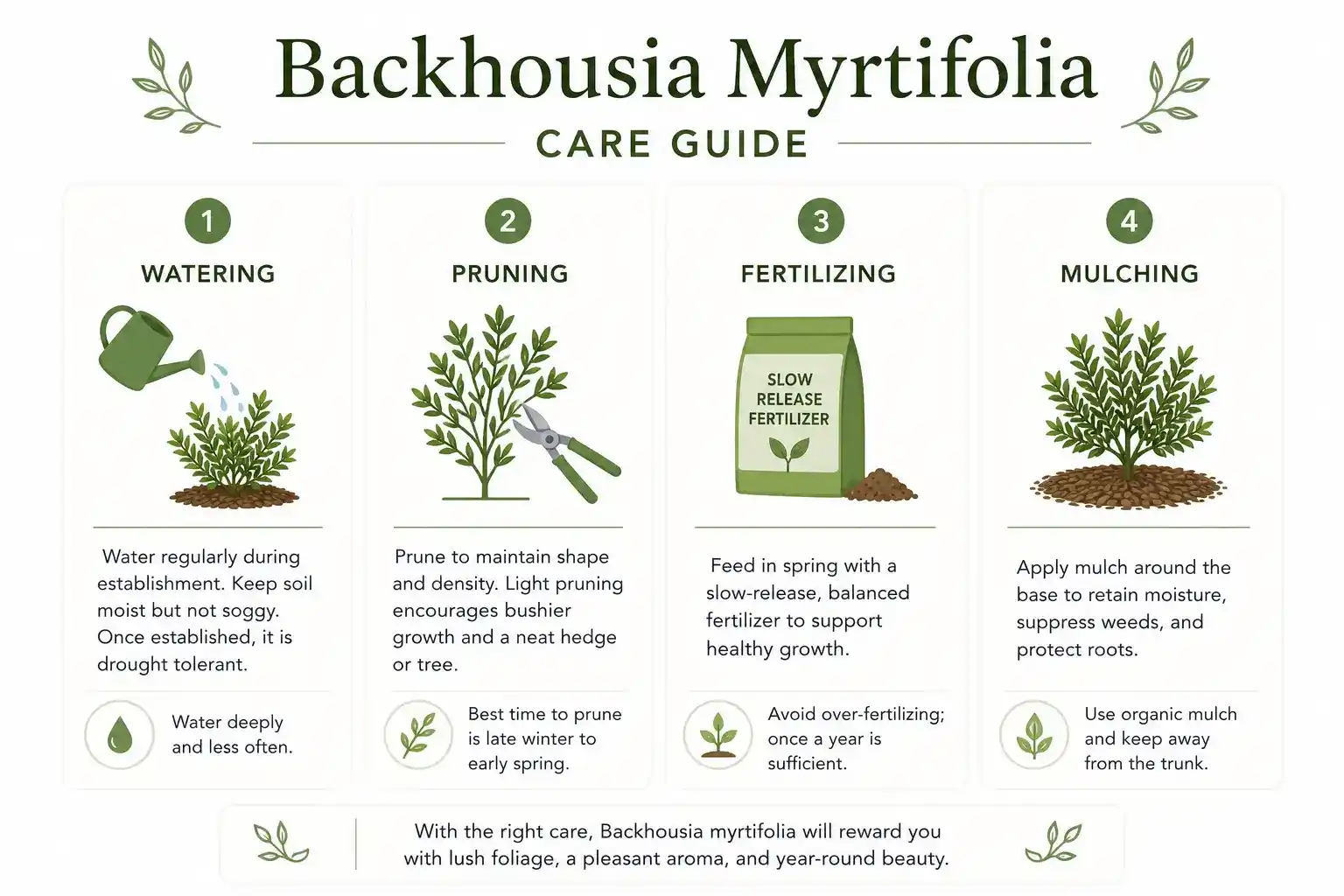
Watering, Feeding, and Soil Care
Water regularly during the first growing season. After establishment:
- Water moderately
- Avoid waterlogging
- Apply balanced fertilizer during growing season
- Use mulch to retain moisture and regulate soil temperature
Pruning and Maintenance
Prune regularly to maintain shape, especially for hedges. Best practices include:
- Light trimming throughout the year
- Heavier pruning after flowering
- Encouraging lateral growth for density
Indoor vs Outdoor Considerations
Backhousia myrtifolia can be grown in large containers but is primarily suited for outdoor cultivation. Indoor growth is limited due to its size and light requirements.
Common Problems and How to Fix Them
Yellowing Leaves, Slow Growth, and Stress
Yellowing leaves often indicate overwatering or poor drainage. Slow growth may result from nutrient deficiencies.
Solutions:
- Improve soil drainage
- Adjust watering frequency
- Apply appropriate fertilizers
Pest and Disease Issues
Common pests include scale insects and aphids. Fungal issues may occur in poorly drained soils.
Prevention:
- Maintain airflow
- Avoid overwatering
- Use horticultural oils if needed
Beginner Mistakes to Avoid When Growing Grey Myrtle
- Overwatering or planting in poorly drained soil
- Incorrect pruning leading to uneven growth
- Planting in deep shade
- Ignoring spacing when forming hedges
Backhousia myrtifolia vs Similar Native Plants
Comparison with Other Australian Native Trees
Compared to other aromatic Australian natives, Backhousia myrtifolia offers a more compact growth habit and consistent foliage density. Some similar plants may grow faster but lack the same structural uniformity.
Why Choose Cinnamon Myrtle?
- Aromatic foliage
- Dense growth for hedging
- Adaptability to different landscape uses
- Low maintenance once established
Compared to other aromatic Australian natives, Backhousia myrtifolia offers a more compact growth habit and consistent foliage density. It is often compared with popular hedging species like Lilly Pilly, which vary in size, growth rate, and maintenance needs.
Seasonal Care and Growth Considerations
Growth is most active during spring and summer. During these seasons:
- Increase watering slightly
- Apply fertilizer
- Perform pruning after flowering
In cooler months:
- Reduce watering
- Protect young plants from frost
Plant Size
Backhousia myrtifolia typically reaches 3–10 meters in height and 2–5 meters in width. Hedge forms remain smaller due to regular pruning. Environmental factors such as soil fertility and sunlight significantly influence final size.
Growth Rate
The plant exhibits a moderate growth rate. Growth is faster in warm seasons and slows in cooler periods. Adequate sunlight, water, and nutrients enhance growth speed.
Care Guide
- Water moderately; avoid waterlogging
- Plant in well-drained, fertile soil
- Provide full sun to partial shade
- Prune regularly for shape and density
- Apply mulch for moisture retention
Conclusion
Backhousia myrtifolia is a highly adaptable and visually appealing native plant suitable for both hedging and tree use. Its aromatic leaves, dense foliage, and manageable growth make it a practical choice for various landscaping needs. With proper care, including well-drained soil, balanced watering, and regular pruning, cinnamon myrtle can thrive in diverse environments. Its versatility and low-maintenance nature make it a reliable option for gardeners seeking both function and aesthetic value. Backhousia myrtifolia is a highly adaptable and visually appealing native plant. For more plant care insights and detailed growing guides, explore our complete plants benefits and guides resource.
FAQs
1. What is Backhousia myrtifolia commonly called?
It is commonly known as cinnamon myrtle or grey myrtle, both referring to the same Australian native plant.
2. How tall does Backhousia myrtifolia grow?
It can grow between 3 to 10 meters, depending on environmental conditions and pruning.
3. Can Backhousia myrtifolia be used as a hedge?
Yes, it is widely used as a hedge due to its dense foliage and ability to tolerate regular pruning.
4. What are the ideal growing conditions for cinnamon myrtle?
It grows best in well-drained soil, moderate watering, and full sun to partial shade.
5. How do you care for a Backhousia myrtifolia plant?
Care includes proper watering, occasional fertilization, regular pruning, and ensuring good soil drainage.
6. Does Backhousia myrtifolia produce fruit?
Yes, it may produce small fruit, but it is mainly valued for its foliage and ornamental qualities.