
Introduction
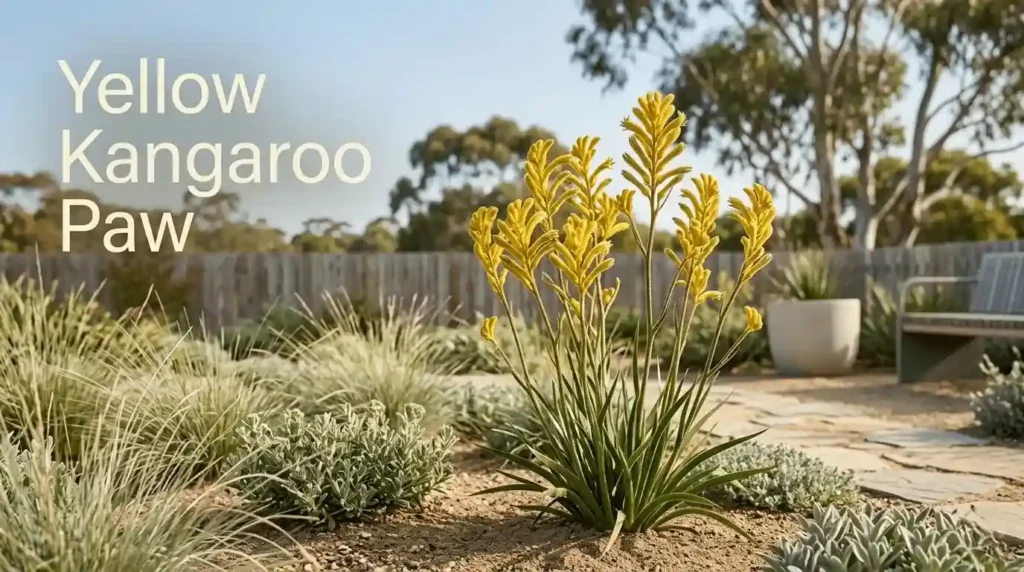
The yellow kangaroo paw is a striking Australian native flowering plant known for its velvety tubular blooms and upright architectural growth habit. Belonging to the genus Anigozanthos, this drought-tolerant perennial is widely grown in ornamental landscapes, native gardens, and coastal plantings. The yellow kangaroo paw plant produces fuzzy flower spikes that attract birds and pollinators while adding strong vertical interest to gardens. Popular forms such as Anigozanthos flavidus yellow are valued for their long flowering period and adaptability to warm climates. This guide explains yellow flowering kangaroo paw identification, care requirements, varieties, landscaping uses, growth habits, and solutions for common plant problems.
Quick Summary
- Yellow kangaroo paw is a drought-tolerant Australian native prized for its bright yellow velvety flowers and long blooming season.
- Popular cultivars such as Anigozanthos Bush Glow, Landscape Gold, and Yellow Gem vary in size, flower color intensity, and landscape suitability.
- Proper sunlight, drainage, and spacing are essential for healthy growth and continuous flowering.
- Common issues like yellow leaves, root rot, and weak flowering are usually linked to watering or environmental stress.
What Is Yellow Kangaroo Paw?
Botanical Classification and Scientific Name
Yellow kangaroo paw belongs to the genus Anigozanthos, a group of flowering Australian native plants recognized for their fuzzy tubular flowers and sword-like foliage. The yellow kangaroo paw scientific name often refers to Anigozanthos flavidus yellow, a yellow-flowering form of the species Anigozanthos flavidus. Yellow kangaroo paw belongs to the genus Anigozanthos, a group of Australian native flowering plants known for their distinctive velvety blooms.
The genus includes multiple naturally occurring species and cultivated hybrids. Anigozanthos kangaroo paw plants are part of the Haemodoraceae family and are commonly used in ornamental horticulture because of their unusual flowers and drought tolerance.
The relationship between Anigozanthos flavidus green and yellow-flowering forms is primarily based on flower coloration. Green forms produce greenish or yellow-green blooms, while yellow selections develop brighter golden or yellow flowers. Both forms share similar growth habits and environmental preferences.
Why It Is Called Kangaroo Paw
The plant is called kangaroo paw because the fuzzy flower tips resemble the shape of a kangaroo’s paw. Each tubular bloom has curved ends covered with fine velvety hairs that create the characteristic paw-like appearance.
A mature kangaroo paw flower develops on tall stems above clumping foliage. The yellow kangaroo paw flower is especially noticeable because its bright color contrasts strongly with the green leaves.
Kangaroo paw flowers also attract pollinators such as:
- Honeyeaters
- Native birds
- Bees
- Nectar-feeding insects
The flower structure allows pollinators to brush against pollen while feeding on nectar.
Native Habitat and Growing Conditions
Yellow kangaroo paw originates from Australia, where it naturally grows in warm climates with sandy, free-draining soils. Many species thrive in coastal regions and dry inland areas where rainfall is seasonal.
The plant is highly drought tolerant once established and performs best in areas with:
- Full sunlight
- Good airflow
- Mild winters
- Low humidity
- Fast-draining soil
Kangaroo paw green and yellow and green kangaroo paw forms are commonly found in climates that mimic Mediterranean growing conditions. Excess moisture and poor drainage are the primary environmental causes of decline.
Popular Yellow Kangaroo Paw Varieties
Anigozanthos Bush Glow
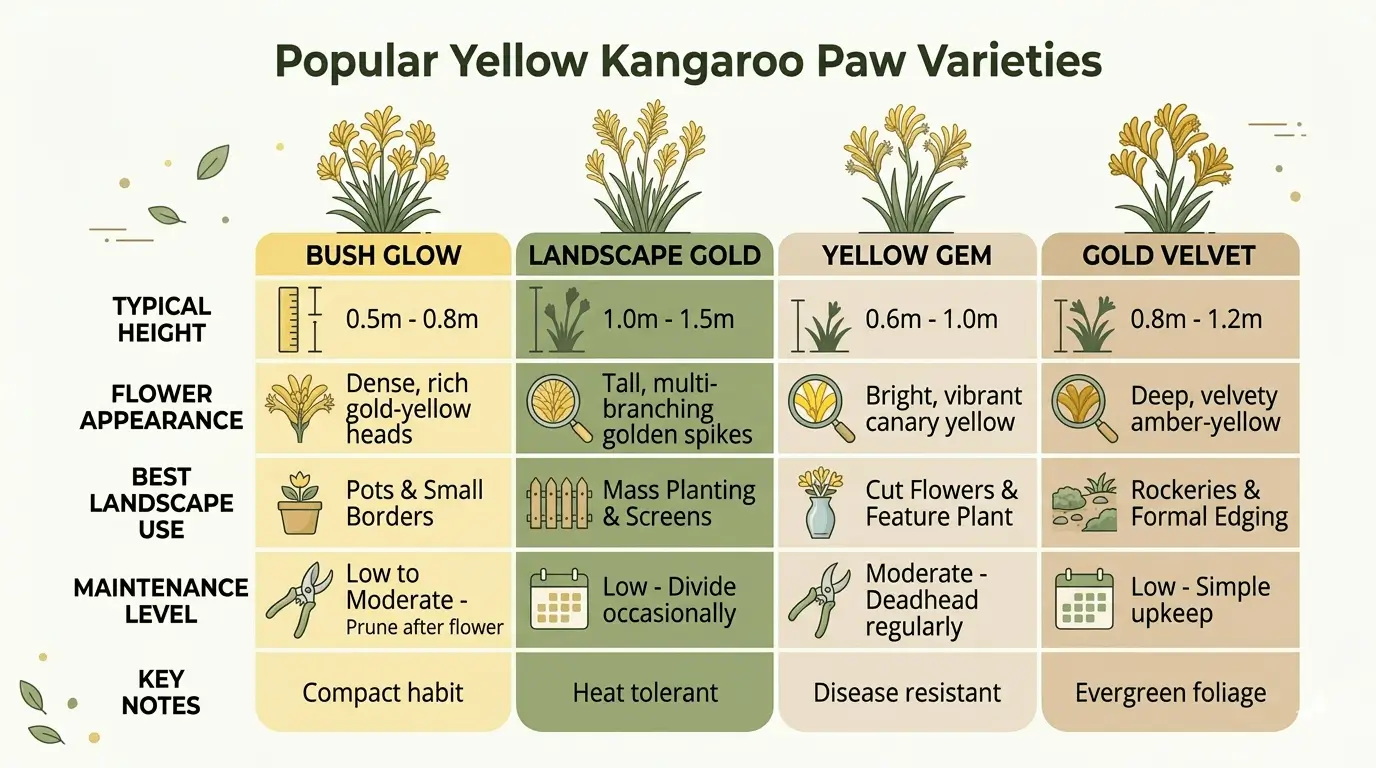
Anigozanthos Bush Glow is a popular landscaping cultivar known for its vibrant yellow-orange flowers and compact upright growth habit. Kangaroo paw Bush Glow is widely planted in modern native gardens because it flowers heavily during warm seasons.
This variety typically produces strong flower stems and responds well to pruning after blooming. It works well in borders, feature beds, and drought-tolerant landscapes.
Landscape Gold Kangaroo Paw
Kangaroo paw Landscape Gold is widely used in public landscaping because of its durability, consistent flowering, and large visual impact. Anigozanthos Landscape Gold tolerates heat and dry conditions better than many ornamental flowering plants.
Landscape yellow kangaroo paw cultivars are commonly planted in:
- Streetscapes
- Commercial landscapes
- Native gardens
- Large mass plantings
- Coastal landscapes
Its bright flower spikes create strong contrast against green foliage and gravel-based garden designs.
Yellow Gem Kangaroo Paw
Yellow Gem kangaroo paw is a compact ornamental cultivar valued for its manageable size and heavy flowering habit. Kangaroo paw Yellow Gem is suitable for smaller gardens, courtyards, and decorative containers.
Anigozanthos Yellow Gem typically develops dense foliage with upright yellow flower stems during active growth periods.
Common characteristics include:
- Compact growth habit
- Long flowering season
- Strong container performance
- Reduced maintenance requirements
Yellow Gem kangaroo paw height usually ranges between 2 and 3 feet under ideal growing conditions. Anigozanthos Yellow Gem size may vary depending on soil fertility, sunlight exposure, and watering consistency.
Gold Velvet Kangaroo Paw
Kangaroo paw Gold Velvet is known for its rich golden flowers covered in dense velvety hairs. Gold Velvet kangaroo paw cultivars are especially valued for their texture and ornamental appearance.
Anigozanthos Gold Velvet produces fuzzy blooms with a soft visual finish that stands out in modern landscapes and native garden settings.
Compared to other yellow varieties, Gold Velvet selections often display:
- More pronounced flower texture
- Richer golden coloration
- Taller flower stems
- Strong ornamental value
Dwarf vs Tall Yellow Kangaroo Paw Varieties
Yellow kangaroo paw varieties range from compact dwarf forms to tall landscape cultivars designed for large gardens.
Dwarf yellow kangaroo paw varieties are ideal for containers, edging, and smaller planting spaces. Small yellow kangaroo paw selections generally require less pruning and fit compact landscapes.
Tall yellow kangaroo paw and big yellow kangaroo paw varieties produce dramatic vertical flower spikes that work well as feature plants. Large yellow kangaroo paw cultivars are commonly used in mass plantings and large native gardens.
Tall kangaroo paw varieties also provide better flower visibility from a distance.
| Variety Type | Typical Height | Best Use | Maintenance Level |
| Dwarf Yellow Forms | 1–2 feet | Containers and borders | Low |
| Medium Landscape Forms | 2–4 feet | General landscaping | Moderate |
| Tall Flowering Varieties | 4–6 feet | Feature planting and mass displays | Moderate |
Yellow Kangaroo Paw Size, Height, and Growth Rate
Mature Height and Width
Yellow kangaroo paw height depends on cultivar type, climate, and growing conditions. Most varieties form clumping foliage at the base with upright flower stems extending well above the leaves.
Average kangaroo paw height ranges from 2 to 6 feet. Compact varieties remain relatively small, while large kangaroo paw selections can produce tall flowering stems suitable for landscape focal points.
Kangaroo paw size is influenced by:
- Sunlight exposure
- Soil drainage
- Fertility levels
- Water availability
- Seasonal temperatures
Container-grown plants usually remain smaller than landscape-grown specimens.
Growth Speed and Seasonal Growth Patterns
Yellow kangaroo paw grows moderately fast under warm conditions with adequate sunlight and drainage. Active growth typically occurs during spring and early summer when temperatures increase.
Flowering periods are influenced by:
- Temperature stability
- Sunlight intensity
- Watering consistency
- Soil quality
Most plants produce the strongest flowering display during warmer seasons. Growth slows during cold weather and periods of excessive rainfall.
Practical gardening experience shows that overcrowded plants often flower less heavily because airflow and sunlight become restricted.
Indoor vs Outdoor Growth Differences
Outdoor-grown yellow kangaroo paw plants generally perform better than indoor specimens because they receive stronger sunlight and better airflow.
Landscape-grown plants typically produce:
- Taller flower spikes
- More blooms
- Stronger root systems
- Better drought tolerance
Indoor or container-grown plants may require more frequent watering and careful placement near bright light sources. Limited airflow indoors can also increase fungal risks.
Yellow Kangaroo Paw Care Guide
Sunlight Requirements
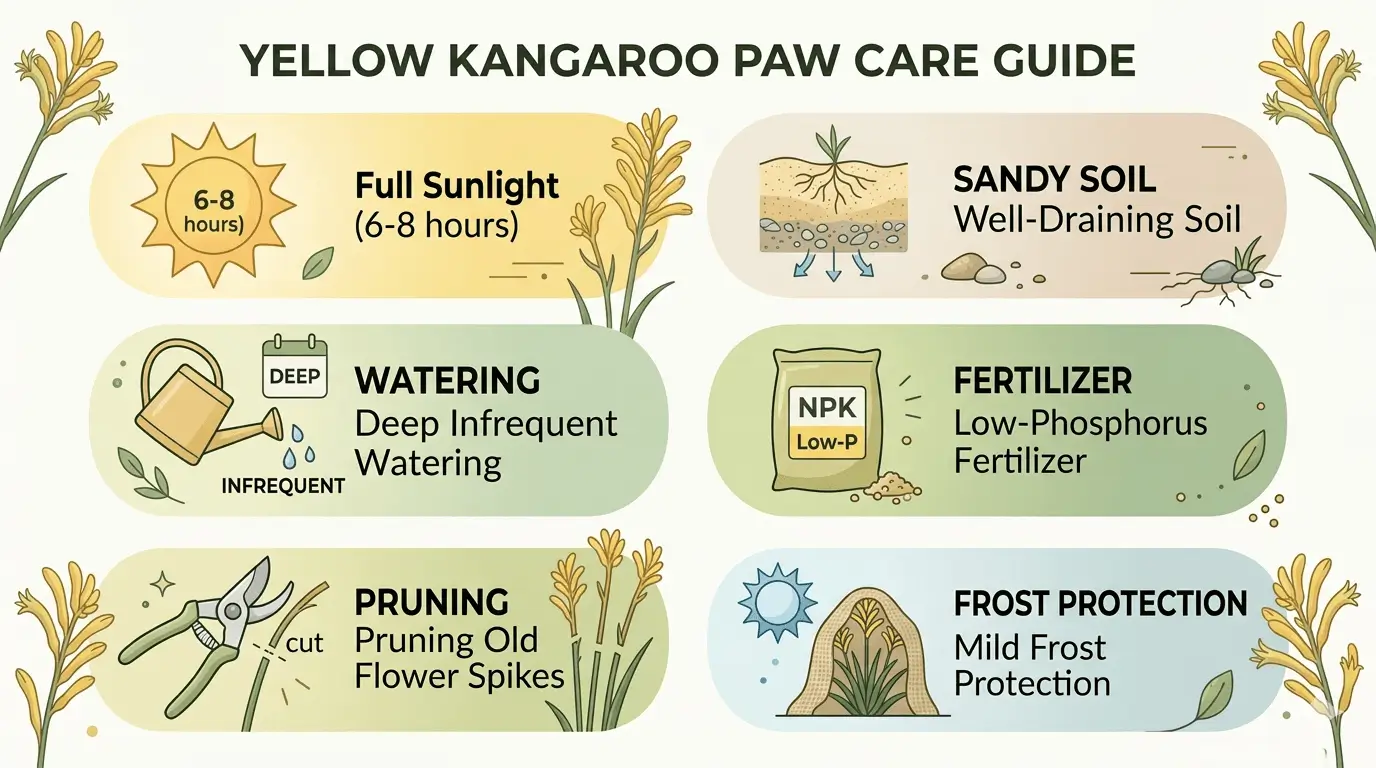
Yellow kangaroo paw grows best in full sunlight. At least 6 to 8 hours of direct sun daily supports strong flowering and healthy foliage development.
Partial shade may reduce flowering intensity and encourage weaker stems. In humid climates, insufficient sunlight can also increase disease problems.
Plants grown in full sun typically develop:
- Brighter flowers
- Stronger stems
- Better airflow
- Improved drought tolerance
Soil and Drainage Needs
Well-draining soil is essential for healthy yellow kangaroo paw growth. Sandy soils are preferred because they allow excess moisture to move away from the roots quickly.
Poor drainage is one of the most common reasons kangaroo paw plants decline. Wet or compacted soil increases the risk of root rot and fungal diseases.
Ideal soil characteristics include:
- Sandy or gravelly texture
- Low water retention
- Moderate fertility
- Good aeration
Heavy clay soils should be improved with coarse sand or raised planting beds.
Watering and Fertilizing
Young plants require regular watering during establishment. Once established, yellow kangaroo paw becomes relatively drought tolerant and usually needs less frequent irrigation.
General watering guidelines include:
- Water young plants consistently
- Allow soil to dry slightly between watering
- Reduce watering during cooler months
- Avoid waterlogged soil
Established plants often perform better with deep but infrequent watering.
Low-phosphorus fertilizers are recommended because many Australian native plants are sensitive to excessive phosphorus levels.
Pruning and Maintenance
Regular maintenance improves flowering performance and plant appearance.
Recommended pruning practices include:
- Deadheading spent flowers
- Removing old flower spikes
- Trimming damaged foliage
- Cleaning crowded growth
Practical gardening experience shows that neglected flower stems can reduce airflow and increase fungal problems.
Frost and Climate Tolerance
Yellow kangaroo paw performs best in mild climates and may suffer damage from prolonged frost exposure. Frosty yellow kangaroo paw foliage often develops blackened or damaged leaf edges after cold weather.
Best climate zones:
- Mediterranean climates
- Coastal warm regions
- Mild subtropical areas
- Dry temperate zones
Signs of cold stress:
- Blackened foliage
- Wilting leaves
- Reduced flowering
- Soft stem damage
Winter protection methods:
- Apply mulch around roots
- Reduce winter watering
- Use frost cloth during cold nights
- Move container plants to protected locations
For broader maintenance techniques and flowering improvement strategies, see our guide on Kangaroo Paw Care: 6+ Essential Tips for Healthy Blooms.
Planting and Spacing Yellow Kangaroo Paw
Best Time to Plant
The best time to plant yellow kangaroo paw is during spring or early autumn when temperatures are moderate and roots can establish efficiently.
Avoid planting during periods of extreme heat or heavy rainfall. Mild weather encourages faster root development and reduces transplant stress.
Proper Spacing Guidelines
Proper yellow kangaroo paw spacing improves airflow and reduces fungal disease risks. Crowded plants are more likely to develop leaf spotting and weak flowering.
Spacing recommendations vary by cultivar size, but most plants benefit from enough room for mature foliage spread.
Good airflow supports:
- Faster drying after rain
- Reduced fungal growth
- Stronger flowering
- Better foliage health
Container Planting vs Garden Beds
Yellow kangaroo paw grows successfully in both containers and garden beds when drainage conditions are suitable.
Container planting offers greater control over soil quality and moisture levels, while garden beds allow more natural root expansion.
| Planting Method | Advantages | Challenges | Best Situations |
| Containers | Better drainage control | Faster drying soil | Patios and small spaces |
| Garden Beds | Larger root growth | Soil drainage issues | Landscapes and mass planting |
Landscaping With Yellow Kangaroo Paw
Using Kangaroo Paw in Modern Landscapes
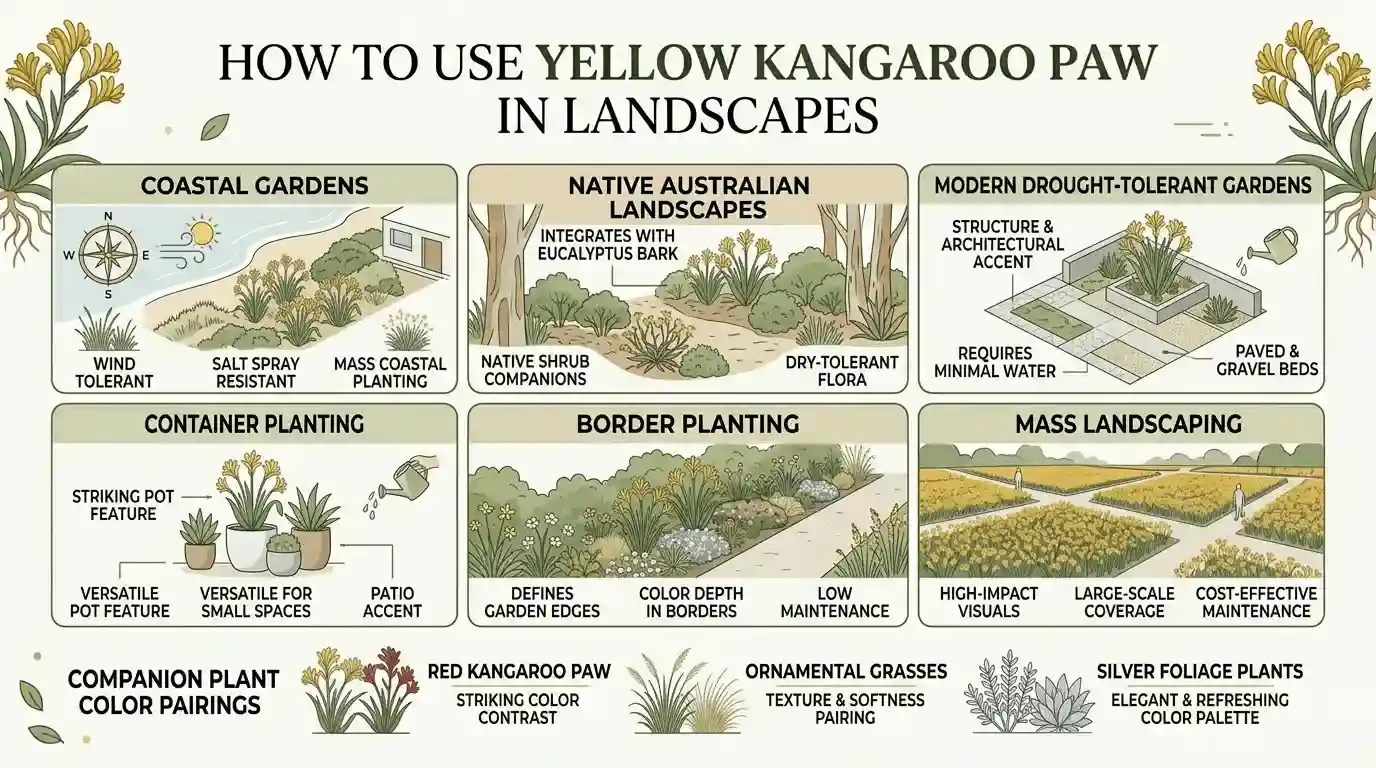
Landscape kangaroo paw varieties are widely used in drought-tolerant and contemporary garden designs. Landscaping with kangaroo paws creates strong vertical structure and long-lasting color.
Landscape kangaroo paws are commonly incorporated into:
- Native Australian gardens
- Coastal landscapes
- Gravel gardens
- Water-wise landscapes
- Modern minimalist gardens
The upright flower stems pair effectively with ornamental grasses and low-growing native shrubs. Because yellow kangaroo paw performs well in low-water landscapes, it also pairs well with other species featured in our 9+ Essential Plants for Dry Areas: Smart Garden Guide.
Companion Plants and Color Pairings
Yellow kangaroo paw combines well with complementary flowering plants and foliage textures.
Popular combinations include:
- Red and yellow kangaroo paw pairings
- Silver-leaved native shrubs
- Ornamental grasses
- Coastal flowering perennials
Yellow and red kangaroo paw combinations create strong visual contrast in native landscapes. Kangaroo paw Landscape Scarlet and Anigozanthos Landscape Scarlet are commonly paired with yellow cultivars to produce bold warm-toned garden displays.
Best Uses for Small and Large Varieties
Small yellow kangaroo paw varieties work well in:
- Decorative containers
- Border plantings
- Courtyard gardens
- Small landscape beds
Large varieties are better suited for:
- Mass landscaping
- Feature planting
- Public landscapes
- Large native gardens
Tall flowering forms provide strong architectural structure and improve visibility across larger spaces.
Common Yellow Kangaroo Paw Problems and Solutions
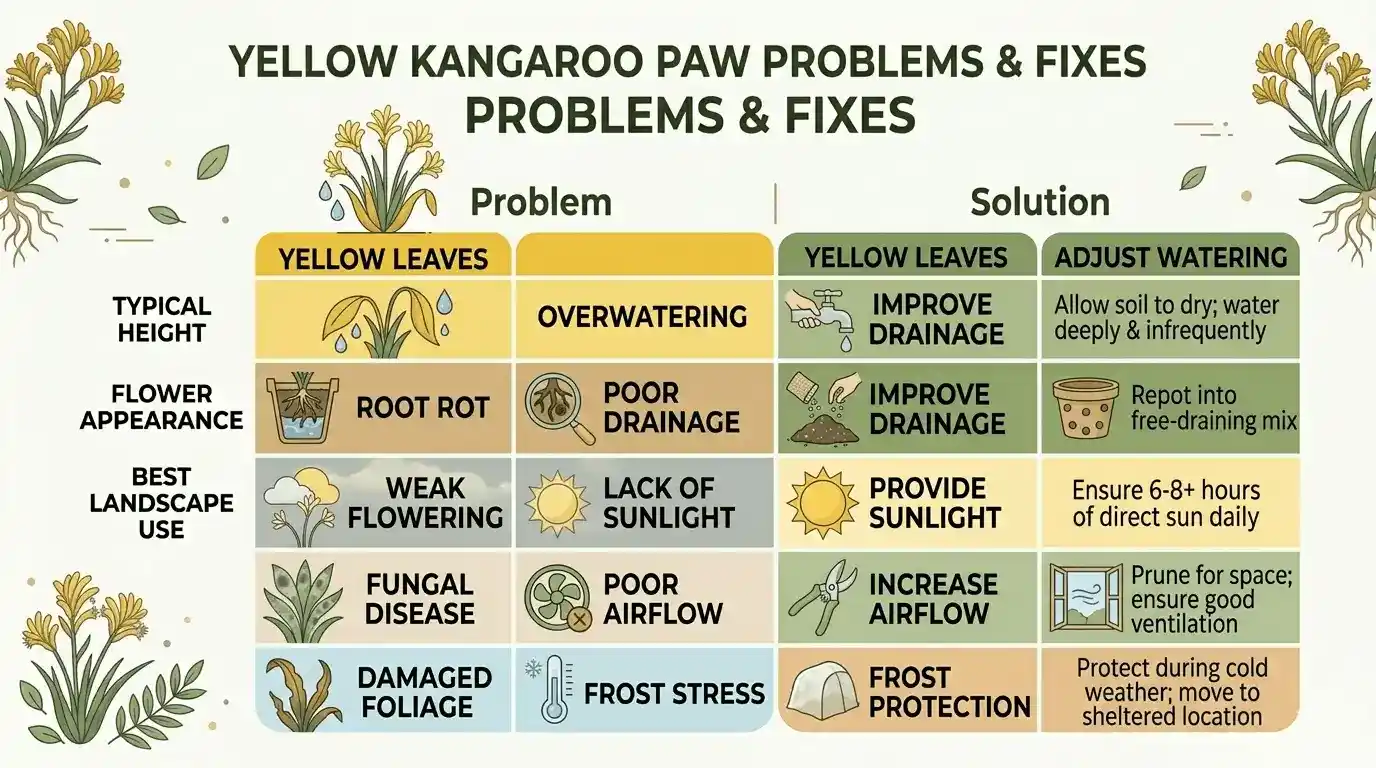
Why Yellow Leaves Occur
Yellow leaves on kangaroo paw plants are commonly caused by overwatering, poor drainage, nutrient imbalance, or natural aging foliage.
Excess moisture is the most frequent issue because saturated soil damages roots and reduces oxygen availability.
Common causes include:
- Waterlogged soil
- Heavy clay conditions
- Poor airflow
- Nutrient deficiencies
- Aging lower leaves
Allowing the soil to drain properly often improves foliage health.
Weak Flowering or Slow Growth
Weak flowering is usually linked to insufficient sunlight, overcrowding, or incorrect fertilization.
Plants grown in shaded conditions often produce fewer flower spikes and weaker stems. Overcrowded planting also limits airflow and reduces light penetration.
Low flowering performance may improve by:
- Increasing sun exposure
- Dividing overcrowded clumps
- Removing old flower spikes
- Using low-phosphorus fertilizer
Root Rot and Fungal Problems
Root rot and fungal diseases are moisture-related problems that commonly affect kangaroo paw plants in poorly drained soils.
Symptoms may include:
- Soft stems
- Wilting foliage
- Blackened roots
- Leaf spotting
Prevention strategies include maintaining strong airflow, avoiding excessive watering, and planting in fast-draining soil.
Raised beds are often helpful in regions with heavy rainfall.
Common Beginner Mistakes
Many beginner problems develop from incorrect planting and watering practices.
Mistakes to avoid:
- Planting too deeply
- Overwatering
- Using heavy clay soil
- Poor pruning habits
- Overcrowded planting
Quick prevention tips:
- Use sandy soil mixes
- Water only when needed
- Remove dead flower stems
- Maintain spacing between plants
Recovery methods:
- Improve drainage immediately
- Prune damaged growth
- Reduce watering frequency
- Replant in raised beds if necessary
Comparing Yellow Kangaroo Paw to Other Kangaroo Paw Colors
Yellow vs Red Kangaroo Paw
Yellow kangaroo paw produces a brighter and softer visual effect compared to red cultivars. Red forms often create stronger dramatic contrast in landscapes, while yellow varieties blend well into naturalistic planting designs. Pollinator attraction is generally strong in both colors, although red varieties may appear more visually striking from a distance.
Gardeners who enjoy vibrant native blooms may also like the species covered in our 8+ Essential Yellow Australian Native Flowers to Grow guide.
Yellow forms are commonly used in:
- Coastal gardens
- Native landscapes
- Contemporary designs
Red cultivars are often preferred for bold feature planting.
Yellow vs Pink and Blue Kangaroo Paw
Pink and blue kangaroo paw varieties are less common than yellow forms. Pink kangaroo paw Bunnings selections are usually marketed for ornamental cottage-style gardens.
Blue kangaroo paw Bunnings varieties are relatively rare and may include hybrids with cooler-toned flowers.
Compared to yellow cultivars:
- Pink forms appear softer and decorative
- Blue-toned forms are more unusual
- Yellow varieties are easier to combine with native landscapes
- Yellow flowers often provide stronger visibility in bright sunlight
Best Kangaroo Paw Colors for Different Garden Styles
Different kangaroo paw colors suit different landscape styles.
| Color Variety | Visual Effect | Typical Height | Landscape Style |
| Yellow | Bright and natural | Medium to tall | Native and coastal gardens |
| Red | Bold and dramatic | Medium to tall | Modern landscapes |
| Pink | Soft ornamental effect | Compact to medium | Cottage gardens |
| Blue | Rare and unusual | Medium | Contemporary feature gardens |
Where To Find Yellow Kangaroo Paw Plants and Seeds
Seeds vs Established Plants
Yellow kangaroo paw seeds are available through native plant suppliers and specialty nurseries. Growing from seed can be rewarding but requires patience because germination and establishment take time.
Established plants provide:
- Faster flowering
- More reliable growth
- Better landscape impact
- Reduced early maintenance
Seeds are generally less expensive but may require controlled conditions for successful germination.
Understanding Nursery Availability
Yellow kangaroo paw plant availability varies by region and season. Nurseries in warm climates often stock plants during spring and early growing seasons.
Seasonal demand, flowering periods, and regional climate suitability all influence nursery inventory.
Large landscape cultivars are often easier to source through native plant specialists.
Choosing Healthy Plants
Healthy yellow kangaroo paw plants should display:
- Strong upright foliage
- Firm roots
- Healthy flower spikes
- No blackened stems
- Minimal yellowing leaves
Avoid plants with soft crowns, soggy soil, or signs of fungal disease.
Conclusion
Yellow kangaroo paw is a highly ornamental Australian native plant valued for its velvety flowers, drought tolerance, and strong architectural form. Cultivars such as Yellow Gem, Landscape Gold, and Gold Velvet offer different heights, flower textures, and landscaping applications for gardens of various sizes.
Successful long-term growth depends on proper sunlight exposure, well-draining soil, good airflow, and careful watering practices. Proper spacing and routine maintenance also help reduce fungal problems and improve flowering performance.
This guide is part of our broader Plants: Benefits and Guides collection covering plant care, landscaping ideas, and growing tips for Australian native species.
Because of its striking appearance, low water needs, and versatility in modern landscapes, the yellow kangaroo paw remains one of the most popular flowering native plants for drought-tolerant gardens and coastal planting designs.
Frequently Asked Questions
How tall does yellow kangaroo paw grow?
Yellow kangaroo paw typically grows between 2 and 6 feet tall depending on the cultivar, climate, and growing conditions. Dwarf forms remain compact, while tall landscape varieties produce large flowering spikes.
What is the scientific name of yellow kangaroo paw?
The scientific name commonly associated with yellow kangaroo paw is Anigozanthos flavidus yellow form. The plant belongs to the genus Anigozanthos in the Haemodoraceae family.
How often should yellow kangaroo paw be watered?
Young plants require regular watering during establishment. Established plants should be watered deeply but less frequently, allowing the soil to dry slightly between watering sessions.
Why are my kangaroo paw leaves turning yellow?
Yellow leaves on kangaroo paw plants are usually caused by overwatering, poor drainage, nutrient imbalance, or aging foliage. Improving drainage and reducing excess moisture often helps.
Can yellow kangaroo paw grow in pots?
Yes, yellow kangaroo paw can grow successfully in pots if the container has excellent drainage and receives full sunlight. Compact cultivars are especially suitable for container planting.
What is the difference between Yellow Gem and Landscape Gold kangaroo paw?
Yellow Gem is generally more compact and suitable for smaller gardens or containers, while Landscape Gold is larger, more durable, and commonly used in public landscaping and mass planting.
Does yellow kangaroo paw tolerate frost?
Yellow kangaroo paw tolerates mild frost but may suffer foliage damage during prolonged freezing temperatures. Frost protection is recommended in colder climates.
How much sunlight does kangaroo paw need?
Kangaroo paw performs best with 6 to 8 hours of direct sunlight daily. Full sun promotes stronger flowering and healthier foliage.
Are kangaroo paw plants drought tolerant?
Yes, established kangaroo paw plants are highly drought tolerant and well suited to water-wise gardens and dry climates.