
Introduction
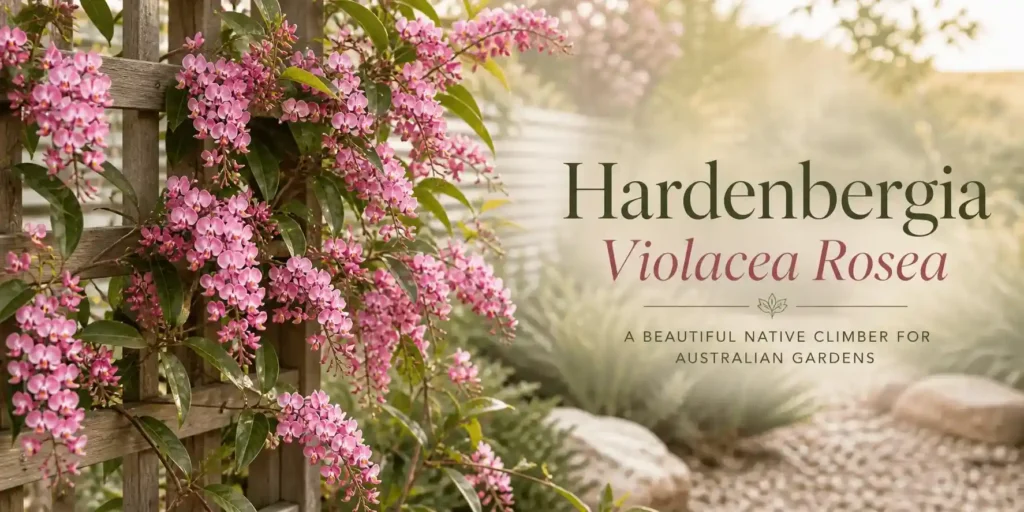
Hardenbergia violacea rosea is a flowering Australian native climbing plant valued for its pink pea-shaped blooms, vigorous growth, and adaptability in ornamental gardens. Often called coral pea, happy wanderer plant, or pink hardenbergia, this evergreen vine is commonly used on fences, trellises, pergolas, and native landscapes. Gardeners appreciate its low-maintenance nature, drought tolerance, and attractive cascading flowers during late winter and spring. The broader species, Hardenbergia violacea, includes several color forms, while pink cultivars such as Hardenbergia violacea rosea pink coral pea are specifically grown for their soft pink floral display and decorative landscaping appeal.
Quick Summary
- Hardenbergia violacea rosea is a fast-growing Australian native climber valued for its pink pea-shaped flowers.
- The plant thrives in sunny positions with well-draining soil and requires relatively low maintenance once established.
- Commonly called coral pea or happy wanderer, it is popular for trellises, fences, and native gardens.
- Proper pruning and controlled watering help improve flowering and prevent leggy growth.
What Is Hardenbergia Violacea Rosea?
Hardenbergia violacea rosea is a pink-flowering form of Hardenbergia violacea, an evergreen climbing plant native to Australia. The plant belongs to the Fabaceae family, which also includes peas and legumes. Known as hardenbergia rosea, coral pea, and happy wanderer plant, it is widely grown for ornamental landscaping due to its climbing habit and colorful flowers.
Hardenbergia violacea belongs to the Fabaceae family and is native to Australia, where it naturally grows in woodland and coastal environments.
The hardenbergia plant naturally grows as a twining vine that can climb structures or spread as ground cover. The hardenbergia violacea plant produces dense foliage and masses of pea-shaped flowers that attract bees and other pollinators.
Common names for the hardenbergia vine vary by region:
- Coral pea
- Happy wanderer plant
- False sarsaparilla
- Pink hardenbergia
The hardenbergia violacea common name “happy wanderer” is especially popular in Australian gardening culture.
Botanical Characteristics and Appearance
Hardenbergia violacea rosea produces clusters of soft pink to rosy-purple flowers that bloom from late winter through spring. The flowers resemble sweet pea blossoms and grow in hanging racemes along the vine.
Key botanical features include:
- Evergreen climbing habit
- Leathery dark green leaves
- Twining stems
- Pea-shaped flowers
- Pollinator-friendly blooms
The pink-flowering variety differs from Hardenbergia violacea white mainly in flower color and visual impact. White varieties create a softer landscape effect, while pink hardenbergia adds warmer ornamental color to fences and pergolas.
Why Gardeners Choose Pink Hardenbergia
Gardeners choose pink hardenbergia because it combines ornamental beauty with practical landscape performance. The plant is drought tolerant once established and adapts well to native gardens, cottage gardens, and low-maintenance landscapes.
Common landscaping benefits include:
- Fast coverage for fences and trellises
- Attractive seasonal flowering
- Evergreen foliage year-round
- Compatibility with Australian native gardens
- Relatively low water needs
Its climbing ability also makes it useful as a decorative privacy screen. Hardenbergia is also commonly included among fast-growing Australian native screening plants because of its dense foliage and climbing coverage.
Hardenbergia Violacea Rosea Height and Growth Rate
Hardenbergia violacea rosea height typically ranges from 6 to 15 feet depending on climate, pruning, and support structures. The hardenbergia violacea growth rate is considered moderate to fast under ideal conditions.
Warm temperatures, full sunlight, and good drainage significantly improve growth speed. In cooler climates, growth may slow during winter months.
Indoor growth is possible in containers, but outdoor cultivation generally produces healthier flowering and stronger vines.
Typical Mature Size in Different Conditions
The mature size of hardenbergia varies depending on growing conditions.
| Growing Condition | Typical Height | Growth Habit |
| Containers | 4–6 feet | Compact climbing |
| Garden Beds | 6–10 feet | Dense vine |
| Trellises | 10–15 feet | Vertical climber |
| Pergolas | Up to 15 feet | Spreading canopy |
Pruning can keep the plant compact, while warm climates often encourage vigorous growth.
Is Hardenbergia Fast Growing?
Yes, Hardenbergia is generally considered a fast-growing climber in suitable conditions. Growth becomes most active during spring and early summer after flowering finishes.
Seasonal growth patterns include:
- Late winter to spring: flowering period
- Spring to summer: strongest vegetative growth
- Autumn: moderate growth
- Winter: slower growth in cool climates
Adequate sunlight and proper watering improve flowering performance.
Ideal Growing Conditions for Hardenbergia
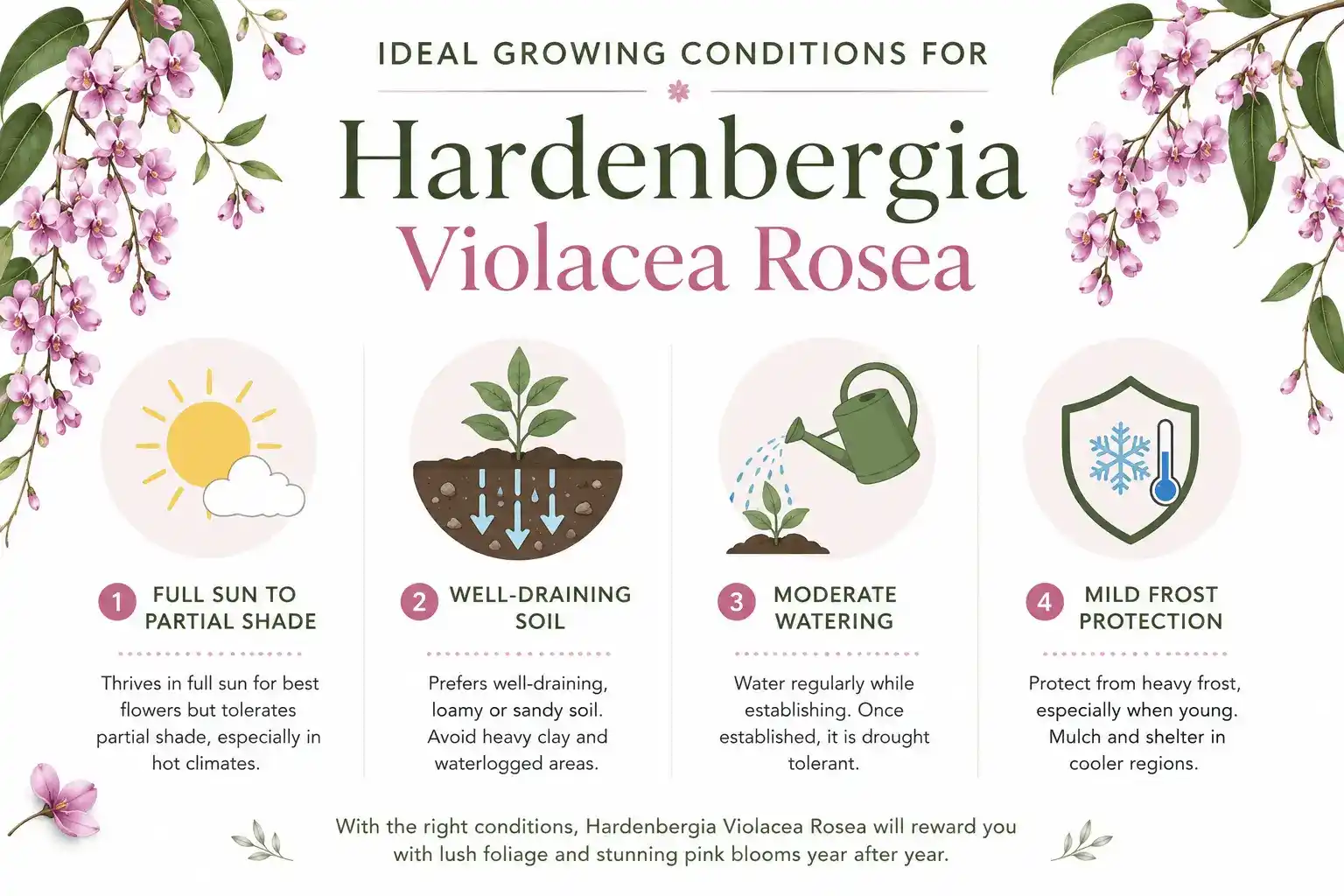
Hardenbergia grows best in environments that mimic its native Australian habitat. Healthy plants require:
- Full sun to partial shade
- Well-draining soil
- Moderate watering
- Mild to warm climates
- Air circulation around foliage
Gardeners researching hardenbergia violacea UK or hardenbergia UK cultivation often grow the plant in sheltered microclimates to reduce frost damage.
The hardenbergia violacea RHS and hardenbergia RHS gardening recommendations emphasize drainage and sun exposure for reliable flowering.
Best Soil and Sunlight Conditions
Free-draining soil is essential because heavy or waterlogged soil can lead to root rot. Sandy loam or improved garden soil works best.
Full sun encourages maximum flowering, while partial shade may reduce bloom production but still support healthy foliage growth.
Best conditions include:
- At least 6 hours of sunlight daily
- Slightly acidic to neutral soil
- Mulched root zone
- Protection from standing water
Can Hardenbergia Grow in the UK Climate?
Yes, Hardenbergia can grow in the UK climate, but winter protection is often necessary in colder regions. Frost tolerance is limited, especially for young plants.
UK gardeners commonly grow hardenbergia in:
- Containers
- Conservatories
- Sheltered courtyards
- South-facing walls
Container cultivation allows plants to be moved indoors during freezing conditions.
Seasonal Care Requirements
Seasonal care helps maintain healthy flowering and foliage.
Spring and summer care:
- Moderate watering
- Light fertilizing
- Training new shoots
Autumn and winter care:
- Reduce watering
- Apply mulch for root insulation
- Protect from frost
Flowering typically peaks from late winter into spring.
Care Guide for Hardenbergia Violacea Rosea
Hardenbergia violacea rosea is considered beginner-friendly when planted in suitable conditions.
Basic care includes:
- Deep but infrequent watering
- Balanced fertilizer in spring
- Regular support training
- Light annual pruning
- Monitoring for pests and fungal issues
Avoid excessive watering because the plant tolerates dry conditions better than wet soil.
How to Prune Hardenbergia Violacea
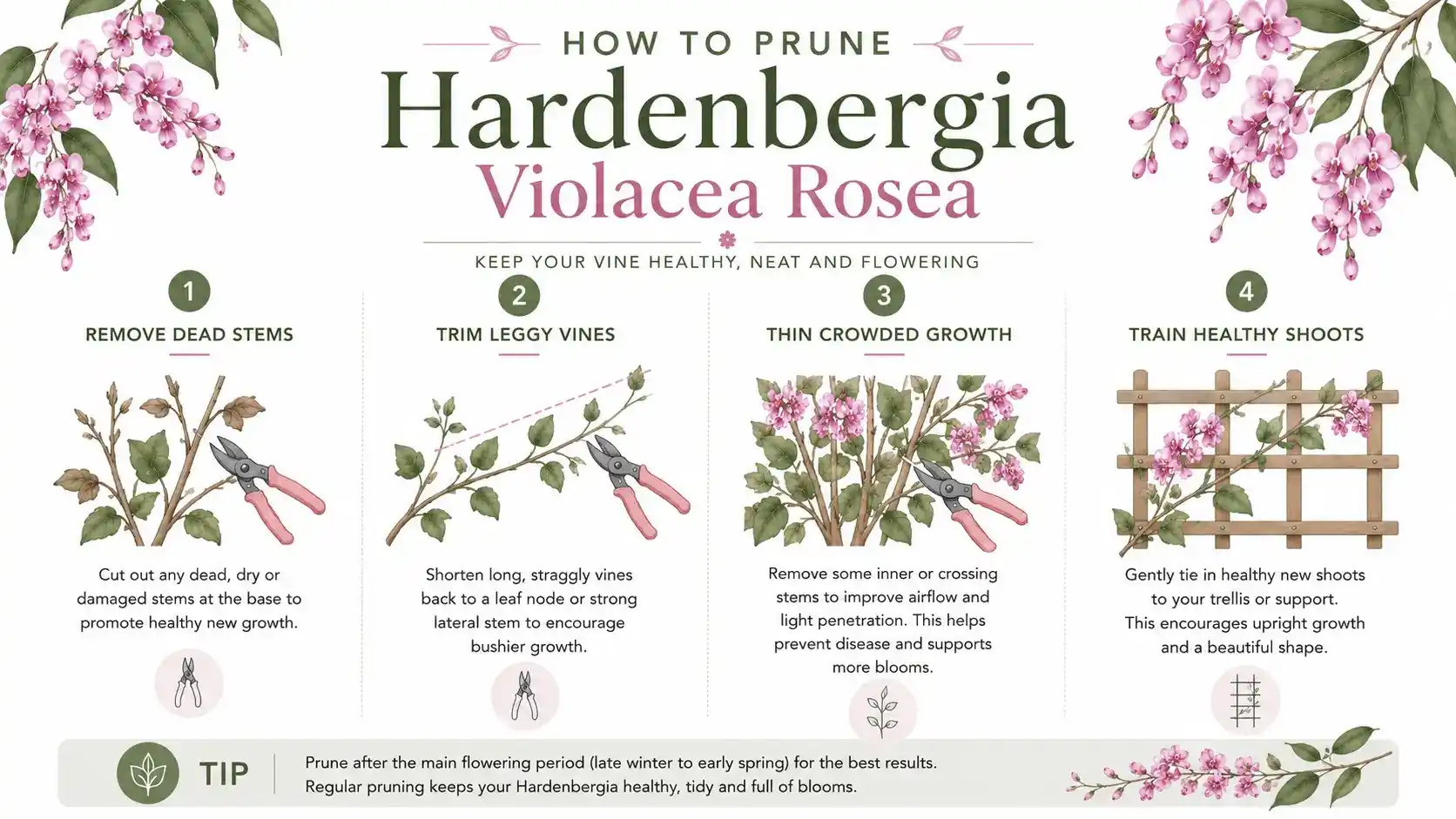
How to prune hardenbergia violacea depends on growth habits and flowering goals. Pruning should occur after flowering finishes.
Benefits of pruning include:
- Improved air circulation
- Better flower production
- Reduced leggy growth
- Easier shape control
Pruning steps:
- Remove dead or damaged stems
- Cut back overly long vines
- Thin crowded growth
- Retain strong flowering stems
- Avoid severe pruning into old woody growth
Over-pruning may temporarily reduce flowering.
Watering and Fertilizing Tips
Established hardenbergia plants are drought tolerant and usually require only occasional deep watering.
Important watering guidelines:
- Allow soil to partially dry between watering
- Avoid saturated soil
- Water more frequently during extreme heat
Overwatering commonly causes yellow leaves and root problems.
Use a low-phosphorus fertilizer formulated for Australian native plants to avoid nutrient stress.
Training Hardenbergia as a Climber
Hardenbergia naturally twines around support structures and benefits from early guidance.
Suitable climbing supports include:
- Fences
- Arches
- Pergolas
- Trellises
Beginner setup tips:
- Install support before planting
- Tie young stems loosely
- Space vines for airflow
- Train shoots horizontally for fuller coverage
Common Problems and Troubleshooting
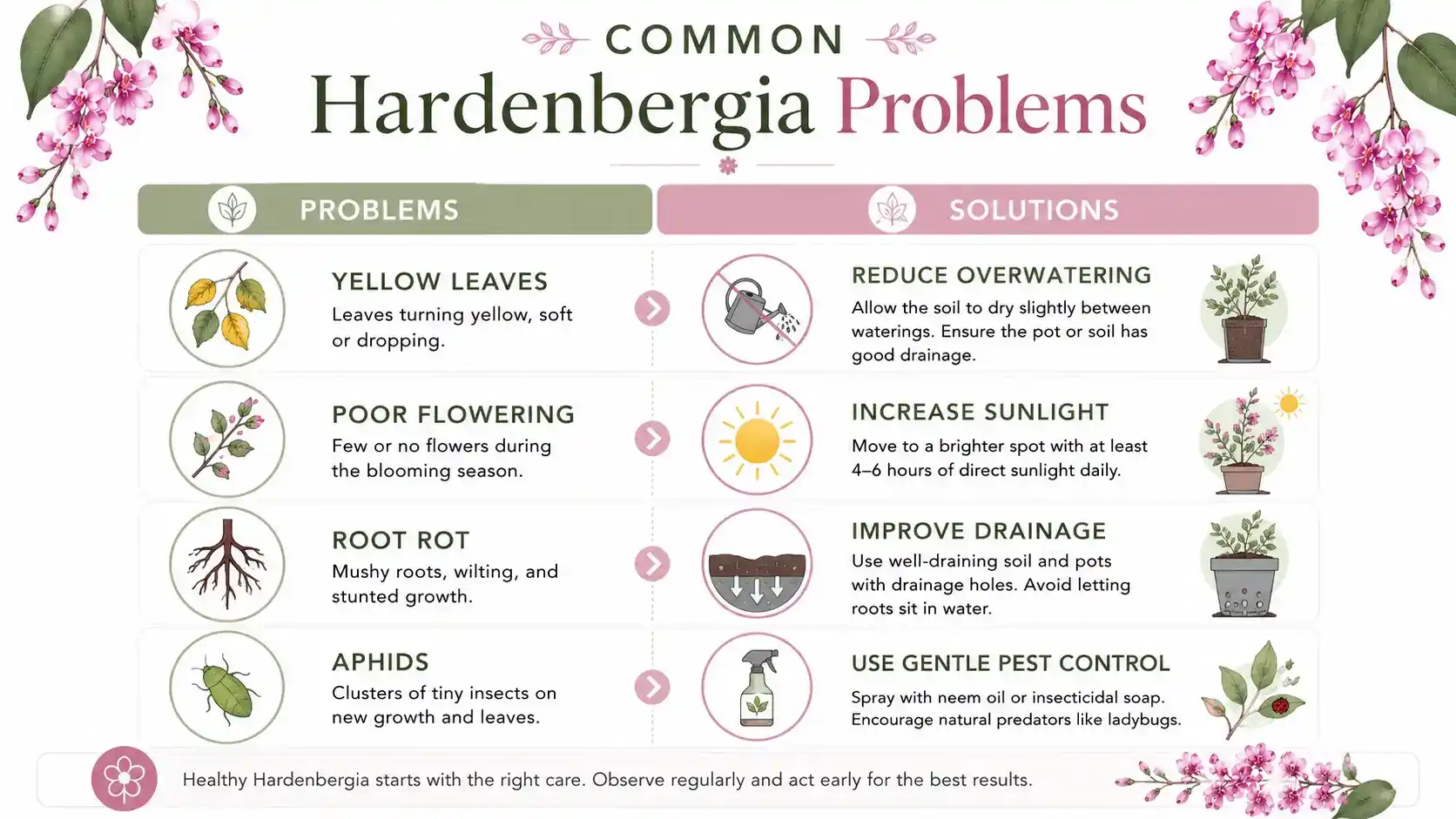
Most hardenbergia problems result from environmental stress or improper maintenance. Common issues include poor flowering, yellow leaves, weak growth, and fungal disease.
Proper drainage and sunlight are critical for prevention.
Why Leaves Turn Yellow or Flowers Decline
Yellow leaves and reduced flowering are usually caused by:
- Overwatering
- Poor drainage
- Nutrient imbalance
- Insufficient sunlight
- Root stress
Plants grown in dense shade often produce fewer flowers and elongated stems.
Pest and Disease Problems
Hardenbergia may occasionally develop fungal problems or insect infestations.
Common issues include:
- Aphids
- Root rot
- Leaf spot fungi
- Powdery mildew
Prevention methods:
- Improve airflow
- Avoid overhead watering
- Use well-draining soil
- Remove infected foliage promptly
Common Beginner Mistakes
New gardeners frequently encounter problems due to improper planting or maintenance.
Common mistakes include:
- Planting in heavy clay soil
- Overfertilizing
- Incorrect pruning timing
- Failing to provide climbing support
- Overwatering young plants
Is Hardenbergia Invasive?
No, Hardenbergia is not generally classified as invasive in most home garden environments. However, vigorous growth can allow the plant to spread aggressively if left unmanaged.
The difference between aggressive growth and true invasiveness is important. Hardenbergia spreads through climbing stems rather than destructive root systems.
Control methods include:
- Annual pruning
- Limiting unsupported spread
- Monitoring nearby plants
- Training vines properly
Hardenbergia Varieties and Comparisons
Several hardenbergia varieties are available, including pink, purple, and white flowering forms. Differences mainly involve flower color, vigor, and landscape style.
Hardenbergia Violacea Rosea vs White Varieties
Hardenbergia violacea rosea and hardenbergia violacea white differ mainly in ornamental appearance.
| Feature | Rosea Variety | White Variety |
| Flower Color | Pink | White |
| Visual Impact | Warm and vibrant | Soft and elegant |
| Pollinator Appeal | High | High |
| Landscape Style | Cottage/native gardens | Formal/minimalist gardens |
Pink forms often create stronger seasonal color contrast.
Comparison Table: Popular Hardenbergia Types
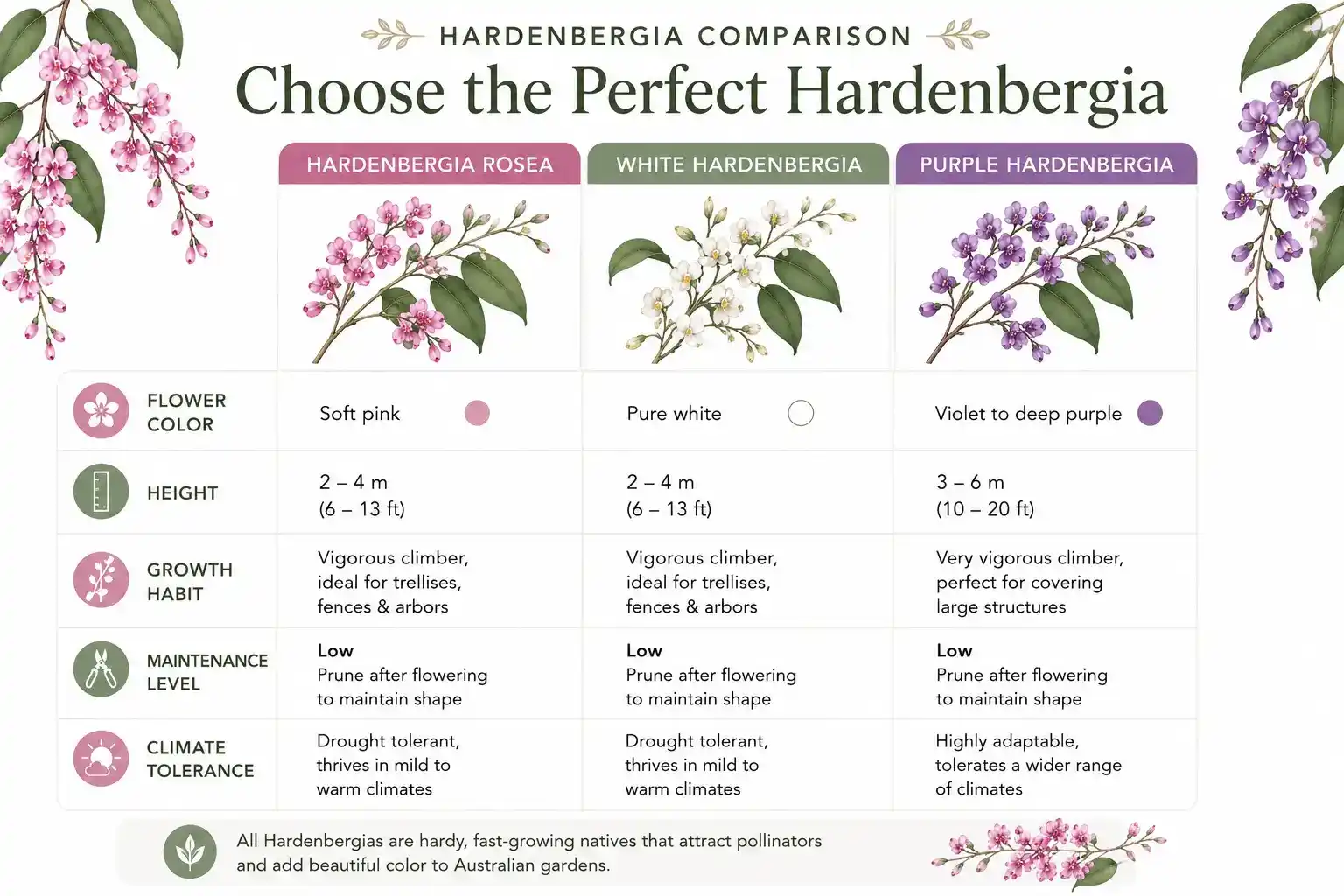
| Variety | Flower Color | Growth Habit | Height | Climate Tolerance | Maintenance |
| Rosea | Pink | Climbing | 10–15 ft | Mild climates | Low |
| White | White | Climbing | 8–12 ft | Mild climates | Low |
| Purple Form | Purple | Vigorous climber | 10–15 ft | Warm climates | Moderate |
Hardenbergia vs Other Popular Climbing Plants
Compared with wisteria bunnings selections or mandevilla bunnings climbers, hardenbergia is generally easier to maintain and more drought tolerant.
| Plant | Growth Style | Water Needs | Maintenance |
| Hardenbergia | Native climber | Moderate-low | Low |
| Wisteria | Woody climber | Moderate | High pruning |
| Mandevilla | Tropical vine | Higher | Moderate |
Among climbing plants bunnings gardeners choose, hardenbergia is often preferred for native landscaping.
Propagation and Seeds
Gardeners commonly propagate hardenbergia using seeds or semi-hardwood cuttings.
The hardenbergia violacea rosea seeds method is widely used for larger planting projects.
Growing Hardenbergia From Seeds
Successful seed propagation requires proper preparation.
Steps include:
- Scarify or soak seeds before planting
- Use free-draining propagation mix
- Maintain light moisture
- Keep temperatures warm
- Transplant seedlings after root development
Germination usually occurs within several weeks.
Can Hardenbergia Be Propagated From Cuttings?
Yes, Hardenbergia can be propagated from cuttings. Semi-hardwood cuttings generally produce faster results than seeds.
Comparison of propagation methods:
| Method | Difficulty | Speed | Reliability |
| Seeds | Moderate | Slower | Good |
| Cuttings | Moderate | Faster | Very good |
Landscaping Uses for Coral Pea
Coral pea is widely used in landscape design because of its colorful flowers and climbing habit. The hardenbergia happy wanderer form works especially well for naturalistic gardens and screening applications.
Its drought tolerance and minimal upkeep also make Hardenbergia ideal for low-maintenance Australian native garden designs.
Best Garden Uses for Hardenbergia
Hardenbergia is commonly used for:
- Fences
- Pergolas
- Retaining walls
- Native gardens
- Erosion control slopes
Its dense growth also provides visual privacy. Many gardeners combine Hardenbergia with fast-growing privacy plants to create layered natural screening around fences and pergolas.
Companion Plants and Design Ideas
Pink hardenbergia pairs well with Australian natives and flowering shrubs.
Good companion plants include:
- Grevillea
- Kangaroo paw
- Bottlebrush
- Lavender
- Native grasses
Pink flowers combine attractively with silver foliage and purple-flowering shrubs.
Where Hardenbergia Is Commonly Found in Garden Centers
Hardenbergia plants are widely available in Australian garden centers and native plant nurseries.
Search trends often include:
- hardenbergia violacea bunnings
- hardenbergia bunnings
- bunnings hardenbergia
- hardenbergia white out bunnings
- happy wanderer plant bunnings
- climber plants bunnings
- climbing plant bunnings
Availability typically increases during flowering seasons when plants are visually attractive.
Regional Availability and Climate Suitability
Hardenbergia is especially popular in:
- Australia
- Perth
- Temperate coastal regions
- UK specialty gardening markets
Hardenbergia comptoniana Perth gardening discussions often highlight the plant’s performance in Mediterranean-style climates with dry summers.
Conclusion
Hardenbergia violacea rosea is a versatile Australian native climber valued for its attractive pink flowers, vigorous growth, and low-maintenance nature. Commonly known as coral pea or happy wanderer plant, it performs well on fences, pergolas, trellises, and native landscapes. With proper sunlight, well-draining soil, and occasional pruning, the plant provides reliable seasonal flowering and evergreen foliage. Its adaptability, drought tolerance, and ornamental appeal make pink hardenbergia a practical choice for both beginner and experienced gardeners seeking a decorative climbing plant. For more plant care, landscaping inspiration, and growing advice, explore our complete guide to Plants: Benefits and Guides (Complete Care, Types & Growing Tips).
FAQ
What is the common name for Hardenbergia violacea rosea?
Common names include coral pea, happy wanderer plant, and pink hardenbergia.
How tall does Hardenbergia violacea rosea grow?
The plant commonly grows between 6 and 15 feet tall depending on climate, support structure, and pruning.
Is Hardenbergia invasive in home gardens?
Hardenbergia is not generally considered invasive, although vigorous growth may require pruning and management.
How often should Hardenbergia be pruned?
Pruning is usually performed once yearly after flowering finishes to maintain shape and encourage flowering.
Can Hardenbergia grow in pots or containers?
Yes, Hardenbergia grows well in containers if provided with drainage, sunlight, and climbing support.