
Introduction
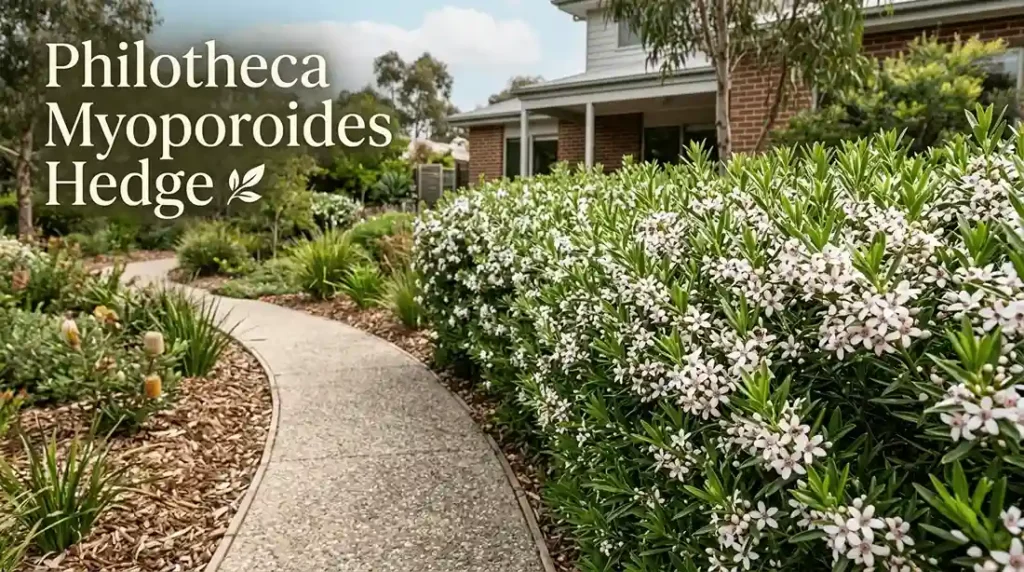
Philotheca myoporoides hedge plants are evergreen native shrubs valued for their dense foliage, fragrant flowers, and adaptable growth habit. Commonly used in Australian-style gardens, a philotheca hedge provides soft screening, ornamental structure, and pollinator-friendly blooms throughout the flowering season. The plant is widely known as long-leaf wax flower or philotheca wax flower and is closely associated with the former botanical name eriostemon myoporoides. Landscapers and homeowners frequently choose philotheca for privacy hedging because of its compact branching, glossy foliage, and relatively low maintenance requirements. Whether planted as a formal hedge or informal flowering screen, philotheca myoporoides offers year-round greenery with seasonal ornamental appeal. Philotheca myoporoides is one of many evergreen native shrubs featured in our comprehensive guide to plant care, growing tips, and ornamental garden plants.
Quick Summary
- Philotheca myoporoides is an evergreen native shrub commonly used as a flowering hedge.
- The plant produces fragrant white to pink flowers and dense foliage suitable for screening.
- Different cultivars such as Philotheca Profusion, Winter Rouge, and Cascade of Stars vary in size and flower appearance.
- Proper pruning, drainage, and sunlight are essential for maintaining a healthy philotheca hedge.
What Is Philotheca Myoporoides?
Philotheca myoporoides is an evergreen flowering shrub in the Rutaceae family, which also includes citrus plants. The species was previously classified under the botanical name eriostemon myoporoides, and older references may still use names such as philotheca eriostemon or simply eriostemon. Philotheca belongs to a genus of flowering shrubs native to Australia and was previously classified under the eriostemon group.
The plant is commonly known as:
- Long leaf wax flower
- Long-leaf wax flower
- Long leaved wax flower
Philotheca myoporoides is native to eastern Australia, where it naturally grows in woodland edges, open forests, and well-drained soils. Its adaptability to pruning and compact branching structure make it highly suitable for hedging applications.
Key ornamental characteristics include:
- Glossy green foliage
- Fragrant white or pale pink flowers
- Dense evergreen branching
- Compact growth habit
Common Features of a Philotheca Hedge
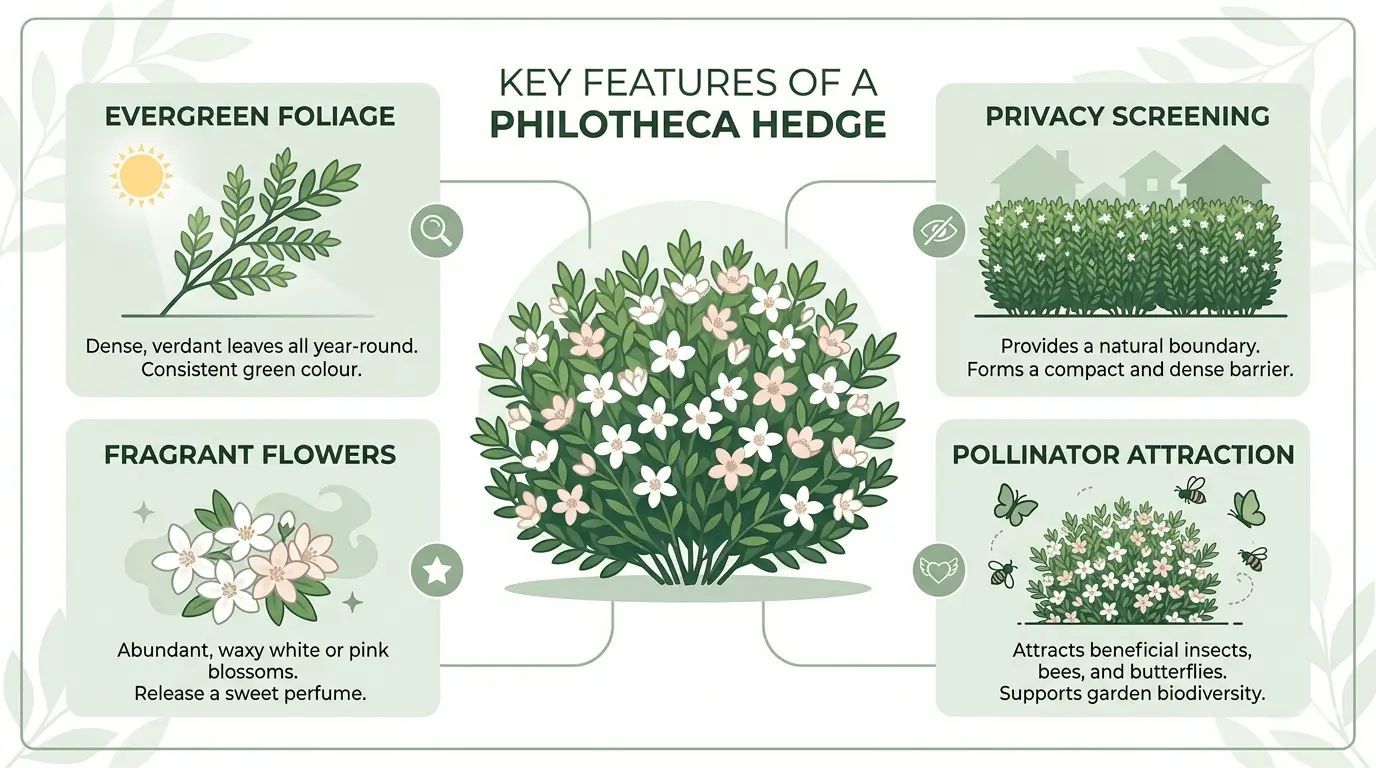
A philotheca hedge is valued for its evergreen structure, seasonal flowering display, and soft natural appearance. Most varieties flower from late winter through spring, producing clusters of fragrant blooms that attract bees and beneficial pollinators.
The hedge performs well as:
- A privacy screen
- A flowering boundary hedge
- A wildlife-friendly garden feature
- An ornamental native planting
Ideal garden styles include:
- Native Australian gardens
- Coastal landscapes
- Cottage gardens
- Informal screening designs
- Low-maintenance gardens
The visual appeal of philotheca hedges comes from their fine foliage texture, compact shape, and masses of delicate flowers during peak bloom periods. Philotheca hedges are often included among fast growing Australian native screening plants because of their dense foliage and ornamental privacy benefits.
Philotheca Myoporoides Hedge Size and Mature Height
Philotheca myoporoides hedge size varies depending on cultivar selection, pruning practices, and growing conditions. Most varieties reach between 1.5 and 3 meters in height when mature.
Typical philotheca myoporoides hedge height ranges include:
- Compact forms: 1–1.5 meters
- Medium hedges: 1.5–2.5 meters
- Upright screening forms: up to 3 meters
Environmental factors influencing philotheca myoporoides size include:
- Sunlight exposure
- Soil drainage
- Root space
- Climate conditions
- Water availability
Regular pruning helps maintain dense foliage and controlled hedge dimensions. Formal hedges generally remain shorter and more compact than informal plantings. Compact philotheca varieties are commonly used in front yard small hedge designs where soft evergreen structure is preferred over formal clipped hedges.
Indoor, Pot-Grown, and Garden Size Differences
Philotheca myoporoides in pots generally remains smaller than garden-grown specimens because container roots have restricted growing space. Pot-grown plants often reach around 1–1.5 meters tall depending on container size and pruning.
Growth differences include:
- Pot-grown plants stay more compact
- Garden beds encourage fuller root development
- Formal hedges maintain tighter growth through regular trimming
Container-grown philotheca requires more frequent watering and feeding compared to plants established in open garden soil.
Table Section — Typical Philotheca Hedge Sizes
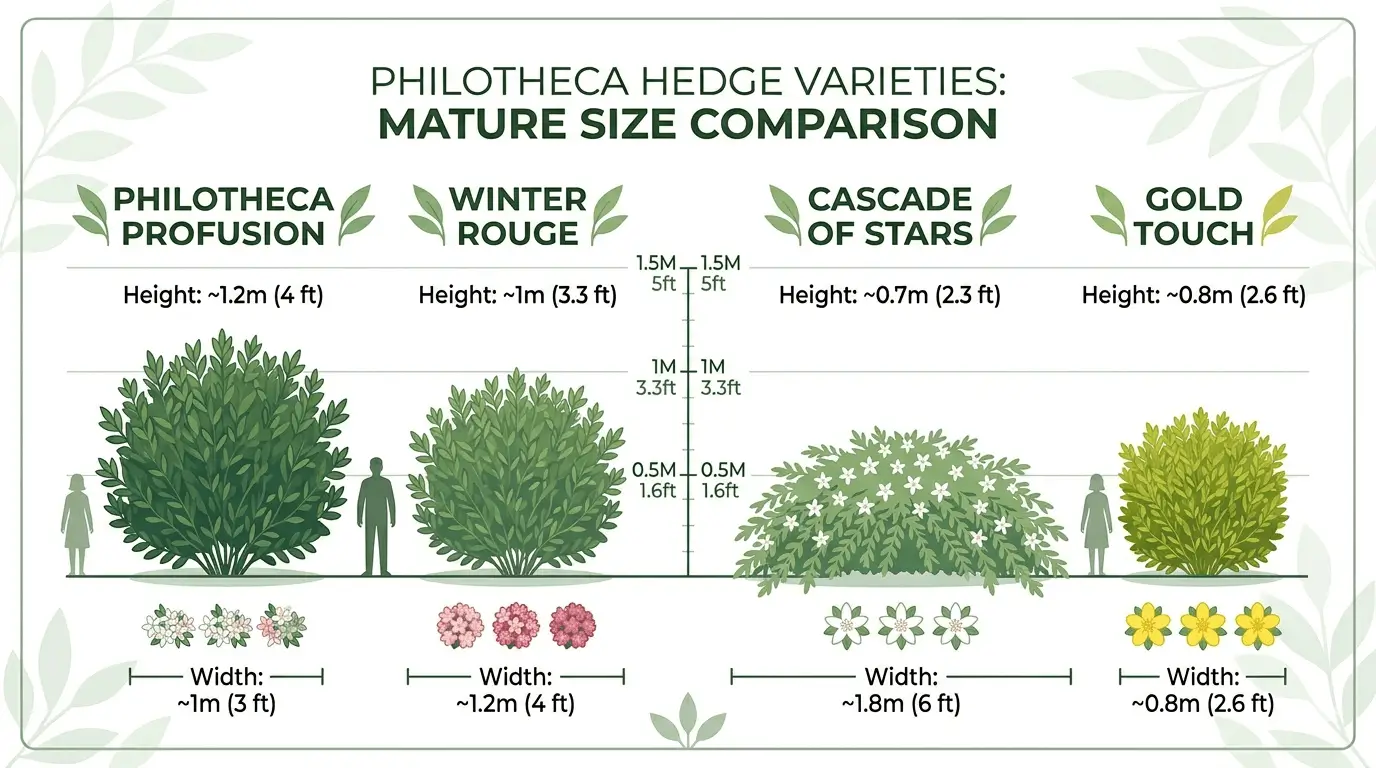
| Cultivar | Mature Height | Width | Hedge Suitability | Growth Habit |
| Philotheca Profusion | 2–3 m | 2 m | Screening hedge | Upright |
| Winter Rouge | 1.5–2 m | 1.5 m | Ornamental hedge | Compact |
| Cascade of Stars | 1–1.5 m | 2 m | Informal hedge | Cascading |
| Ruby Cascade | 1–1.5 m | 1.5–2 m | Retaining walls | Weeping |
| Gold Touch | 1–1.5 m | 1 m | Low hedge | Compact |
Popular Philotheca Varieties Used for Hedges
Several philotheca cultivars are commonly selected for hedging because of their varying flower colors, foliage tones, and growth habits.
Selection differences typically involve:
- Flower density
- Branching structure
- Mature size
- Foliage coloration
- Maintenance requirements
Philotheca Profusion
Philotheca profusion, also called philotheca myoporoides profusion, is known for its heavy flowering habit and vigorous growth. The plant produces dense masses of white flowers during spring.
Its hedge appearance is:
- Full and bushy
- Suitable for medium-height screening
- Attractive in native landscapes
Maintenance involves regular post-flowering pruning to preserve hedge density and encourage repeat branching.
Philotheca Winter Rouge
Philotheca winter rouge features pink-red buds that open into pale flowers, creating strong ornamental contrast. Philotheca myoporoides winter rouge is especially valued for seasonal color variation.
Winter Rouge characteristics include:
- Deep pink buds
- Compact shape
- Decorative flowering display
- Suitable for smaller hedges
The cultivar performs particularly well as an ornamental feature hedge near pathways or entrances.
Philotheca Cascade of Stars and Ruby Cascade
Philotheca cascade of stars and philotheca ruby cascade are recognized for their arching or cascading growth habits.
These cultivars are commonly used for:
- Informal flowering hedges
- Retaining walls
- Feature planting
- Sloped gardens
Cascade of Stars produces dense flowering stems that soften landscape edges naturally.
Philotheca Gold Touch and Flower Girl White
Philotheca myoporoides gold touch features slightly golden-toned foliage that adds visual contrast in mixed native gardens. Flower Girl White is known for its abundant bright white flowers and compact structure.
Differences include:
- Gold Touch emphasizes foliage color
- Flower Girl White emphasizes bloom density
- Both suit low hedging applications
Comparison Block — Best Philotheca Varieties for Different Garden Uses
| Garden Use | Recommended Variety | Key Benefit |
| Formal hedges | Profusion | Dense upright growth |
| Low hedges | Gold Touch | Compact shape |
| Screening | Winter Rouge | Thick foliage |
| Container growing | Flower Girl White | Controlled growth |
| Ornamental flowering | Cascade of Stars | Cascading flowers |
How to Grow a Healthy Philotheca Hedge
A healthy philotheca hedge requires sunlight, well-drained soil, and moderate watering. Most varieties perform best in full sun to partial shade.
Ideal growing conditions include:
- Free-draining soil
- Morning sun exposure
- Moderate airflow
- Protection from waterlogged roots
Philotheca myoporoides UK growing conditions may require sheltered planting locations because prolonged cold and excessive winter moisture can affect root health.
Planting a Philotheca Hedge Step by Step
- Prepare soil with compost and drainage material
- Dig planting holes slightly wider than root balls
- Position shrubs at original nursery depth
- Water deeply after planting
- Apply mulch around roots without touching stems
- Space shrubs according to mature width
Spacing recommendations vary between 80 cm and 1.5 meters depending on desired hedge density.
Best Soil and Drainage Conditions
Drainage is critical for philotheca root health. Waterlogged soil increases the risk of fungal disease and root rot.
Soil performance differences:
- Sandy soils improve drainage
- Clay soils require soil improvement
- Raised beds help in poorly drained areas
Adding coarse organic matter can improve airflow around roots and reduce moisture retention.
Growing Philotheca in Pots
Growing philotheca in pots requires:
- Large containers with drainage holes
- Native plant potting mix
- Consistent watering during warm weather
- Light pruning for shape control
Container-grown philotheca benefits from regular inspection because pots dry out faster than garden beds.
Care Guide for Philotheca Myoporoides Hedges
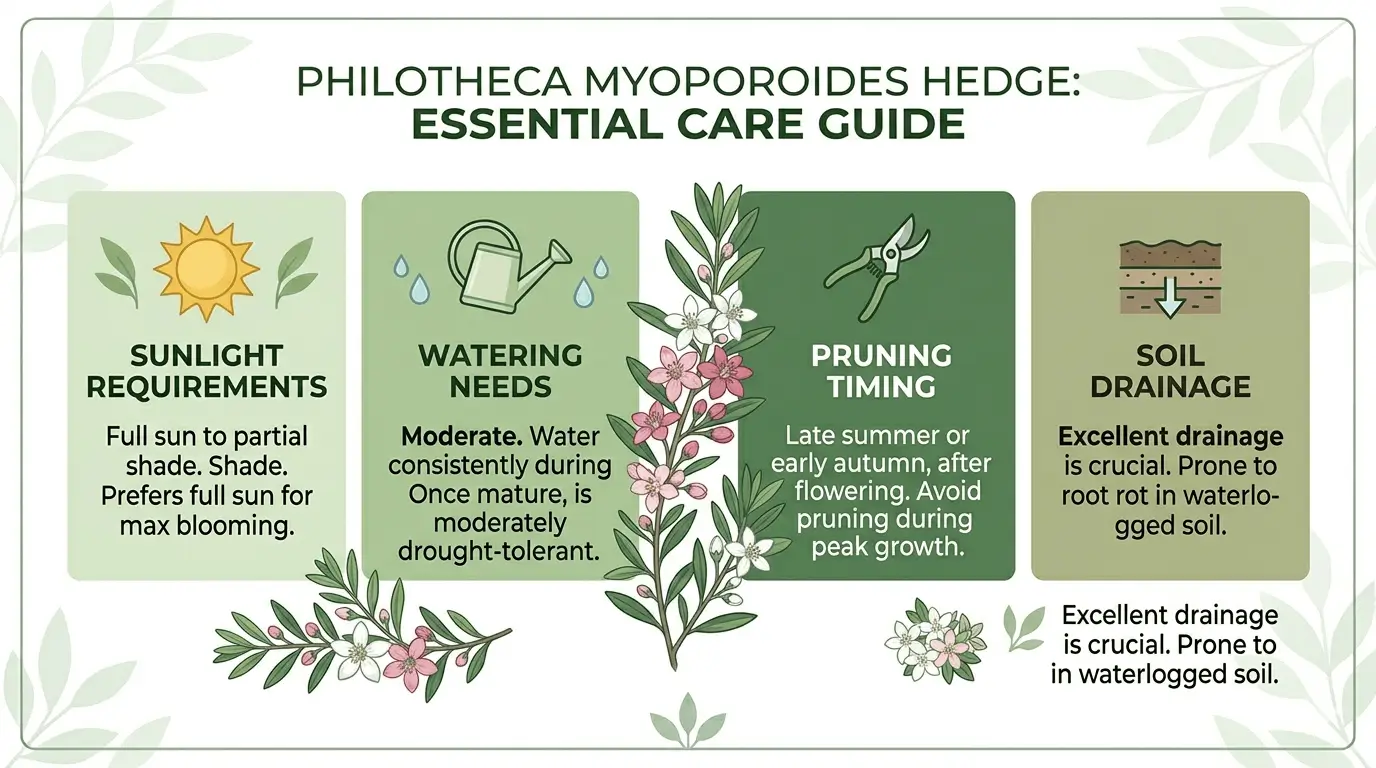
Philotheca myoporoides hedges require balanced watering, seasonal pruning, mulching, and occasional feeding to maintain healthy foliage and flowering.
Core care requirements include:
- Deep but infrequent watering
- Organic mulch application
- Light fertilization
- Post-flowering pruning
- Frost protection for young plants
Established plants generally tolerate moderate heat and short dry periods once roots are established.
Watering and Fertilizing Requirements
Philotheca has moderate drought tolerance after establishment. Deep watering encourages stronger root systems compared with shallow frequent watering.
Fertilizer recommendations:
- Use native-friendly fertilizers
- Apply low-phosphorus products
- Avoid excessive feeding
Overfeeding may cause weak growth and reduced flowering.
Seasonal Care Considerations
Spring care focuses on flowering support and light pruning after bloom periods. Summer care involves monitoring heat stress and maintaining soil moisture.
Seasonal adjustments include:
- Mulching before summer heat
- Reducing watering during winter dormancy
- Removing damaged growth after frost events
Pruning is best completed immediately after flowering finishes.
Table Section — Seasonal Philotheca Hedge Care Checklist
| Season | Maintenance Task | Watering Adjustment | Pruning Recommendation |
| Spring | Flower monitoring | Moderate watering | Light shaping |
| Summer | Mulching | Deep watering | Minimal pruning |
| Autumn | Soil improvement | Reduce frequency | Structural trimming |
| Winter | Frost protection | Low watering | Avoid heavy pruning |
Philotheca Myoporoides Hedge Pruning Techniques
Philotheca myoporoides hedge pruning should occur after flowering to encourage dense branching without removing future flower buds.
Pruning techniques include:
- Light shaping
- Tip pruning
- Rejuvenation pruning for older hedges
- Removal of crossing branches
Most hedges benefit from pruning one to two times annually.
How Pruning Affects Hedge Density and Flowering
Pruning directly affects flowering performance and screening density. Moderate pruning encourages compact branching while preserving flower production.
Balanced pruning improves:
- Airflow
- Structural strength
- Flowering distribution
- Foliage density
Over-pruning may reduce seasonal blooms.
Common Hedge Shaping Mistakes
Common beginner mistakes include:
- Over-pruning during active flowering
- Uneven hedge shaping
- Cutting into old wood
- Delayed seasonal trimming
Maintaining a slightly tapered hedge shape allows lower branches to receive adequate sunlight.
Common Philotheca Myoporoides Hedge Problems
Philotheca myoporoides hedge problems usually relate to drainage, pruning stress, or environmental conditions.
Common issues include:
- Yellow leaves
- Sparse growth
- Root rot
- Reduced flowering
- Heat stress
- Pest damage
Early identification improves recovery success.
Why Philotheca Leaves Turn Yellow
Philotheca leaves often turn yellow because of overwatering or poor drainage. Root stress limits nutrient uptake and weakens foliage health.
Other causes include:
- Nutrient imbalance
- Transplant shock
- Excessive soil moisture
- Compact clay soils
Improving drainage typically resolves long-term yellowing.
Pest and Disease Troubleshooting
Common philotheca problems include:
- Fungal root diseases
- Aphid infestations
- Scale insects
- Environmental stress damage
Good airflow, moderate watering, and regular monitoring reduce pest pressure significantly.
How to Prevent Slow or Weak Hedge Growth
Slow growth commonly results from:
- Overcrowded spacing
- Soil compaction
- Insufficient sunlight
- Incorrect pruning methods
Providing consistent sunlight and maintaining healthy soil structure improves hedge vigor.
Problem-Solution Table for Philotheca Hedge Issues
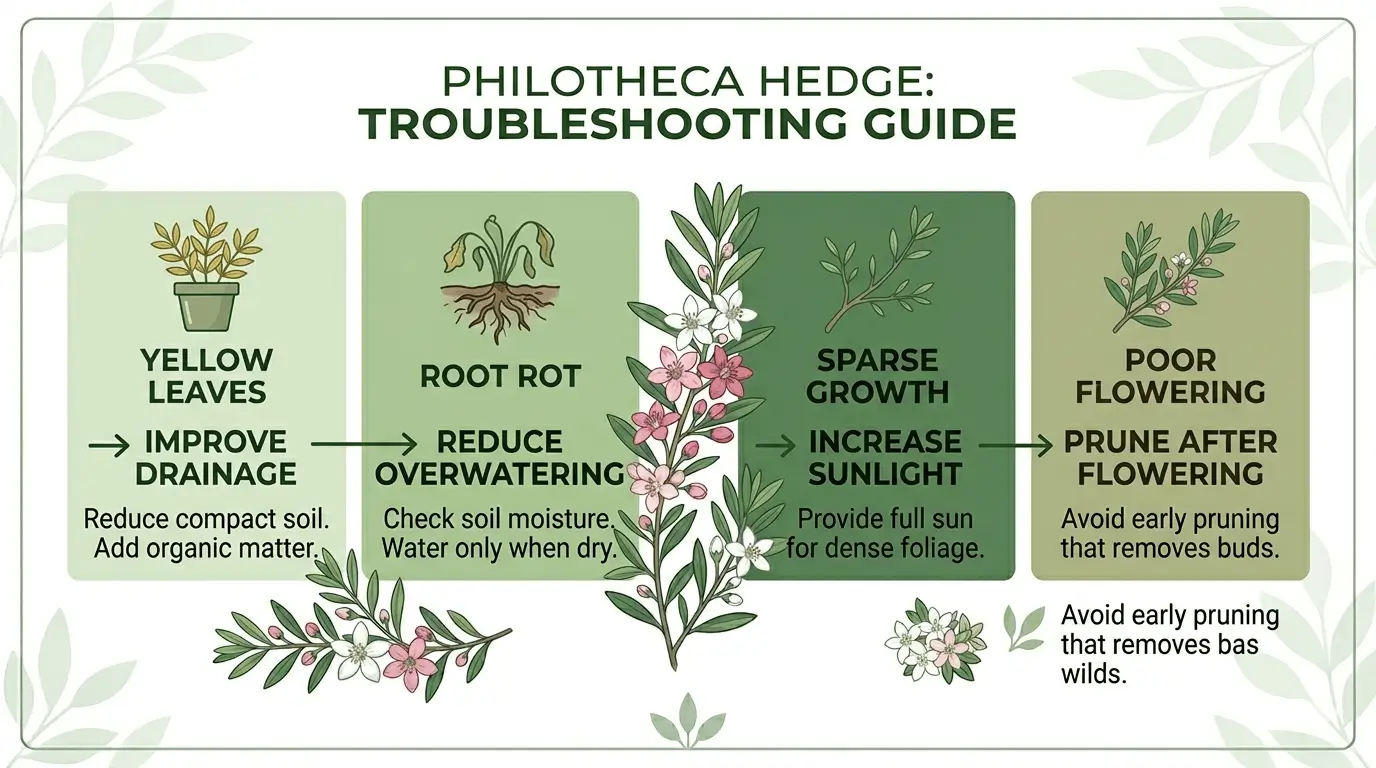
| Symptom | Likely Cause | Solution | Prevention Tip |
| Yellow leaves | Poor drainage | Improve soil drainage | Avoid overwatering |
| Sparse growth | Low sunlight | Increase light exposure | Correct spacing |
| Root rot | Waterlogging | Reduce watering | Use raised beds |
| Poor flowering | Incorrect pruning | Prune after flowering | Avoid late pruning |
| Wilting | Heat stress | Deep watering | Mulch regularly |
Comparing Philotheca Hedges With Other Native Hedge Plants
Philotheca differs from many native hedge shrubs because of its fine foliage texture, fragrant blooms, and moderate growth rate.
Advantages include:
- Softer ornamental appearance
- Fragrant flowering habit
- Compact screening potential
Limitations may include slower establishment compared with vigorous native hedges.
Philotheca vs Bottlebrush Hedges
Dwarf bottlebrush bunnings varieties generally grow faster than philotheca hedges and produce more vivid flowers.
Comparison differences:
- Bottlebrush grows faster
- Philotheca offers softer foliage texture
- Bottlebrush tolerates harsher pruning
- Philotheca creates more refined ornamental hedges
Philotheca vs Hawthorn Hedges
Philotheca hedges are evergreen, while hawthorn hedges are deciduous. Hawthorn often requires heavier maintenance and develops larger root systems.
Compared with hawthorn hedge how to plant requirements, philotheca generally needs better drainage but less aggressive pruning.
Related considerations include:
- Removing hawthorn hedge roots can be labor-intensive
- Philotheca roots are typically less invasive
- Hawthorn provides stronger thorn-based security screening
Table Section — Native Hedge Plant Comparison
| Plant | Growth Speed | Mature Size | Maintenance Level | Flowering Habit | Drought Tolerance |
| Philotheca | Moderate | Medium | Moderate | Fragrant spring blooms | Moderate |
| Bottlebrush | Fast | Medium-large | Low | Bright brush flowers | High |
| Hawthorn | Moderate | Large | High | Seasonal blooms | Moderate |
Where Philotheca Myoporoides Is Commonly Available
Philotheca myoporoides is commonly available through:
- Native plant nurseries
- Garden centers
- Regional plant suppliers
Searches for philotheca myoporoides bunnings and wax flower plant bunnings often reflect consumer interest in nursery availability rather than specific purchasing intent.
Availability may vary by region and season.
Choosing Healthy Nursery Plants
Healthy philotheca nursery plants should display:
- Dense foliage
- Strong branching
- Healthy root systems
- No visible pests
- Minimal leaf discoloration
Avoid plants showing root binding, yellow leaves, or weak stems.
Beginner Mistakes to Avoid With Philotheca Hedges
Common mistakes include:
- Planting in poorly drained soil
- Overcrowding shrubs
- Excessive fertilization
- Pruning at incorrect times
- Growing in deep shade
Many beginners underestimate how important drainage and airflow are for long-term hedge health.
Environmental Limitations and Climate Considerations
Philotheca myoporoides tolerates mild frost once established, but young plants may require winter protection.
Environmental limitations include:
- Heavy clay soils
- High humidity
- Strong drying winds
- Prolonged waterlogging
Sheltered positions with moderate airflow generally produce the healthiest flowering hedges.
Conclusion
A philotheca myoporoides hedge provides evergreen structure, fragrant flowering, and adaptable screening for native and ornamental landscapes. Its glossy foliage, compact branching, and pollinator-friendly blooms make it suitable for both formal and informal garden designs. Successful hedge growth depends on proper drainage, careful pruning, and selecting the right cultivar for the available space and climate conditions. Whether using Philotheca Profusion for dense screening or Cascade of Stars for softer ornamental planting, maintaining healthy soil and balanced seasonal care helps ensure long-term performance. For gardeners seeking a flowering evergreen hedge with refined texture and native appeal, philotheca remains a practical and visually attractive choice.
FAQs
What is the ideal height for a philotheca myoporoides hedge?
The ideal height for a philotheca myoporoides hedge is typically between 1.5 and 2.5 meters depending on the cultivar and pruning style.
How often should a philotheca hedge be pruned?
Most philotheca hedges should be pruned once or twice each year, preferably immediately after flowering.
Can philotheca myoporoides grow in pots?
Yes, philotheca myoporoides can grow successfully in pots if provided with well-drained potting mix, regular watering, and adequate sunlight.
Why is my philotheca hedge turning yellow?
Yellow leaves are commonly caused by overwatering, poor drainage, nutrient imbalance, or transplant stress.
Which philotheca variety is best for flowering hedges?
Philotheca Profusion is one of the best varieties for flowering hedges because of its dense bloom coverage and upright growth habit.
Is philotheca myoporoides suitable for UK climates?
Philotheca myoporoides can grow in sheltered UK gardens, but excessive winter moisture and prolonged frost may affect plant health.