
Introduction
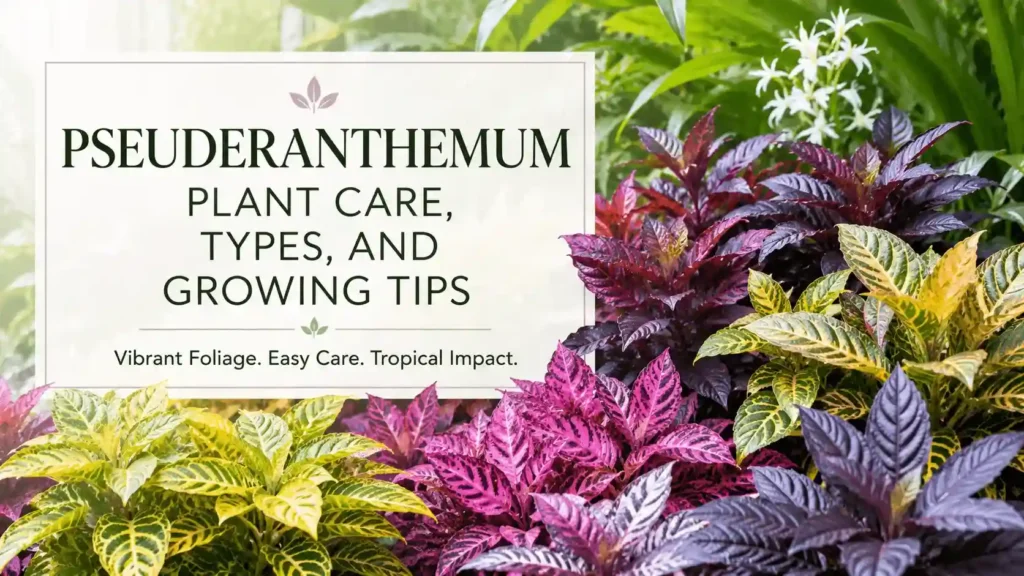
Pseuderanthemum is a tropical ornamental plant admired for its colorful foliage, decorative flowers, and striking leaf patterns. Many gardeners associate the plant with names such as the “love plant,” “love flower,” and “pastel flower” because of its vivid pink, burgundy, purple, green, and pastel-toned leaves. Multiple pseuderanthemum species and cultivars are available for landscaping, indoor decoration, and tropical garden design. Some varieties are grown primarily for foliage, while others are valued for delicate blooms and compact growth habits. Gardeners frequently search for pseuderanthemum care requirements, plant varieties, medicinal uses, indoor growing methods, and troubleshooting tips to maintain healthy growth and vibrant foliage throughout the year. Pseuderanthemum is one of many colorful tropical ornamental plants featured in our complete Plants: Benefits and Guides resource for plant care, growth tips, and landscaping inspiration.
Quick Summary
- Pseuderanthemum is a tropical ornamental plant known for colorful foliage and decorative flowers.
- Popular varieties include burgundy, golden, reticulated, and purple-leaf cultivars.
- Most species thrive in warm climates with bright indirect light and moist, well-draining soil.
- Proper watering, humidity, and pruning help maintain healthy foliage and compact growth.
What Is Pseuderanthemum?
Pseuderanthemum is a genus of tropical flowering plants within the Acanthaceae family. The pseuderanthemum plant is widely cultivated for ornamental use because of its brightly colored leaves and decorative flowers. Depending on the species, foliage may display shades of green, purple, pink, burgundy, cream, yellow, or silver. Pseuderanthemum belongs to the Acanthaceae plant family and includes numerous tropical ornamental species cultivated worldwide.
The plant is popular in tropical landscaping, indoor gardening, and decorative container displays. Its ability to provide year-round color makes it valuable in both residential and commercial garden settings.
Common searches related to the plant include:
- pseuderanthemum
- pseuderanthemum plant
- pseuderanthemum common name
- plant of love
- love plant
The term “love plant” is often associated with pseuderanthemum because of its romantic pastel foliage and ornamental appearance.
Common Names and Meaning Behind “Love Plant”
The plant is commonly linked with names such as love flower, pastel flower, and flower pastel because of its vibrant and soft-toned foliage combinations. Pink, lavender, burgundy, cream, and purple patterns create an ornamental appearance often associated with decorative romance-themed gardens.
These common names are not official botanical classifications but are widely used in gardening communities and ornamental plant markets.
The plant’s colorful leaves and soft blooms contribute to:
- Tropical garden aesthetics
- Decorative indoor styling
- Pastel-themed landscaping
- Ornamental container gardening
Where Pseuderanthemum Naturally Grows
Pseuderanthemum naturally grows in tropical and subtropical climates across Asia, the Pacific Islands, and parts of Oceania. Many species prefer humid environments with consistent warmth and filtered sunlight.
The plant performs best in:
- Tropical regions
- Frost-free climates
- Humid subtropical environments
- Warm coastal gardens
In regions such as pseuderanthemum Australia gardening zones, the plant is commonly cultivated outdoors in warm climates and indoors in cooler regions.
Popular Types of Pseuderanthemum Plants
Several pseuderanthemum species are cultivated for ornamental purposes. They differ in foliage color, flower appearance, growth habit, and landscape suitability.
Popular varieties include:
- Burgundy foliage cultivars
- Golden-veined reticulated types
- Purple-leaf ornamental forms
- Compact tropical landscaping varieties
Some species grow upright with dense foliage, while others spread more openly in tropical garden beds.
Table: Common Pseuderanthemum Varieties and Their Features
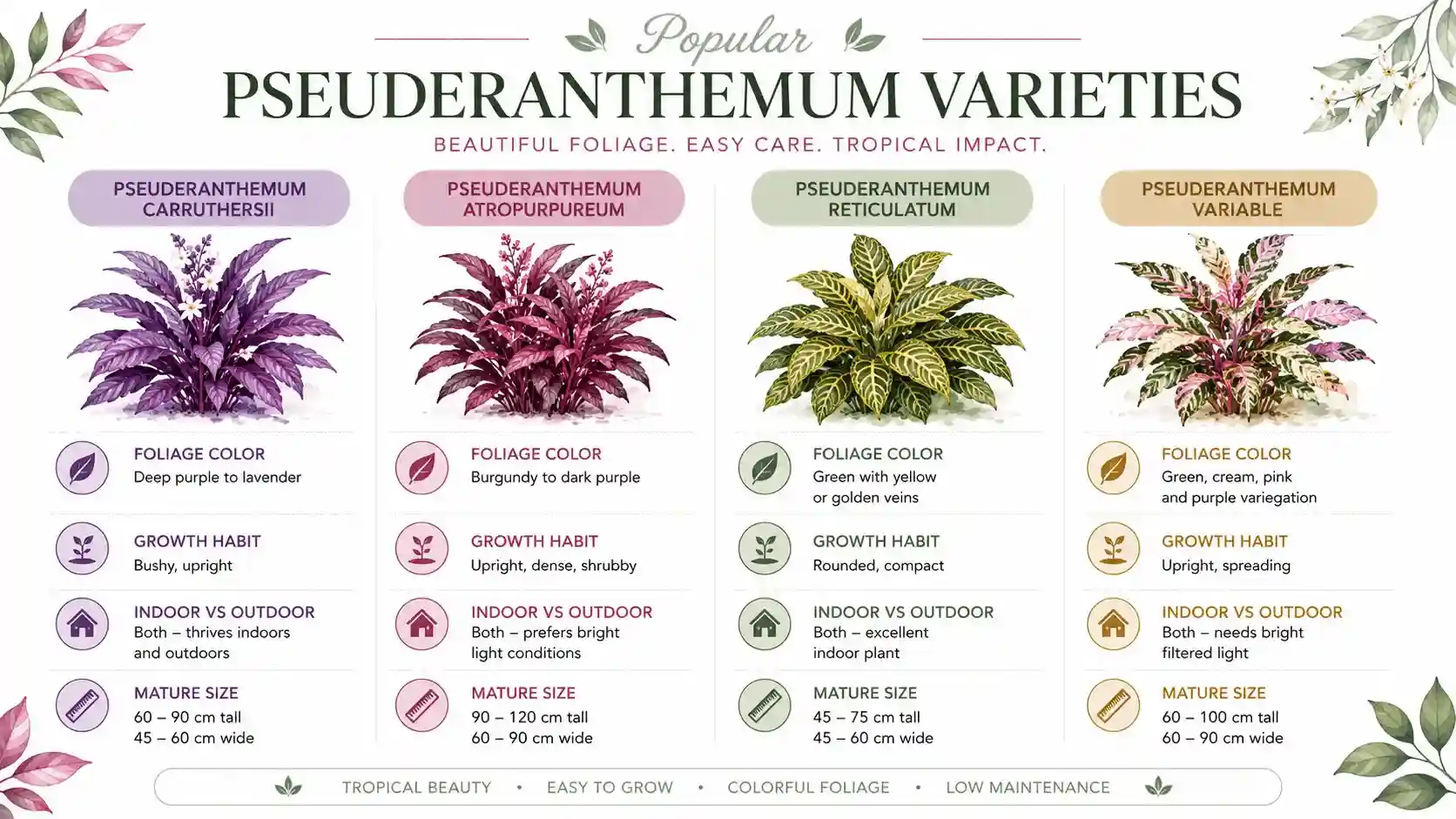
| Variety | Foliage Color | Flower Color | Mature Size | Indoor/Outdoor Suitability | Growth Habit |
| Pseuderanthemum carruthersii | Purple-green variegated | White/pink | 3–6 ft | Indoor & outdoor | Bushy upright |
| Pseuderanthemum atropurpureum | Burgundy-purple | White spotted | 4–5 ft | Mostly outdoor | Dense foliage |
| Pseuderanthemum reticulatum | Green with yellow veins | White | 2–4 ft | Indoor & outdoor | Compact |
| Pseuderanthemum variabile | Purple-green | Pale flowers | 2–5 ft | Outdoor preferred | Spreading |
| Pseuderanthemum laxiflorum | Dark green-purple | Tubular pink | 3–4 ft | Outdoor tropical | Semi-compact |
Pseuderanthemum Carruthersii
Pseuderanthemum carruthersii is one of the most widely cultivated ornamental species in tropical gardens. It is recognized for colorful foliage that combines green, purple, cream, and pink tones.
The variety pseuderanthemum carruthersii var atropurpureum is especially popular because of its darker burgundy-purple leaves and dense growth habit.
This species is commonly used for:
- Tropical borders
- Accent foliage displays
- Decorative hedges
- Patio containers
Pseuderanthemum Atropurpureum
Pseuderanthemum atropurpureum is known for rich purple foliage and ornamental garden appeal. The deep burgundy coloration creates strong contrast in tropical landscapes.
Gardeners often refer to this variety as pseuderanthemum burgundy because of its dark leaf tones. The plant is commonly paired with green tropical foliage plants to create layered color displays.
Its popularity comes from:
- Dramatic foliage coloration
- Dense ornamental growth
- Easy shaping through pruning
- High decorative value
Pseuderanthemum Reticulatum
Pseuderanthemum reticulatum features bright green leaves marked with golden-yellow veining. This striking contrast makes it visually different from darker purple cultivars.
The plant is also called pseuderanthemum golden because of its vivid vein patterns. It is commonly grown as an ornamental tropical shrub or indoor foliage plant.
Key characteristics include:
- Golden netted foliage
- Compact growth habit
- Decorative indoor adaptability
- Bright tropical appearance
Pseuderanthemum Variabile
Pseuderanthemum variabile is commonly associated with Australian tropical gardening. The species adapts well to humid environments and warm outdoor conditions.
Gardeners searching for pseuderanthemum variabile buy options often seek it for decorative foliage landscaping and subtropical garden design.
This species generally prefers:
- Warm temperatures
- Moist but draining soil
- Partial sunlight
- High humidity
Other Notable Species and Cultivars
Several lesser-known species also contribute to ornamental gardening collections.
These include:
- pseuderanthemum laxiflorum
- pseuderanthemum graciliflorum
- pseuderanthemum maculatum
- pseuderanthemum jessica
Each cultivar differs in foliage pattern, flower shape, and growth structure, making the genus highly diverse for collectors and landscape designers.
Plant Size and Growth Habit
Most pseuderanthemum plants grow between 2 and 6 feet tall depending on species, climate, and pruning practices. The plants typically develop bushy upright growth with dense foliage coverage.
Outdoor plants usually become larger and fuller than indoor specimens because of increased humidity and natural sunlight exposure.
Regular pruning encourages:
- Compact shape
- Fuller branching
- Better airflow
- Improved ornamental appearance
Indoor vs Outdoor Growth Differences
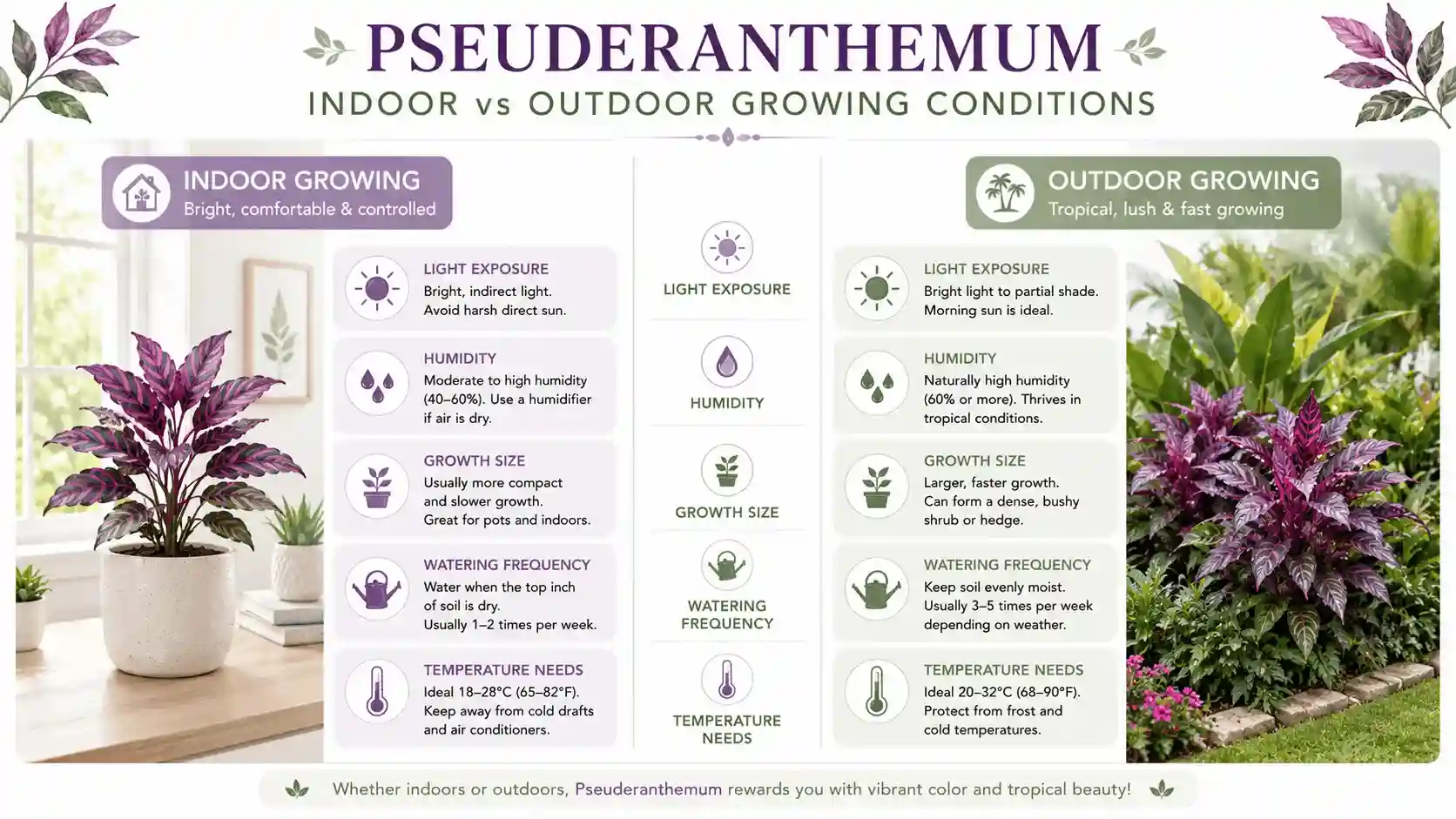
Indoor pseuderanthemum plants generally remain smaller because of limited root space and reduced humidity. Outdoor plants in tropical climates grow more vigorously and produce denser foliage.
Key differences include:
| Factor | Indoor Growth | Outdoor Growth |
| Size | Smaller | Larger |
| Humidity | Lower | Higher |
| Light exposure | Filtered | Natural bright light |
| Growth speed | Moderate | Faster |
| Maintenance | Controlled | Weather-dependent |
Container-grown plants may require more frequent watering and fertilization than landscape-grown specimens.
Growth Rate and Seasonal Development
Pseuderanthemum is generally considered a moderate to fast-growing tropical plant under warm conditions. Growth becomes more active during spring and summer when temperatures and humidity increase.
In cooler climates:
- Winter growth slows significantly
- Foliage production decreases
- Water requirements become lower
The plant does not tolerate frost and may experience stress during prolonged cold exposure.
Factors That Influence Growth Speed
Several environmental factors directly affect plant growth speed.
Important influences include:
- Sunlight exposure
- Soil drainage
- Humidity levels
- Fertilization frequency
- Temperature stability
Warm temperatures and consistent moisture usually encourage faster foliage development.
Pseuderanthemum Care Guide
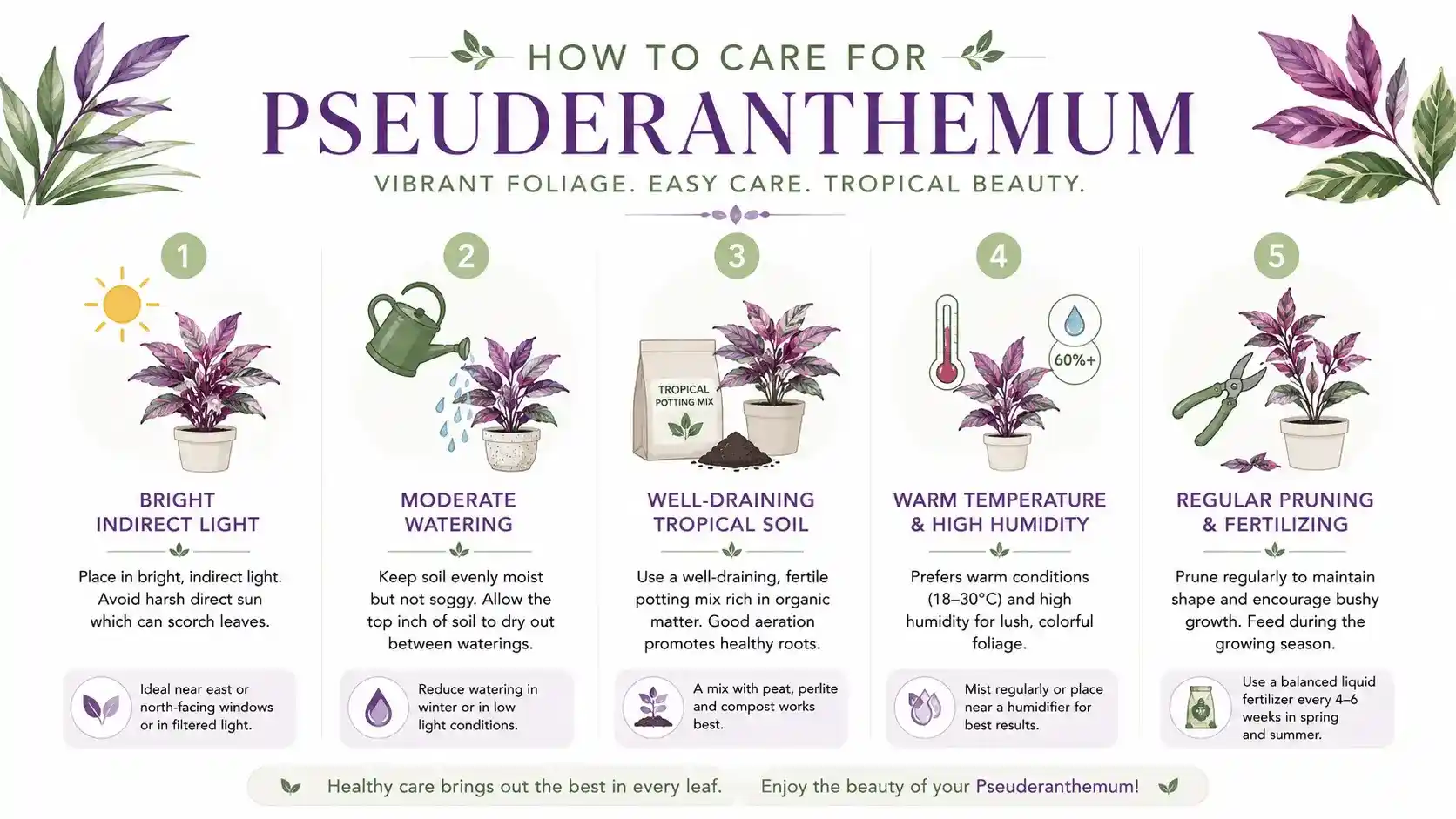
Pseuderanthemum carruthersii care and general plant maintenance focus on balancing warmth, moisture, humidity, and indirect light. The plant responds best to stable tropical conditions.
Basic care priorities include:
- Bright filtered sunlight
- Moist well-draining soil
- Moderate fertilization
- Regular pruning
- Warm humidity-rich conditions
Light Requirements
Pseuderanthemum grows best in bright indirect light. Strong filtered sunlight helps maintain vibrant foliage coloration without causing excessive leaf burn.
Direct afternoon sunlight may:
- Fade foliage colors
- Cause leaf scorch
- Dry soil too quickly
Indoor plants perform well near east-facing or filtered south-facing windows.
Watering Needs
The plant prefers consistently moist soil but should never remain waterlogged. Overwatering is one of the most common causes of root problems.
General watering guidelines:
- Water when the top inch of soil becomes slightly dry
- Reduce watering during cooler months
- Avoid standing water in trays
Hot weather may require more frequent watering because tropical foliage loses moisture quickly.
Best Soil Type and Drainage
Pseuderanthemum prefers loose, nutrient-rich soil with strong drainage capacity. Organic matter improves moisture retention while preventing compacted conditions.
Ideal soil characteristics include:
- Slightly acidic to neutral pH
- High organic content
- Good aeration
- Fast drainage
Tropical houseplant mixes with compost, peat, and perlite are commonly used.
Temperature and Humidity Preferences
The plant thrives in warm tropical temperatures between 65°F and 85°F. Frost exposure can damage foliage and stunt growth.
Humidity is extremely important for healthy development. Dry indoor air may cause:
- Brown leaf edges
- Curling foliage
- Reduced growth
Indoor gardeners often use humidifiers or pebble trays to maintain humidity levels.
Fertilizing and Pruning Tips
Regular pruning encourages bushier and more compact growth. Without pruning, some varieties may become leggy or uneven.
Fertilizing tips include:
- Use balanced fertilizer during active growth
- Feed every 4–6 weeks in spring and summer
- Reduce fertilizer during winter
Practical gardening experience shows that light but consistent pruning produces healthier ornamental shape than severe cutting.
How To Grow Pseuderanthemum Indoors and Outdoors
Indoor pseuderanthemum plants require stable humidity and indirect sunlight, while outdoor plants benefit from warm tropical climates and partial shade.
Indoor growing focuses on:
- Humidity control
- Consistent watering
- Bright indoor placement
Outdoor cultivation depends on:
- Frost-free conditions
- Good drainage
- Shelter from harsh midday sun
Gardeners interested in tropical indoor foliage plants may also benefit from learning about Japanese Money Plant care, especially for managing indoor light and watering conditions.
Container Gardening Tips
Container gardening helps control moisture and soil conditions more effectively.
Important tips include:
- Use pots with drainage holes
- Avoid oversized containers
- Repot when roots become crowded
- Place containers in bright filtered light
Terracotta pots dry faster than plastic containers and may require more frequent watering.
Landscaping Uses in Tropical Gardens
Pseuderanthemum is widely used in tropical landscaping because of its colorful foliage and adaptable growth habit.
Common landscaping uses include:
- Border planting
- Accent foliage displays
- Decorative pathways
- Tropical mixed beds
- Patio container arrangements
Its colorful leaves provide visual contrast against green tropical shrubs and palms.
Common Problems and How To Fix Them
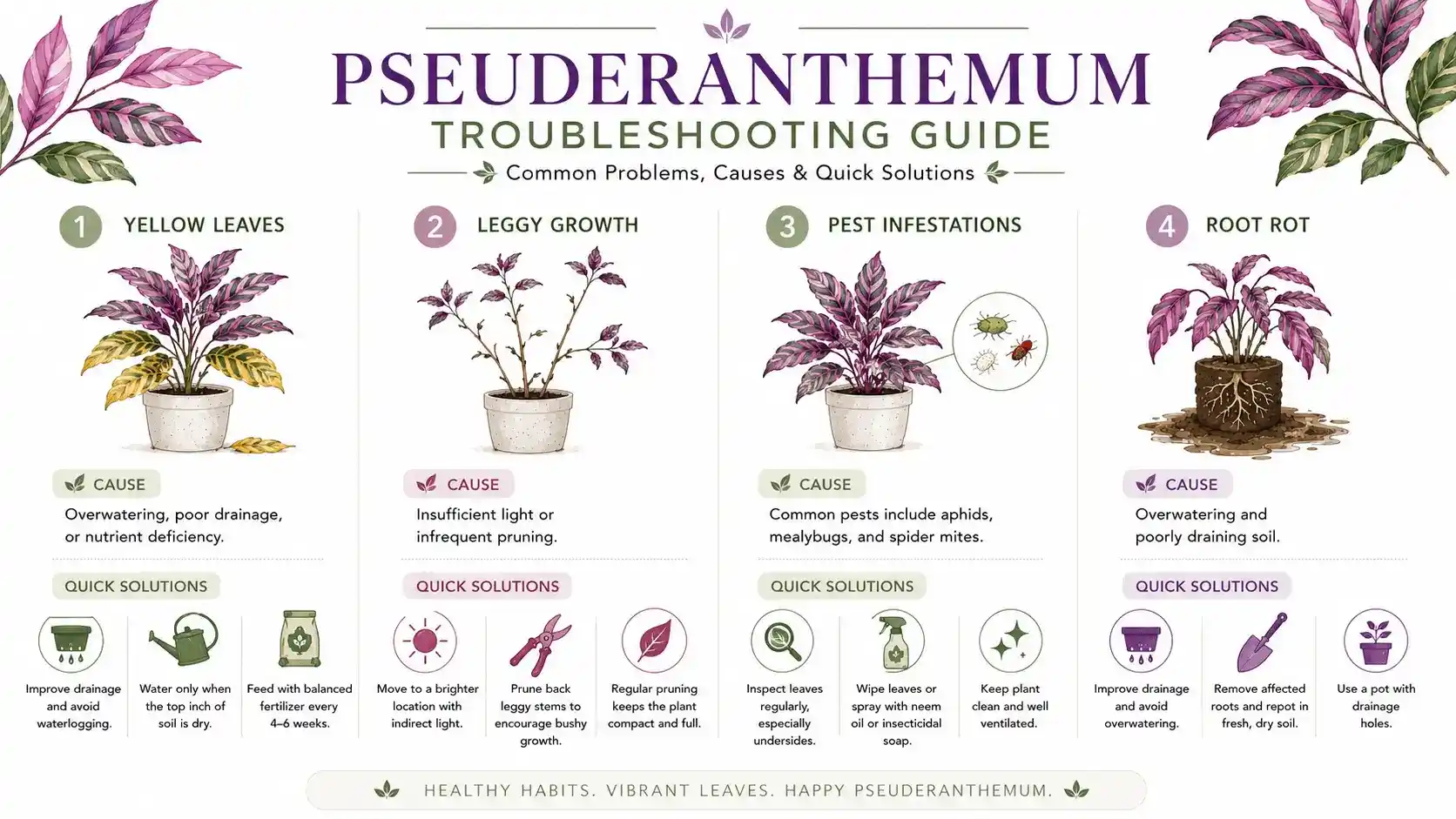
Most pseuderanthemum problems are related to watering imbalance, insufficient light, poor humidity, or pest infestations.
Early correction helps prevent permanent foliage damage and root decline.
Why Leaves Turn Yellow
Yellow leaves are commonly caused by overwatering, poor drainage, nutrient deficiencies, or low light conditions.
Common solutions include:
- Improving drainage
- Reducing watering frequency
- Increasing indirect light exposure
- Applying balanced fertilizer
Persistent yellowing may indicate root stress.
Leggy or Weak Growth Problems
Leggy growth usually develops when the plant receives insufficient light or inadequate pruning.
To correct weak growth:
- Increase bright indirect light
- Prune regularly
- Rotate indoor containers
- Avoid overcrowded placement
Practical growers often pinch stem tips to encourage fuller branching.
Pest and Disease Issues
Common tropical plant pests include:
- Spider mites
- Aphids
- Mealybugs
These pests feed on foliage sap and weaken plant health.
Prevention methods:
- Maintain airflow
- Inspect leaves regularly
- Avoid excessive moisture on foliage
- Use insecticidal soap if necessary
Healthy humidity balance helps reduce stress-related pest problems.
How To Prevent Root Rot
Root rot prevention depends on balanced watering and well-draining soil.
Important prevention practices:
- Never allow standing water
- Use drainage-friendly containers
- Avoid compacted soil
- Water only when needed
Root rot symptoms often include blackened roots, yellow leaves, and foul soil odor.
Pseuderanthemum Medicinal Uses and Traditional Applications
Some regional traditions reference pseuderanthemum medicinal uses in local herbal practices. Applications vary depending on species and cultural background.
Traditional uses may involve:
- Leaf-based preparations
- Decorative ceremonial use
- Folk plant remedies
However, scientific research on medicinal effectiveness remains limited for many species.
Important Safety Considerations
Ornamental plants should never be consumed without expert botanical guidance. Some species may cause irritation or digestive discomfort if ingested.
Safety considerations include:
- Keep away from small children
- Prevent pets from chewing leaves
- Wear gloves when sensitive to plant sap
Responsible plant handling improves household safety.
Comparing Pseuderanthemum With Similar Tropical Ornamental Plants
Pseuderanthemum is often compared with other colorful tropical foliage plants because of its decorative leaves and indoor adaptability.
Similar ornamental plants include:
- Coleus
- Caladium
- Stromanthe
- Cordyline
Each differs in care difficulty, humidity needs, and foliage texture.
Table: Pseuderanthemum vs Similar Colorful Foliage Plants
| Plant | Foliage Appearance | Care Difficulty | Humidity Needs | Indoor Suitability | Growth Habit |
| Pseuderanthemum | Variegated purple, pink, gold | Moderate | High | Good | Bushy |
| Coleus | Bright patterned leaves | Easy | Moderate | Good | Compact |
| Caladium | Heart-shaped colorful leaves | Moderate | High | Seasonal indoor | Upright |
| Stromanthe | Pink-striped foliage | Moderate | High | Excellent | Clumping |
| Cordyline | Long colorful leaves | Moderate | Moderate | Good | Upright |
What Makes Pseuderanthemum Unique?
Pseuderanthemum stands out because of its combination of tropical foliage coloration, decorative flowers, and adaptable ornamental use.
Unique characteristics include:
- Pastel and burgundy foliage patterns
- Golden-veined leaf cultivars
- Tropical visual appeal
- Indoor and outdoor versatility
Its foliage often changes slightly depending on light intensity and environmental conditions. Like many plants with soft velvety leaves, pseuderanthemum is valued for distinctive foliage texture, ornamental contrast, and indoor decorative appeal.
Beginner Mistakes To Avoid When Growing Pseuderanthemum
Many beginner gardeners unintentionally damage the plant through incorrect watering, poor lighting, or inadequate humidity management. Understanding common care mistakes improves long-term plant health and appearance.
Common Care Errors
Common growing mistakes include:
- Excessive sunlight exposure
- Underwatering
- Poor humidity
- Compacted soil
- Inconsistent pruning
These issues often lead to weak growth, fading foliage, or leaf damage.
Seasonal Care Adjustments
Pseuderanthemum care changes slightly during cooler seasons and dry weather periods.
Seasonal adjustments include:
- Reducing fertilizer in winter
- Lowering watering frequency
- Increasing indoor humidity
- Protecting plants from cold drafts
Outdoor plants may require additional mulch during cooler weather.
How Pseuderanthemum Fits Into Indoor and Tropical Gardening Trends
Colorful foliage plants continue gaining popularity in modern indoor gardening and tropical landscape design. Pseuderanthemum fits well within these trends because it offers year-round decorative color.
The plant is valued for:
- Tropical aesthetics
- Indoor adaptability
- Compact ornamental growth
- Decorative foliage diversity
Social media gardening trends have also increased interest in colorful foliage houseplants. Pseuderanthemum pairs well with other decorative foliage species commonly featured in house plants with waxy leaves collections because of its colorful tropical appearance.
Best Companion Plants for Tropical Displays
Pseuderanthemum combines well with other tropical foliage plants in decorative garden arrangements.
Popular companion plants include:
- Caladium
- Croton
- Philodendron
- Cordyline
- Bird of paradise
These combinations create layered tropical textures and contrasting foliage colors.
Conclusion
Pseuderanthemum is a highly decorative tropical ornamental plant admired for colorful foliage, pastel tones, and versatile landscaping value. Popular varieties such as pseuderanthemum carruthersii, atropurpureum, reticulatum, and variabile offer diverse foliage patterns suitable for indoor and outdoor growing. The plant performs best in warm humid conditions with bright indirect light and well-draining soil. Proper watering, pruning, and humidity management help maintain dense healthy foliage and vibrant color. Whether used in tropical landscapes, decorative containers, or indoor displays, pseuderanthemum remains a visually striking plant valued for its ornamental versatility and tropical appeal.
FAQs
What is the common name of pseuderanthemum?
Pseuderanthemum is commonly called the love plant, love flower, or false eranthemum depending on the species and region.
Is pseuderanthemum an indoor or outdoor plant?
Pseuderanthemum can grow both indoors and outdoors. It grows outdoors in tropical climates and indoors in bright humid conditions.
How often should pseuderanthemum be watered?
Water the plant when the top layer of soil becomes slightly dry. Avoid allowing the soil to remain waterlogged.
Why are pseuderanthemum leaves turning yellow?
Yellow leaves are often caused by overwatering, poor drainage, low light, or nutrient deficiencies.
Does pseuderanthemum need direct sunlight?
No. Pseuderanthemum grows best in bright indirect light or filtered sunlight rather than harsh direct sun.
What is the difference between pseuderanthemum carruthersii and reticulatum?
Pseuderanthemum carruthersii typically has darker purple or variegated foliage, while reticulatum is known for green leaves with golden-yellow veins.