
Introduction
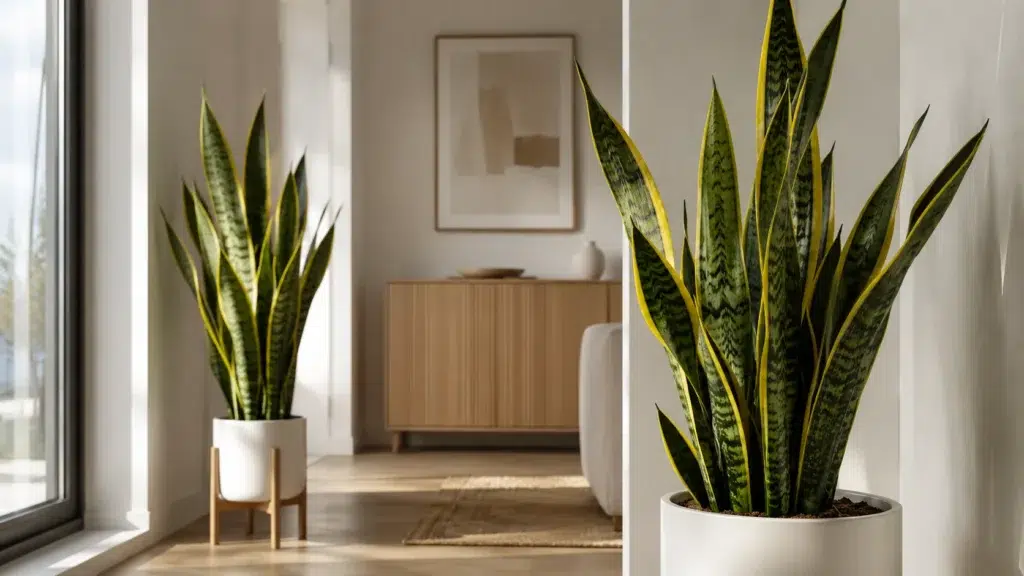
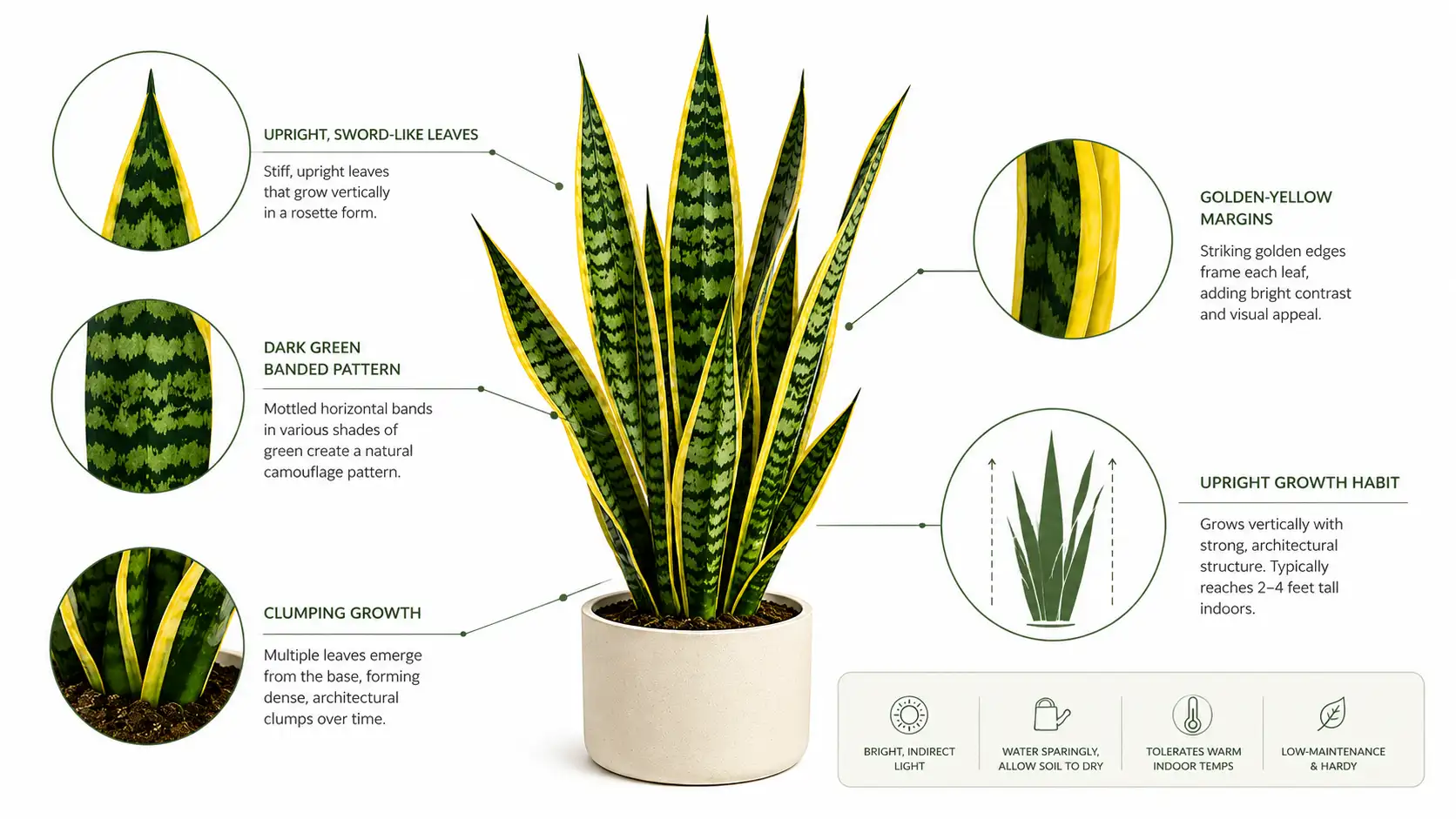
Sansevieria trifasciata ‘Laurentii’, commonly known as laurentii snake plant, mother-in-law’s tongue, and sansevieria laurentii, is one of the most widely grown indoor plants globally. It is instantly recognizable by its upright, sword-like leaves featuring deep green banding and bold golden-yellow margins.
In plant searches, it often appears as sansevieria laurentii care, sansevieria trifasciata laurentii care, and even the common misspelling sanseveria laurentii. Botanically, it is now classified as Dracaena trifasciata ‘Laurentii’, though both names are still widely used.
This plant is valued for its extreme drought tolerance, adaptability to low light, and minimal maintenance needs. In this guide, you will learn everything about sansevieria laurentii care, including light, watering, soil, growth habits, toxicity, propagation, and common problems. For more plant care insights, explore our complete guide on Plants Benefits and Guides.
Quick Summary
- Sansevieria Laurentii is a drought-tolerant indoor plant that thrives in indirect light and well-draining soil
- It requires watering only every 2–6 weeks depending on season, with overwatering being the main risk
- The plant is toxic to cats and dogs due to saponins, so placement must be careful
- Its upright, architectural leaves make it ideal for modern indoor styling and low-light rooms
What Is Sansevieria Laurentii? Plant Identity and Background
Plant Identity and Classification
Sansevieria trifasciata ‘Laurentii’, now classified as Dracaena trifasciata ‘Laurentii’, is a variegated cultivar of the classic snake plant species. It is commonly referred to as laurentii snake plant, mother-in-law’s tongue, and sansevieria laurentii.
Botanical classification changes are widely documented in Sansevieria (Dracaena trifasciata) on Wikipedia for taxonomic reference.
Its most defining feature is the golden-yellow margin along each leaf, which distinguishes it from standard green snake plant varieties. This variegation is stable only through correct propagation methods.
Origin and Botanical Background
Native to West Africa, sansevieria laurentii evolved in dry, rocky environments with minimal water availability. This natural adaptation explains its exceptional drought tolerance and resilience in indoor conditions.
It is also recognized for ornamental value in horticulture, including listings by the Royal Horticultural Society for garden merit under sansevieria laurentii rhs references.
Sansevieria Laurentii Size and Growth Habit
Mature Size and Structure
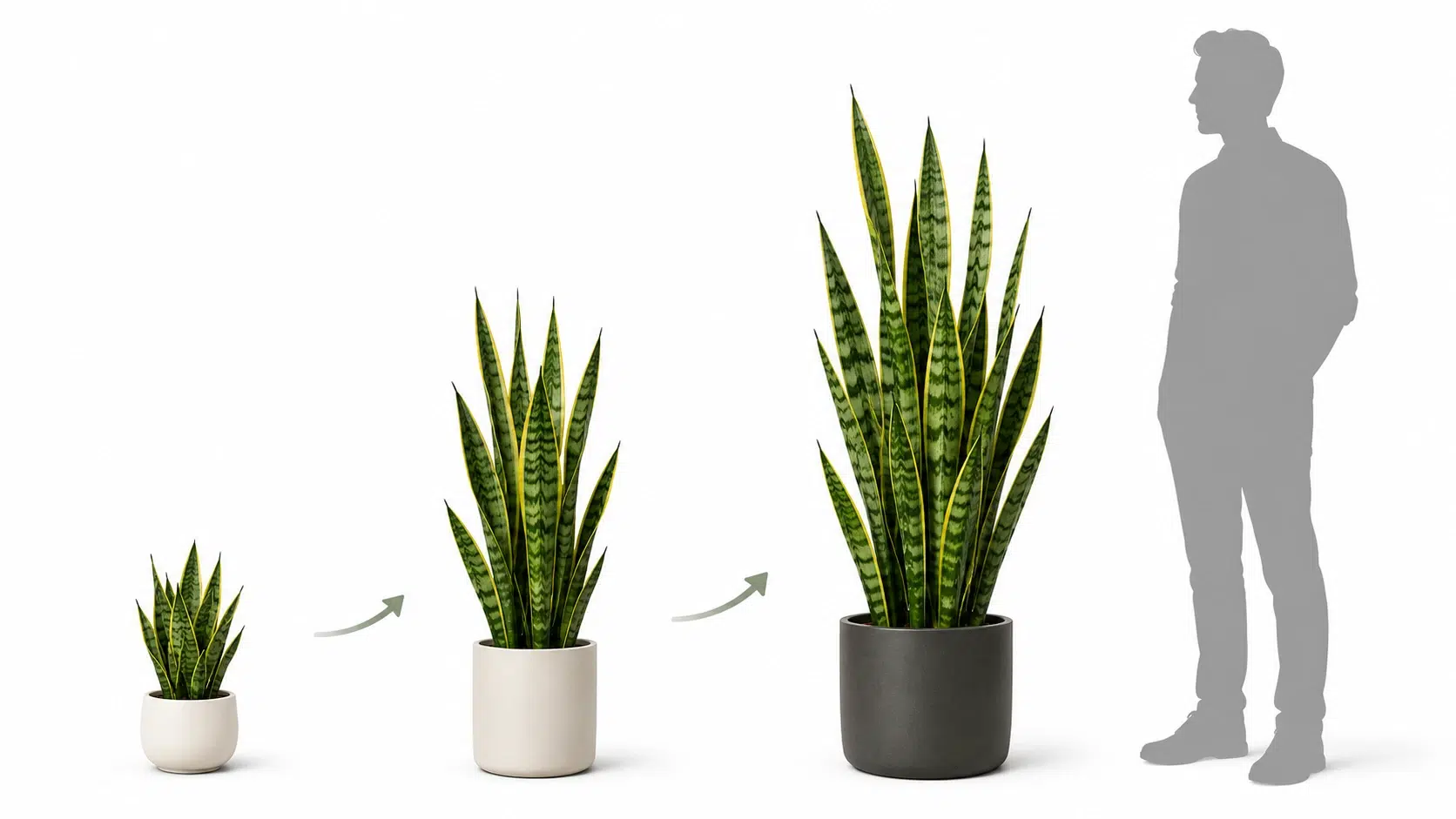
Sansevieria laurentii typically reaches 60–120 cm (2–4 ft) indoors, with sansevieria laurentii 100cm being a common mature height under good conditions.
- Upright, rigid sword-shaped leaves
- Thick foliage for water storage
- Compact root system suitable for containers
Smaller forms, often called sansevieria laurentii small, are ideal for desks, shelves, and compact indoor spaces.
Growth Influencing Factors
Plant size and structure depend on several environmental conditions:
- Light intensity and duration
- Pot size and root restriction
- Watering consistency
- Seasonal growth cycles
Better light generally produces taller and healthier foliage.
Indoor vs Outdoor Size Differences
Outdoor plants in warm USDA zones 9–11 can grow significantly larger than indoor specimens, often exceeding 120 cm in height. In temperate climates such as the UK (sansevieria care uk), the plant is strictly grown indoors due to cold sensitivity and frost risk. While sansevieria is a tropical indoor plant, many gardeners also explore Australian Native Garden Plants for outdoor landscapes and low-maintenance gardens.
Sansevieria Laurentii Growth Rate
Sansevieria laurentii is classified as a slow to moderate grower.
- Active growth occurs in spring and summer
- Winter growth is minimal or dormant
- Typically produces 2–4 new leaves per growing season indoors
Growth rate depends on light levels, temperature stability, watering balance, and light fertilization during active growth periods. Wondering how quickly your Sansevieria Laurentii may grow under your specific conditions? Use our Plant Growth Calculator to estimate potential growth based on environmental factors such as light, watering, and seasonal growing conditions.
Complete Sansevieria Laurentii Care Guide
Light Requirements
Sansevieria laurentii care indoors is highly adaptable but performs best under stable lighting conditions.
- Thrives in bright, indirect light
- Tolerates low light environments
- Direct harsh sunlight can scorch leaf edges
- Ideal placement: near north or east-facing windows
Low light conditions are survivable, but prolonged shade may reduce growth and fade variegation. Similar low-light adaptability can also be seen in Spider Plant Indoor Benefits, making both plants ideal for beginners.
Sansevieria Laurentii Watering Guide
Proper watering is the most critical part of sansevieria laurentii care watering.
- Water every 2–4 weeks in summer
- Reduce to 6–8 weeks in winter
- Allow soil to dry completely before watering again
- Water deeply until drainage occurs, then empty excess water
Like ZZ plants in Zamioculcas Zamiifolia Care Guide, Sansevieria Laurentii also thrives on infrequent watering and drought tolerance.
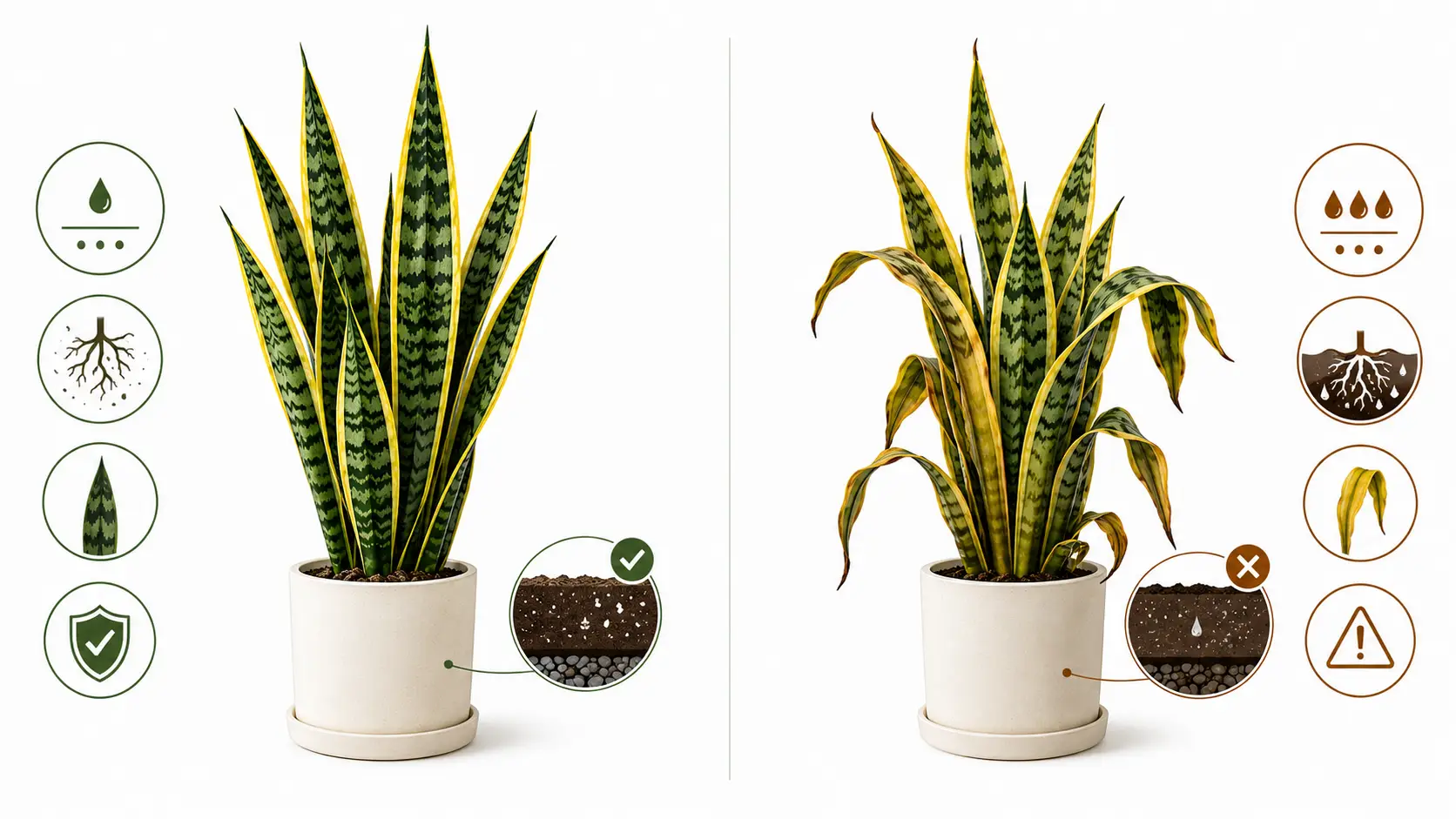
Signs of Underwatering vs Overwatering
Underwatering:
- Wrinkled or slightly curled leaves
- Slow or halted growth
- Dry, compact soil
Overwatering:
- Yellowing leaves
- Soft or mushy base
- Foul odor from soil (root rot risk)
Soil and Potting Mix
Sansevieria laurentii requires fast-draining soil to prevent root rot.
- Cactus or succulent potting mix recommended
- Add perlite or coarse sand for aeration
- Avoid heavy moisture-retaining compost
- Terracotta pots improve drying speed
Temperature and Humidity
- Ideal temperature range: 15–29°C (60–85°F)
- Do not expose to temperatures below 10°C
- No humidity adjustment required
- Avoid cold drafts and chilled windowsills
Fertilization
- Feed once a month in spring and summer
- Use balanced liquid fertilizer at half strength
- Do not fertilize in autumn or winter
- Excess fertilization may cause leaf tip burn
Similar feeding patterns are required in Coffee Bean Plant Care Guide, where light fertilization supports steady growth.
Pruning and Maintenance
- Remove dead or damaged leaves at the base
- Clean leaves with a damp cloth to remove dust
- No regular shaping required due to natural upright growth
Repotting
- Repot every 2–3 years
- Best done in spring
- Choose a pot 1–2 inches wider than current container
- Ensure proper drainage holes are present
Sansevieria Laurentii Toxicity — Is It Safe for Pets?
Sansevieria laurentii is toxic to cats and dogs due to saponins, which can cause gastrointestinal irritation if ingested.
Symptoms in Pets
- Nausea
- Vomiting
- Drooling
- Lethargy
Safety Guidance
- Keep out of reach of pets and children
- Not typically fatal, but veterinary attention is recommended if ingested
| Plant | Cats | Dogs | Humans | Symptoms |
| Sansevieria Laurentii | Toxic | Toxic | Mildly toxic | Vomiting, nausea, drooling |
Sansevieria Laurentii vs. Similar Varieties — How to Tell Them Apart
Sansevieria Laurentii vs Sansevieria Superba
- Laurentii has golden-yellow leaf margins
- Superba features cream or white margins
- Both share similar care requirements
- Superba is less commonly found commercially
| Feature | Laurentii | Superba |
| Leaf margin | Yellow | White/cream |
| Size | Medium-large | Medium |
| Care | Easy | Easy |
Sansevieria Laurentii vs Sansevieria Zeylanica
- Zeylanica lacks golden variegation
- Displays wavy green banding
- Slightly more tolerant of very low light
Sansevieria Fernwood and Fernwood Mikado
- Fernwood Mikado has cylindrical, upright clustered leaves
- Laurentii has flat, blade-like leaves
- Both are drought-tolerant and low-maintenance
Other Common Sansevieria Varieties
- Sansevieria Cylindrica: round, spear-like leaves
- Sansevieria Moonshine: silvery-green foliage
- Sansevieria Hahnii: compact bird’s nest form
Laurentii remains the most popular due to its bold variegation and strong architectural presence.
Sansevieria Laurentii Propagation Methods
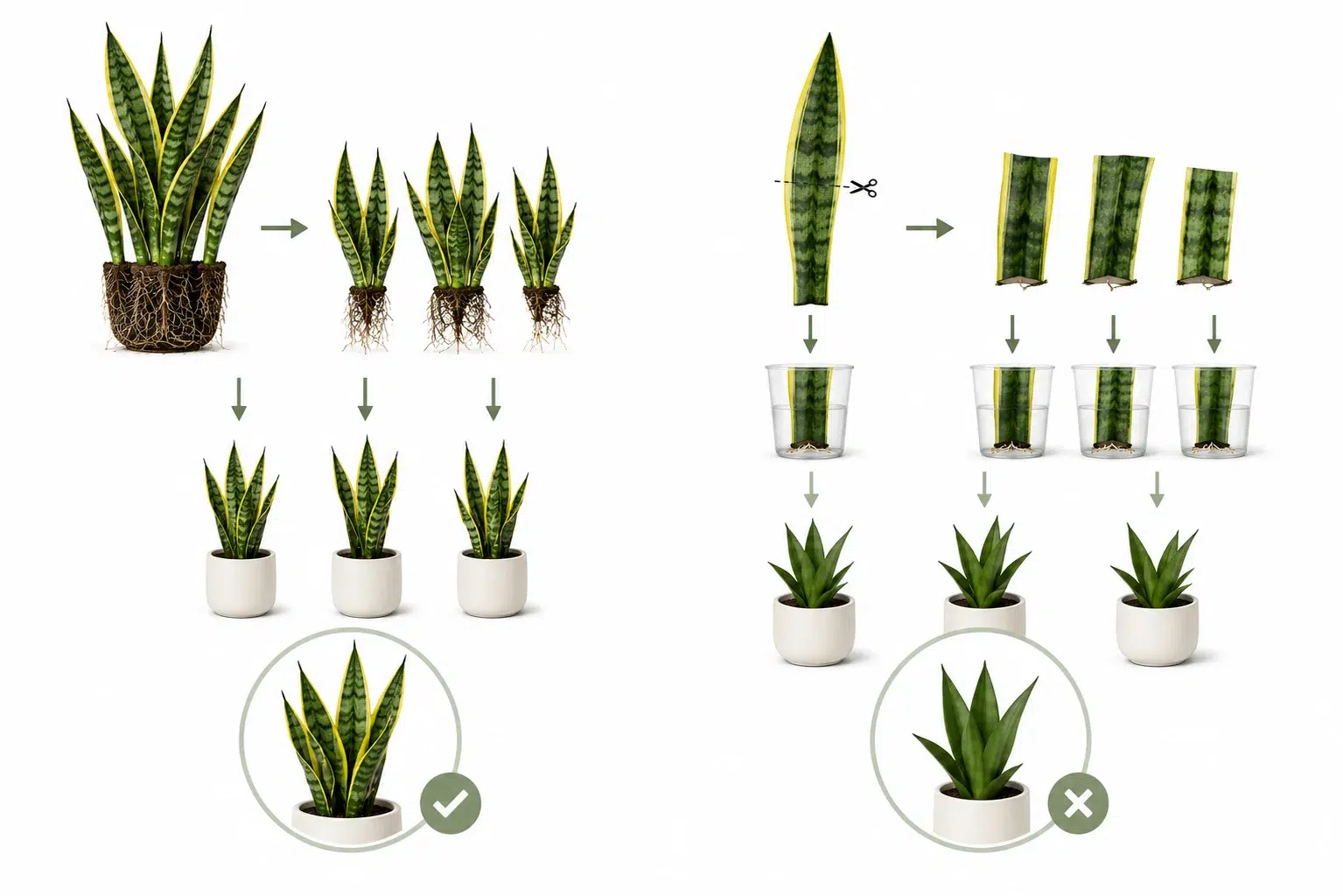
Sansevieria laurentii can be propagated through division or leaf cuttings, but only one method preserves variegation.
Propagation Methods
- Division of pups (best method)
- Leaf cuttings (does not preserve variegation)
Step-by-Step Division
- Remove plant from pot
- Separate offsets with roots
- Replant in fresh soil
- Water lightly after repotting
Step-by-Step Leaf Cuttings
- Cut healthy leaf sections
- Allow to callus
- Plant in soil
- New growth will be plain green
Why Propagation Differs
The golden margin is genetically unstable in leaf cuttings, meaning only division preserves true sansevieria laurentii variegation.
Common Sansevieria Laurentii Problems and How to Fix Them
Yellow Leaves
- Caused by overwatering or poor drainage
- Fix by allowing soil to dry and checking roots
Brown Leaf Tips
- Caused by low humidity, chemicals, or overfertilization
- Use filtered water and reduce feeding
Root Rot
- Caused by constant wet soil
- Remove affected roots and repot in dry mix
Losing Variegation
- Caused by low light or leaf cutting propagation
- Improve light and propagate via division only
Pests
- Common pests: spider mites, mealybugs, fungus gnats
- Treat with neem oil or insecticidal soap
Sansevieria Laurentii Indoors — Room Placement and Styling Tips
Sansevieria laurentii thrives indoors in a wide range of environments, making it ideal for homes and offices.
- Best rooms: living rooms, bedrooms, offices, hallways
- Tolerates low-light corners
- Air-purifying reputation based on NASA studies (limited real-world effect)
- Ideal for minimalist, modern, and Scandinavian interiors
Its upright structure makes it especially suitable for small spaces.
Seasonal Sansevieria Laurentii Care — What Changes Through the Year
Spring
- Resume fertilization
- Check for new growth
- Repot if needed
Summer
- Slightly increase watering
- Monitor for pests
Autumn
- Reduce watering
- Stop fertilization
Winter
- Minimal watering
- Keep above 10°C
- No feeding required
Conclusion
Sansevieria laurentii care is simple once you understand its drought-adapted nature. The laurentii snake plant, also known as Sansevieria trifasciata ‘Laurentii’, thrives on neglect rather than attention. By avoiding overwatering, providing indirect light, and propagating through division, you can maintain its striking golden-edged foliage for years. Its resilience, sculptural form, and adaptability make it one of the most reliable indoor plants for any environment.
Frequently Asked Questions About Sansevieria Laurentii Care
How often should I water my Sansevieria Laurentii?
Water every 2–4 weeks in warm months and every 6–8 weeks in winter, ensuring soil is fully dry before watering again.
Is Sansevieria Laurentii toxic to cats?
Yes, it contains saponins that are toxic to cats and dogs and can cause vomiting and nausea if ingested.
What is the difference between Sansevieria Laurentii and Superba?
Laurentii has yellow leaf margins, while Superba has creamy-white margins, but both have similar care needs.
Can Sansevieria Laurentii survive in low light?
Yes, but growth slows and variegation may fade. Bright indirect light is ideal.
Why are my leaves turning green?
This happens due to low light or propagation by leaf cutting instead of division.
How do I propagate it correctly?
Use division of pups only, as leaf cuttings do not preserve variegation.
Is it the same as Dracaena trifasciata 'Laurentii'?
Yes, it is the updated botanical name after taxonomic reclassification.



2 Responses