Introduction
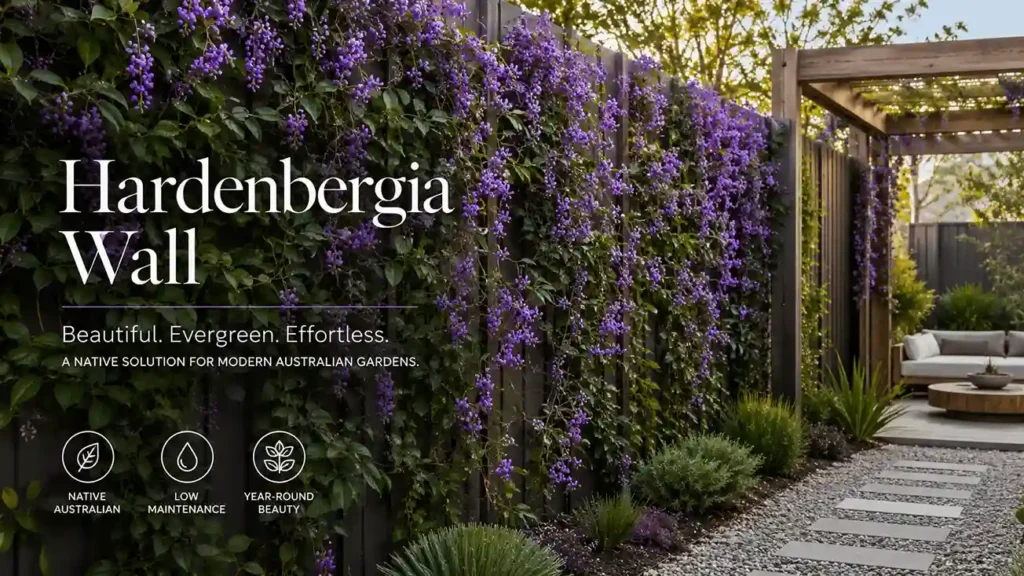
A hardenbergia wall refers to the use of Hardenbergia violacea as a vertical landscaping plant for fences, retaining walls, pergolas, and trellis systems. Commonly called the happy wanderer plant, coral pea plant, or purple coral pea, this Australian native climber is valued for its evergreen foliage, rapid growth, and masses of seasonal flowers. In many hardenbergia wall Australia landscaping projects, gardeners train the vine across structures to create dense ornamental coverage with relatively low maintenance. The plant adapts well to temperate and coastal conditions and is widely used in native Australian gardening. Rather than describing a separate plant variety, the term “hardenbergia wall” refers to the decorative wall-covering application of Hardenbergia violacea.
Quick Summary
- Hardenbergia violacea is a fast-growing Australian native climber often used for walls, fences, and trellises.
- The plant produces purple, pink, or white flowers and works as both a climber and ground cover.
- Hardenbergia grows best in full sun with well-drained soil and moderate watering.
- Common issues include poor drainage, overwatering, and lack of structural support.
What Is a Hardenbergia Wall?
Why Hardenbergia Is Popular for Vertical Gardening
A hardenbergia wall is popular because the vine spreads quickly across vertical structures while producing dense evergreen foliage and colorful flowers. Hardenbergia climbing systems are commonly installed on fences, pergolas, retaining walls, and wire mesh supports.
Gardeners often use:
- Hardenbergia fence coverage for privacy screening
- Hardenbergia pergola systems for shaded outdoor areas
- Hardenbergia trellis designs for decorative vertical gardens
The vine twines naturally around supports rather than attaching with adhesive roots. This makes it easier to manage and prune compared to more aggressive climbers. Hardenbergia is commonly included in broader Australian landscaping and climbing plant collections alongside many other ornamental species featured in our Plants: Benefits and Guides (Complete Care, Types & Growing Tips) article.
Common Names and Plant Identity
Hardenbergia violacea belongs to the Fabaceae family and is native to Australia. Common names include:
- Happy wanderer vine
- Coral pea plant
- Purple coral pea
The hardenbergia violacea common name varies by region, but all refer to the same species commonly used in Australian landscapes.
The plant is known for:
- Evergreen leaves
- Pea-shaped flowers
- Winter to spring blooming
- Screening and decorative coverage applications
For additional botanical classification and native habitat information, readers can refer to the Hardenbergia violacea Wikipedia resource.
Hardenbergia Varieties and Colours
Purple, Pink, White, and Snow White Varieties
Hardenbergia varieties are available in several flower colours.
Common colour forms include:
- Hardenbergia purple
- Purple hardenbergia
- Pink hardenbergia
- White hardenbergia
- Hardenbergia pink cultivars
Popular named selections include:
- Hardenbergia alba
- Hardenbergia violacea snow white
- Hardenbergia white out
- Hardenbergia violacea rosea
- Hardenbergia violacea Edna Walling Snow White
Purple varieties remain the most widely planted due to their strong flowering display and traditional Australian garden appearance. Because of its vibrant flowering display, hardenbergia is also commonly grouped with other purple native flowering species featured in the Purple Native Flowers Australia: 7+ Best Types & Guide article.
Popular Cultivars and Types
Several hardenbergia types are commonly grown in residential landscapes.
Popular hardenbergia varieties include:
- Hardenbergia Sweetheart
- Hardenbergia Free and Easy
- Hardenbergia Free N Easy
- Hardenbergia Edna Walling
Some cultivars are compact and suited to containers, while others grow vigorously across large fences or retaining walls.
Comparison Table — Hardenbergia Types
| Variety | Flower Colour | Growth Habit | Climbing Strength | Ground Cover Suitability | Best Climate | Maintenance |
| Sweetheart | Purple | Compact | Moderate | High | Temperate | Low |
| Free and Easy | Purple | Vigorous | Strong | Moderate | Coastal | Moderate |
| Snow White | White | Medium | Moderate | Moderate | Mild climates | Low |
| Rosea | Pink | Medium | Moderate | High | Temperate | Low |
| Edna Walling | White | Dense | Strong | Moderate | Cool-temperate | Moderate |
Beginner gardeners often prefer compact cultivars because they require less pruning and structural management.
Ideal Growing Conditions for a Hardenbergia Wall
Sunlight, Soil, and Climate Requirements
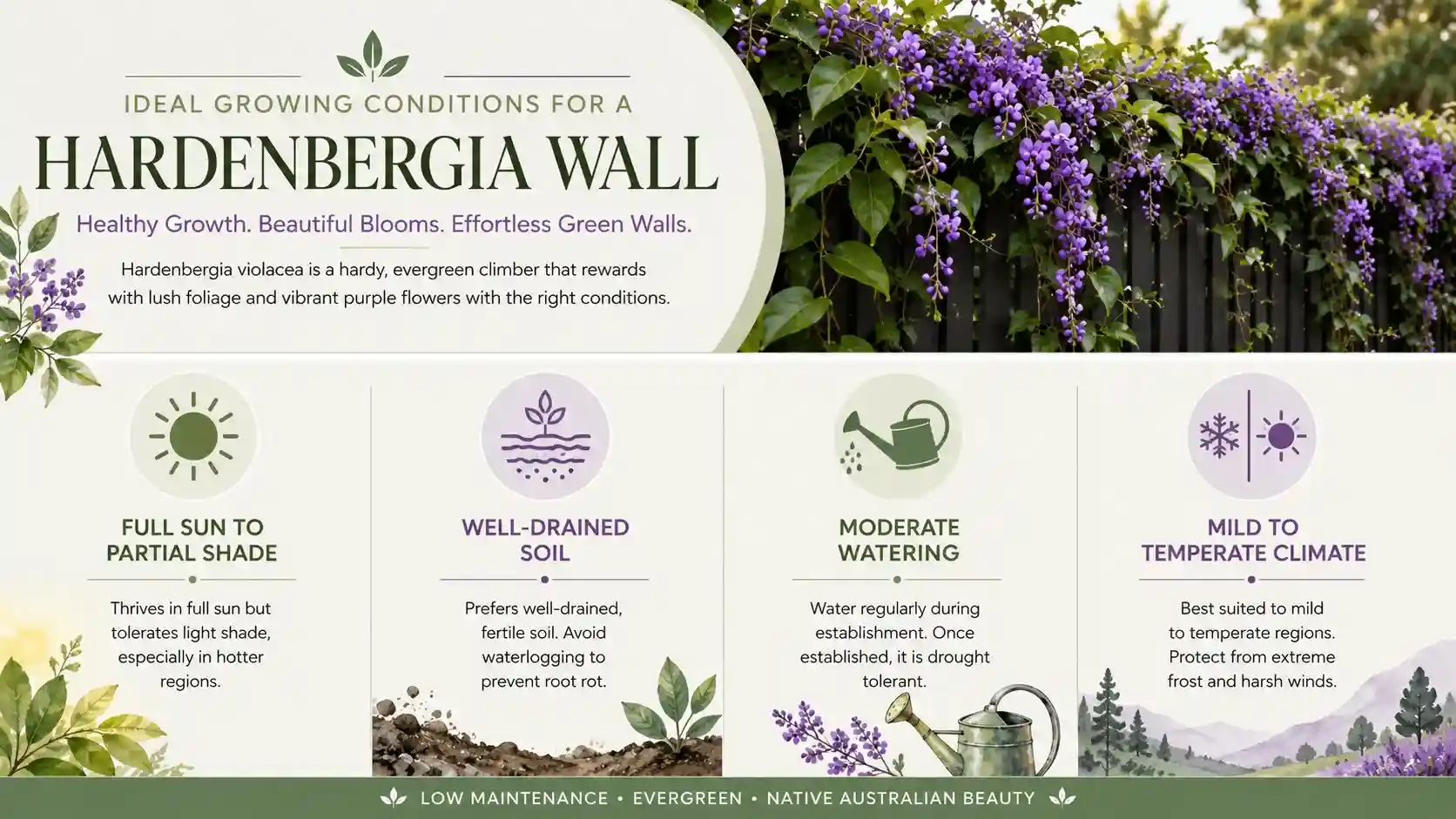
Hardenbergia growing conditions are best in:
- Full sun to partial shade
- Well-drained soil
- Mild to temperate climates
In hardenbergia UK gardens, plants often require frost protection during severe winter conditions. Hardenbergia alba UK growers commonly use sheltered walls to improve warmth retention.
Poor drainage is one of the most common causes of plant decline.
Does Hardenbergia Need a Trellis?
Yes, hardenbergia usually needs a trellis or support system for vertical growth. The vine climbs by twining around structures rather than attaching directly to walls.
Suitable support systems include:
- Mesh panels
- Wire systems
- Timber trellises
- Pergolas
A happy wanderer trellis setup improves airflow and flowering performance.
Is Hardenbergia Fast Growing?
Yes, hardenbergia is fast growing under favorable conditions. Many plants establish rapidly during spring and early summer.
Growth speed depends on:
- Sunlight exposure
- Soil drainage
- Water availability
- Climate conditions
Gardeners frequently ask how long do hardenbergia live. Healthy plants can survive for many years with regular pruning and proper drainage.
Indoor vs Outdoor Performance
Outdoor growth is generally stronger because the plant receives better airflow and sunlight. Indoor container growing is possible near bright windows or protected patios.
Important considerations include:
- Frost tolerance varies by climate
- Containers require careful drainage
- Outdoor walls encourage denser growth
- Coastal gardens often support vigorous flowering
How to Create and Train a Hardenbergia Wall
Best Structures for Climbing Support
Suitable structures include:
- Retaining walls
- Wire mesh systems
- Pergolas
- Fences
- Trellis panels
A hardenbergia retaining wall installation often combines mesh wiring with pruning for controlled coverage.
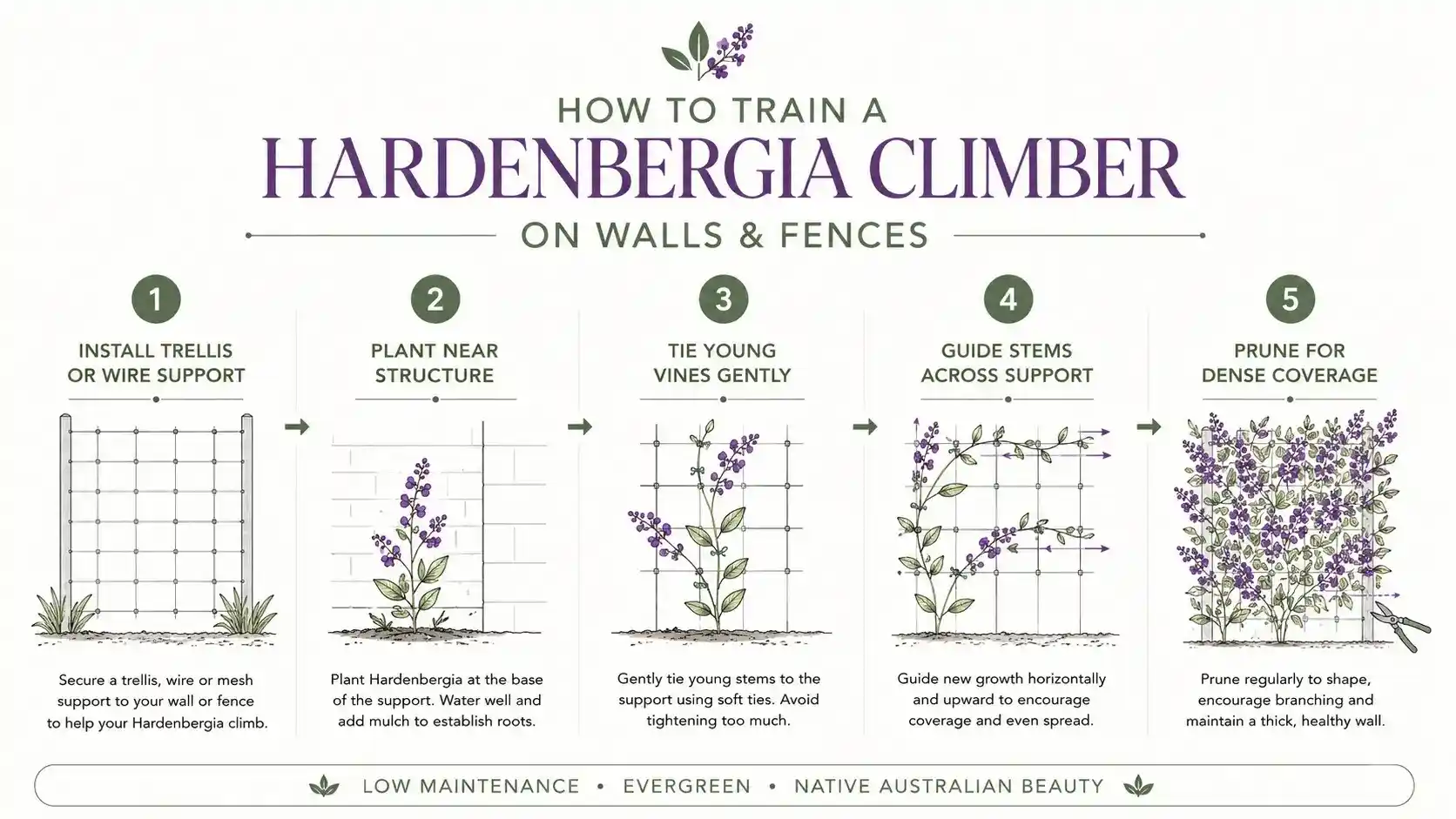
How to Train Hardenbergia Properly
To train hardenbergia properly, guide new stems onto supports during early growth. Secure young vines loosely to prevent stem damage.
Training methods include:
- Horizontal wire spacing
- Vertical mesh attachment
- Fence weaving techniques
A happy wanderer fence setup becomes denser with consistent pruning and directional training.
Hardenbergia as Ground Cover vs Vertical Cover
Hardenbergia ground cover applications are common in sloped gardens and erosion-prone landscapes. When unsupported, the hardenbergia vine spreads laterally across soil surfaces.
Vertical growing creates:
- Better airflow
- More flowers
- Stronger screening effects
Step-by-Step Planting Process
- Prepare well-drained soil before planting
- Space plants to allow airflow and mature spread
- Water deeply after planting
- Begin early support training immediately
- Apply mulch to regulate moisture and suppress weeds
Pruning helps increase wall density and improves structural coverage over time.
Hardenbergia Wall Care Guide
Watering and Fertilization Needs
Hardenbergia prefers moderate watering with occasional deep soaking during dry periods. Established plants tolerate short dry spells better than young vines.
Use balanced fertilizer during active growth seasons to encourage flowering.
Pruning and Seasonal Maintenance
Prune after flowering to maintain shape and prevent excessive tangling. Remove weak or overcrowded stems to improve airflow.
Common beginner mistakes include:
- Heavy pruning before flowering
- Ignoring tangled stems
- Allowing unsupported growth
Growing Hardenbergia in Pots
Hardenbergia in pots grows best in large containers with free-draining potting mix. Container-grown plants require more frequent watering because roots dry faster.
Choose pots with:
- Strong drainage holes
- Climbing support systems
- Quality potting mix
Seasonal Care Differences
- Spring flowering care includes light feeding and pruning after blooms
- Summer watering adjustments help reduce drought stress
- Winter frost considerations are important in cooler regions
- Autumn pruning timing prepares the plant for seasonal growth
Common Hardenbergia Problems and Solutions
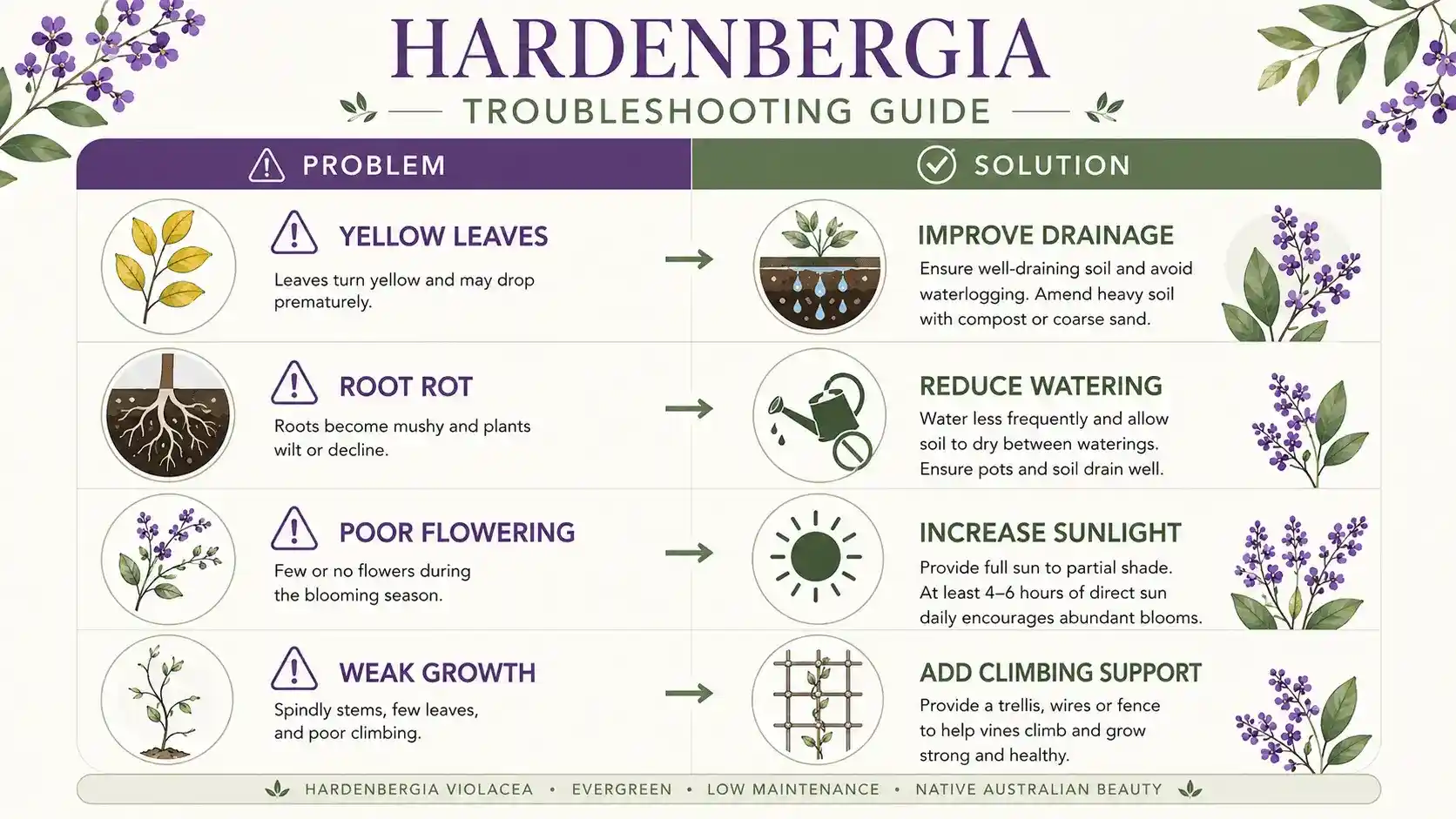
Why Leaves Turn Yellow or Wilt
Yellow leaves usually result from poor drainage, excessive watering, or nutrient imbalance. Root stress can also cause wilting.
Overwatering and Root Rot Problems
Overwatering is one of the most serious hardenbergia problems. Saturated soil reduces oxygen around roots and encourages fungal diseases.
Signs include:
- Soft stems
- Yellow foliage
- Stunted growth
- Root decay
Pest and Disease Issues
Common pests include aphids and scale insects. Fungal diseases may appear in humid environments with poor airflow.
Preventive care includes:
- Proper spacing
- Moderate watering
- Regular pruning
Slow Growth or Poor Flowering
Poor flowering usually occurs due to:
- Too much shade
- Incorrect pruning timing
- Excess nitrogen fertilizer
- Weak structural support
How to Prevent Common Growing Mistakes
- Avoid poor drainage conditions
- Reduce excessive shade exposure
- Install strong support systems
- Prune after flowering rather than before bloom development
Is Hardenbergia Invasive or Difficult to Control?
Understanding Growth Behavior
A hardenbergia wall invasive concern is usually related to vigorous growth rather than true environmental invasiveness. The plant spreads rapidly under ideal conditions but is generally manageable with pruning.
Managing Spread and Maintenance
Control methods include:
- Seasonal pruning
- Directional training
- Support management
- Removing unwanted runners
Environmental Considerations in Australian Gardens
In Australian gardens, hardenbergia is valued as a native species that supports pollinators while tolerating dry conditions. However, neglected vines may overwhelm smaller neighboring plants.
Wildlife, Companion Plants, and Landscaping Uses
Do Wallabies Eat Hardenbergia?
Yes, wallabies may occasionally browse young hardenbergia shoots, especially in rural areas where native browsing animals are active.
Best Companion Plants for Hardenbergia Walls
Suitable companion plants include:
- Native grasses
- Grevillea
- Westringia
- Lavender
- Kangaroo paw
These combinations support drought-tolerant landscaping.
Landscaping Ideas for Fences, Pergolas, and Retaining Walls
Hardenbergia retaining wall applications are popular because the vine softens hard surfaces while adding seasonal colour.
Popular landscaping uses include:
- Fence screening
- Pergola coverage
- Sloped erosion control
- Decorative vertical gardens
Hardenbergia walls are frequently combined with species from Tropical Screening Plants: Best Choices for Garden Privacy to create layered screening and dense garden coverage.
Comparison Section — Hardenbergia vs Other Climbers
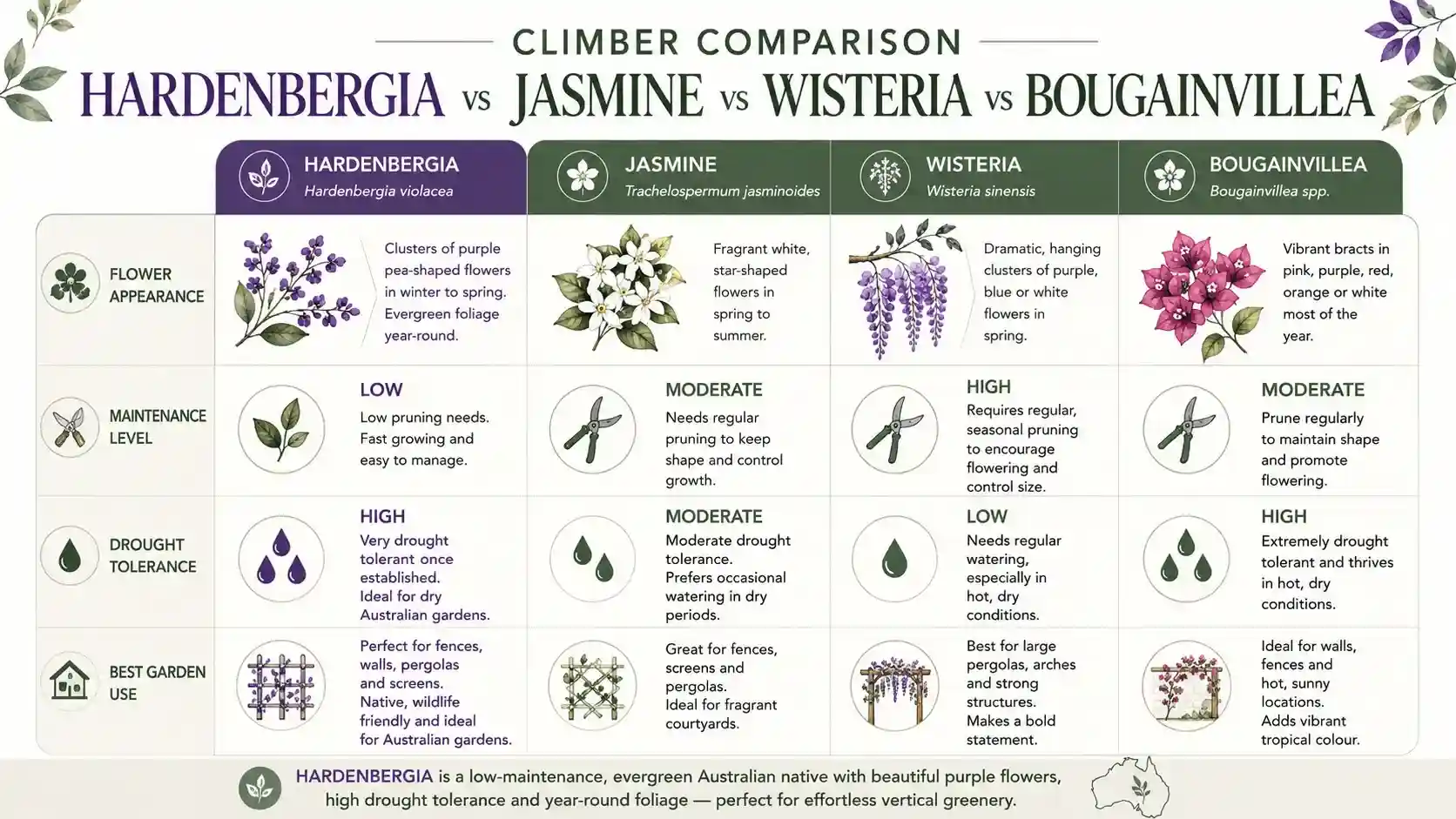
| Plant | Flower Display | Maintenance | Drought Tolerance | Growth Habit | Best Use |
| Hardenbergia | Purple, pink, white | Low | High | Twining vine | Native screening |
| Jasmine | White fragrant flowers | Moderate | Medium | Climber | Scented walls |
| Wisteria | Hanging flower clusters | High | Medium | Heavy climber | Pergolas |
| Bougainvillea | Bright bracts | Moderate | High | Thorny climber | Hot climates |
| Tibouchina | Purple flowers | Moderate | Medium | Shrub/tree | Accent planting |
Tibouchina Bunnings searches are common among gardeners comparing ornamental purple-flowering plants. Gardeners comparing Australian climbing plants may also consider species discussed in Native Wisteria Australia: Varieties, Care and Uses due to similar ornamental screening applications.
Propagation and Long-Term Growth
How to Propagate Hardenbergia
Hardenbergia propagation is commonly done through seeds or stem cuttings. Cuttings provide faster and more reliable results.
Seed vs Cutting Propagation
Seed propagation:
- Slower establishment
- Greater variation
- Suitable for large planting projects
Cutting propagation:
- Faster rooting
- Consistent flower colour
- Better cultivar preservation
Long-Term Growth Habits and Lifespan
Healthy hardenbergia plants can survive for many years with proper pruning and drainage management. Mature vines become denser and stronger over time.
Where Gardeners Commonly Buy Hardenbergia Plants
Understanding Nursery Availability and Cultivar Labels
Gardeners often search for:
- Hardenbergia Bunnings
- Bunnings hardenbergia
- Happy wanderer plant Bunnings
- Hardenbergia violacea Bunnings
- Hardenbergia White Out Bunnings
- Bunnings online plants
Nurseries typically label plants using cultivar names rather than general common names.
How to Choose Healthy Hardenbergia Plants
Healthy hardenbergia violacea plant selections should have:
- Green foliage
- Firm stems
- Healthy roots
- No signs of fungal disease
Avoid hardenbergia plants with yellow leaves or waterlogged soil.
What to Know Before Searching for Specific Cultivars
Searches for hardenbergia violacea for sale or hardenbergia wall for sale often include both seeds and mature nursery plants.
Before selecting cultivars, consider:
- Mature size
- Flower colour
- Climate suitability
- Support requirements
Conclusion
A hardenbergia wall is a practical and visually appealing solution for low-maintenance vertical gardening. Hardenbergia violacea performs well on fences, pergolas, retaining walls, and trellis systems due to its fast growth, evergreen foliage, and colorful seasonal flowers. The plant adapts to many Australian landscapes and also functions effectively as ground cover in suitable environments. With proper drainage, sunlight, pruning, and support structures, hardenbergia remains relatively easy to maintain over the long term. Its wide range of flower colours, native garden value, and strong climbing habit make it one of the most versatile ornamental climbers for decorative wall coverage.
Frequently Asked Questions
How fast does a hardenbergia wall grow?
A hardenbergia wall grows quickly under full sun and well-drained conditions. Many plants establish strong coverage within one to two growing seasons.
Does hardenbergia need full sun to flower properly?
Yes, hardenbergia flowers best in full sun. Partial shade is tolerated, but flowering intensity may decrease.
Can hardenbergia grow without a trellis?
Yes, hardenbergia can grow without a trellis as ground cover. However, vertical support improves airflow, flowering, and screening performance.
Is hardenbergia suitable for retaining walls?
Yes, hardenbergia is commonly used on retaining walls because it softens hard surfaces and provides decorative coverage.
What is the difference between happy wanderer and coral pea?
Happy wanderer and coral pea are common names for Hardenbergia violacea. Both names refer to the same Australian native plant.
Can hardenbergia be grown in pots?
Yes, hardenbergia grows well in pots if containers have good drainage and climbing support.
Why is my hardenbergia turning yellow?
Yellowing usually results from overwatering, poor drainage, nutrient imbalance, or root stress.