
Introduction
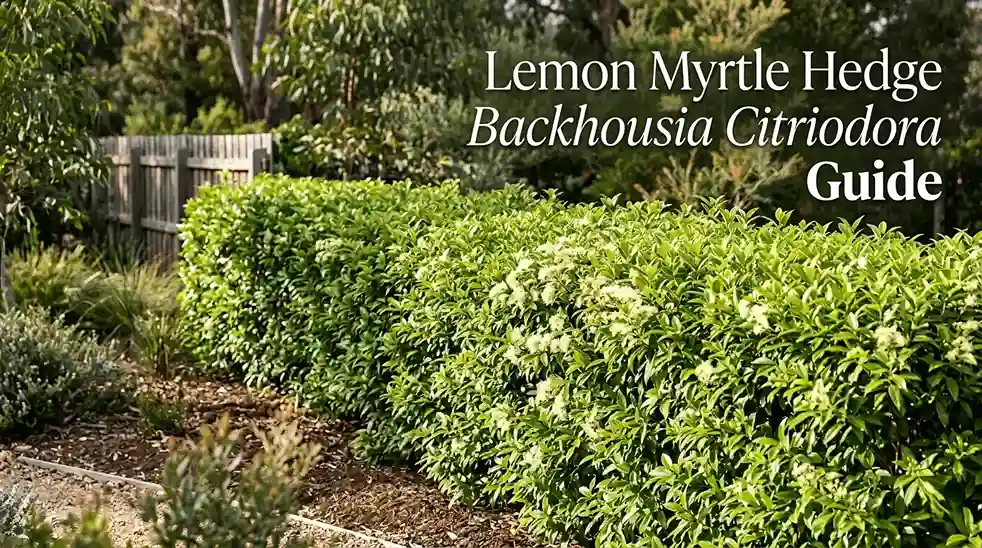
Backhousia citriodora hedge plantings are increasingly popular in Australian gardens because they combine ornamental beauty, fragrant foliage, and practical screening ability. Commonly known as lemon myrtle or lemon-scented myrtle, this Australian native tree forms a dense evergreen canopy that responds exceptionally well to pruning. Its glossy leaves release a strong citrus fragrance rich in citral oils, making it valuable as both a hedging plant and culinary species. Lemon myrtle adapts well to formal clipped hedges, informal privacy screens, and container growing. With suitable climate conditions, proper spacing, and regular maintenance, it becomes a long-lasting and low-maintenance feature for subtropical, warm temperate, and sheltered cool-climate gardens.
Quick Summary
- Backhousia citriodora is an Australian native tree prized for its lemon-scented leaves and suitability as a formal hedge or screen planting.
- It grows to 3–8 metres in garden conditions and responds well to regular pruning, making it a practical hedging choice.
- Lemon myrtle thrives in subtropical to warm temperate climates but can be grown in cooler regions with shelter.
- It performs well in garden beds and large containers, and can be propagated from cuttings.
What Is Backhousia Citriodora? (Plant Overview and Identity)
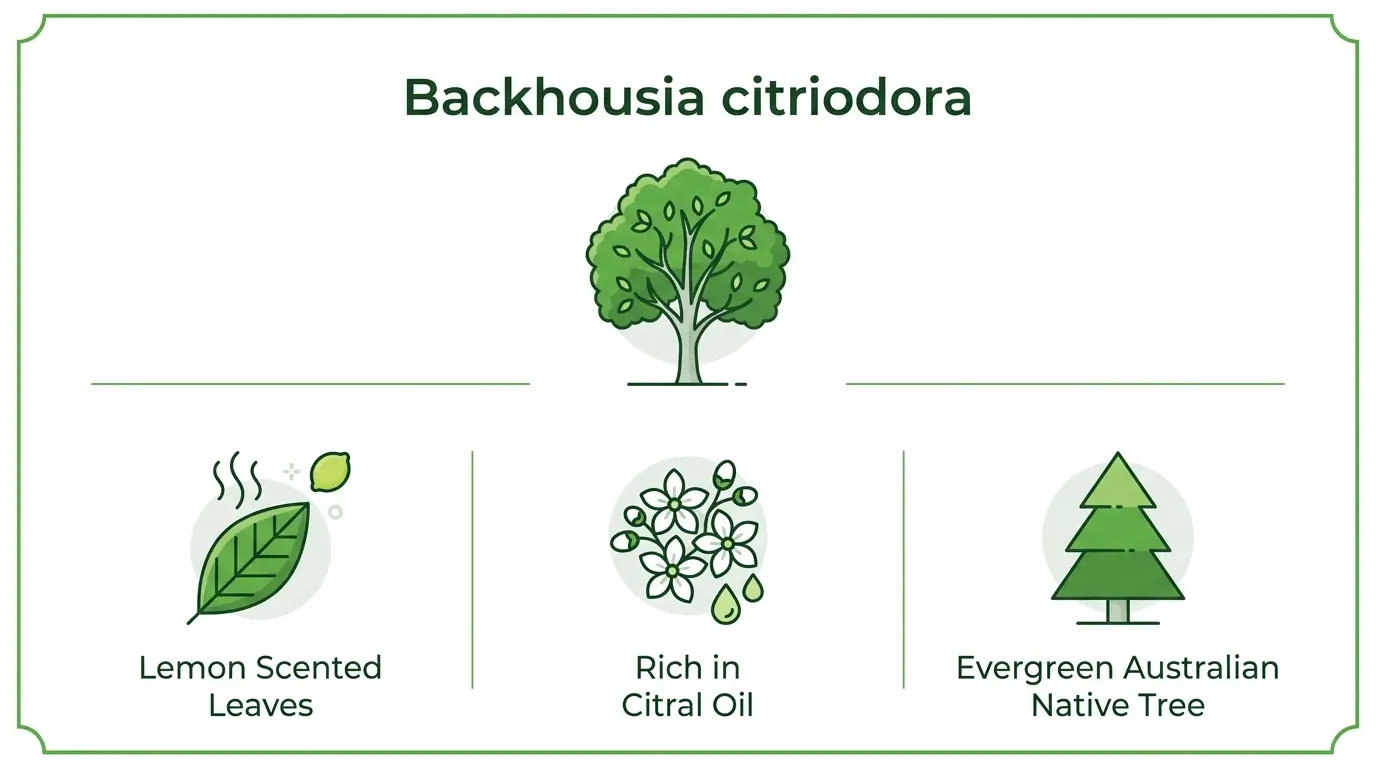
Backhousia citriodora is an evergreen Australian native tree from the myrtle family, Myrtaceae. Commonly called lemon myrtle or lemon-scented myrtle, it naturally grows in the subtropical rainforests of Queensland, Australia. If you are exploring more Australian native garden plants, lemon myrtle is one of the most versatile hedging choices for modern landscapes.
The plant is widely known for its intensely fragrant foliage, which contains exceptionally high levels of citral. Because of this, lemon myrtle backhousia citriodora is commonly used in culinary products, herbal teas, essential oils, and ornamental landscaping. Lemon myrtle belongs to the Myrtaceae family, which includes many aromatic Australian plants.
Lemon scented myrtle backhousia citriodora is also valued as a hedging species because it develops dense foliage, tolerates pruning, and maintains an attractive upright structure throughout the year.
What Does Lemon Myrtle Look Like?
Lemon myrtle has glossy, lance-shaped leaves that are deep green and highly aromatic. When crushed or brushed, the foliage releases a strong lemon fragrance.
The plant also produces creamy-white flower clusters during summer. These fluffy blossoms attract pollinators and add ornamental value to garden hedges.
Other identifying features include:
- Smooth pale bark on mature trunks
- Upright branching habit suitable for screening
- Prominent leaf veining
- Dense evergreen canopy
- Fragrant foliage rich in citral oils
Lemon myrtle flowers contrast attractively against the dark green foliage, especially on mature hedges during peak flowering periods.
Backhousia Citriodora Hedge — Is Lemon Myrtle a Good Hedging Plant?
Yes, Backhousia citriodora is an excellent hedging plant because it combines dense growth, fragrant foliage, and strong pruning tolerance.
It forms a thick evergreen screen that provides:
- Privacy
- Wind protection
- Year-round greenery
- Aromatic garden interest
Unlike some rainforest trees, lemon myrtle tolerates repeated trimming without significant dieback. This makes it suitable for both formal clipped hedges and informal privacy screens.
Backhousia citriodora hedge Australia plantings are especially popular in Queensland and coastal New South Wales because warm, humid climates encourage vigorous growth. In sheltered areas of Victoria, the species can also perform well with frost protection. Lemon myrtle also fits well in broader plant benefits and guides, especially when considering its fragrance, wellness value, and landscaping function.
Hedges generally establish within 2–4 years under favourable conditions.
Backhousia Citriodora Hedge Size — How Tall and Wide Does It Grow?
- A Backhousia citriodora hedge can be maintained at a wide range of sizes depending on pruning frequency and planting style.
- Unmanaged specimens may reach 8–10 metres in gardens, while maintained hedges are typically kept between 1.5–4 metres tall.
- Average hedge width ranges from 1.5–3 metres depending on trimming practices and spacing.
- A full grown lemon myrtle tree is substantially larger than a regularly pruned hedge, so understanding mature dimensions is important before planting near structures or fences.
Lemon Myrtle Hedge Size at a Glance
| Condition | Height | Width |
| Unmanaged garden tree | 6–10 m | 3–5 m |
| Maintained hedge | 1.5–4 m | 1–2.5 m |
| Dwarf cultivar | 1–2 m | 0.8–1.5 m |
| Container-grown | 1–2 m | 0.6–1.2 m |
Backhousia Citriodora Size — Full Grown Lemon Myrtle Tree Dimensions
In its natural rainforest habitat, Backhousia citriodora can reach heights of up to 20 metres. However, suburban garden conditions usually limit mature unpruned trees to around 6–10 metres.
Lemon scented myrtle size is strongly influenced by:
- Soil fertility
- Moisture availability
- Climate warmth
- Pruning frequency
- Root restriction in containers
Container-grown plants remain significantly smaller because restricted root systems naturally slow growth. This is useful for gardeners with limited space or cooler climates where potted growing allows seasonal protection.
Understanding mature lemon myrtle tree dimensions helps prevent overcrowding and poor hedge airflow later in the plant’s life.
Lemon Myrtle Growing Conditions — What Does It Need to Thrive?
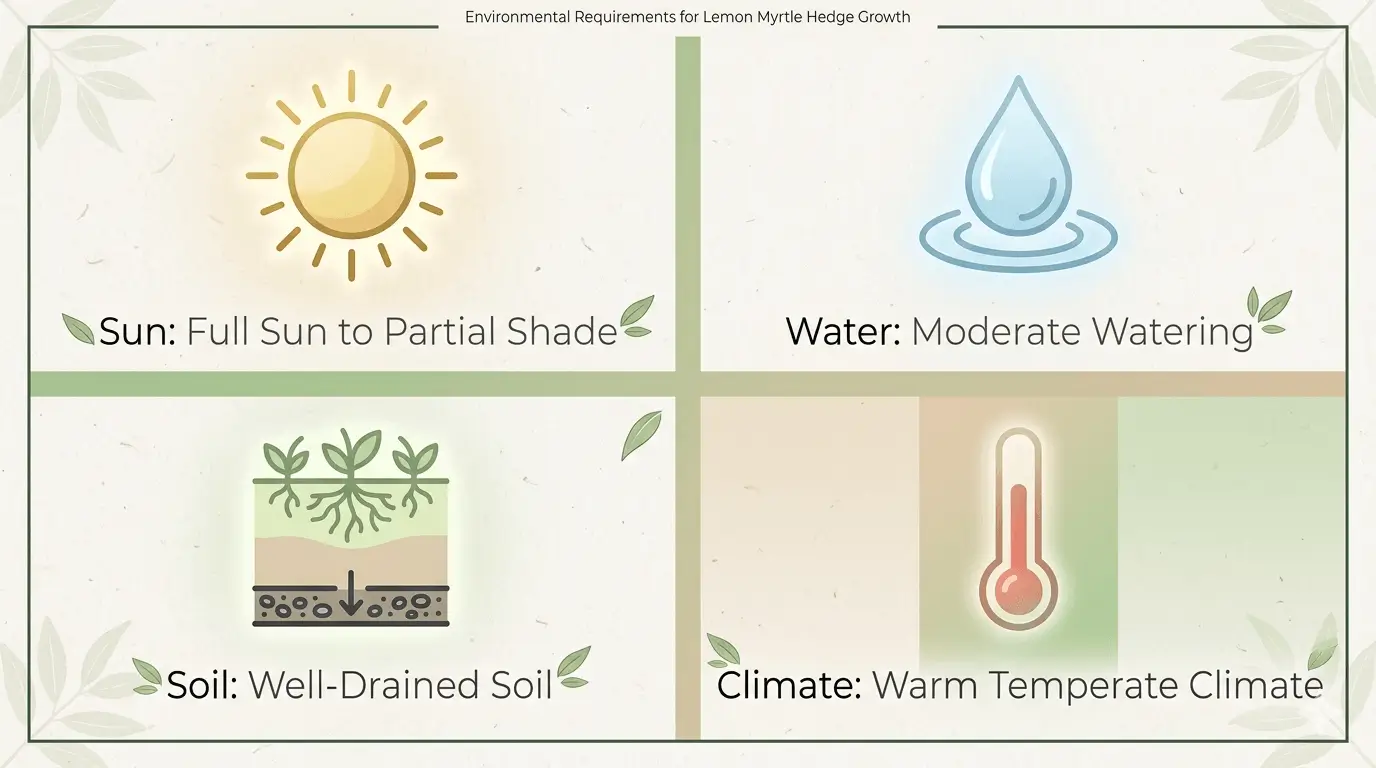
Lemon myrtle grows best when planted in warm conditions with reliable drainage, moderate moisture, and adequate sunlight.
Sunlight Requirements
Lemon myrtle prefers full sun to partial shade. Full sun encourages denser growth, stronger fragrance, and better hedge performance.
Plants grown in excessive shade often become sparse or leggy.
Soil Preferences
The plant performs best in:
- Well-drained soil
- Slightly acidic to neutral pH
- Organic-rich garden beds
Clay soils can be suitable if drainage is improved with gypsum, compost, or raised planting.
Waterlogged conditions should be avoided because root rot can develop quickly.
Watering Needs
Young lemon myrtle plants require consistent moisture during establishment.
Once mature, the species becomes moderately drought tolerant in the ground.
Practical watering advice includes:
- Water deeply during the first two growing seasons
- Reduce watering frequency after establishment
- Avoid constantly saturated soil
Climate Tolerance and Hardiness
Backhousia citriodora hardiness is best suited to subtropical and warm temperate regions.
It performs exceptionally well in:
- Queensland
- Coastal New South Wales
- Warm sheltered coastal regions
Lemon myrtle Canberra growing is possible in protected microclimates with frost management. In Melbourne, winter frost exposure can damage young growth, especially on immature plants. Backhousia citriodora UK cultivation is considered marginal outdoors because prolonged frost limits survival. Container growing is recommended in cold regions. For beginners building structured gardens, lemon myrtle is often recommended in native garden design systems and low-maintenance planting guides.
Climate Suitability for Lemon Myrtle
| Climate Zone | Suitability | Notes |
| Subtropical (QLD) | Excellent | Ideal native range |
| Warm temperate (coastal NSW) | Very good | Grows vigorously |
| Cool temperate (Melbourne, ACT) | Moderate | Needs frost protection |
| Cold/alpine | Poor | Not recommended outdoors |
| UK / Northern Europe | Marginal | Container growing only |
Is Lemon Myrtle Fast Growing?
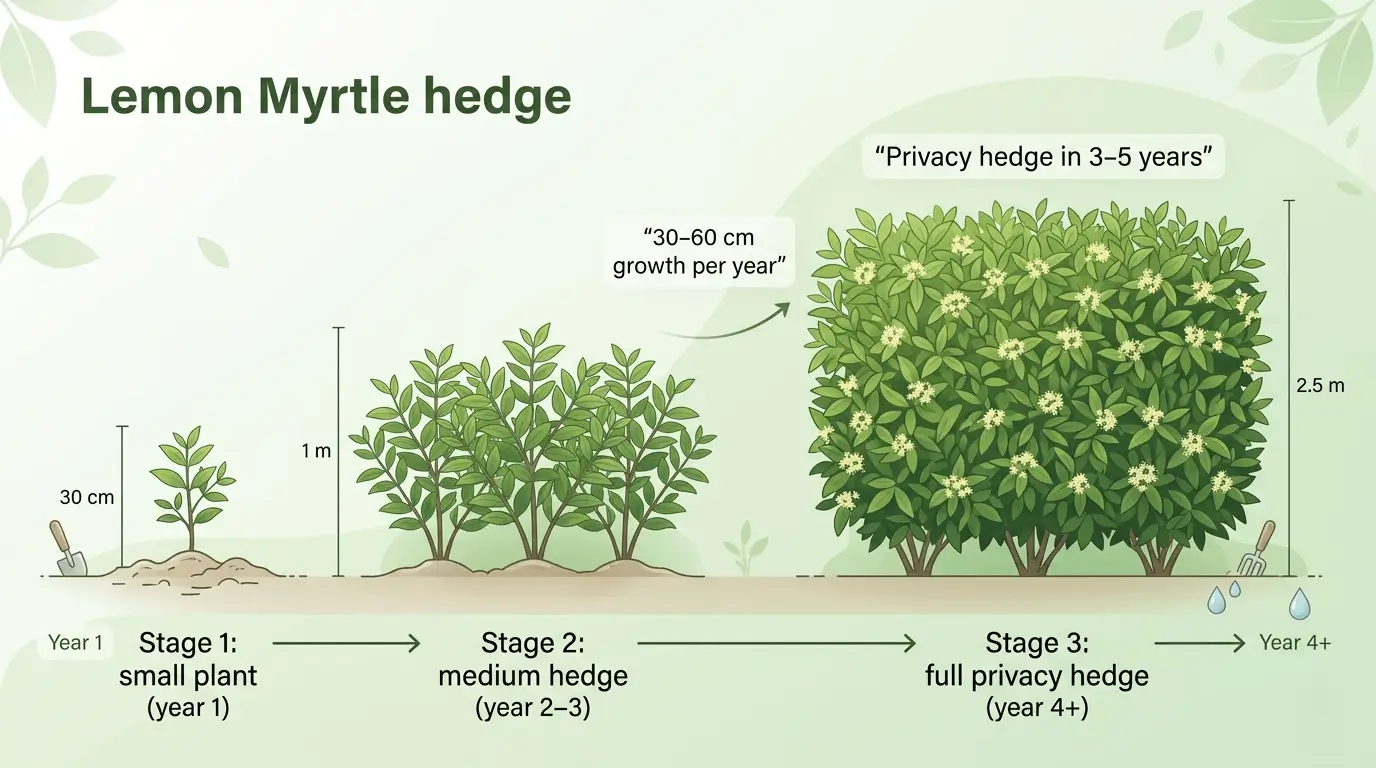
Yes, lemon myrtle has a moderate growth rate and can establish relatively quickly under favourable conditions.
Most plants grow approximately 30–60 cm per year when provided with:
- Warm temperatures
- Consistent moisture
- Fertile soil
- Adequate sunlight
Lemon scented myrtle growth rate is faster in subtropical climates with humid summers and slower in cool or dry regions.
Most hedge plantings become effective privacy screens within 3–5 years.
Growth is most active during spring and summer.
How to Grow a Lemon Myrtle Hedge — Planting and Establishment
Growing lemon myrtle successfully begins with proper spacing, drainage preparation, and early formative care.
Hedge Spacing Recommendations
For dense formal hedges, plants should generally be spaced 60–90 cm apart.
For informal screens, wider spacing of 1–1.5 metres is appropriate.
Proper spacing improves:
- Air circulation
- Root development
- Hedge density
- Long-term maintenance access
Where Does Lemon Myrtle Grow Best in Australia?
Lemon myrtle naturally grows in subtropical Queensland rainforests.
It performs particularly well in:
- Brisbane
- Coastal Queensland
- Northern New South Wales
- Sydney’s warm coastal climate
Lemon myrtle tree Melbourne plantings can succeed in protected locations with reduced frost exposure.
Backhousia Citriodora Hedge Pruning — How to Maintain Shape and Density
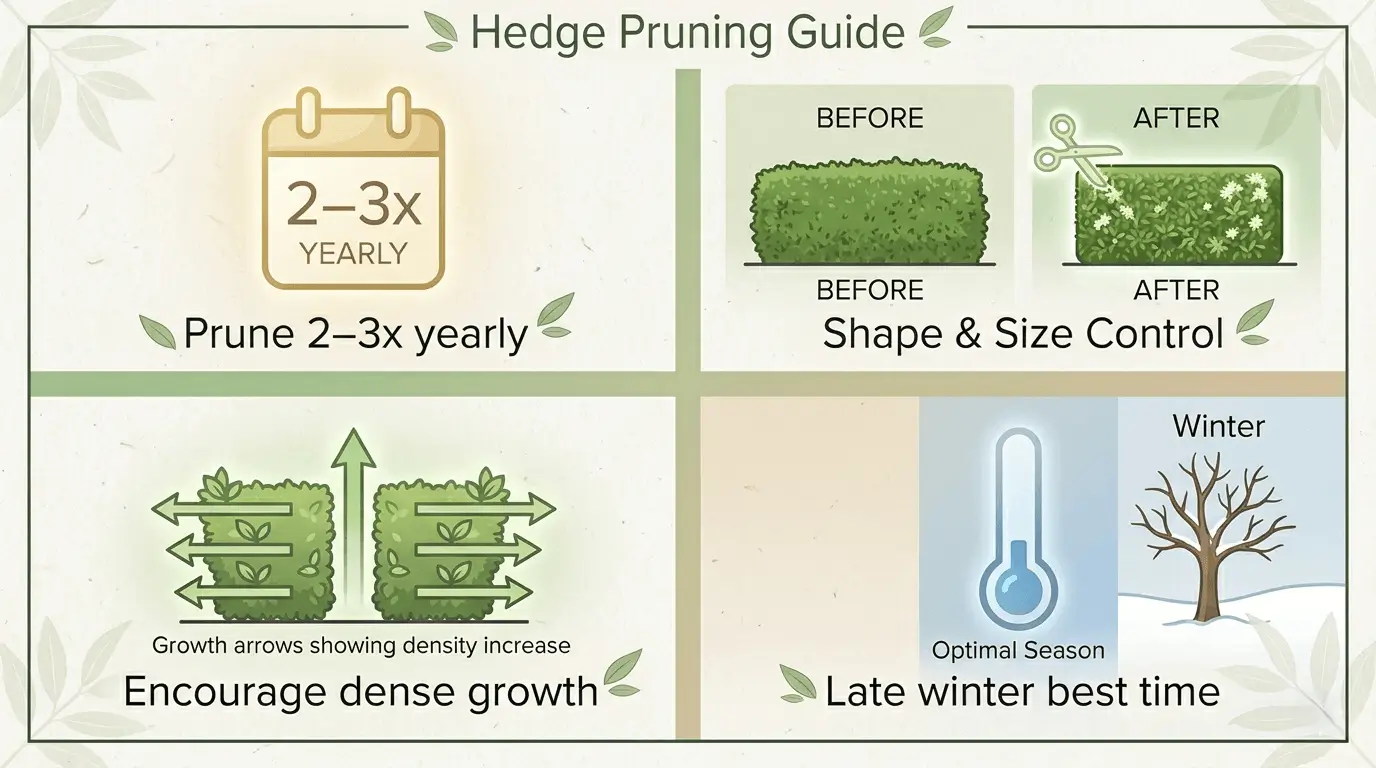
Regular pruning is essential for maintaining a dense and attractive Backhousia citriodora hedge.
The best major pruning period is late winter to early spring before strong seasonal growth begins.
Light trimming after summer flowering can also maintain shape.
Pruning benefits include:
- Improved hedge density
- Stronger lateral branching
- Better airflow
- Controlled height and width
Important pruning guidelines:
- Prune 2–3 times per year for formal hedges
- Avoid pruning during frost periods
- Remove dead or crossing branches annually
- Renovative hard pruning can be performed every 3–5 years
Clean hedge trimmers or sharp secateurs help minimise plant stress and disease entry.
Dwarf Lemon Myrtle — Compact Varieties for Smaller Spaces
Backhousia citriodora dwarf cultivars are suitable for small gardens, border hedges, and container planting.
Most dwarf lemon myrtle tree varieties reach approximately 1–2 metres in height and require less maintenance than standard forms.
These compact cultivars are ideal for:
- Courtyard gardens
- Low hedges
- Decorative pots
- Small suburban landscapes
Standard vs Dwarf Lemon Myrtle Comparison
| Feature | Standard B. citriodora | Dwarf Cultivar |
| Mature height | 6–10 m (wild) / 2–4 m (hedged) | 1–2 m |
| Pruning frequency | 2–3x per year | 1–2x per year |
| Hedge suitability | Tall screens, windbreaks | Low borders, pots |
| Container suitability | Large containers only | Small–medium containers |
| Growth rate | Moderate | Slow to moderate |
Growing Lemon Myrtle in Pots — Container Care Guide
Growing lemon myrtle in pots is practical for patios, balconies, and cool-climate gardens.
Standard forms require containers at least 40–50 cm wide, while dwarf varieties adapt more easily to long-term container culture.
Key container care practices include:
- Use premium free-draining potting mix
- Add perlite for improved aeration
- Water regularly during warm weather
- Apply slow-release native fertiliser every 6–8 weeks during active growth
- Repot every 2–3 years
Additional container growing tips:
- Container growing is recommended for the UK and frost-prone climates
- Move pots under shelter during frost events
- Avoid pots without drainage holes
One of the most common beginner mistakes is overwatering container-grown lemon myrtle.
How to Grow Lemon Myrtle from Cuttings — Propagation Guide
Lemon myrtle propagation from cuttings is the most reliable method for producing identical plants.
Semi-hardwood cuttings should be taken from late spring to summer.
Basic propagation steps include:
- Cut 10–15 cm stems below a leaf node
- Remove lower leaves
- Dip the cut end into rooting hormone
- Insert into propagating mix containing perlite and coarse sand or coco coir
- Maintain warmth, humidity, and indirect light
Roots generally form within 6–10 weeks.
Additional propagation tips:
- Avoid flowering stems because rooting rates are lower
- Heat mats improve propagation success in cool climates
- Label cuttings with dates for monitoring
Common Problems with Lemon Myrtle Hedges and How to Fix Them
Yellowing Leaves
Yellow leaves are commonly caused by overwatering, nutrient deficiencies, or poor drainage.
Solutions include:
- Improving drainage
- Applying native slow-release fertiliser
- Reducing watering frequency
Sparse or Leggy Hedge Growth
Sparse growth usually develops from excessive shade or insufficient pruning.
To improve density:
- Increase pruning frequency
- Grow in full sun
- Begin formative pruning early
Pest Issues (Scale, Mites)
Scale insects and spider mites occasionally affect stressed plants.
Treatment options include:
- Neem oil spray
- Horticultural oil
- Improved watering and plant health management
Frost Damage
Frost damage primarily affects plants in Melbourne, Canberra, and cold inland regions.
Management strategies include:
- Cutting back damaged growth in spring
- Using frost cloth during winter
- Planting in sheltered microclimates
Beginner Mistakes When Growing a Lemon Myrtle Hedge
Several common mistakes reduce hedge quality and longevity.
Typical problems include:
- Planting too closely together
- Ignoring formative pruning
- Overwatering young plants
- Underestimating mature size
- Selecting standard forms for very small gardens
Many beginner gardeners delay pruning because they fear reducing growth. However, early pruning is critical for encouraging dense lower branching.
Lemon Myrtle vs Similar Australian Native Hedge Plants
| Feature | Lemon Myrtle | Lilly Pilly | Coastal Banksia | Sweet Viburnum |
| Fragrance | Strong lemon scent | Minimal | Mild | Mild |
| Growth rate | Moderate | Fast | Moderate | Fast |
| Frost tolerance | Low–Moderate | Moderate | Low | High |
| Hedge height | 1.5–4 m (pruned) | 1–5 m | 2–4 m | 1.5–4 m |
| Native to Australia | Yes | Yes | Yes | No |
| Edible/culinary use | Yes | Yes (berries) | No | No |
Where to Buy Lemon Myrtle Plants in Australia
Lemon myrtle plants for sale are widely available through native plant nurseries, landscape suppliers, and some hardware garden centres.
Backhousia citriodora hedge Bunnings availability varies by region and season, particularly for dwarf forms.
Specialist native nurseries often provide:
- Dwarf cultivars
- Hedge-specific forms
- Larger advanced specimens
- Mail-order shipping options
When purchasing plants:
- Check for root-binding
- Inspect foliage for pests or yellowing
- Choose upright specimens with strong central leaders
- Ask specifically for hedge-suitable cultivars
Backhousia citriodora hedge for sale listings are commonly found through Australian native plant retailers online.
Conclusion
A Backhousia citriodora hedge combines ornamental beauty, fragrant foliage, and practical screening performance in a single Australian native plant. Lemon myrtle adapts well to formal hedges, informal privacy screens, and container growing when provided with suitable drainage, sunlight, and pruning. Its dense evergreen growth, moderate growth rate, and strong citrus fragrance make it highly desirable for subtropical and warm temperate gardens.
Whether used as a tall screening hedge or a compact dwarf border, lemon myrtle remains a versatile and rewarding landscape choice. With proper spacing, regular formative pruning, and climate-appropriate care, a lemon myrtle hedge can provide long-term privacy, fragrance, and visual appeal for many years.
Frequently Asked Questions
How tall does a Backhousia citriodora hedge grow?
A maintained Backhousia citriodora hedge is typically kept between 1.5–4 metres tall. Unmanaged lemon myrtle trees may reach 6–10 metres in gardens and up to 20 metres in natural rainforest conditions.
How fast does lemon myrtle grow as a hedge?
Lemon myrtle grows at a moderate rate of approximately 30–60 cm per year under good conditions. Warm subtropical climates encourage faster growth, while cool climates slow development.
Can lemon myrtle be grown in a pot?
Yes, lemon myrtle can be grown successfully in pots, especially dwarf cultivars. Use a free-draining potting mix, provide regular watering, fertilise during active growth, and protect containers from frost in cold climates.
Can lemon myrtle grow in Canberra or Melbourne?
Yes, lemon myrtle can grow in Canberra or Melbourne if planted in sheltered positions with frost protection. Container growing is also useful because plants can be moved during severe winter weather.
How do I propagate lemon myrtle from cuttings?
Take semi-hardwood cuttings during late spring or summer, remove lower leaves, dip stems in rooting hormone, and place them into a moist propagation mix. Roots usually develop within 6–10 weeks.
How often should I prune a lemon myrtle hedge?
Formal lemon myrtle hedges should generally be pruned 2–3 times per year. Major pruning is best done in late winter or early spring, with lighter trimming after flowering.
What is the difference between a standard and dwarf lemon myrtle?
Standard lemon myrtle varieties can grow into medium-sized trees, while dwarf cultivars usually remain between 1–2 metres tall. Dwarf forms require less pruning and are better suited to small gardens and container growing.