
Introduction
Does calathea like to be root bound? No, calathea plants do not prefer to be root bound. While they tolerate slightly snug root conditions for short periods, they grow best when their roots have enough space to expand without becoming crowded. Choosing the wrong pot size is one of the most common calathea care mistakes because both root-bound conditions and oversized pots can create problems. Understanding how calathea roots grow, recognizing signs that repotting is needed, and selecting the right container can significantly improve plant health. This guide explains what root-bound means for calatheas, when to repot, how to repot correctly, and how to choose the best pot for long-term growth. This guide is part of broader indoor plant care topics, similar to other educational resources in Plants Benefits and Guides, which explore how different plants respond to care, environment, and growth conditions.
Quick Summary
- Calathea plants do not prefer to be root bound and perform best with adequate root space.
- Roots growing from drainage holes, stunted growth, and fast-drying soil often indicate repotting is needed.
- Spring and early summer are the best times to repot calathea plants.
- Pot size, drainage, and material all influence watering needs and overall plant health.
What Does It Mean for a Plant to Be Root Bound
Defining Root Bound in Houseplants
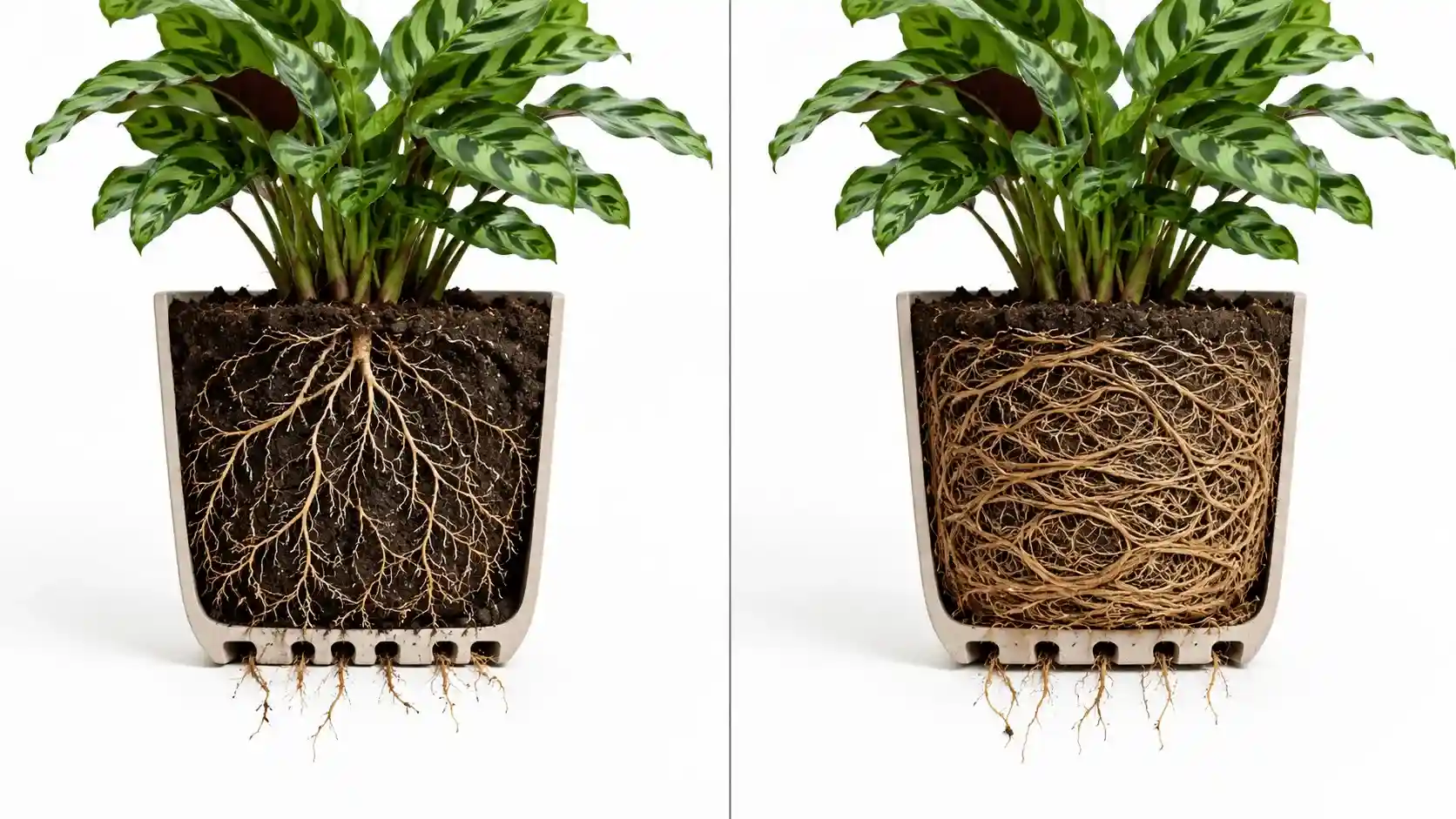
A root-bound plant is a plant whose roots have filled nearly all available space inside the container. Instead of growing outward into fresh soil, the roots begin circling around the inside of the pot, creating a dense mass.
In houseplants, root-bound conditions can range from mild to severe:
- Mildly pot-bound plants still have some usable soil available.
- Moderately root-bound plants have dense root growth throughout the container.
- Severely root-bound plants have roots wrapping tightly around one another and often growing through drainage holes.
A healthy houseplant root system should have access to both soil and air pockets. When roots completely occupy the pot, water and nutrients become harder to access efficiently. The concept of root-bound plants is widely studied in horticulture and is closely related to container plant physiology, as explained in general plant growth principles on Wikipedia.
Do Plants Like Being Root Bound — General Overview
Whether plants like being root bound depends on the species. Some plants naturally tolerate tight root conditions better than others.
Examples of plants that often tolerate snug pots include:
- Snake plants
- Spider plants
- ZZ plants
Other species prefer more root space and can decline when root-bound conditions become severe.
When people ask, “Do plants like being root bound?” the answer is not universal. A plant that likes to be root bound typically grows naturally in compact root zones and can continue thriving despite limited space. Calatheas do not fall into this category.
Does Calathea Like to Be Root Bound
The Direct Answer: Calathea Root Space Preferences
No, calatheas do not like to be root bound as a general preference. They perform best when planted in a container that is only slightly larger than the root ball.
The ideal balance is important:
- Too little space causes root crowding.
- Too much space increases moisture retention and root rot risk.
- Slightly larger pots support healthy root expansion.
When asking, “Does calathea like to be root bound?” the answer remains no. Likewise, “Do calathea plants like to be root bound?” and “Do calatheas like to be root bound?” can be answered the same way.
Severe root binding can lead to:
- Restricted nutrient absorption
- Rapid soil drying
- Curled leaves
- Brown leaf edges
- Reduced growth
- Increased stress during warm seasons
Calatheas are tropical plants that rely on stable moisture levels. Crowded roots often disrupt that balance.
Does Calathea Orbifolia Like to Be Root Bound
No, Calathea orbifolia does not like to be root bound. In fact, many growers consider orbifolia one of the more sensitive calathea varieties when it comes to root disturbance and environmental changes.
Compared with smaller calathea varieties, orbifolia develops a broader root system and larger foliage. As a result:
- Root crowding can affect moisture uptake more quickly.
- Leaf curling may appear sooner.
- Growth can slow noticeably in cramped containers.
Repotting Calathea orbifolia should be done carefully and only when clear signs of root restriction appear.
Seasonal Considerations: Root Bound in Fall and Winter
Calatheas grow most actively during spring and summer. During fall and winter, growth naturally slows.
Because of this seasonal slowdown:
- Slightly root-bound plants may appear stable during winter.
- Water usage decreases.
- Growth pauses temporarily.
However, severe root-bound conditions should not be ignored. A plant entering spring with heavily compacted roots may struggle to support new growth.
When considering whether calathea likes to be root bound in the fall or winter, remember that tolerance is higher during dormancy, but preference does not change. Calatheas still benefit from adequate root space.
Signs Your Calathea Needs Repotting
Visual and Physical Indicators
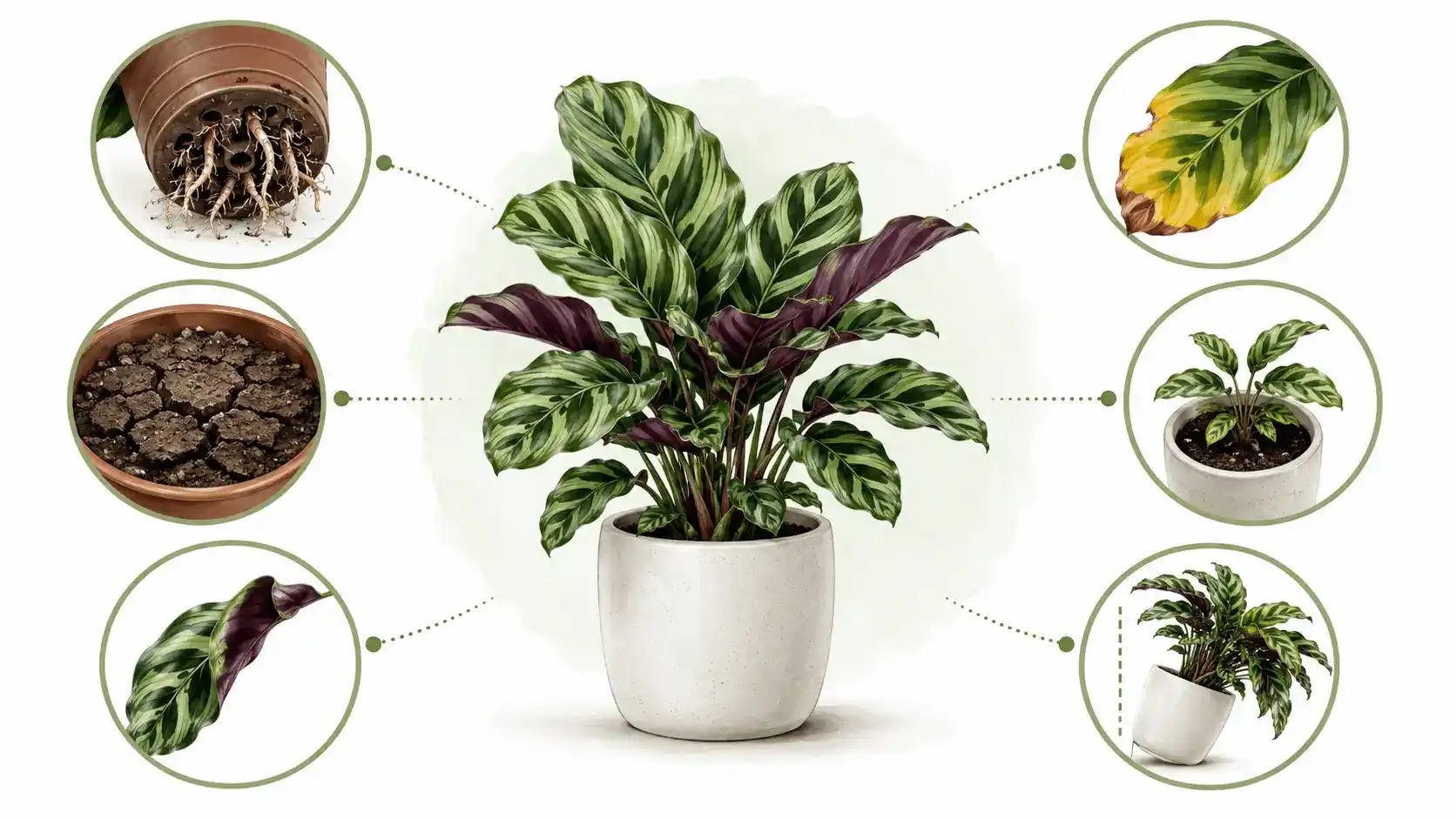
Common signs that your calathea needs repotting include:
- Roots visibly growing out of drainage holes
- Roots circling or matting on the soil surface
- Soil drying out unusually fast between waterings
- Slowed or stalled new growth
- Leaves curling, yellowing, or showing stress without another clear cause
- Plant becoming top-heavy or tipping over easily
When several of these symptoms appear together, the plant is often becoming root bound.
When to Repot Calathea — Timing by Season
The best time to repot calathea is during spring or early summer.
During active growth:
- Roots recover faster
- New growth develops more quickly
- Repotting shock is reduced
- Water uptake stabilizes sooner
If you are asking, “Should I repot my calathea?” spring is usually the safest answer when root-bound symptoms are present.
Fall and winter repotting should generally be avoided unless:
- The plant is severely root bound
- Root rot is present
- The pot is damaged
- Drainage problems require immediate action
This timing gives the plant the best chance to establish itself before seasonal slowdowns begin.
How to Repot Calathea Step by Step
Preparing for Repotting
Successful repotting begins with proper preparation. Before repotting your calathea, gather all necessary materials to minimize stress on the plant and reduce the amount of time the roots are exposed.
You will need:
- A new pot that is 1–2 inches larger than the current pot
- Fresh, well-draining potting mix
- Clean gloves
- Sterilized scissors or pruning shears
- Watering can
A practical tip many experienced growers follow is watering the calathea one day before repotting. Moist roots are more flexible and less likely to break during the process.
The Repotting Process
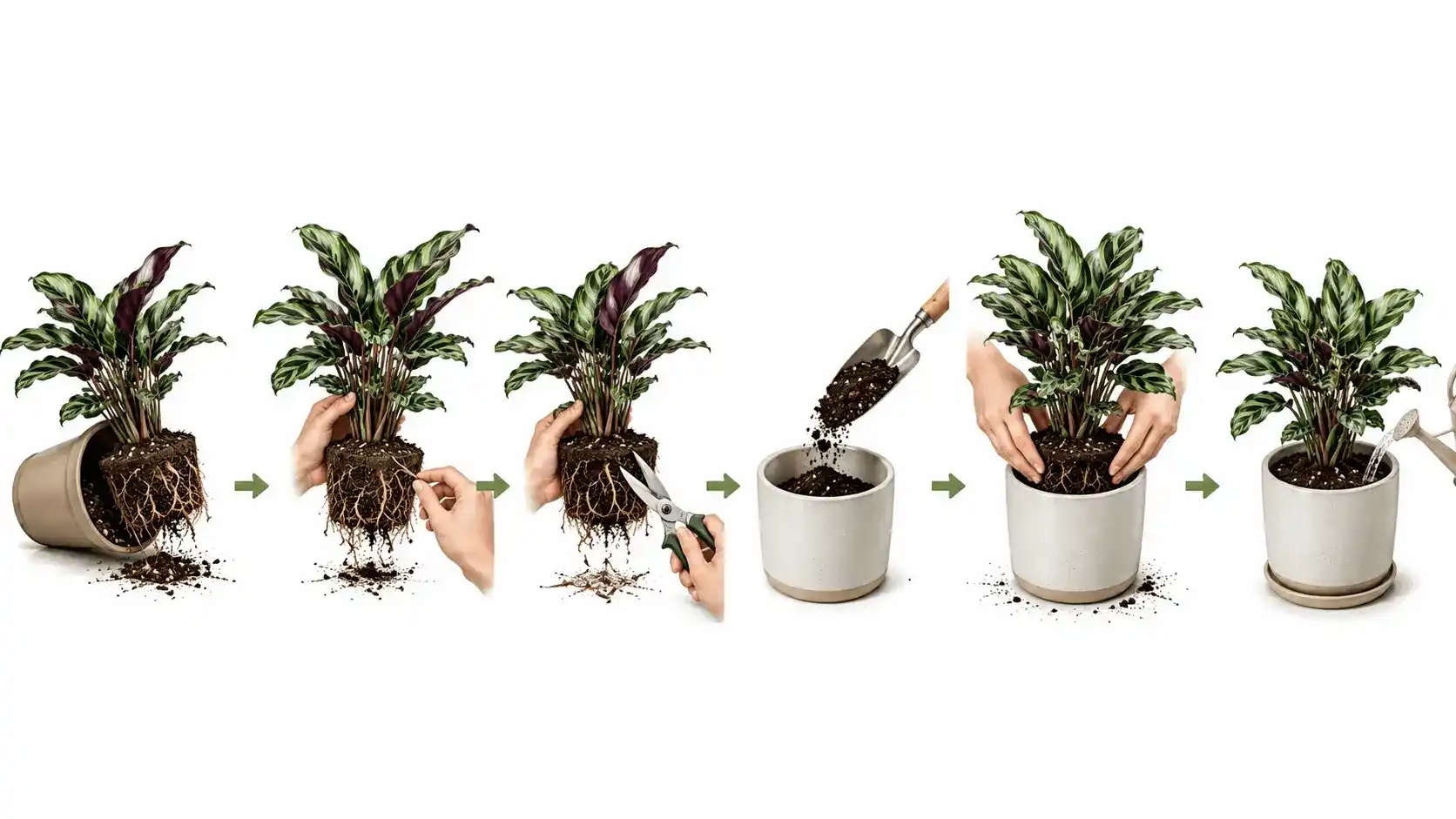
Follow these steps when learning how to repot calathea plants:
- Gently remove the calathea from its current pot.
- Carefully loosen compacted roots using your fingers without excessive pulling.
- Trim any dead, mushy, or rotting roots with clean scissors.
- Add a layer of fresh soil to the bottom of the new pot.
- Position the plant in the center and fill around the root ball with fresh potting mix.
- Water thoroughly and place the plant in bright indirect light.
Avoid packing the soil too tightly. Calathea roots benefit from a loose, airy growing medium that allows oxygen to reach the root zone.
Calathea Repotting Shock — What to Expect and How to Manage It
Calathea repotting shock is common and usually temporary. After repotting, you may notice:
- Drooping leaves
- Slight wilting
- Curling foliage
- Reduced growth for a short period
This happens because the roots have been disturbed and must adjust to their new environment.
To minimize repotting shock:
- Maintain humidity levels above 50%
- Keep the plant in bright indirect light
- Avoid direct sunlight
- Do not fertilize immediately after repotting
- Water carefully without overwatering
Most calatheas recover within two to four weeks. Patience is important, as excessive watering or fertilizing during recovery often creates additional stress.
Calathea Pot Size — Choosing the Right Container
How Pot Size Affects Calathea Health
Calathea pot size directly affects moisture retention, root development, and overall plant health.
A pot that is too small can restrict root growth and increase watering frequency. A pot that is too large may retain excessive moisture and encourage root rot.
The safest approach is usually moving up one pot size, which means selecting a container approximately 1–2 inches wider than the current pot.
| Scenario | Effect on Calathea |
| Pot too small | Root-bound stress, fast drying, stunted growth |
| Pot correct size | Healthy moisture retention, stable root growth |
| Pot too large | Waterlogged soil, root rot risk, leaf yellowing |
Choosing the correct calathea pot size helps maintain the balance between moisture retention and root aeration.
Recommended Pot Sizes by Plant Maturity
General pot size recommendations include:
| Plant Stage | Recommended Pot Size |
| Seedlings | 3–4 inches |
| Young plants | 5–6 inches |
| Medium plants | 6–8 inches |
| Mature calatheas | 8–10 inches |
| Large orbifolia specimens | 10–12 inches |
These sizes serve as general guidelines. Always consider the size of the root ball rather than plant height alone.
Best Pot for Calathea — Materials, Drainage, and Design
Comparing Pot Materials for Calathea
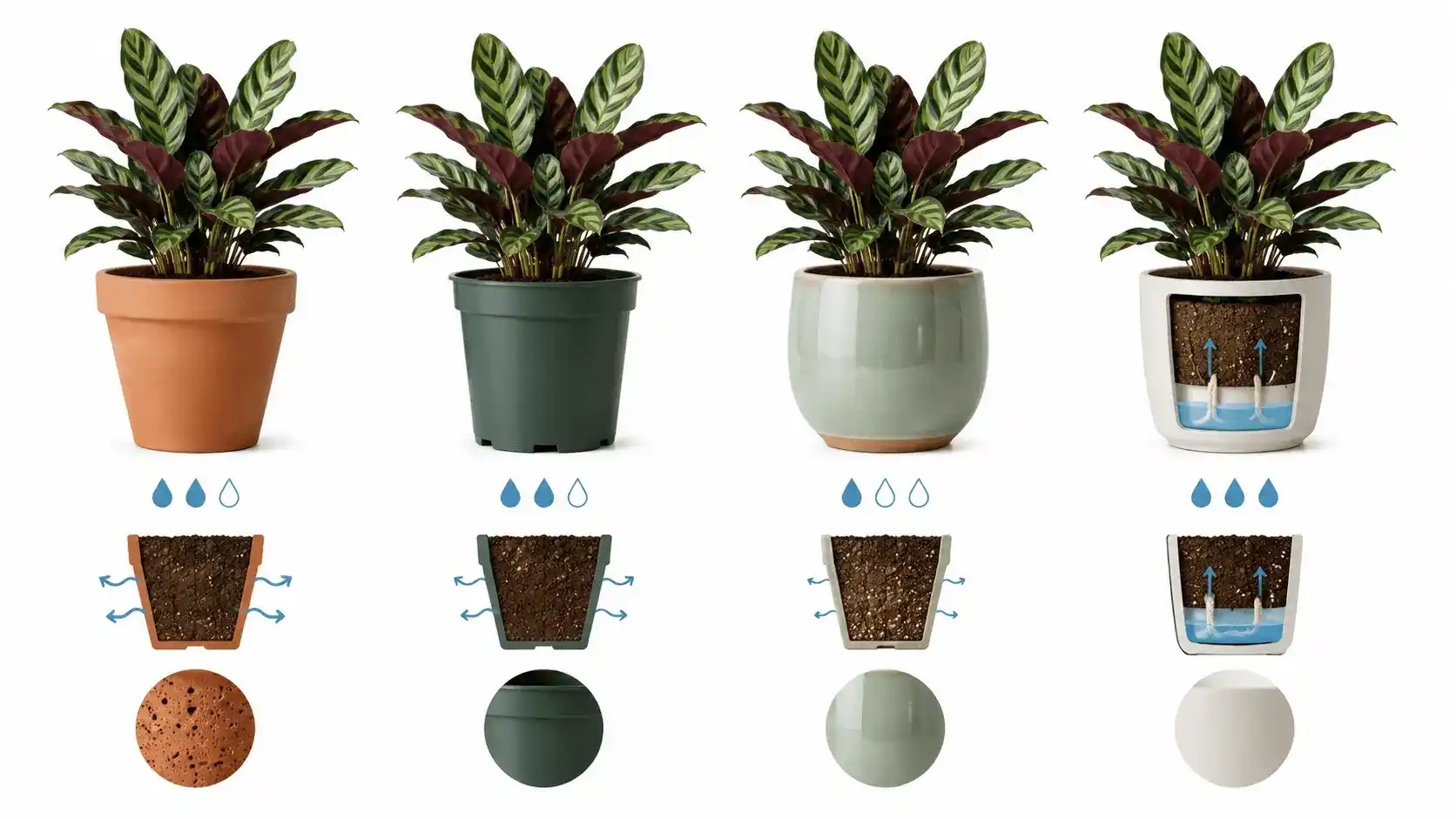
The best pot for calathea depends on your watering habits, humidity levels, and indoor environment.
| Pot Material | Pros | Cons | Calathea Suitability |
| Terracotta | Breathable, reduces overwatering | Dries faster, may lower humidity | Good for overwater-prone growers |
| Plastic | Retains moisture well, lightweight | Less breathable | Good for humidity-loving calatheas |
| Ceramic (glazed) | Attractive, retains moisture | Heavy, less breathable | Good option with drainage hole |
| Self-watering pot | Consistent moisture delivery | Risk of overwatering if not monitored | Potentially useful with care |
For most indoor gardeners, plastic and glazed ceramic containers offer the best balance of moisture retention and ease of care.
Should You Use a Calathea Self Watering Pot
A calathea self watering pot can be helpful when used correctly. These containers provide water from a reservoir beneath the soil, helping maintain consistent moisture levels.
Benefits include:
- More stable moisture availability
- Less frequent watering
- Reduced risk of drought stress
Potential drawbacks include:
- Root rot from excessive moisture
- Mineral buildup over time
- Difficulty monitoring soil conditions
A self-watering pot can work well for calatheas, but it should not replace regular monitoring. Always check soil moisture and clean the reservoir periodically.
If you are growing calathea alongside other moisture-loving indoor plants like ZZ plants or exploring general indoor plant care strategies, guides such as Zamioculcas Zamiifolia Care Guide (ZZ Plant Growing Tips) and Peperomia Rotundifolia Care Guide can help you understand how different houseplants respond to watering and pot conditions.
Drainage Requirements for Calathea Pots
Drainage holes are essential for every calathea pot.
Without drainage:
- Water accumulates around roots
- Oxygen levels decrease
- Root rot becomes more likely
- Fungal issues may develop
A popular solution is placing a nursery grower pot inside a decorative cachepot. This setup provides proper drainage while maintaining an attractive appearance.
Calathea Care Essentials That Affect Repotting Decisions
Watering, Humidity, and Light — How They Interact With Pot Choice
Proper calathea care is closely connected to container selection.
Calathea care also overlaps with other tropical foliage plants often used in indoor greenery setups, such as those discussed in Alocasia Amazonica Care Indoors, which shares similar humidity and indirect light requirements.
Watering
Calatheas prefer evenly moist soil. Pot material and size directly influence how quickly the soil dries.
Humidity
Calatheas thrive in humidity levels between 50% and 70% or higher. Terracotta pots can increase evaporation, which may reduce humidity around the root zone.
Light
Bright indirect light is ideal. Direct sunlight can scorch leaves and increase moisture loss.
Understanding how to care for a calathea plant means considering the interaction between watering, humidity, light, and container type.
Soil Mix Recommendations for Repotting
The ideal calathea potting mix should balance moisture retention with drainage.
A reliable blend includes:
- 60% quality potting mix
- 20% perlite
- 20% orchid bark
This mixture:
- Retains adequate moisture
- Improves aeration
- Reduces compaction
- Helps prevent root rot
Using the correct soil can significantly reduce repotting frequency by maintaining healthier root growth over time.
Plant Size and Growth Rate
How Large Does Calathea Grow
Most calathea varieties are medium-sized tropical houseplants that remain manageable indoors. Mature size varies by species, growing conditions, and container size.
| Calathea Variety Type | Mature Height | Mature Spread |
| Compact varieties | 12–18 inches | 12–18 inches |
| Most common varieties | 18–24 inches | 18–24 inches |
| Calathea orbifolia | 24–36 inches | 24–36 inches |
| Large mature specimens | Up to 3 feet | Up to 3 feet |
Compact varieties are well suited to shelves, desks, and small indoor spaces. Larger varieties such as Calathea orbifolia develop broader foliage and require more room to spread. Their larger leaves also increase humidity and watering demands compared to smaller types.
Several environmental factors influence how large a calathea becomes:
- Light intensity and duration
- Humidity levels
- Pot size and root space
- Soil quality
- Watering consistency
- Temperature stability
Indoor calatheas generally remain smaller than those grown outdoors in tropical climates, where warmth and humidity encourage more vigorous growth.
Calathea Growth Rate — What to Expect
Calatheas are generally considered moderate-growing houseplants. They are not particularly fast growers, but under favorable conditions they produce steady new foliage throughout the growing season.
Typical seasonal growth patterns include:
- Spring: Growth resumes and accelerates.
- Summer: Peak growth period with the most new leaves.
- Fall: Growth gradually slows.
- Winter: Minimal growth due to reduced light and cooler conditions.
Growth rate directly affects repotting frequency. Faster-growing calatheas may fill their containers within a year, while slower-growing plants can remain in the same pot for two years or longer.
Most healthy calatheas require repotting every one to two years, depending on root development and growing conditions.
Common Problems After Repotting and How to Fix Them
Leaves Turning Yellow After Repotting
Yellow leaves after repotting are often caused by temporary stress, but they can also indicate a care issue that requires attention.
Common causes include:
- Repotting shock
- Overwatering in the new pot
- Incorrect pot size
- Poor drainage
- Root disturbance
To diagnose the problem, check soil moisture first.
If the soil remains wet for extended periods, overwatering or an oversized pot may be the cause. If the soil moisture is appropriate and only a few older leaves are affected, repotting shock is the more likely explanation.
To correct and prevent yellowing:
- Allow the soil surface to dry slightly between waterings.
- Ensure the pot has drainage holes.
- Use a container only 1–2 inches larger than the root ball.
- Avoid fertilizing immediately after repotting.
- Maintain stable humidity and temperature conditions.
Calathea Wilting or Drooping After Repotting
Mild wilting or drooping immediately after repotting is common and usually temporary. The roots need time to adjust to their new environment and reestablish normal water uptake.
Temporary wilting typically improves within a few days to a couple of weeks.
However, ongoing decline may indicate:
- Root damage
- Root rot
- Severe transplant stress
- Improper watering
- Environmental stress
Recovery steps include:
- Moving the plant away from intense light temporarily
- Maintaining high humidity
- Keeping temperatures stable
- Avoiding fertilizer applications
- Watering only when needed
If wilting worsens over several weeks instead of improving, inspect the roots and soil conditions for signs of rot or drainage problems.
Slow Growth After Repotting
Slow growth immediately after repotting is normal. Newly repotted calatheas often direct energy toward root establishment rather than producing new leaves.
Normal recovery signs include:
- Stable foliage color
- Healthy leaf posture
- Gradual improvement over several weeks
Potential warning signs include:
- Persistent yellow leaves
- Mushy stems
- Constantly wet soil
- Foul-smelling potting mix
These symptoms may indicate root rot or an unsuitable potting environment.
If you are trying to save a dying calathea plant after repotting, focus on correcting watering practices, improving drainage, maintaining humidity, and providing bright indirect light. Most healthy calatheas recover once root conditions stabilize.
Calathea vs. Similar Plants — Root Bound Preferences Compared
Does Monstera Like Being Root Bound
Monstera plants are generally more tolerant of being slightly root-bound than calatheas.
While monsteras still benefit from periodic repotting, they often continue growing well even when roots become somewhat crowded. Many growers intentionally allow mild root binding before repotting because it can help support foliage growth.
Calatheas, however, are more sensitive to root restriction because they rely on consistent moisture availability. A crowded root system can cause the soil to dry too quickly and lead to leaf stress.
For those wondering, “Do monsteras like being root bound?” the answer is that they tolerate it far better than calatheas, although they do not necessarily prefer severe root crowding.
Side-by-Side: Root Bound Tolerance in Popular Houseplants
| Plant | Likes Being Root Bound? | Repotting Frequency |
| Calathea | No — prefers adequate space | Every 1–2 years |
| Monstera | Tolerates it moderately | Every 1–2 years |
| Snake Plant | Yes — prefers snug conditions | Every 3–5 years |
| Spider Plant | Tolerates well | Every 1–2 years |
| Peace Lily | No — dislikes being pot-bound | Every 1–2 years |
This comparison highlights why calathea care requires closer attention to pot size than some other popular houseplants.
Beginner Mistakes When Repotting Calathea
The Most Common Calathea Repotting Errors
Many calathea problems occur because of avoidable repotting mistakes. Understanding these common errors can help prevent stress and improve long-term plant health.
Common mistakes include:
- Choosing a pot that is too large, increasing the risk of root rot
- Repotting during fall or winter dormancy
- Failing to acclimate the plant after repotting
- Using dense, compacted soil with poor drainage
- Fertilizing immediately after repotting
- Ignoring repotting shock symptoms and overwatering in response
A common beginner mistake is assuming drooping leaves mean the plant needs more water. In many cases, the plant is simply experiencing transplant stress. Adding excessive water can worsen the situation by creating soggy soil and encouraging root problems.
The best approach is patience, stable conditions, and careful monitoring during the first few weeks after repotting.
Conclusion
Does calathea like to be root bound? No. Calathea plants grow best when their roots have adequate space to expand, though they also perform poorly in oversized containers. The ideal balance is a pot that is only slightly larger than the root ball and provides excellent drainage.
Understanding proper pot size, choosing suitable pot materials, and repotting during spring or early summer are among the most important factors for successful calathea care. Recognizing early signs of root binding, such as roots escaping drainage holes, rapid soil drying, and slowed growth, allows you to repot before significant stress develops.
Repotting calathea does not need to be difficult. With the right preparation, a well-draining soil mix, an appropriately sized container, and proper aftercare, most calatheas recover quickly and continue producing healthy, attractive foliage. For indoor plant growers, maintaining the right balance between root space and moisture retention is the key to long-term success.
Frequently Asked Questions
1. Does calathea like to be root bound?
No. Calathea plants do not prefer to be root bound. They grow best when given adequate root space, typically in a pot that is 1–2 inches larger than the root ball. Severe root binding can lead to stress, stunted growth, and leaf problems.
2. How often should I repot my calathea?
Most calathea plants benefit from repotting every one to two years. Spring is usually the best time because active growth helps the plant recover more quickly from root disturbance.
3. What is the best pot for calathea?
Plastic and glazed ceramic pots with drainage holes are generally the best options for calathea. These materials retain moisture well while helping maintain the consistent soil conditions calatheas prefer.
4. Can I use a self-watering pot for calathea?
Yes, a self-watering pot can work for calathea if monitored carefully. While it helps maintain consistent moisture, improper use can increase the risk of root rot and mineral buildup.
5. What should I do if my calathea is showing repotting shock?
Place the plant in bright indirect light, maintain high humidity, avoid fertilizing, and water only when needed. Most calatheas recover from repotting shock within two to four weeks.
6. Does calathea orbifolia like to be root bound?
No. Calathea orbifolia does not thrive when severely root-bound. Because it is particularly sensitive to root disturbance, repotting should be done carefully and only when necessary.
7. Is it okay to repot calathea in winter?
Repotting calathea in winter is generally not recommended. Growth slows significantly during this period, making recovery from root disturbance more difficult. Spring remains the ideal season for repotting.