
Introduction
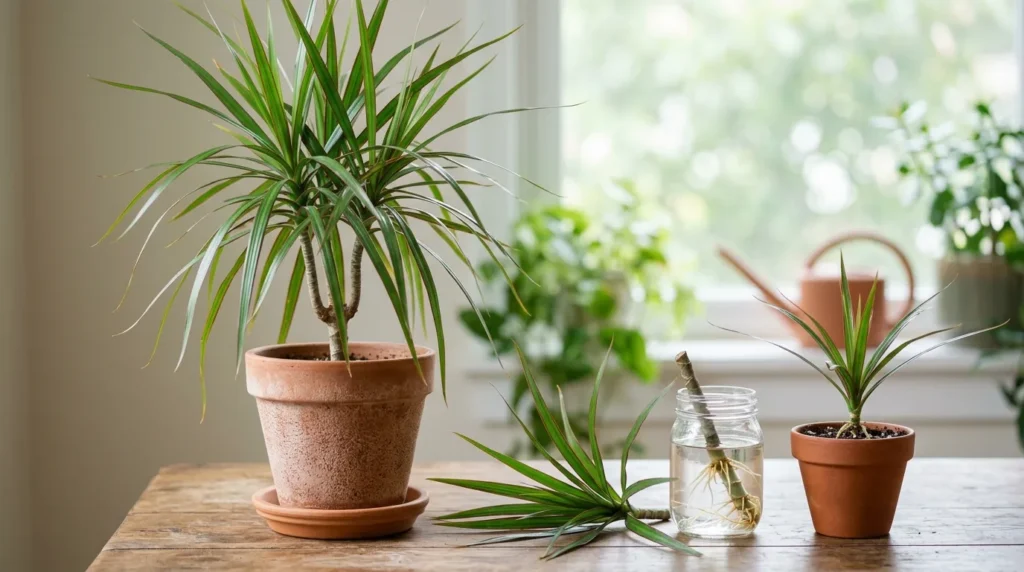
Learning how to propagate dragon tree is a simple way to create new plants from an existing Dracaena marginata. Also called the Madagascar dragon tree, this popular houseplant is valued for its narrow leaves, upright growth, and ability to adapt indoors. Dracaena marginata propagation is usually done through stem cuttings placed in water or soil. This guide explains the best propagation methods, ideal timing, rooting process, common mistakes, and aftercare steps to help growers successfully produce healthy new dragon trees at home. Dragon trees are one of many popular houseplants valued for their easy care and adaptability. Explore more plant care information in our complete Plants Benefits and Guides resource.
Quick Summary
- Dragon trees are mainly propagated through stem cuttings in water or soil.
- Spring and summer are the best seasons because the plant grows actively.
- Root development usually takes about 4–8 weeks depending on conditions.
- A single leaf cannot create a new dragon tree; stem sections with nodes are required.
What Is a Dragon Tree (Dracaena Marginata)?
The dragon tree, scientifically known as Dracaena marginata, is a tropical evergreen houseplant from Madagascar. It is recognized by its slender stems, arching green leaves, and red or purple leaf edges. The marginata plant is popular because it tolerates indoor conditions and can be easily shaped through pruning and propagation. The dragon tree, scientifically known as Dracaena marginata, is a tropical evergreen houseplant from Madagascar. Learn more about its botanical classification and background through the Wikipedia page for Dracaena marginata.
The Madagascar dragon tree is different from the dragon blood tree (Dracaena draco) and other species sometimes called dragon trees. The draco dragon tree develops a much larger trunk and is usually grown outdoors in suitable climates. Dragon tree flowers are rare indoors, but mature plants may occasionally produce small clusters of fragrant white flowers.
Dragon Tree vs. Dragon Blood Tree (Comparison Block)
| Feature | Dracaena marginata | Dracaena draco |
| Common name | Madagascar dragon tree | Dragon blood tree |
| Native region | Madagascar | Canary Islands, Socotra, and nearby regions |
| Growth habit | Thin stems with narrow leaves | Thick trunk with umbrella-like crown |
| Propagation method | Mainly stem cuttings | Seeds and stem cuttings |
| Growth rate | Slow to moderate | Slow |
| Mature size | Usually 6–10 feet indoors | Can become a large outdoor tree |
| Lifespan | Several decades indoors | Can live for hundreds of years |
Can You Propagate Dragon Tree Cuttings?
Yes, dragon tree cuttings can be propagated successfully, and stem cutting is the standard method for creating new Dracaena marginata plants. The reason this method works is that dragon trees store growth points along their stems, allowing new roots and shoots to develop. Many indoor plants can be multiplied through cuttings when the correct stem section and growing conditions are used. Similar techniques are explained in our Tradescantia Nanouk Propagation: Easy Step-by-Step Guide.
If you ask, “can I cut the top off my dracaena and replant it?” the answer is yes. Healthy top cuttings can produce roots when placed in water or planted in suitable soil. The remaining stem can also grow new shoots after pruning. Stem cutting works because dragon trees are far from unique in relying on nodes to root — most common houseplants follow the same rule. If you’re comparing methods across species, the houseplant propagation reference database breaks down rooting method, timing, and difficulty for 18 popular plants side by side.
How to Propagate Dragon Tree Step by Step
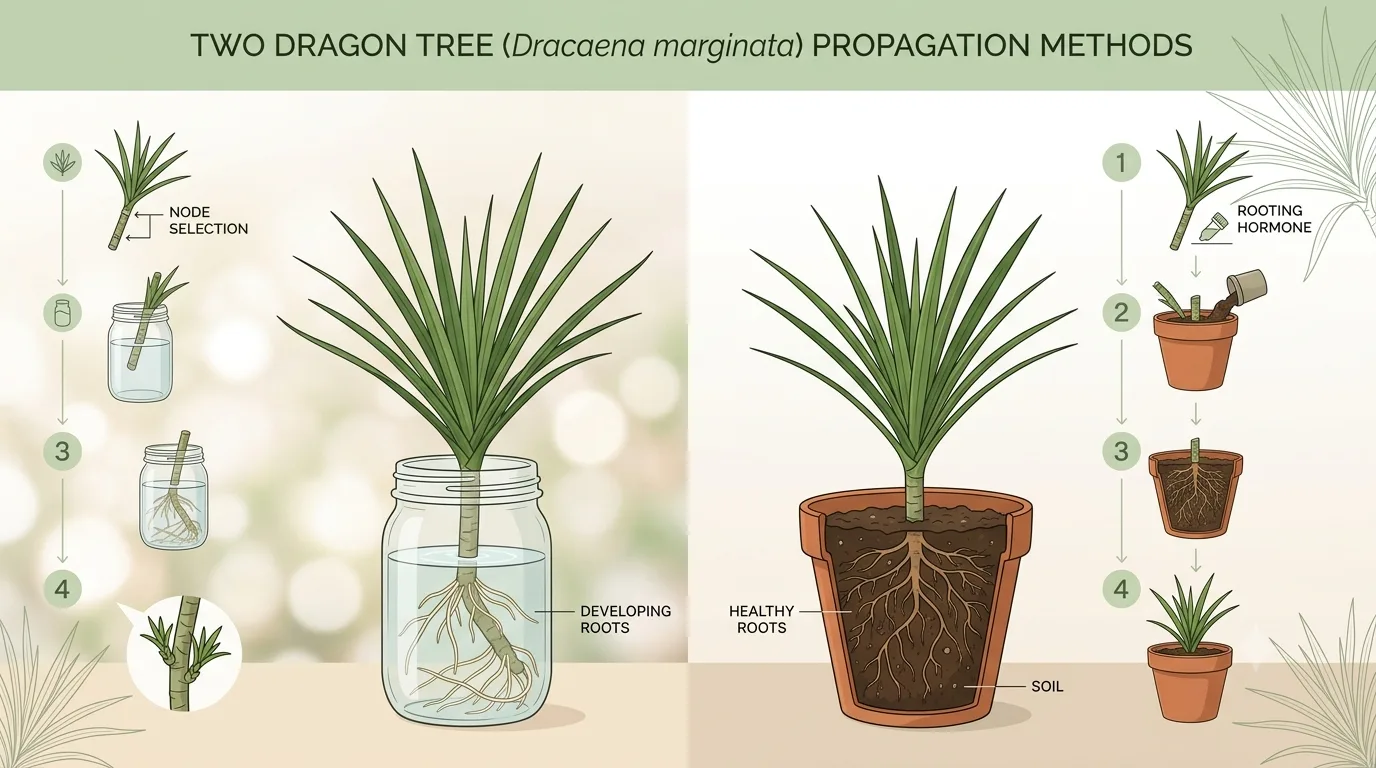
Dragon tree propagation begins by selecting a healthy stem and creating a cutting with active growth potential. The process works through either water propagation or direct soil planting. Stem propagation is a common technique used for many houseplants. You can also explore another propagation method with our guide on How to Propagate a Prayer Plant: Complete Guide.
How to Propagate Dragon Tree in Water
Water propagation is one of the easiest ways to observe root development.
Steps:
- Choose a healthy stem section about 4–8 inches long.
- Cut below a node using clean, sharp pruning shears.
- Remove lower leaves so the stem can sit in water.
- Place the cutting in a container with fresh water covering the lower stem.
- Keep it in bright, indirect light.
- Change the water every few days to prevent bacterial growth.
Many growers ask, “how to root dracaena in water?” The process involves keeping the stem node submerged while providing warmth and indirect sunlight. Dracaena can grow in water temporarily, but long-term growth is healthier after transferring the rooted cutting into soil.
How to Propagate Dragon Tree in Soil
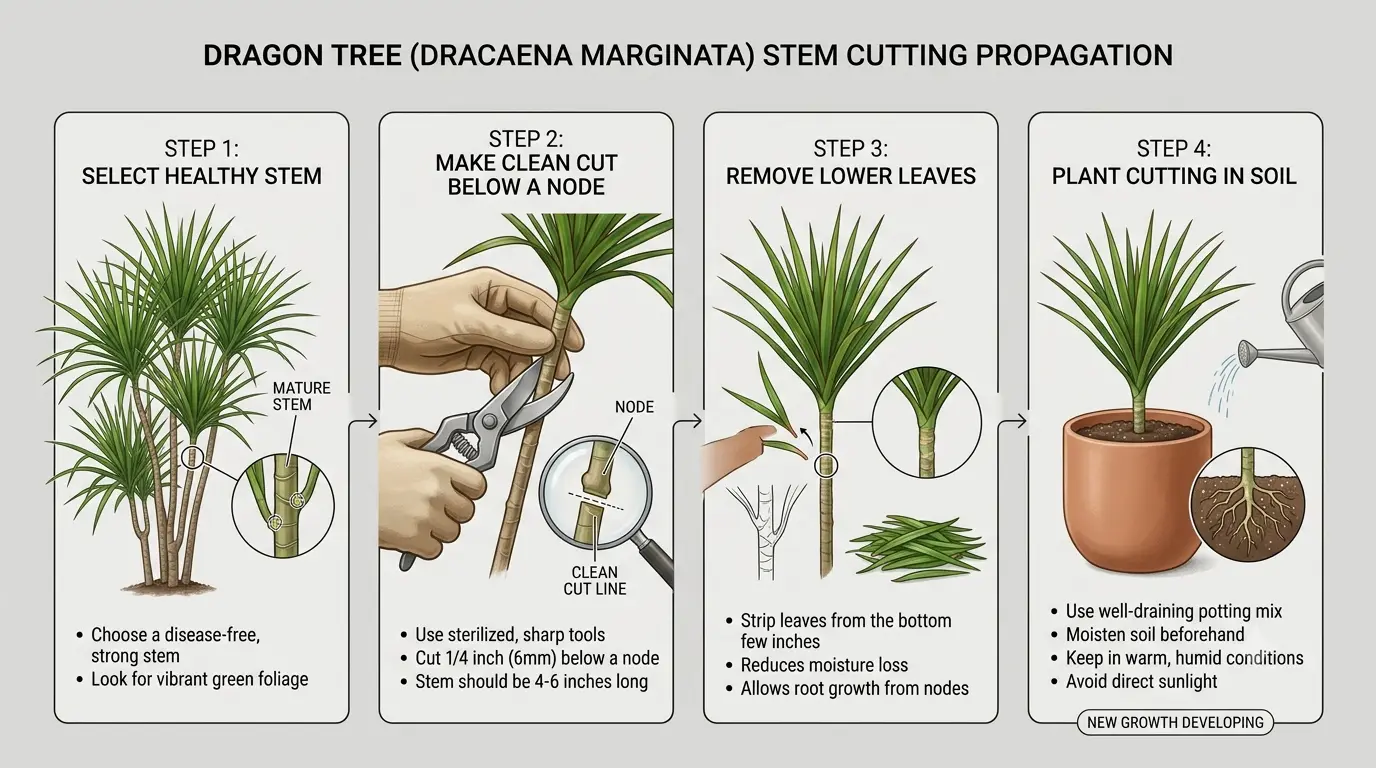
Direct soil propagation allows the cutting to develop roots in its final growing medium.
Materials needed:
- Clean pruning shears
- Healthy dragon tree stem cutting
- Well-draining potting mix
- Small container with drainage holes
- Optional rooting hormone
Steps:
- Cut a healthy stem section and allow the cut surface to dry briefly.
- Dip the end in rooting hormone if desired.
- Place the cutting into moist, well-draining soil.
- Keep humidity slightly higher while roots develop.
- Avoid keeping the soil constantly wet.
An orchid potting mix is usually not ideal for dracaena because it may not provide the balanced moisture retention needed. A regular well-draining houseplant mix works better. Dragon trees do not require deep pots; moderate depth with good drainage is more important.
Can You Propagate Dragon Tree from a Leaf?
No, dragon trees cannot be propagated from a single leaf. Unlike some succulents and tropical plants, Dracaena marginata requires a section of stem containing nodes to produce new roots and shoots. This is a common point of confusion because some houseplants can skip stem cuttings entirely. For a full breakdown of which species allow leaf-only propagation and which require nodes, the Houseplant Propagation Method Database on Notion organizes each method by plant type for easy comparison.
A leaf placed in water or soil will not develop into a new dragon tree. To propagate successfully, use stem cuttings rather than individual leaves.
How to Propagate Dragon Tree from Seed
Seed propagation is possible but uncommon for Dracaena marginata. It is more associated with species like Dracaena draco. Seeds require warm temperatures, consistent moisture, and patience because germination can take several weeks or months.
For most home growers, stem propagation is faster and more reliable than growing dragon trees from seed.
Best Time to Propagate Dracaena
The best time to propagate dracaena is during spring and summer when the plant is actively growing. Warm temperatures and increased daylight encourage faster root formation. Seasonal changes influence how quickly indoor plants grow and recover after pruning or propagation. Learn more about this relationship in our guide on How Does Season Affect Indoor Plant Growth.
Cuttings can sometimes be taken in September, especially in warm climates, but cooler temperatures may slow rooting. Winter propagation is possible indoors but usually takes longer.
How Long Does It Take to Root and Grow a Dragon Tree Cutting?
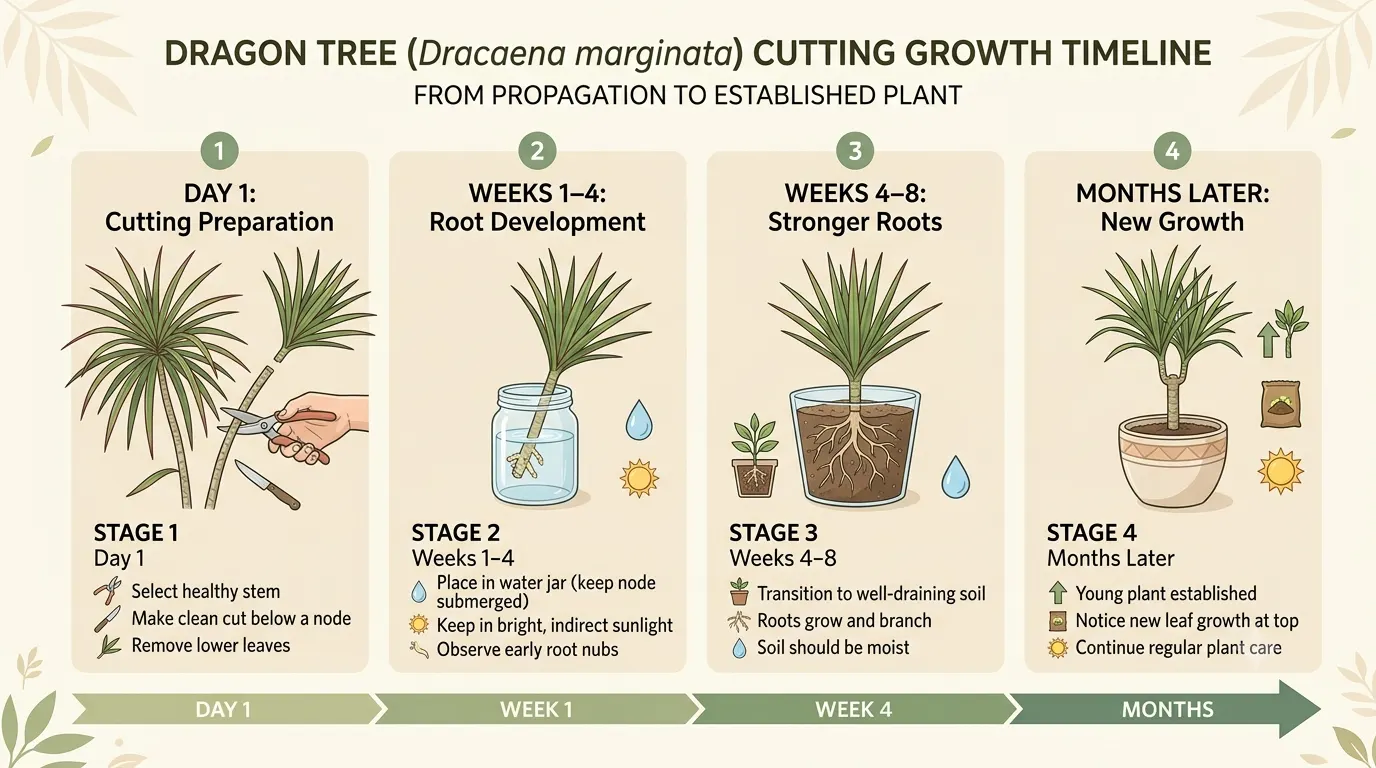
Dragon tree cuttings usually take about 4–8 weeks to develop roots. Water propagation often allows easier observation, while soil propagation may produce stronger early root systems. Rooting time varies significantly by species, so if you’re propagating multiple plants at once and want to track expectations, the houseplant propagation reference sheet lists rooting duration alongside ideal temperature for each plant in one glanceable table.
Rooting speed depends on:
- Temperature and warmth
- Amount of indirect light
- Humidity levels
- Cutting health
- Water or soil quality
Dragon trees grow slowly to moderately after rooting. New shoots may appear within months, but reaching mature size requires years.
What Helps Cuttings Root Faster?
Dragon tree cuttings root faster when they receive stable warmth, proper moisture, and suitable light conditions.
Helpful practices include:
- Using rooting hormone to encourage root development
- Keeping temperatures between 65–80°F (18–27°C)
- Providing bright indirect light
- Maintaining moderate humidity
- Avoiding overwatering
A humidity dome or clear plastic covering can help reduce moisture loss while roots develop.
Common Mistakes to Avoid When Propagating Dragon Tree
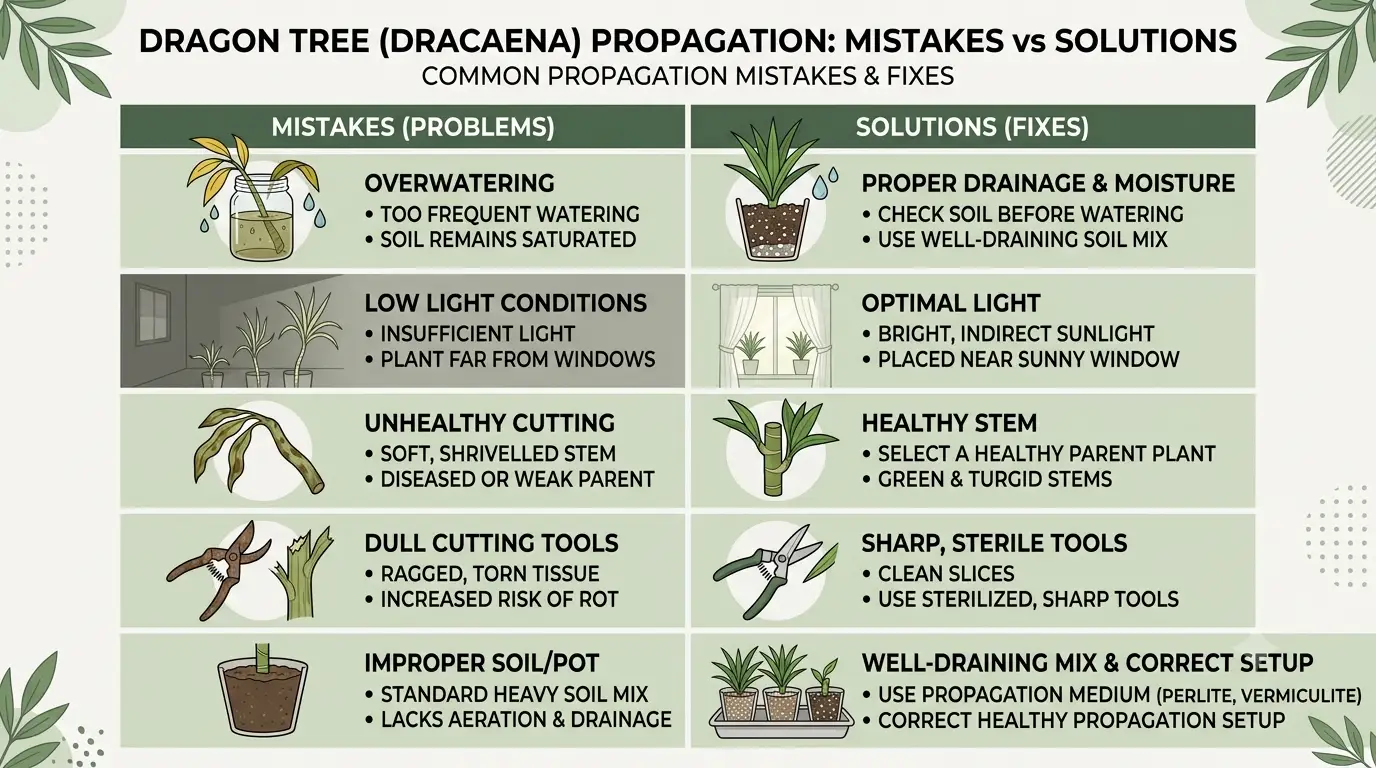
Common propagation mistakes can prevent successful rooting.
Top mistakes and solutions:
- Using unhealthy cuttings: Choose firm, disease-free stems.
- Overwatering soil cuttings: Keep soil lightly moist, not saturated.
- Using dull tools: Clean, sharp tools reduce damage and infection risk.
- Low light conditions: Provide bright indirect light.
- Propagating during cold periods: Warm seasons produce better results.
Common Problems with Dragon Trees
Dragon trees are generally easy to care for, but several issues can affect growth.
Common problems include:
- Yellow leaves caused by overwatering or natural aging
- Root rot from poor drainage
- Pest problems such as spider mites or scale insects
- Slow growth caused by insufficient light
Why Are My Dragon Tree Cuttings Not Rooting or Growing Slowly?
Dragon tree cuttings may fail to root because of poor moisture control, low temperatures, weak cuttings, or inadequate light. Using fresh healthy stems, proper drainage, and warm conditions usually improves success.
Dragon Tree Care After Propagation
Once rooted, young dragon trees need consistent care to establish healthy growth. Like other Dracaena species, dragon trees benefit from similar indoor care practices, including proper lighting, watering balance, and well-draining soil. For more details on caring for related varieties, see our Dracaena fragrans Care Guide: Complete Indoor Growing Tips.
Watering, Light, and Soil Needs
Dragon trees prefer bright indirect light but can tolerate moderate indoor light. Water when the top few inches of soil become dry, avoiding constantly wet roots.
Ideal conditions include:
- Well-draining soil
- Moderate watering
- Warm indoor temperatures
- Protection from harsh direct sunlight
Fertilizing a Dragon Tree (Is Miracle-Gro Good for Dracaena?)
Yes, diluted balanced fertilizers such as Miracle-Gro can be used for established dracaena plants. However, new cuttings should not be heavily fertilized until roots are developed. Over-fertilizing can damage young roots.
Dragon Tree Growth Rate and Lifespan
Dragon tree growth rate is generally slow to moderate. Indoor plants often grow several inches per year depending on light, temperature, and care quality. Understanding the growth habits of different Dracaena varieties can help indoor growers provide better conditions. Another popular indoor species is covered in our Dracaena Deremensis Plant Care Guide for Indoors.
Plant Size
Indoor dragon trees commonly reach 6–10 feet tall, although size depends on pot space and growing conditions. Outdoor specimens in suitable climates can become much larger.
Factors affecting size include:
- Light availability
- Root space
- Temperature
- Pruning practices
Growth Rate
Dragon trees grow actively during spring and summer and slow down during winter. Better light, appropriate watering, and enough root space encourage healthier growth.
With proper care, a Dracaena plant can live for several decades indoors, making it a long-lasting houseplant.
Transplanting and Repotting Propagated Dragon Trees
Propagated dragon trees are ready for transplanting when roots are several inches long and the cutting shows new growth. Move water-rooted cuttings gradually into soil to reduce stress.
Choose a pot slightly larger than the root system and use fresh, well-draining soil. Avoid oversized pots because excess soil can hold moisture and increase root rot risk.
Conclusion
Learning how to propagate dragon tree is achievable through simple stem-cutting methods in water or soil. Dracaena marginata propagation works best when healthy cuttings are taken during spring or summer and given proper moisture, warmth, and indirect light. Avoiding common mistakes such as overwatering and poor drainage improves success. With the right cutting, timing, and ongoing care, growers can successfully create new dragon trees at home.
Frequently Asked Questions
Can you propagate dragon tree cuttings?
Yes, dragon tree cuttings can be propagated using healthy stem sections placed in water or soil. Stem cuttings containing nodes are required for successful root development.
Can I cut the top off of my dracaena plant and replant that?
Yes, the top section of a dracaena can be cut and replanted. Top cuttings often root successfully when placed in water or well-draining soil.
How do you root dracaena in water?
To root dracaena in water, place a healthy stem cutting with a node into clean water and keep it in bright indirect light. Replace the water regularly until roots develop.
What is the best time to propagate dracaena?
The best time to propagate dracaena is spring or summer because the plant is actively growing and roots form faster in warm conditions.
Can dracaena grow in just water long-term?
Dracaena can survive in water temporarily, but long-term growth is usually healthier when the rooted cutting is transferred into nutrient-rich, well-draining soil.
What is the lifespan of a Dracaena plant?
A Dracaena plant can live for several decades indoors when provided with suitable light, watering, and soil conditions.
Why is my dragon tree cutting not rooting?
A dragon tree cutting may not root because of cold temperatures, poor light, unhealthy stems, excessive moisture, or incorrect propagation timing. Improving these conditions can encourage root growth.