
Introduction
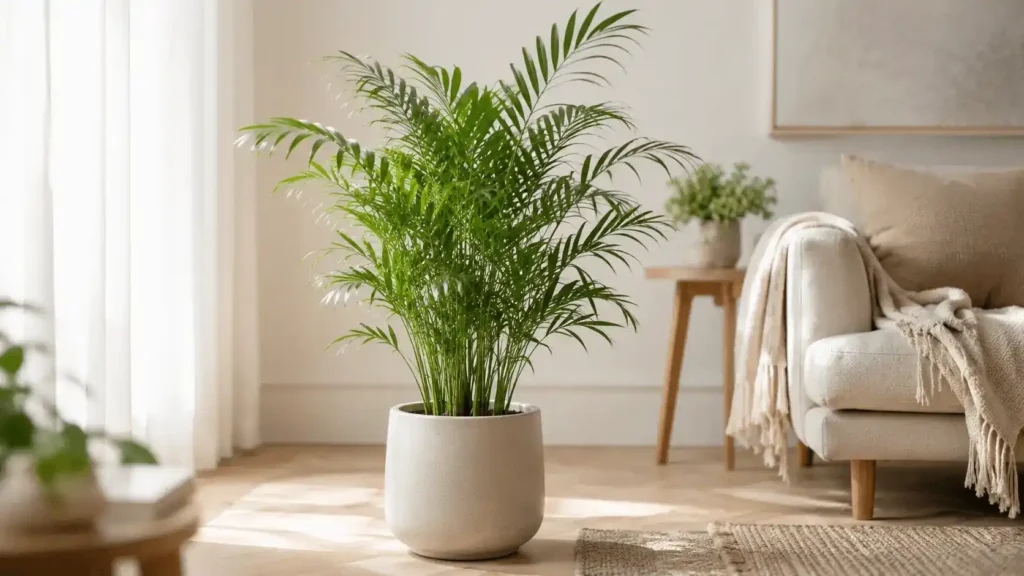
The issue of chamaedorea elegans dry leaves is one of the most common concerns for indoor plant owners growing Chamaedorea elegans (parlor palm / parlour palm). This tropical indoor plant is generally easy to maintain, but its leaves can turn dry, brown, or yellow when environmental or care conditions are not ideal.
Dry leaves are not just a cosmetic issue—they signal plant stress caused by watering imbalance, humidity problems, soil issues, or inadequate light. Understanding these symptoms helps prevent long-term damage and restore healthy growth in indoor environments. Chamaedorea elegans, commonly known as the parlor palm, is a species of palm native to tropical rainforests. More botanical details can be found on Wikipedia.
Quick Summary
- Dry leaves on Chamaedorea elegans usually result from watering imbalance, low humidity, or poor soil conditions
- Browning and yellowing leaves are early warning signs of environmental stress
- Proper indoor care, including humidity control and correct watering, can reverse most issues
- Root health and soil quality are key to preventing recurring leaf dryness
Understanding Chamaedorea Elegans Dry Leaves
What chamaedorea elegans dry leaves indicate in indoor environments
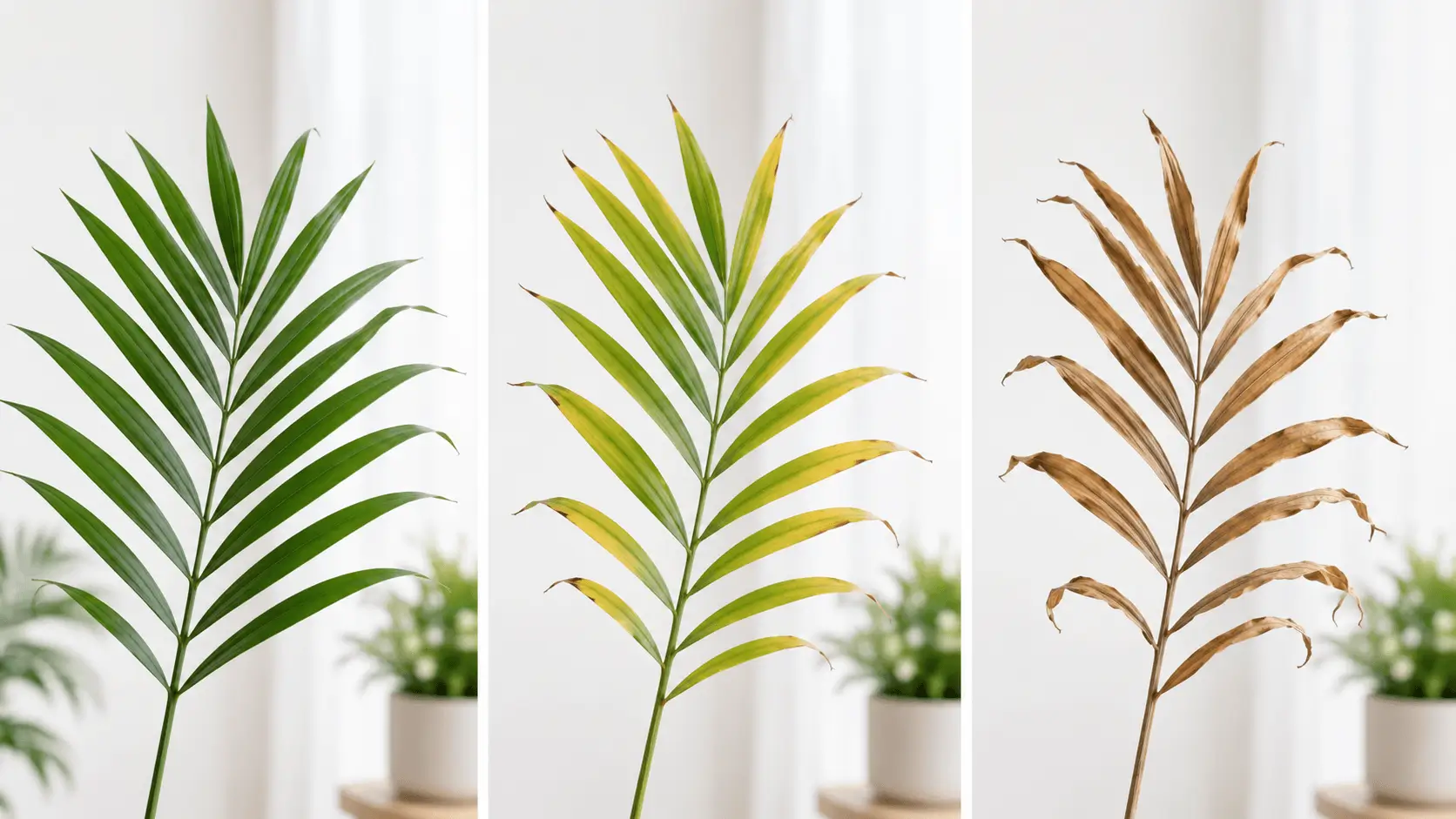
Dry leaves in Chamaedorea elegans indicate environmental stress, usually caused by moisture imbalance, low humidity, or nutrient disruption. Indoors, this often happens because conditions are less stable than the plant’s natural tropical habitat.
Difference between natural leaf aging vs stress-induced dryness
Natural leaf aging affects older, lower leaves that gradually yellow and dry out. Stress-induced dryness appears across multiple leaves at once and often starts at the tips or edges.
Role of humidity, watering, and soil in leaf dehydration
Low humidity increases water loss, while improper watering disrupts hydration balance. Poor soil restricts root function, increasing dehydration risk.
Why chamaedorea elegans indoor care directly affects leaf health
Because this plant depends on stable moisture and humidity, even small indoor changes can directly impact leaf texture, color, and vitality.
Why Parlor Palm Leaves Turn Brown and Dry
Parlor palm leaves turning brown and dry due to low humidity
Low indoor humidity is a major cause of crispy brown leaf tips, especially in heated or air-conditioned rooms.
Overwatering or underwatering leading to dry leaf edges
Both conditions stress roots—overwatering reduces oxygen flow, while underwatering causes dehydration.
Salt buildup in soil affecting root absorption
Mineral salts from tap water or fertilizers accumulate in soil and reduce water uptake efficiency.
Indoor heating and air conditioning effects
Artificial heating and cooling systems reduce humidity levels, increasing leaf dryness.
Link between parlor palm problems and leaf dehydration
Most dryness issues are ultimately linked to moisture imbalance between soil, roots, and surrounding air.
Watering Needs and Moisture Balance
How often to water chamaedorea elegans for healthy leaves
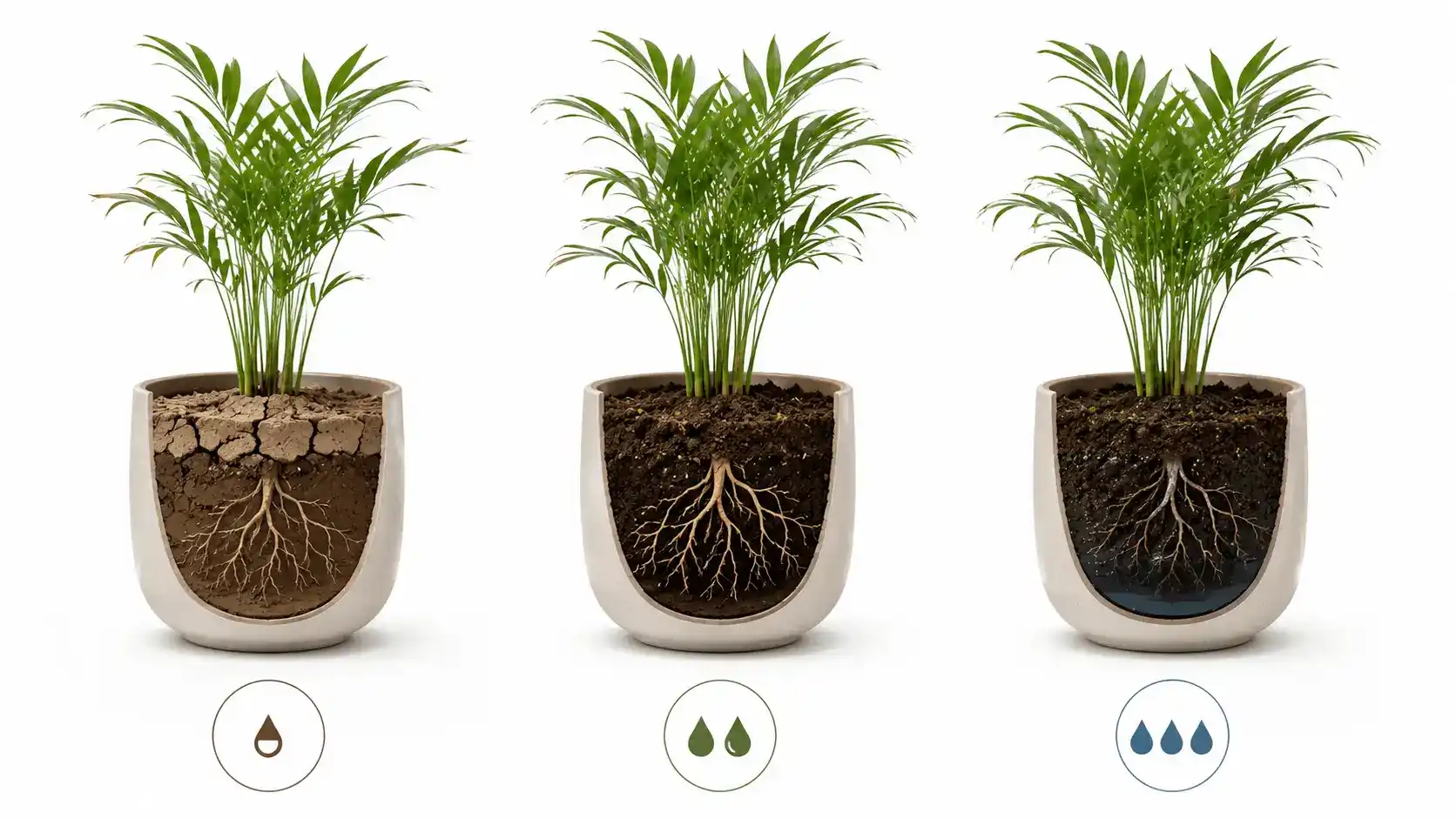
Water when the top 2–3 cm of soil feels dry, usually every 7–10 days depending on indoor conditions.
Signs of improper watering
- Dry leaf tips indicate underwatering or low humidity
- Yellowing before drying suggests overwatering
- Wilting stems show inconsistent moisture supply
Relationship between watering imbalance and drying out
Irregular watering disrupts root hydration cycles, leading to gradual leaf dehydration.
Preventing dry leaves through moisture balance
Maintain evenly moist soil—not soggy or bone dry—to support stable hydration.
Like many tropical houseplants such as Peperomia Rotundifolia Care Guide, balanced moisture is essential to prevent leaf dehydration.
Soil Requirements for Healthy Growth
Importance of proper soil composition
A balanced soil mix ensures drainage and moisture retention are both maintained for root health.
Well-draining soil mix requirements
A mix of peat, perlite, and organic matter supports airflow and prevents waterlogging.
Effects of compacted soil on root oxygen flow
Compacted soil limits oxygen availability, weakening roots and increasing leaf dryness.
Link between poor soil and brown leaves
Poor drainage leads to root stress, which directly results in browning and drying foliage.
Role of aeration in preventing root stress
Good aeration improves oxygen exchange and supports healthier root systems.
Light and Indoor Environment Conditions
Is Chamaedorea elegans an indoor plant?
Yes, it is a low-light tolerant indoor palm suited for shaded environments.
Do parlor palms need a lot of light?
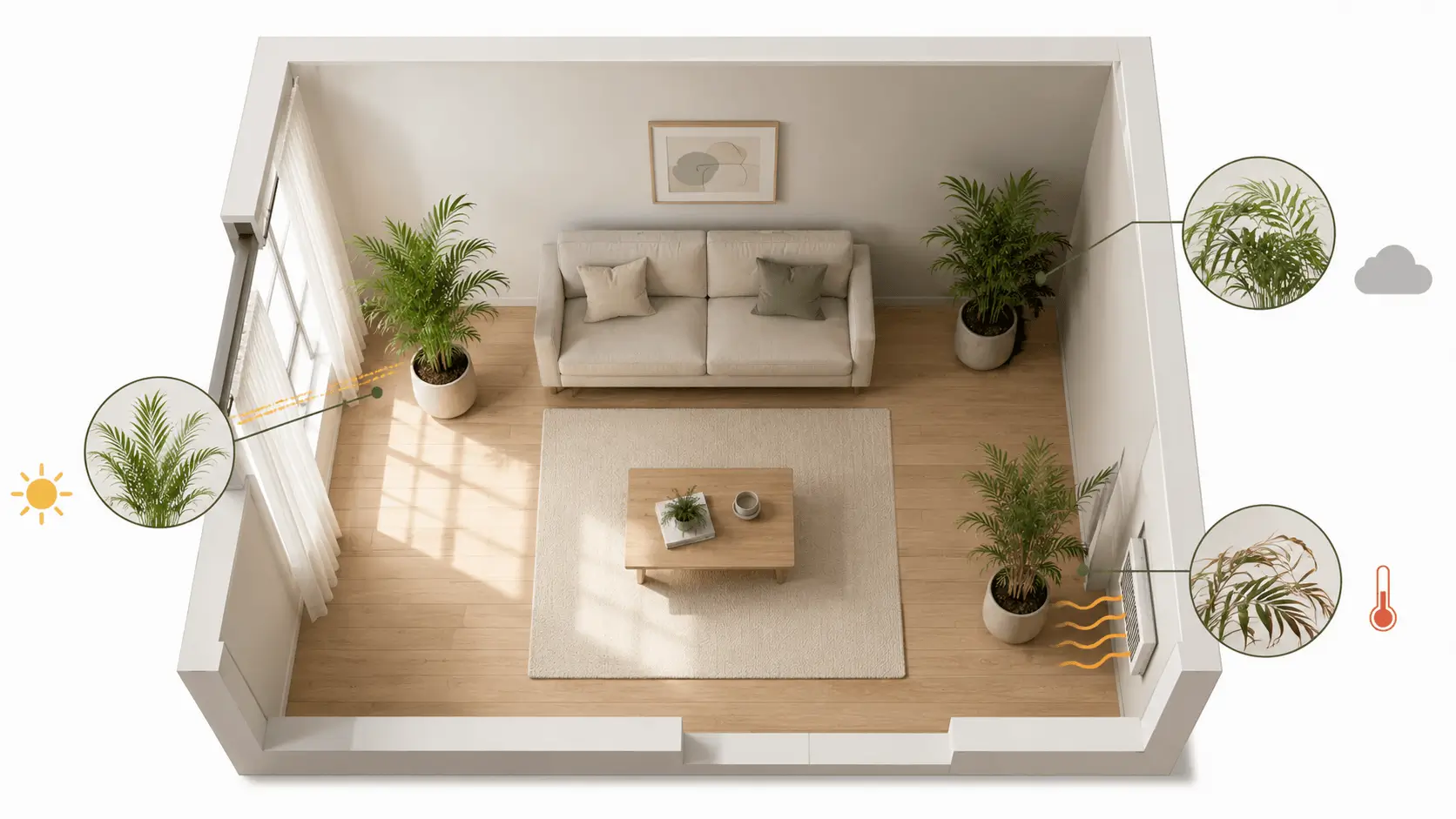
They prefer moderate indirect light and should be protected from direct sunlight.
Effects of low light on yellow leaves
Low light reduces photosynthesis, leading to weak, yellowing foliage.
Heat stress and dry indoor air impact
Excess heat increases transpiration and accelerates leaf dehydration.
Ideal placement for stable growth
Place near filtered natural light, away from heaters and AC vents.
Plants such as Alocasia Amazonica Care Indoors also react strongly to low light and dry air, making placement a critical factor.
Diagnosing Yellow, Brown, and Dry Leaves
Yellowing and dry leaves as early stress signals
Yellowing often indicates early stress from watering or light imbalance.
Brown dry leaves vs natural aging
Natural aging affects older leaves, while stress causes widespread browning.
Nutrient imbalance and yellow leaves
Low nitrogen or poor feeding leads to pale, weak foliage.
Brown tips caused by dry air or fluoride
Low humidity and fluoride in tap water often cause burnt leaf tips.
Early signs of dying leaves
Curling, fading color, and brittle texture indicate declining health.
Even low-maintenance plants like ZZ Plant Growing Guide can show yellowing when environmental stress is present.
Indoor Care Guide for Chamaedorea Elegans
Core care essentials
Stable humidity, indirect light, and consistent watering are essential.
Step-by-step care routine
- Provide indirect light
- Water when topsoil dries slightly
- Maintain moderate humidity
- Avoid sudden temperature changes
Care consistency importance
Stable routines prevent stress-related leaf damage.
Temperature and airflow role
Stable temperature and gentle airflow reduce moisture loss.
Maintaining stable humidity is also important for many indoor plants like Begonia Maculata Care Guide, which shows similar sensitivity to dry indoor air conditions.
Propagation and Misconceptions About Dry Leaves
Propagation basics
This plant is propagated mainly through seeds.
Dry leaves misconception
Dry leaves are a stress symptom, not part of propagation.
Proper propagation method
Seed germination in soil is the only reliable method.
Water propagation misunderstanding
Water propagation is not suitable for this species.
Water Propagation and Indoor Experiments
Chamaedorea elegans in water
The plant cannot sustain long-term growth in water alone.
Limitations of water propagation
Lack of nutrients and structure prevents proper development.
Why dry leaves appear in experiments
Stress from unsuitable conditions leads to dehydration symptoms.
Stress vs rooting activity
Dry leaves indicate stress, not successful rooting.
Safe propagation method
Only soil-based seed propagation is recommended.
Potting, Soil Mix, and Container Size
Best pot type
A pot with drainage holes is essential for root health.
Ideal pot size
A medium-sized pot prevents overwatering and overcrowding.
Soil mix recipe
Peat, perlite, and compost ensure balanced moisture control.
Container size impact
Wrong pot size can cause water imbalance and leaf stress.
Root-bound stress
Root-bound plants struggle to absorb water, causing dryness.
Growth Rate and Plant Longevity
Growth pattern
It is a slow-growing indoor palm with steady development.
Lifespan indoors
With proper care, it can live for many years.
Environmental influence
Light, humidity, and soil directly affect growth speed.
Slow growth and stress signals
Slow growth makes stress symptoms more visible in leaves.
Hidden Causes of Dry Leaves
Tap water mineral buildup
Fluoride and salts reduce nutrient absorption and cause browning.
Seasonal humidity changes
Winter air dryness increases leaf dehydration risk.
Fertilizer overuse
Excess fertilizer burns roots and causes brown tips.
Root rot paradox
Wet soil with damaged roots still leads to dry leaves.
Airflow imbalance
Poor airflow creates uneven microclimates and stress zones.
Plants with delicate foliage, such as Plants with Soft Velvety Leaves Guide, often display early stress symptoms similar to parlor palms.
Problem–Solution Guide for Parlor Palm Problems
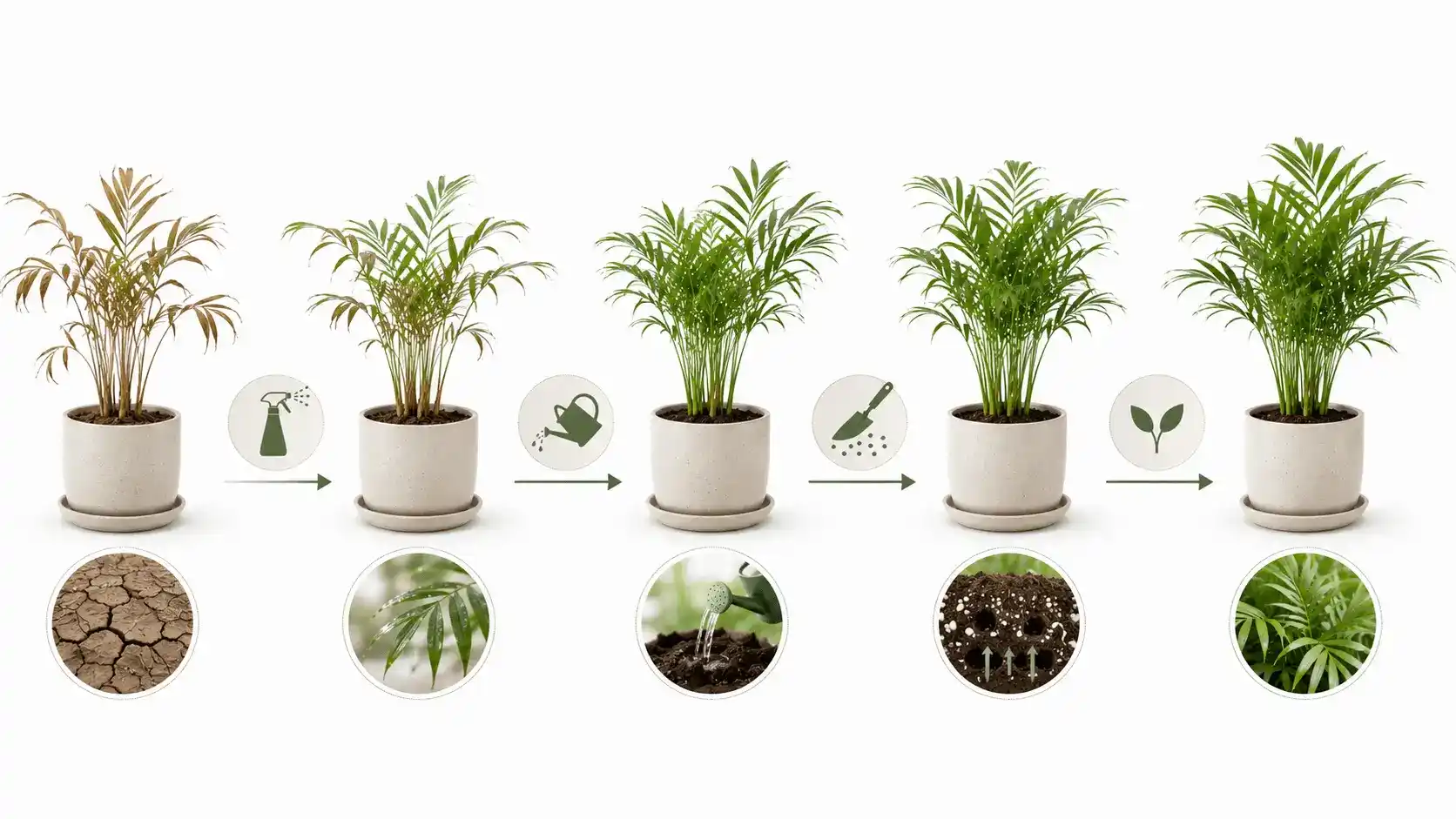
Overwatering
Caused by frequent watering and poor drainage. Fix by reducing watering and improving soil aeration.
Underwatering
Caused by dry soil neglect. Fix by gradual rehydration and monitoring moisture.
Yellowing leaves
Caused by nutrient or light imbalance. Fix by adjusting feeding and light conditions.
Brown tips and dry edges
Caused by low humidity or mineral buildup. Fix by increasing humidity and using filtered water.
Slow growth and dying leaves
Caused by root stress. Fix by repotting and improving environment.
Some indoor plants like House Plants with Waxy Leaves Guide naturally resist moisture loss better than parlor palms.
Differentiation — Parlor Palm vs Similar Indoor Palms
Comparison with other indoor palms
Chamaedorea elegans is more humidity-sensitive than many palms.
Humidity sensitivity
It reacts faster to dry air than most indoor species.
Leaf dryness response
Shows earlier browning compared to other palms.
Beginner adaptability
Easy to grow but requires stable conditions.
Unique indoor plant status
Its low-light tolerance makes it highly popular indoors.
Conclusion
Chamaedorea elegans dry leaves are a clear indicator of environmental or care-related stress rather than permanent damage. Most issues can be reversed by correcting watering habits, improving humidity, ensuring proper soil, and maintaining stable indoor conditions. With consistent care, the parlor palm can recover and continue producing healthy green foliage. For more in-depth plant care insights and related indoor plant guides, explore our main resource on Plants Benefits and Guides covering complete indoor plant care strategies.
FAQs
Why are my chamaedorea elegans dry leaves turning yellow?
Yellowing is usually caused by overwatering, low light, or nutrient imbalance.
How often should I water chamaedorea elegans?
Water when the topsoil is slightly dry, typically every 7–10 days.
Why do parlor palm leaves turn brown and dry?
Low humidity, underwatering, and salt buildup are the most common causes.
Is chamaedorea elegans an indoor plant?
Yes, it is a popular low-light indoor palm.
Can dry leaves on parlor palm recover?
No, damaged leaves do not recover, but new growth replaces them.
What causes brown tips on parlour palm leaves?
Dry air, fluoride in water, or inconsistent watering.
How do I fix parlor palm leaves drying out?
Improve humidity, adjust watering, and ensure proper soil drainage.