
Introduction
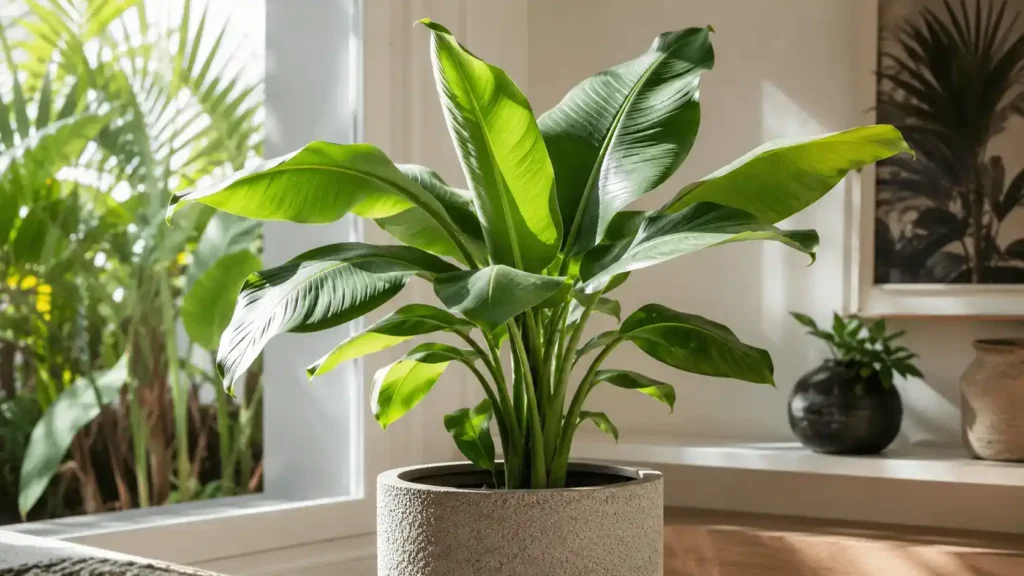
Musa Tropicana is a compact ornamental banana plant valued for its lush tropical foliage and manageable size. Botanically classified as Musa acuminata ‘Tropicana’, it belongs to the banana family and is commonly grown as both a houseplant and an outdoor specimen in suitable climates. Unlike large banana plants that can dominate a garden, Musa Tropicana remains relatively compact, making it a practical choice for patios, conservatories, and indoor growing spaces. Its attractive leaves, straightforward care requirements, and adaptability have made it increasingly popular among home gardeners and tropical plant enthusiasts seeking a bold foliage plant without the space demands of full-sized banana varieties. Like many popular indoor plants such as Spider Plant, Musa Tropicana is valued for its lush greenery and ability to enhance indoor tropical aesthetics.
Quick Summary
- Musa Tropicana is a compact, ornamental banana plant suitable for indoor and outdoor growing.
- Mature plants typically reach 1–2 metres in height depending on growing conditions.
- Bright indirect light, consistent moisture, and well-draining soil support healthy growth.
- Fruit production is possible but uncommon in indoor environments.
- Musa Tropicana is generally considered non-toxic to cats and other household pets.
What Is Musa Tropicana?
Musa Tropicana is a compact cultivar of Musa acuminata grown primarily for its decorative foliage rather than fruit production. It belongs to the Musaceae family, the same botanical family that includes edible banana plants cultivated worldwide. Musa Tropicana belongs to the Musa genus within the Musaceae family, a classification documented by leading botanical authorities such as the Royal Botanic Gardens, Kew.
The plant is often marketed under several similar names, including tropicana banana plant, banana tropicana plant, and musa banana plant. In most cases, these names refer to the same ornamental cultivar.
Unlike large commercial banana varieties, Musa Tropicana is selected for compact growth, making it more suitable for container cultivation and indoor environments. Its broad green leaves create a tropical appearance that fits well in homes, patios, conservatories, and sheltered gardens.
How Does Musa Tropicana Differ from Other Banana Plants?
Musa Tropicana differs from many banana plants because of its compact size and ornamental purpose. Standard banana species can reach several metres in height and often require significant space to grow successfully.
Key differences include:
- Smaller mature size
- Better suitability for containers
- Easier indoor cultivation
- Primarily grown for foliage
- Less emphasis on fruit production
These characteristics make Musa Tropicana a practical option for gardeners who want a tropical-looking plant without managing a full-sized banana tree.
Musa Tropicana Size and Height
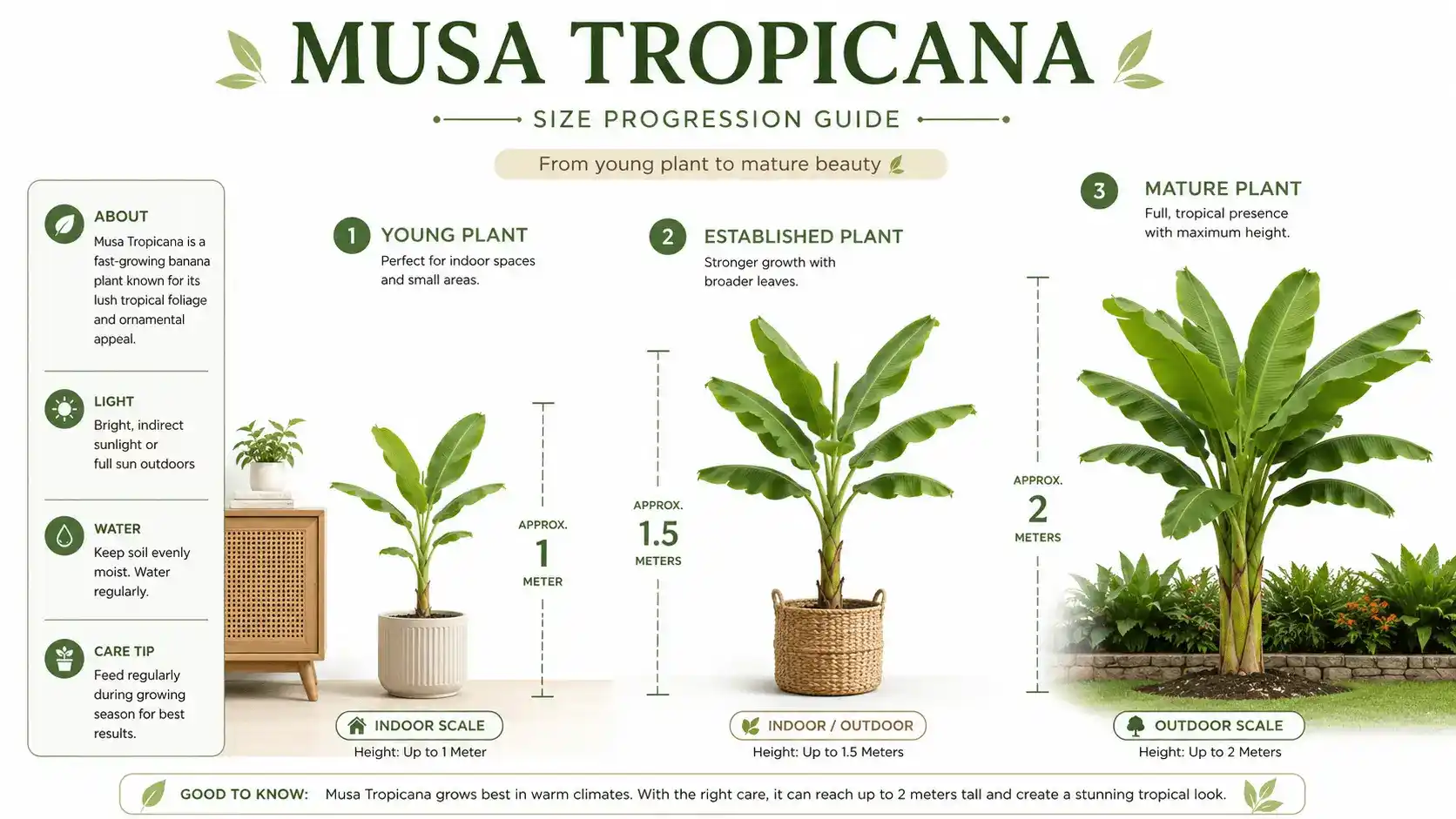
Musa Tropicana typically reaches between 1 and 2 metres in height at maturity. Indoor specimens generally remain smaller than outdoor plants due to environmental limitations such as light levels, root space, and humidity.
The plant develops a moderate leaf spread, producing broad tropical foliage that contributes significantly to its visual appeal.
| Growth Factor | Indoor | Outdoor |
| Typical height | 1–1.5 m | 1.5–2+ m |
| Leaf spread | Moderate | Wide |
| Pot size impact | High | Low |
| Temperature sensitivity | Managed | Climate-dependent |
Environmental factors affecting Musa Tropicana height include:
- Available sunlight
- Pot size
- Soil fertility
- Water availability
- Humidity levels
- Seasonal temperatures
Plants grown in larger containers with consistent care often achieve greater height and stronger foliage development.
Musa Tropicana Growth Rate
Musa Tropicana is considered a moderate to fast-growing banana plant under favorable conditions. Growth is most active during spring and summer when temperatures are warm and daylight hours increase.
During the growing season, new leaves may emerge regularly, creating rapid visual growth. In winter, development slows considerably, particularly indoors where lower light levels reduce plant activity.
Factors that promote faster growth include:
- Bright light exposure
- Warm temperatures
- Consistent watering
- Balanced fertilization
- Adequate humidity
Poor lighting, cold temperatures, and nutrient deficiencies can significantly slow development.
Does Musa Tropicana Produce Fruit?
Yes, Musa Tropicana can produce fruit under suitable conditions, although fruiting is relatively uncommon, especially indoors.
When fruit production occurs, it generally requires:
- Several years of maturity
- Warm temperatures
- Strong light exposure
- Consistent nutrition
- Sufficient growing space
The fruit resembles small bananas and is generally considered edible. However, most home growers cultivate Musa Tropicana primarily for its foliage rather than expecting regular harvests. Indoor fruit production is rare because plants often lack the space, light intensity, and environmental stability necessary for flowering and fruit development. Banana plant cultivation and fruiting conditions are widely studied in global agricultural research, including reports and cultivation data from the Food and Agriculture Organization (FAO).
Musa Tropicana Care Guide
Watering Requirements
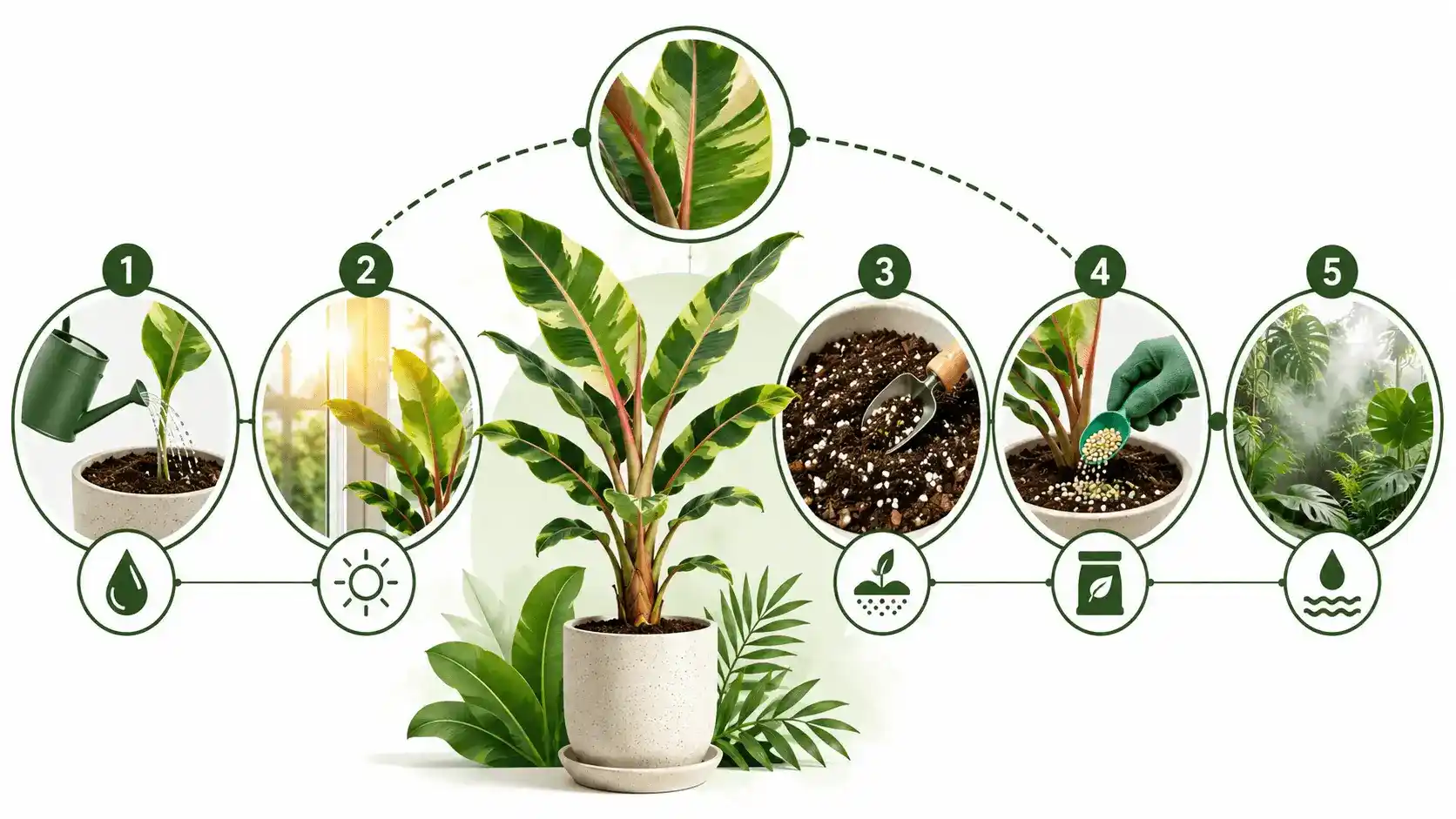
Musa Tropicana prefers consistently moist soil but should never sit in waterlogged conditions. Water when the top layer of soil begins to dry slightly while ensuring excess moisture drains freely. Similar to Japanese Money Plant care, Musa Tropicana prefers consistent moisture but should never be left in waterlogged soil.
Signs of overwatering include:
- Yellow leaves
- Soft stems
- Persistent wet soil
- Root rot symptoms
Signs of underwatering include:
- Dry soil
- Crispy leaf edges
- Wilting foliage
- Slow growth
Checking soil moisture with a finger before watering helps prevent common watering mistakes. While plants like Lucky Money Plant are often associated with Feng Shui symbolism, Musa Tropicana is mainly grown for its ornamental tropical foliage appeal.
Light Requirements
Bright indirect light is ideal for Musa Tropicana indoors. Outdoors, the plant can tolerate full sun to partial shade depending on climate conditions. Like the Zamioculcas Zamiifolia (ZZ plant), Musa Tropicana adapts well to indoor environments but performs best with brighter indirect light for healthy leaf development.
Insufficient light often results in:
- Pale foliage
- Smaller leaves
- Slow growth
- Drooping appearance
A bright south-facing or east-facing window typically provides suitable indoor lighting.
Soil and Potting
The ideal growing medium is rich, fertile, and well-draining. A quality houseplant mix amended with organic matter and drainage materials often performs well. Similar to Monstera and Ficus plants, Musa Tropicana benefits from a rich, well-draining soil mix that supports strong root development.
Important soil characteristics include:
- Good drainage
- Moisture retention
- Slight acidity
- Organic content
Containers should always include drainage holes to reduce the risk of root rot.
Fertilization
Musa Tropicana benefits from regular feeding during active growth periods.
General fertilization recommendations include:
- Balanced NPK fertilizer
- Feeding every 2–4 weeks during spring and summer
- Reduced feeding during winter dormancy
Signs of nutrient deficiency may include yellowing foliage, reduced leaf size, and slower growth.
Temperature and Humidity
As a tropical plant, Musa Tropicana performs best in warm environments. Like Dracaena fragrans, Musa Tropicana prefers stable indoor temperatures and should be protected from cold drafts and sudden temperature drops.
Preferred conditions include:
- Temperatures between 18°C and 30°C
- Moderate to high humidity
- Protection from cold drafts
The plant has limited frost tolerance. Exposure to freezing temperatures can severely damage foliage and roots. Higher humidity levels help maintain healthy leaves and reduce browning at the edges.
Pruning and Maintenance
Routine maintenance mainly involves removing damaged or aging leaves.
Best practices include:
- Pruning dead foliage
- Removing yellow leaves
- Cleaning leaves periodically
- Monitoring for pests
The central growing stem should generally remain intact unless the plant has completed a fruiting cycle.
Musa Tropicana Indoors vs Outdoors
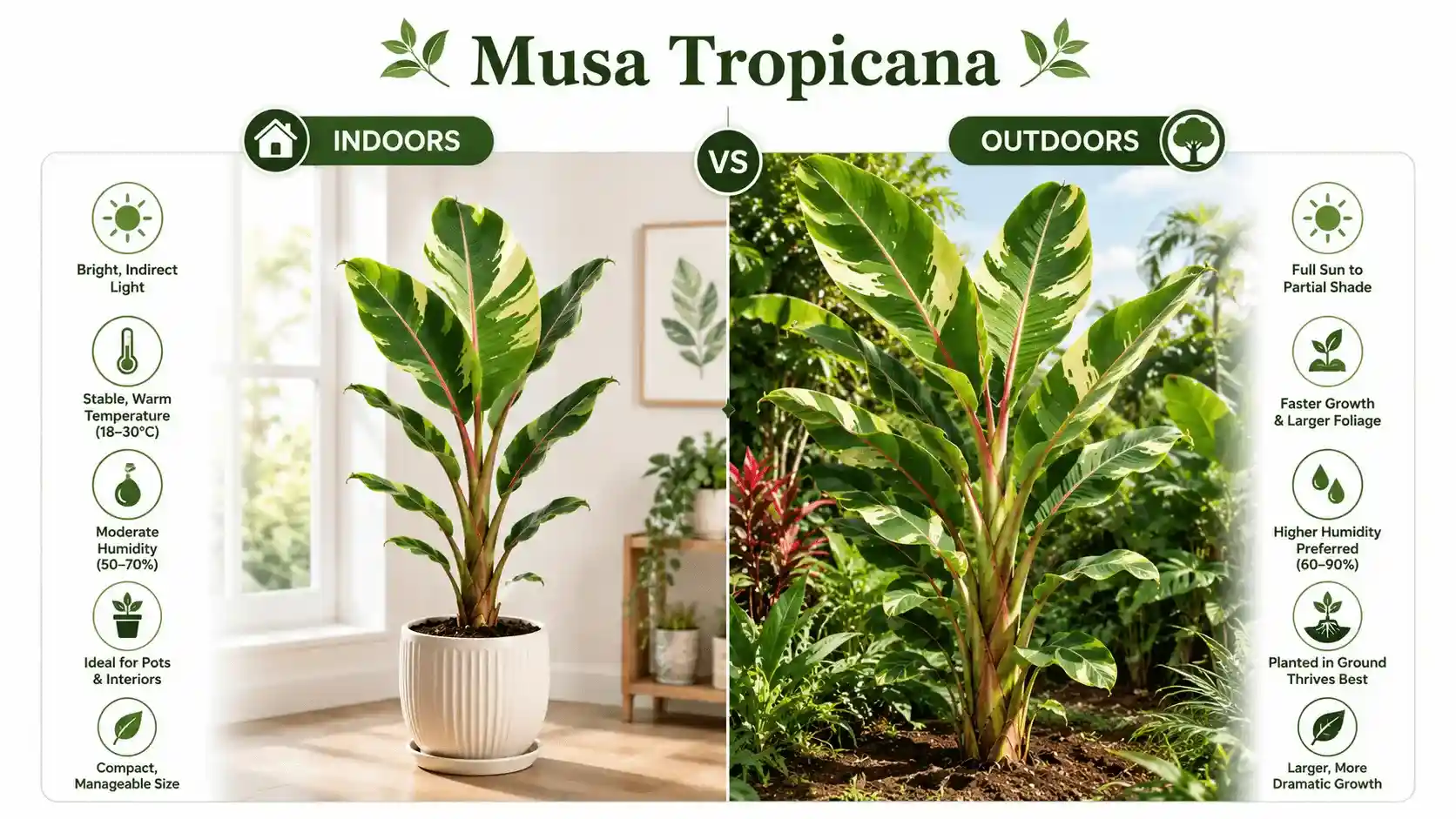
Musa Tropicana performs well in both indoor and outdoor environments when its basic requirements are met.
| Consideration | Indoors | Outdoors |
| Light availability | Requires bright window or grow light | Full sun preferred |
| Growth potential | More limited | Larger leaves and height |
| Winter care | Low maintenance | Needs frost protection |
| Humidity control | Manual (misting/humidifier) | Natural in warm climates |
Gardeners in temperate regions often move outdoor specimens indoors before the first frost to prevent cold damage. Similar to Elephant Ear plants, Musa Tropicana creates a bold tropical look, though it remains more compact and manageable indoors. Like Purple Heart plants, Musa Tropicana thrives in bright light conditions and adds strong visual contrast in indoor plant setups.
Musa Tropicana vs Dwarf Cavendish: Key Differences
Musa Tropicana and Dwarf Cavendish are both compact banana plants, but they differ in several important ways.
| Feature | Musa Tropicana | Dwarf Cavendish |
| Mature height | 1–2 m | 2–3 m |
| Primary use | Ornamental | Ornamental + fruit |
| Indoor suitability | High | Moderate |
| Fruit production | Rare indoors | More likely |
| Leaf appearance | Broad, tropical | Broad, green |
Super Dwarf Cavendish and other dwarf banana varieties often focus more heavily on fruit production, whereas Musa Tropicana is typically selected for decorative foliage and compact growth.
Is Musa Tropicana Safe for Cats?
Yes, Musa Tropicana is generally considered non-toxic to cats. This makes it a safer choice than many tropical houseplants commonly grown indoors. However, non-toxic does not mean risk-free.
If a cat consumes large quantities of leaf material, mild symptoms may occur, including:
- Stomach upset
- Vomiting
- Temporary digestive discomfort
Pet owners should still discourage chewing behavior and consult a veterinarian if symptoms develop.
Common Problems and How to Fix Them
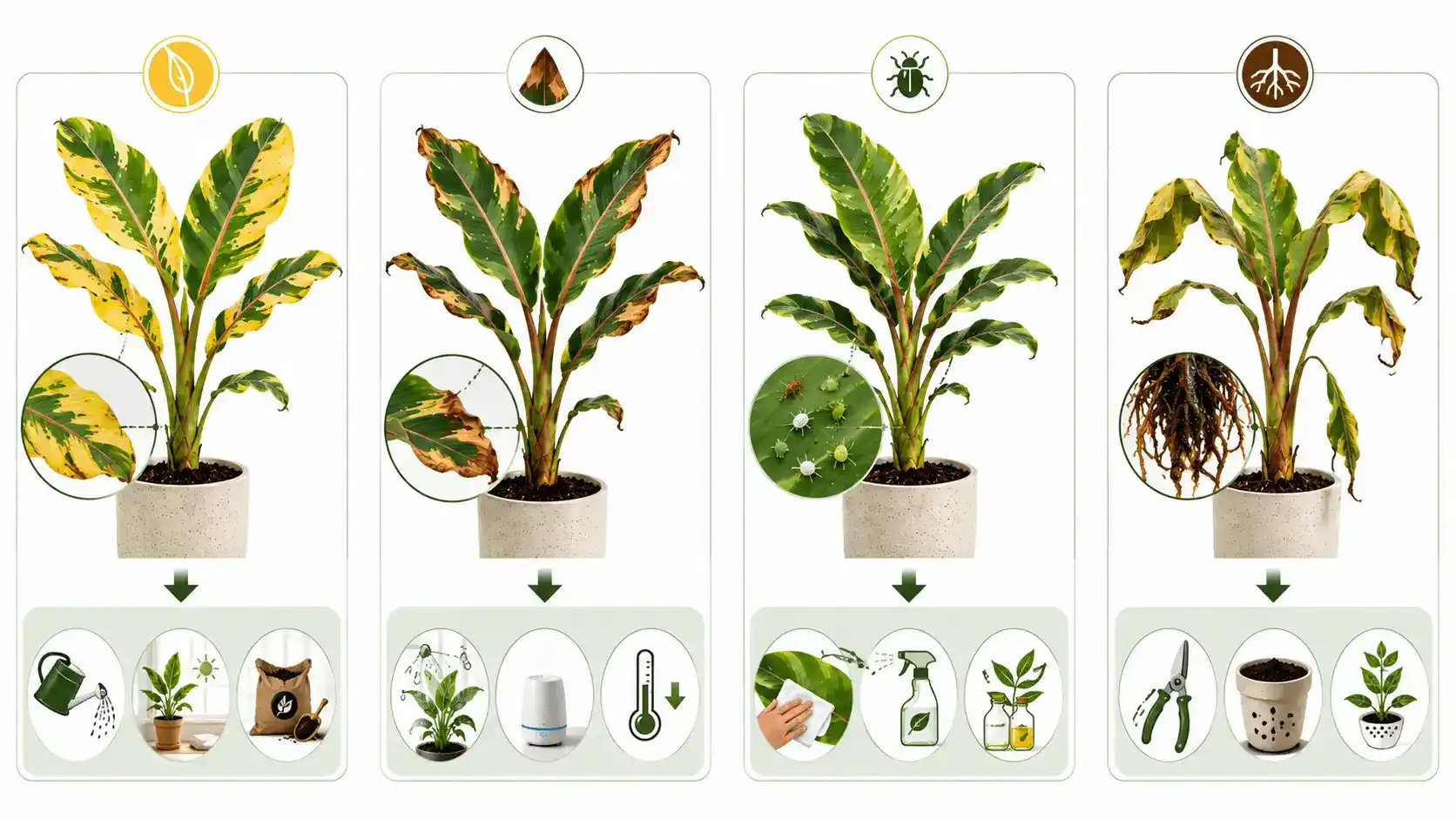
Yellowing Leaves
Why it occurs:
- Overwatering
- Low light
- Nutrient deficiency
How to fix it:
- Adjust watering frequency
- Increase light exposure
- Apply balanced fertilizer
How to prevent it:
- Monitor soil moisture
- Maintain consistent care
- Provide adequate light
Brown Leaf Tips
Why it occurs:
- Low humidity
- Underwatering
- Dry indoor air
How to fix it:
- Increase humidity
- Water consistently
- Use a humidifier if necessary
How to prevent it:
- Maintain stable humidity levels
- Avoid prolonged drought stress
Slow or Stunted Growth
Why it occurs:
- Poor lighting
- Cold temperatures
- Root-bound conditions
How to fix it:
- Move to brighter conditions
- Maintain warmth
- Repot when necessary
How to prevent it:
- Provide suitable growing conditions year-round
Pests
Common pests include:
- Spider mites
- Mealybugs
- Fungus gnats
How to fix it:
- Isolate affected plants
- Use insecticidal soap
- Improve airflow
How to prevent it:
- Inspect plants regularly
- Avoid excessive moisture
Root Rot
Why it occurs:
- Chronic overwatering
- Poor drainage
How to fix it:
- Remove affected roots
- Repot in fresh soil
- Improve drainage
How to prevent it:
- Water appropriately
- Use containers with drainage holes
Common Beginner Mistakes with Musa Tropicana
Many growing problems stem from avoidable care mistakes.
Common errors include:
- Overwatering because the plant is tropical
- Growing the plant in insufficient light
- Using containers without drainage holes
- Repotting too often or not often enough
- Expecting rapid fruit production indoors
- Exposing the plant to cold drafts
Understanding these issues early significantly improves long-term plant health. Unlike low-maintenance plants such as ZZ Plant, Musa Tropicana requires more consistent watering and humidity control to avoid stress.
Musa Tropicana Plant Varieties and Related Cultivars
Musa Tropicana belongs to the broader Musa acuminata group, which contains numerous ornamental and fruiting cultivars.
Related compact banana cultivars include:
- Musa Dwarf Tropicana
- Dwarf Cavendish
- Super Dwarf Cavendish
- Other ornamental Musa selections
These cultivars share similar tropical aesthetics while varying in mature size, fruiting potential, and growth habits. Musa Tropicana remains one of the most accessible options for growers seeking a compact ornamental banana plant.
Conclusion
Musa Tropicana is one of the most accessible and rewarding compact banana plants for home growers. Its manageable size, attractive tropical foliage, and relatively straightforward care requirements make it suitable for both indoor and outdoor cultivation. With proper watering, bright light, well-draining soil, and protection from cold temperatures, the plant can thrive for many years. Whether grown for its ornamental appeal, compared with Dwarf Cavendish varieties, or selected because of its pet-safe reputation, Musa Tropicana offers an excellent way to bring a tropical atmosphere into a home or garden setting.
Frequently Asked Questions
How tall does Musa Tropicana grow?
Musa Tropicana typically grows between 1 and 1.5 metres indoors and 1.5 to 2 metres or more outdoors. Light levels, container size, and overall growing conditions influence its final height.
Can Musa Tropicana produce fruit indoors?
Yes, Musa Tropicana can produce fruit indoors, but it is uncommon. Successful fruiting generally requires strong light, maturity, warm temperatures, and sufficient growing space.
Is Musa Tropicana toxic to cats or dogs?
No. Musa Tropicana is generally classified as non-toxic to cats and dogs. However, consuming large amounts of foliage may cause mild digestive discomfort.
How often should I water Musa Tropicana?
Water when the upper layer of soil begins to dry slightly. Frequency varies according to season, pot size, temperature, and humidity. Most plants require more frequent watering during spring and summer.
What is the difference between Musa Tropicana and Dwarf Cavendish?
Musa Tropicana is generally smaller, more ornamental, and highly suited to indoor growing. Dwarf Cavendish tends to grow larger and is more likely to produce fruit under suitable conditions.
Can Musa Tropicana grow outside in a temperate climate?
Yes, Musa Tropicana can grow outdoors during warm months in temperate regions. However, it should be protected from frost and brought indoors before temperatures approach freezing.
Why are the leaves on my Musa Tropicana turning yellow?
The most common causes are overwatering, insufficient light, and nutrient deficiencies. Evaluating these factors and correcting care conditions typically resolves the issue.