
Introduction
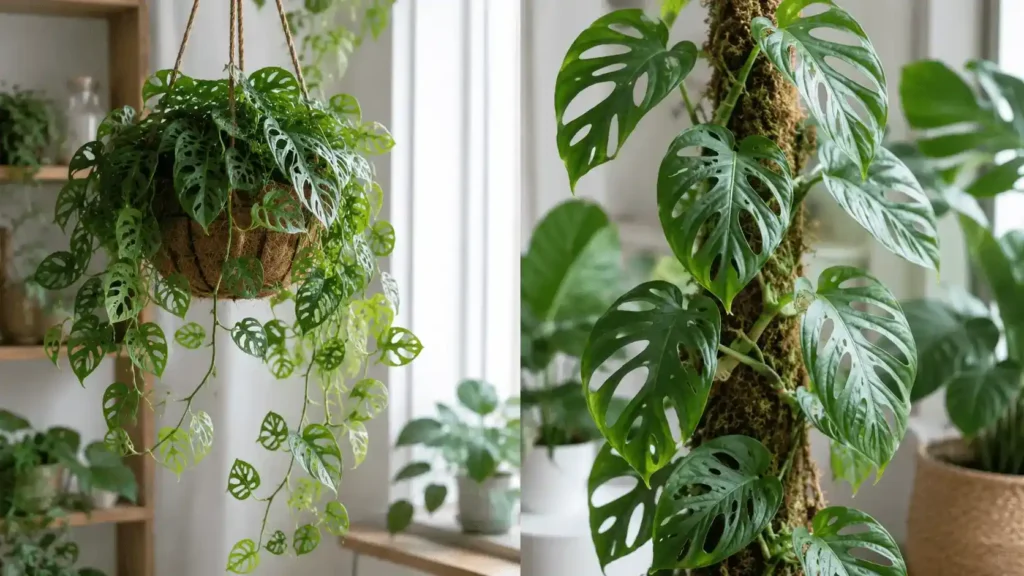
Monstera adansonii hanging or climbing is one of the most common questions asked by indoor plant enthusiasts. Known as the swiss cheese vine because of its distinctive perforated foliage, Monstera adansonii is a tropical vining plant that can either trail gracefully from a hanging basket or climb vertically with support. Both growing methods are successful indoors, but they produce noticeably different results. Climbing plants typically develop larger leaves, stronger fenestration, and faster growth, while hanging plants create elegant cascading vines. Although Monstera adansonii naturally climbs in tropical forests, it adapts well to trailing indoors. This guide covers its natural growth habits, hanging versus climbing comparisons, support options, care requirements, pruning methods, and common troubleshooting tips. Like spider plants, Monstera adansonii is also a popular indoor choice for natural greenery and home wellness aesthetics.
Quick Summary
- Monstera adansonii is naturally a climbing plant that uses aerial roots to ascend trees in tropical rainforests.
- When given a moss pole or trellis to climb, it develops larger and more fenestrated leaves.
- Hanging or trailing setups require less maintenance and fit well in compact spaces.
- Both growing methods work successfully indoors depending on space and aesthetic goals.
- Proper light, watering, humidity, and support structures influence overall growth and appearance.
What Is Monstera Adansonii (Swiss Cheese Vine)?
Monstera adansonii is a tropical vining plant in the Araceae family native to Central and South America. The monstera adansonii plant is prized for its unique foliage featuring natural holes and perforations. Common names include swiss cheese vine, monkey leaf plant, monkey plant, swiss cheese ivy plant, cheese plant vine, monstera vine plant, and monstera vine. Botanical classification and species details are widely documented by global plant taxonomy databases such as Kew Science.
Historically, some growers referred to it as Philodendron adansonii, but modern botanical classification places it firmly within the Monstera genus. It is also distinct from Monstera deliciosa, another popular houseplant with much larger leaves and different fenestration patterns. Similar to elephant ear plants, Monstera adansonii belongs to tropical foliage species that thrive in warm indoor environments.
Why Monstera Adansonii Has Holes in Its Leaves
The holes found in a monstera with holes are known as fenestrations. Botanists believe these openings help light penetrate through dense rainforest canopies while also reducing wind resistance during tropical storms.
Young plants often produce leaves with few or no holes. As the plant matures, especially when climbing vertically, fenestration becomes more pronounced and visually dramatic.
Common Names, Varieties, and Naming Confusion
Several names are commonly used for this species:
- Monstera adansonii monkey leaf
- Monstera adansonii monkey plant
- Swiss cheese ivy plant
- Swiss cheese plant vine
- Cheese plant vine
Confusion frequently arises because “mini monstera” often refers to Rhaphidophora tetrasperma, which is a completely different species. While both plants have split foliage and climbing habits, they belong to separate genera and have distinct growth patterns.
Is Monstera Adansonii a Climbing or Trailing Plant by Nature?
Monstera adansonii is naturally a climber. It is classified as a hemi-epiphyte that uses aerial roots to attach itself to trees and other vertical surfaces in tropical forests. Indoors, however, it becomes a trailing monstera adansonii when no support structure is available.
This means both growth forms are natural. A monstera adansonii vine can climb when support exists or trail when it does not.
How Monstera Adansonii Grows in the Wild
In tropical rainforests, vining monstera plants grow under filtered sunlight and high humidity. Aerial roots emerge from the stems and anchor onto nearby trees. As the monstera adansonii vine climbs upward, it reaches brighter conditions near the canopy. This vertical growth encourages larger leaves, stronger fenestration, and faster development.
What Happens When Monstera Adansonii Trails Without Support
Monstera adansonii trailing growth occurs when no climbing surface is available. The plant extends vines downward instead of upward.
Common characteristics include:
- Smaller leaves
- Reduced fenestration
- Longer internodes
- Slower maturation
Trailing growth is not unhealthy. It is simply a different growth form. A monstera adansonii not trailing naturally may simply need brighter light or improved growing conditions.
Monstera Adansonii Hanging vs Climbing — Side-by-Side Comparison
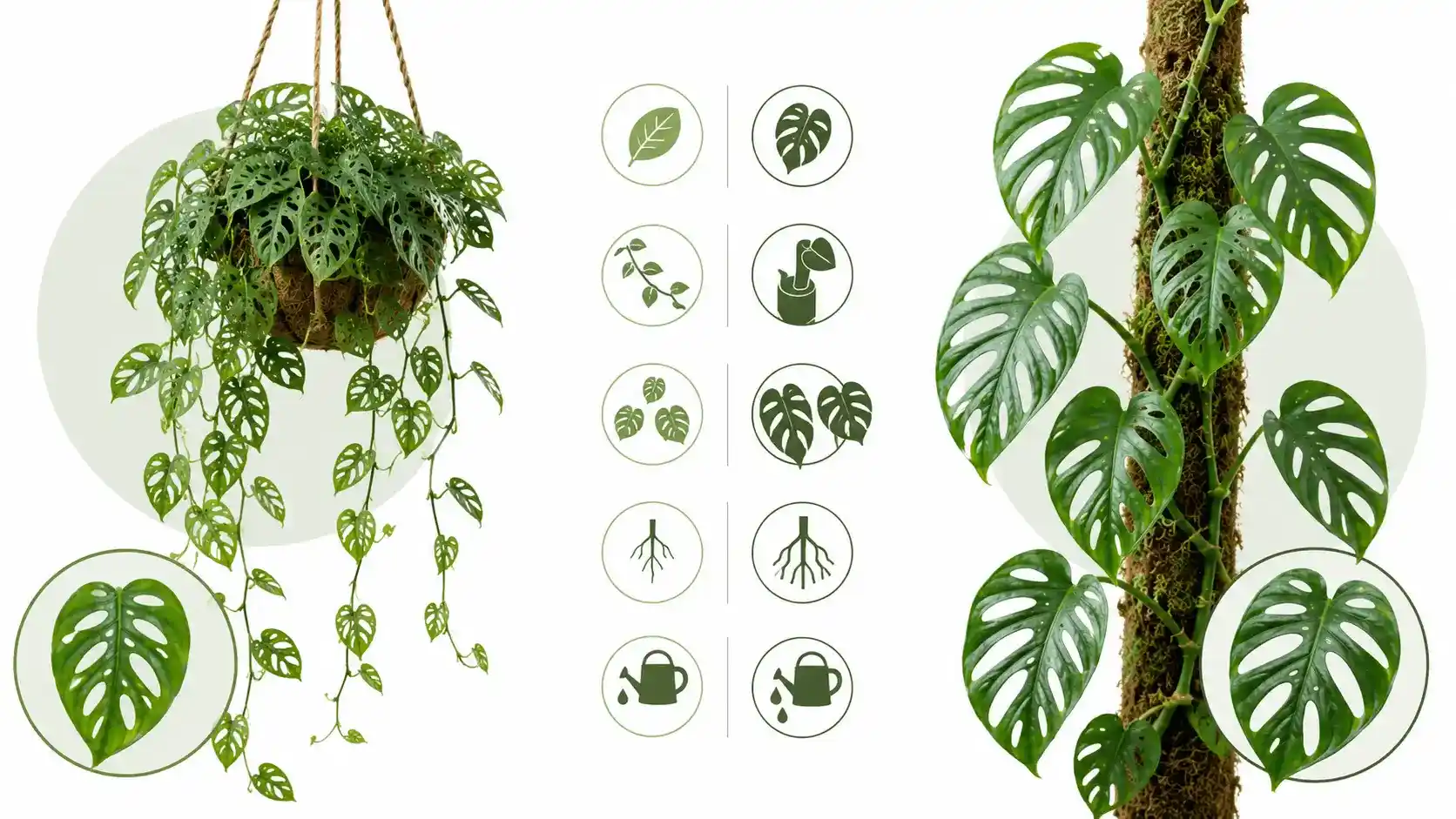
Monstera adansonii hanging or climbing both produce attractive indoor displays, but the outcomes differ significantly.
| Factor | Hanging / Trailing | Climbing (Moss Pole / Trellis) |
| Leaf size | Smaller | Larger with maturity |
| Fenestration | Minimal to moderate | More developed |
| Space needed | Minimal shelf space | Vertical growing area |
| Maintenance level | Low | Moderate |
| Aesthetic | Cascading and relaxed | Structured and tropical |
| Growth speed | Moderate | Faster when supported |
| Best for | Small spaces and beginners | Statement displays |
The decision between monstera adansonii climb or hang depends on available space, maintenance preferences, and desired leaf development. Like purple heart plants, Monstera adansonii is often grown in trailing form for decorative cascading effects.
Benefits of Growing Monstera Adansonii as a Hanging Plant
A hanging monstera adansonii offers several practical advantages.
- No support structure required
- Cascading vines create a bohemian appearance
- Ideal for hanging baskets and shelves
- Lower maintenance requirements
- Suitable for apartments and compact spaces
A monstera adansonii hanging plant works especially well where vertical growing space is limited. Much like money plants used in Feng Shui décor, hanging Monstera adansonii is often chosen for its cascading aesthetic appeal in indoor spaces.
Benefits of Training Monstera Adansonii to Climb
Climbing monstera adansonii plants often produce the most impressive foliage.
Benefits include:
- Larger leaves
- Greater fenestration
- Faster growth
- Stronger stems
- More natural development
Training a monstera to climb closely mimics its rainforest environment. Many growers find that a monstera adansonii climbing setup produces a more mature and dramatic display over time.
How to Make Monstera Adansonii Climb
Monstera adansonii climbing depends on support structures and proper training. Aerial roots naturally seek surfaces to anchor onto. By attaching stems to a support and encouraging root contact, growers can guide vertical growth.
Key steps include:
- Install a support structure.
- Position vines against the support.
- Secure stems with soft plant ties.
- Keep support surfaces slightly moist.
- Allow aerial roots time to establish.
Using a Moss Pole for Monstera Adansonii
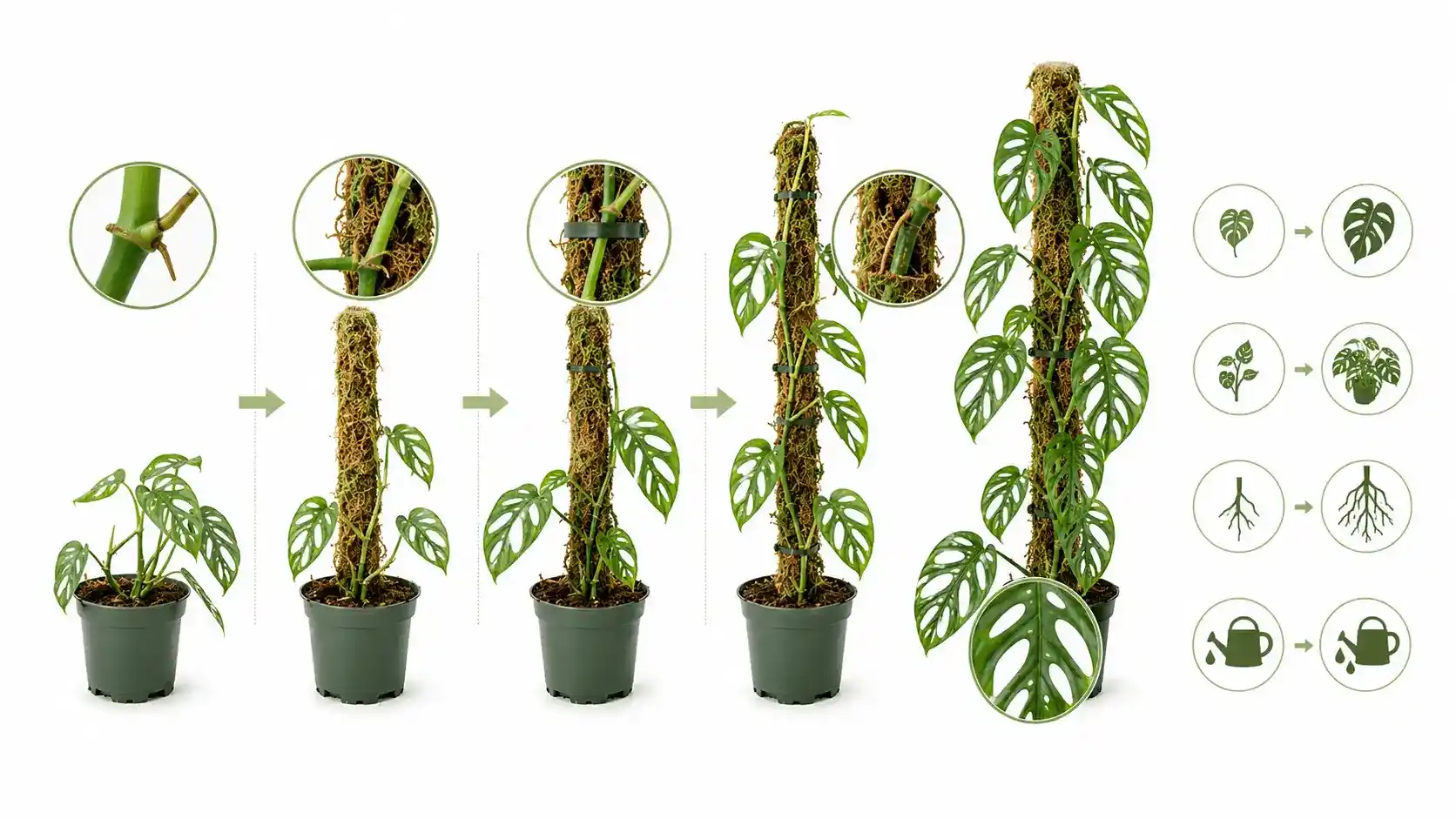
A monstera adansonii moss pole is generally considered the best support option. A moss pole for monstera adansonii consists of a vertical support covered with sphagnum moss or coco coir. The pole is inserted into the pot and stems are secured with soft clips or ties.
Benefits of a moist moss pole include:
- Better aerial root attachment
- Faster climbing response
- Improved leaf development
- Increased humidity around roots
Sphagnum moss typically outperforms dry plastic or wooden supports because roots can embed directly into the moist surface. For most plants, choose a monstera adansonii pole that extends beyond the current vine length to allow future growth.
Coco Coir Pole vs Sphagnum Moss Pole
| Feature | Coco Coir Pole | Sphagnum Moss Pole |
| Moisture retention | Moderate | Excellent |
| Root attachment | Good | Superior |
| Maintenance | Lower | Moderate |
| Growth performance | Good | Best |
Trellis Options for Monstera Adansonii
A trellis for monstera adansonii offers an attractive alternative.
Popular options include:
- Bamboo trellises
- Wire trellises
- Fan-shaped trellises
- Metal grid panels
DIY monstera adansonii trellis ideas can be created using bamboo stakes, coated wire, or decorative metal frames. Secure stems gently without crushing nodes or aerial roots.
Training Monstera Adansonii on a Climbing Wall
A monstera adansonii climbing wall creates a dramatic living display.
Common support methods include:
- Adhesive plant clips
- Wall hooks
- Mounted bark panels
- Wall-mounted moss systems
A monstera growing up wall can eventually cover large vertical surfaces. However, wall protection, watering access, and maintenance planning are important considerations.
Choosing the Right Pot Size for Monstera Adansonii
Proper monstera adansonii pot size affects root health and overall growth. Oversized containers can hold excessive moisture and increase root rot risk. Undersized containers may cause root binding and restricted growth.
| Growth Stage | Recommended Pot Size | Key Notes |
| Propagated cutting | 4–6 inch | Avoid excess soil |
| Young plant | 6–8 inch | Repot as roots emerge |
| Established plant | 8–10 inch | Suitable for hanging baskets |
| Mature climbing plant | 10–12+ inch | Supports moss poles safely |
Monstera Adansonii Care Guide
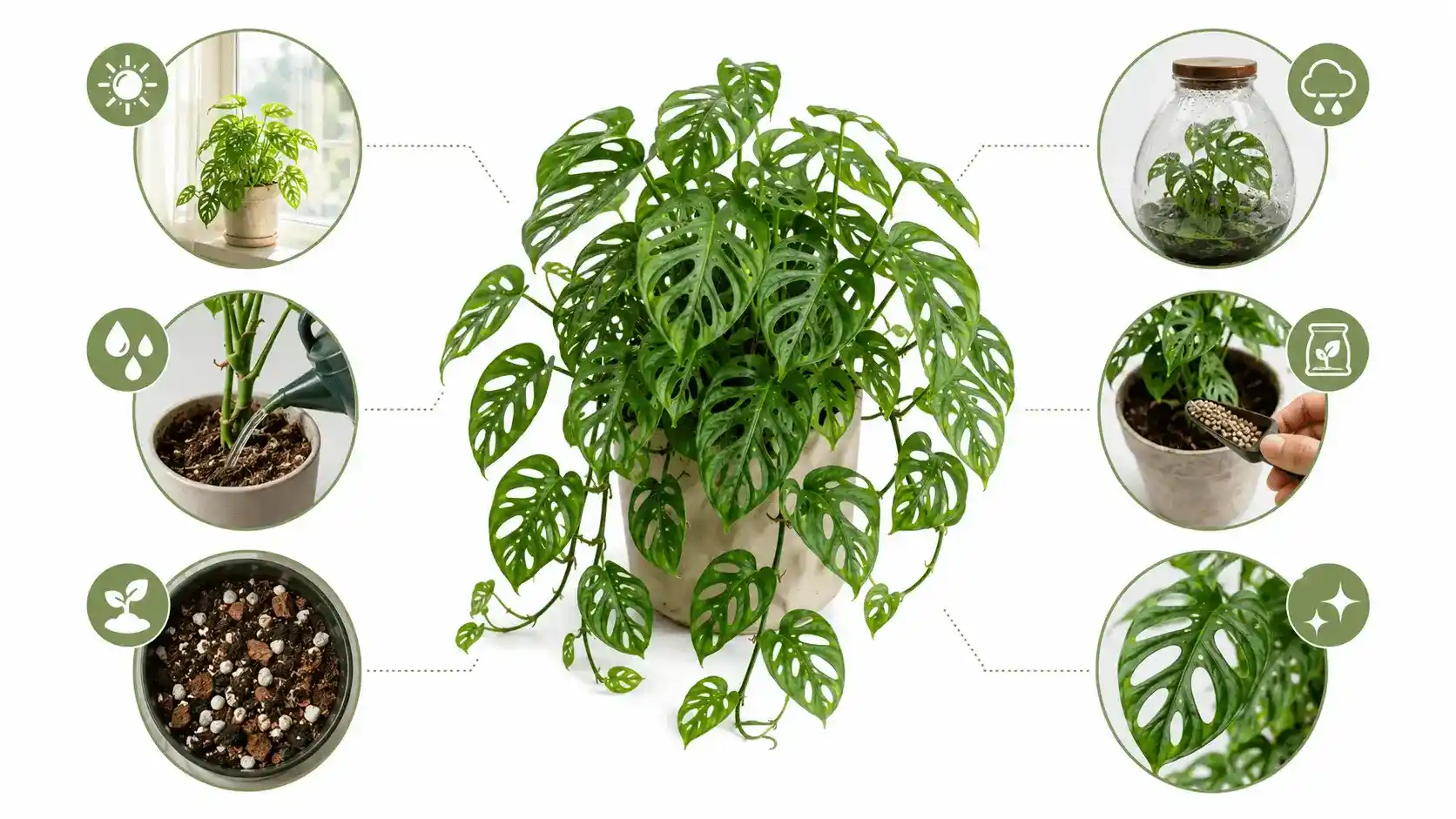
This monstera adansonii care guide covers the essential growing requirements for healthy indoor growth. Similar to other low-maintenance houseplants like ZZ plant, Monstera adansonii also adapts well to indirect indoor lighting conditions. General indoor plant care principles for tropical aroids are also supported by horticultural research institutions and botanical gardens.
Light Requirements
Bright indirect light is ideal.
Too little light can cause:
- Leggy growth
- Small leaves
- Reduced fenestration
- Slow development
Direct afternoon sun may scorch leaves. During winter, moving the plant closer to a bright window often improves growth.
How to Water Monstera Adansonii Correctly
Allow the top 1–2 inches of soil to dry before watering.
Signs of overwatering include:
- Yellow leaves
- Root rot
- Soft stems
Signs of underwatering include:
- Crispy edges
- Wilting
- Dry soil
The finger-test method remains one of the most reliable ways to determine watering needs.
Soil Mix, Potting Medium, and Fertilization
An airy soil mix supports healthy roots.
Recommended blend:
- 40% potting soil
- 30% orchid bark
- 30% perlite
Feed monthly during spring and summer using a balanced houseplant fertilizer. Excess fertilizer can cause salt buildup and leaf damage. Like ficus elastica, Monstera adansonii performs best in well-aerated soil mixes that prevent water stagnation around roots.
Humidity, Temperature, and Climate Needs
Monstera adansonii thrives in humidity above 60%.
Ways to increase humidity:
- Humidifiers
- Pebble trays
- Plant grouping
- Bathrooms with natural light
Ideal temperatures range between 60–85°F (15–30°C). Cold drafts and frost can damage foliage.
How to Make Monstera Adansonii More Bushy and Fuller
Many growers want a fuller plant rather than a single long vine. The most effective strategy combines pruning and propagation.
Pruning and Cutting Back Monstera Adansonii
Monstera adansonii cutting back encourages branching and denser growth.
Steps:
- Identify a healthy node.
- Sterilize pruning tools.
- Cut below the node.
- Root the cutting.
- Replant it into the original pot.
Repeated pruning gradually creates a fuller, multi-stem plant. Similar propagation methods are also used in Japanese money plants, where cuttings are replanted to encourage fuller growth.
Why Monstera Adansonii Is Not Trailing or Growing
A monstera adansonii not trailing or producing new growth may be experiencing:
- Low light
- Root-bound conditions
- Low humidity
- Overwatering
- Seasonal dormancy
Evaluate each factor systematically to identify the underlying cause.
Common Monstera Adansonii Problems and How to Fix Them
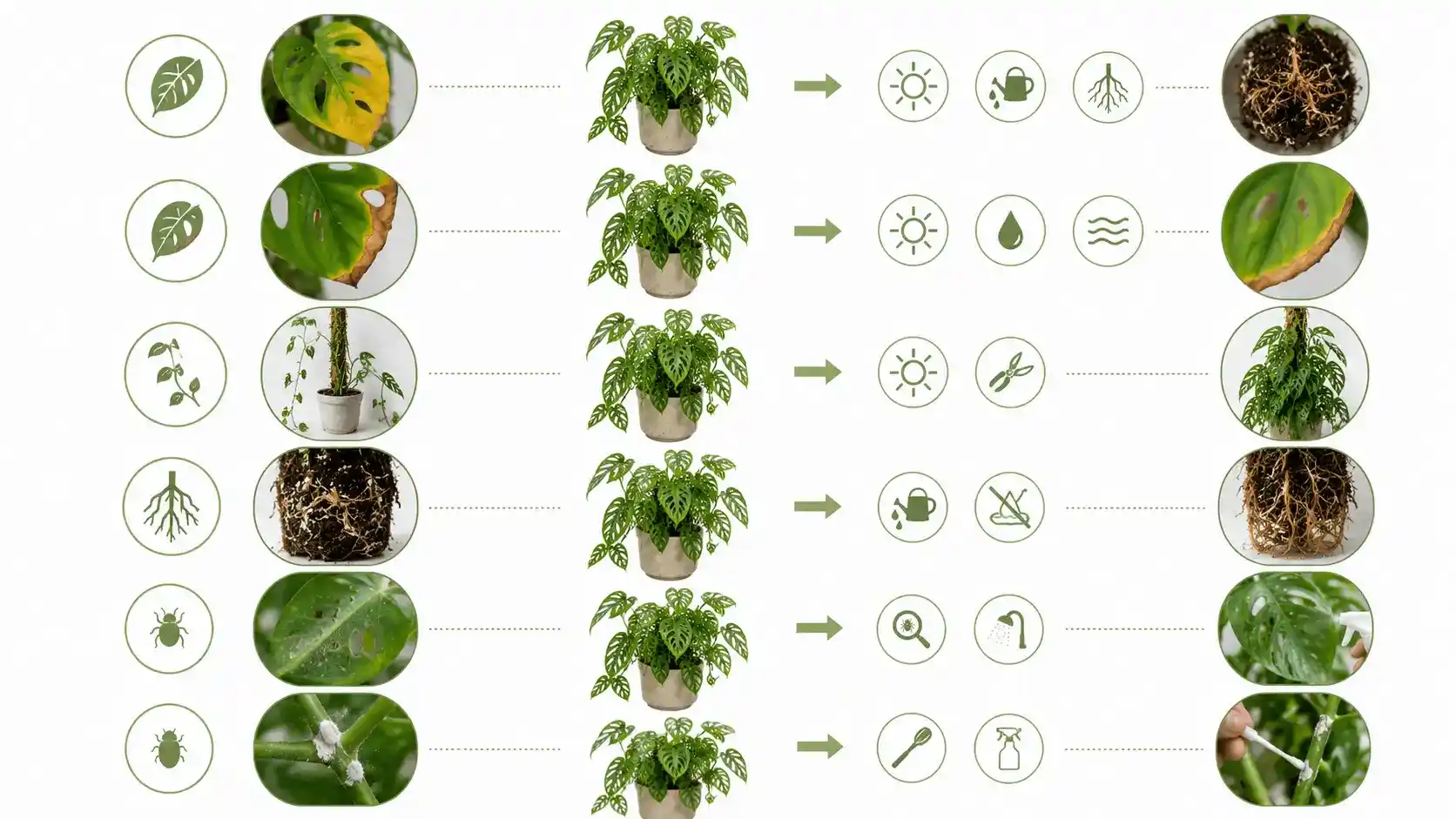
Every monstera adansonii problem has an identifiable cause and solution. Similar to begonia maculata, Monstera adansonii can develop leaf spotting issues if humidity and watering are not balanced properly.
Yellowing Leaves — Causes and Fixes
Why it happens:
- Overwatering
- Root rot
- Nutrient deficiencies
- Natural aging
How to fix it:
- Reduce watering frequency
- Inspect roots
- Improve drainage
- Fertilize appropriately
How to prevent it:
- Use drainage holes
- Avoid constantly wet soil
- Follow a consistent watering schedule
Leggy Growth and Leaves With Few Holes
Why it happens:
- Insufficient light
- Lack of climbing support
How to fix it:
- Move to brighter indirect light
- Install a moss pole or trellis
- Prune stretched vines
How to prevent it:
- Provide adequate lighting
- Encourage vertical growth
Identifying and Treating Common Pests
Spider mites produce:
- Fine webbing
- Speckled leaves
Mealybugs produce:
- White cotton-like deposits
- Clusters around nodes
Treatment options:
- Neem oil
- Insecticidal soap
- Rubbing alcohol applications
- Manual removal
Prevention focuses on maintaining good airflow and proper humidity.
Monstera Adansonii vs Monstera Deliciosa — Key Differences
Monstera adansonii and Monstera deliciosa are frequently confused but differ substantially.
| Feature | Monstera Adansonii | Monstera Deliciosa |
| Leaf size | Small to medium | Very large |
| Fenestration type | Oval holes | Deep splits |
| Growth habit | Vining and climbing | Upright climbing |
| Indoor footprint | Compact | Large |
| Ideal support | Moss pole or trellis | Heavy-duty support |
| Care level | Easy | Easy to moderate |
Monstera deliciosa climbing plants eventually become much larger and require significantly more space than Monstera adansonii.
Conclusion
The answer to monstera adansonii hanging or climbing depends on your goals and available space. Both growing styles are healthy and achievable indoors. Hanging plants create attractive cascading vines and require less maintenance, making them ideal for shelves, baskets, and smaller spaces. Climbing plants more closely replicate the species’ natural rainforest behavior and typically develop larger leaves, stronger fenestration, and faster growth. Whether you choose a moss pole, trellis, or climbing wall, success ultimately depends on providing bright indirect light, balanced watering, well-draining soil, and adequate humidity. With proper care, Monstera adansonii can thrive as either a stunning hanging display or an impressive climbing specimen.
FAQ — Monstera Adansonii Hanging or Climbing
Q1: Does Monstera adansonii climb or trail naturally?
Monstera adansonii is naturally a climber that uses aerial roots to ascend trees. Indoors, it trails when no support structure is available. Both growth habits are natural responses to its environment.
Q2: Will Monstera adansonii grow larger leaves if it climbs?
Yes. Climbing encourages a more mature growth phase, resulting in larger leaves and stronger fenestration than trailing growth.
Q3: What is the best support structure for Monstera adansonii to climb?
A moist monstera adansonii moss pole is usually the most effective because aerial roots can naturally attach and anchor into the moss. Trellises and climbing walls also work well depending on available space.
Q4: How do I train Monstera adansonii to climb a moss pole?
Insert the moss pole near the plant base, secure vine nodes using soft plant ties, keep the pole moist, and allow aerial roots time to grip the surface naturally.
Q5: Can Monstera adansonii grow directly on a wall?
Yes. Adhesive clips, hooks, bark panels, or wall-mounted moss systems can support wall growth. Mature plants can create impressive living wall displays when maintained properly.
Q6: Why is my Monstera adansonii not trailing or growing well?
Common causes include low light, root-bound conditions, improper watering, low humidity, and seasonal dormancy. Checking each factor individually helps identify the issue.
Q7: How is Monstera adansonii different from the Swiss cheese plant (Monstera deliciosa)?
Monstera adansonii typically has smaller leaves with oval holes, while Monstera deliciosa develops much larger leaves with deep splits. Monstera deliciosa also requires significantly more indoor space as it matures.



3 Responses