
Introduction
Banana plants (Musa spp.) are fast-growing tropical plants valued for their large, lush leaves and, in some varieties, edible fruit. If you are wondering how to care for a banana plant, the key is to provide the right balance of sunlight, warmth, moisture, and nutrients. Whether you grow one as an indoor houseplant, in a patio container, or outdoors in a suitable climate, proper care helps it develop healthy foliage and vigorous growth. This guide explains every essential aspect of banana plant care, including watering, feeding, soil selection, seasonal maintenance, and solutions to common problems, making it a complete care guide rather than a buying guide.
If you’re interested in caring for more indoor and outdoor plants, explore our Plants: Benefits and Guides (Complete Care, Types & Growing Tips) for expert growing advice, care guides, and plant maintenance tips.
Quick Summary
- Banana plants grow best in bright light, warm temperatures, and consistently moist but well-drained soil.
- They can be grown indoors, in containers, or outdoors depending on your local climate, including suitable locations in the UK.
- Regular fertilizing, occasional repotting, and winter protection help maintain healthy, long-term growth.
- Most problems, such as yellow leaves or slow growth, are caused by incorrect watering, poor lighting, or inadequate nutrition.
What Is a Banana Plant (Musa)?
A banana plant belongs to the Musa genus, a group of tropical plants native to Southeast Asia and widely cultivated throughout tropical and subtropical regions. Although commonly called a “banana tree,” it is not a true tree. Instead, it is a large herbaceous plant with a pseudostem formed by tightly wrapped leaf bases. If you’re growing the popular Musa Tropicana variety, read our Musa Tropicana Care Guide for variety-specific growing tips and maintenance advice.
Banana plants are grown for different purposes. Some species produce edible bananas, while others are cultivated purely for their striking ornamental foliage. Regardless of the variety, most Musa plant care requirements remain similar, including warmth, moisture, fertile soil, and abundant light.
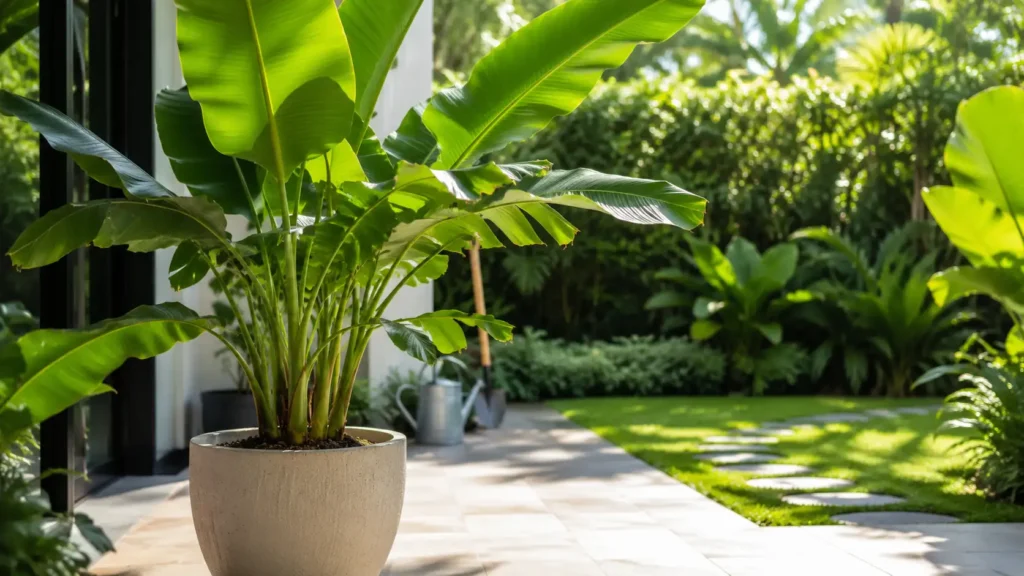
Banana plants belong to the Musa genus, a group of tropical herbaceous plants that includes both ornamental and fruit-bearing species.
The large leaves are one of the plant’s defining features, which is why many gardeners refer to it as a banana leaf plant. Whether you grow an ornamental variety or a fruit-bearing banana tree plant, understanding its natural tropical habitat helps you recreate the ideal growing conditions at home.
Indoor vs Outdoor Banana Plants
Indoor and outdoor banana plants require similar basic care but differ significantly in their growing environment.
Indoor banana plants are usually grown in containers where temperature, humidity, and watering can be controlled. They generally stay smaller because their root systems are confined to pots and indoor light levels are lower than natural sunlight.
Outdoor banana plants benefit from greater sunlight, rainfall, and unrestricted root growth. In warm climates, they may grow several metres tall and can even produce fruit. In cooler regions, including much of the UK, many gardeners grow hardy ornamental varieties or move container-grown plants indoors during winter.
Understanding these differences allows you to adjust watering, feeding, and seasonal care according to where your banana plant is growing.
How Do You Care for a Banana Plant Indoors?
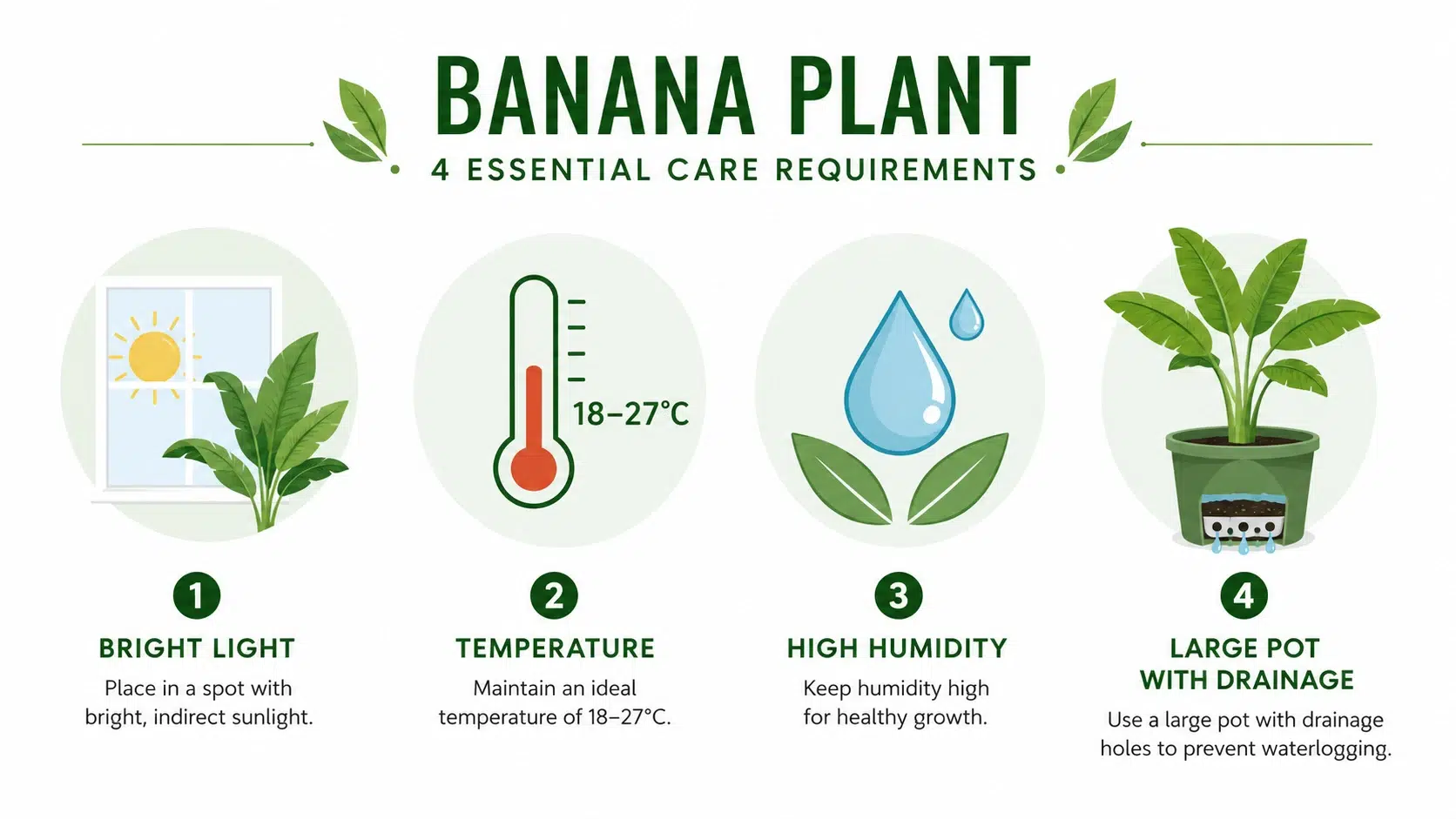
Indoor banana plant care focuses on recreating tropical conditions. A healthy indoor banana tree requires bright light, consistent warmth, high humidity, and a container that allows for steady root development. When these needs are met, the plant produces larger leaves and maintains vigorous growth throughout the growing season.
For successful banana plant indoor care, focus on the following essentials:
- Place the plant in bright, indirect light with several hours of direct morning or late afternoon sun if possible.
- Maintain indoor temperatures between 18°C and 27°C (65°F–80°F).
- Increase humidity using a humidifier, pebble tray, or by grouping plants together.
- Use a large container with drainage holes to prevent waterlogging while allowing healthy root expansion.
- Rotate the pot every few weeks so all sides of the plant receive even light.
- Feed regularly during spring and summer to support rapid leaf production.
Because a banana tree houseplant grows quickly, monitor its environment regularly and adjust care as seasonal conditions change.
Where Is the Best Place to Put a Banana Plant?
The best place to put a banana plant is near a bright window where it receives several hours of strong natural light each day while remaining protected from cold drafts and sudden temperature changes.
South-facing windows usually provide the most light in cooler climates, while east-facing windows offer gentle morning sun that is suitable for most indoor banana plants. If direct midday sunlight is extremely intense, especially during summer, filtering it with a sheer curtain can help prevent leaf scorch.
Avoid placing the plant near air conditioners, heating vents, or frequently opened exterior doors. Sudden temperature fluctuations can slow growth and damage the leaves.
If natural light is limited, supplement it with a quality grow light positioned above the plant for 12 to 14 hours daily.
How to Care for a Banana Plant Outdoors (Including in the UK)
Outdoor banana plant care depends largely on climate. Banana plants thrive in warm, frost-free environments, but many ornamental varieties can also be grown successfully in the UK with appropriate seasonal protection.
If you are growing bananas in the UK, choose a sheltered, sunny location that is protected from strong winds. Large banana leaves tear easily during windy weather, reducing the plant’s appearance and photosynthetic efficiency.
For successful banana plant care UK, follow these recommendations:
- Choose the warmest, sunniest location available.
- Protect plants from strong winds using fences, walls, or surrounding vegetation.
- Plant in fertile, well-drained soil rich in organic matter.
- Water consistently during warm weather without allowing the soil to remain waterlogged.
- Apply mulch around the base to conserve moisture and protect roots.
- Move container-grown plants indoors or protect them before winter frost arrives.
Many gardeners ask, “Can bananas be grown in the UK?” The answer is yes. While edible bananas rarely ripen outdoors because of the short growing season, hardy ornamental banana plants can flourish with proper care and winter protection.
Light and Sun Requirements
Banana plants prefer full sun to bright indirect light and generally grow best with at least six to eight hours of strong light each day. Adequate light encourages vigorous leaf growth, stronger stems, and, in fruiting varieties, improved flowering and fruit production. If you’re unsure whether your banana plant is receiving the correct amount of light, our guide on Bright Indirect Light vs Direct Sunlight for Plants explains the differences and when each type of light is beneficial.
A common question is, “Does a banana plant like sun or shade?” Banana plants perform best in full sun once established, although young plants may benefit from slight afternoon shade in extremely hot climates. Too much shade often causes slower growth, smaller leaves, and elongated stems as the plant stretches toward available light.
Indoor plants should be positioned where they receive the brightest possible natural light. If insufficient light is available, supplemental grow lights can help maintain healthy foliage and prevent leggy growth.
Proper lighting is one of the most important factors in maintaining a healthy, attractive banana plant and preventing many common growth problems.
Watering a Banana Plant Correctly
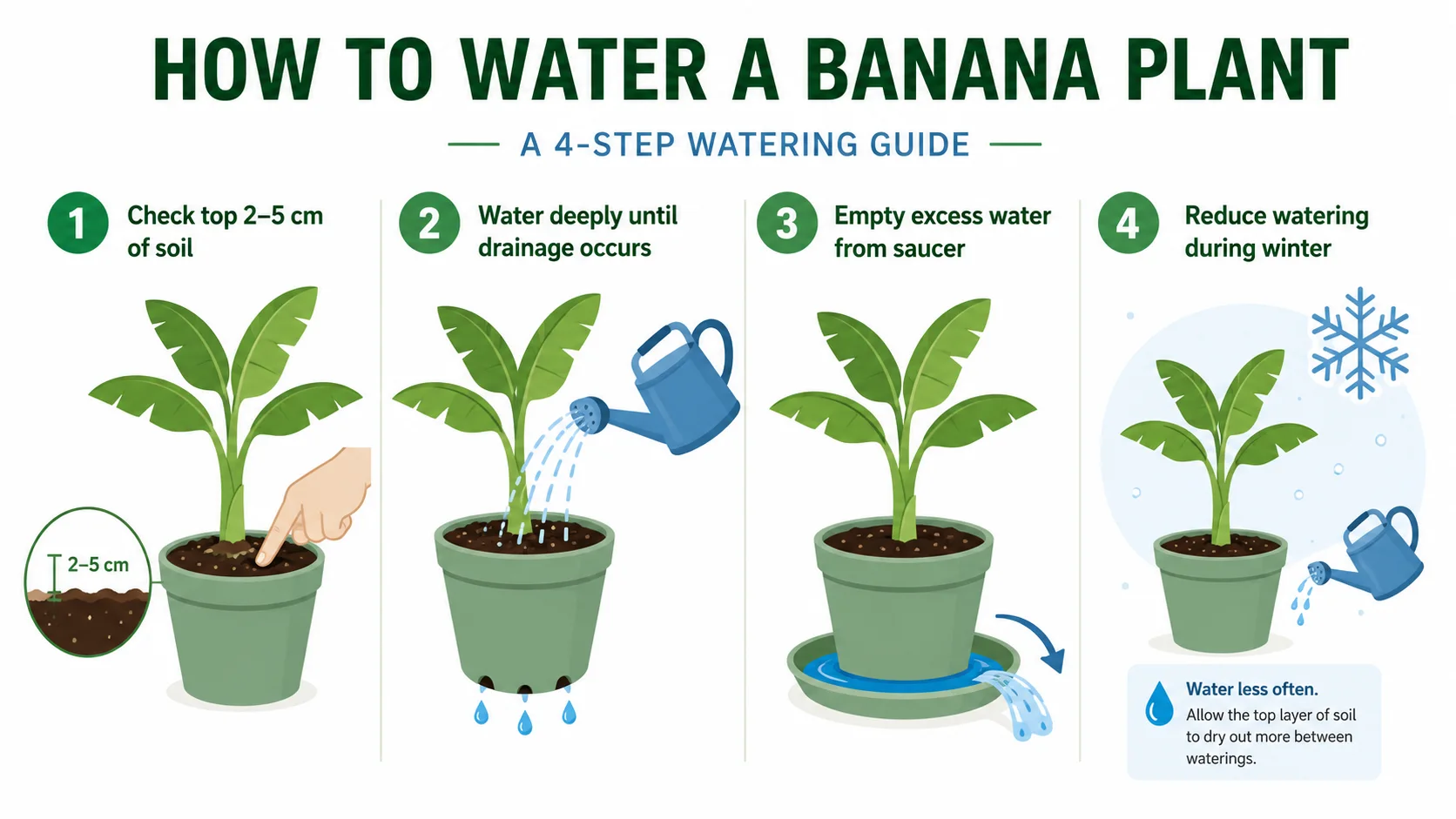
Banana plants grow best when the soil remains consistently moist but never waterlogged. Proper watering encourages strong root development, healthy leaf production, and vigorous growth, while both overwatering and underwatering can quickly lead to stress.
During the active growing season in spring and summer, check the soil regularly. Water thoroughly when the top 2–5 cm (1–2 inches) of soil feels slightly dry. In autumn and winter, reduce watering because the plant’s growth slows and moisture evaporates more slowly.
A common question is, “What does an overwatered banana tree look like?” An overwatered banana plant typically develops yellowing leaves, soft stems, drooping foliage despite wet soil, and in severe cases, root rot accompanied by an unpleasant smell from the potting mix.
For healthy watering practices, follow these guidelines:
- Water deeply until excess water drains from the bottom of the pot.
- Allow the top layer of soil to dry slightly before watering again.
- Never let the plant sit in standing water.
- Reduce watering during cooler months when growth naturally slows.
- Check soil moisture instead of watering on a fixed schedule.
Some gardeners also ask, “How long do I leave banana peels in water for plants?” Banana peel water can provide small amounts of potassium and other nutrients, although it should not replace a balanced fertilizer. Soak chopped banana peels in water for 24–48 hours, strain the liquid, and use it occasionally to water the soil. Use it sparingly, as excessive organic matter may encourage mold or pests.
Feeding and Fertilizing Banana Plants
Banana plants are heavy feeders because they produce large leaves and grow rapidly. Regular fertilization provides the nitrogen, potassium, phosphorus, and micronutrients needed to support healthy foliage, strong roots, and, for fruiting varieties, flower and fruit development. For more detailed fertilizer scheduling, see our comparison of Bi-Weekly vs Monthly Fertilizing for Houseplants to determine the best feeding routine for container-grown plants.
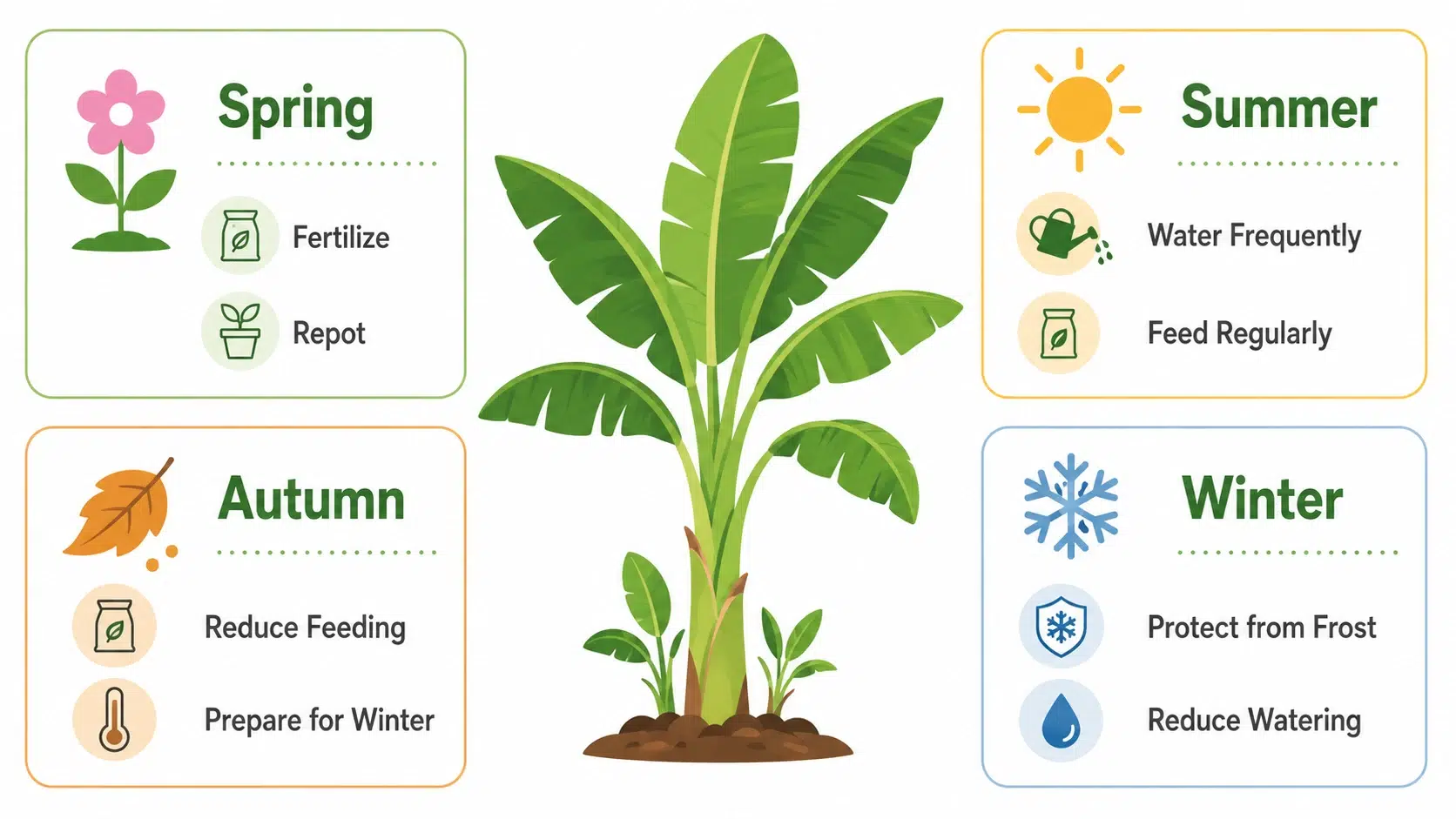
Feed banana plants every two to four weeks during spring and summer using a balanced liquid fertilizer or according to the manufacturer’s recommendations. Reduce or stop feeding during winter when growth slows significantly.
Organic materials can also improve soil fertility. Compost and well-rotted manure gradually release nutrients while improving soil structure. Many gardeners wonder, “Are coffee grounds good for banana trees?” Used coffee grounds can be beneficial in moderation because they add organic matter and small amounts of nitrogen. However, they should be composted or mixed into the soil rather than applied in thick layers, which can restrict airflow and moisture movement.
| Fertilizer Type | Feeding Frequency | Benefits | Best Use Case |
| Liquid fertilizer | Every 2–4 weeks during active growth | Fast nutrient uptake and vigorous leaf growth | Indoor plants and container-grown bananas |
| Slow-release fertilizer | Every 2–3 months | Provides steady nutrition over time | Outdoor planting and large containers |
| Organic compost or coffee grounds | Apply periodically | Improves soil health and adds organic matter | Long-term soil improvement and sustainable gardening |
Regular feeding, combined with adequate sunlight and watering, produces stronger plants with larger, healthier leaves.
Soil and Repotting Requirements
Banana plants thrive in fertile, well-draining soil that retains moisture without becoming soggy. An ideal potting mix contains high-quality compost, peat-free potting soil or coco coir, and drainage materials such as perlite or coarse sand.
Good drainage is essential because waterlogged soil deprives roots of oxygen and increases the risk of fungal diseases and root rot.
When growing a banana tree in a pot, choose a sturdy container with drainage holes and enough room for the roots to expand. Repotting is usually necessary every one to two years because banana plants grow quickly and can become root-bound.
When repotting a banana plant:
- Select a pot one size larger than the current container.
- Fill the new container with fresh, nutrient-rich potting mix.
- Carefully remove the plant without damaging the roots.
- Loosen tightly packed roots if necessary.
- Position the plant at the same depth as before.
- Water thoroughly after repotting to help the soil settle.
Repotting during spring or early summer allows the plant to recover quickly and establish new roots before the growing season ends.
Signs Your Banana Plant Needs Repotting
Banana plants usually show clear signs when they have outgrown their containers.
Common indicators include:
- Roots growing through drainage holes.
- Roots circling around the inside of the pot.
- Water draining through the container unusually quickly.
- Slower growth despite proper care.
- Leaves becoming progressively smaller.
- The plant becoming top-heavy or unstable.
Repotting before the plant becomes severely root-bound helps maintain healthy growth and reduces transplant stress. Choosing the right container is equally important, and our guide on Does Pot Size Affect How Fast a Plant Grows? explains how pot size influences root development and overall plant health.
Pruning and Seasonal Care
Pruning keeps banana plants healthy by removing damaged or aging foliage and allowing the plant to direct energy toward producing new leaves. Dead or badly damaged leaves should be removed throughout the growing season using clean, sharp pruning tools.
Many gardeners ask, “Should you cut dead leaves off banana trees?” Yes. Removing brown, dead, or diseased leaves improves appearance, increases airflow, and reduces places where pests and fungal diseases may develop.
Another common question is, “Should banana plants be cut back in the fall?” The answer depends on your climate. In frost-free regions, only damaged leaves usually need removal. In colder climates where plants are overwintered, cutting back foliage before winter protection can make handling easier and reduce damage from freezing temperatures.
Spring and Summer vs Autumn Pruning
| Season | Purpose | Recommended Method |
| Spring and Summer | Encourage healthy growth and remove damaged leaves | Prune only dead, torn, or diseased foliage |
| Autumn | Prepare plants for winter protection in colder climates | Remove damaged leaves and reduce foliage if overwintering |
Seasonal care also includes adjusting watering and fertilization. Increase both during active growth and gradually reduce them as temperatures fall and daylight hours shorten.
Overwintering a Banana Plant
Overwintering a banana plant involves protecting it from cold temperatures so it can survive until the next growing season. While tropical banana plants are sensitive to frost, many ornamental varieties can be successfully overwintered indoors or with adequate outdoor protection in milder climates. Understanding cold tolerance is essential during winter, and our guide on What Temperature Is Too Cold for Indoor Houseplants? explains how low temperatures affect tropical plants like banana plants.
If you are wondering, “What should I do with my banana plant in winter?”, the answer depends on where it is growing. Container-grown plants should be moved indoors before the first frost, while outdoor plants in cooler regions should be insulated with mulch or horticultural fleece if they are hardy varieties.
To overwinter a banana plant indoors, follow these steps:
- Move the plant indoors before nighttime temperatures fall below 10°C (50°F).
- Place it in a bright location with as much natural light as possible.
- Reduce watering but do not allow the soil to dry out completely.
- Stop or significantly reduce fertilizing until active growth resumes in spring.
- Maintain temperatures above 10–15°C (50–59°F) for tropical varieties.
For outdoor banana plants in cooler climates:
- Apply a thick layer of mulch around the base to protect the roots.
- Wrap the pseudostem with horticultural fleece or insulating material before severe frost.
- Ensure the planting area drains well to prevent winter root rot.
- Remove winter protection gradually when temperatures become consistently warm in spring.
Many gardeners also ask, “Will a banana plant come back every year?” Hardy ornamental banana plants often regrow from their underground rhizomes after winter if the roots survive freezing temperatures. Tropical fruiting varieties, however, generally require frost-free conditions and are best overwintered indoors in cooler climates.
Common Banana Plant Problems and How to Fix Them
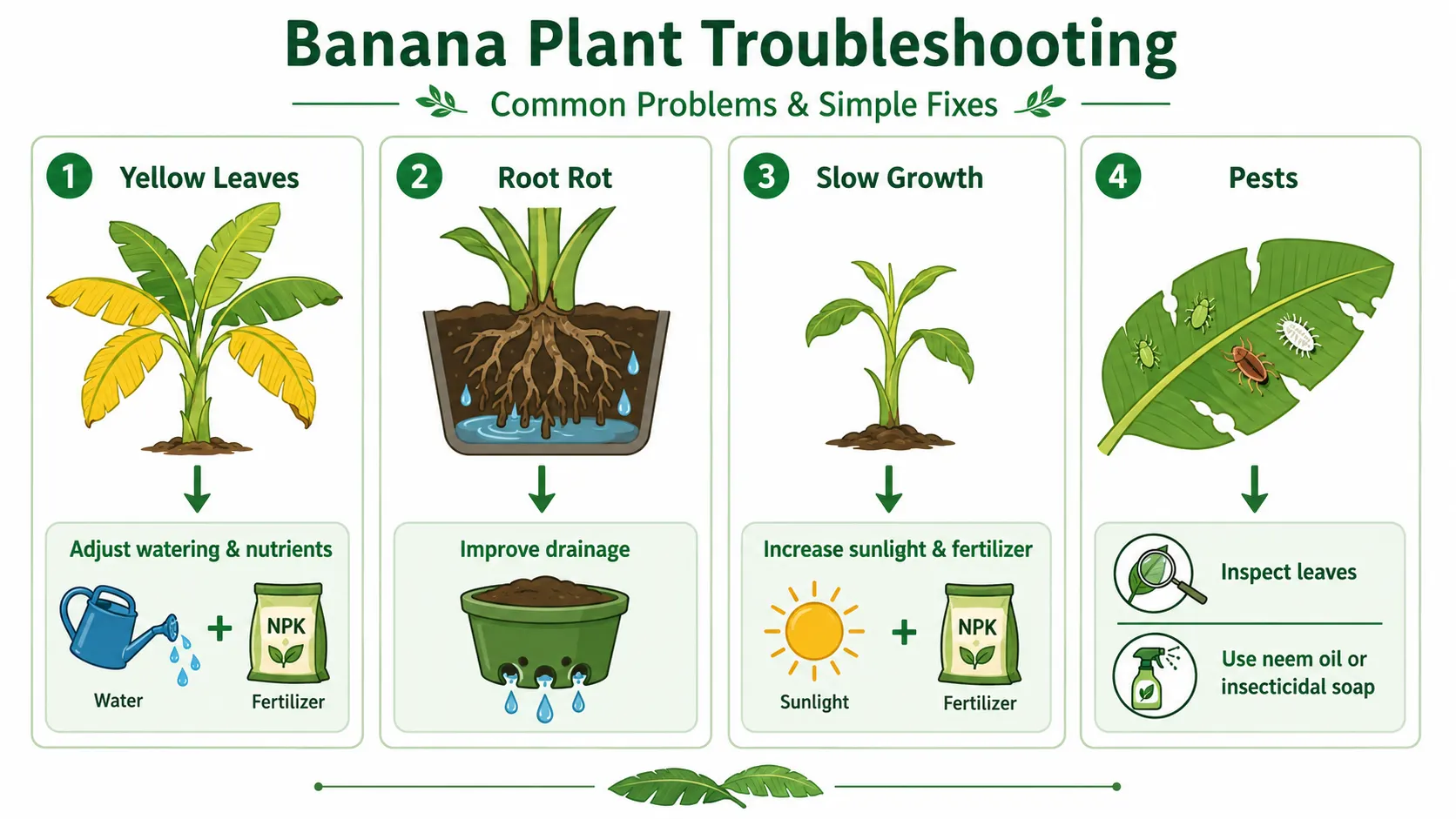
Banana plants can develop problems when their growing conditions are unsuitable. Most issues are related to watering, light, nutrition, or pests and can be corrected if identified early.
Yellowing Leaves
Yellow leaves are one of the most common concerns. While older leaves naturally yellow as they age, widespread yellowing often indicates a care problem.
Possible causes:
- Overwatering
- Poor drainage
- Nutrient deficiencies
- Insufficient sunlight
- Natural aging of older leaves
How to fix it:
- Allow the soil to dry slightly before watering again.
- Improve drainage if water remains in the pot.
- Feed with a balanced fertilizer during the growing season.
- Move the plant to a brighter location if necessary.
How to prevent it:
- Water according to soil moisture rather than a fixed schedule.
- Use well-draining soil.
- Maintain regular feeding during active growth.
Overwatering and Root Rot
Overwatering is one of the leading causes of banana plant decline.
Symptoms include:
- Soft or mushy stems
- Yellowing leaves
- Drooping despite wet soil
- Foul smell from the pot
- Blackened roots
How to correct it:
- Stop watering until the top layer of soil begins to dry.
- Remove severely damaged roots if repotting.
- Replace saturated soil with fresh, well-draining potting mix.
- Improve drainage by using containers with drainage holes.
Prevention:
- Always check soil moisture before watering.
- Never allow the pot to sit in standing water.
- Use a free-draining soil mix.
Slow or Stunted Growth
Slow growth usually indicates that one or more growing conditions are limiting the plant.
Common causes:
- Inadequate sunlight
- Nutrient deficiencies
- Root-bound containers
- Cool temperatures
Solutions:
- Increase light exposure.
- Feed regularly during spring and summer.
- Repot if roots have filled the container.
- Maintain warm growing conditions.
Pests
Although generally resilient, banana plants can occasionally attract pests.
Common pests include:
- Spider mites
- Aphids
- Mealybugs
- Scale insects
Treatment:
- Wipe leaves with a damp cloth.
- Spray with insecticidal soap or neem oil.
- Isolate affected plants to prevent spreading.
Prevention:
- Inspect leaves regularly.
- Maintain good airflow.
- Avoid excessive humidity without ventilation.
- Remove dead foliage promptly.
Beginner Mistakes and Practical Care Tips
Many banana plant problems are easy to avoid once you understand the plant’s basic requirements. Beginners often make small mistakes that can significantly affect growth.
Common mistakes include:
- Using pots without drainage holes.
- Overwatering because the soil surface appears dry.
- Growing the plant in insufficient light.
- Choosing a container that is too small.
- Applying excessive fertilizer, which can damage roots.
- Leaving tropical varieties outdoors during cold weather.
- Ignoring humidity requirements for indoor plants.
Practical care tips for healthier banana plants:
- Check soil moisture with your finger before watering.
- Rotate indoor plants every few weeks for even growth.
- Clean dust from leaves to improve photosynthesis.
- Increase humidity during winter when indoor heating dries the air.
- Feed consistently during the growing season but reduce fertilization in winter.
- Inspect plants regularly for pests so problems can be treated early.
- Repot before the plant becomes severely root-bound instead of waiting until growth stops.
These simple habits help prevent many common issues and support strong, healthy growth throughout the year.
How Long Do Indoor Banana Plants Live?
Indoor banana plants can live for many years when they receive proper care. Although an individual pseudostem flowers and dies after producing fruit, the underground rhizome continues producing new shoots, allowing the plant to survive and regenerate.
Want to estimate how quickly your banana plant may grow under different conditions? Try our Plant Growth Calculator to estimate growth based on factors such as plant type, growing environment, and care conditions. It can help you plan repotting, indoor space, and long-term maintenance for healthier banana plants.
Ornamental indoor banana plants commonly live for 10 years or longer, especially when they are regularly repotted, properly watered, and protected from cold temperatures.
Several factors influence their lifespan, including:
- Adequate light throughout the year.
- Consistent watering without overwatering.
- Regular fertilization during active growth.
- Timely repotting to prevent root restriction.
- Protection from winter cold and sudden temperature changes.
- Prompt treatment of pests and diseases.
With proper maintenance, indoor banana plants remain attractive foliage plants for many years and continue producing new growth season after season.
Conclusion
Learning how to care for a banana plant is largely about recreating the warm, bright, and consistently moist conditions of its natural tropical environment. Whether you grow a banana plant indoors, in a container, or outdoors, success depends on providing sufficient sunlight, well-draining soil, regular watering, and balanced feeding throughout the growing season. Seasonal care, including repotting when necessary and protecting plants during winter, helps ensure long-term health and vigorous growth. By monitoring your plant for early signs of stress and making small adjustments to its care routine, you can enjoy lush green foliage and a thriving banana plant for many years.
FAQ
How do you care for a potted banana plant?
Care for a potted banana plant by placing it in bright light, watering when the top layer of soil begins to dry, using well-draining soil, feeding regularly during spring and summer, and repotting when it becomes root-bound. Ensure the pot has adequate drainage to prevent root rot.
Does a banana plant like sun or shade?
Banana plants prefer full sun or very bright indirect light. Most varieties grow best with at least six to eight hours of sunlight each day. While young plants may tolerate light afternoon shade in very hot climates, too much shade results in slower growth and smaller leaves.
Are coffee grounds good for banana trees?
Yes, coffee grounds can benefit banana trees when used in moderation. They contribute organic matter and small amounts of nitrogen, but they should be composted or lightly mixed into the soil rather than applied in thick layers. Coffee grounds should complement, not replace, a balanced fertilizer.
Will a banana plant come back every year?
Hardy ornamental banana plants can return each year if their underground rhizomes survive the winter. In colder regions, protecting the roots with mulch or moving container-grown plants indoors greatly improves their chances of regrowth. Tropical fruiting varieties generally require frost-free conditions.
How long do indoor banana plants live?
Indoor banana plants can live for 10 years or more with proper care. Although individual stems naturally die after flowering or fruiting, the rhizome continuously produces new shoots, allowing the plant to regenerate and remain healthy for many years.
Should banana plants be cut back in the fall?
In colder climates, cutting back damaged leaves in autumn helps prepare banana plants for winter protection. In warm, frost-free regions, only dead or diseased leaves usually need to be removed. Avoid excessive pruning, as healthy leaves continue to support plant growth.



One Response