
Introduction
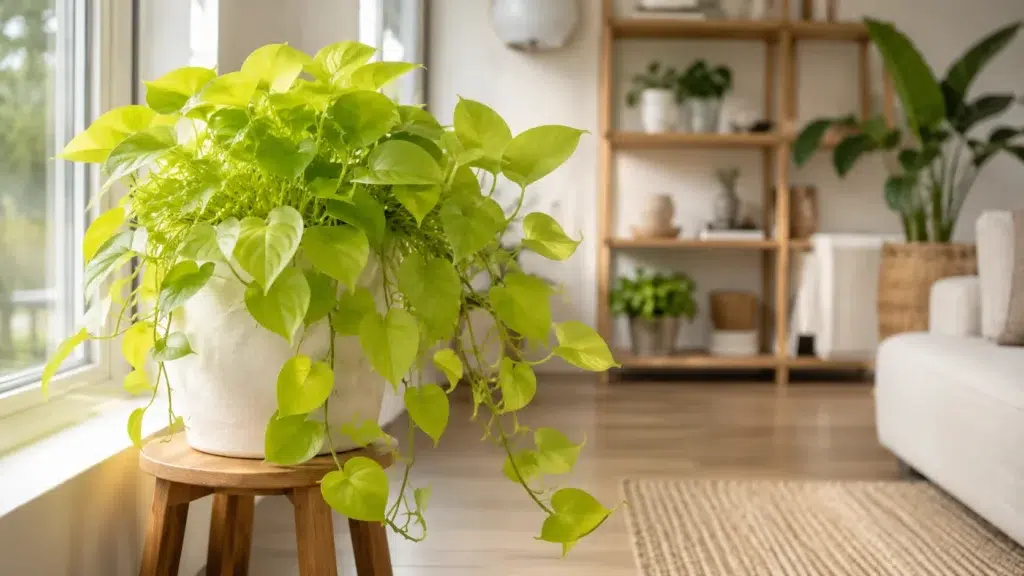
Neon pothos light requirements are one of the most important aspects of keeping this vibrant houseplant healthy and colorful. Neon pothos (Epipremnum aureum ‘Neon’) is a cultivar known for its striking chartreuse to bright lime-green foliage, and its distinctive color depends largely on receiving the right amount of light. While this adaptable plant can tolerate a range of indoor environments, improper lighting often leads to faded leaves, slower growth, and leggy stems. Understanding the relationship between light, watering, and overall care helps ensure your neon pothos remains vigorous and maintains its signature appearance throughout the year. Neon pothos is one of many easy-care houseplants featured in our Plants Benefits and Guides, where you can explore detailed growing tips for a wide range of indoor plants.
Quick Summary
- Bright indirect light is ideal for maintaining the vivid neon foliage and promoting healthy, compact growth.
- Low-light conditions allow the plant to survive but often result in slower growth, longer stems, and less vibrant leaf color.
- Consistent watering, moderate humidity, and warm indoor temperatures work together with proper lighting to support long-term plant health.
What Are Neon Pothos Light Requirements?
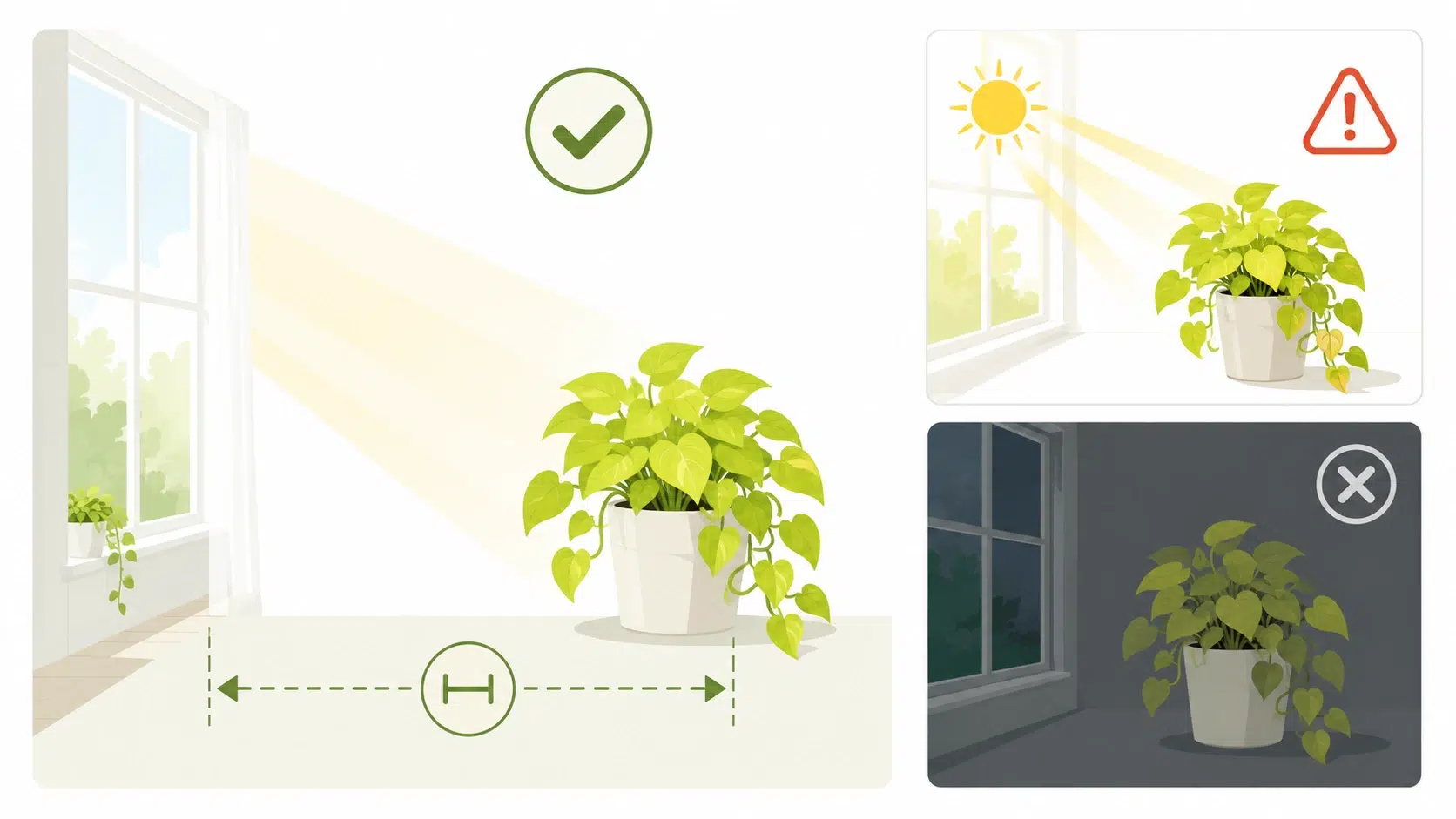
Neon pothos light requirements are best met by providing bright, indirect light for most of the day. This level of light allows the plant to produce enough energy through photosynthesis while protecting its delicate leaves from sun scorch. Compared to many other pothos varieties, Neon Pothos benefits from brighter conditions because its naturally lighter leaf pigmentation contains less chlorophyll than darker green cultivars. Adequate lighting helps preserve its vibrant chartreuse color and encourages fuller, healthier growth.
Bright indirect light refers to a location that receives abundant natural daylight without prolonged exposure to harsh afternoon sun. Gentle morning sunlight is usually safe, while filtered light through curtains or placement a short distance from a sunny window provides ideal conditions. If you’re unsure what bright indirect light actually looks like, see our guide on Bright Indirect Light vs Direct Sunlight for Plants to learn how different light levels affect indoor plants.
Proper pothos plant light requirements also support:
- Strong, compact vines
- Larger, healthier leaves
- Faster growth during spring and summer
- Better color retention
- Reduced risk of leggy growth
Best Light Conditions Indoors
The best indoor location for meeting neon pothos light requirements indoors is near an east- or west-facing window where the plant receives several hours of filtered sunlight. A south-facing window can also work if sheer curtains diffuse the strongest midday rays.
As a general guideline:
| Window Direction | Light Quality | Suitability |
| East-facing | Gentle morning light | Excellent |
| West-facing | Bright afternoon light (filtered) | Very Good |
| South-facing | Strong light (filtered recommended) | Good |
| North-facing | Lower natural light | Acceptable but may reduce color intensity |
For optimal growth:
- Position the plant approximately 2–6 feet from a bright window.
- Rotate the pot every few weeks for even growth.
- Avoid placing the plant directly against hot glass during summer.
- Keep foliage away from heating or cooling vents that can create temperature stress.
Artificial grow lights can also provide excellent supplemental lighting in homes with limited natural sunlight. Full-spectrum LED grow lights placed 12–18 inches above the foliage for 10–12 hours daily can effectively support healthy growth.
Light Requirements in Winter
During winter, neon pothos light requirements become more challenging because daylight hours are shorter and sunlight intensity decreases. Even healthy plants may grow more slowly as light availability naturally declines. Seasonal changes naturally slow plant growth, which is explained in more detail in our guide on How Does Season Affect Indoor Plant Growth.
To compensate during winter:
- Move the plant closer to a bright window without exposing it to cold drafts.
- Clean leaves regularly to maximize light absorption.
- Rotate the plant to ensure even exposure.
- Supplement natural light with full-spectrum LED grow lights if indoor lighting is insufficient.
Winter is also a good time to monitor leaf color. If the vibrant neon foliage begins appearing dull or greener than usual, insufficient light is often the primary cause rather than nutrient deficiency.
Because growth slows during colder months, avoid drastically increasing fertilizer. Instead, focus on maintaining adequate lighting while adjusting watering frequency to match reduced growth.
Can Neon Pothos Live in Low Light?
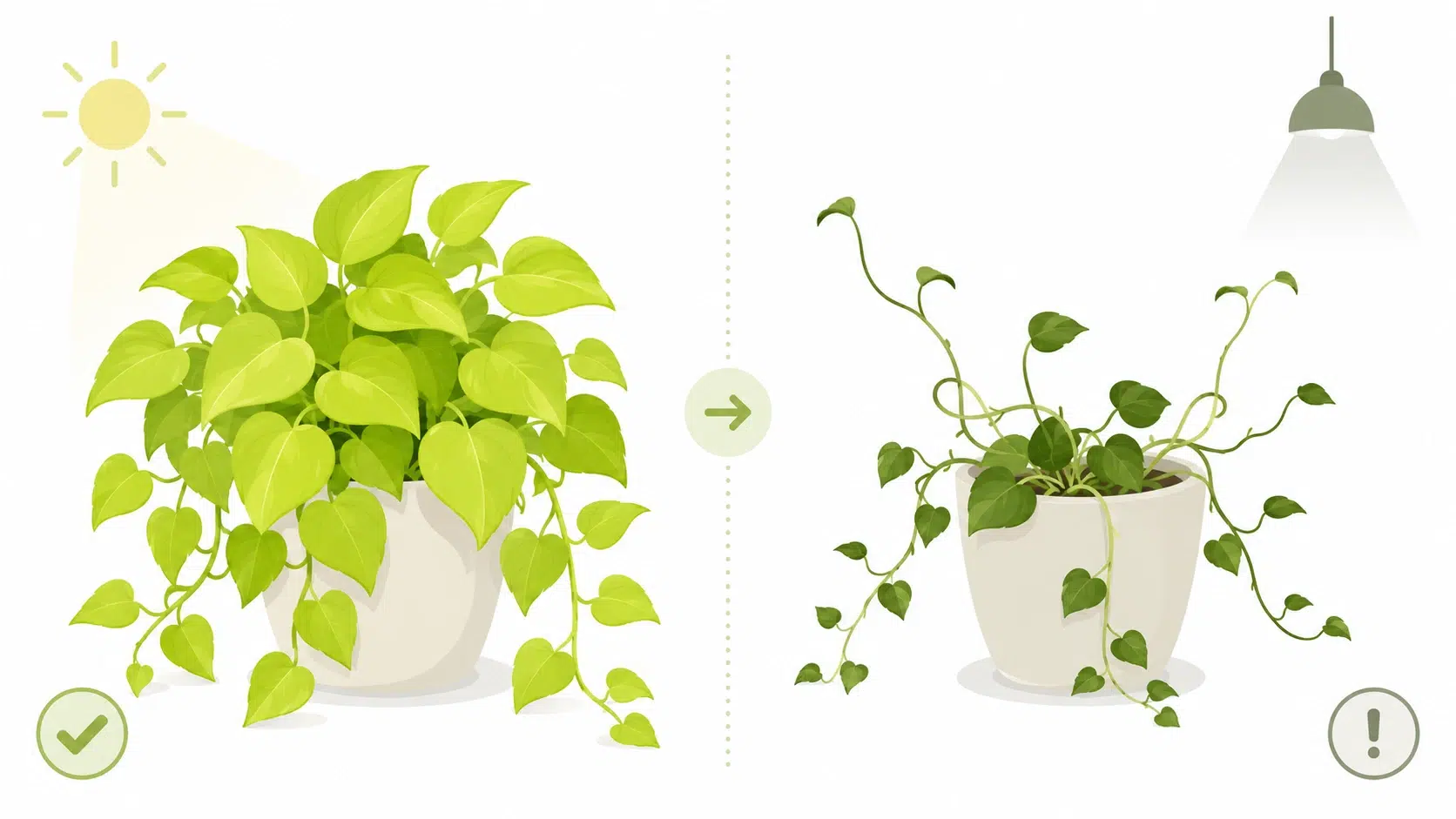
Yes, neon pothos can live in low light, but it is unlikely to thrive under those conditions. Although this adaptable houseplant tolerates lower light better than many indoor plants, prolonged low-light exposure reduces photosynthesis, leading to slower growth, smaller leaves, and a noticeable loss of its signature bright neon color.
Rather than maintaining vibrant chartreuse foliage, leaves often become darker green as the plant produces more chlorophyll to compensate for limited light. While this response helps the plant survive, it diminishes the ornamental quality that makes Neon Pothos popular.
Common signs of insufficient light include:
- Long, stretched vines with wider spacing between leaves
- Smaller newly emerging foliage
- Faded or greener leaf coloration
- Slow or stalled growth
- Thin, sparse appearance
Neon pothos generally tolerates:
- Bright indirect light — Ideal
- Medium indirect light — Healthy growth with slightly slower development
- Low light — Survival possible, but reduced vigor
- Very dark rooms — Unsuitable for long-term health
Low light becomes harmful when new growth nearly stops, leaves continue shrinking, or older foliage begins dropping. Relocating the plant gradually to a brighter area usually restores healthy growth over time.
Where Should You Place a Neon Pothos?
The best place for a neon pothos is somewhere that consistently receives bright, indirect light while maintaining stable indoor temperatures. Proper placement helps preserve foliage color, encourages balanced growth, and reduces common stress-related problems.
Ideal locations include:
- Bright living rooms near east-facing windows
- Home offices with filtered natural light
- Bedrooms with ample daylight
- Kitchens with bright but indirect sunlight
Avoid placing the plant:
- In prolonged direct afternoon sun
- Beside radiators or heating vents
- Near cold winter drafts
- In consistently dark hallways without supplemental lighting
Distance from the window is equally important. Positioning the plant a few feet away often provides abundant indirect light while protecting leaves from scorching.
For hanging baskets, ensure nearby windows still provide sufficient brightness. Shelves positioned too far from natural light may require supplemental grow lighting.
Do Pothos Prefer to Climb or Hang?
Pothos naturally prefer to climb because they are vining plants that attach themselves to trees in tropical forests using aerial roots. Providing a moss pole or support often produces larger leaves and more vigorous upward growth.
However, neon pothos also performs exceptionally well in hanging baskets, making it one of the most versatile indoor houseplants.
Comparison of growth habits:
| Climbing Growth | Hanging Growth |
| Larger leaves | Long trailing vines |
| Stronger vertical growth | Decorative cascading appearance |
| Better aerial root development | Easier maintenance |
| Often receives more even light | Requires occasional rotation for balanced growth |
Neither option is inherently better. The choice depends on available space and aesthetic preference, provided the plant continues receiving sufficient indirect light.
Neon Pothos vs. Golden Pothos — Light and Care Differences
Although both cultivars belong to Epipremnum aureum, their foliage characteristics influence their lighting preferences. Neon pothos generally requires brighter indirect light to maintain its vivid chartreuse color, whereas Golden Pothos retains attractive variegation even under moderately lower light conditions. If you’re interested in another popular trailing houseplant with similar care requirements, read our Scindapsus Pictus Care Guide: Light, Water, Soil & Growth.
The lighter pigmentation of Neon Pothos means reduced chlorophyll content, making adequate light especially important for healthy growth and color intensity.
| Feature | Neon Pothos | Golden Pothos |
| Light Needs | Bright indirect light preferred | Medium to bright indirect light |
| Leaf Color | Bright chartreuse | Green with yellow variegation |
| Color Retention | Depends heavily on sufficient light | More forgiving in medium light |
| Growth Rate | Moderate to fast | Fast |
| Variegation | Solid neon foliage | Yellow and green variegation |
| Low-Light Performance | Survives but loses vibrancy | Better tolerance while retaining appearance |
Despite these differences, both varieties benefit from:
- Well-draining potting mix
- Moderate watering
- Warm temperatures
- Occasional feeding during active growth
- Consistent indoor humidity
Neon Pothos Watering Needs
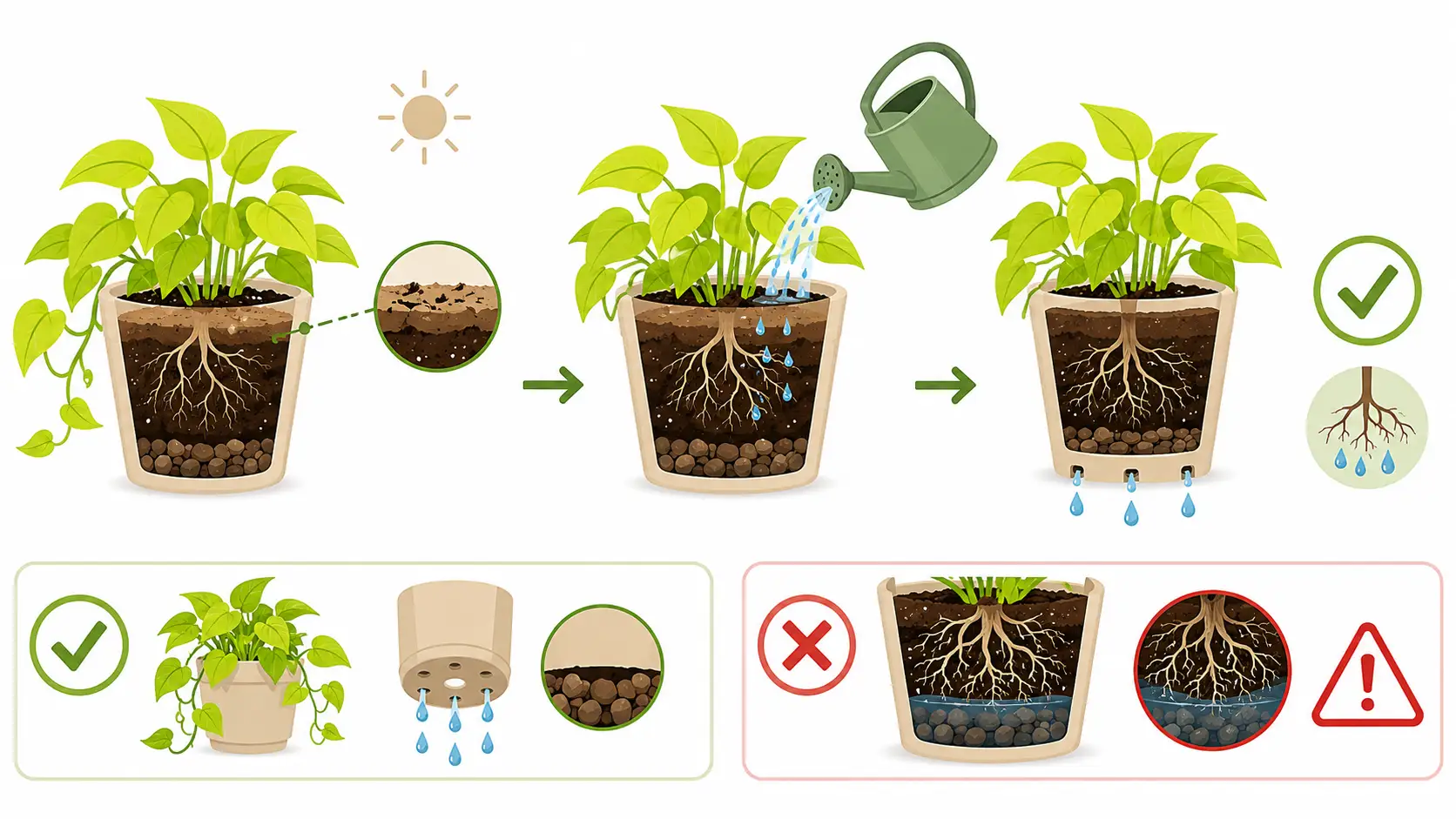
Proper watering works hand in hand with neon pothos light requirements. Plants growing in brighter locations use water more quickly because increased light supports faster photosynthesis and active growth. Conversely, plants kept in lower light require less frequent watering since their growth slows and soil remains moist for longer periods.
A practical approach is to water only after the top 1–2 inches of soil have dried. Rather than following a strict weekly schedule, checking soil moisture helps prevent both underwatering and overwatering.
Helpful watering guidelines include:
- Test soil moisture with your finger before watering.
- Water thoroughly until excess drains from the pot.
- Empty drainage trays to prevent standing water.
- Reduce watering during autumn and winter as growth slows.
- Increase watering slightly during warm, bright summer months if the soil dries more quickly.
Common signs of overwatering include:
- Yellowing leaves
- Soft stems
- Persistently wet soil
- Root rot
- Leaf drop
Allowing the soil to partially dry between waterings supports healthy root development and reduces the risk of fungal diseases. Combined with bright indirect light, proper watering forms the foundation of successful neon pothos care.
Neon Pothos Humidity, Temperature, and Fertilizer
Although neon pothos light requirements play the biggest role in maintaining vibrant foliage, humidity, temperature, and fertilization also contribute to healthy growth. Providing a stable indoor environment helps the plant produce lush leaves, strong vines, and a healthy root system.
Neon pothos thrives in average household conditions but performs best when humidity levels remain moderate to high. Dry indoor air, especially during winter, may cause brown leaf edges or slower growth. Grouping plants together, using a pebble tray, or running a humidifier can help increase humidity when necessary.
General care requirements include:
| Care Factor | Recommended Range |
| Humidity | 40–60% (higher is beneficial) |
| Temperature | 65–85°F (18–29°C) |
| Fertilizer | Balanced liquid fertilizer |
| Feeding Frequency | Every 4–6 weeks during spring and summer |
Avoid placing the plant near air conditioners, heaters, or drafty windows, as sudden temperature fluctuations can stress the foliage.
Ideal Temperature Range
The ideal temperature range for neon pothos is 65–85°F (18–29°C). These temperatures closely resemble the tropical environment where Epipremnum aureum naturally grows.
Growth slows significantly below 60°F (16°C), while prolonged exposure to cold temperatures can damage leaves and roots.
Cold stress may cause:
- Drooping foliage
- Yellow or blackened leaves
- Slow growth
- Leaf drop
Many gardeners ask, “What temperature kills pothos?” Although brief exposure to temperatures around 50°F (10°C) may not immediately kill the plant, extended periods below this level can cause serious damage. Freezing temperatures (32°F / 0°C or below) are usually fatal because they destroy plant cells.
Keeping indoor temperatures stable throughout the year is one of the simplest ways to promote healthy growth.
Fertilizing for Healthy Growth
Neon pothos is not a heavy feeder, but regular fertilization supports vibrant foliage and steady growth during the active growing season.
A balanced liquid houseplant fertilizer, such as a 10-10-10 or 20-20-20 ratio diluted according to the manufacturer’s instructions, is suitable for most plants. Feed every four to six weeks during spring and summer, then reduce or stop fertilizing during autumn and winter when growth naturally slows.
Helpful fertilizing practices include:
- Apply fertilizer only to moist soil.
- Avoid overfeeding, which can lead to salt buildup.
- Flush the soil occasionally with clean water to remove excess fertilizer salts.
- Skip fertilizing stressed or newly repotted plants until they recover.
A common question is, “Will coffee grounds help pothos grow?” Fresh coffee grounds are not recommended directly in potted pothos because they may retain excess moisture, compact the soil, and encourage fungal growth. A balanced houseplant fertilizer provides nutrients in a safer and more predictable form. Choosing the right feeding schedule is just as important as selecting the correct fertilizer, and our guide on Bi-Weekly vs Monthly Fertilizing for Houseplants explains when each approach works best.
What Makes Neon Pothos Happy? (Ideal Conditions Summary)
A neon pothos is happiest when it receives bright indirect light, consistent watering, warm temperatures, moderate humidity, and well-draining soil. Maintaining these conditions encourages vibrant foliage, healthy roots, and steady vine growth while preventing many common care problems. Want to estimate how your care routine may affect growth? Use our Plant Growth Calculator to understand how factors like light, watering, temperature, and growing conditions can influence your plant’s development over time.
An ideal care routine includes:
- Bright indirect light for most of the day.
- Watering after the top 1–2 inches of soil become dry.
- Temperatures between 65–85°F (18–29°C).
- Moderate humidity.
- Well-draining potting mix.
- Balanced fertilizer during active growth.
- A container with drainage holes.
Pot size also influences root development and growth, which you can explore further in Does Pot Size Affect How Fast a Plant Grows? Complete Guide.
Many plant owners also ask, “Do pothos like wide or deep pots?” Pothos generally prefer pots that are only slightly larger than the root ball rather than excessively deep containers. Oversized pots hold excess moisture, increasing the risk of root rot. Choosing a pot with adequate drainage is more important than selecting a particularly wide or deep container.
Common beginner mistakes include:
- Placing the plant in a dark corner.
- Watering on a fixed schedule instead of checking soil moisture.
- Allowing roots to sit in standing water.
- Exposing leaves to intense afternoon sun.
- Overfertilizing during winter.
Following a simple, consistent care routine usually produces better long-term results than making frequent changes to the plant’s environment.
Common Neon Pothos Problems and Fixes
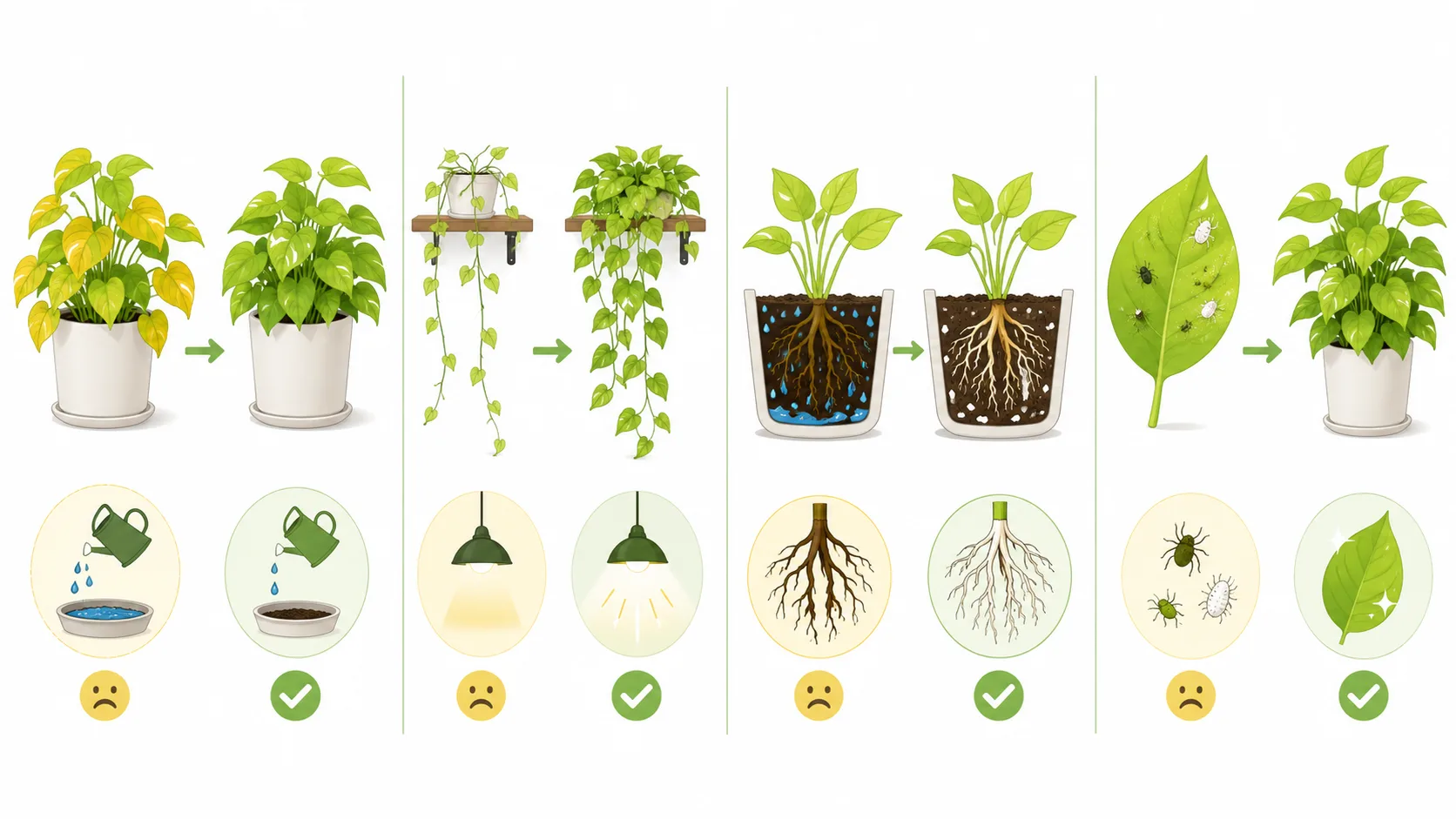
Most common neon pothos problems result from improper watering, inadequate lighting, or environmental stress. Identifying symptoms early allows you to correct the underlying cause before permanent damage occurs.
| Problem | Likely Cause | Recommended Solution |
| Yellow leaves | Overwatering or excessive direct sunlight | Allow soil to dry slightly and move to bright indirect light |
| Leggy, faded growth | Insufficient light | Relocate to a brighter location |
| Brown leaf edges | Low humidity or inconsistent watering | Increase humidity and water consistently |
| Root rot | Poor drainage or constantly wet soil | Remove affected roots and repot in fresh, well-draining soil |
| Pest infestation | Spider mites, mealybugs, or scale insects | Clean foliage and treat with insecticidal soap or neem oil |
Yellow leaves
Yellow leaves commonly indicate overwatering or excessive direct sunlight. Check soil moisture before watering and ensure the pot drains freely. If sunlight is too intense, move the plant slightly farther from the window or filter the light with a sheer curtain.
Leggy, faded growth
Long stems with widely spaced leaves usually indicate insufficient light. Moving the plant to a brighter location encourages fuller, more compact growth and restores healthier foliage over time.
Root or transplant shock
Many gardeners ask, “Do pothos go into shock after repotting?” Yes. Temporary transplant shock is normal and may cause mild drooping or slower growth for a few weeks. Keeping the soil lightly moist, avoiding fertilizer immediately after repotting, and maintaining stable lighting usually helps the plant recover.
Pest issues
Spider mites, mealybugs, and scale insects occasionally affect indoor pothos plants. Inspect leaves regularly, especially the undersides, and isolate infested plants to prevent pests from spreading. Early treatment with insecticidal soap or neem oil is typically effective.
Neon Pothos Propagation and Pruning (Content Differentiation)
Neon pothos is one of the easiest houseplants to propagate. Stem cuttings root readily in water or moist potting mix, making propagation an effective way to create new plants or encourage fuller growth.
To propagate neon pothos in water:
- Select a healthy vine with several leaves.
- Locate a node where a leaf joins the stem.
- Cut just below the node using clean scissors.
- Remove the lowest leaf if necessary.
- Place the node in clean water while keeping the leaves above the surface.
- Change the water every few days.
- Wait until roots are approximately 2–3 inches long before planting in potting mix.
The node is the most important part of the cutting because this is where new roots develop.
Pruning also improves the plant’s appearance and encourages branching.
Helpful pruning tips include:
- Trim just above a leaf node.
- Remove damaged or yellowing leaves.
- Prune during spring or summer for fastest recovery.
- Use sterilized pruning tools.
- Save healthy cuttings for propagation.
Regular pruning produces a denser, bushier plant and prevents vines from becoming overly long or sparse.
Neon Pothos Lifespan and Benefits
With proper care, a neon pothos can live for 10 years or more, and many indoor specimens remain healthy for decades through regular pruning and occasional repotting.
Its longevity depends on maintaining consistent care, particularly proper lighting, watering, and temperature.
Benefits of growing neon pothos include:
- Attractive year-round foliage.
- Easy care for beginners.
- Adaptability to most indoor environments.
- Fast propagation from stem cuttings.
- Decorative trailing or climbing growth.
- Suitable for homes and offices with bright indirect light.
Because of its forgiving nature and vibrant foliage, neon pothos remains one of the most popular tropical houseplants for indoor gardeners.
Conclusion
Understanding neon pothos light requirements is the key to maintaining healthy growth and preserving the plant’s signature bright chartreuse foliage. Bright indirect light allows the plant to photosynthesize efficiently without risking leaf scorch, while consistent watering, moderate humidity, warm temperatures, and well-draining soil create the ideal growing environment. Most common problems—including yellow leaves, leggy vines, and faded color—can be prevented through proper placement and a consistent care routine. By providing stable conditions and adjusting care as seasons change, your neon pothos can remain vibrant, vigorous, and attractive for many years.
Frequently Asked Questions
Can neon pothos live in low light?
Yes. Neon pothos can survive in low light, but it grows more slowly, develops longer stems, and often loses its vibrant neon color. Bright indirect light produces the healthiest growth.
How often do I water a neon pothos?
Water when the top 1–2 inches of soil feel dry. The exact frequency depends on light, temperature, humidity, and the season, so always check the soil before watering.
Do pothos prefer to climb or hang?
Pothos naturally prefer climbing because they are tropical vines, but they also thrive in hanging baskets. Both growth habits are healthy as long as the plant receives adequate light.
What temperature kills pothos?
Extended exposure below 50°F (10°C) can cause severe damage, while freezing temperatures at or below 32°F (0°C) are typically fatal.
Do pothos go into shock after repotting?
Yes. Mild transplant shock is common after repotting and may cause temporary drooping or slower growth. Stable light, careful watering, and avoiding fertilizer for a short period usually help the plant recover.
What's the difference between neon and golden pothos light needs?
Neon pothos generally requires brighter indirect light to maintain its vivid chartreuse foliage, while Golden Pothos tolerates medium light more effectively and typically retains its variegation better under lower light conditions.



4 Responses