
Introduction
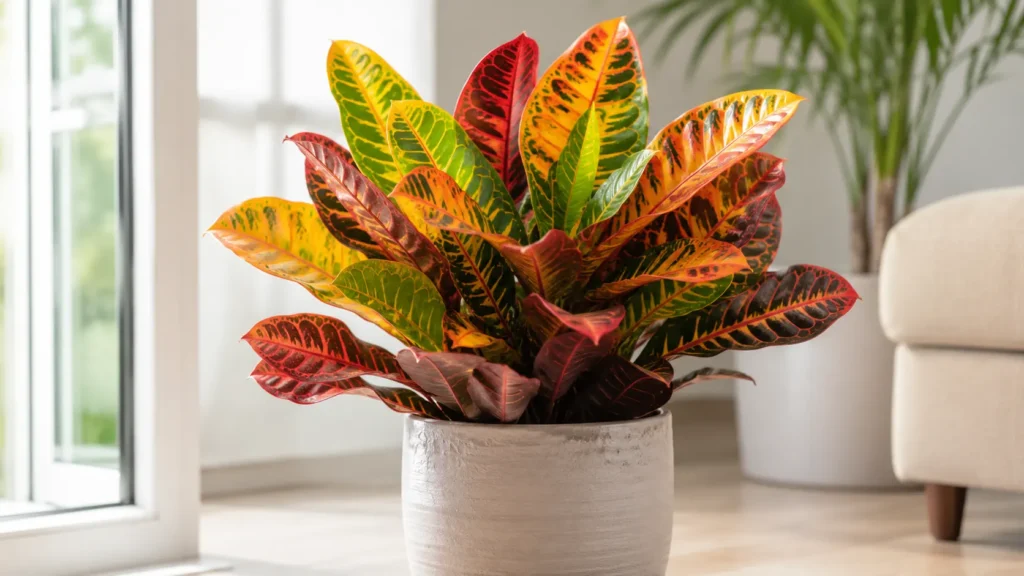
The codiaeum plant, scientifically known as Codiaeum variegatum, is a tropical ornamental plant admired for its vibrant foliage in shades of green, yellow, orange, red, pink, and purple. Commonly called the croton plant, it is grown primarily for its colorful leaves rather than its flowers. Native to Southeast Asia and the Pacific Islands, this evergreen shrub has become a favorite houseplant and landscape plant around the world. One of the best-known cultivars is Petra, recognized for its broad leaves with striking yellow, orange, and red veins. Whether grown indoors or outdoors, understanding its light, watering, and environmental needs is essential for maintaining healthy growth and vivid foliage.
Quick Summary
- The codiaeum plant (Codiaeum variegatum), commonly known as croton, is prized for its bold, multicolored foliage rather than its flowers.
- It grows best in bright indirect light or several hours of gentle direct sunlight with consistently moist, well-draining soil.
- Popular varieties include Codiaeum Petra and Mammy Croton, each offering unique leaf shapes and vibrant color patterns.
- Crotons thrive outdoors in warm climates but make excellent indoor plants when protected from drafts, sudden temperature changes, and inconsistent lighting.
What Is a Codiaeum Plant?
A codiaeum plant is an evergreen tropical shrub belonging to the Euphorbiaceae (spurge) family. Its botanical name is Codiaeum variegatum, while croton is the common name used in gardening and houseplant care. Although the scientific and common names are often used interchangeably, “croton” generally refers to cultivated varieties of Codiaeum variegatum grown for their ornamental foliage.
The codiaeum plant, scientifically known as Codiaeum variegatum, belongs to the Euphorbiaceae family. For additional botanical classification and taxonomy, see the Wikipedia article on Codiaeum variegatum.
Unlike many houseplants valued for flowers, crotons are appreciated for their thick, leathery leaves that display dramatic combinations of green, yellow, orange, red, burgundy, pink, and even purple. The intensity of these colors depends largely on light exposure and overall plant health.
Crotons naturally grow in tropical forests, where warm temperatures, high humidity, and bright filtered sunlight create ideal growing conditions. Because of their colorful appearance, they are widely used as:
- Indoor decorative houseplants
- Tropical landscape shrubs
- Patio container plants
- Accent plants in gardens with warm climates
The plant’s remarkable diversity has resulted in dozens of cultivars featuring different leaf shapes, sizes, and color combinations. Some varieties have broad oval leaves, while others produce narrow, twisted, or curled foliage.
Codiaeum Petra and Mammy Croton — Popular Varieties
Among the many croton cultivars, Codiaeum Petra and Mammy Croton are two of the most widely grown because of their exceptional ornamental value.
Codiaeum Petra, often called the Petra croton or croton Petra plant, is known for its broad, leathery leaves highlighted by bright yellow, orange, and red veins. As the foliage matures, the colors become richer, making Petra one of the most recognizable croton varieties for homes and landscapes.
Mammy Croton, in contrast, produces long, narrow leaves that naturally twist and curl. Its unique foliage combines shades of green, yellow, red, orange, and purple, creating a more sculptural appearance than many other crotons.
| Variety | Leaf Shape | Main Colors | Best Use |
| Codiaeum Petra | Broad, oval to star-shaped | Green, yellow, orange, red | Indoor décor, tropical gardens |
| Mammy Croton | Curled and twisted | Green, yellow, orange, red, purple | Containers, accent planting |
| Variegated Croton (general) | Highly variable | Mixed multicolored foliage | Indoor and outdoor ornamental displays |
Both cultivars require similar care, including bright light, warm temperatures, and evenly moist soil. Their main differences lie in their leaf shape, growth habit, and overall visual appeal rather than their maintenance needs.
Is Codiaeum an Indoor or Outdoor Plant?
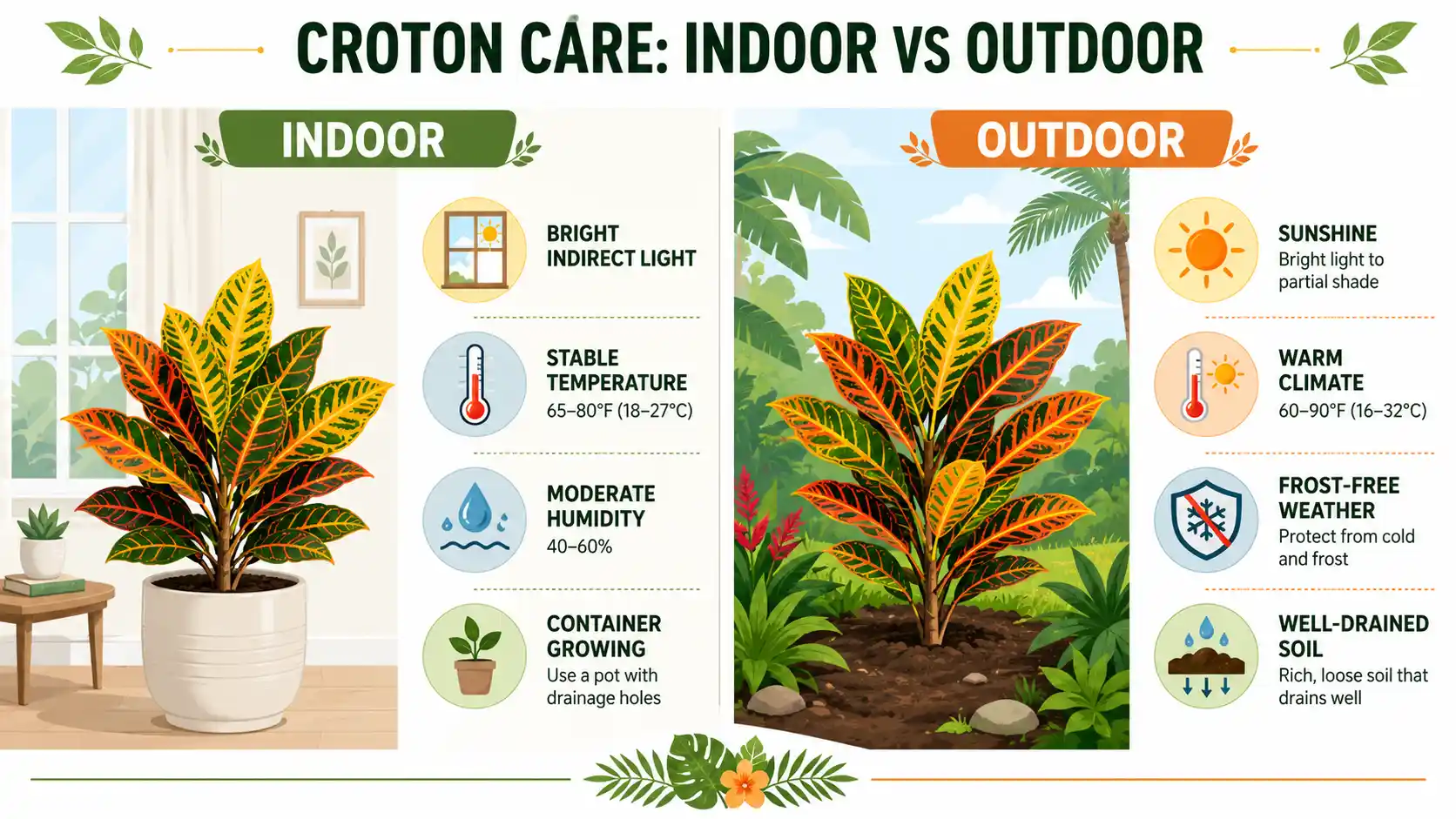
Codiaeum variegatum can be grown both indoors and outdoors, depending on the climate. In tropical and subtropical regions, it thrives outdoors throughout the year. In cooler climates, it is most commonly grown indoors as a colorful houseplant or kept in containers that can be moved inside before cold weather arrives.
Crotons perform best outdoors in USDA Hardiness Zones 9–11, where temperatures remain consistently warm. They cannot tolerate frost, and prolonged exposure to temperatures below approximately 50°F (10°C) can cause leaf drop and long-term damage.
When grown indoors, crotons need a location that receives abundant bright light throughout the day. South- or east-facing windows often provide suitable conditions, although filtered afternoon sunlight is preferable in particularly hot climates.
Moving a croton frequently between indoor and outdoor environments can cause temporary stress. The plant often responds to sudden changes in light intensity, humidity, or temperature by dropping leaves. This reaction is common and usually temporary if the plant is given time to adjust.
Outdoor growing requirements
- Warm tropical or subtropical climate
- Frost-free conditions throughout the year
- Bright sunlight with some protection from intense afternoon heat
- Well-drained, fertile soil
- Consistent moisture and moderate humidity
Indoor growing requirements
- Bright indirect light with several hours of gentle direct sun
- Stable room temperatures between 60–85°F (16–29°C)
- Moderate to high humidity
- Protection from heating vents, air conditioners, and cold drafts
- Well-draining potting mix with drainage holes
Transition stress when moving between environments
- Introduce outdoor sunlight gradually over one to two weeks.
- Move plants indoors before nighttime temperatures become too cool.
- Expect minor leaf drop after relocation while the plant adjusts.
- Maintain consistent watering during the transition period to reduce stress.
How Do You Care for a Codiaeum Plant?
Caring for a codiaeum plant involves providing bright light, consistent moisture, warm temperatures, and high humidity while avoiding sudden environmental changes. Although crotons have a reputation for being demanding, most problems can be prevented by maintaining stable growing conditions.
Healthy crotons develop their brightest foliage when they receive adequate sunlight, regular watering, and balanced nutrition. Consistency is more important than frequent intervention, as these plants respond poorly to abrupt changes in their environment.
The key elements of successful croton care include:
- Bright light every day
- Evenly moist but never waterlogged soil
- Warm temperatures year-round
- Moderate to high humidity
- Well-draining soil
- Regular feeding during active growth
- Occasional pruning to maintain shape
Light Requirements — Does a Croton Need Sunlight?
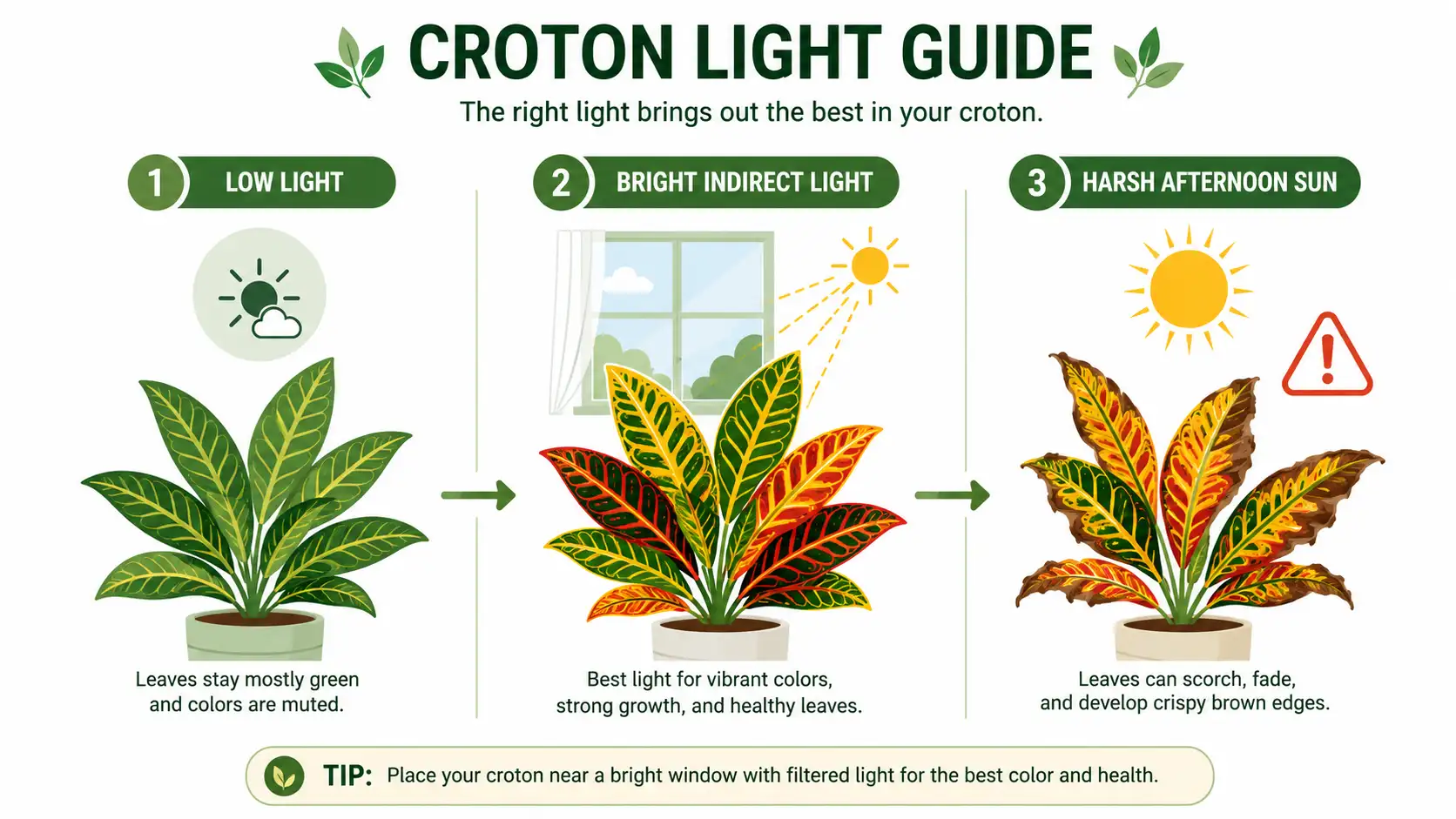
Yes, crotons need plenty of sunlight to maintain their vibrant leaf colors. Bright indirect light is ideal for most indoor plants, while a few hours of gentle morning or late afternoon direct sun help intensify the reds, oranges, and yellows that make crotons so attractive.
A location near an east-facing or bright south-facing window often provides excellent growing conditions. Outdoors, crotons perform well in partial sun or filtered sunlight, especially in regions with extremely hot summers. If you’re unsure what bright indirect light means, see our guide on Bright Indirect Light vs Direct Sunlight for Plants to choose the best location for your croton.
Too little light causes leaves to become greener as the plant produces more chlorophyll. Growth may also become leggy, with larger spaces between leaves and fewer colorful markings.
Excessively harsh afternoon sunlight, particularly after a sudden move outdoors, can scorch leaves, resulting in brown patches or faded foliage.
Signs of insufficient light include:
- Duller leaf colors
- Mostly green foliage
- Slower growth
- Leggy stems
- Smaller new leaves
Signs of excessive light include:
- Scorched leaf edges
- Brown or bleached patches
- Wilting during the hottest part of the day
- Dry, crispy leaf margins
The best place to put a croton plant is in a consistently bright location where lighting remains stable throughout the year. Avoid frequently moving the plant, as sudden changes in light intensity can trigger unnecessary leaf drop.
Watering Needs — How Often Should You Water a Croton?
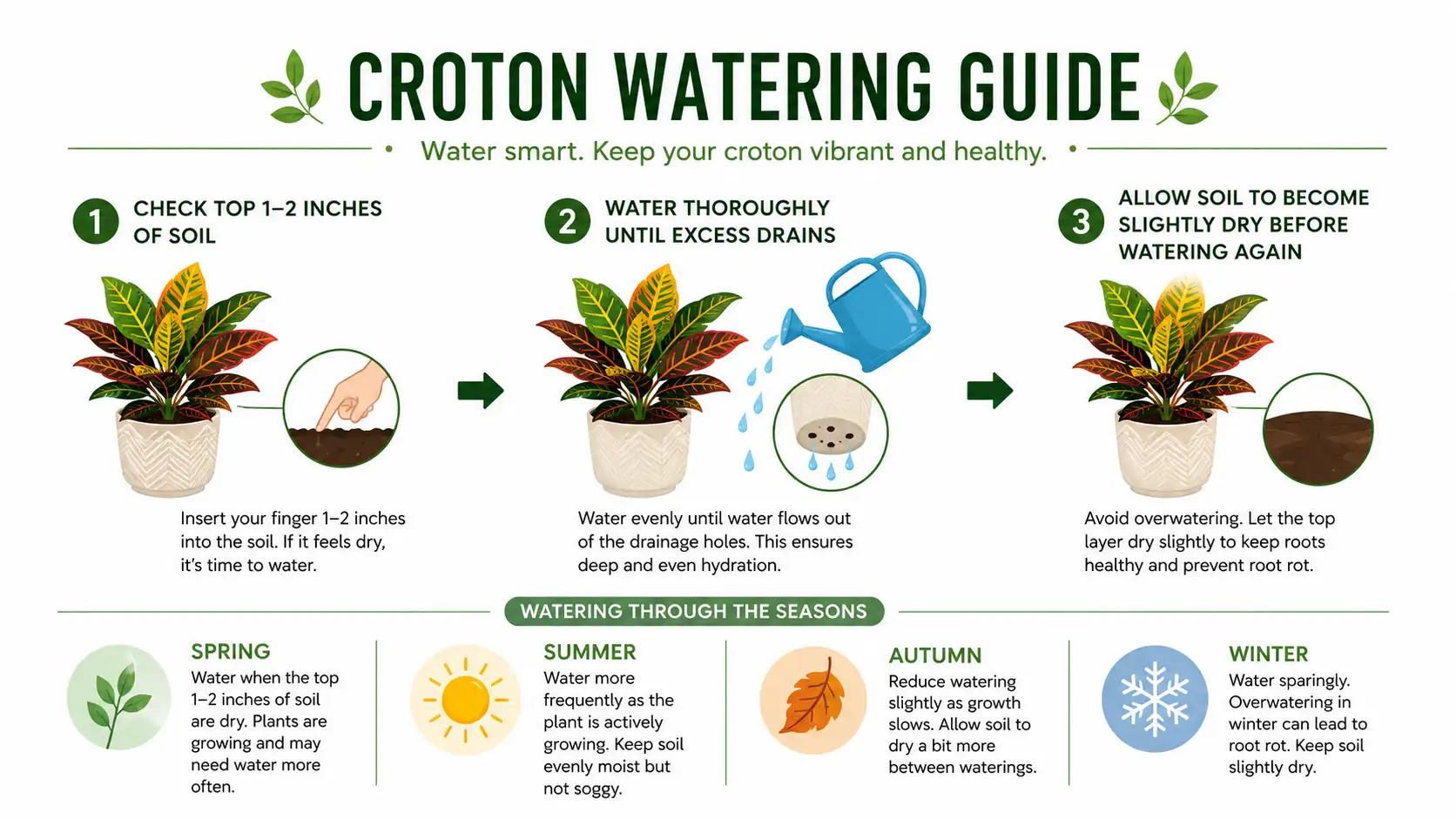
Crotons prefer consistently moist soil but should never remain waterlogged. Water whenever the top 1–2 inches (2.5–5 cm) of soil feel dry, then allow excess water to drain completely. This balance keeps the roots hydrated while reducing the risk of root rot.
For most indoor plants, watering once every 5–10 days during the growing season is common, though the exact frequency depends on temperature, humidity, pot size, and light exposure. During winter, growth slows and watering usually becomes less frequent.
Overwatering is one of the most common reasons crotons decline. Saturated soil deprives roots of oxygen, leading to root rot, yellowing leaves, and stem damage. Underwatering, on the other hand, causes leaves to droop, become crispy, and eventually fall off.
A balanced watering routine works best. Always check the soil before watering rather than following a strict schedule, as environmental conditions can change throughout the year.
Some gardeners use coffee grounds sparingly as a compost ingredient or soil amendment because they add organic matter. However, fresh coffee grounds should not be applied heavily around crotons, as excessive amounts can compact the soil and affect drainage. Well-composted coffee grounds used in moderation are generally a better option.
Signs of overwatering
- Yellowing leaves
- Frequent leaf drop
- Mushy or blackened stems
- Soft roots with an unpleasant odor
- Soil remaining wet for several days
Signs of underwatering
- Dry, crispy leaf edges
- Drooping foliage
- Curled leaves
- Dry potting mix pulling away from the container
- Slow or stunted growth
Recommended watering frequency by season
| Season | Watering Recommendation |
| Spring | Water when the top 1–2 inches of soil become dry. |
| Summer | Check soil frequently, as warm temperatures increase water needs. |
| Autumn | Gradually reduce watering as growth slows. |
| Winter | Water less often, allowing the top layer of soil to dry before watering again. |
Soil and Container — Pots or Ground?
Crotons grow successfully in both containers and garden beds, provided the soil drains well and the climate is warm enough. In cooler regions, containers are often the better choice because plants can be moved indoors before cold weather arrives.
The ideal growing medium is a fertile, well-draining potting mix rich in organic matter. Heavy clay soils that retain water for long periods should be improved with compost or other organic materials to increase drainage. Choosing the correct container also influences growth. Read Does Pot Size Affect How Fast a Plant Grows? for a detailed explanation.
When selecting a pot, choose one with drainage holes to prevent standing water around the roots. A container that is only slightly larger than the root ball helps maintain balanced moisture levels while encouraging healthy root development.
The following comparison highlights the advantages of each growing method.
| Feature | Container Growing | In-Ground Growing |
| Best for | Indoor plants and cold climates | Tropical and subtropical gardens |
| Mobility | Easy to move indoors | Permanent location |
| Moisture Control | Easier to monitor | Depends on natural drainage |
| Growth Potential | Limited by pot size | Larger mature size |
| Winter Protection | Simple to protect | Only suitable in frost-free climates |
Regardless of where a croton is planted, avoid waterlogged soil and repot container-grown plants every two to three years or when roots begin circling the pot.
Plant Size
A mature codiaeum plant varies in size depending on the variety, growing conditions, and whether it is grown indoors or outdoors. Indoor crotons typically reach 3–6 feet (0.9–1.8 m) tall with a spread of 2–4 feet (0.6–1.2 m). Their growth is naturally limited by container size, indoor lighting, and pruning. Outdoors in tropical climates, crotons can grow 6–10 feet (1.8–3 m) tall and may spread 4–6 feet (1.2–1.8 m) or more when planted directly in the ground.
Want to estimate how large your croton may grow?
Use our Plant Growth Calculator to predict your plant’s potential size based on its age, growing conditions, and environment.
Several environmental factors influence mature size:
- Light intensity
- Pot size and root space
- Soil fertility
- Regular watering
- Temperature
- Humidity
- Pruning practices
Routine pruning encourages a fuller, bushier plant rather than excessive height. Removing the growing tips also stimulates branching, producing a denser display of colorful foliage.
Growth Rate
Crotons have a moderate growth rate, producing most of their new leaves during the warm growing season. Under ideal conditions, they steadily develop new stems and foliage from spring through early autumn.
Growth slows significantly during winter because lower light levels and cooler temperatures reduce the plant’s metabolic activity. Indoor plants may appear almost dormant during this period, which is normal.
Several factors influence growth speed:
- Bright, consistent lighting promotes faster growth.
- Warm temperatures between 65–85°F (18–29°C) encourage active development.
- High humidity supports healthy leaf production.
- Balanced fertilizer during spring and summer improves vigor.
- Root-bound plants often grow more slowly until repotted.
If a croton stops producing new leaves during its active growing season, the most common causes include insufficient light, poor nutrition, cool temperatures, or inconsistent watering. Correcting these environmental conditions usually restores healthy growth over time.
How to Make a Croton More Colorful
The best way to make a croton more colorful is to provide bright, consistent light, maintain warm temperatures, and supply balanced nutrients during the growing season. The vivid reds, oranges, yellows, and pinks in croton leaves develop when the plant receives enough light and grows under stable environmental conditions. A consistent feeding schedule is equally important. Learn how often to fertilize in our Bi-Weekly vs Monthly Fertilizing for Houseplants guide.
Light is the single most important factor influencing leaf coloration. While crotons can survive in moderate light, their foliage often becomes predominantly green because the plant produces more chlorophyll to compensate for lower light levels. Moving the plant to a brighter location gradually can help restore its vibrant colors.
Temperature stability also plays an important role. Sudden drops in temperature or exposure to cold drafts can stress the plant, causing dull foliage and leaf drop. Crotons perform best in warm environments where temperatures remain relatively consistent throughout the year.
Nutrition supports healthy leaf production as well. Feeding with a balanced, water-soluble fertilizer every four to six weeks during spring and summer provides the nutrients needed for vigorous growth. Avoid overfertilizing, as excessive nutrients can damage roots and reduce overall plant health.
To encourage brighter foliage:
- Place the plant in bright indirect light with a few hours of gentle morning sun.
- Rotate the pot every few weeks for even light exposure.
- Maintain temperatures between 65–85°F (18–29°C).
- Keep humidity at moderate to high levels.
- Fertilize regularly during active growth.
- Clean leaves occasionally to remove dust that blocks sunlight.
Patience is important when improving color. Existing leaves may not change dramatically, but new growth usually develops richer coloration once growing conditions improve.
Why Are Crotons Hard to Take Care Of?
Crotons are considered challenging because they react quickly to changes in their environment. Fluctuations in light, temperature, humidity, or watering can cause leaf drop, making the plant appear difficult to maintain even though its care requirements are straightforward when conditions remain consistent.
Unlike many adaptable houseplants, crotons prefer stability. Moving the plant from one room to another, placing it near heating vents or air conditioners, or allowing the soil to become extremely dry can trigger stress responses. Cold temperatures are a common cause of croton stress. Our guide on What Temperature Is Too Cold for Indoor Houseplants? explains safe temperature ranges.
Common reasons crotons seem difficult to care for include:
- Sensitivity to sudden changes in light
- Inconsistent watering habits
- Low indoor humidity
- Cold drafts and temperature fluctuations
- Overwatering and poor drainage
- Frequent relocation within the home
Most of these problems are preventable by keeping the plant in a permanent, well-lit location and following a consistent care routine.
Croton vs Other Common Houseplants — Care Difficulty Comparison
The table below compares crotons with several popular houseplants to highlight their relative care requirements.
| Feature | Croton | Snake Plant | ZZ Plant | Pothos |
| Light Sensitivity | High | Low | Low | Moderate |
| Watering Tolerance | Moderate | High | Very High | Moderate |
| Humidity Needs | Medium to High | Low | Low | Moderate |
| Leaf Drop from Stress | Common | Rare | Rare | Uncommon |
| Beginner Friendly | Moderate | Excellent | Excellent | Excellent |
While crotons require more attention than many common houseplants, they reward proper care with some of the most colorful foliage available for indoor and outdoor gardens.
Common Problems With Croton Plants (Troubleshooting)
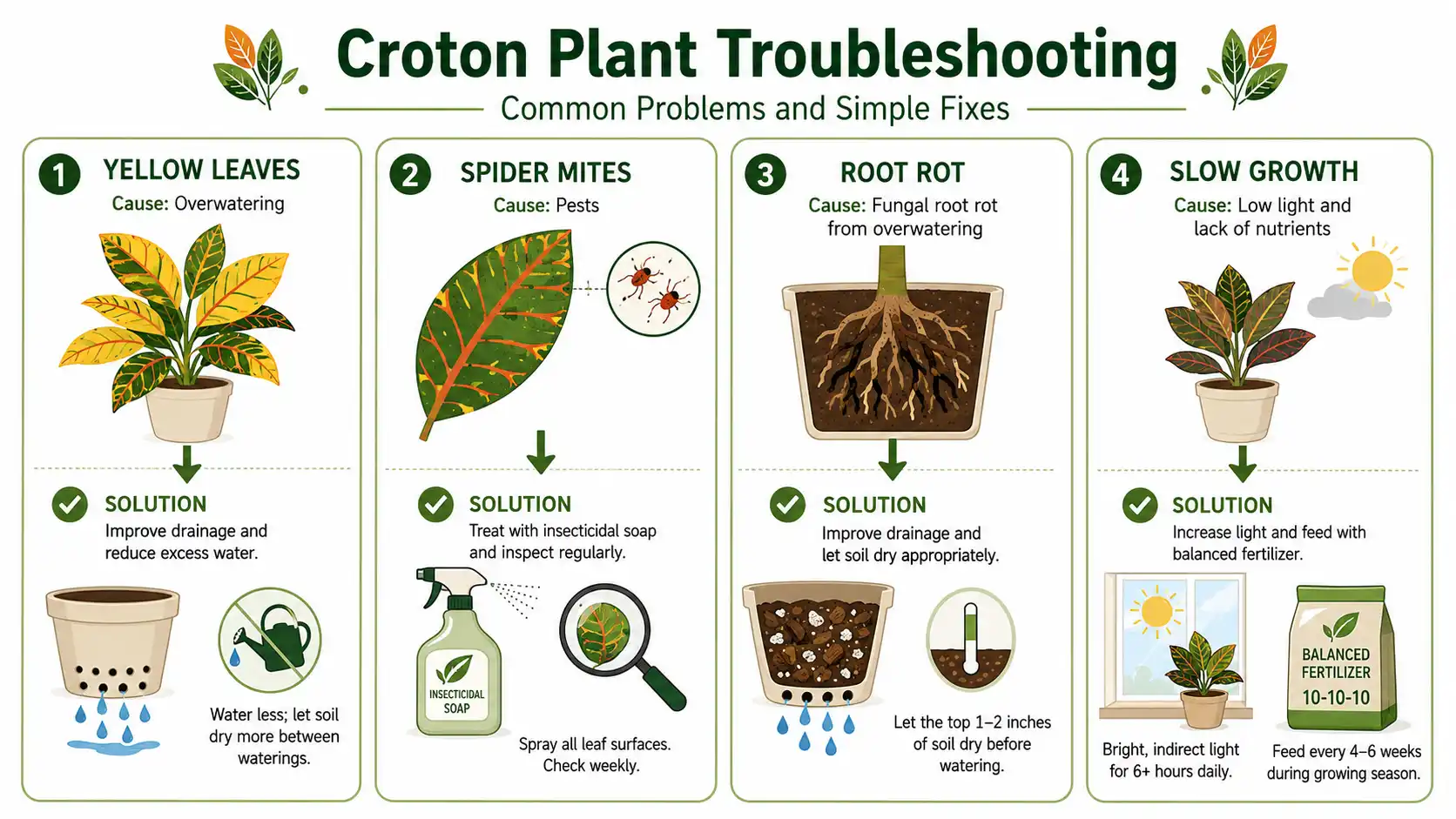
Most croton problems are caused by environmental stress rather than disease. Identifying the symptoms early and correcting the underlying cause usually allows the plant to recover.
Yellowing Leaves
Yellow leaves are commonly caused by overwatering, nutrient deficiencies, or sudden changes in light conditions. Older leaves naturally age and drop occasionally, but widespread yellowing usually indicates a care issue.
How to fix it
- Check soil moisture before watering.
- Improve drainage if soil remains soggy.
- Move the plant gradually to brighter light if needed.
- Feed with a balanced fertilizer during the growing season.
How to prevent it
- Water only when the top layer of soil begins to dry.
- Use well-draining soil.
- Maintain consistent lighting.
- Avoid sudden environmental changes.
Overwatering Issues
Root rot is one of the most serious problems affecting crotons. Excess water prevents roots from receiving oxygen, leading to decay and poor plant health.
Common symptoms include:
- Soft black roots
- Mushy stems
- Persistent yellow leaves
- Foul-smelling soil
- Leaf drop despite wet soil
How to fix it
- Remove the plant from saturated soil.
- Trim damaged roots using clean pruning tools.
- Repot into fresh, well-draining potting mix.
- Reduce watering frequency.
How to prevent it
- Always use pots with drainage holes.
- Empty saucers after watering.
- Never allow the plant to sit in standing water.
Pest Infestations
Crotons can occasionally attract sap-feeding insects, particularly in dry indoor environments.
The most common pests include:
- Spider mites
- Mealybugs
- Scale insects
- Aphids
Treatment
- Wipe leaves with a damp cloth.
- Spray with insecticidal soap or horticultural oil.
- Isolate affected plants until pests are eliminated.
Prevention
- Inspect new plants before bringing them indoors.
- Maintain adequate humidity.
- Clean leaves regularly to remove dust and insects.
If insects begin appearing in the potting mix, read Bugs in Indoor Plant Soil: Identification, Treatment & Prevention for identification and treatment methods.
Slow or Stalled Growth
Crotons naturally grow more slowly during winter, but prolonged lack of growth during spring or summer usually indicates unsuitable growing conditions.
Possible causes include:
- Insufficient light
- Poor nutrition
- Low temperatures
- Root-bound containers
- Low humidity
Improving light exposure, feeding during active growth, maintaining warm temperatures, and repotting when necessary usually encourage healthy new growth.
Is a Croton Plant Good for the Home? Pet Safety Considerations
Yes, a croton plant is an excellent decorative houseplant when its care requirements are met, but it should be kept away from pets and young children. Its striking foliage adds year-round color to living spaces, offices, and covered patios, making it a popular choice for indoor décor.
Although crotons are valued for their ornamental appeal, the plant contains a milky sap that can irritate the skin of sensitive individuals. Wearing gloves while pruning or repotting can help prevent skin irritation.
Pet owners should also be aware that Codiaeum variegatum, including popular cultivars such as Codiaeum Petra, is considered toxic if chewed or ingested by cats and dogs. Symptoms may include drooling, vomiting, or digestive upset.
For a safe home environment:
- Keep crotons out of reach of curious pets.
- Wash hands after handling the sap.
- Place the plant on shelves or plant stands if pets are likely to chew foliage.
- Contact a veterinarian promptly if a pet shows signs of ingestion.
Despite these precautions, crotons remain highly valued as long-lasting foliage plants that bring bold tropical color to indoor spaces.
Can You Grow a Croton in Water?
Yes, you can grow a croton in water for propagation, but it is not the best long-term growing method. Stem cuttings of a codiaeum plant can develop roots in water, making water propagation a simple way to produce new plants. However, mature crotons perform much better in nutrient-rich, well-draining soil where they can establish stronger root systems.
To propagate a croton in water:
- Select a healthy stem with at least two or three leaves.
- Cut just below a leaf node using clean, sterilized pruning shears.
- Remove the lower leaves so they will not sit in the water.
- Place the cutting in a clean container filled with fresh water, ensuring only the node is submerged.
- Position the container in bright, indirect light.
- Replace the water every few days to keep it clean and oxygenated.
- Once roots are about 2–3 inches (5–7.5 cm) long, transplant the cutting into a well-draining potting mix.
Although water propagation is effective, plants kept permanently in water often experience slower growth because water alone does not provide the balance of oxygen and nutrients available in soil. Transferring rooted cuttings to soil encourages healthier, more vigorous development.
What Is the Lifespan of a Croton Plant?
A croton plant can live for decades when provided with proper care. There is no fixed lifespan for Codiaeum variegatum, as longevity depends largely on growing conditions and routine maintenance. Healthy indoor crotons commonly thrive for 10–20 years or longer, while outdoor plants in tropical climates may live even longer.
The lifespan of a croton is influenced by several factors:
- Consistent bright lighting
- Proper watering without prolonged soggy soil
- Warm, stable temperatures
- Moderate to high humidity
- Regular fertilization during the growing season
- Timely repotting as the plant grows
- Prompt treatment of pests and diseases
Conversely, repeated stress from overwatering, underwatering, cold exposure, or poor light can weaken the plant over time and shorten its lifespan.
To maximize longevity:
- Repot every two to three years when the plant becomes root-bound.
- Remove dead or damaged leaves to encourage healthy growth.
- Keep the foliage clean so it can absorb light efficiently.
- Inspect regularly for pests such as spider mites and mealybugs.
- Maintain a consistent care routine throughout the year.
With stable conditions, crotons continue producing vibrant new foliage for many years, making them one of the longest-lasting ornamental foliage houseplants.
Beginner Mistakes and Practical Care Tips (SERP Gap Coverage)
Many new plant owners struggle with crotons because they unintentionally create inconsistent growing conditions. Fortunately, most common problems are easy to avoid once you understand the plant’s basic requirements.
Overwatering Is the Most Common Mistake
Overwatering is the leading cause of croton decline. Watering too frequently or allowing the pot to sit in excess water can quickly lead to root rot and leaf drop.
Better practice:
- Check soil moisture before watering.
- Use containers with drainage holes.
- Empty excess water from saucers after watering.
Moving the Plant Too Often
Crotons dislike sudden changes in their environment. Frequently moving the plant between rooms or from indoors to outdoors can cause stress and leaf loss.
Better practice:
- Choose a bright, permanent location.
- Rotate the pot occasionally instead of relocating it completely.
- Acclimate the plant gradually when moving it outdoors for the season.
Ignoring Humidity Needs
Indoor air can become very dry, especially during winter when heating systems are in use. Low humidity may cause brown leaf edges and reduced growth.
Better practice:
- Maintain moderate to high humidity.
- Group tropical plants together to create a more humid microclimate.
- Use a humidifier if indoor air is consistently dry.
Inconsistent Feeding Schedule
Crotons benefit from regular nutrition during their active growing season. Skipping fertilizer for long periods or overfeeding can both affect plant health.
Better practice:
- Feed every four to six weeks during spring and summer with a balanced fertilizer.
- Reduce or stop fertilizing during winter when growth naturally slows.
- Follow the manufacturer’s recommended application rates.
Forgetting Seasonal Care Adjustments
Croton care should change slightly throughout the year as growth rates and environmental conditions shift.
| Season | Practical Care Tips |
| Spring | Resume fertilizing, increase watering as new growth begins, and inspect for pests. |
| Summer | Maintain consistent moisture, provide bright light, and monitor humidity. |
| Autumn | Gradually reduce watering and stop heavy fertilization as growth slows. |
| Winter | Water less frequently, protect from cold drafts, and maximize available light. |
Following these seasonal adjustments helps keep crotons healthy while reducing stress-related problems.
Conclusion
The codiaeum plant, commonly known as croton, is one of the most striking ornamental foliage plants available for homes and tropical gardens. Popular varieties such as Codiaeum Petra and Mammy Croton offer bold colors and distinctive leaf shapes, making them standout additions to indoor and outdoor spaces.
Although crotons are sometimes considered demanding, their care becomes straightforward when their basic needs are met. Bright light, consistently moist but well-draining soil, warm temperatures, stable humidity, and minimal environmental changes are the keys to healthy growth and vibrant foliage. This croton care guide is part of our comprehensive Plants: Benefits and Guides (Complete Care, Types & Growing Tips) resource, where you’ll find expert information on growing and maintaining a wide range of indoor and outdoor plants.
By understanding how to provide proper light, watering, nutrition, and seasonal care, you can enjoy a healthy codiaeum plant that produces colorful leaves for many years. Consistency is the most important factor in successful croton care, rewarding growers with long-lasting tropical beauty.
Frequently Asked Questions
How do you care for a Codiaeum plant?
Care for a Codiaeum variegatum by providing bright indirect light, consistently moist but well-draining soil, warm temperatures between 65–85°F (18–29°C), moderate to high humidity, and regular fertilization during spring and summer. Avoid sudden changes in light, temperature, or watering habits to reduce stress and leaf drop.
Is Codiaeum an indoor or outdoor plant?
Codiaeum can be grown both indoors and outdoors. It thrives outdoors year-round in warm tropical and subtropical climates, typically USDA Zones 9–11. In cooler regions, it is most commonly grown indoors as a houseplant or in containers that can be moved inside before frost.
Does a croton need sunlight?
Yes. Crotons require bright light to maintain their vibrant foliage. Bright indirect light with a few hours of gentle morning or late afternoon direct sun usually provides the best color without increasing the risk of leaf scorch.
How often should I water a croton?
Water a croton whenever the top 1–2 inches (2.5–5 cm) of soil become dry. During spring and summer, this is often every 5–10 days, while winter watering is typically less frequent because growth slows and the soil dries more slowly.
What are the common problems with croton plants?
The most common problems include yellowing leaves, overwatering and root rot, underwatering, spider mites, mealybugs, scale insects, and slow growth caused by insufficient light or cool temperatures. Most issues can be corrected by improving growing conditions and maintaining a consistent care routine.
Can I grow a croton in water?
Yes. Croton stem cuttings root readily in water and can be propagated successfully this way. However, water propagation is intended for rooting cuttings rather than long-term cultivation. Once healthy roots develop, transplanting the cutting into well-draining soil produces stronger and more vigorous growth.
Why are crotons hard to take care of?
Crotons are often considered difficult because they are highly sensitive to environmental changes. Sudden shifts in light, watering, humidity, or temperature can trigger leaf drop. Keeping the plant in a stable location with consistent care greatly reduces these problems and helps it thrive.