
Introduction
An overwatered coffee plant is one of the most common issues faced by indoor plant growers, especially with Coffea arabica, a species known for its sensitivity to moisture imbalance. Overwatering occurs when the plant receives more water than its roots can absorb or when soil drainage is poor, leading to oxygen deprivation in the root zone. This condition often causes drooping leaves, yellowing, brown spots, and eventually root rot. Understanding the symptoms, causes, and corrective actions is essential for maintaining a healthy coffee plant and ensuring long-term growth and vitality indoors or outdoors. Similar moisture-sensitive indoor plants like the Spider Plant Indoor Benefits: Air, Wellness, and Easy Care also highlight how proper watering is essential for healthy foliage and growth.
Quick Summary
- Overwatering causes drooping, yellowing, and brown-spotted coffee plant leaves with soggy soil
- Coffee plants require well-draining soil and slight drying between waterings
- Recovery involves improving drainage, trimming damaged roots, and adjusting watering habits
- If untreated, overwatering leads to root rot and plant decline
What Does an Overwatered Coffee Plant Look Like?
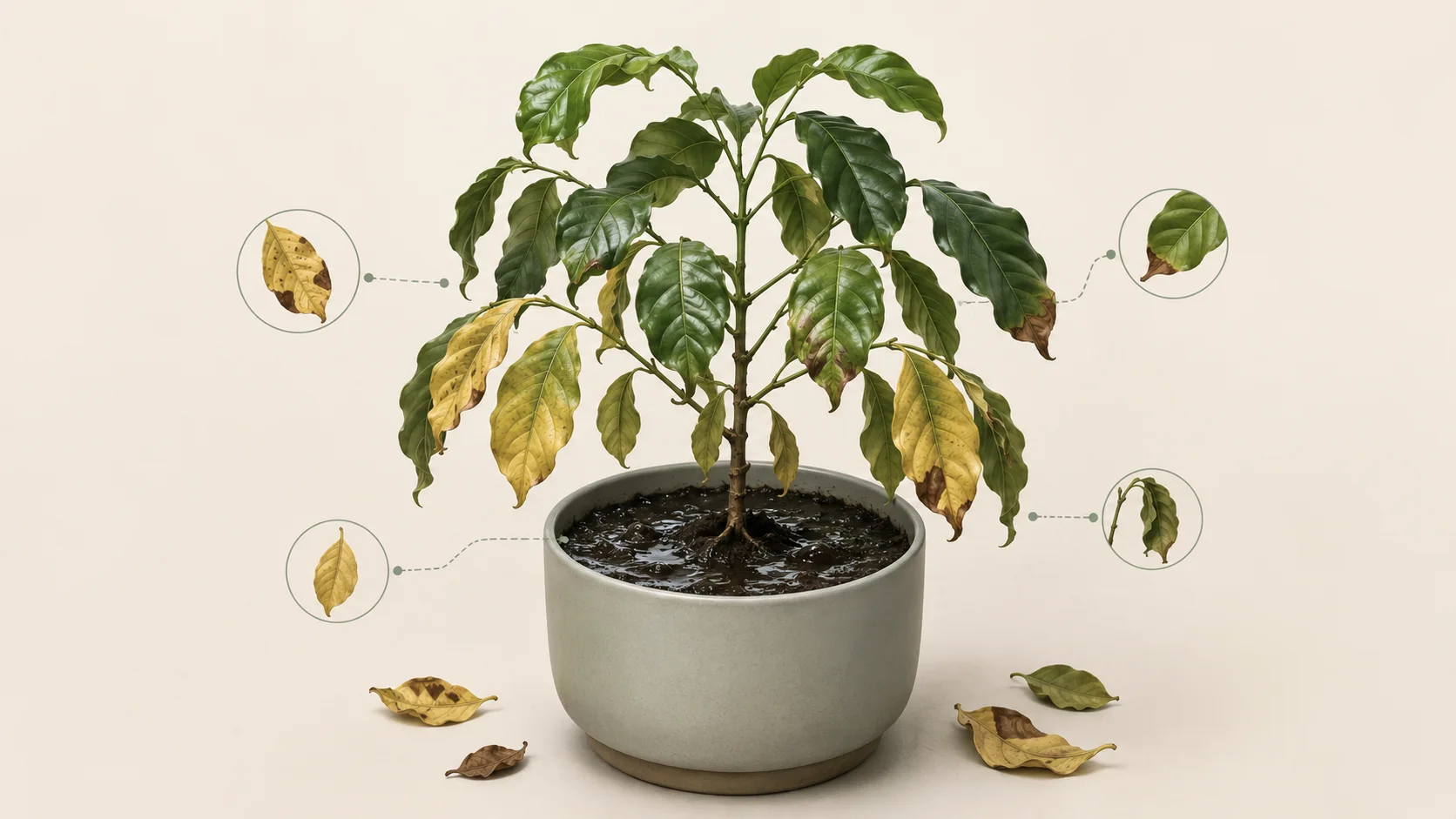
An overwatered coffee plant typically shows visible stress in its leaves, stems, and soil condition due to excess moisture disrupting root function. The most common signs include yellowing leaves, drooping stems, and brown or crispy leaf edges caused by oxygen-starved roots.
The plant may also develop a musty or moldy smell from the soil, indicating fungal growth. Leaves may fall prematurely as the plant struggles to sustain itself. In severe cases, root rot develops, making recovery difficult.
Common symptoms include:
- Yellowing coffee plant leaves
- Coffee plant leaves drooping despite moist soil
- Brown or crispy leaf tips
- Brown spots on coffee plant leaves
- Soggy, waterlogged soil
- Moldy or foul-smelling soil
- Leaf drop and weak stems
These symptoms collectively indicate that the plant is receiving more water than it can process efficiently.
Overwatered vs. Underwatered Coffee Plant
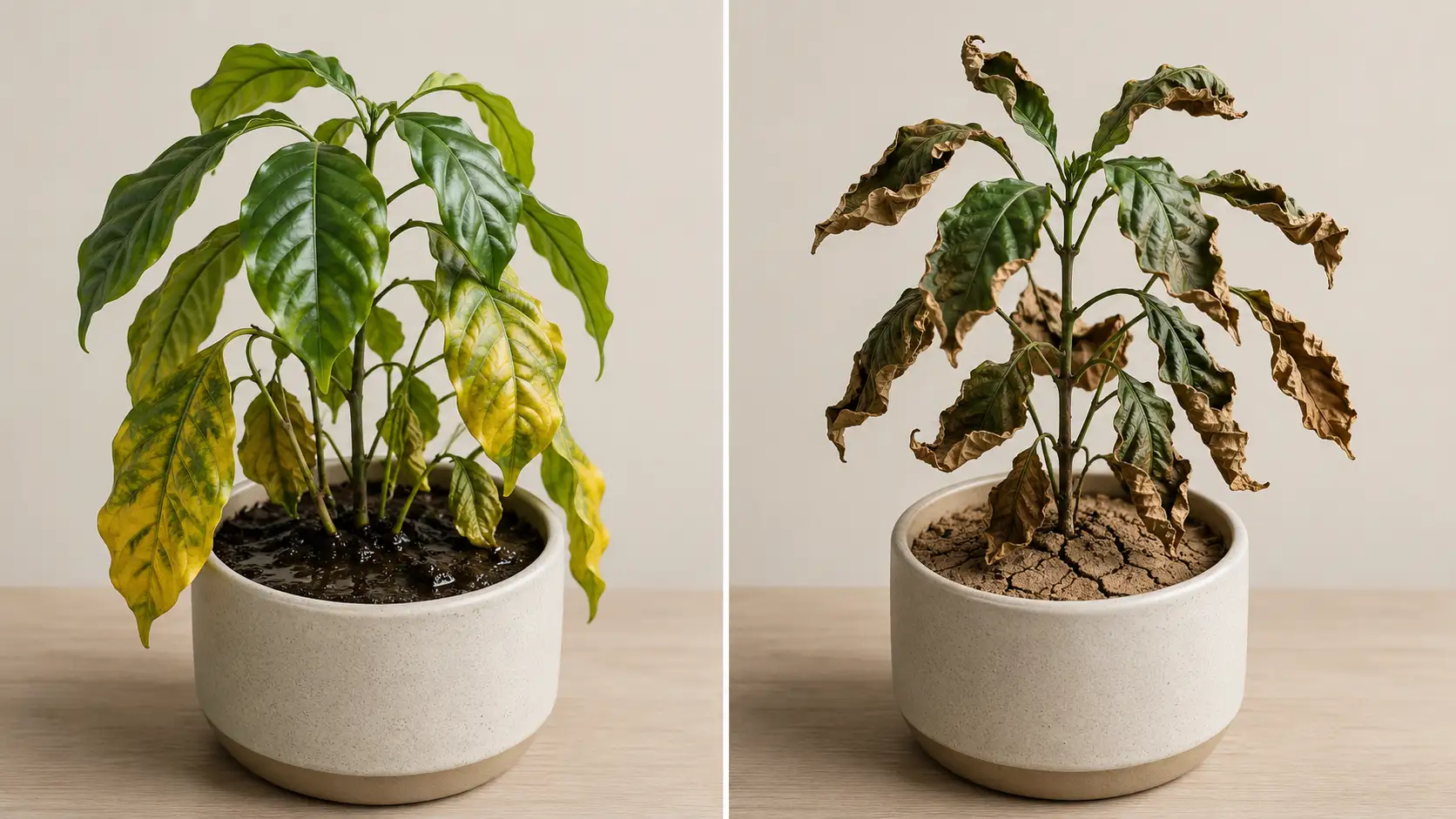
| Symptom | Overwatered | Underwatered |
| Soil condition | Wet, soggy, waterlogged | Dry, crumbly, pulling from pot edges |
| Leaf texture | Soft, limp, sometimes mushy | Crispy, dry, brittle |
| Leaf color | Yellowing with brown spots | Uniform browning, dry edges |
| Drooping pattern | Droops despite wet soil | Droops and perks up after watering |
| Root condition | Rotting, dark roots | Dry, shriveled roots |
An overwatered coffee plant often confuses growers because it also droops like an underwatered plant. The key difference is soil moisture: wet soil signals overwatering, while dry soil indicates dehydration.
Why Coffee Plant Leaves Turn Brown or Yellow From Overwatering
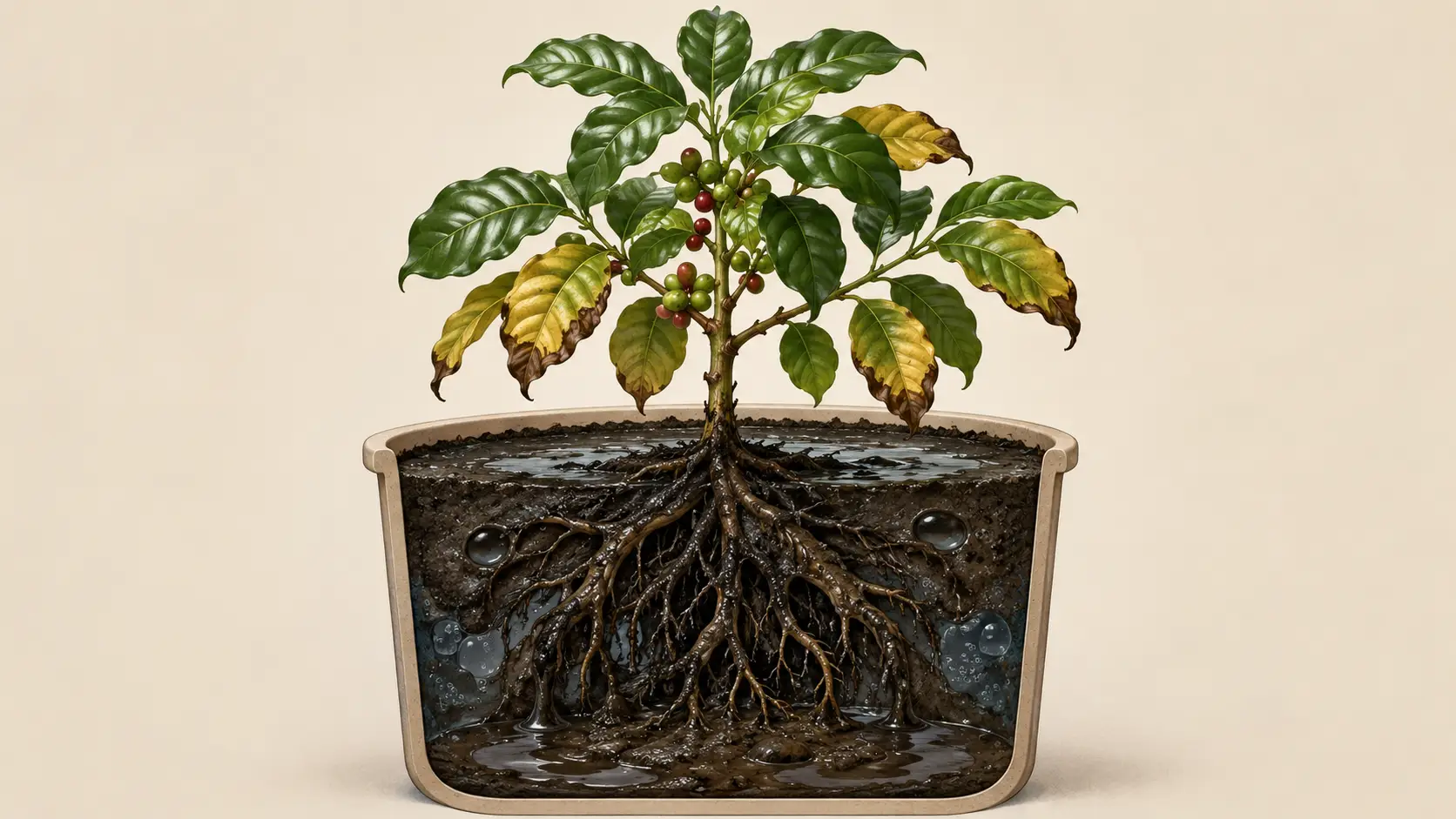
Coffee plant leaves turn brown or yellow due to oxygen deprivation in the root system caused by excess water. When soil remains saturated, roots cannot breathe properly, leading to root suffocation and decay.
This condition is commonly known as root rot in plants. Learn more about it here: Root_rot.
Once roots begin to rot, they lose the ability to absorb nutrients and water efficiently. This nutrient deficiency results in discoloration, including yellow leaves and brown leaf tips. Fungal infections in overly wet soil can also worsen leaf damage.
Key causes include:
- Root rot from prolonged water exposure
- Reduced oxygen availability in soil
- Fungal and bacterial growth in wet conditions
- Nutrient uptake failure
- Damage to fine root hairs responsible for absorption
This chain reaction explains why overwatering quickly leads to visible decline in coffee plant health.
How Often Should You Water a Coffee Plant?
Coffee plants should be watered only when the top 1–2 inches of soil feel dry to the touch. There is no fixed schedule because environmental factors significantly affect soil moisture levels. This watering approach is similar to other indoor plants such as the How Often to Water a Cheese Plant, where soil moisture checks are more reliable than fixed schedules.
Best watering practices:
- Check soil moisture before watering
- Water thoroughly until excess drains out
- Allow soil to partially dry between waterings
- Reduce watering frequency in winter
- Increase drainage for potted plants
Overwatering usually results from watering on a fixed schedule instead of responding to actual soil conditions.
Coffee Plant Light and Soil Conditions That Affect Watering Needs
Light and soil type directly influence how quickly a coffee plant consumes or retains moisture. Bright, indirect light increases evaporation, while low light slows it down. Understanding light levels is crucial, as explained in Bright Indirect Light vs Direct Sunlight for Plants, since lighting directly affects soil drying speed and watering frequency.
Key factors:
- Bright indirect light = faster drying soil
- Low light = slower evaporation and higher overwatering risk
- Well-draining soil reduces root rot risk
- Dense or compact soil retains excess water
Ideal soil is slightly acidic, rich in organic matter, and well-aerated to prevent waterlogging.
How to Fix an Overwatered Coffee Plant
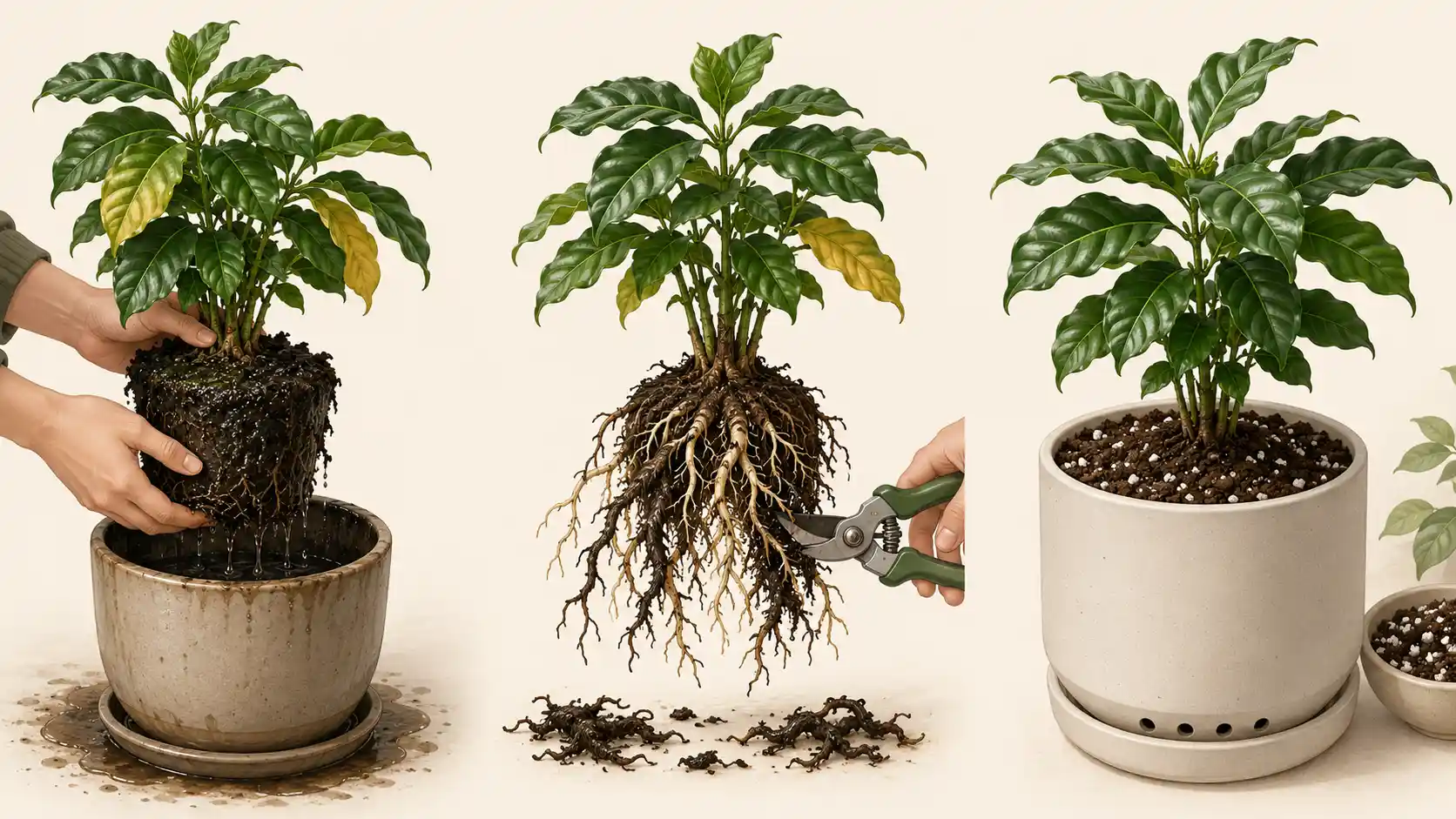
Fixing an overwatered coffee plant requires immediate corrective action to prevent permanent root damage. The goal is to restore oxygen flow and eliminate decayed roots.
Step-by-step recovery:
- Stop watering immediately
- Remove plant from pot and inspect roots
- Trim black or mushy roots using sterilized tools
- Repot in fresh, well-draining soil mix
- Ensure pot has proper drainage holes
- Remove severely damaged leaves to reduce stress
- Place plant in indirect light for recovery
Recovery time depends on severity, but early intervention significantly improves survival chances.
Coffee Plant Care Essentials to Prevent Overwatering
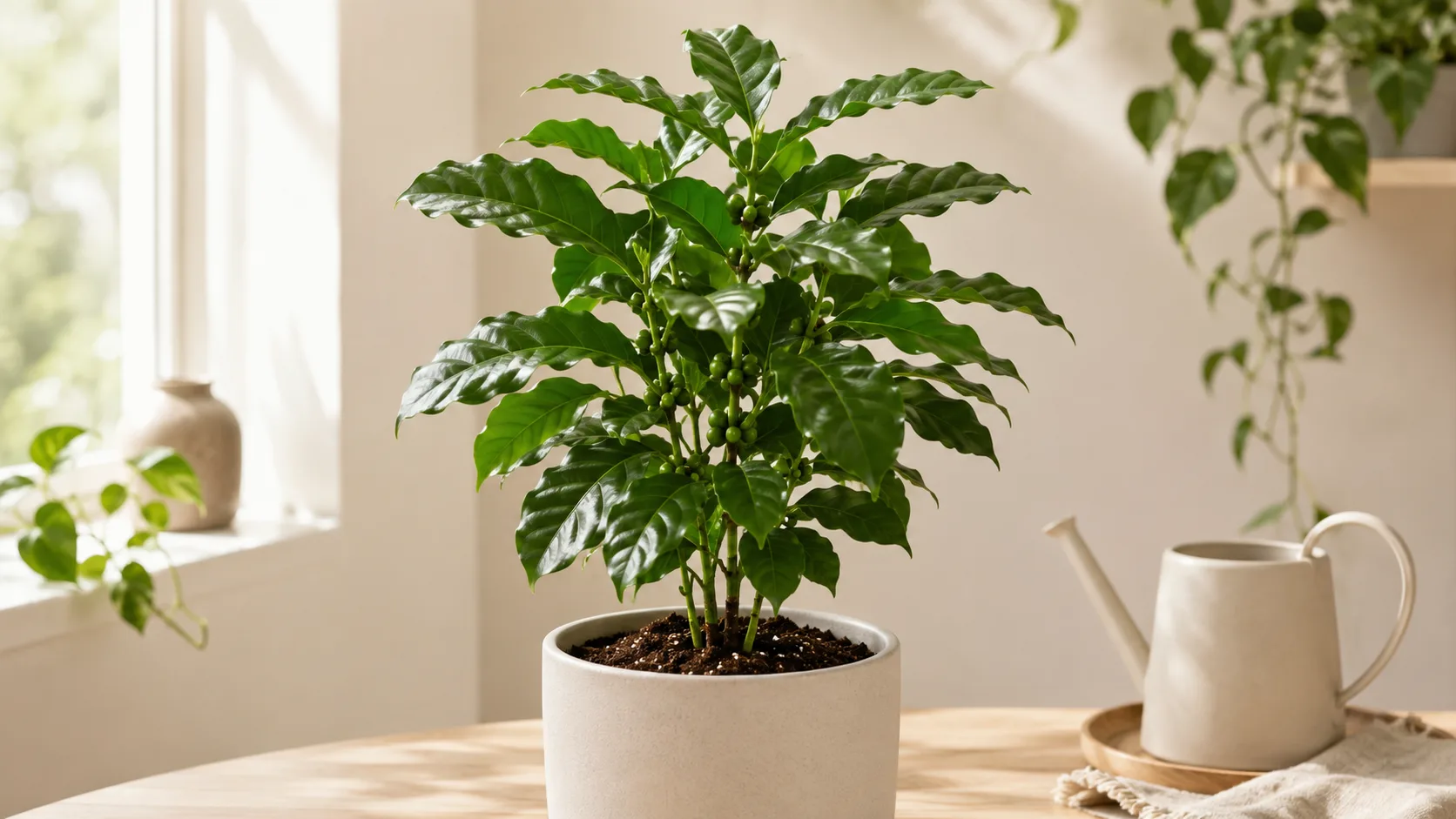
Proper care practices help prevent future overwatering issues and support healthy growth of Coffea arabica. For broader indoor plant care principles and benefits, see our complete guide on Plants Benefits and Guides.
Essential care tips:
- Use a well-draining soil mix (peat, perlite, organic matter)
- Always choose pots with drainage holes
- Water only when topsoil is dry
- Maintain moderate humidity levels
- Fertilize lightly during growing season
- Provide bright, indirect sunlight
- Monitor seasonal growth changes
Indoor humidity levels also play a key role in moisture balance, as discussed in How to Increase Humidity for Indoor Plants Without a Humidifier, especially for tropical plants like coffee.
Using Coffee Grounds as Fertilizer
Coffee grounds can be used as a mild organic fertilizer, but only in controlled amounts. Excessive use can increase soil acidity too much and reduce drainage efficiency.
Guidelines:
- Mix small amounts into compost rather than direct soil application
- Avoid thick layers that trap moisture
- Use occasionally during active growth season
- Suitable for improving organic matter content
Moderation is key to avoiding compaction and moisture retention issues.
Common Beginner Mistakes With Coffee Plant Watering
Many overwatering issues come from simple but repeated care mistakes. Overwatering can also attract pests in soil, which is covered in Bugs in Indoor Plant Soil: Identification, Treatment & Prevention, where excess moisture creates ideal breeding conditions.
Common errors include:
- Watering on a fixed schedule instead of checking soil
- Using pots without drainage holes
- Ignoring humidity and seasonal changes
- Overcorrecting after slight wilting
- Using heavy, moisture-retentive soil mixes
Avoiding these mistakes significantly improves plant survival rates.
Arabica vs. Robusta Coffee Plants
| Trait | Arabica | Robusta |
| Scientific name | Coffea arabica | Coffea canephora |
| Climate preference | Cool, high altitude | Hot, low altitude |
| Water tolerance | Low–moderate | Higher tolerance |
| Flavor profile | Smooth, mild | Strong, bitter |
| Growth regions | Ethiopia, Latin America | Africa, Asia |
Arabica coffee plants are more sensitive to overwatering compared to Robusta coffee plants, making drainage and watering control especially important.
Is a Coffee Plant Toxic to Cats or Pets?
Coffee plants contain caffeine, which is toxic to cats and other pets if ingested. All parts of the plant, including leaves and berries, can cause adverse reactions.
Symptoms of ingestion:
- Vomiting
- Restlessness
- Rapid heart rate
- Tremors
Safety tips:
- Keep plants out of reach of pets
- Avoid leaf shedding in accessible areas
- Contact a veterinarian if ingestion occurs
Conclusion
An overwatered coffee plant develops clear warning signs such as yellowing leaves, brown spots, and soggy soil due to root oxygen deprivation. Managing watering habits, ensuring proper drainage, and understanding environmental needs are essential for preventing damage. By maintaining balanced moisture levels, growers can keep Coffea arabica healthy and productive while avoiding root rot and long-term plant decline.
FAQs
How do you know if a coffee plant is overwatered?
An overwatered coffee plant shows yellow leaves, drooping stems, brown spots, and constantly wet soil.
Can an overwatered coffee plant recover?
Yes, if root rot is not severe and damaged roots are removed quickly, the plant can recover.
How often should you water an indoor coffee plant?
Water only when the top 1–2 inches of soil are dry, usually once every 7–14 days depending on conditions.
Why are my coffee plant leaves turning brown?
Brown leaves usually result from root damage caused by excess water, poor drainage, or fungal infection.
Is it better to underwater or overwater a coffee plant?
Underwatering is generally safer because coffee plants recover faster from dryness than from root rot.
Are coffee plants toxic to cats?
Yes, coffee plants are toxic to cats due to caffeine content and should be kept out of reach.