
Introduction
Knowing how to check if indoor plant needs water helps prevent one of the most common houseplant problems: giving too much or too little water. A soil test for watering does not mean a laboratory pH test; it is a simple physical and visual check of soil moisture using methods you can do at home. The most reliable ways include checking soil with your finger, observing soil appearance, lifting the pot to judge weight, and using a wooden stick method. These quick checks help determine when plants actually need water instead of relying on fixed schedules.
Quick Summary
- The finger test is the simplest way to check soil moisture: insert a finger 1–2 inches into the soil and water only when it feels dry.
- Signs a plant needs water include dry soil, drooping leaves, lightweight pots, and soil pulling away from container edges.
- Most indoor plants are watered every 1–2 weeks, but frequency depends on plant type, light, pot size, humidity, and season.
- Overwatering is often more harmful than underwatering and can cause yellow leaves, soggy soil, and root problems.
Why Plants Need Water in the First Place
Plants need water because it supports essential biological processes that keep them alive and growing. Water helps plants perform photosynthesis, move nutrients from soil to leaves, maintain cell structure, and regulate temperature. Plants are living organisms that use water as part of essential biological processes, including photosynthesis and nutrient transport. More general botanical information is available through the Wikipedia article on plants.
Water is transported through plant tissues and allows leaves, stems, and roots to function properly. Without enough water, plants lose turgor pressure, which causes leaves to become soft, wilted, or droopy. Plants that need water regularly depend on consistent moisture because they have limited ways to store water. In contrast, drought-tolerant plants such as many succulents store water in their leaves and require less frequent watering.
Water supports plants by helping with:
- Photosynthesis, where plants use water, sunlight, and carbon dioxide to produce energy.
- Nutrient transport from soil through roots and into plant tissues.
- Cell strength and structure through proper water pressure inside cells.
- Cooling and temperature regulation through water loss from leaves.
How to Know When to Water Plants (Core Signs)
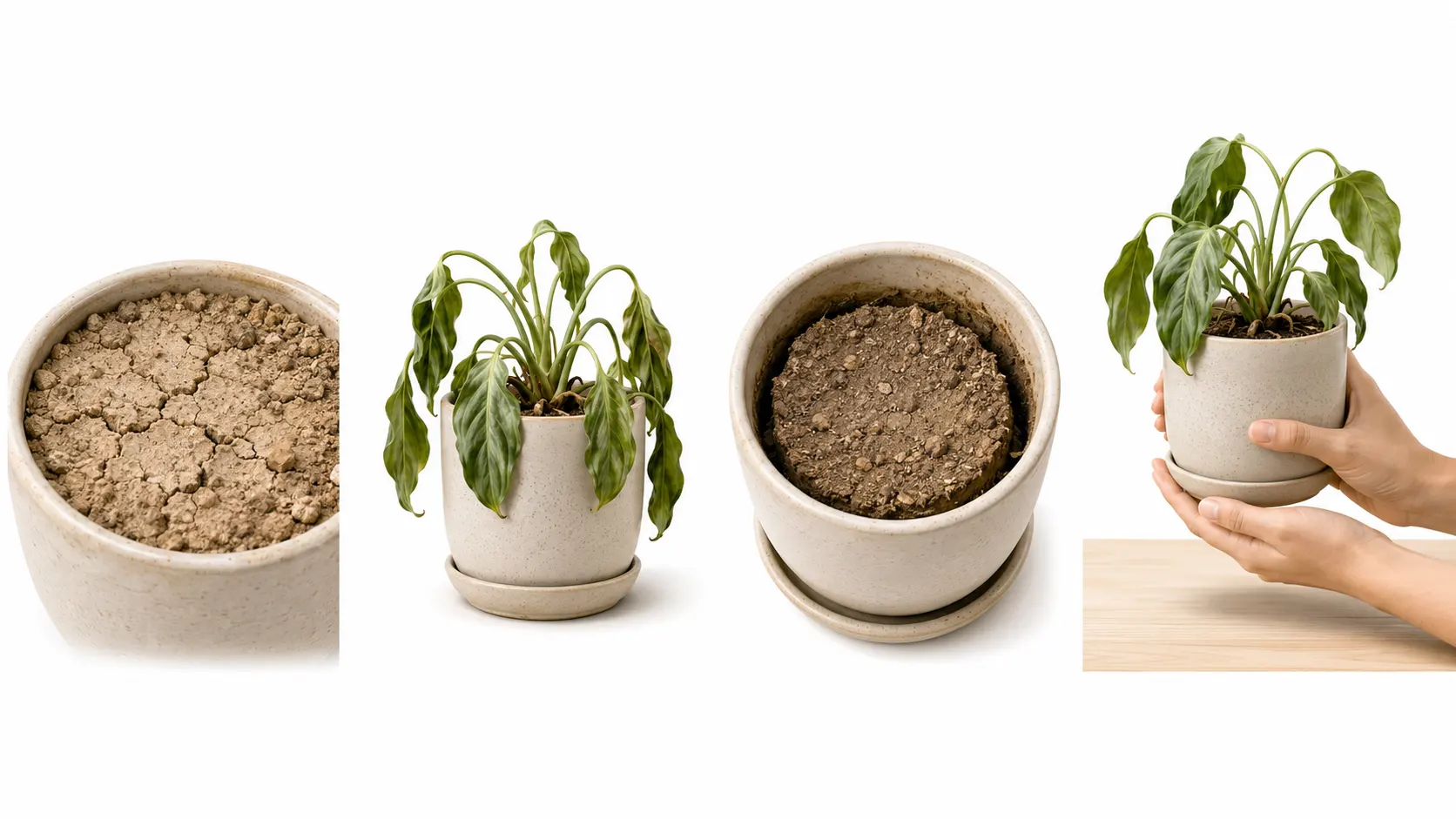
The best way to know when to water plants is to check the soil and observe the plant’s condition rather than following a strict calendar. Plants usually show several signs when moisture levels become too low.
Common signs include:
- Dry, pale soil color: Dry soil often appears lighter and loses its darker moist appearance.
- Wilting or drooping leaves: Leaves may hang downward when the plant cannot absorb enough water.
- Soil pulling away from the pot’s edge: Extremely dry soil can shrink and separate from the container sides.
- Lightweight pot when lifted: A dry pot usually feels noticeably lighter than one containing moisture.
- Slow or stalled new growth: Lack of water can reduce leaf production and overall growth.
The Finger Test (Simple DIY Soil Check)
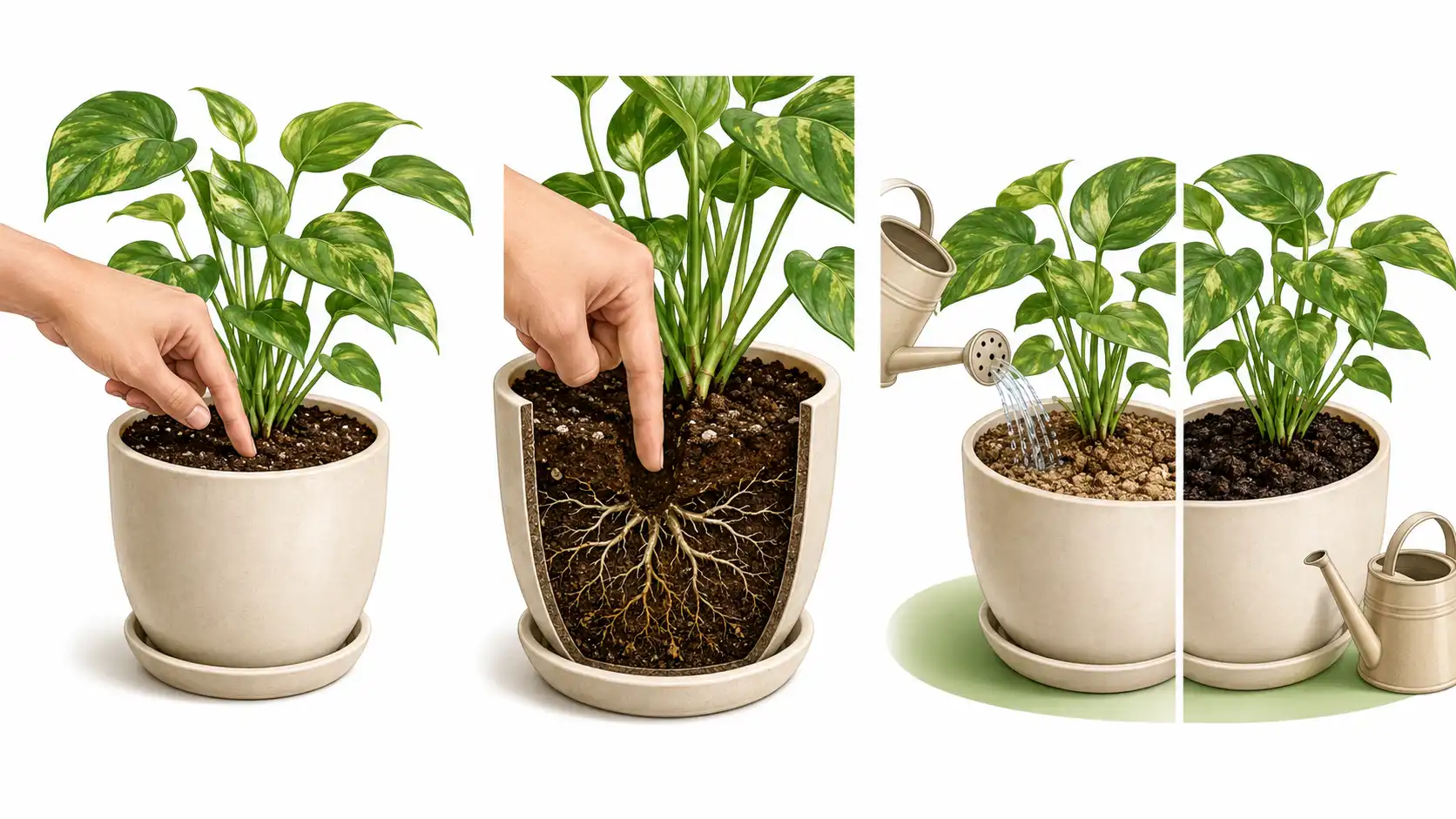
The finger test is one of the easiest ways to check if a potted houseplant needs watering. It involves feeling the moisture level below the soil surface because the top layer can dry faster than the roots.
To perform the finger test:
- Insert a clean finger about 1–2 inches into the soil.
- Feel whether the soil is moist, cool, or dry.
- Water the plant if the soil feels dry at root level.
- Wait before watering if the soil still feels damp.
For small pots, checking about one inch deep is usually enough. Larger pots may require checking deeper because moisture can remain longer near the bottom.
How to Test Indoor Plant Soil (Other DIY Methods)
There are several simple ways to test indoor plant soil without special equipment.
Wooden skewer or chopstick method:
Insert a wooden stick into the soil and remove it after a few seconds. If soil sticks to the wood or leaves a dark mark, moisture is present. A clean, dry stick usually indicates dry soil.
Pot-weight test:
Lift the plant container before and after watering to learn the difference in weight. Over time, this becomes a reliable way to estimate when soil has dried.
Soil color observation:
Moist soil is generally darker, while dry soil becomes lighter and may look dusty.
Dedicated moisture meters are also available as an alternative, but simple physical checks are often enough for most indoor plants.
How Often Should Indoor Plants Be Watered?
Most indoor plants should be watered every 1–2 weeks, but there is no universal schedule that works for every plant. Watering frequency depends on environmental conditions and plant needs. Indoor humidity also affects how quickly plants lose moisture through their leaves, especially tropical houseplants. Improving indoor humidity can support healthier growth, as explained in this How to Increase Humidity for Indoor Plants Without a Humidifier guide.
Some moisture-sensitive plants, such as calatheas, require more careful watering because they respond quickly to changes in soil moisture and humidity. Learn more about their growing needs in this Are Calathea Low Light Plants? Care Guide.
Factors that influence watering include:
| Factor | Effect on Watering |
| Plant species | Tropical plants usually need more water than drought-tolerant plants |
| Pot size | Small pots dry faster than large containers |
| Pot material | Terracotta pots lose moisture faster than plastic pots |
| Light exposure | Bright light increases water use |
| Humidity | Dry air causes faster soil drying |
| Season | Plants usually need less water during slower winter growth |
Can Plants Go 2 Weeks Without Water?
Yes, many plants can survive two weeks without water, especially drought-tolerant species such as succulents and snake plants. Their leaves and stems store water, allowing them to tolerate longer dry periods.
However, tropical houseplants with thin leaves, such as ferns or some calatheas, may show stress much sooner. The ability to survive two weeks depends on plant type, soil condition, temperature, and indoor environment.
What Happens If You Don’t Water for 4 Days?
For most indoor plants, not watering for four days is generally safe because many plants can tolerate short dry periods. However, sensitive plants may begin showing signs of stress.
Plants that may react quickly include:
- Ferns, which often wilt when soil becomes dry.
- Peace lilies, which can droop noticeably without enough moisture.
- Plants kept in warm, bright locations where soil dries faster.
The Three Rules of Watering
The three basic rules of watering help prevent common mistakes:
- Check before watering: Do not water only because a schedule says it is time. Always check soil moisture first.
- Water thoroughly: Apply enough water until excess drains from the bottom of the pot.
- Remove standing water: Empty saucers or trays to prevent constantly wet roots and root rot.
Different houseplants have different moisture requirements, and tropical plants such as monstera often need a balanced watering approach based on soil dryness rather than a fixed schedule. See this How Often to Water a Cheese Plant: Complete Guide for a specific example.
Signs of Overwatering vs. Underwatering (Comparison)
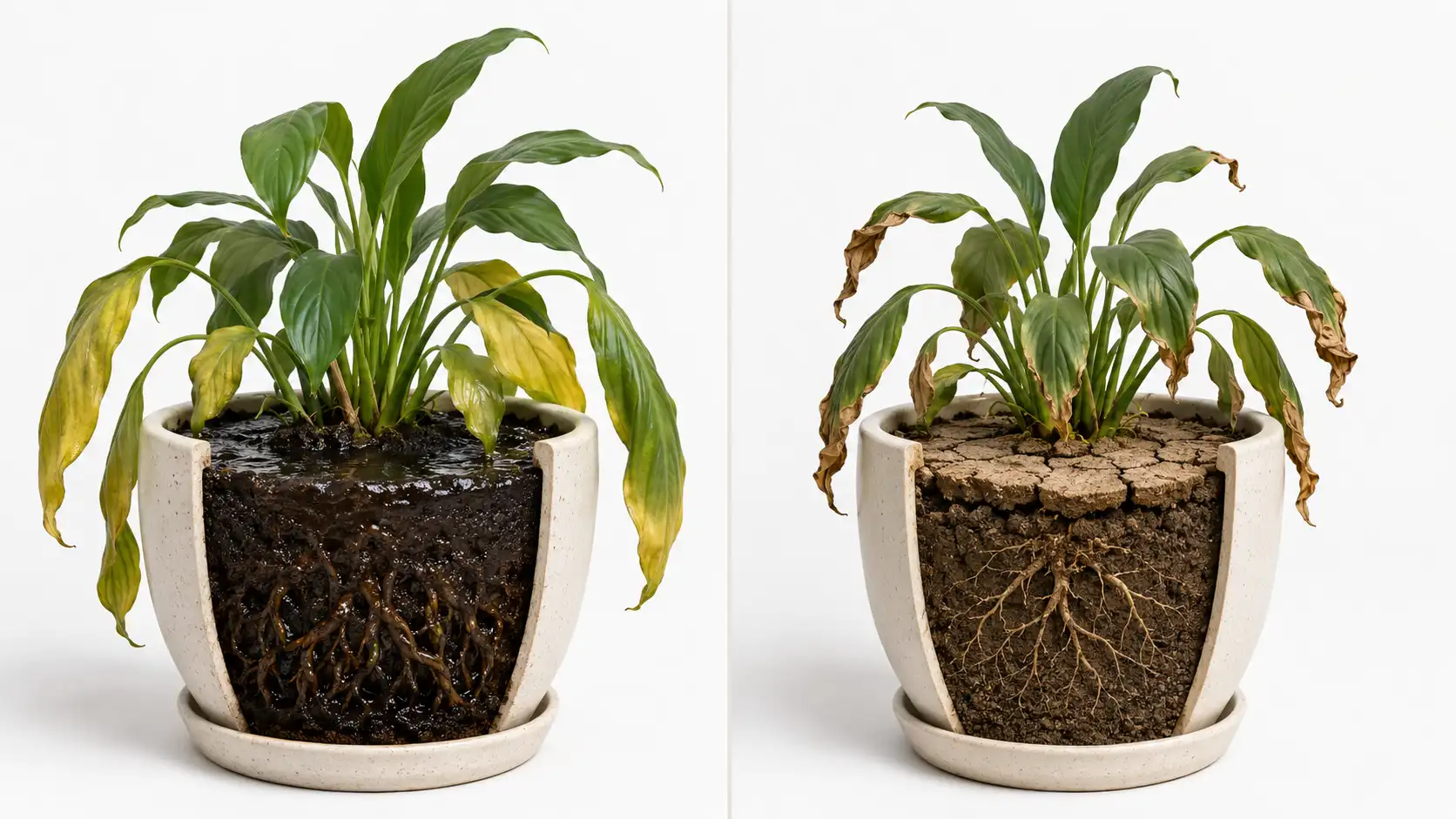
Overwatering and underwatering can create similar symptoms, but the causes and solutions are different. Overwatering symptoms can appear differently depending on the plant species, but yellow leaves, poor growth, and unhealthy roots are common warning signs. A detailed example is explained in this Overwatered Coffee Plant: Symptoms, Fixes, and Care Guide.
| Symptom | Overwatering | Underwatering |
| Leaf color | Yellow, sometimes mushy leaves | Brown, crispy edges |
| Soil texture | Soggy soil with possible musty smell | Dry soil pulling away from pot |
| Leaf feel | Soft and limp | Dry and brittle |
| Growth | Root problems and stunted growth | Slow growth and drooping |
Signs of Poor Soil pH and Soil Health
Poor soil pH affects how easily plants absorb nutrients. It is different from checking whether soil is wet or dry.
Common signs of poor soil pH or unhealthy soil include:
- Yellowing between leaf veins.
- Weak or slow growth despite proper watering.
- Nutrient deficiencies caused by nutrient lockout.
- Poor root development.
A moisture test tells you when to water, while a pH test measures soil acidity or alkalinity.
Common Mistakes When Checking Soil Moisture
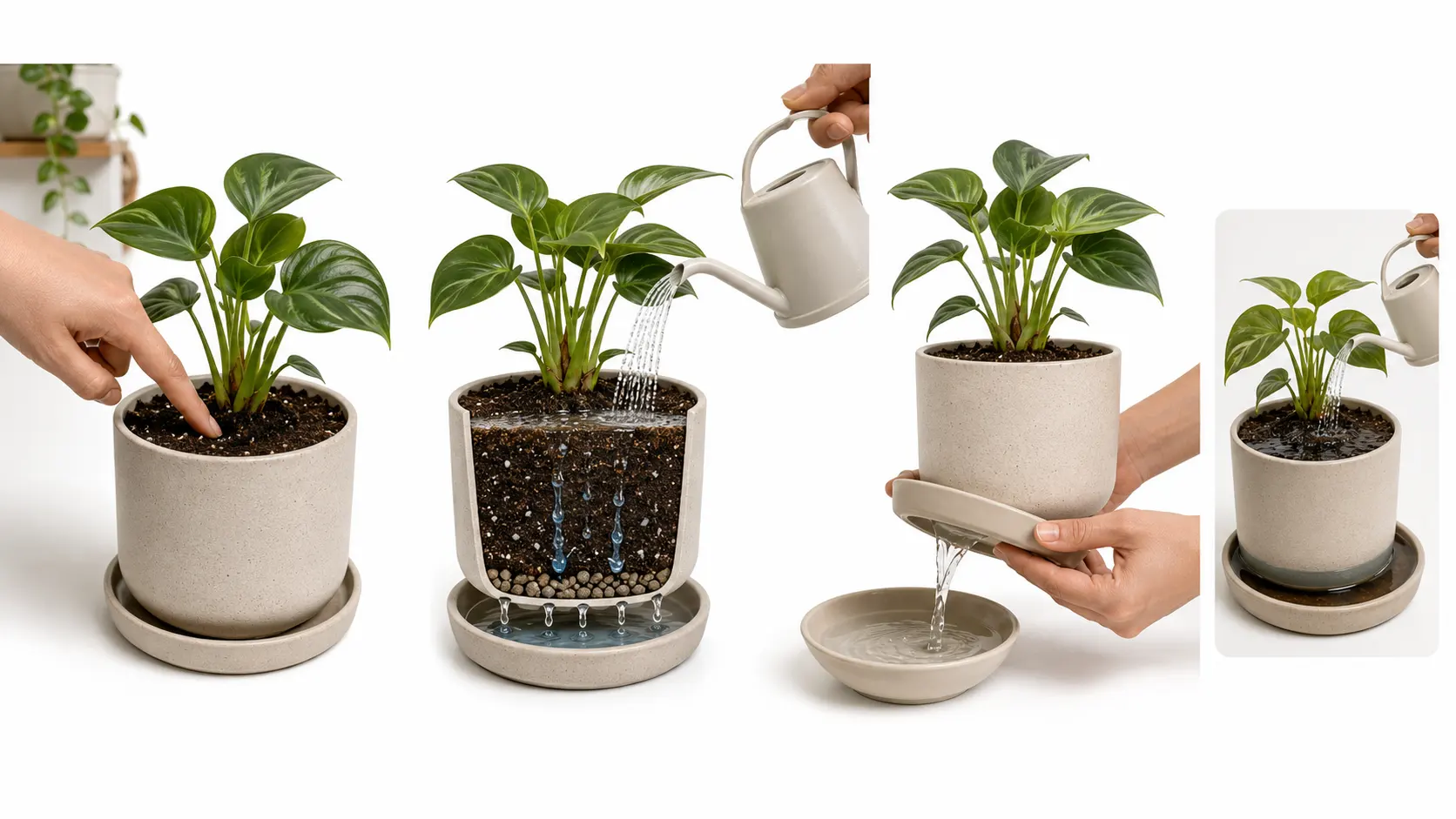
Many beginners make mistakes when judging soil moisture:
- Testing only the surface: The top layer dries quickly, while deeper soil may still be wet.
- Following a fixed calendar: Watering every certain number of days can lead to overwatering.
- Ignoring drainage: Poor drainage keeps roots wet even when the surface appears dry.
Troubleshooting: Why Isn’t My Watering Routine Working?
Common watering problems usually happen because plants receive the wrong amount of moisture.
Yellowing leaves: Often caused by overwatering or poor drainage. Check the roots, improve drainage, and reduce watering frequency if soil remains wet.
Slow growth despite watering: The plant may be root-bound or growing in compacted soil. Check roots and refresh the soil if necessary.
Water runs straight through the pot: Very dry, compacted soil may repel water. Bottom-watering can help rehydrate soil evenly.
Is 1 Cup of Water Enough for a Plant?
One cup of water may be enough for a very small plant but insufficient for a larger container. The correct amount depends on pot size, soil type, and plant species.
A better approach is to water thoroughly until excess water drains from the bottom of the pot. This ensures the entire root area receives moisture instead of only the surface.
Which Houseplants Are Hardest to Keep Watered Correctly?
Some houseplants are more challenging to water because they react strongly to inconsistent moisture levels.
Common examples include:
- Fiddle leaf figs: They often dislike sudden changes in watering and may drop leaves when stressed.
- Calatheas: They prefer consistent moisture and can develop leaf browning in dry conditions.
- Ferns: They usually require higher humidity and frequent moisture monitoring.
These plants are not impossible to grow, but they require closer observation than drought-tolerant plants. In contrast to sensitive plants, beginner-friendly species such as spider plants are often more forgiving when watering conditions are not perfectly consistent. Learn more about their advantages in this Spider Plant Indoor Benefits: Air, Wellness, and Easy Care guide.
Conclusion
The best way to check if indoor plant needs water is to observe soil moisture instead of relying on a fixed watering schedule. Simple methods like the finger test, pot-weight check, and soil appearance assessment provide reliable information without special tools. Understanding plant signals, avoiding overwatering, and adjusting care based on species and environment will create healthier indoor plants. The key takeaway is simple: check before you water, and do not guess. Understanding basic plant care principles, including watering, light, soil, and growth requirements, is essential for keeping healthy indoor plants. A complete overview of plant types and care practices can be found in this Plants: Benefits and Guides (Complete Care, Types & Growing Tips) resource.
FAQs
What is the easiest way to check if my plant needs water without tools?
The easiest method is the finger test. Insert your finger 1–2 inches into the soil and check whether it feels dry or moist. Dry soil usually means the plant needs water.
How deep should I check the soil before watering?
For most indoor plants, check about 1–2 inches below the soil surface. Larger pots may require checking deeper because moisture can remain near the bottom longer.
Can overchecking soil moisture harm my plant?
No, gently checking soil moisture does not harm plants. Avoid pushing too hard near delicate roots, but occasional checks are safe and useful.
Do all houseplants need the same watering frequency?
No, watering frequency varies by plant species, pot size, soil type, light level, humidity, and season. Different plants have different moisture requirements.
How can I tell the difference between overwatering and underwatering symptoms?
Overwatered plants usually have yellow, soft leaves and soggy soil, while underwatered plants often have dry soil, crispy leaf edges, and drooping leaves.
Is it better to water on a schedule or check the soil each time?
Checking the soil each time is better because indoor conditions change. A fixed schedule may cause overwatering or underwatering depending on environmental factors.



2 Responses